

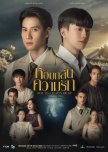
A Romantic Tale That Gave Birth To A Masterpiece.
I have a lot of things that I want to say about this phenomenal show, but I’ll try my best to make it as concise and spoiler-free as possible.The majestic cinematography is one of the strongest points in the series, be it in the modern day or the 1927 era. The filter or the soft bokeh effect that they put in the 1927 era gave the show an ethereal feel as if we were watching a movie set in a dreamworld, which in my opinion is a smart decision since it is told mostly from Jom’s perspective, cause literally, everyone in that time is already a ghost in the present day except Jom. It’s like putting the character’s lenses through our screen. This alone is already a brilliant way of visual storytelling!
The characters are all interesting and well-written. The acting? Outstanding! Nonkul and Bright did an astonishing job as Jom and Yai. In the first episode, we can already see Nonkul’s spectacular acting chops! His eyes alone speak of those devastating emotions that he is experiencing. In the succeeding episodes, you can feel those tantalizing romantic shivers that he feels every time Yai speaks poetry of his love to him. I would not be surprised if he wins an award for his performance as Jom. Bright’s big moments were in the later part of the story. But what amazes me is his versatility in portraying different versions of Yai. The non-verbal and verbal that he did is distinct from the other versions of the character. He did his homework excellently.
I also have to commend the supporting actors for a splendid performance! It’s great that the supporting cast had their own moments and was not left behind by the amazing leads. And did I mention that aside from the main gay couple, we also have a lesbian and straight couple? Yes, this series shows all kinds of love.
The series holds no bars in showing the ruthless treatment of the servants and women in that period. Its fearless portrayal of what happened in the past makes me realize that the series that I’m watching is a bold, unfiltered, and fiercely beautiful work of art. Despite that, it also shows that the abused and the oppressed CAN claim their power and stand up for themselves! Which makes it one of the most powerful scenes in the show.
The music and original soundtrack are magical. For some, it might not be radio-friendly, but the way the music was arranged fits the drama perfectly! Even the lyrics of the four songs featured in the show voiced the perspective and emotions of our main leads. Each note and instrument was meticulously placed to fit the scenes of the drama.
The show as a whole is heartfelt and hopeful. Especially the last few episodes which are excruciatingly beautiful, it made me dehydrated from wailing. Each second that goes by is a slow agony of the inevitable separation. The last scene makes some people confused, unless you read the novel, you will understand it. But I think it was left that way in the series to open the possibility of a 2nd Season, after all, there is so much more to tell.
The love story of Yai and Jom can be considered a one-of-a-kind timeless, classic, romantic tale that gave birth to a masterpiece.
Was this review helpful to you?
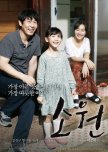
Like many other real cruel stories another cruel story is made into film. This film is based on a rape case known as 'Na-young case'; in which an 8 year old girl was beaten and raped by an old man. I've a problem related to reality...
Now the problem is that the case is only 5 years old. Girl was 8 and now she's just 13 years old. Few years ago someone made a song on this & now this film caught lots of attention and I think it's extremely hard for family to overcome the trauma because of this film. Especially because this film came into light at the point where family was (probably) starting to forget this event. I'm not saying that it's wrong to make films on such cases but this film came too early.
I'll keep this short since I'm still buried under emotions.
Beginning of the film is very sad and can make anyone angry easily. It was painful to watch but those scenes don't last for long. After those painful scenes there is series of many beautiful scenes. Recovery of So-won (Victim), friends helping family, a lot of people trying to restart life of devastated family, family trying to be positive for future and make the daughter happier instead of crying over past that can not be changed. I loved father-daughter relationship most.
What I loved about this film is it's strength in stirring up emotions (of characters & our) in meaningful way. It's not like usual Korean films that force melodrama and turn into joke (Fly High, You're My Sunshine and many more!). Everything in this film is genuine...
Good:
-Genuine & unforced situations-emotions
-Great cast
-Music is excellent. I loved the long track played during recovery scenes of So-won.
Bad:
-Mistimed release (Related to reality, it's bugging me)
-I didn't notice any bad points. I was very busy in watching film.
Was this review helpful to you?
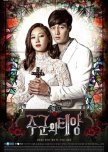
So, I had pretty low expectations of this drama when I read the synopsis, but It was the most fun I've had watching a drama in a while.I laughed, I cried, I crushed hard on So Ji Sub. What more can I ask for in a K-Drama? lol!
What made me love this drama so much, from the very first episode, was So Ji Sub & Gong Hyo Jin. The premise for their romance is pretty far fetched, but their chemistry was amazing, and their characters were so well played that even the most unbelievable parts worked. Both play the comedic moments, and the emotional moments equally well. They are, hands down, two of my favorites in K-Drama.
I think the entire cast was outstanding, even the minor roles. Seo In-Guk was so charming, that he didn't get completely over shadowed by So Ji Sub, which is very impressive. I'm definitely becoming his fan. Kim Yoo-ri was great, and it was really fun to love & hate her as Tae Yi Ryung. Their storyline, and chemistry, was also a lot of fun to watch. Choi Jung Woo was another favorite of mine. He was great as the caretaker/quiet instigator Kim Gwi Do. Han Bo Reum was maybe the only slightly boring one in the main bunch, but was still good enough to not be a distraction. It's the cast that held together the weaker episodes, because they were all so likable.
I thought the story was mostly original, and really well told, even though I'm not really a fan of dramas that include a bunch of unrelated mini stories in each episode. I think the Hong Sister's did a great job of making sure the stories still connected to both of the main character's development, so they aren't just completely random. The horror elements weren't cheesy, or all that scary (for those of you turned off by horror). There were plenty rewatchable romantic moments that made me swoon. There was one moment in particular that had me unexpectedly in boo-hoo tears. There is also a good amount of suspense.
The reason for giving this drama an 8 and not higher for the story is that It definitely lost some of it's magic, and started to drag a little, in the last episodes. I'm still not sure why introducing someone from Tae Kong Shil's 'unconscious' past was necessary, since it didn't do much to move the story forward, or explain much about why she is how she is. Too many plot developments like that seemed more like time filler towards the end, making the show lose some momentum. It had such a strong start, and was so addictive throughout most of it, that watching it start to fall apart at the end was really disappointing. That being said, I was satisfied by the end of the last episode.
Oh, the music. I guess nothing really stuck out to me besides "Touch Love" by T Yoon Mi Rae, but it was hard to get the "lonely love, yes i love..." out of my head.
Overall I loved this drama. It caught me off guard the way "Secret Garden" did, making the unbelievable seem perfectly plausible. Sure, it's the same rich mean chaebol meets quirky poor girl cinderella-type romance, but it still manages to feel fresh & unique. I would definitely recommend The Master's Sun to rom-com fans who want something that's a little different, and isn't too light-hearted.
Was this review helpful to you?
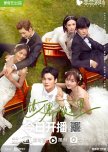
Old-fashioned Sweet
Sweet Teeth is a drama adapted from a novel (世界微尘里-A Speck Amid the Dust of The World). The drama tells the story of Zeng Li, a down-to-earth girl and someone who didn’t have the courage to love due to her past. However, it all changes until she met Ai Jingchu.The drama narrative revolves around Zeng Li and her two best friend’s love story. There are 3 couples in this drama:
1. Zeng Li (librarian) and Ai Jingchu (dentist): both of them start off on the wrong foot but eventually fall for each other
2. Wu Ying (doctor) and Liu Yucheng (traditional Chinese medicine student): Liu Yucheng basically fall in love at first sight with Wu Ying, and starts to pursue her
3. Ma Yiyi (Influencer) and Deng Haoran (entrepreneur): both of them have known each other for a long time because Deng Haoran is Zeng Li’s stepbrother. And round and round, their feelings towards each other sparked again.
The storyline is not new, it has all idol drama cliche tropes: the cold yet brilliant male lead, the scatter-brained yet warm female lead, slow motion, drunken love confession and more. Though the storyline is not new, the script is written in a very heart-warming way that it lulls you into the drama. Two complete strangers, getting to know each other, learn and understand each other and eventually fall in love.
The pacing of this drama is so fast, but looking at its only 22 episodes it makes sense how they are trying to squeeze everything. The love story between all the three couples progresses really fast, to a point that you don’t really feel the chemistry between the leads, they are only together for the sake of the script (unless you read the novel before). However, in the second half of the drama, you can start to feel the chemistry between the couples. This drama does not have any really heavy conflict, most of them are sweet moments!!
Wu Xuanyi acted as Zeng Li in this drama and I can say that she pulled it off. She did a good job in pulling off the typical 傻白甜, sweet and silly girl. However, she did exaggerate her acting too much in some scenes, that I cringed at some of her scenes. On the other hand, Bi Wenjun is kinda stiff and robotic in the first few episodes, however, it gets better in the later episodes. The supporting actors in this drama did a really commendable job. All of them acted so well in their own role, to a point that they outshone the main lead. Nevertheless, while watching it, you’ll slowly fall in love with every character.
As a part of the Iqiyi Sweet On drama lineup, I feel that this drama has weaker cinematography compared to other Sweet On series (for now). The shots and sequences are taken simply and beautifully, it evokes a warm and home-y feeling. However, there are also lots of shaky shots, weird close-up shots, and choppy editing.
The drama soundtrack definitely plays a huge part in this drama, as it elevates the whole drama atmosphere. The soundtrack has an ecstatic beat and flow that goes really well with the drama. It is also very memorable.
Though Sweet Teeth has some cliches, its supporting actors, well-written and heart-warming script makes it unique and special. While watching it, you can feel a warm glow, as if you are basking on the beach watching the sunset.
If you looking for a hearty laugh, fluffy love story and interesting supporting and side characters, this drama is definitely for you!!
Was this review helpful to you?
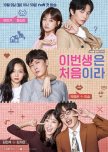
What I really loved was the freshness that Soo Ji Brought and Sang Goo was lovable too. Ho Rang's and Won Seok's story was what made me finish this drama, it gave me heartaches and I really felt their pain as a couple.
Was this review helpful to you?

Arthdal Chronicles Part 1: The Children of Prophecy
70 people found this review helpful
This review may contain spoilers
I recommend this drama to anyone who loves historical fantasies.I don't recommend it to people who like mostly lovely bubbly romcoms.
What I didn't like:
- seasons.... lol so meaningless, why separate it into seasons... ><
-too many names at the begging might be overwhelming plus the first episode is hectic as it doesn't show "passed...years" every time they time-skip.
What i liked:
- the story. It's different from what we usually see so i like it.
- twists and turns.
-costumes
-scenery
Overall I liked this first half of the drama :) but the whole season is more like an intro. and the real stuff will start i guess in the second. the story is nice and it gets more and more interesting later. as I said it is more like an intro and it gets power mostly during the 6th episode. However many historical dramas (and not only) have long introductions that are necessary for us to learn about characters, so it was okay for me. I liked this first season. The only thing is left is for the second and especially the last to be great. because an ending can ruin a drama lol. the first season is nice though.
MYTHOLOGY:
This series are based on Korean mythology about Dangun, who is considered the founder of Koreans. you can read about him on the internet. It is set in Ancient Jeoson and about Korea's first nation and Bronze Age. The myth depicts a story how a Heaven's Son comes to Korean Peninsula and makes The First Kingdom. Because he was the second or third son and couldn't become the ruler of Heaven. He lands on Great White Mountain. Later a Tiger and Bear come to him and ask him to turn them into human. So he tells them to go and eat mugwort and garlic only during 100 days or something. The Tiger gives up in the middle. But the bear eat's it and becomes a woman. The bear woman and Heaven's son have a child, Dangun. Dangun becomes the first real ruler of korea. Actually people say that he symbolizes a human as he was born from meeting of a spirit and an animal. Also he symbolizes the start of Bronze age in Korea. later he goes into a mountain and his spirit rests there. Well there are several versions and in one of them the capital they make is called Asadal. To compare it to the drama Dangun must be the Aramun Haesseula in the drama. Nheantals are the tiger tribe and Sarams (which means literally "human/person" in Korean) are the bear tribe. As you can see in the first episode, Naeanthals come to the meeting with tiger fur, tiger skulls, and Sanung Niruha (at the time ruler of Sarams) wears a bear mask. So this drama took this myth about creation of Koreans and made a fantasy :)
I think the production team just made several mistakes and that's why got so much criticism and low ratings. maybe im wrong, this is just my opinion but:1. they made this show come out not long after GoT ended.... many fans fresh from GoT came to this and saw many similarities. However historical fantasies all have similar clothes and similar power struggle. This series are based on Korean mythology. 2. they overestimated viewers lol I think many were not ready to get a different-like kinda a bit European setting fantasy from Korea. And were just too used to that the Korea usually does historicals mostly in Jeoson or Georyo (and sometimes Silla).
So if you are interested in this genre, don't let these things stop you from trying :) watch till the 4th or 5th episode and then decide if you like it or not :)
Was this review helpful to you?
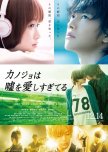
This was the best Japanese romance production I have seen to date.
The acting was stunning. The fine skills exhibited by all the cast (also the support roles) was just brilliant.
Japanese productions tend to be either overly melodramatic or greatly exaggerated acting-wise. But this was neither.
It was just beautful from start till the end (and by that I mean the very end. The part after the credits...)
Story: Aki is the genius songwriter of CrudePlay, a band of highschool friends in which he formerly used to play. When he meets Riko, he wants her to like him as himself, not as the famous composer he is. So he lies. This is revealed when Riko is scouted by the same label. Will they overcome the obstacles of the industry and the rival from his own band?
Characters: I loved every single character in this drama. Aki, the tormented genious whos heart is slowly opening to the young and sweet Riko. Riko, the gentle singer who admires Aki as a composer and has a passion for singing. The chemistry between the leads was very real. I liked the way they interacted when the were on screen together.
Shou, the cool best friend. He's singer of CrudePlay and I think just as cool as Aki. His acting was very sophisticated, very detailed and perfectly portrayed the friendship between him and Aki. I think he is also my favourite character. And I am not (just) saying that out of 2nd lead bias. I just think he acting was so mesmerising.
And all the other loveable side characters.
Music: Well this is a music-themed film, so this only could be good, right? It's very light pop based. Not really catching, but definitely easy to listen to. I appreaciate that it is not one or 2 main songs that get repeated over and over like in many other dramas.
Rewatch Value: I don't rewatch much. But I may just rewatch this some time. You can probably pick up more details and emotions in this movie during a rewatch. You can look at the beautiful characters more closely and find new expressions that will make you like them even more.
Overall: I can highly recommend this drama to everyone who likes music-themed stories, a sublime romance, fantastic acting, loveable characters, and a magnificent story.
Was this review helpful to you?
 2
2 1
1Angel & Grim Reaper
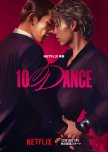
If you’re obsessed with professional dancing, I’m gonna go out on a limb and say you will probably be head over heels for this one, way more than I was. Don’t get me wrong, the movie isn’t bad by any stretch. In fact, it’s pretty damn impressive. They dive deep into the nitty-gritty of dance techniques, the ins and outs of the competitive ballroom world and how that high-stakes environment messes with the people caught up in it. I was honestly blown away by how authentic it felt. But if I’m being real, the romance in this was way too slow of a waltz for my taste.The story centers on two men: Sugiki and Suzuki. These guys are internationally ranked competitive dancers, but they’ve never gone head-to-head because they dominate in different styles. Sugiki is all about Standard Ballroom, while Suzuki slays in Latin Dance. Still, they have got this long-standing rivalry that keeps them hyper-aware of each other. Then, out of nowhere, Sugiki throws a wild proposition: they train each other in their respective styles and take on the 10DANCE. For those not in the know, that’s an event combining all five Standard Ballroom dances and all five Latin Dances. In competition, they dance with their female partners but during practice, it’s mostly just the two of them and that’s where things get interesting. There’s this undercurrent of competitive flirtation that simmers beneath every step and turn they take together. It’s hot, no doubt but it’s also frustratingly understated for a hopeless romantic like me.
I will say, the actors absolutely killed it. Their movements are mesmerizing. When Sugiki and Suzuki train together, you can feel the tension through the screen. Their bodies move with such precision and passion, it’s almost erotic without even trying to be. The way Sugiki’s Standard style clashes with Suzuki’s hip-rolling Latin flair is pure art. I mean the chemistry between them is off the charts. The actors nailed every single detail.
The production quality is also top-notch. The cinematography captures every angle of the dances with such grace and the music has the perfect heartbeat to every scene, whether it’s a slow tango or a fast-paced cha-cha. Honestly, the movie is a feast for the eyes and ears. I can see why so many people would fall in love with it, especially if you’re into the technical side of things or just appreciate a beautifully crafted film.
But here’s where I’m gonna be brutally honest: I wanted more romance, damn it! From the trailer, I got the vibe that this would be a love story but I’d say romance was maybe 20% of the movie. I get it, the title and premise say “dance first,” and they executed that part flawlessly. I’m not saying they did anything wrong; it’s just not what I expected and that’s on me for hyping up the love angle in my head. If dance is your jam, you will probably eat this up and ask for seconds.
And well...the ending...I hate to say it, but it was such a letdown. Without giving spoilers, I’ll just say it felt kind of empty. I wanted a bigger payoff, something to make my heart race or at least leave me satisfied. Instead, it just kinda fizzled out.
So, bottom line: this movie is amazing in its own right. It’s artistic, beautifully made and the actors are phenomenal. If you are into dance or just appreciate a visually stunning film, you have got every reason to love this. I’m just a sucker for romance and I felt a bit shortchanged on that front. Plus, that flat ending didn’t help. Still, I would say give it a shot. It’s worth watching for the talent and passion on display. Just don’t go in expecting a full-blown love story like I did or you might walk away a little disappointed too.
Was this review helpful to you?

Awesome show with badass fl & sweetheart ml!
I just wanna say that till now ( i. e 12th April 2020) 9.5/10 is the highest rating I have given for a show and this is the only show I have given that rating to! This show is that awesome! :)If you don't mind grey characters (Everyone's grey here, including ML & FL) and love to watch a really good romance between a badass FL and a smart ML set in a shady legal world, then this drama is for you! :)
This drama had everything I ever hope for in a show:
1) Fast pacing of the scenes, no dragging or filler scenes whatsoever! I am just sad it wasn’t extended for few more episodes...
2) Strong FL (not just physically strong but most importantly, emotionally strong!). Jgj has entered into my list of all time fav heroines!
3) Smart ML who is willing to adapt to new ideas and is super witty on top of it! Did I mention he's super loyal too? <3 :) He makes you go "awwww" so many times that you will lose count! ;)
4) Smart opponents! Because the game will be boring if your opponents are complete pushovers...
5) Awesome BGM/ost that actually suit the narrative instead of hindering the flow of the scenes.
6) Beautiful set designs and cinematography for that added visual appeal.
7) Awesome set of actors, right from both the fantastic lead actors (I have become a fan of them both after this) to the equally entertaining supporting actors. It was a fab cast! Spl mention for the quirky secretary of our FL in the supporting cast, the show wouldn't have been the same without her! :)
8) Entertaining story. I wouldn't say that the story was something out of this world or anything, but it surely had a bit of everything for everyone... It had a good dose of romance and comedy with a decent amount of legal /investigation drama. It also had a generous peppering of feel good scenes between all the team members. And on top of it all, it has a really really satisfying ending too! :)
Plus it gave me the same feels I used to get while watching 'Castle', an US drama series. Especially the leads romance gave me CasKett feels! <3 So basically, highly recommended! :D
Was this review helpful to you?
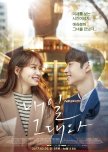
The story was quite new in the KDrama world, which I appreciated. And where else can you see the leads get married by the third episode? The first half of the drama was quite light, mostly centered on their romance while the second half had lots of angst and suspense. What this drama did well was weave the past, the present, and the future in which he traveled to into a clear and coherent storyline. Most of the show is actually foreshadowing, and finally in the last few episodes are the viewers exposed to what actually happened. It did build up suspense and intrigue, as you had no idea what would happen. It was unpredictable, but by doing that they lost a few people (and provoked lots of fan theories), but I promise if you stick with it, everything will build up to a satisfying end.
The acting was done really well on Lee Je Hoon's part. This was my first time watching any work of his and I was pleasantly surprised. I didn't particularly like Shin Min Ah's character, as sometimes I felt like she was unreasonable. Their chemistry was off the charts though, and perhaps because they were married early on in the series, we're given a ton of fanservice (aka steamy scenes). At first I was skeptical because the circumstances of which he married her wasn't the best, but soon you could really believe that they're in love. There isn't a moment where the music fades and the camera pans over their face in slow motion that tells you they've fallen for each other, but trust me you'll know.
I really loved the music. I think there were only about three main OSTs , significantly less than that of other dramas, but all of them fit the drama so well. They also played some beautiful piano instrumental tracks pretty often, which created a sort of gloomy mood befitting the storyline.
While I may not watch the entire drama over again, I would definitely rewatch some of the scenes.
Overall, I loved the way the story was told, despite the pace. I have to mention the color scheme again, because it was really genius and beautiful. Right off the bat, it helps you get into the solemn mood constantly reminding you of the overarching plot despite the cheesy happy scenes. I would recommend this drama for those who don't mind a slower storyline, because it's definitely worth the watch.
Was this review helpful to you?
--------------------------------------------------------------
This series is among the best of the best. It is one of those rare shows where every episode matters. The plot was never left hanging in order to extend the series. Instead, every single scene was developed in service of the narrative.
The transitions from tension-filled scenes to sweeter ones was flawless. It made watching the series easy and enjoyable. The narrative was also organic, with nothing feeling forced or out of place.
Overall, prepare yourself. This drama will demand your complete attention, push you to the edge of your seat, steal your breath away and have you rooting for more than just the main leads.
MAIN CHARACTERS: Memorable
--------------------------------------------------------------
The main leads were remarkably three dimensional. They were given as many strengths as weaknesses and every single one made sense. The development of the characters was consistent and coherent. Every action had a lasting consequence, and every instinctive reaction demanded a hefty price.
Yoon Na Moo (male lead, aka Chae Do Jin): His complex character was handled masterfully. He was presented as a sympathetic and strong figure, but realistically so. The best way I could describe him is with the saying, "courage is not the absence of fear, but the ability to act in spite of it." Throughout the short series, this character struggled with his inner fears but accepted his vulnerabilities rather than hide them. He was strong precisely because he was afraid... but he didn't let that fear rule him.
Gil Nak Won (female lead, aka Han Jae Yi): Despite her tragic backstory, she was well written and very well portrayed. She's strong, not because she got over her past, but because she's able to face her present while accepting what happened. Her strength is quiet and subtle; allowing her actions to show her defiance rather than voice them loudly. She's also very nurturing towards Na Moo and I love that she never once runs from her problems, but faces them head-on. Because of the nature of the story, Na Moo's side of the story was more intense, but she is without a doubt one of the strongest female leads I've seen in Kdramas so far.
ANTAGONIST: Imposingly petrifying
--------------------------------------------------------------
Yoon Hui Jae (ML's father): Heon Joon Ho deserves an award for his performance. Every time he stepped into a scene, he dominated and filled it with almost palpable tension. He cast a terrifying shadow over every character, continually reminding you that he was a prowling beast ready to strike. Forget Hollywood "horror" movies and "frightful" tv shows. From now on, Yoon Hui Jae is my new standard for blood-curdling terror.
SUPPORT CHARACTERS: Relatable & complex
--------------------------------------------------------------
Though this series has an amazing cast of characters that bring something of importance to the table, I'll focus on the top three characters that merit a special recognition...
Chae Ok Hee (ML's adoptive mother): Talk about a character caught between a sword and a hard place. Her performance was absolutely brilliant and her character was probably the most relatable. Ok Hee is going to go down as the definition of a strong mother. She's a testament that water can be thicker than blood and, when push comes to shove, any mother will pull her claws out to protect her children.
Yoon Hyun Moo (ML's brother): Kim Kyung Nam deserves an award for his superb performance. Alongside Hui Jae, he stole the show for me. He had some of the most powerful scenes and the strength he displayed was of a different kind than usual. He was a sacrificial character (a spot almost always reserved for the female lead) but with a strong purpose. He loves, selflessly and fully, without expecting anything from anyone in return. I found myself hurting alongside him and rooting for him throughout most of the show.
Gil Moo Won (FL's brother): Another character that stood out with his complexity and excellent portrayal. We were given his backstory in small doses until the picture was completed. This was a character that lingered in his pain but who was strong enough to accept and ask for help when things got tough. He understood and empathized with Hyun Moo because they were both shades of grey, which gave them an undeniable bond. The fact that he plays off of Hyun Moo so well, made me wish they could've shared more screentime together.
PORTRAYAL OF ROMANCE: Sweet & nurturing
--------------------------------------------------------------
The relationship between Na Moo and Nak Won was exceptionally balanced. It was an exchange of giving and taking; of want and need. They were loving, sweet and nurturing towards one another. They were also both hurting and, rather than taking the easy way out by keeping away from each other, they actively decided to pave a path out together. The quote: "You lean on me, I'll lean on you and we'll be okay" is enough to describe this beautiful relationship.
Here are some of the highlights:
1) They each have moments where one of them is vulnerable and the other strong; so it never feels one-sided.
2) There are no misunderstandings because they communicate with each other in a very honest and straightforward way.
3) The chemistry between them makes their relationship feel natural together. You can tell how much they care for each other with every stolen glance, soft smile and lingering touch.
HORROR FACTOR: Off the chart.
--------------------------------------------------------------
You better be prepared to hold your breath and curl your toes whenever Yoon Hui Jae steps into the scene, is all I'm saying.
OVERALL: This is a masterpiece.
--------------------------------------------------------------
The art direction is Hollywood quality (I'd say it even surpasses it). The framing, colors and lighting enhance the message communicated. So if you know what you're looking for, you'll be amazed at the attention to detail.
The music has also been carefully selected, used to amplify a feeling rather than distract. The ambient sounds help enhance the atmosphere, drawing you into the scene and forcing you to live it alongside the character.
Add to that the interesting story, superb characters and amazing acting you'll get a series that you'll not soon forget. Re-watch value for this is also quite high.
Was this review helpful to you?
Before watching this, I would consider a drama on how good it is based on how addicted I was, but even if I wasn't super addicted to Answer Me 1997(maybe part of it is that I didn't watch it while it was airing so I wasn't left hanging every week), everything in the drama was full of meaning and everything just fit together perfectly.
I applaud the writer and director for making such a work of art altogether, I must say.
This drama was different from others, in the aspect that it wasn't the typical cliff hanger every episode and there wasn't really a FIXED storyline, if you know what I mean. It was the story-telling of two first loves that succeeded and their growth together. From high school to adulthood, it was just lovely seeing all the characters grow.
It was full of sweet moments and what I like about this drama is that there isn't some annoying, cockblocking antagonist that was only put there to have a base conflict. The conflict in the drama was more personal, realistic, and relatable which made this drama just seem more "real" I guess. Even if I wasn't into kpop in that time exactly, I still felt the nostalgia and warm fuzzy feeling when they play a 90's or early 2000's song in the background. This drama always got me all emotional all the time haha. The writing was also amazing and even I learned a few lessons watching this drama :)
THE CAST AND ACTING WAS PERFECT. Everyone was so natural and even if Shiwon was a delusional fan girl, I still loved her character. Yoon jae was just sooo.. soo.. dreamy at times. You can see his emotions through his eyes and his intense gaze that's only for Shiwon. When he cries I just cry with him, because it seems so genuine and the pain is visible through his crying. Again, I loved the fact that there was no crazy ass villain in the drama.
The music they played seemed to fit so well with every scene and even if j didn't even know some(most) of the 90's Korean songs I still felt nostalgic. I'm currently looking for all the songs used in this drama because it's that good.
I would highly recommend this drama to anyone who is a sucker for sweet and 'fuzzy' love stories as well as people who are just looking for a drama that's not too heavy. This will take you down memory lane as the beepers and cell phones with antennas are re-introduced. I mean, who DOESN'T love the feeling of nostalgia? Well this drama will definitely give you that feeling.
I HIGHLY RECOMMEND THIS DRAMA!
Was this review helpful to you?
Adorable Couple, Wonderful Chemistry, Best Contemporary Romance of Summer 2019
I’ve come to watch this drama, partly because Yang Zi is my favorite actress. Initially, I was holding some reservation because I was not familiar with the major male lead, Li Xian, portraying Han Shang Yan. At my first viewing, I was not very impressed by him; he wasn't that good looking, I thought; as Han Shang Yan, he was rude, mean, nasty - a total jerk. But then, something pulled me in - the contrast of the two main characters and the theme about reaching for your dream. After just the first episode, my doubts about Li Xian dissipated. I got more than what I bargained for.Upon further research into what the term “CTF” stands for, repeatedly referred to in the drama, I find it is something even more intriguing and more complicated than I would have imagined. CTF means Capture the Flag. It is an information security competition between security professionals about cyber security. It challenges its participants to solve computer security problems and/or capture and defend computer systems. The competition is used as a learning tool to help sharpen the tools they have learned during their training. In another words, what seemingly “a waste of time playing computer” is actually teaching and training the next generation in the most advanced field of artificial intelligence in cyber security which is the next BIG thing.
Li Xian, playing the male lead, is absolutely incredible. The actor has a calm, cool, no-nonsense demeanor. He fits into the Han Shang Yan's character perfectly as if the role is written for him. What seemingly cold and tough on the outside, is actually tender and caring inside. He may talk mean and scold his people, but cares deeply for them. He is strict and uncompromising. He commands a breath of full authority that everyone looks up to, loves and fears. He doesn't care to defend himself. He doesn't care what others think of him. To him, everything is just noise. All he has wanted is the championship, until the love of his life comes along.
This is my first drama of Li Xian's. I find him super super cool and awfully good looking. Some viewers may not find him attractive at first glance, but he has the type of look that captures hearts. At the end of the drama, like many viewers, I fall head-over-toes for him like a little crazy school girl.
I have always liked Yang Zi’s acting. I find her genuine, beautiful, cute and sweet. In this drama, she plays the character of a prodigy girl. Tong Nian is so adorable that even the coldest stone heart can be melted. She melts mine. I'm just a little disappointed that the story hasn't developed on Tong Nian's intelligence and skills in helping Han in improving his teams.
Contrasting greatly to Han Shang Yan who almost always dresses in all black outfits, Tong Nian always dresses in cute and girly style (some viewers find the outfits outrageous). With her large round eyes and puffy outfits, she looks kind of like, a squid. No wonder she calls herself Squid the Fish. This contrasts greatly with Han Shang Yan who looks damn serious and yet stylish at the same time.
Having said that, the relationship between Han Shang Yan and Tong Nian is just amazing. Despite their differences in taste, age and almost everything, their chemistry is so wonderful and undeniable. Han Shang Yan, always being misunderstood by others, only Tong Nian sees through that iron facet of him. She thinks highly of him and treasures every bit of him. It is so satisfying to see they find each other from the very beginning and nothing can separate them.
Another young actor that captures my heart is Hu Yi Tian. He portrays Han's cousin, Wu Bai, who speaks few words but always watching and listening. He covers Han Shang Yan's back always, no matter what. It is so good to watch such a trusted brotherly relationship which needs few words. One look, Wu Bai would immediately know what his cousin wants. Both completely understand and communicate love and care for each other without many words. I wish we have more scenes of Wu Bai in the drama. Hu Yi Tian definitely has a lot of potential in future with his height at 188 cm (6'2") and awesome cool look.
This drama uses also quite a lot of incredible settings. One such setting is the Atlantis Sanya Resort Hotel that features aquariums in some underwater guess rooms. It is the most beautiful hotel I've ever seen. I am also impressed by the Disney Castle model that Han Shang Yan has in his room. It has taken him years to built from the lego bricks. The iconic Disney Castle, a symbol for dreamers, depicts the dreams he has. Multiple times it worries me that Tong Nian may crush it when she's topsy-turvy.
The official theme songs sung by Li Xian and Yang Zi are pretty good. But my favorite song would be the song called "Beyond's A Brighter Future" sung by the Solo and K&K teams under various occasions. The lyrics of the song are so touching that I tear up each time hearing them. The song is very inspiring, expressing the struggle of the dreamers. It calls for all dreamers to not give up when they stumble and face obstacles. It yearns for freedom and encourages determination. Composed by Wong Ka Kui, a Hong Kong musician, in 1993, the song expresses his own pain and struggle. Sadly Wong died within months of the release of his song. Another beautiful song that strikes me is "Couldn't Leave" sung by Dimash Kudaibergen, a very talented musician from Kazakhstan. The lyrics of the song is so beautiful and appropriately depicting the difficulties and struggle each dreamer is going and has to go through.
It is heart-warming to see a group of youngsters living and playing together, and enjoying each other's company and discovering themselves in the process. Han Shang Yan is not only their leader (they call him Lao Da - meaning big brother), he is also their guardian, parent, teacher and mentor. His relationship with them is simply lovely and moving.
This is truly an amazing drama for the summer. Don't miss it. Two thumbs up!
Was this review helpful to you?

Acting/Cast: Mostly new faces but boy did they acted well! Kudos to the female lead and male leads of this drama, including the supporting characters of female servants, eunuchs and princes. They can act serious at one point and turn to quirky and funny at another then to a touching and tear-inducing, heart-jerking scenes the next! Amazing! I hope they will all go on to bigger and better roles! And the costumes were scandalous to say the least! Scandalous and unthinkable for the period in question but they added to the fun of the drama! Big pat on the back to everyone- from cast to production and directing teams! A job well done!
Music: Love the haunting OSTs and how it's played throughout in 3 different variations depending on the mood of the drama. I am looking around to download it now.
Rewatch vaue: High rewatch value. I do not mind rewatching this drama again very soon. Each episode's only 30 minutes since it's made for web viewing. I enjoyed all of the weird antics and the more serious parts of this drama. Very entertaining!
Overall: Highly recommended! You'll laugh, fall in love and cry. This is chinese quirky humor mixed with romance in the ancient times at its best!
Was this review helpful to you?
Rough path with some sweetness and the ending that lost focus…
A Shoulder to Cry On delivered quite a few good messages that would resonate with teens and young adults, and even a few lessons that can change the perspective of the adults, as long as they are willing to think about these topics after the episodes end. A nice step into a different direction in a well known high school set up.That said, is this truly the deep and complex psychological story as some people claim it to be? Depends on what you compare it to. It’s not as sweet and silly as many high school and university BLs, and there is an attempt to add layers to the characters, especially on Tae Hyun’s side. So compared to other K-BLs, one could see it as something more. If you look at it in a broader manner, sadly it’s just another enemy to lovers trope with trauma as a cherry on top.
Yes, it does tackle some serious and important topics like childhood trauma, lack of emotional support, repressed feelings, guilt, resentment, forgiveness. Yet, all on surface level. It’s like a weather talk - just a starter for the conversation.
I think the biggest disappointment for me comes from how black and white they tried to present really complex situations and how fast they moved away from them without truly putting time and effort to give a proper resolution, which was especially obvious in the last two episodes. How to put it… it lacked nuance. It made me feel like the production team does not trust the audience to handle difficult topics so they made them as approachable and simple as possible. God forbid someone finishes an episode with conflicted feelings about the characters.
Personally, my favorite part of the plot was Da Yeol’s doubts about his path. It’s an issue most young people resonate with and many adults still struggle with. It was best written, paced and concluded part of the story and I wish the drama focused on it a little bit more.
Then we have the acting, which was fine during the teen daily life scenes, and questionable at best during the emotional scenes. There were a few moments I could see Shin Ye Chan tried to convey strong emotions, but it just did not translate on screen. Similar issues happened with more “heart wrenching” scenes from Kim Jae Han. Realistically speaking, for debut roles, these were quite challenging, so I’m; not exactly surprised by the end product.
Undoubtedly the production was a massive improvement compared to other short k-bls. Longer episodes allowed the story to have a more even pacing without too many things being painfully rushed (putting aside the final conclusions). While it still lacks in comparison to mainstream dramas, it’s on par with other web dramas, which is far better than what we’ve got until this point from Korean BLs.
Improvement from makeup artists needed though.
Overall, it’s great to see a longer format and I’m glad it was given to a story with an actual plot that at least attempted something more than “sweet teen romance”.
Was this review helpful to you?


