


The Movie That Had Me Questioning My Entire Moral Compass
Okay, so Green Bones?? I walked into the theatre expecting a solid crime thriller, but walked out re-evaluating my entire worldview. Like, no exaggeration, this movie wrecked me.The premise is already wild—a person’s ashes turn green if they lived a life of goodness (which, excuse me, that’s a concept I’m obsessed with??). Then the film throws us into a tense prison drama with Xavier Gonzaga (Ruru Madrid), a corrections officer who takes his job wayyy too seriously, and Domingo Zamora (Dennis Trillo), a convict fighting for his freedom. From minute one, the intensity was unreal.
I loved how this movie made me second-guess everything. Like, do people actually change? Can redemption be real? Are our justice systems as fair as we think they are? The performances?? Chef’s kiss. Dennis Trillo had me on edge the entire time, and the suspense just kept building. Every scene had me gripping my popcorn, convinced something was about to go down.
By the end, I was just sitting there, staring at the credits, emotionally compromised. If you’re into movies that make you feel something—like really hit you with ethical dilemmas and gut-wrenching performances—you need to watch Green Bones. Just trust me on this one. 10/10 would spiral into deep thought again.
Was this review helpful to you?
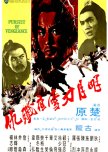
"If your sword skill is poor, best to not carry it."
Pursuit of Vengeance was a 1977 kung fu flick whose cast was stronger than its story. Based on a Gu Long book, Chor Yuen must have struggled to contain the story in a 90-minute film. While the story may have been convoluted, the potent combination of Ti Lung, Tony Liu, and Lo Lieh made the film entertaining.Fu Hong Xue and Ye Kai wander into town and are invited to Ma Kong Qun’s school for dinner along with four other fighters. Six coffins are delivered ahead of them, not a good sign of a friendly welcome. Amongst the attendees is the unknown surviving son of Master Bai. The family leader was ambushed by thirty masked warriors and brutally murdered twenty years prior. Fu and Ye develop a friendship as they fight together or watch the other one fight. Into the mix, a sword for hire and playboy, Lu Xiao Jia drops into their laps. Lu has been sent to kill them, but as he hasn’t been paid yet, he works to keep them alive until he sees the money.
The Gu Long story behind Pursuit of Vengeance was also made into the 1993 movie, A Warrior’s Tragedy. I’d hoped by watching this film that I would better understand AWT, but alas not. The original story must have been quite complex with numerous characters as both films struggled to narrow down the focus and make it understandable. Frankie Chan wrote the music for this film and then 17 years later directed and starred in the remake. Ti Lung played Fu in both adaptations. At least he was closer to the character’s age in this one and didn’t walk around with that ridiculous limp as he did in AWT.
Despite the fact that this film was absurdly written, I enjoyed watching Ti Lung and Lo Lieh. Ti, as he usually did, played the straight man, this time to Lo and Tony Liu who delivered their comedy without going OTT. There were so many fights that many bit actors and stuntmen died at least twice! Mama Hung who was normally cast as a random villager even got in on the action as did Oyang Sha Fei! Tang Chia designed the fights which meant that they more theatrical than realistic. Unlike the remake’s over the top wire work, PoV had a modicum of super leaping individuals. It more than made up for any realistic elements by overusing the Mission Impossible face masks.
Pursuit of Vengeance had trouble with what must have been an unwieldy book to translate onto the screen. The fights were typical of the time, including bizarre weaponry. What made the film entertaining for me was the camaraderie between Ti Lung, Tony Liu, and Lo Lieh. They were fun to watch banter and fight back to back. I can honestly say I’ve never seen so much of Lo. Only for fans of old kung fu flicks and as always, rated on a generous curve for the genre.
26 April 2025
Trigger warning: Lo’s bare bottom on two occasions.
Was this review helpful to you?
Was this review helpful to you?

Was this review helpful to you?

Was this review helpful to you?
Was this review helpful to you?
Was this review helpful to you?
Was this review helpful to you?
Gripping and Quietly Intense
I think my most favourite of this is the technicality because it showed how high the stakes are. I mean it was already like that but that aspect of the film made me feel invested and thinking how they will pull this off.It was two hours long which I thought was too long but it as actually a good length. I really like how they just got into it. My favourite character, alongside the main, has got to be the General Commander - I think he pulled off being calm, focused and highly principled so well. I'm quite surprised he's listed as a supporting role. I think his role made such a big impact on how invested I got. His character was so impressive.
I think the only thing that I didn't feel convinced about was regarding the suspect. I don't know, just the way it was revealed and the motivations I guess made it feel far fetched? Plus the enormity of how it was done and who's done it just didn't feel believable.
Overall, I'm really glad I watched it. I think the main role, Takaichi, really rounded off the feel of the film with his good natured character. He was dependable and in charge which made you trust him and felt like everything's going to be okay even with the seemingly impossible situation.
Plus the scale of the production was amazing. The director/writer/team behind this are so so impressive. I also really liked Chika, the train driver. I think she was quietly holding everything together and wasn't thanked properly by the passengers when she was introduced 🙈
Was this review helpful to you?
Silly and lacking process
This movie could have been good but there is no process, every single scene is under developed and I am not really sure what they are trying to say here, unless it is don't get caught up in what people say and an eye for en eye makes you the eye.There could of course be more to it, something about society being quick to judge and that nothing really changes, or maybe some type of you we are all the villains in a world where people suck. Careful what you wish for, careful what you say someone may take it seriously... But it was all cluttered by the loudness, the mobs an the flickering camera.
Making my wish for depth... or my wishful interperted depth and the presence of some good actors up the score but my honest opinion would probably be meeh...
Was this review helpful to you?
This review may contain spoilers
I have watched it already 4 times now...
What would I do to watch it for the first time. The best film if you want to watch something on a rainy day... The warm hug you need of encouragement... The feeling of being alive and the feeling of HOPE... I just love it sooooooooooooo much ... Worth every second! If you like the plot of someone blind but not everyone pitying them, this one is for you ! The main leads did an amazing job in portraying the characters. The chemistry was there andSpoiler:
it has a happy ending, despite how it looks in the last 15 minutes. Everything was sorted out, I at least didn't have any more questions.
I loved it....
If anyone has movie recommendations like this movie please PLEASE write it down below.
Was this review helpful to you?
This review may contain spoilers
Watercolor inclusion in life
The gentle, rhythmic pace of the plot accompanies the understanding of life without the sounds. The initial delicacy recalls silent cinema in which “the person” was central and not “the sound construct.”The direction and screenplay pointed to the pragmatism of real life, in which ignoble “grievances” exist but from which no wars but acts of social resilience are born. Changing the pool because deafness is seen as an outrageous disease reflects mentally and culturally undeveloped and conservative societies. This key reading is ascribed to all social communities in which the different is not welcomed not accepted but discriminated against from birth.
The challenges inherent in disability are unexpected for the able-bodied; we do not realize how society in its customs is geared toward non-inclusion. Fire or other alarm systems rely on sounds to spread the alert--what about the deaf? Do all condominiums have inclusion in building construction? Routine inspections by the principals why don't they consider these “rules” from the perspective of inclusion?
Immersing oneself is one of the small steps one could take as Yong Jun ... and it is enlightening to realize how for the able-bodied the “usual” is profoundly distant from the surroundings experienced by the differently abled.
Thus, inclusion is the film's silent protagonist, hidden until Yeo Reum's confession of “existence.” She who was born hearing in a deaf family forces herself to live as a deaf-mute in order to bridge the inclusion that the rest of the world does not contemplate for her family by nullifying her life.
"Hear me" is a film as delicate as a snowflake, the centrality of the plot is critical of the presence of inclusiveness in our societies but also emphasizes the risk of “taking on everything.”
Was this review helpful to you?
This review may contain spoilers
For any remake, they would either do it exactly the same and not have leeway to have their own creative ideas Or change it and lose the original essence
Here, eventho I haven’t seen the og, many say it stayed the same, beside them being in uni and not highschoolers, tbh I feel like 20s is better for groundbreaking star crossed lovers
They also missed out big time on showing both of them playing at the same time to add more urgency
And he could’ve “reached her first” cuz he plays faster and both would be on the piano stool
I kinda interpret it as both dying with the piano cuz she died already in the past and he wanted to go back as the rocks fell on him
So I was waiting for blood to trickle down after he saw her, he gets to confirm the truth and cuz like, he can’t really “live” there if no one sees him besides her
So the ending was abrupt tho I liked their “rule” that the first person she sees is the only person that could see her for the future but they never explained the past
I thought there were things that stopped her from going or appearing, not that she was there but he couldn’t see her
So in the og ppl say he graduated with her so could ppl see him?
Were ppl not seeing her in the future cuz supposedly she already tried to go when the building was demolished and she died, so she didn’t “exist” in the world
Meanwhile him going back to a time he was alive in, so ppl could see him?
and tbh the dads stories were always hilarious xD
It was sad, but he’s in the present so technically he’ll turn around and see his son as a 40ish year old🤣
It’s him that loses his life but he also wanted to run away
Demolishing the old grand piano was ridiculous, like if the present could change, they can just buy the piano before the building is destroyed, so many what ifs…
In a book with time traveling, they’d say you can’t change the past, so if someone survives, they’d hide until the present, and they’ll reappear cuz the future is “unwritten”
But it’s a loop, if she doesn’t die, her mom wouldn’t tell him, so he won’t try to go back, so she’ll die..
Unless the “she disappeared” is about them both running away together, always in hiding cuz no one sees him and they’ll think she’s crazy xD
Also speaking of unseen, I hate when movies do a slowmo and zoom ins when something is mentioned that hints to the truth
Like the balloon pupping, she was hit by the powder, but no one sees her, so moving things, opening doors, nothing was seen besides by 1 so did it really happen?
Also the curtain scene was done so over vaguely I didn’t even see her hand so I was like “ah she’s not really there” xD
And when someone mentions a twist, either she’s a ghost, he is, or time traveling and such
Was this review helpful to you?

An Eye-opening thriller about fame and deception!!!
I recently finished watching Streaming and honestly, it was a really great thriller movie. It felt very different from the usual thrillers and I really liked it.What stood out the most for me was Kang Ha-neul’s acting. He was absolutely amazing. The way he portrayed nervousness and anxiety was so real, especially how he would shiver and stutter when something intense or dangerous happened. His mannerisms were so natural that it didn’t feel like acting at all. It made me connect even more with his character. His performance was truly on point and I really, really enjoyed watching him.The story was also very interesting. It gave a different perspective on the world of online streaming and influencers. It showed how far people are willing to go for money and fame, even if it means putting themselves in real danger or faking entire situations just for views.
One supporting character, Mathilda, stages fake scenarios to make people believe they are real. It really makes you think about how scripted and fake some parts of online content can be, and how little some people care about the viewers all they care about is the attention and money.
Without giving away spoilers, I’ll just say that the villain’s obsession adds another layer to the story, making it even more intense.
Overall, Streaming was quite a different experience for me, in a good way. I absolutely loved the acting and the story was strong too.
It’s definitely a movie I would recommend if you want a thriller that is unique and leaves you thinking even after it ends.
Was this review helpful to you?
Oh those evil secret agents!
My first impression when I started watching this movie is a quality of production. And really, the people who worked on the visual aspects of the movie did a great job. The scenes were often dark but still very clear and impressive. Also I was surprised to see quite a few veteran actors who bring their charisma into the movie. Sul Kyung-gu and Yang Dong-geun are my guys and Koran Cinema action heroes.So, yes, this is an action movie but the action was mostly just shooting without much sense and realism. The good guys can shoot everyone they want but the bad guys can never shoot the target. But mostly i was confused by the amount of killing, and have in mind that here we don't have assassins like in "John Wick" but government officers working as secret agents. The interest of the movie is in finding out who among the agents is a double spy (a rat). So I had a good time watching the movie, and i will remember the visuals, but the story and the action was somewhat forgettable.
Was this review helpful to you?


