

TR1: Off to a good start!
I've been meaning to check out this 10 movie series for quite a while now. It starts Bunta Sugawara of Battles Without Honor and Humanity fame, but in a comedic role this time. I think the worldbuilding is where this film succeeds the most, as we're introduced to a large cast of characters and primarily focus in on a circle of truck drivers and their acquaintances.I'll be honest, the movie felt like it should have been done after the first hour, as the ending felt a bit tacked on. What I learned afterwards, however (after doing some digging online), there is a reason for it. This was meant to follow the same formula as the Tora-san films, and in that way I kind of better understand what they were going for. That said, it did feel a bit unnecessary, and it's obvious they were hoping to do a bunch of sequels.
Most of the antics are amusing, and aside from a small sidequest that seemingly comes out of nowhere (and offers absolutely nothing to the plot, in my opinion), the movie does a good job of being entertaining. I also admit, I find it hilarious that the last few minutes go out of their way to prove our protagonist is a good and decent guy, all the while as we watch him mow down police cars without a second thought to their well being. I have no idea if this was intentional, or just completely overlooked by the writer(s?)., but it got a good laugh out of me.
Curious to see how the sequels go.
Was this review helpful to you?
SEoD4: Not quite the bounceback I'd hoped for
This was another sort of mid entry in the series. Although, I need to say it up front, the subtitles stopped working with 20 mins left in the film, so there is a chance that there was some sort of twist I was missing all along that was revealed during a particularly long conversation. And I want to be clear, it is in regards to his past, so it is entirely possible.I think, on the whole, this one suffers from all the same issues as the previous movie. Nemuri is a hard guy to like a lot of the time. I'm also unsure why this was titled as it was, as there doesn't seem to be a whole lot in the way of seduction happening here. I think, even more so than the first movie (but probably only because it was the first one), this has been the most forgettable instalment so far. And not only that, it felt like the storyline was almost ripped right from the third one.
This one relies less on swordfights to draw you in, but the few that are here were actually pretty cool. I think the main actor is getting more used to Nemuri's style, as you can tell he's more confident in using a few small strokes to take down crowds. I'm still holding out hope we'll get another really great entry in the next one, as it has the same creators behind my favorite one.
Was this review helpful to you?
This review may contain spoilers
no thrill in this thriller
I was really looking forward to the release of this movie since it's Theater release four months ago and watched it right away when it popped up on Netflix but I can't say I wasn't disappointed....The first half of the movie is sprinting through the plot in a way where you think something ain't right. I never thought "thriller" and "murder" could leave me feeling so indifferent. There's barely any mystery and everything is dealt with so fast that you never get the feeling that the supposed killer could get away with it. Pairings form up unnaturally fast and confessions aren't questioned in the slightest.
The second half is where the expected happens but even that was lame. Essentially this movie had no thrill, nor were any of the characters particularly interesting. Especially the older FL, who was supposed to be this scheming killer widow, had no mysterious aura around her nor was she pissing me off (which I kinda wanted). It also gets a bit cheesy in the middle but at least everyone's pretty to look at.
I guess the only good things in this movie are 1. Rhydian looks very dashing as the prosecutor and the the final 5 minutes / the post credit scene evoked a tiny bit of excitement in me. Everything else was very bland in my opinion
Was this review helpful to you?
Comedy that has geographical lines
This is a comedy that nobody outside china can appreciate.As such, the movie can become a completely waste of time to a laughing good time (depending on your sense of comedy again).
This is basically a low budget comedy that nobody outside china can appreciate due to the context of the jokes, as it's often a spoof or parody on events that has happened. And since comedy itself is subjective and everyone has a different funny bone, even people in china do not find this movie funny.
To be honest, just skip this movie unless you are dying for some wuxia, but even then there are much better movies to watch if you're okay with older movies.
Was this review helpful to you?

A Portrayal of the Human Struggle and Looking for Happiness
I remember seeing the trailer for this movie back in 2019 where the line “We’re both going to pay for this” that Anne Curtis says as she and Marco Gumabao’s character kiss stuck with me, and it was only a day ago that I managed to watch it.Filipino movies have this certain vibe that screams “Filipino-made”, which doesn’t necessarily make it bad but rather that it’s tailored specifically for a Filipino audience. Duh. But in this movie, it has this quality to it that I can’t quite place—in a good way. The cinematography, the background music, the ambience, the plot—all of it is so good that I can see it being viewed by an international audience.
The plot deviates from the usual story that involves an affair between two people in relationships of their own. You usually expect a catfight and those intense confrontation scenes that Filipinos have come to love because of their exchanges. However, this doesn’t involve any such confrontation. I would say it’s a tad bit realistic in this way and made me adore it because, while I love confrontation scenes, they feel like fantasies you play out in your head (we even see a similar fantasy play out in our protagonist’s head). While there are certainly tense confrontations where you get those savage lines, what mostly happens is existing in the mundane with a stiff upper lip.
Let me preface this paragraph by saying we know all of this beforehand. Mae, played by Anne Curtis, is the movie’s main character. She is the trophy wife of her older businessman husband, Phil Pimentel, played by the ever-intimidating Edu Manzano. Mae begins an affair in Portugal with nineteen-year-old Jericho, who is played by Marco Gumabao. What surprised me a little—and this may be a fault of mine—is Anne Curtis’ acting. I’m used to seeing her be comedic, so as a result, I probably stayed away from any of her works because I thought she just wouldn’t be suitable for these dramatic roles. Boy, I was proven so wrong! She was so phenomenal in this film that I honestly was baffled. I only know Marco from one of his works, Los Bastardos, and he was good there. If I remember right, he was twenty-five when they filmed this, but he portrayed the role of a nineteen-year-old so well.
Some fool in me thought everything would work out, like in one of those Filipino movies I saw. It was The Other Woman, where, in the end, they were all blissful after everything worked out in their favour. While I wanted that, I think that would not have been the correct ending for the film. The film did such a great job in making me attached to the characters to the degree that I didn’t even realise that when the ending happened, I was legitimately left speechless with my hand over my gaping mouth. Which only means that it achieved what it set out to do.
The themes it tackles are one of the reasons I ended up loving the movie as much as I did: A teenager's plight in standing his ground to his overbearing parents and a trophy wife's unhappiness because she is stuck in a loveless marriage. Teenagers struggle with pleasing themselves while also keeping their family's expectations met. Meanwhile, a good chunk of marriages nowadays involve lovelessness and looking for happiness elsewhere as a consequence. I would also consider this to be a commentary on the dangers of the less-than-stellar areas of the Philippines.
I love how the film swerves away from the blueprint of movies with a similar premise to this. I love how this film doesn’t feature a confrontation scene with those iconic lines since it focuses on the human struggle of biting your tongue and enduring it all because it is what it is. I love it whenever I find media that represents humanity for what we all are: beautifully flawed. The only reason that its rewatch value is at five is because I want to spare myself the pain, not because it's bad but because it hurts.
I would recommend this to anyone curious, and while I can’t guarantee that you’d love it the same way I did, I can at least hope you’d enjoy it.
Was this review helpful to you?
This review may contain spoilers
A continuation of the series
I'll be honest, the beginning was not as riveting as the previous two, it took me a few days to get through 40-50mn, but once the action started it was sustained mostly to the end. Continuing honestly, I started watching these for Yamazaki Kento (a Naruto-like character) and the action scenes.The action is good, choreography of fights is cool but... this movie especially (iirc), less believable than previous ones? It's not MCTNA quality, let's say, barely killing enemies as they go, I sincerely doubt enemies would attempt to tackle someone rather than lead with their swords but, characters must survive, I get it.
The cinematography is good, the costumes too (armors excepted, they do have that fake/cheap look but alas).
The acting is as good as it always is, in a... very Japanese fashion (no duh, yes), the dialogue is, well, also simplistic.
I haven't read the original (book? manga?) the live action is based on and can't judge the accuracy of the plot, just that it's simplified for the 2hr format (probably). As seems to be the trend in Japanese productions, women are scarce with a similar amount of lines (we met a new one but naturally died for the cause), there was a lot of backstory I'm not entirely sure was necessary in the way it was done, though we get to understand Eisei's motivations, we don't spend a lot of time developing other characters. Kyokai continues to be awesome, sadly never enough screen time for her skills hahaha, I loved her and Shin sparring. And once again I wonder why Karyoten is still here, probably so they have an excuse to explain strategies to the audience (but does she *really* still need that costume!? Ahem). Shin's on his way to fulfilling his dream(s)? If Hoken doesn't kill him first, lol (he won't, yes yes).
I did not expect OGURI SHUN to show up but omg, HELLO! More please!
tl;dr, it's a pretty fun watch that continues the series, if you watch just for the action you're likely to skip halfway through. Solid production overall, though if I were to rewatch anything of the series it'd be the action (or Shin's good looking face).
Was this review helpful to you?
"You helped me find my ladder"
From birth to death, we all have the need for food in common. Tampopo put a weird twist on the food genre by combining it with a Western, with the emphasis on weird. The film’s main course was the search for the perfect bowl of ramen. The side dishes ran the gamut from heartwarming to sexual food fetishes. When the character in the opening scene breaks the fourth wall, hold onto your popcorn because you are in for a wild ride.On a dark and stormy night, two truck drivers ride into town looking for a place to eat. Goro wears a cowboy hat and his trusty young sidekick loves ramen so they stop at small shop. Tampopo is a widow with no experience cooking ramen and it showed. Goro and Gun give her advice on her ramen and before long are helping her to improve. Team Ramen begins to expand to include a homeless ob/gyn, a chauffeur, and a drunken contractor. And this is the most normal story in the film.
Just when you think it couldn’t get any weirder, director Itami Juzo says, “Hold my Heineken.” Like tag team wrestling, a passerby will be tagged in and their story of food begins. Professional and international dinner etiquette, con artists, fetishes, first times, and last times all pop in and out with circle wipes. Tampopo delves into the connections we have with food and dining. How much do we savor and pay attention to what we eat? How memories and food are tied together in a family. There were some scenes with the 18+ food fetish couple that I would rather not have seen but for the most part the vignettes were PG, kooky, and entertaining. When the last breaths of a character were for a wild boar intestines recipe you know the director is hard core about food. While I found myself invested in one of the romances, the true love of the film was for food.
Tampopo will not be for everyone, nor will all the stories in it. I enjoyed Team Ramen as they explored the world of ramen, experimenting, failing, improving, and building a comradery. Some of the vignettes were more humorous than others, but overall, I found it quirky and entertaining. As someone who grew up watching westerns with my dad, I fully expected one character to shout out, “Come back Shane!” at the end of the film. If you are in the mood for something different, grab a snack, and settle in for a film dedicated to food in the many ways we celebrate it.
7 February 2024
Was this review helpful to you?
very good if you like imperfect realistic portrayal of people
after reading the negative critiques of this movie I understand now that its a case of kdrama delusion. they want everything and everyone to be perfect and soft and cute with nothing bad ever happening ... well this is not that kind of movie.here the relationship and the people are realistic and flawed. every action has its consequence negative or positive. same with the inaction. nothing felt forced or like a plot device to make things move forward. the writing was excellent, smart and simple.
here the villain of the story is the timing. it seems like they barely miss each other every time but also the ML not taking its chance and regretting it. the acting and the chemistry was really good as well. the direction, cinematography and the colours were perfect. 10/10 for sure !
ps: we're the dog and monkey cgi ???I think so bas of the credits
Was this review helpful to you?
emptiness and warmth
I remember watching it a while back and I saw it on my recommendations on YouTube so I watched it again.Loved it the story just touched my heart I don’t know if it was because of heartbroken I was aldready due to some things that had happend to me today but when I was watching it every little detail touched my heart ❤️ love it 😊Was this review helpful to you?
This review may contain spoilers
Sadly Disappointing
I have been waiting for this movie with bated breath.I love these two actors together. From all I have watched before, they have great chemistry and good acting skills.
Sadly none of that was evident in this movie.
For starters the story was seriously mediocre and bland. The visual effects were not effective, just a bit of fading in and out to make a ghostly figure. The directing was cringe worthy.
And I'm truly sorry to say this, but the acting from the leads was wooden and weird. Zee's facial expression never changed and NuNew constantly looked like he was on opioids, with this strange dreamy expression in every scene. There was no chemistry between them like I've seen in other dramas.
The setting was about the nicest thing about the whole movie. It was very pretty. :(
Was this review helpful to you?
A shining star in Brandon's filmography
Notable for being the late Brandon Lee's first starring role and his only Hong Kong production, Legacy of Rage is an explosive extravaganza and highly entertaining little jewel of Brandon's tragically short career. Yeah, the plot and melodrama are standard eighties action fodder, but Ronny Yu's direction, Lee's reverting presence and exceptional acting chops more than carry the film through the more clichéd aspects of its story. The action possesses a raw intensity and some exceptional choreography which makes it rather a shame there isn't more of it sprinkled throughout the film, however, there's an outstanding climactic car chase and final shootout that feels very much in the vein of John Woo's A Better Tomorrow, all accompanied by a badass score courtesy of Richard Yuen. Given this is the film where Brandon fights Bolo Yeung (who had fought his father in the iconic Enter the Dragon) and featuring a gloriously slimly Michael Wong as its villain, you'd be hard-pressed not to love Legacy of Rage's rough and ready emotional camaraderie.Was this review helpful to you?
"Love and marriage aren't always the same thing"
Late Autumn was in many ways a reworking of Ozu’s classic 1949 film Late Spring only this time focusing on a widowed mother and her daughter of marriage age. Three friends of her late husband decided they knew what was best by finding not only a mate for the daughter but the mother as well! Regardless of what the women wanted.At the memorial service for their friend Miwa, three old friends, Mamiya, Hirayama, and Taguchi ask Miwa’s widow, Akiko, if she would like help matchmaking for her daughter Ayako. She agrees and after she’s left the men discuss how much each one of them had a crush on Akiko when they were younger, not always in the most respectful ways. The men get to work finding a suitable prospect but run into a wall when they discover Ayako doesn’t want to wed for she fears leaving her mother alone. That knowledge only spurs them on. Mamiya finds out by accident that Ayako has started dating one of the prospects she’d rejected. When he called her on it she said it didn’t change anything. Love and marriage were not necessarily the same thing. The men change tactics and decide to have Akiko marry one of them which turns her small, quiet household upside-down!
Despite their sometimes crass language, the three men’s hearts were in the right place. They wanted the best for Akiko and Ayako. There was more innuendo in this film than most Ozu films. I really didn’t need to hear about the men’s “itches”. Akiko and Ayako had a close relationship that was tested. Fortunately for all involved, Ayako’s friend, Yuriko, stepped in and sorted the men out in the best scene of the whole movie. She then went to work on the mother and daughter.
Ayako feared marriage would cause her to lose her friends as she’d seen with her own friends that married. She also feared becoming distant from her mother and leaving her mother alone, with no one. Despite not being as independent as Yuriko, she enjoyed her independence and feared losing it, too. Akiko, with Hara Setsuko playing her, was the epitome of grace and generosity. The three men were all a little in love with her which even their wives knew.
Ozu’s palette was much the same-muted colors highlighted with green, yellow, and his favorite color red. His red teapot was replaced by a prominent yellow one here. The steady camera set low with the people moving instead was a constant as well as the intricately composed frames. Many of the same players from previous films showed up here like old friends. There’s a comfort and familiarity with his post-war films.
Despite having covered much of the same topics in previous films-the changing Japanese family, aging, and loneliness, he still had more to say. I enjoyed this film more than Late Spring with Hara as the mother instead of the daughter. Okada Mariko’s presence gave the film a jolt of energy when the talking began to go in circles. As bachelor Ozu aged, so did it seems, the boys from his silent films. Still incorrigible with good hearts, only now old men sitting together drinking sake and meddling in other people’s lives…with good intentions of course.
6 February 2024
Was this review helpful to you?
This review may contain spoilers
Will we ever see an Imjin War movie that respects history?
Noryang: Deadly Sea depicted its namesake, the Battle of Noryang, which was the last major battle of the Imjin War, one where Ming/Joseon forces pursued a fleeing enemy, the Japanese invaders under Taiko Toyotomi Hideyoshi. Realizing the war was shifting rapidly against Japanese interests and with domestic unrest brewing, Toyotomi had made arrangements for an orderly retreat even while he was still alive. The sudden death of the Taiko however, meant whatever plans he had in motion went haywire. An opportunity where Ming/Joseon forces were all too happy to exploit.For the most part, the production values were excellent. Although it was obvious the actors were standing in front of a green screen on numerous occasions, the special effects team strived to render battle scenes and large fleet maneuvers as realistic as possible, something even Hollywood would be hard-pressed to replicate. In terms of costumes, I was particularly impressed with the costumes of all parties involved, which provided distinctiveness and displayed careful research. I was especially impressed by the movie's depiction of Ming armor, which was the most accurate yet in a Korean production, and even Chinese media companies could learn a thing or two from.
The uneven acting and abuse of artistic license unfortunately, was where this movie faltered. Japanese characters were either tyrannical villains or sniveling cowards, lacking any humanizing quality. Chinese characters were no better, as they were portrayed as arrogant buffoons with one sole exception. Then, once these 'foreign' characters started to speak, whatever seriousness this movie managed to muster at that point instantly fell apart. Chinese and Japanese characters (played by Korean actors) spoke in what should be their native tongue, but uttered their lines with great irregularity accompanied by the occasional over-the-top performance. This was obvious as most of them probably had no idea what they were saying. Japanese characters conversed with notable disconnected syllables, thick accents, pause in the wrong areas and overall seemed as if they were just reciting their scripts verbatim. The Chinese characters were even worse as their 'Chinese' was difficult to comprehend and became complete gibberish when delivered at a faster pace. The lack of understanding in how Chinese terminology should be applied also contributed to numerous instances of unintentional hilarity. For example, Chen Lin addressed Yi Sun-Sin as 'Lao Ye', roughly meaning old-master or lord-master depending on context. Except this would never happen since Chen Lin was actually older than Yi Sun-Sin, and also the latter's superior officer. Yi for his part, would never consider breaking protocol and suggest parting ways as that would have amounted to treason. Moreover, the relationship of the two men were known to be amicable, thus it was unfortunate that this movie chose to fabricate their mutual intense-friction for the sake of drama. To further signify Yi's skills in naval strategy, Chen also had to be made a moron, which led to the death of another key character, that of Deng Zilong. In reality, the latter met his demise by friendly fire while fighting onboard Admiral Yi's own flagship in midst of enemy formation. It was actually Yi's ship that was surrounded, and Deng was killed in action alongside Yi. But we cannot have Admiral Yi's reputation tarnished now, can we?
Furthermore, the plot was inconsistent. The movie informed us early on that Japanese forces were seeking to retreat and sought safe-passage in their negotiations with the Chinese since all parties involved at that point realized the Japanese could no longer maintain a presence on the Korean peninsula. Though near the end, somehow the battle became one of desperation for Ming/Joseon, and the Japanese fleet seemed as if it was more than capable of committing another serious naval campaign. Whatever the original objectives of the Japanese forces (one of retreat) were lost at that point.
With all the modern media revolving around the topic of the Imjin War produced by South Korea, there seems to be an implication that South Koreans believe Joseon Korea could actually win the entire war by themselves. This implication can be both blatant and subtle, depending on the production, but difficult to miss. In order to reinforce this notion, very often Joseon's Chinese allies were made feeble while their Japanese foes degraded to near cartoonish levels of villainy all for the purpose of portraying Joseon's efforts during the Imjin War to be more significant than it actually was. Especially when Admiral Yi is involved, and this movie is no different. While the production values were marvelous, excessive artistic license to prop up Joseon efforts marred by obvious language barriers in this movie reached a point where certain segments ranged anywhere from cringe to downright laughable. No one is disputing Admiral Yi's prowess as a naval strategist and leader of men, and stories focused on him should not require the degradation of everyone else around him. It is entirely possible to highlight his qualities while staying true to historical sources. It is not difficult.
Was this review helpful to you?
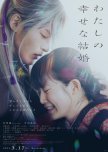
Japanese romance and fantasy - what's not to love!
Aesthetics of Japanese architecture, kimono fashion, culture, beautiful men and women combined with an excellent fantasy genre - don't blink or you'll miss it. Time just flew past watching this film. I expected more of a Mills & Boon 'he hates her - she tries her best to win his affection' but whoah, how quickly he was enamoured by Miyo but she was so deserving of his affection. It was a fast paced film which could easily be made into a 20 part series, showing us the relationships, past the present, of Kudo, then with Miyo, then introducing us to the Special Skills soldiers - which alone warranted a much lengthier exploration of each character and their particular 'magical' attributes. Actually, if they made a series about this alone, it would still be a winner - Japanese X-men... yes please!Was this review helpful to you?

How does the gaze of others affect an a priori perfect homosexual relationship?
In this 2018 short film of only 15 minutes, Taiwanese director Ching Chi Hu captures a youthful homosexual experience with a good deal of sensitivity, but also with the same taste for taking the dramatic conflict to a practically extreme situation that crushes the audience's heart. more sensitive.The first part of this deeply personal portrait of a newly discovered love, draws the love relationship between the two protagonist boys, Kai Chang (Xuan Qi Chen) and Hao Tsai (Bo Yao Wang), the latter co-writer with Chi Hu, in a of those intense and unique connections that occur over six magical months, while both frequently skip classes at a Taiwanese high school to discover the universe within their reach.
Between jokes, laughter and complicity, what emerges as a friendship quickly transforms into a more intense bond. However, with the same speed and simplicity as this pure relationship is created, it is affected when moving to another socialization environment, school. As Hao rides the bus with his fellow students, they express an obvious aversion toward homosexual people. In fact, the girl next to him, presumably a girlfriend to hide his homosexuality, asks Hao about the boy with whom he spends many hours together every day and they are very close.
As the connection between the two strengthens, Hao grows increasingly certain that they will not have the possibility of a future together. Therefore, against her will, she decides to break up with her lover. The scenes, which show the mutual discovery of secret desires until one's lips want to eat the other's, are filmed with a tender and tactile lens.
Through ellipses and in a naturalistic tone, in its second half, 'Grounded' becomes a drama around the loss that Kai suffers, first due to the death of his mother, and then due to the tragic breakup with Hao .
Instead of jokes, laughter and complicity, now there are half smiles on the faces of the two protagonists and involuntary grimaces of pain, with the boys' lips closed and those dark, very dark eyes, shining with shed tears and others without shedding.
Hao wants to “marry the sea and embrace freedom, but he is afraid of the wind and the waves and the limits of painting.” The homophobic society in which he lives and where marriage between people of the same sex is not recognized until the year after the filming of the short, does not allow him to conquer his dreams. Hao does not reveal himself to the circumstances and ends up being a victim of them. This foresees serious consequences for the loved one.
The short film thus becomes a sharp portrait of how the gaze of others ends up affecting an a priori perfect relationship. The audiovisual offers us, on the one hand, a window to other realities, and on the other hand, it places a mirror in front of ours.
With a little more development of the characters and events, I have no doubt this film will be able to remodel the belief system of many viewers, make them think and reconsider our immovable truths.
Was this review helpful to you?


