
 News


This review may contain spoilers
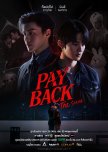
I LOVE THIS ADAPTION! :)))
The adaption of the Manhwa to real life series is sooo good like this masterpiece of a story got brought to life.Everything is just perfect the plots and twists. From the Lee Baek-won/Song Baht nickname, the back waist tattoo, mascot mystery, rising actor plot, taking revenge plot, gangster debt collector, etc. everything is just perfect it fits everything like a puzzle.
Bruh even the hot and steamy scenes are included 😭😍 they are like the character in the Manhwa brought to life.
TopTapMin Chemistry on Top! ☝️💯
Was this review helpful to you?

MY FAVORITE SHOW
The untamed is my favorite show of all time!!! The duality of all the progress of characters and how much they mean to each other is BEAUTIFUL!!!! 10/10 NO QUESTIONS ASKED!!!! This show truly shows you that you can make aBL without having to be them making out on screen!!! I hope everyone at least tries it out and if it isn't your cup of tea, no worries!!Was this review helpful to you?
For its genre, IT SERVES!!
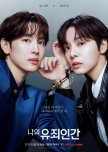
Genre - The Genre is Romcom with enemies to lovers as its sub genre. They have a bickering relationship but it never annoying. For its genre,its definitely ONE OF THE BEST.Plot - The plot is simple. An undercover female cop who passes as a man, investigates a chaebol who seems like a diva on the outside but is actually a LAYERED man. Slowly, their relationship evolves into love.
Acting and direction - The acting is the strongest part of the drama. The actors have not overdone the silly side of romcom. That means, its LOUDLY A ROMCOM but doesn't make you cringe. The FL is an extremely talented actress who is perfectly endrogenous in her mannerisms but at the same time, you see that girly side of her when she is in her personal/safe space. What I really liked about the ML is the fact that he can go from this very funny crazy man to a serious mastermind and make it believable. This is a total entertainment package. Credit definitely goes to the director as well for making their chemistry very addictive to watch.
Supporting cast - I love the LAWYER❣️. This actor has never disappointed me. He is so good in grey characters and has an amazing comic timing. All the other characters also nailed their respective roles and I liked the girl who played the heiress too. The second couple's chemistry is just as entertaining as the main.
Overall, if you like romcoms...YOU WILL LIKE IT.
Was this review helpful to you?

This review may contain spoilers
Math, Banchan, and Academic Hell: The High-Stakes Romance
[Italian Version Below / Versione Italiana in Basso]ENG
Earning a solid 8.5/10, Crash Course in Romance delivers a uniquely addictive blend of high-pressure South Korean academic satire, mouth-watering comfort food, and an unexpected enemies-to-lovers romance.
~ The "Ten-Billion-Won Man" and the Banchan Healing ~
The comedy and tension thrive on the stark contrast between its leads. Choi Chi-yeol is the ultimate "Ten-Billion-Won Man" — a brilliant, severely burnt-out math tutor whose emotional and physical state resembles a ticking time bomb fueled by stress, eating disorders, and strict schedules. Enter Nam Haeng-sun, a former national athlete turned side-dish shop owner, whose home-cooked meals become the literal and metaphorical cure for his exhaustion. The dynamic of a secret trade — private tutoring for top-tier home-cooked side dishes — forms a wonderfully chaotic core.
~ Academic Hell and the Darker Shades ~
Beyond the romantic friction, the series shines when portraying the ruthless "Daechi-dong mothers" culture, exposing the brutal pressure placed on high school students. However, the narrative missteps slightly in its final stretch, over-relying on a dark thriller subplot with iron balls and betrayals that somewhat smothers the bright rom-com energy.
~ The Final Verdict ~
A sharp, funny, and comforting drama anchored by Jung Kyung-ho’s stellar performance. While the thriller subplot dilutes the finale, the core warmth of food and family makes it a memorable K-drama milestone.
Recommended for: Fans of adult rom-coms with strong food themes, viewers interested in Korean academic culture, and lovers of dynamic "opposites attract" character tropes.
---
ITA
Matematica, Banchan e l'Inferno dei Tutoring: L'Amore ad Alta Pressione
Aggiudicandosi un solido 8.5/10, Corso accelerato sull'amore offre una miscela unica e coinvolgente che unisce la satira spietata sul sistema scolastico coreano, il cibo confortante fatto in casa e un inaspettato romance tra due mondi opposti.
~ L' "Uomo da 10 Miliardi di Won" e la Cura del Cibo ~
La comicità e la tensione vivono del contrasto netto tra i due protagonisti. Choi Chi-yeol è l'"Uomo da 10 Miliardi di Won" — un famosissimo professore di matematica brillante ma devastato dal burnout, con la stabilità emotiva e fisica di una bomba a orologeria alimentata da stress, inappetenza e orari rigidi. Dall'altra parte c'è Nam Haeng-sun, ex atleta nazionale che gestisce un negozio di contorni tradizionali (banchan), il cui cibo diventa letteralmente l'unica cura per il corpo e lo spirito del professore. L'accordo segreto — lezioni private d'élite in cambio di piatti fatti in casa — crea un motore comico e romantico esilarante.
~ L'Inferno Scolastico e le Ombre del Thriller ~
Oltre alle scintille di coppia, la serie colpisce nel segno quando svela l'ossessione feroce delle "mamme d'élite", mostrando la pressione disumana a cui sono sottoposti gli studenti. La narrazione perde però un po' di smalto nella parte finale, concedendo fin troppo spazio a una sottotrama thriller cupa (tra sfere d'acciaio e tradimenti) che rischia di soffocare la leggerezza iniziale.
~ Il Giudizio Finale ~
Un capolavoro sostenuto dall'interpretazione magistrale di Jung Kyung-ho. Nonostante un finale un po' sbilanciato sul giallo, il calore della famiglia e il valore del cibo come cura rendono la serie una visione caldamente consigliata.
Consigliato a: Amanti dei romance maturi a tema culinario, chi vuole esplorare il mondo spietato della scuola coreana e fan dei contrasti caratteriali pungenti.
Was this review helpful to you?

Disappointed
The ML and FL roles are much like "Love between the lines."She starts working at the ML company because her internship applications were declined by many companies. She is smitten over him.
The ML acting and keeping within his role is top notch.
He had not overcome the death of his best friend that he grew up with.
He blames himself for not taking good care and for failing his friends family's trust in him.
He is trying to complete the program his friend created.
He takes care of his friend's family because he feels responsible for them, even though they still blame him
FL role.
She's studying but needs to do her internship but many companies have declined her application. The ML says she should work at his company.
She is good at acting cute and giving viewers some chuckles.
But, FL forgeting her role as a impaired hearing person.
Here are the hiccups in her acting.
She is impaired hearing in her left ear. I think she tends to forget to play this role because people talking to her on her left, she responds to them. Her boss calls her from across the room, and even though he back is turned towards him, she responds. 🤔
The supporting actors look like lawn that are full of weeds. They are all over the place.
It looks as if the writer thoughy it imperative for the FL to have a best friend. However, this best friend is either on a treadmill, running, cycling and trying her best to be sensual to win the Ben Ten's heart.
In my opinion if the writer didn't have a written script for the supporting actors, I wouldn'think they are wasting their time.
.
Was this review helpful to you?
This review may contain spoilers
In your radiant disappointment
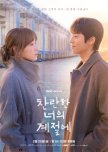
I would like to start this review by stating that I love and actively seek out slow-paced, introspective dramas that deal with psychological issues.Encouraged also by the many positive reviews, I had high expectations—and, in fact, I found the first episode wonderful!
I was also pleasantly surprised that part of the mystery was revealed as early as ep 2.
However, I soon had to adjust my expectations; there was a sudden shift in atmosphere—moving away from something melancholic and intimate toward more classic romantic-comedy dynamics, perhaps to lighten the weight of the themes. It’s not exactly my cup of tea, but I can see why they did it.
As the story progressed, I began to have doubts about the consistency and depth of the screenplay. I sensed some cracks here and there, but I held onto the hope that everything would eventually be explained, for instance:
- The complete reversal of the protagonists' personalities. Initially, the female lead is presented as a cheerful, positive, and outgoing girl; later, it’s revealed that she had already lost both parents in a horrific accident (which she witnessed firsthand) leading her to develop an anxious attachment to her loved ones out of fear that another tragedy might strike. This deep emotional trauma seemed entirely absent seven years earlier, as if the writers had swapped the sequence of events.
As for the male lead, he goes from being a troubled, solitary, and marginalized boy to someone outgoing and friendly toward everyone, (granted, he nearly died and even got a "memento mori" tatto, so let’s assume that a desire to live without regrets leads to such a radical personality shift.) These character transitions felt forced, serving only the specific plot the writers wanted to construct.
- Then there’s the matter of the messages exchanged via PC, with the female lead convinced she’s talking to her boyfriend. This dynamic remains quite unclear; it’s never fully explained what he actually writes or how he manages to respond without his true identity being discovered. Did she never realize she was chatting with a stranger? At this point, I already began to have doubts about the authenticity of the love between the couple, and her level of grief struck me as increasingly strange and disproportionate...
- Then there’s the speed with which the protagonist agrees to the "three-month trial." After seven years of isolation, depression, and a terror of forming attachments, she accepts an absurd proposal from someone who is still essentially a stranger to her. I let this slide, though—I understand that there’s a fixed number of episodes, and the writers needed to move things along.
I kept watching without ever getting bored, I’ll admit, but as the story progressed, the flaws became increasingly more apparent than the merits, and my disappointment only grew.
For starters, I couldn’t sense any genuine familial bond between the three sisters and their grandmother; they felt like disconnected figures, with never a glimpse of shared daily life—not even a meal together. Later on, the writers seem to realize this and toss in a scene where the three sisters open up to one another; yet, given that the looming threat of the grandmother’s illness was hinted at from the very first episode, it would have been far better to build a sense of closeness so that the eventual "tragedy" could be experienced with true empathy and emotional investment. Instead, even at home, the female lead addresses her grandmother as if they were a boss and an employee.
The growing bond between the leads was sweet to watch, but I couldn’t fully enjoy it because of the secret that kept hanging over them. Her newfound peace and the trust she placed in him were built on a lie—or rather, an "omission of the truth." It was maddening to watch the male lead constantly grapple with his guilt—realizing his own greed while choosing to stay silent—all while convincing himself he was doing it for her own good, to avoid reopening old wounds... ugh.
Then Chan returns to America, leading to the couple’s customary "separation"—yet another traumatic experience Ha Ran who finds herself alone once again, convinced that she must come to terms with the definitive end of their relationship. It’s never made clear how much time passes (days? weeks?), but could someone explain why, in 2026, it’s impossible to make a phone call or send a text message from America to South Korea? The mysteries of K-dramas.
From episode 7 onwards, the script descends into absurdity, burying us under the most tired melodrama clichés—seemingly just to pad out the runtime.
The grandmother’s "senile dementia" turns out to be nothing of the sort, but rather a condition that can be perfectly resolved with surgery.
The younger sister’s boyfriend suffers a silly fall, ends up under the knife, and faces the potential loss of his baseball dreams.
Chan begins having nosebleeds, and his life appears to be in danger due to a fragment lodged in his head—a remnant from an explosion seven years prior...
Then, finally, we reach the so-called "bombshell" moment, where the protagonist discovers the truth about Chan. This part was handled incredibly poorly—and, no offense intended, but some of the plot devices they came up with were actually laughable: she rushes to the café to find him (refusing to hear any explanation), while he rushes to her place, and—naturally—they keep missing each other. The next day, she suddenly comes down with a fever, yet drags herself to work anyway; that evening, she has a dramatic conversation with her middle sister, then disappears without her phone. Her worried sister calls Chan—and—wouldn't you know it?—he has a fever too! Despite this, he decides to get behind the wheel to go look for her—and I should point out that he already has trouble driving, whether due to an ear issue or some past trauma... the result?
Ha Ran returns home the next morning, completely unfazed, only to discover that everyone is frantic with worry because Chan never came back. Consequently, the protagonist never even gets the chance to experience or process her own anger, as it’s immediately eclipsed by the fear and anxiety that she might have lost him.
But the real stroke of genius—and a point of narrative consistency—lies in how the show explains the relationship Ha Ran had with the boyfriend who went to study in Boston. Essentially, they had started dating, but Ha Ran—swamped by a new job—didn't seem all that invested; the situation only worsened due to the distance and the time zone difference. The boyfriend, initially painted as a villain for cheating, is later almost exonerated, given that he fell for someone else after being so neglected.
We learn that Ha Ran only began to feel "truly invested" when our protagonist—posing as the boyfriend—started replying to her messages and even sent her a pen as a gift. It reaches a point where even her sister asks her why she’s suddenly so smitten. In other words, the immense pain Ha Ran carried for seven years was rooted in a mere month’s worth of long-distance text exchanges. At this point, I swear I wanted to pull my hair out in frustration; the abysmal writing completely undermines the already weak premise of the entire story.
Needless to say, the long-awaited reunion in the final minutes of the drama was also terrible—with her actually thanking him for lying to her "for her own good."
You might wonder, then, why I still gave it a 6? Because the cast, as a whole, did a good job despite the terrible script. I enjoyed the relationship between the grandmother and the coffee shop owner, as well as the character of the middle sister—though it’s a shame she received even less screen time than the youngest sister, whose teenage storyline took center stage.
As for the music, I didn't find it memorable at all—not a single song left an impression—and the direction is nothing special; quite the opposite, in fact. I noticed several times that during dialogues between the protagonists, the focus would be on a completely random spot on the male lead’s face, leaving the rest blurred. I don’t know the technical terms, but I can say for certain that it was distracting—and, frankly, an unpleasant effect.
Ultimately, this drama fails to live up to its premise, hampered by a lazy, superficial script that falls short of addressing the mature, profound themes it introduces—such as depression, PTSD, guilt, grief, and amnesia.
If you can manage to switch off your brain while watching, you might find it engaging; however, if you are looking for a solid story that treats serious subjects with the respect they deserve, look elsewhere.
I didn’t intend to be so long-winded, but as I wrote this, all the frustration I felt while watching came to the surface.
I’ve been watching dramas for 15 years—never with the goal of tearing them apart—but I feel it’s worth noting that, lately, people are far too quick to hand out stellar ratings. Even when a story is enjoyable and emotionally resonant, one should still maintain a degree of objectivity.
I apologize for any mistakes; English is not my native language.
Was this review helpful to you?
Was this review helpful to you?

A different type of drama
This drama had me torn honestly. I actually quite enjoyed it up until ep 10/12. However after that, it became quite soap opera territory. My rating for the first 12 episodes is 8/10 but it kind of went downhill after that. Also, i skipped a lot from ep 22 till the last 2 episodes. Be aware that the whole premise of watching this is that the couple have a toxic relationship so know that going in. Watching the trailers should give you an idea of what you're in for.Likes:
- ml acting was really really good. It was the best I've seen from him and he did so well. Unfortunately, while the fl was decent, because the ml did so well, she felt not as good in comparison.
- overall storyline. There were many things i did not like about the plot but i liked the whole war storyline. That part was well done. The ml character building in terms of being a soldier and a commander was also pretty good.
- i liked the cinematography and color grading for this drama as well.
- i also liked the ending. It was open but realistic and they tried to shy away from making it too sad.
Dislikes:
- the romance. It was so so repetitive and annoying after a while. The intimate scenes were well done but that's about it. They just kept going round and round in circles.
- fl character. Her character was great in the first 10-12 episodes but they fumbled after that. She did too many ridiculous stuff and made her too wishy washy especially with the 2ml. I was disappointed honestly. While the ml was a toxic person through and through, he stayed consistent. Whether he was evil, obsessed or whatever, he always knew what he wanted and went for it. This is not a fault of the actress but of whoever wrote the fl character.
Anyway, it was a drama i watched to the end though i skipped a lot of the second half. It does have some good qualities and bad qualities.
Was this review helpful to you?

This review may contain spoilers
A Ruthless Heroine, Complicated Relationships and a Story of Survival
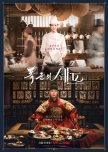
What a fascinating and refreshingly different historical drama! I went into this expecting an entertaining story about a substitute bride, mistaken identities, and perhaps a conventional historical romance. What I got was something much more layered: a story about survival, ambition, power, revenge, and a woman who refuses to let circumstances decide her fate.We follow A'Chou, a poor young woman who has spent practically her entire life struggling to survive. She has a sick mother and two younger siblings to look after, while her gambling father makes their already miserable existence even worse. Eventually, he sells her to a creditor to settle his gambling debts. When the man attempts to sexually assault her, A'Chou fights back and kills him in self-defence. Right from the beginning, I admired her courage and determination.
Then we have Wei Rao, a wealthy, spoiled, selfish young woman who looks exactly like A'Chou. She is supposed to marry Lu Zhuo, a nobleman who is unconscious and believed to be dying. Naturally, she has no interest in marrying someone who might never wake up, so she forces A'Chou to take her place as the substitute bride. But things don't go according to plan. Lu Zhuo unexpectedly wakes up, and suddenly Wei Rao wants her handsome husband, marriage, and position back!
Meanwhile, A'Chou finds herself trapped in an unfamiliar household where she must rely on her intelligence and quick thinking to survive. Lu Zhuo doesn't trust her, and she has to navigate complicated family relationships and political circumstances while concealing her real identity. Honestly, what a brilliant setup! I was hooked from the beginning.
The biggest reason I enjoyed this drama, however, is undoubtedly Tian Xiwei. She absolutely SLAYED this role! Playing two characters with completely different personalities is no easy task, but she made A'Chou and Wei Rao feel like entirely different individuals. Their expressions, mannerisms, body language, and even the way they carry themselves are so distinct that you can immediately tell which character she is portraying.
My favourite moments were when she slipped into her cunning mode while maintaining that innocent little face and playing the victim. Watching her manipulate situations, mislead her opponents, and turn seemingly disadvantageous circumstances in her favour was incredibly satisfying. And let's not forget how she smashes villains over the head with whatever happens to be within reach. No hesitation, no mercy!
What makes Wei Rao particularly interesting is that she isn't your conventional righteous heroine. She can be selfish, ambitious, calculating, and downright ruthless, but she is also genuinely kind and compassionate in her own way. I don't think these qualities contradict one another. A person can be kind and selfish at the same time, and Wei Rao embodies that contradiction rather well.
Some viewers seem to have a problem with how much she appears to know about business, politics, and manipulation. However, I don't think she is someone who magically knows everything. What she understands exceptionally well is human nature. She can recognise people's desires, weaknesses, and motivations, and knows how to use that knowledge to her advantage.
Considering her upbringing, I actually find this believable. Her adoptive mother saved her life but never truly loved her, while her father was an abusive gambler who saw her as something he could trade whenever he needed money. She had to learn how to navigate difficult people and dangerous situations from a very young age. She was constantly observing, learning, and looking for whatever advantage could help her survive.
Yet, despite everything, she remained deeply hungry for family affection. Her decision to return after being rescued from the grave wasn't simply about revenge or securing her position. She also wanted to protect her younger sister from suffering the same fate. This is one of the aspects I appreciate about her character: her ambition and ruthlessness coexist with a genuine desire for family and belonging.
I also liked that the story didn't suddenly make her abilities a consequence of her noble birth. Although she was born into nobility, it was her experiences among ordinary people that shaped her personality and developed her survival instincts. Her empathy comes from what she experienced, not from some inherent superiority associated with her birth.
One thing I found interesting was the change in the story's direction around the middle. The first part focuses largely on her survival as a substitute bride, protecting her stolen identity, and establishing herself in an unfamiliar environment. The later part shifts towards creating an identity of her own, expanding her influence, and becoming someone who no longer needs to depend on others for survival. I can understand why this change might have disappointed some viewers, as the two parts offer somewhat different experiences.
Personally, though, I didn't feel that Wei Rao suddenly became a different person. She had always been petty, revenge-minded, and ruthless. She simply didn't have enough resources or influence to pursue everything she wanted initially. Even before becoming a substitute bride, she was cultivating relationships and gathering useful information from people around her, whether an old nanny, a poor scholar, or a retired prostitute. Those seemingly insignificant connections eventually became valuable resources. Her circumstances changed, her influence expanded, but her fundamental personality remained largely consistent. To me, this was more character growth than character transformation.
I also enjoyed that the drama continued exploring her life after she reclaimed her position. There is a common historical C-drama trope where royal or noble characters eventually abandon their positions, become ordinary people, and live happily ever after. I was glad this drama didn't take that route. For Wei Rao, returning to an ordinary life would almost feel like going back to where everything started. She fought so hard to establish her identity and secure her position, so why should her happy ending require giving all of that up?
The ending was actually one of the aspects I appreciated, although I suspect I might be in the minority here. We get a glimpse of her life with Lu Zhuo three or four years later, showing that they have settled into their relationship and that she has found her place within the royal family as the Grand Princess. It isn't the traditional happily-ever-after where the heroine abandons everything, has children, and spends the rest of her life enjoying domestic bliss. Instead, it acknowledges that her position comes with responsibilities, political complications, and enemies. Her struggle for survival isn't necessarily over, but she is now in a position where she has the strength and resources to face whatever comes her way. I found that much more fitting for her character. Her happy ending isn't about escaping the world she fought so hard to conquer; it's about finally being able to navigate it on her own terms.
Coming to the romance, I ultimately enjoyed the relationship between Wei Rao and Lu Zhuo much more than I initially expected. Their dynamic was more complicated than a conventional historical romance, and I particularly appreciated the mutual understanding and coordination that gradually developed between them. Lu Zhuo is one of those intelligent male leads who learns to give the FL room to execute her own schemes. He often supports her quietly behind the scenes, and I particularly enjoy this kind of unspoken understanding between couples. They don't always need to explain everything to each other because they understand what the other is trying to achieve.
I also don't agree with the argument that Lu Zhuo blindly follows Wei Rao simply because he loves her. Whenever he works with her, he usually has something to gain as well. They share similar principles, particularly their desire for peace and prosperity, and their enemies overlap. Han Liao was already his sworn enemy because he had previously schemed to have him killed. Even if Lu Zhuo had chosen a different approach, that conflict would still have existed. His support for Wei Rao comes from romantic affection, but also mutual respect, shared interests, and political cooperation. I never saw it as blind devotion.
That said, my biggest complaint is how underutilised Lu Zhuo was. Yan An is such a gem, and I genuinely wanted more from him. He is capable and intelligent, but the writers often use him as a supporting presence in Wei Rao's story rather than giving him a substantial storyline of his own. I understand that this is her story, and naturally, she deserves the majority of the screen time. However, I would have loved to see more of his political responsibilities, ambitions, and individual struggles outside his relationship with her. Yan An deserves to be cast as a general again, preferably in a drama where he gets to be part of the central storyline. I would happily watch that!
I also found Wei Rao's decision to initiate a divorce quite frustrating. Noble idiocy is one of my least favourite plot devices, and I wasn't particularly happy with its execution. However, I can understand why the writers included it as part of her development. She needed to reach a point where she could stand independently and make decisions about her own life rather than define her survival through her relationship with someone else.
There are actually two different masks Wei Rao wears throughout the story. In the first half, she wears the mask of a false identity, pretending to be someone she is not while trying to survive in an unfamiliar household. In the second half, she wears the mask of a refined noble young lady, adopting all the expected manners, etiquette, and behaviour of her position. But the interesting thing is that neither mask ever completely hides who she really is. The moment someone pushes her too far or threatens what matters to her, that sharp, combative side comes right back. She can play the graceful noblewoman when necessary, but she is never someone who will simply stand there and accept being mistreated.
The political storyline was another aspect I enjoyed. I did get tired of seeing Han Liao survive yet another encounter, but the drama eventually explains why the Empress Dowager repeatedly protects him. He is the most capable member of her maternal family, and losing him would mean losing the one person capable of preserving their family's influence. That makes his repeated escapes more understandable, even if watching him survive yet another confrontation can still be exhausting!
And when your enemies include the Emperor's mother, her maternal family, and the princes, bringing them down is hardly straightforward. The characters gradually undermine their opponents through successive political manoeuvres rather than conveniently defeating everyone through one brilliant plan. I also appreciated that the story continued exploring Wei Rao's life after she reclaimed her position. Defeating one enemy doesn't mean you will never encounter another. Different circumstances bring different challenges, and new adversaries emerge. I thought this was a natural continuation of her journey.
Overall, I really enjoyed this drama. It has a fascinating premise, a compelling female protagonist, entertaining schemes, political manoeuvring, and a romance that develops into something more complex than I initially expected. The pacing kept me invested, and there was always something happening, whether another confrontation, a revelation, a clever scheme, or an intimate moment between the leads.
If I had one more thing to ask for, it would be additional fighting and action scenes. With a character like Lu Zhuo and a world filled with political intrigue and dangerous opponents, I think more intense action sequences could have made the series even better. But this is a relatively minor complaint compared to everything else I enjoyed.
Most importantly, Tian Xiwei absolutely carried this drama for me. Her portrayal of the two identities was fantastic, and she made Wei Rao such an entertaining, unpredictable, and fascinating protagonist. I also loved the chemistry between Tian Xiwei and Yan An, even though I wish Lu Zhuo had been given more to do.
Where the Mask Ends is ultimately a story about a woman who refuses to remain a victim of her circumstances. She doesn't become a conventional heroine, nor does she abandon her ambition and ruthlessness once she finds love and power. She builds her own identity, learns to use the resources available to her, and fights for the life she wants.
And honestly, I wouldn't have wanted her any other way.
Was this review helpful to you?
This review may contain spoilers
A Marriage Built on Deception!!
One of the most interesting aspects of “Where the Mask Ends” is its premise. The idea of an ordinary woman taking the place of a noblewoman and finding herself trapped in a world of wealth, privilege, and political intrigue is hardly new. However, the drama manages to make the situation engaging through A Chou’s personality and the complicated circumstances surrounding her identity.Unlike protagonists who are immediately overwhelmed by their new surroundings, A Chou quickly learns to adapt. She understands that survival in the Lu household requires more than simply pretending to be someone else. She needs to observe the people around her, understand their motivations, and carefully choose her battles.
What I particularly liked about her character is that she doesn’t allow her humble background to define her capabilities. She may not possess the education or social standing of the people around her, but she has something equally valuable: practical intelligence, emotional awareness, and an instinct for survival.
Her interactions with the members of the Lu household gradually change their perception of her. The woman they initially believe to be arrogant and cruel begins revealing a completely different personality. Even Lu Zhuo, who has every reason to distrust her, slowly starts noticing the differences.
The drama also introduces an interesting family mystery surrounding A Chou’s birth. As the story progresses, her resemblance to Wei Rao turns out to be more than a convenient plot device. The revelations surrounding her origins add another layer to the story, transforming her journey from one of survival into a fight for her rightful identity.
Although some of the revelations are predictable, they provide enough intrigue to keep the narrative moving.
Read the complete article here-
https://kcdramamusings.wordpress.com/2026/11/09/where-the-mask-ends-series-review/#more-2644
Was this review helpful to you?

Romance Between Satan and a Psychopath
Neurodivergent characters are a favorite of mine. Bae Suzy was the stated psychopath, Ki Ga Yeong, who had rubbed the genie's lamp and activated her three wishes. Kim Woo Bin played the "evil" genie, Iblis, who was adversarial in spirit and disgusted with the human race for their unimaginative and predictable greed. Ki Ga Yeong thwarted him at every turn by not falling for power or wealth; instead, her wishes were unselfish, which hindered his plan to prove humanity's corruptibility.The Good:
• I liked Kim Woo Bin even before I read an interview talking about his battle with nasopharyngeal cancer, which, in a worst case scenario, would have taken his life in six months. He kept a positive attitude and didn't consider that he might not be victorious over the disease. I've watched nearly everything he has appeared in but Our Blues (saving as a treat) and Uncontrollably Fond (avoiding because it's sad).
• The leads had a natural ease and chemistry with one another. It was a good pairing of Kim Woo Bin and Bae Suzy. I'd like to see them in another romcom.
• The FL was called a psychopath throughout the drama, but it was demonstrated time after time that she made connections to people and loved them in her own way. She seemed more of a sociopath with trauma issues on the autistic spectrum whose upbringing and continual love and acceptance from her grandmother—though some of it was brutally tough love—had helped her navigate a world she didn't always understand. She'd been abandoned as a child, resulting in the trauma. She was rigidly dedicated to her routines and couldn't handle them being interrupted or changed which would signify more of an autistic bend than that of a psychopath. She also had to be taught how to interpret people's expressions which is more a sign of autism than that of a psychopath. Unlike psychopaths, the FL didn't use her observations to manipulate people. She was blunt and straightforward, often to her own detriment, unlike a psychopath and more like an autistic individual. I enjoyed this part of the drama.
• Suzy Bae had a wonderfully creepy "I'm a psychopath that's friendly" smile. I wonder how long that took to practice to perfection in front of a mirror. It was done to perfection!
• The sets and location shots were filmed beautifully. It was a visual feast.
The Bad:
• As with many dramas, this one got muddled in the middle and there were too many loose strands added into the loom that shouldn't have been included or needed to be woven in completely (Sade and I Rem, for instance). Poppi was one of the three characters included in the bet, and it was never fully explained what happened to him.
Genie, Make a Wish offered a unique romcom with charismatic actors portraying fascinating characters against a stunning background. Though there were some plot holes, the experience, as a whole, was an pleasurable one.
Was this review helpful to you?

✨ THE LITTLE MATCHMAKER WHO RAN THE ROMANCE
OVERALL IMPRESSION🌟A sweet age-gap romance with talented leads, satisfying family reversals and an adorable child determined to secure himself a mother. Although the pacing occasionally dragged, the humour and character chemistry kept it enjoyable.
WHAT I LIKED💖
• Bai Yi Xiang and Wang Zi Yi once again shared natural, appealing chemistry.
• The FL was hardworking, generous and talented at restoring antiques, while remaining determined to earn recognition through her own abilities.
• I loved how she repeatedly escaped the stepmother and stepsister’s schemes and turned their traps against them.
• The ML and FL were delightfully like-minded whenever they teamed up to torment her unpleasant relatives.
• The little boy’s clever matchmaking, perfect timing and obvious devotion to the FL made him the drama’s standout character.
WHAT I DISLIKED⚠️
• Several conversations felt dull and unusually slow, causing parts of the drama to drag.
• The FL’s father remained frustratingly blind to the behaviour of his wife and stepdaughter.
PRODUCTION AND PERFORMANCES🎭
The cast portrayed both the comedy and family conflict effectively. Wang Zi Yi gave the FL intelligence and quiet confidence, while Bai Yi Xiang balanced the ML’s authority with warmth and wonderful dimples. The child actor delivered the drama’s funniest and most endearing moments.
FINAL THOUGHTS💭
With no excessive abuse, kidnapping, stabbing or exhausting misunderstandings, this was a light and entertaining romance. Despite its uneven pacing, I enjoyed the story, chemistry and lovable little matchmaker, and I can easily recommend it.
Was this review helpful to you?

About the importance of healing
I have to say, Xiao Zhan is absolutely the heart of this drama for me. What a performance! He brings so much depth, vulnerability and emotional nuance to his character that even the quietest moments feel meaningful. There’s something about the way he portrays someone carrying so much emotional weight that makes you want to reach through the screen and give him a hug.One thing I found particularly interesting is how the drama starts. The first episodes are surprisingly dark, heavy and downright depressing. And I actually think that’s intentional. The atmosphere feels like an extension of the male lead’s mental state: gloomy, isolated and emotionally exhausting. You’re not exactly stepping into a feel-good small-town story from the beginning.
But then, almost without you noticing, things start to shift. And I absolutely loved that transition.
As the story unfolds, the darkness slowly gives way to warmth, humor and genuinely entertaining moments. The characters begin to open up, relationships develop, and small-town life starts working its magic. The story becomes lighter, more playful and so much more fun to watch. It’s like watching someone slowly find their way back to life, one little moment at a time.
And that’s what makes this drama work so well for me. It doesn’t rush the healing process or pretend that happiness magically fixes everything. Instead, it lets the characters grow through everyday encounters, unexpected friendships and the simple pleasures of having people around who genuinely care.
Honestly, I wasn’t expecting to enjoy this gradual change in tone quite so much, but it became one of my favorite aspects of the drama.
Xiao Zhan’s ability to convey so much through expressions, silences and the smallest emotional shifts is wonderful. He makes his character’s journey feel personal, and I was completely invested.
A Small Town Remedy is one of those dramas that sneaks up on you. It may start with a heavy heart, but it gradually fills that little corner of your heart with warmth. And sometimes, that’s exactly the kind of story I need.
I’m here for the healing, the laughs and the small-town charm.
Was this review helpful to you?

One of the best romcom of the year!
My Bias, My Boss is made out of the same crack as the best classic romcoms.This is the kind of show that reminds you why romantic comedies are such a joy to watch: a fun, wonderfully entertaining story, characters who actually behave like grown-ups, and chemistry so ridiculously good that you can’t help but grin at the screen.
What I particularly loved was the maturity of its characters. The romance doesn’t need endless misunderstandings, unnecessary angst or manufactured conflicts to keep things interesting. Instead, it gives us people with personalities, emotional depth and the ability to navigate their relationships like actual adults.
And the chemistry! The leads have that special something that makes every interaction entertaining, but the magic doesn’t stop with them. The supporting cast brings so much personality, charm and comedic energy to the story that the entire ensemble feels alive. Everyone has their moment to shine.
It’s playful, charming, genuinely funny and wonderfully romantic. A drama that understands that a good romcom isn’t just about making two people fall in love; it’s about making us fall in love with the whole world surrounding them.
Sometimes, all you need is a well-written romcom, great chemistry and characters you actually enjoy spending time with. My Bias, My Boss delivers all three.
Was this review helpful to you?
This review may contain spoilers
Huge Disappointment
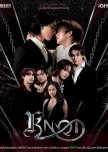
So, as everyone else I was super excited for this series after learning about the omegaverse concept and more so because I loved Boatoat chemistry in My Stubborn. Honestly, their chemistry was the only good part about the story. The plot is shit, the writing is also very bad, like the same dialogues keep repeating and it feels extremely boring and slow-paced. It doesn't feel interesting at all; the plot has so many holes, and it had potential to be actually great because of the unique concept and acting abilities of the actors. The sound production also bothered me a lot as it made no sense, there were different sounds sometimes in the same scene and it made no sense. Overall, I couldn't bare to watch it further even after trying multiple times, yeah the NC scenes aren't bad but they aren't enough.Was this review helpful to you?


