
 Editorials

 2
2 2
2 1
1 1
1 1
1 1
1


This review may contain spoilers
Suited Me to a "T"
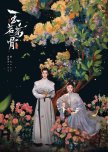
Two of my MDL friends enjoyed Glory. That, and having Hou Ming Hao as the lead, made this an easy choice for next to watch (some may not know that Hou Ming Hao is the embodiment of my beloved departed cat; I was recently told his fans have nicknamed him "Kitten," which only reinforced my impression of him).The Good:
• My aversion to amnesia plots was tested, but it was done right and was believable.
• At 36 episodes, the drama never dragged, nor did I consider it to have needless filler.
• The tea motif was a highlight; the views of hills swathed in centuries-old tea bushes were beautiful.
• The life lessons ML imparted to the FL about relationships were exceptional: knowing when, or if, to intervene between two people, and understanding that promoting goodwill between individuals benefits all.
The Bad:
• I'm incredulous of love that survives betrayal and a literal stab to the heart. I'd be unlikely to kiss and make up after that.
• Nearly all male villains were punished; practically no female villains were held accountable. Even murder and attempted murder held no significant consequences for the females.
• The finale felt like a fragmented disaster. The Duke's household was the converse of the Rong's matriarchal society. It had as much infighting and many poisonous relationships. However, it didn't make complete sense to me: the father, who had been robust and domineering, suffered a quick decline; the sister's muddled thinking; the mother's inconsistent acquiescence to belligerence; and the concubine's nonsensical reasoning were too much and felt unconvincing. The brother's death, in particular, was a needless emotional gut punch.
I like dramas that make me think, and I've been contemplating the difference between the Rongs' matriarchal structure and the Duke's patriarchal household. Both systems trampled on the feelings of everyone involved, with the head dictating the terms by which everyone else was forced to live by.
At the end, the Duke's position had been taken by his young grandson, with his daughter-in-law holding all the power. The situation was unlikely to have a happy outcome, given its roots in scheming and bloodshed. Will the daughter-in-law relinquish power peacefully to her son as he comes of age? Will her stepdaughter prove to be a destabilizing factor? Pity the poor woman the young duke eventually marries. Lu Jiang Lai escaped a hornet's nest by abandoning that family.
The matriarch of the Rongs was left unscathed, but she will suffer the ongoing indignity of being supplanted by her granddaughter. I feel for them both as they will remain thorns in one another's sides until the grandmother's death. Slowly, Rong Shan Bao will implement changes to make the clan more inclusive and less combative. She'll allow her "sisters" to form relationships of their own choosing. Men may join the business. Will this mean a change from a matriarchal emphasis? Will this shift harm or benefit the Rong family company?
Was this review helpful to you?
This review may contain spoilers
Toxicity in Every Shade and Hue
After watching several episodes, I decided nearly all of the characters, with the exception of the ML, FL, and a select few of their friends and family, needed to be placed in an airtight room and have the oxygen slowly pumped out of it.I kept having flashbacks to my dysfunctional childhood family. Unlike the ML and FL, who endured and accepted their abuse, I set boundaries once I became a mature adult. Real life isn't like a drama; toxic people don't often realize their toxicity and change their ways. It would be nice if reality functioned more like a drama.
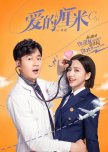
The Good: The relationship between the ML and FL was a delight from beginning to end. ML's mother, the sweet and beleaguered wife to her malignant husband, realized at the end that she was also to blame for her daughter's distress and her son's condition, because she had enabled her spouse's vile speech and actions by not more firmly standing against him. The admission was too little and too late, but it meant more to me than the redemption of the "villains" in the story. I expect bad people to act badly; it's more horrifying when good people allow the bad to happen. Kudos to Tan Jian Ci. He was unrecognizable to me as the sweet ML from Filter. He made me absolutely loathe him in this.
The Bad: Toxic people don't often change in a short period of time. Yet, nearly every villain was either given a redemption story, forgiven outright, or had their outrages glossed over and forgotten. One person went to jail, and one person was divorced. Two out of about ten paid a price; the rest cried (and some didn't even do that) and were forgiven. To me, a real redemption consists of being sorry, asking the person who was hurt for forgiveness, and then atoning for the transgression. Atonement was lacking in nearly every case.
I fast-forwarded through the final episode. I lived through Covid-19 and didn't wish to re-live it. The scenario felt tacked onto the drama, which should have ended with the wedding.
I added an extra star because my Rewatch Value was so low. This was too stressful a view to want to sit through it again, regardless of how lovely the ML and FL were.
Was this review helpful to you?
This review may contain spoilers
Started with a Nice Twist on Cold CEO as a Woman But Floundered in Cliches Afterward
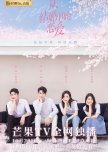
Love triangles, misunderstandings galore that lasted too long and often didn't make sense, noble idiocy, freaking six-year skip in another country with no contact, rich CEO forcing a contract marriage, childhood friends turned adult romance, scheming stepmother, controlling father, skeevy adopted brother, evil board members, and childhood traumas. Other than amnesia, I think this drama had most of the tropes covered. The one twist was the CEO was a woman, and her forced partner was a man.The good: As the powerful CEO, FL's office wear was haute couture and sizzling, especially the black/white ensembles. And those handbags! Nice. Oddly, when she returned home, she'd change into frumpy housewife dresses in ghastly shades of muted corpse.
The bad: It was hard to believe the motivation of the bad guy. It was even harder to believe that after all his planning and scheming that he made peace at the end.
I liked the leads, but I found the love stories of the two other eventual couples (who were involved in multiple love triangles until the very end) were tedious, repetitive, and distracting.
*MAJOR SPOILER to follow*
I'm glad this is fiction, because if someone had stolen the first five years of my baby's life—something I could never get back—I'd find that unforgivable. I'd jettison 99.99% of drama relationships. I find myself mumbling, "I'd never put up with that!"
The time skip was atrocious, but the supernatural ending with dead sister was worse. Why didn't she show up 16 years earlier and save everyone all the trauma and destruction? I enjoy fantasy and supernatural elements if they're introduced early and follow the drama's parameters, but it's a cheap trick to inject them at the end of a long drama.
TL; DR: Started well and with sizzle, meandered in the middle, and fizzled out at the end. The leads were watchable, but the script failed them.
I added an extra half star for FL's styling as the CEO at the beginning of the drama.
Was this review helpful to you?
This review may contain spoilers
Subverted Cliches
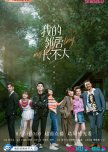
Flashbacks aren't a favorite narrative device of mine, but My Fated Boy did them well, and they added greatly to the story. The viewer watched expectant neighboring parents pledge their unborn children to one another in marriage and then agonize as the daughter was born first, and the son was born seven years later, effectively ruining their plans. With each episode, we saw the little girl go from major disappointment that the new baby was a boy (when she'd hoped for a girl), to bullying and using the toddler baby as her scapegoat, to finally becoming his close friend and protector.He Yu was adorable as the smitten kitten totally in love with his childhood friend. The supporting cast was a joy, with screenwriter Meng Hu giving depth to characters other writers treat as paint by number. The wife of the CEO was smart, warm, and loyal to her sister, but she was also kind and considerate to her sister's rival. The 2FL was a breath of fresh air in drama world. She was passionate and determined (and I did dislike her greatly at first), but she grew from entitled to admirable. The FL's friends added to the warm and supportive feel. Other characters deviated from the run-of-the-mill drama script, which was refreshing! I'd see the set-up and groan that here comes another evil executive, and I'd have my expectations subverted. Thank goodness! And most of the noble idiocy acts were short and overcome quickly.
The OST fit the drama well, the cast was great, and the ML was the cutest puppy in love.
Was this review helpful to you?
The Many Views of an Attractive Torso
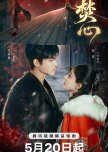
Come for the vampire, stay for the plot loosely stitched together purely by Dai Gao Zheng's handsome chest, which did its part admirably. Condolences to the FL for the writer skipping on her dialogue and forcing her to repeat the ML's name "Chong Yang" ad nauseum.Not much of a story, minimal budget, and haphazardly presented, but the OST and abs were good.
https://music.youtube.com/watch?v=1N6M-ZA-i_s
I added a full star for DGZ's torso. Such diligence in maintaining a fit body deserves acknowledgment.
Was this review helpful to you?

This review may contain spoilers
Unfortunately, this drama focused on one of my personal taboos: a person who feels entitled to the love of another. After FL's confession to the clueless object of her affection, ML merely said he thought they were unsuited to one another. He didn't say he hated her or she was repulsive; he wasn't angry, mean, or disgusted—he was taken unaware and was confused and perplexed. After all, she was the girl who had tried to fix him up with another woman. How was he to know she'd had a one-sided love affair with him for four years? After the unsuccessful confession, FL sexually assaulted the ML, forcibly kissing him and holding him in an armlock. I don't condone this action when done by males; why is it permissible for females? When this didn't change the ML's mind, FL turned into the classic scorned woman, full of anger and bitterness. All the love she'd previously held for the ML turned into loathing.
She should have been fired from the company. Instead, the ML discovered he loved her and began to pursue her. I guess that sullen face grew on him. FL was manipulative, deceitful, childish, and mean-spirited. She continued to be spiteful, contrary, difficult, and disagreeable. ML forfeited his dignity and became her pitiful doormat.
I hate-watched the rest of the drama simply for Miles Wei and Yang Shi Ze's sakes. I realize I'm not the typical romance viewer, so your experience may differ greatly. I'm of the opinion that romance/marriage should be of a balanced nature with respect and power on both sides. No one is entitled to own someone else's heart, and a rejection of a confession (especially when it comes unexpectedly) should be accepted gracefully.
I added an extra star for the MLs.
Was this review helpful to you?
This review may contain spoilers
So Many Questions!
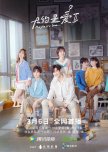
What happened to Wei Qing's mother? She doted on Ning Fei, but she didn't make an appearance in the entire show. Why did the sweet, kind, effervescent FL become an angry, sullen difficult woman? I admit she had due cause to be angry at the circumstances, and I wouldn't have blamed her for breaking off a relationship that was toxic, but there are better ways than ghosting a person and still wanting to be a part of his life afterwards. I began to detest a character I'd cheered on in the first season. How could she let her best friend live in limbo when she knew her loved one was alive? Worse yet, when directly asked by the friend, she lied and said she didn't know anything.The manufactured drama and ridiculous nature of this season made me cringe. Did amnesia really need to make an appearance? Worse yet, all the villains were left unscathed and even had their hideous actions glossed over. I guess attempted murder, corporate espionage, blackmail, slander, libel, and theft aren't that big a deal; invite the black-hearted psychopaths to our wedding!
The first season had a light-hearted aspect that the angst-ridden second season lacked. I suggest stopping at the first season unless you are addicted to the ML's torso (it makes a frequent appearance, so there's that).
Was this review helpful to you?
Dark, Rich Wuxia That Keeps One Guessing
When I think of darkness, spies, and poison, Esther Yu is not the first actress that comes to mind, but she did an admirable job navigating between good and evil, safety and danger, and love and hate in this wuxia drama.The Good:
• Esther Yu was athletically mesmerizing to watch in her fight scenes. I was so pleased to see her in a mature role, and she did it well.
• The friction between the MLs was riveting to watch. Gong Shang Jue was a pit bull to Gong Zi Yu's golden retriever. Ryan Cheng evoked massive disdain with a slight narrowing of his eyes! And who had puppy dog eyes? It was Gong Zi Yu: he's a good boy.
• Loved the growth arc for Gong Zi Yu. I relished the scenes of his rebuttals to Gong Shang Jue's accusations. With his intelligence, he was able to turn the tables with irrefutable logic, much to Shang Jue's disgust.
• Beautiful cinematography.
• The supporting cast was composed of interesting characters. Shoutout to Tian Jia Rui. I wanted so badly for someone to wipe the smirk off of Gong Yuan Zhi's face!
• I loved how off-kilter the situations and people were. Who to trust? Who was a spy? Were the fellow spies telling the truth? Were they helping or hindering? And was that tea poisoned? I'd get skinny in a hurry in the Gong residence, because I wouldn't trust any food or drink!
• I'm not certain the Wufeng need to take over the Gongs, as I'm convinced most of them were spies anyway!
The Bad:
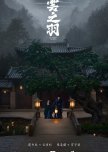
• The poster. I was never interested in the drama, because my eyes skipped over the poster. It was so dark, the two people depicted were indistinguishable. It's moody, but it didn't appeal to me.
• Can we please retire the horrible trope of the parent who demeans and destroys his child because he loves him and wants to make him strong? Belittling and torturing a child doesn't make him stronger: it makes him traumatized, resentful, and incapable of reaching his potential. I'm strict and stern with children when necessary, but I take the time to explain why I insist on certain behavior without calling them names. Conversely, when they do well, I let them know how pleased I am that they are growing into competent people.
• Idiotic assassins. Why sword fight, when you have access to guns? Why did the poison expert with the secret shooting weapons seem to never use them against the bad guys? I was left inwardly screaming, "Shoot your poison weapons!" when he'd idly stand by watching his friends in a fight to the death.
• The ending. There really wasn't one, as it seemed the story was meant to continue to a second season that likely will never happen. There were many loose ends and unresolved situations. In some way, I understand the ending being left open as realistic, but it came too abruptly and could have been handled more deftly for greater impact and understanding. It left this viewer frustrated and unsatisfied.
I'd love to see a second season. I want resolution with the Wufeng. I want closure for all my characters. I would have given an extra half star if not for that non-ending.
Was this review helpful to you?
Flawed People
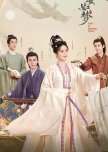
A girl who'd been partially abandoned by her parents schemed to change her life, no matter the cost. Through underhanded methods, she usurped her favored sister's summons to the palace and plotted her way to power only to end in ruin. Given a miraculous chance at a do-over, she fought for a different outcome only to be thwarted at every turn by persistent fate.The Good:
• Everyone was stunning on screen, especially Bai Lu, Zhang Ling He, Wang Xing Yue, and Zhou Jun Wei. I can't complain about a love square that was written so well. The writer didn't sloppily use the trope to gin up manufactured angst, but allowed the motivations and emotions to naturally manifest on screen. All of the MLs were admirable in their own way. And Bai Lu was ethereally beautiful (especially in Empress regalia), in addition to being brave, smart, and resilient.
• The writer respected the viewers' intelligence and rewarded us with characters who didn't make stupid decisions simply to move the plot along. The FL's actions and feelings were understandable, as she had lived all this before and had preconceived ideas of what had happened and what would happen.
• I appreciated thinking how differently the story ended just because of one person's choices. Each of the three MLs had very different outcomes because the FL fought fate and made choices that changed the trajectory of all their lives. Bad things still happened, and she couldn't "fix" everything, but the lives of people she touched positively made all the difference in the grand scheme of things and to them personally.
The Bad:
• This is just a tiny quibble, but I laughed out loud when the diagnosis for red Satanic eyes, drinking blood, and an uncontrollable murderous rage was... schizophrenia.
• I disliked Xie Wei's favoritism for a daughter over a son, and I despised the casual abuse for comedic effect. Disrespecting a child isn't funny.
• Due to reincarnation/time travel censorship, the drama began and ended in modern times, and the drama was presented as a story within a story. It was disruptive and unnecessary, but I've come to accept it in Chinese dramas. It's a small price to pay for an otherwise riveting story.
Current culture loves to talk about red flags. Both the ML and FL were schemers with agendas and waved red flags the size of Texas. If you want a sweet drama with perfect people, this isn't it. If you want an entertaining story with intelligent people who lived with personal darkness, you'll appreciate their journey.
Add an extra half star for Bai Lu's make-up, costuming, and attitude as the Empress.
Was this review helpful to you?
Nearly Perfect Drama, but I Worry About the Writer's Childhood
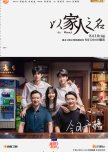
Nearly every mother in Go Ahead was a nightmare, but the way the children grew, adapted, and supported one another made this a rewarding watch. GA had everything: humor, heartache, struggles, triumphs, and healing. The family relationships were everything, as they sacrificially watched out for and supported one another. Family in this context didn't necessarily mean blood, as the closest individuals weren't related at all.I'd just watched Shine on Me with Song Wei Long in which he played an attractive, competent CEO. He didn't have to work at being attractive and that role seemed an easy one for him, but he surprised me by his portrayal of a traumatized soul. He depicted the dead-inside, long-suffering young man well. Tan Song Yun was perfect as the free-spirited Li Jian Jian; Zhang Xin Cheng did admirably as the cautious overthinker; and Tu Song Yan was superb as the kind-hearted father figure of them all.
The drama never stayed dark for overly long. Sweet moments were interspersed among the serious scenes. The children as teens had many warm, loving interactions, some of the best parts of the drama. Beyond relationships, the drama featured many of my favorite things: food, books (I've put Our Starry Starry Night by Jimmy Liao on pre-order), and children.
There were so many relatable situations and characters. I was once asked for a metaphor for my parents, and I said "a black hole." Ling Xiao made that same comparison, and I could identify with his reasoning.
It took me a long time to decide to watch GA, because it had a "Melodrama" tag, along with "Depression," "Child Abandonment," and "Mental Illness." It didn't sound like a good time! I generally avoid melodramas, but this had enough sweetness and light to balance out the heaviness. There were tears, but they were mostly good ones, and there was plenty of laughter to counteract the sad times.
Was this review helpful to you?
Mischievous Fox and the Elegant Emperor
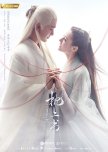
Eternal Love (the parent story) was mostly drama with comedic relief supplied by the exuberant fox and her crush, the Imperial Emperor. The sequel, Eternal Love of Dream, began with mostly silly comedy and very little drama. It was too great a departure from the feel of the parent story, so I put my viewing on hold. When I finally resumed the drama, the story switched to mortal tribulations, the FL matured and was less cutesy, and it became interesting to me once more.The Bad:
• There were far too many foolish misunderstandings that lasted way too long. One would think people who had lived for millenniums would have learned how to communicate with one another.
• As for FL being the leader of her clan, I'd like that job: she never led anyone, didn't serve on a committee, and was absent from her country 97% of the time. When she was home, she was either drunk or getting into trouble!
• The villain was disappointing, and it was hard to believe all the different leaders couldn't have dealt with her over time.
The Good:
• FL had character growth. She retained her stubbornness, playfulness, and impulsive nature, but she tempered it by listening to counsel and being willing to accept what she couldn't change.
• ML retained his narcissistic manner, but he learned to defer to the FL. His greatest change was realizing he shouldn't protect the FL from harmful knowledge; she had the need to know what was happening, if only to prevent more misunderstandings!
• The romance between the ML and FL was charming to watch. Gao Wei Guang and Dilraba Dilmurat each gave life to their roles and made their characters memorable.
• It was bliss watching the ever elegant and reserved ML become petty and spiteful over the tiniest things he felt encroached on his love. His expressions and snide remarks were deliciously amusing.
• The OST was enjoyable. I especially liked "Deliberately" by Dilraba Dilmurat and Silence Wang.
https://music.youtube.com/watch?v=c_aSzeG4b5U
Was this review helpful to you?
This review may contain spoilers
Daring Speed in Thailand; Sputtering Love in China
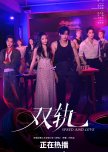
Thrills and romance set in Bangkok, Thailand? Sign me up. I relished the change of scenery with the opportunity to view the dilapidated elegance of a major city. The day scenes showcased colorful waterways, and the night scenes were magical in neon. I'm not a fan of brutality, so the boxing wasn't for me (and, thankfully, was limited), but I relished the racing scenes and wouldn't have objected to more, especially if the FL were the navigator.The FL was adorable, but how could she not be when played by Esther Yu? I didn't realize until I double-checked that the continually smiling, sweet boy from My Fated Boy was He Yu, who now played a dark, dangerous, desperate man. Who knew such a cute Golden Retriever pup could transform into a snarling Pit Bull?
I was enjoying the drama (even the love triangle wasn't overly annoying) until the act of Noble Idiocy hit. I felt the momentum slow and sputter, and it never revved up after the ensuing time skip. I will begrudgingly admit that I could understand this instance of sacrifice more than most dramas, because of the FL's age. ML didn't want to take her future away when she hadn't even attended college yet, and he didn't want to saddle such a spoiled young girl with a handicapped husband.
Add a nice supporting cast and excellent music to round out my review.
Offhand remarks: I was visibly relieved when the ML got a haircut after the time skip. I had wanted to snip those uneven strands so badly! And the mother's outdoor garden in Canada in winter with tropical plants... they would all be dead after one night. Not only that, but the mother had all the doors and windows open in the house. They'd be celebrating the New Year with burst plumbing pipes and pneumonia! Canada is frigid in the dead of winter.
TL;DR: Romance and racing in beautiful Thailand, but the drama lost its momentum, sputtered, and stalled once it relocated to Nanjing, China.
Was this review helpful to you?
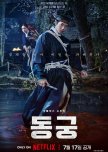
Palace Intrigue with Ghosts and Monsters
#Halloween WatchesThe East Palace was drenched with the blood of maidservants, princes, concubines, and anyone else foolish enough to capture attention. Gu Cheon was brought into the palace, very much against his will, to exorcise the spirits who caused such death and despair.
The Good:
• Nam Joo Hyuk has returned from his military service with a more mature edge. I'm glad to see him evolve from parts as a college student into an action hero role. He played Gu Cheon perfectly: a man who'd been traumatized and ostracized and whose daily existence was one of bare survival. He wasn't the classical charming hero: he was sullen, hostile, and standoffish with his unkempt clothing and uncombed hair. All the poor man wanted was to be left alone, but neither the supernatural nor the humans would let him be.
• Roh Yoon Seo played Princess Saeng Gang with strength and intelligence. She'd suffered trauma and could empathize with Gu Cheon, even when he was being sarcastic and difficult. Her interactions with Gu Cheon, though they were terse and combative, were more interesting than most romance couples.
• There were some visually magnificent scenes.
• The music enhanced the action.
• The drama was dark and deadly with twists and revelations. I appreciate a story that can keep me guessing.
The Bad:
• Some CGI monsters were more comical looking than scary. One was supposed to be cute, and it was in that I'll-eat-your-face-off kind of way. The little ggeomeoksali provided the only light moments in the drama. I know it's a monster, but I'd probably end up taking it home with me.
So far, The East Palace was the spookiest of my October watches. It was drenched in supernatural atmosphere, kept the tension ratcheted, and told a compelling story (which only proved to strengthen my opinion that 99.9% of all palaces in K- and C-dramas should be nuked from space). I'm not admitting to being a wimpy scaredy-cat, but if I could handle this, Gentle Viewer, I think most people could.
Was this review helpful to you?
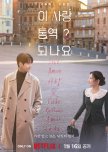
This review may contain spoilers
There's a Love Story Somewhere Between Trauma, Beautiful Locations, and a Killer Zombie
I was ready for a modern romcom, and Can This Love Be Translated? gave a psychological twist to the genre which I enjoyed. Cha Mu Hui (played by Go Young Jung) was driven by trauma to succeed, but she was hindered by her lack of self esteem. A devastating accident put her in a coma, and when she woke up her first movie had gone viral and rocketed her to fame. Ju Ho Jin (played by Kim Seon Ho) was an interpreter whose rigid rules and private angst had trapped him in a suffocating existence for years.The Good:
• After Cha Mu Hui's coma, she began having hallucinations involving her role as a killer zombie, Do Ra Mi. The zombie was relentlessly hateful, critical, and demoralizing. Mu Hui was understandably frightened and alarmed with each appearance. Do Ra Mi was outgoing, fearless, and dismissive of Mu Hui's inability to cope. Eventually, the hallucinations morphed into Do Ra Mi taking over Mu Hui's body for longer periods of time. Do Ra Mi was the best part of the show as the most interesting and original character. It was rewarding to watch her styling and attitude slowly change as Cha Mu Hui began to face some hard truths about her life with Ho Jin's support. Now, I want to watch a drama starring Do Ra Mi!
• I enjoyed the different languages.
• The locations were stunning: Japan, Canada (magnificent mountains and dramatic landscapes), Italy, and South Korea.
• Hiro, the Japanese actor, cracked me up by referring to Mu Hui as "Zombie" as if that were her name.
The Bad:
• This could have been a fun romcom with Do Ra Mi, but it ended up being light on comedy and romance and veered into a melodrama with serious topics like murder, mental illness, and child abandonment, etc. Do Ra Mi was fun, but dissociative disorders aren't. It didn't feel like the right ratio of romcom to angst.
• I think it was at a Farmer's Market in Canada where a stand featured pineapples. Don't think pineapple growing is a thing in Canada!
• For being a drama about languages and translations, it was frustrating that only Korean was subtitled. I wanted to know what the Italians and Japanese were saying, too.
On a less serious note, Mu Hui fell off a several-story building and was in a coma for six months. My devoted drama watching has taught me that Koreans and Chinese fall off terribly tall cliffs and walk away with just a scratch or two. This has been well documented.
I've added a half star for Do Ra Mi, that crazy zombie killer.
Was this review helpful to you?
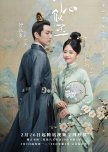
Concubines Dropped Like Flies... Another One Hit the Dust
The more I watch Tan Song Yun, the more I like her. Her portrayal of the unfavored daughter of a concubine expertly navigating the treacherous waters of jealousy, schemes, and favoritism was deftly done. She handled each crisis with aplomb and unwavering faith in herself.The Good:
• If viewers appreciate needlework (and I do), there were ample opportunities to enjoy it from subtle designs on clothing to larger pieces. I value when dramas have something distinctive to distinguish themselves.
• I so appreciate an intelligent character. The FL managed to stay ahead of most of the calamities schemed to befall her by resourcefulness and strategic planning. I tire of the idea that a "badass" female has to be able to toss around 200 pound men, act coarsely, and talk with vulgarities. It's refreshing to see a strong woman who holds her own with kindness, inner strength, and capability. Although she had every right to claim victimhood, she kept putting one foot in front of the other and continued on with her life. She didn't allow circumstances to make her a victim.
• The ML was cold and aloof, which was hardly surprising when so much was expected of him, and it seemed all of his concubines tried to take advantage of him, and none of them loved him except for his status and wealth. Hence, his indifference to his new wife. He'd been in a loveless marriage with her sister, who had schemed against him (orchestrating him marrying her sister was also her plot in order to protect her only son after her death; she didn't care about her husband or sister's feelings).
• Good Lord, I despised the ML's mother. Villains, I can handle. They're bad, and that's acknowledged; however, people who claim to be superior and all-knowing who make horrible choices and treat people badly under the guise of good are much worse to handle. My compliments to Wu Mian for playing a character I wanted to slap desperately and often. It was agonizing to see her steamroll everyone and have her son accept it for the sake of filial piety.
• There was a love triangle done respectfully. With the kind of person the FL was, I think she could have made a good life with the 2ML, too (if the story had gone that way), but she kept her boundaries intact and he abided by them to an extent.
The Bad:
• The misunderstandings went on far too long. I understand why they occurred. Both ML and FL were hesitant and suspicious of one another for good reasons, so it made sense and wasn't only ratcheted angst to fill episodes. But it got old.
• I really hate the trope of the FL distrusting the ML even though he saved her time after time and did all sorts of good things for her. Conversely, she trusted the 2ML unconditionally, even though there were ample warning signs. If the FL was intelligent, as the writer wished us to believe, she wouldn't be insufferably dense.
I added a half star for the embroidery and the convoluted antics the writer took to ensure the FL was the last woman standing. No modern viewer wanted a happy ending with a man and his five wives walking off into the sunset.
Was this review helpful to you?


