


 4
4 17
17 1
1 5
5 1
1 1
1 1
1


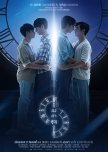
Every meeting means there will be a parting
Time-travel stories are always tricky, especially if you have, like here, several "travels" back or forth in time. Not only needs the fictional world keep its own internal logic -- who knows what, what has influence on what and so on -- there's also the question of whether to explore "timelines" and "alternative realities" and all the technicalities that come with time travel. "Absolute Zero" does this relatively well, by making the time travel a magical one (implicating that there are unknown forces at work) and not attempting to explain how it all works. Some questions remain a bit unclear, especially the "Where did it all begin?" and why the third time someone travelled worked differently than the other two.
But overall, the story is quite obviously not about the logistics, it's much more about meetings and partings, love and loss, and the hope to meet each other again.
The drama also caught one of my weaknesses: I love it when the same part of a story gets re-told from different perspectives or when it explores a "What if this one thing is changed?". "Absolute Zero" has both, so the cast and crew would have had to do a lot of things wrong for me to not like it.
I loved quite a few more aspects. What hooked me in the first episode was the use of colour and light; I also loved the sets which looked both cozy and down-to-earth. I liked that the story takes its time to explore the emotions, even if that made the pace quite slow. The pace and the way it is filmed, combined with the surprisingly high acting quality, took me in, and I cried with the characters when they cried, I hoped with them, I laughed with them. But really, there was a lot of crying -- in the end, "every meeting means there will be a parting" (paraphrased from the DVD shop grandfather).
One thing I wasn't so sure about right after watching, was whether I liked that it's not quite clear if this universe is a deterministic one, i.e. if everything is fixed and unchangeable. The first two thirds make it seem like it is -- but then, the ending seems to imply that it's not, that the writer wants us to know that with determination, we can change our fate. But it's also not made explicit, so maybe it was their fate to end up like they did?
After a night of sleeping over it, I now believe that it's a good thing -- that the author doesn't make a clear decision made me question my own stance on it. Would I like to think that these two men are "soulmates", destined to find and love each other no matter what? Do I want to think that the universe wanted to help them? Or do I want to believe that it was their own strong desire that overcame their pre-written destiny, that only with their sacrifices were they able to overcome their previous destiny?
I love it when a story can make me think.
That said, not everything was great. There are some (minor) aspects that could have been better, many of them would be major spoilers, but I can give you some non-spoilery examples:
* I think the drama could have been tightened up in places. Not by much -- because I do think that we needed the time to explore the characters and their dynamics, as well as their developing emotions -- but maybe by two or three episodes.
* I would have been nice to learn more about adult!Ongsa before the first time-travel. I think it would have made the diferences between teen!Ongas and adult!Ongsa clearer, as well as the difference between pre-story!Ongsa and post-story!Ongsa. This would have also had the effect to have more material for flashbacks, so it's even more obvious that Soon loves both the 18-year-old that Ongsa was and the adult Ongsa he will be in equal measures.
* More variety in the music and its use would have been good. I could predict when which kind of music (a capella, non-verbal vocalisations or instrumental) would be used down to the second. It was also always the same music. So, that got on my nerves by episode 9 or 10.
But these are really minor criticisms -- the drama did well in taking me through an emotional journey, and after finishing it, I felt both full and empty, which is one of the best outcomes for this kind of story.
Was it good?
It was, for the most part. The internal logic worked, and I liked that there were things left unanswered in the end. Actors were excellent in making me feel with their characters, which is essential for a character-driven story.
Did I like it?
Yes! I loved it, even with its flaws. It hit a favourite way of mine for story telling, so I am positively biased.
Who would I recommend it to?
To those who love soulmate fics, who love stories about yearning and the pain of loss. To those who can get on with slow-paced dramas.
But overall, the story is quite obviously not about the logistics, it's much more about meetings and partings, love and loss, and the hope to meet each other again.
The drama also caught one of my weaknesses: I love it when the same part of a story gets re-told from different perspectives or when it explores a "What if this one thing is changed?". "Absolute Zero" has both, so the cast and crew would have had to do a lot of things wrong for me to not like it.
I loved quite a few more aspects. What hooked me in the first episode was the use of colour and light; I also loved the sets which looked both cozy and down-to-earth. I liked that the story takes its time to explore the emotions, even if that made the pace quite slow. The pace and the way it is filmed, combined with the surprisingly high acting quality, took me in, and I cried with the characters when they cried, I hoped with them, I laughed with them. But really, there was a lot of crying -- in the end, "every meeting means there will be a parting" (paraphrased from the DVD shop grandfather).
One thing I wasn't so sure about right after watching, was whether I liked that it's not quite clear if this universe is a deterministic one, i.e. if everything is fixed and unchangeable. The first two thirds make it seem like it is -- but then, the ending seems to imply that it's not, that the writer wants us to know that with determination, we can change our fate. But it's also not made explicit, so maybe it was their fate to end up like they did?
After a night of sleeping over it, I now believe that it's a good thing -- that the author doesn't make a clear decision made me question my own stance on it. Would I like to think that these two men are "soulmates", destined to find and love each other no matter what? Do I want to think that the universe wanted to help them? Or do I want to believe that it was their own strong desire that overcame their pre-written destiny, that only with their sacrifices were they able to overcome their previous destiny?
I love it when a story can make me think.
That said, not everything was great. There are some (minor) aspects that could have been better, many of them would be major spoilers, but I can give you some non-spoilery examples:
* I think the drama could have been tightened up in places. Not by much -- because I do think that we needed the time to explore the characters and their dynamics, as well as their developing emotions -- but maybe by two or three episodes.
* I would have been nice to learn more about adult!Ongsa before the first time-travel. I think it would have made the diferences between teen!Ongas and adult!Ongsa clearer, as well as the difference between pre-story!Ongsa and post-story!Ongsa. This would have also had the effect to have more material for flashbacks, so it's even more obvious that Soon loves both the 18-year-old that Ongsa was and the adult Ongsa he will be in equal measures.
* More variety in the music and its use would have been good. I could predict when which kind of music (a capella, non-verbal vocalisations or instrumental) would be used down to the second. It was also always the same music. So, that got on my nerves by episode 9 or 10.
But these are really minor criticisms -- the drama did well in taking me through an emotional journey, and after finishing it, I felt both full and empty, which is one of the best outcomes for this kind of story.
Was it good?
It was, for the most part. The internal logic worked, and I liked that there were things left unanswered in the end. Actors were excellent in making me feel with their characters, which is essential for a character-driven story.
Did I like it?
Yes! I loved it, even with its flaws. It hit a favourite way of mine for story telling, so I am positively biased.
Who would I recommend it to?
To those who love soulmate fics, who love stories about yearning and the pain of loss. To those who can get on with slow-paced dramas.
Was this review helpful to you?


