
 K-Drama





Falling High School Girl and Irresponsible Teacher Lesson 2
0 people found this review helpful
A Rushed Continuation
The second season of *Falling High School Girl and Irresponsible Teacher* did not disappoint me when it comes to acting. Once again, the performances carried the story.
I genuinely think this series is one of the best manga-to-live-action adaptations I’ve seen. And that’s not something I say lightly.
What impressed me the most is how naturally it translates classic manga elements into live action without feeling awkward
Things that usually look cringey in adaptations; exaggerated reactions, typical manga-style behavior, even characters wearing things like paper bags over their heads (a common quirky trope in manga) — somehow work here. Instead of feeling forced or unnatural, they blend seamlessly into the world of the drama.
Most adaptations struggle with this. When they stay too faithful to the manga’s style, it often feels exaggerated or strange in live action. But this series manages to incorporate those elements so smoothly that I didn’t even question them. It feels intentional and balanced. That alone deserves credit.
That said, I did feel that Season 2 was weaker in certain areas. I haven’t read the manga, so I’m judging purely from a viewer’s perspective. Compared to the first season, this one felt rushed. It wasn’t as deep when it came to exploring trauma and emotional layers which was something Season 1 handled beautifully.
The chemistry between the leads is still there. Their dynamic still works. The romance still feels authentic. But I wish we had gotten more backstory especially about her brother. The show touches on why she is the way she is, but it moves through those explanations too quickly. It almost feels like they rushed to push Season 2 out.
The male lead’s storyline also felt somewhat fragmented. Instead of gradually unfolding, parts of his narrative felt like quick explanations rather than fully developed storytelling.
Another noticeable difference from Season 1 is the smaller cast. The first season had more supporting characters, more faces, more emotional layers around the main story. Season 2 feels more limited in comparison, which makes the world feel smaller.
I just wish they had taken more time more episodes, more depth, more emotional blending to properly finish and expand the story.
Was this review helpful to you?

This review may contain spoilers
⚠️ Content WarningBefore anything else: this film contains graphic scenes involving death, suicide, and blood. The depictions are explicit and repeated throughout the movie. If you are sensitive to gore or themes of self-harm, this may be deeply triggering. Please approach with caution.
Plot**
The film opens on what should be an ordinary end-of-term school day. A student brings a DVD to class and plays it for everyone. What begins as a strange montage of chaotic images and distorted sound quickly takes a horrifying turn. At the end of the video, the same student suddenly jumps out of the classroom window to their death.
The class is left traumatized but the nightmare is only beginning. Their teacher informs them that they have been hypnotized. The DVD contained **100 hidden signals**, each capable of triggering them to commit suicide. In order to survive, they must identify and neutralize all 100 signals before they activate. From this moment onward, the film transforms into a psychological survival game.
The movie strongly echoes the survival chaos of **Battle Royale** and the high-stakes absurdity of **As the Gods Will**. Adapted from a manga, it carries that signature intensity exaggerated stakes, rapid escalation, and stylized brutality.
Japan has a long history of producing compelling survival thrillers, and this film continues that tradition. It blends psychological horror with graphic physical violence, creating an atmosphere that feels both frantic and triggering! However, this is not subtle horror. It is loud, shocking, and intentionally disturbing.
The “100 signals” concept allows the film to explore multiple forms of death, and it does so in graphic detail. The gore is not implied, it is shown. Blood is frequent, and the suicide scenes are explicit.
For viewers who enjoy extreme survival narratives, this may heighten the intensity and realism. For others, it may feel overwhelming or excessive. This is not casual viewing!!!!
Despite the heavy material, the cast delivers strong performances. The emotional panic, confusion, and desperation feel believable, grounding the more extreme aspects of the plot.
A standout performance comes from **Kanna Hashimoto**. With every role I see her in, she becomes more impressive.
One of the most surprising elements of the film is its ending. As the credits rolled, I found myself unable to turn it off — completely absorbed by the theme song. **Carry On** by **YukaDD** is powerful, catchy, and thematically fitting. It contrasts beautifully with the intensity of the film, leaving a lingering emotional impression. I added it to my playlist immediately and it has stayed there ever since.
This film is gripping, intense, and unapologetically graphic. It will strongly appeal to fans of survival manga adaptations and high-stakes psychological thrillers. At the same time, it is not for everyone. The gore and repeated suicide depictions may make it a difficult watch for some. If you can handle extreme survival horror, you may find this film compelling and memorable. If not, consider this your warning.
The only reason I am not scoring this 10/10 it is because of the pace and how everything went by so fast! I wish this was a drama it would have give more time to explore the feelings, grief and the horror.
Was this review helpful to you?

This review may contain spoilers
Fast-Forward Romance With Zero Originality
I’ll be honest , this is a plot I’ve seen so many times that in terms of originality, I’d give it a solid zero. Nothing about it felt fresh. And on top of that, the pacing was incredibly rushed. Watching it almost felt like those YouTube videos that recap an entire two-hour movie in six minutes. Maybe that’s just my impression, but everything moved way too fast to properly breathe.Plot**
The story follows Maika, an employee at a hotel who has been dating her colleague Narimitsu for some time. One day, she witnesses him having an affair with another woman at work and she simply gets dumped.
In the middle of her heartbreak, the hotel’s new CEO, Shun, suddenly proposes that she become his fake girlfriend so she can get revenge on her ex. (I still don’t understand how that is supposed to work in real life, but okay.!) At the same time, Shun is trying to avoid an arranged marriage his family is pushing on him.
So yes ! fake relationship, revenge, rich CEO escaping family pressure. You already know exactly where this is going...
The biggest issue for me wasn’t just the predictability but it was the execution!
In my opinion, the male and female leads felt like they were acting in two completely different dramas. Their acting styles didn’t match, didn’t complement each other, and never really blended. Instead of building chemistry, it often felt awkward and disconnected. Sometimes I genuinely wondered if they had just met on the first day of filming. There was no natural flow between them, which is a problem when they’re supposed to be playing a couple.
And then there’s the pacing. I’ve watched plenty of dramas with 20-minute episodes that manage to develop relationships and emotions properly. But this one felt like it was running at 5x speed. Emotional beats barely landed before the story moved on to the next plot point. There was no build-up, no simmer, no tension just constant forward motion.
This is extremely predictable and rushed. If you’re looking for something light and never seen this storyline, you might still find it mildly entertaining.
But for me, the lack of originality, weak chemistry, and breakneck pacing made it feel more like a summary of a drama than an actual fully developed one.
Was this review helpful to you?

It’s not life-changing. But it’s cute for binge watching
This is one of those dramas you can finish in a single day without even realizing it. It’s only eight episodes, about twenty minutes each, and the story moves quickly. Nothing drags, nothing feels heavy. It’s an easy watch.The plot itself isn’t groundbreaking. We’ve definitely seen variations of this story before.
Plot**
It follows Yumeko, a successful career woman who seems to have it all together. She looks polished, confident, almost perfect. But behind closed doors, she’s the complete opposite. She obsesses over how people perceive her, carefully managing her image because of how introverted she is and because of the scars she still carries from being an outcast in high school.
She’s expecting a proposal from her boyfriend… only to be unexpectedly dumped instead. And honestly, that shift happens fast. While dealing with heartbreak, she reconnects with a young guy she once helped someone who happens to resemble her first love. In a vulnerable moment, when he asks what he can do for her, she blurts out a request: be her ideal boyfriend.
And just like that, they begin a contract relationship.
It’s not an intense drama. The story is simple, almost predictable. You can see where it’s heading from early on. But what genuinely surprised me was the acting. The performances are much stronger than I expected for a light, short-format drama like this. The actors really sell the emotions, even when the plot feels familiar. They elevate material that, on paper, isn’t particularly original.
Still, good acting can only carry a known storyline so far.
Overall, I’d say this is the kind of drama you watch when you don’t want to think too much but still want something entertaining and soft. It’s low-commitment, easy to binge, and visually quite dreamy. The cinematography has this gentle, cute aesthetic that matches the tone perfectly
Was this review helpful to you?

This review may contain spoilers
Enemies to Lovers? More Like Speed-Run to Lovers
The second I pressed play, I knew this was a manga adaptation. You can just tell. The pacing, the reactions, the dramatic coincidences ! if you know, you know!Plot*
The story follows Mitsu, who starts university determined to move on from the trauma of her first love. She’s ready for a fresh start, new life, new apartment… and of course, because drama logic never rests, her next-door neighbor turns out to be her ex-boyfriend, Kaede. They haven’t seen each other in five years. It’s awkward. He’s grown up, somehow even more handsome than in high school, and suddenly all the feelings Mitsu thought she had buried start bubbling up again.
Spoilers ahead***
Now here’s where I started struggling.
When it comes to live-action manga adaptations, I truly believe there are only two outcomes: really good or really bad. There’s rarely a middle ground. And unfortunately, this one doesn’t land on the “really good” side.
We’re told Mitsu was traumatized by her first love. But we never really see it. I kept wishing the drama had started in high school ! show me the relationship, show me the heartbreak, show me why she’s still so affected. Instead, we jump straight into her new apartment and are expected to emotionally invest in backstory we barely witnessed. It just wasn’t enough for me to fully buy into her pain.
Then there’s the whole “chase” phase ( more like 5 minute). Mitsu resists Kaede at first, refuses to get back together… but honestly? That tension barely lasts. By episode three, they’re already back together. Episode three!?!?.
Where was the slow burn? Where was the longing, the simmering tension, the emotional build-up? It felt like the story hit fast-forward and skipped all the parts that actually make romance satisfying.
The love triangle didn’t help either. Kaede’s friend confesses, sees her dating his friend, and just… gives up ( like what??) That’s it. No emotional struggle, no fight, no messy confrontation. I kept thinking, “Is that all?” The drama insists they’re adults now, but the energy feels very teenager like! rushed emotions, shallow conflict, quick resolutions.
In the end, it feels underdeveloped. Everything moves too quickly, which makes the emotions feel thin. What could have been a layered, slow-burn second-chance romance ends up feeling like a checklist of manga tropes executed at a microwave speed.
I wanted more tension. More depth. More time to simmer. Instead, I got a romance that barely had time to breathe.
Was this review helpful to you?

Wasn’t My Cup of Tea
This movie just didn’t work for me. The action felt too light and oddly teenage-coded, and the story was so predictable that I always knew exactly where it was going. The comedy had a few decent moments, but overall it landed as pretty mediocre.It’s not a bad movie by any means, it’s just painfully familiar. The characters aren’t particularly complex, original, or creative, and it feels like a mash-up of things we’ve all seen many times before.
That said, it does have a couple of genuinely funny scenes. If you’re bored, want something easy, and don’t feel like committing emotionally or mentally, this could work as background entertainment.
Was this review helpful to you?

This review may contain spoilers
She Lost Her Memory, Not Her Bite: A Drama That Delivers Laughs and Justice
Every time I watch something with Lee Hanee , I’m completely mesmerized. by her beauty and her effortless humour. She doesn’t try to be funny, she just is. I actually started this drama because I saw a random clip online, and the moment I watched it, I knew: okay, this is going to be good. And it really was.Plot*
The story follows Jo Yeon-joo, a sharp and fearless prosecutor who, while on an undercover mission, gets into a car accident and falls into a coma. When she wakes up, she has completely lost her memory and finds herself in a luxurious hospital room, surrounded by people insisting she is Kang Mi-na, the second daughter-in-law of the powerful Hanju chaebol family.
What the Hanju family doesn’t know is that the woman they believe to be Kang Mi-na is actually Jo Yeon-joo a prosecutor who just happens to look exactly like her. And unknowingly to them, she’s now living under their roof while slowly uncovering their secrets and digging into their corruption.
This drama is honestly iconic. It’s packed with comedy and unforgettable scenes that make it ridiculously entertaining. If you’ve watched anything with Hanee Lee before, you already know, her comedic timing is unreal. She carries the drama so naturally that even the smallest expressions land perfectly.
But beneath all the humor, the drama tackles some very serious themes. It once again shines a light on how easily the wealthy can manipulate the justice system, how crimes are buried under money and power, and how even prosecutors and public officials, people meant to protect society, can become part of the corruption. Despite its lighthearted tone, the message is loud and clear: justice isn’t always justice when power is involved.
Spoilers***
The only details I really wished the drama hadn’t made was the plastic surgery storyline involving Kang Mi-na. Personally, I think it would have been far more satisfying if Kang Mi-na had returned as herself, joined the mission to take down Hanju. Seeing her and the prosecutor in the same frame with the same face would have been so powerful, especially considering how much she suffered.
Still, this drama remains such a fun, sharp, and memorable watch. It balances comedy and critique so well, and Hanee Lee absolutely owns every scene she’s in. One of those shows that makes you laugh, think, and occasionally yell at the screen in the best way possible.
Was this review helpful to you?
This review may contain spoilers
Losing something you did not even know you had it
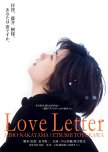
Love Letter is one of those movies that feels less like a movie and more like something that has always existed, something passed down quietly, the way families pass down stories, or pain, or love they never fully talked about. It’s visually stunning, yes, but its real power comes from how deeply it has embedded itself into collective memory. Like Titanic in the West, its scenes have been recreated endlessly, its emotions echoed across music videos and films. Even before watching it, I already felt like I knew it.And maybe that’s why I waited so long.
I knew this film would hurt me. I could feel it. And I think part of me wasn’t ready to sit with that kind of sadness.
Plot*
The story follows Hiroko Watanabe, a woman still grieving her fiancé, Itsuki Fujii, two years after his death. Time has passed, yet Hiroko remains unable to let go. While going through Itsuki’s old belongings, she comes across his high school yearbook. Inside, she finds his old address, and despite knowing that the house was destroyed years ago.
Almost impulsively, she writes him a letter. Maybe it’s for closure, maybe it’s simply because she doesn’t want to forget him. To her shock, she receives a reply.
The letter is not from her deceased fiancé, but from a woman who shares the same name: Itsuki Fujii. As they continue exchanging letters, Hiroko learns that this woman went to the same school as her fiancé. Through their correspondence, the film slowly reveals fragments of the past about the man Hiroko loved, and about the lives of two women connected to him in very different ways.
Watching My Heart Slowly Break*
As I watched, I felt myself sinking deeper into the story, almost without realising it. The sadness isn’t loud. It doesn’t scream. It creeps in quietly, through small moments and gentle discoveries. When Hiroko begins asking female Itsuki to share memories, the truth begins to surface.
Female Itsuki never knew. She never realised that the boy with the same name in high school, the boy who lingered, who always found reasons to be close, was in love with her from the very beginning. His feelings were constant, invisible. His confession never reached her. She lived her life unaware that she had already been loved.
At the same time, Hiroko, who loved him openly, deeply, and completely begins to understand something devastating. That perhaps the reason he fell in love with her at first sight was because she resembled the girl he had loved all along. That realization doesn’t erase his love for Hiroko, but it complicates it in a way that feels unbearably human.
What broke me most is that there is no visible romance in this film. No grand declarations. No dramatic embraces. Despite being called Love Letter, love is discovered only through memory, silence, and absence. Through things that were never said.
Female Itsuki, realising love was next to her and lost it before she ever knew it existed. And now, she can never go back. He is gone. That kind of loss feels especially cruel, the pain of understanding too late, of mourning something you didn’t even know was yours. This made me so melancholic!!
I don’t know if it hit me this hard because, in some way, we’ve all lost something we didn’t even know was ours to begin with. Maybe it was love, a job, a friend, or an opportunity. Grieving something you never truly got to hold in your hands, something you only realise mattered after it’s gone, is a unique, type of aheartbreak.
When the film ended, I walked outside and just stood there, staring at the sky, feeling hollow. Not crying, just… heavy. Like the film had reached inside me and rearranged something.
Acting*
Nakayama Miho, playing both Hiroko and Itsuki, is astonishing. For the first few minutes, I genuinely thought my eyes were playing tricks on me. The resemblance was uncanny. I had to pause the film to check the cast. Yet as the story unfolded, I never confused them again. Her acting creates such a clear emotional divide that they feel like two completely separate souls, carrying different kinds of loneliness.
Otaru, Hokkaido *
And then there’s Otaru. Snow-covered, quiet, almost suspended in time. The winter landscapes give the film a dreamlike quality, as if everything exists inside a memory rather than reality. It makes sense why couples still travel there, even in the harsh cold, to chase a feeling this movie captured so perfectly.
Final Reflection*
Love Letter is not just a classic, it’s an emotional experience. It’s about grief, unspoken love, and mystery. It reminded me that some of the most painful realisations in life come not from what we lose, but from what we never realised we had.
Even now, whenever I see snow falling in Japan, my mind drifts back to this film.
And I don’t think it will ever leave me.
Was this review helpful to you?

This review may contain spoilers
Two Husbands, One Wife is a Japanese drama with a very unique plot and there’s something almost ironic about watching what initially feels like a fantasy slowly collide with reality. What begins as something shocking and unconventional gradually turns into a quiet, sometimes uncomfortable exploration of how complex emotions, expectations, and relationships truly are.Plot*
The story follows Mia, who is in a loving relationship with Shinpei, a younger man with a carefree outlook on life. Mia is deeply in love and ready to settle down. She constantly drops hints about marriage, hoping Shinpei will eventually take that step. However, Shinpei views marriage very differently. Instead of a traditional proposal, he suggests something entirely unexpected, a three-person marriage. The revelation comes as a shock to Mia. She wants Shinpei for herself and struggles deeply with the idea, but her fear of losing him ultimately pushes her to agree. The third person turns out to be Takuzo, Mia’s ex-boyfriend, someone who is completely opposite of Shinpei in both personality and values. From that moment, the drama steps into unexplored territory, questioning what love, commitment, and partnership really mean when they exist outside social norms.
The concept is undeniably unconventional, and that boldness is what initially drew me in. This isn’t a familiar story, and the arrangement itself raises endless questions. The drama explores how society might view such a relationship, how intimacy and jealousy are managed, the rules that must be created, and how emotional boundaries are constantly tested. It also touches on the unexpected bond that grows between the two men, which gradually shifts the narrative into BL territory.
While I genuinely appreciated the uniqueness behind this approach, the narrative slowly began to lose its balance. As the story progressed, the focus shifted more and more toward the relationship between the two men, and Mia’s place within the relationship started to fade. At certain points, it felt less like a story about a woman navigating an unconventional marriage and more like two men in a relationship, with Mia existing on the sidelines.
That shift made me question whether such an arrangement could realistically be integrated into society at all especially when it felt like even the writers themselves struggled to fully balance and honor all three perspectives equally.
In my opinion, despite the originality of the concept, the drama ultimately felt incomplete. Many aspects deserved deeper exploration, particularly the long-term implications of such a relationship. Questions about children, emotional sustainability, and future stability were introduced but never truly examined. The drama mentioned many challenges, but it rarely pushed them far enough to truly challenge the viewer.
Shinpei’s backstory, in particular, felt underdeveloped. His motivations remained vague, which made it difficult for me to fully understand or emotionally connect with his choices.
This drama stands out for its willingness to challenge norms and present a relationship dynamic rarely shown on screen. However, its ambition feels bigger than what it ultimately delivers. It introduces powerful ideas but doesn’t fully commit to exploring them, leaving the impression that this story is only part of a much larger conversation.
I truly hope there’s a second season, not just to continue the story, but to give emotional depth, balance, and closure to characters who deserved more space to be fully understood.
Was this review helpful to you?

This review may contain spoilers
Animals
I went into this drama knowing almost nothing, and I emerged from it with a surprising boost in self-confidence. I really didn’t expect that. What started as a casual watch slowly turned into something that made me stop and reflect on work, self-worth, and how much we allow ourselves to endure.Plot*
The story follows Umi, an assistant director working for a major Japanese Talk show. Her entire life revolves around work. She is overworked to the point where she can’t even remember how many days she has gone without proper sleep. Her work environment is brutal; she’s the one who does everything, the one everyone relies on, and the one people dump their tasks on without a second thought.
After pushing herself for too long, Umi falls asleep during a live TV broadcast. It’s revealed on air that she has been working without sleep for three days straight. This sparks controversy and public backlash toward the TV station, forcing the company to give her time off. During this break, and with encouragement from Kazuo, a freelance photographer working for a company called Animal, Umi makes a life-changing decision: she quits her job as an AD and embarks on a completely new journey.
She joins Animal, a makeup company run by a CEO with a modern approach to work culture, a bit like Google, one that prioritises employee well-being, mental health, and balance. For the first time in her life, Umi is encouraged to speak up, share her ideas, and take care of herself. Slowly, she begins to rediscover not only her voice, but also her self-worth and her ability to love herself.
Thoughts & Themes
Well, the drama’s principal topic on toxic work culture is very strong and very real. Japan is known for having an extremely strict—and often toxic work environment, but what makes it even more troubling is how normalised it has become. Everyone knows it’s unhealthy, yet no one complains. People just endure it.
Animal, on the other hand, is the complete opposite. The CEO actively encourages employees to take days off, go skiing, rest, and look after their mental health. Most importantly, he actually listens to them. It’s uplifting and refreshing to watch such an environment, but the drama is also smart enough to show that even a comfortable environment can become a trap.
That is exactly what happens to Kazuo, who becomes so comfortable working for the company that he slowly forgets and stops chasing his dreams altogether. It subtly shows how such comfort can become a trap. When everything is supportive and easy, some people forget their ambitions and stop chasing bigger goals. The drama suggests that comfort does not always mean accomplishment, and that sometimes growth only happens in uncomfortable places. It doesn’t romanticise either extreme, and I enjoyed that aspect.
There’s also a rom-com element running alongside the heavier themes, with love triangles woven into the story, which keeps the drama light enough to watch without feeling overwhelmed.
About the Title
The title initially caught my attention, and I assumed it would mean something else. At first, I was surprised to realise it’s simply the name of the company. But the more I thought about it, the more intentional it felt. Maybe it’s also a commentary on how toxic systems treat people like animals, working them endlessly without care, while this company tries to redefine what work should look like.
Was this review helpful to you?
When Fitness Culture Meets Comedy”
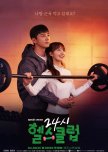
Pump Up the Healthy Love is a comedic take on society’s obsession with the perfect body, calorie counting, and fat shaming in Asian culture. Watching it honestly reminded me of those fitness apps that calculate every last calorie you eat and guilt-trip you with reminders about how many grams you still need to burn. That constant pressure to be “perfect” is very much the vibe here.I won’t lie this drama can be triggering for some people, especially if you’ve dealt with body image issues. At the same time, I think it does a good job showing how deeply body shaming affects everyday life, often in ways we don’t even notice anymore because it’s so normalized. What I appreciated most is that it doesn’t just stop at fat shaming it also highlights how many people hide behind a “perfect” body, using it as armor while carrying insecurities no one ever sees.
It’s not an extremely deep or heavy drama, but that feels intentional. All the heavier topics are softened by comedy, which makes it easier to digest while still getting the point across. You laugh, but you also pause and think and honestly, that balance is what makes it work.
Was this review helpful to you?

A Cozy Summer Drama That Feels Like Early-2000s TV
A Girl & Three Sweethearts is a 10-episode summer drama that screams early-2000s vibes , the kind of show you’d casually watch during summer break and end up enjoying way more than expected. It’s light, warm, and comforting.Plot*
The story follows Misaki, a talented pâtissier who is painfully unlucky in love. After getting laid off from her bakery, she struggles to find a new job until fate steps in and she unexpectedly runs into her old crush, Chiaki. He’s now a successful restaurant owner, running several establishments including Sea Sons, a seaside restaurant inherited from his late father and shared with his two brothers.
Chiaki, who happens to be looking for a pâtissier, offers Misaki a position at Sea Sons, located far from Tokyo in a beautiful coastal town. Happy to start a new chapter (and maybe rekindle old feelings), Misaki accepts the offer, only to discover that she’ll be living under the same roof as Chiaki and his brothers, Kanata and Touma.
Thoughts*
The story is really cute and easy to follow, with classic love triangles (and love squares 👀). It’s very positive, low-stress, and perfect if you don’t want to overthink while watching. The three brothers are basically the definition of early-2000s “handsome drama leads,” and the whole setup feels nostalgic in the best way.
Overall, it’s not an extraordinary or groundbreaking plot, but that’s honestly part of its charm. This is the kind of drama you can rewatch over and over, something cozy, familiar, and comforting. A perfect comfort drama for when you just want to relax and enjoy the ride.
Was this review helpful to you?

This review may contain spoilers
A feast for Japan lovers ! Don't miss this masterpiece!
Curse in Love is one of those dramas you go into with low expectations… and then it completely takes you by surprise. I genuinely did not expect it to be this good, or this addictive. Even more shocking? The truth of the story is nowhere near what you think it will be at the beginning. What truly elevates this drama, though, is how deeply it’s steeped in traditional Japanese culture. The atmosphere alone already sets it apart.Plot*
The story follows Nao and her mother, who once lived in the staff quarters of Kogetsu-An, a prestigious wagashi shop. As a child, Nao grows close to Tsubaki, the heir to the shop. Their lives feel almost idyllic, until everything shatters. Nao’s mother is framed for the murder of Tsubaki’s father, and their world collapses overnight.
Fifteen years later, Nao returns with one goal: uncover the truth. She conceals her identity, re-enters Kogetsu-An, and even marries Tsubaki, the very heir of the wagashi empire tied to her past. From there, the story slowly tightens its grip, mixing revenge, love, secrets, and tradition into something completely addictive.
After finishing this drama, I desperately searched for something similar and couldn’t find anything that quite matched it. The plot itself is gripping, but what makes Curse in Love truly unique is how heavily it leans into Japanese tradition. We’re not just watching a drama; we’re being immersed in a cultural world. From tea ceremonies to the history and symbolism of wagashi, to the absolutely stunning kimonos, this drama feels like a visual and cultural feast.
It honestly reminded me of 90s Japanese dramas, where stories proudly showcased Japan itself. Compared to many modern dramas that feel increasingly westernized in fashion and lifestyle, this one felt refreshing, rooted, and intentional. Every frame felt carefully thought out, and every costume told a story.
One detail I absolutely loved is that the show even has an official website that goes deep into these elements. There are dedicated pages explaining the wagashi—what each one represents, the ingredients used—and separate kimono fashion pages for nearly every main character: Nao, Tsubaki, Kyoko, the Grand Master, Shiori, Takigawa, even Yuko. Each kimono is explained in terms of color, pattern, symbolism, and style. I don’t know if this is common for dramas (I honestly doubt it), but the fact that they went this far made me appreciate the production even more. If you loved this drama, I highly recommend checking out the official website, it adds another layer to the experience.
And of course, the acting was exceptional across the board. There’s really nothing negative I can say there. Everyone delivered, and the emotional weight felt earned. Ryusei Yokohama, in particular, was an absolute dream in traditional attire—effortlessly elegant and perfectly suited to the role.
Overall, Curse in Love was a beautiful surprise. It’s dramatic, addictive, visually stunning, and rich in culture. One of those dramas that sneaks up on you—and stays with you long after it ends.
If you’re looking for something that feels different, immersive, and unapologetically Japanese, this one is absolutely worth your time!
Was this review helpful to you?
This review may contain spoilers
Soulmate sat on my watchlist for the longest time, and honestly, my only regret is not watching it sooner. This movie didn’t just make me cry, it made me cry warm tears, the kind that hurt but also feel comforting. Plot*
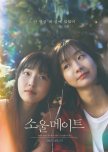
The story follows two girls, Mi-so and Ha-eun, who couldn’t be more different. They meet as children when Mi-so moves to Jeju Island, and somehow, despite being complete opposites, they become inseparable. Their bond is so strong that when Mi-so’s mother decides to leave Jeju, Mi-so chooses to stay behind and live with Ha-eun’s family. From that point on, they’re no longer just friends, they’re sisters.
As they grow up, Ha-eun starts dating a boy who slowly becomes part of their little world, turning the trio into something like the “three musketeers.” But cracks begin to form when it becomes clear that Ha-eun’s boyfriend is more drawn to Mi-so. The moment Mi-so realizes this, she makes a quiet but life-altering decision: she leaves Jeju to follow her dreams, leaving Ha-eun behind with promises of letters and stories.
Spoilers ahead *
But Soulmate is so much deeper than its plot. At its core, this is a story about love and letting go about choosing pain for yourself if it means protecting the person you love.
When Mi-so moves to Seoul, her life is harsh and unstable. She takes on exhausting, jobs just to survive, her life is anything but confortable. But in the letters she sends Ha-eun, she hides all of that. Instead, she tells stories of adventure, traveling through Europe, seeing the places they once dreamed of together. On paper, her life is magical and free. In reality, it’s lonely and brutal. And she carries that burden alone, because she doesn’t want Ha-eun to worry.
Meanwhile, Ha-eun stays in Jeju. She gives up her dream of painting, becomes a teacher, and eventually agrees to marry her childhood boyfriend. But as her life moves forward, something feels deeply wrong. She slowly realizes a painful truth: no one has ever loved her the way Mi-so did. Mi-so wasn’t just her best friend, she was the only person who truly saw her, believed in her, and wanted nothing but the best for her.
That realization changes everything.
Ha-eun leaves her wedding behind and moves to Seoul, following the life Mi-so once lived. She rents the same apartment Mi-so narrated in her letters and finally pursues painting. For nine months, she devotes herself entirely to her art, drawing the person she loved most, the person who understood her better than anyone else.
One of the most heartbreaking moments for me is when Ha-eun, after revealing her pregnancy, turns to Mi-so and offers her a family: the two of them, together, with the baby. That scene alone destroyed me.
The ending*
The film gives us two endings, one imagined, one real. In one version, Ha-eun gives birth, leaves the baby with Mi-so, and travels the world, finally free, just like in Mi-So's letters. Mi-so raises the child and names her Ha-eun.
In the other, we learn the truth: Ha-eun died, and Mi-so chose to keep her alive through stories. And suddenly, everything clicks. Ha-eun never traveled not physically She finishes Ha-eun’s paintings and exhibits her work, making sure the world sees her talent. But what broke me most is the choice Mi-so makes afterward: she keeps Ha-eun’s death a secret. To Jin-woo. To the gallery. To the world. Instead, she tells everyone that Ha-eun is traveling, living freely somewhere far away. Mi-so gives her the freedom she never had. She lets her rest inside a dream instead of a grave.
And that’s when I understood what this movie was really about.
This isn’t a romantic love story. It’s not about choosing someone over another person. It’s about choosing love over truth, kindness over closure. It’s about loving someone so deeply that you carry their dreams for them when they no longer can.
A lot of people frame Mi-so and Ha-eun’s relationship as romantic, but to me, it’s something purer and harder to define. They are soulmates in the truest sense, two people who shaped each other, who saw each other fully, who wanted nothing but the other’s happiness. Soulmates aren’t always lovers. Sometimes they are friends. Sometimes they are sisters. Sometimes they are the one person who understands you when no one else ever will.
To love someone isn’t to possess them.
To love someone is to step back.
To love someone is to make the hardest choices so they can be happy.
To love someone is to let go.
Mi-so left when she realized her presence could hurt Ha-eun. She endured loneliness, poverty, and silence to protect her. And when Ha-eun was gone, Mi-so loved her enough to let her live on, in stories, in art, in movement.
This movie shattered me. It felt like a long, quiet love letter written in grief. The cinematography, especially the Jeju Island scenery only deepened that sense of longing and nostalgia. Everything felt soft, distant, and aching, like a memory you don’t want to let fade.
I don’t think I’ll ever fully get over Soulmate.
It didn’t just make me sad it made me reflect on the people who have shaped my life, the ones who loved me quietly, and the ones I would choose again, in any lifetime.
Was this review helpful to you?
This review may contain spoilers
I have to admit, I was skeptical going into this movie because I’m not a fan of student-teacher romance storylines. But somehow, this one managed to feel painfully romantic. Maybe it’s the cinematography, maybe it’s the way everything looks almost unreal, like a dream—you can forgive a lot when it’s that cinematic. But… is it really okay? That’s the question that lingered the whole time I was watching.Plot*
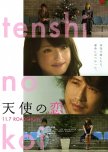
17-year-old Rio is a high school student who is always the center of attention thanks to her beauty. Because of her traumatic past, she’s learned to care only about herself. Friends and boyfriends exist mainly for her amusement or gain, and she’s focused on money and fun above all else. One day, Rio takes some photos to develop and is handed the wrong envelope. Inside, she finds pictures of a man and falls for him at first sight. Determined to find him, she begins stalking him, unaware that he has been diagnosed with cancer, and the photos are essentially his death portraits. From there, the story follows Rio pursuing him while he tries to keep her at a distance.
Controversy / Thoughts:
Here’s where the movie gets complicated. Rio’s behavior can feel disturbing, she pushes and chases, sometimes aggressively, and the story romanticizes it. Her lifestyle, dating older men, living extravagantly in Louis Vuitton, is glamorized in a way that feels unrealistic and morally grey. And yes, Kouki’s illness is used to soften the situation, but it doesn’t fully justify the age gap or the way her behavior is romanticized. Watching it, I constantly wrestled with these feelings: part of me cringed, part of me couldn’t look away.
And yet… despite all that, I found myself genuinely invested. Rio’s persistence, her raw emotions, the way the cinematography captures her and Kouki, it’s hard not to get swept up in it. The movie makes you feel her heartbreak, her obsession, her hope. I hated that I was enjoying it at times, but I couldn’t help it. There’s an undeniable emotional pull here. I found myself rooting for her, for him, for them, even when logic screamed that none of this should feel romantic.
One of the things that struck me most is how exaggerated and unrealistic Rio’s life is! her sugar baby lifestyle, her outfits, the extravagance of her world. But instead of feeling shallow, it adds a certain energy to the movie. It makes her character fascinating to watch and gives the film almost dreamlike quality. Watching Rio navigate her obsession, her heartbreak, and the consequences of her choices made me reflect on the way movies can make impossible or uncomfortable things feel emotionally real.
In the end, I can’t fully say this movie is “okay” in terms of ethics or realism. But as a story, as an emotional experience, it works in a way I didn’t expect. It made me feel conflicted, moved, and strangely connected to characters I probably shouldn’t have. I disliked parts of it, and yet, I can’t deny how much it stayed with me.
This is one of those movies that will make you question what you feel and why you feel it, and somehow, that makes it unforgettable.
Was this review helpful to you?


