

 10
10 42
42 15
15


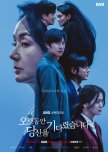
A fancy, unusual treat for crime thriller fans
"Longing for You" offers crime and more at its best. Nice to have along the way: a bit of salt in the fresh air of the coastal town where two of the protagonists grew up in.The public prosecutor's office and the police form a special investigation unit in the case of a serial killer. Solving the case is one thing - an that is overrun by further victims. The internal dynamics within the team as well as emotional complications between further characters are another. Both crime case and complex personal dynamics being jointly combined within a splendidly explosive mixture make “Longing for You” a fancy, unusual treat for crime thriller fans.
We abruptly stumble into an opaque spider's web. The KDrama thrives on its bizarre, strangely interwoven relationships. Abyssal. A bit chilly at times. Mostly harsh and brusque. But sensitive and touching in well-placed spots, too. Suspenseful until the end. Whenever you think you have a clue, the story takes a new, unexpected turn. As I said, a fancy, unusual treat for crime thriller fans.
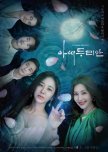
RomCom, crime, historical drama, fantasy & Makjang make the dough for something standalone new
"Durian's Affair" is set among the wealthy - ´here´ (2023) and likewise ´there´ (long gone Joseon days). The time may have changed for Du Ri-an and her daughter-in-law, but the place has not. They are instantly catapulted from their Joseon days to recent today. Some of the wealthy family, who own the property today, have apparently reincarnated again in this family. They are especially well known to Du Ri-an. Now those involuntary time travelling ladies have to deal with the culture shock and the traumatic leap in time that actually seems as incredible as a dream, whereas in their own days they were actually in the midst of grieving over the loss of their beloved son/husband...This bizarre, four-dimensional dramaturgical setting is providing a load of finely knitted entanglements and arising questions, yet unanswered. What had really happened back then? What's going on today in this family? Why the time jump? So what's next for the two Joseon-day ladies? How is everyone going to deal with this weird practical (and for some even emotional confusing) situation?
This production is full of zeitgeist of the 2020s, in which Anglicisms and Banmal (informal speech) are a matter of course, while in mass consciousness the curtain between different times and spaces has become extremely permeable. Yet, the icing on the cake: relationship dynamics in the fourth dimension. The people of that long gone time are not those of today. And yet... There are notions of their life back then, even if they cannot consciously remember it, as well as the option of making new decisions in their life today. Broken hearts, cupid's arrow, greed and passion, as well as a sense of responsibility or noblesse oblige... it's all mixed up through the perspective of the time-travelling ladies of days gone by. Situation comedy breaks through encrusted structures. The strangely insane is tossing and turning the minds of reincarnates and time travellers alike. Likewise, the strangely familiar is, too.
"Durian's Affair" is one of those KDramas that wants to break with established genres. The South Korean, but also the international market is currently being flooded with excessive KDrama productions. Thus there is increasingly space opening up for experiments... and that's what “Durian´s Affair” is, too. This KDrama is no RomCom, no crime thriller, no historical drama, no fantasy and also no classical Makjang. However, elements of each are richly included. Together they create something independently new. Anyone who is open to such an experiment should sit back, relax, shake off the usual expectations and get involved with the KDrama. It's entertaining. With some open questions that keep the suspension throughout all 16 episodes. There are also love interests. (Yes, plural.) All multi-layeredly entangled across time and space. Additionally, “Durian´s Affair” is even exuding a pleasant scent of humanness.
Be prepared for deliberate Sostenuto! The pacing is characteristic, since the production sticks consistently with the two outdated ladies from Joseon days. And in my opinion, those ladies are the ones who make the show as remarkable as it is. Regarding Du Ri-an and her daughter-in-law, all characters in the show as well as the audience alike can work themselves off. Nice!
----------------------------------------------------------------------------
SIDENOTE: --- A reckoning with the lost virtues of a conservative South Korean society ---
“Wheresoever you go, go with all your heart.” -Confucius
In my opinion, "Durian's Affair" is kind of a reckoning with pseudo-virtues of a conservative South Korean society. Du Ri-an and her daughter-in-law are catapulted into Seoul 2023 and show the elite clan around the Dan family what true Confucian virtue actually means. At the same time, they are caricatures as those virtues come along as an almost unattainable ideal. The two ladies from back then embody i.e. propriety, righteousness, integrity, benevolence, wisdom and trustworthiness in such an uncompromisingly consistent way that one cannot help but be amazed. Confucian virtues are inextricably linked to patriarchy. But the lesson in this idealistic self-image of a dignified, respectful life is given to us by two women! Adaptably creative, intuitive, respectful and well grounded. Timelessly human, righteous, wise and trustworthy.
Du Ri-an and her daughter-in-law embody the Confucian virtues, but more than that, they have transcended them without realizing it and found an answer for what these (and every other virtue, too,) are actually intended for: A source of self-confidence as a human being and dignity, from which a person can draw strength and grounding - even in the most adverse situations! In general, this as a prerequisite for any human, compassionate, authentic encounters. Those virtues had to be (necessarily, involuntarily) adapted by those ladies into a completely foreign century. (And they prove themselves again and again in every one of the three different households of the Dan family.) So it is actually about the core essence of any virtue: providing a human being with dignity and inner values as a compass – reaching out with the power of respect and thus transcending boundaries of specified classes, too.
The two time travelers come across as idealized caricatures of the bygone Joseon period, that is generally considered virtuous. As foreign ladies in Seoul 2023, they embody rather unreal, almost exaggerated ideals of virtues that are still upheld and (as it turns out) actually largely lost. And yet, the two ladies prove it: true, authentic dignity can grow from the upright embodiment of these virtues. This dignity matches its dramaturgical equivalent in the overall deliberate Sostenuto pacing of the K-drama.
The timelessness of the old values stands in apparent contrast to the growing western internationalized coolness and the elitist arrogant version of the new nobility, which however seems to have lost any grounding unless it is for money. It is rather obvious: a bit more humanness, morality, integrity, wisdom and trustworthiness would be nice here and there. What is offered above all is a shiny facade cushioned by the bank account. More or less covered underneath you find any human topic irrespective of class or wealth: longing to be loved, self-doubt, jealousy, gender issues, fear of aging, love in old age, temptation...
In "Durian's Affair" the head of the family clan may be a (actually surprisingly liberal) woman. Homosexual love can become a topic here, too. And then there are a few more time-sensitive issues in play. Yet, authenticity and sincerity are primarily triggered by the two noble, upstanding Joseon ladies... They may remind one or the other just by their attitude towards life, that human dignity is deeply rooted inside - even though one may have lost or forgotten about it along the way.
Don’t get me wrong. I'm not standing here for Confucian virtues. And neither does the KDrama. But it holds a nicely presented mirror to South Korean society, which to this day may hide behind the 'old, time-honoured' values. For better or for worse. If so, then it might be crucial to fill these virtues with life. Message: The present is far from that. Fascination? Yes. Attraction? Perhaps. But embodied? No. Two ladies from the past must be landing in 2023. (And actually they had to carry their baggage at home back then - a baggage whose weight was characterized by a questionable virtue (also) of the people of that distant time.)
“Durian´s Affair” rejects any kind of idealization. How nice, indeed! Yet it upholds authenticity (as a new and needed virtue?), basic for any respectful human-to-human encounter. As a value! As the true virtue! And with that - against this background - "Durian's Affair" becomes quite a progressive KDrama production. What a delightful surprise!
PS:
And then, the ending. It is open for all you can imagine. Any direction. You choose, where to go next. Drama just like the human condition (la condition humaine.) Like the wheel of existence, fueled by Karma! It goes on and on... A never ending story of birth and rebirth...
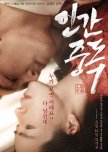
An (erotic) melodrama whose melodramatics were brilliantly captured
"Obsessed" is an erotic movie about a passionate affair in South Korea around 1969. It is a melodrama whose melodramatics were brilliantly captured - with a Song Seung-heon, who absorbs the drama in his particular passionate manner. What is new in that context, is how he is allowed to act almost shamelessly here.However, "Obsessed" is also an exciting KMovie as it touches on a not so well known chapter in recent South Korean history: the time of Vietnam War.
------------------------- SIDE NOTE: --- South Korea and the Vietnam War ---
It is always the USA that come to mind. But South Korea, Australia, New Zealand, Thailand and the Philippines also fought in Vietnam. South Korea was the country most involved after the USA. Between 1964 and 1973, around 48.000 Korean soldiers were each year drafted into this war. They had all volunteered, not least because their monthly wages brought in almost twice as much as a normal annual salary would have at the time. However, the South Korean army has gained a dubious reputation with a few massacres (including among civilians) in this war - a chapter from the time of the military dictatorship that has not been fully processed by now. The KMovie gives at least some space/thinking to this aspect - in connection with the consequences of the post-traumatic disorders, including the protagonist.
-----------------------------------------
"Obsessed" conveys some impressions about those 1960s/70s. The already strictly authoritarian context of South Korean every day life becomes even more so during dictatorship at that time, let alone in military itself. Thus every spark of vitality is nipped in the bud by the stiff corset of an immaculate facade. With the affair, an erotic tension is built up that one is not used to from the KDrama orbit. For the protagonists, however, this tension opens up a forbidden, yet addictive space to breathe, love and feel alive - and this precious moment of feeling alive has more value for the distressed male protagonist than anything else - as he has already seen and brought way too much death into this world...
Provoking. Gloomy. Beautifully done.
Thought provoking. Confronting the arrogance of the ´normal´. Truly outstanding acting performance
"Oasis" was highly celebrated by international film critics in 2002. Director and screenwriter Lee Chang-dong, who had with "Peppermint Candy" in 1999 already contributed a milestone in Korean film art, came up with this unusual love story between a mentally retarded young man and a young woman with infantile cerebral palsy. In doing so, he once again relied on Sol Kyung-gu and Moon So-ri, who had proven themselves as a couple in "Peppermint Candy" and who now once again deliver truly outstanding acting performances in "Oasis". The list of international awards – i.e. in Venice, Vancouver, Bergen, Brisbane, Seattle and Seville - as well as in South Korea, is long. And rightly so.“Oasis” is pure (independent) KMovie! It impressively embodies a great strength of South Korean movie production: ruthlessness! Even if social life is characterized by facades, coats, make-up and social reputations, modern South Korean cinema has (since the end of dictatorial censorship) proven what 'independence' really means. The freedom to finally show things the way they really are! Not being afraid of what is hurting, what is ugly, what is disgusting! The brutal revelation of the emotional abyss to which the human soul may be exposed over the course of a human life. Situations and moments in life that people tend/wish to quickly forget. The cruelties that people are capable of inflicting on each other. The look behind the facades and underneath the coats, where we are naked and without make-up, alone and vulnerable. But this is where we are sincere and real, too. From there, a new form of beauty and strength can grow. KMovies bring to light even the unloved, unpleasant, repressed, despised, perverted, uninhibited, disturbing human emotions with magnificent intensity, which are often presented so authentically that it hurts (because it's so true). The protagonists have no claim whatsoever to be likeable. This creative courage, when it comes to production and performance, as well as the audience´s willingness to open up to these cinematic works is (in my opinion) almost unique.
“Oasis” offers an impressive expression of this particular artistic attitude. This is a thought provoking KMovie confronting the arrogance of the ´normal´. The plot is about a young woman and a young man who – in the eyes of their social environment - preferably should be socially isolated and actually locked away, as they are supposedly unpresentable. Because of their disability, they are ultimately just a nuisance, causing work and trouble, irritating the 'normal' people with their unpredictable behavior, and actually not contributing anything... Because the families are ashamed of them.
The KMovie bluntly frames that social norms are in fact more important to 'us' than people. "Oasis" encourages to open up a bit and approach the lives of those 'waywards'. And lo and behold! They are sensitive, soulful people like 'us' - with feelings, dreams and longings. They are falling in love. They long for relationships. They are just people, too. Lovable people. Adults with their own lives.
'He' is a physically healthy man in his late 20s, but at the mental level of an 8 year old. He is strong, but easy to manipulate and rather simple-minded. 'She', on the other hand, is physically handicapped due to her severe infantile cerebral palsy to such an extent that she is dependent on help. Due to the impairment of her nervous system, which affects voluntary motor skills, speech disorders, spasms, as well as sensory and motor limitations are occurring, too. Intelligence isn't actually her problem, but that young woman in "Oasis" apparently wasn't given any specific assistance, just basic care. She has her difficulties communicating.
The way the families treat their ´waywards´ is horrendous. In fact, they are both unscrupulously exploited and abused. And both are helpless in their own ways. He doesn't fully grasp the situation. She is physically dependent on helping hands.
The romantic relationship between the two is quite something else. Their start can be considered downright dubious. And yet, as the odd couple they are, they both are happy together. The picture of the oasis on the wall jumps out of its frame and fills the room. In their togetherness, the couple has created an almost magic space where their souls can relate and recharge, where they can be a different person. It is touching, indeed. ´He´ is a responsible man and she is a desirable woman! Yet, this reality is completely alien to their social environment. The families don't have the slightest idea, that this could be even possible: those two ´handicapped losers´ being actually able to genuinely caring for each other and loving each other just the way they are. Not even their closest families honestly tried to truly reach out and attempt to understand their brother/sister.
Bringing the quality of this relationship against all odds authentically to the audience is the unique beauty and strength of “Oasis”. Although 'beauty' is not otherwise something, one would directly associate with this movie. There is hardly any beauty in the world of those two protagonists, where their environment isn´t taking them serious at all. They are either patronized or treated in a disrespectful and disdainful manner. Nevertheless, their feelings for each other radiate beauty and grace. Interaction may inevitably be rather awkward, but still they find their unique way. In the end, it all comes to an almost passionately brilliant finale when HE risks everything in order to by all means keep his promise to HER: sawing off the branches of the tree in front of her window, which only cast shadows on her beloved oasis picture on the wall...
The KMovie leaves us with our thoughts behind. Touched. And - substitutional for those two families, the police, the neighbors etc., who in their arrogance are blind to the inner world of those two lovers – ashamed, too.
A merciless play with people's fears. Witch-hunt revisited. Gloomy. Upsetting. Horror with no escape
"The Netflix production "Hellbound" started even more successfully on the global streaming platform in November 2021 than "Squid Game". Dystopias (stories about gloomy visions of the future) these days obviously hit a sore spot in the global mass consciousness - the fear of what still is to come, considering that nothing will be the way it used to be....Accordingly, "Hellbound" generally plays with people's fears. The characters in the story also play with people's fears - here in the face of a hell on earth that is spreading inexorably, flanked by a modern form of witch hunts and establishing a new order in which there is little room for hope and light. Because even as a reward for a righteous life, only death awaits in the end. At best, you don´t have to be ashamed and getting ridiculed of it.
The focus for the 'not righteous' is a heavenly or better hellish special commando, which arrives from the afterlife in the form of huge hell gorillas and stages a small earthly hellfire from human bones. No less shocking is the moment that meticulously announces the day and hour of this death in advance.
Rarely have there been so many crazy, delusional people in KDrama (here namely in the realm of the sect). The number of truly honest people can be counted on one hand. And in between there is the vast majority of the terrified masses, blinded and tamed by the New Truth Society's threats sold as hope...
The prospects are really daunting. Not just unearthly prophecy and execution of the death sentence for the shameful, despicable sinners. Even more actually what this scenario does to the people. There is the group of the "arrowhead" who, already sort of detached from any aspect humanity. Their members receive the carte blanche from the ordained sect priests to use the brute force and terror in order to carry out a multimedia-fuelled new edition of witch hunts. They are allowed to live out their wildest violent fantasies . And then there are the would-be ´gentlemen´ (and ´ladies´), CEOs and high priests of the New Truth Society, who submit their new 'commandments' to the people, and the VIPs who solemnly attend the celestial court processes live and in the first row...
Eventually, it can´t get any worse than that. "Hellbound" effortlessly catapulted humanity back into the deepest Middle Ages - yet in the midst of the modern, high-tech 21st century. Business with sin is very popular there. From now on it is no longer about the hope of eternal life (in the hereafter), but merely about not to unnecessarily embarrass yourself as a sinner in the face of the inevitable earthly death...
For me, "Hellbound" is highly ambivalent. It's done great again. Ecellent actors. Exciting story. Upsetting, because maybe not so absurd in terms of social dynamics... But do you really want to/do you have to look at it? There's practically nothing positive coming out of it. Even the hopeful spark at the end remains under a hood of fear and horror and somehow doesn't really find its way back to the light... (A 2nd season is in discussion... maybe then? Or just more fear and horror from which there is no escape?)
Tragic, epic, visually impressive.
"The Slave Hunters" is a cinematic-style KDrama, almost like a movie for the big screen. (It would definitely be an experience on the big screen.) In any case, "The Slave Hunters" has a lot to offer during ist 24 episodes.
There is strikingly selected staging of the landscape. Korea presents itself self-confident with its countless riverscapes and deltas, its mountains and coastal regions. The viewers visually accompany the protagonists on their long journeys across the country.
The accumulation of well-trained, well-structured torsos of the male actors is also characteristic for "The Slave Hunters". There's a lot of work involved, and it's appropriately staged here in numerous shots. Why not?
In connection with its sporty mimes, "The Slave Hunters" also comes up with a variety of brilliant, sometimes spectacularly choreographed fight scenes. Above all, Jang Hyuk once again sets quite a monument with his versatile martial arts skills.
The KDrama also presents - if you like - some Joseon-style parkour. 'Chase' thus gets a nicely invigorating touch. (Side note, in case you don´t know: Parkour is a special form of athletic movement art - a mostly urban steeplechase that has become fashionable in the last few decades. Individuals choose the most effective way to get to their destination, and that's hardly ever the predetermined path. Rather, the urban or natural landscape is re-perceived with regard to potential obstacles and evaluated as to how these can be creatively overcome on the individually chosen route, for example by jumping, somersaults or the like.)
The KDrama also stresses the subject of fatal love triangle in its complex emotionality. Eventually, there are also more love stories in the side plots. Yet, to be honest, the romance aspect should not be your reason to watch... The complicated dynamics might drive you crazy at times, so does the rigid play of the ex-and-again-general.
After all, the story mixes a good pinch of humor with profound wisdom. Surrounded by all the muscle-packed, fast-paced spectacle, the question of how a just society can be achieved is examined, i. e. whether it can ever be achieved at all. As soon as people gain power, won't they always tend to turn their fellow human beings into slaves, chattel or lackeys? And: will a changed political system change the people? Or do people have to change for the system to change? As a premise it is stressed that slaves are also human beings, e. g. that it actually starts with an attitude, that one should not deny any human being to being a human being - certainly not according to their genetic origin. "Slave Hunters" historically refers to the beginning of socio-critical Yangban movements against practiced slavery.
At the same time, the KDrama shows life under simple/poor living conditions - unembellished in all coarseness, e. g. ugly, blustering, brutal, unkempt and uneducated, but still warm-hearted. On the other hand, the fine silk clothings and the well-groomed, educated demeanor of the nobles and officials cannot hide their emotional coldness and corrupted souls.
All in all: It is not surprising that the KDrama in average thrilled more than 30 percent of the South Korean population and received numerous respectable awards and even international nomination. Above all, Jang Hyuk, for whom his role seems to be tailor-made. He fights, jumps, sprints, barks, laughs, cries, digs into the deepest depths of his soul and on top of that presents profound street smart and wise philosophies.
"The Slave Hunters" has a charm of its own. It´s tragic, epic, visually impressive.
---------------- Side Note: --- historical background ----
The historic frame refers to the time of King Injo in the 17th century as well as his son and Crown Prince Sohyeon. As a result of the submission after the second Manchu invasion in 1636, the Crown Prince (together with his wife and other officials) went to Shenyang practically as a hostage of the Qing. He spent his time there working diplomatically on peaceful relations between the Joseon and Qing dynasties.
His commitment also brought him to Beijing, where he became familiar with Western culture through his acquaintance with Jesuit missionaries. However, his father did not like Sohyeon's diplomatic commitment and open-mindedness at all. He feared that after his return and accession to the throne, he would want to reform Joseon with Catholicism and Western values. Prince Sohyeon's sudden death is interpreted by historians as deliberate poisoning. There is some evidence that his own father was behind this. Sohyeon's wife was executed for treason and only the youngest of his three sons survived their exile on Jejudo.
---------------------------------------------------------------------
Made in Korea felt like a high‑gloss promise that ultimately left me puzzled.
I really wanted to love this series. Everything about "Made in Korea" — the cast, the production design, the cool prestige look — suggested that this would be the next big thing. But while watching, I slowly got that familiar feeling I sometimes have with shows that seem a little too confident in their own importance. The series aims for “masterpiece” status, but never quite pulls me in on a narrative level.For me, the six episodes felt like a structural dead end. They were too short to truly explore the characters as human beings trapped in a system, with all their contradictions and moral struggles. At the same time, they were too long to work as a lean, uncompromising espionage thriller. The show wants to be both — and ends up losing me somewhere in between.
What disappointed me most was how much is hinted at rather than actually told. Friendships feel more like setup than lived relationships, the Vietnam reference remains a decorative biographical backdrop, and the sibling dynamic feels like a dramatic premise rather than an emotionally grounded conflict. Many characters came across as symbols for power and betrayal rather than people I could really connect with. Everything feels like narrative furniture — present, but not truly inhabited.
My personal anchor was the prosecutor. Amid all the polished surfaces, he felt like the exception, and that’s exactly why he stood out to me. He didn’t feel like a plot device, but like someone who thinks, doubts, and hesitates. That some viewers felt he didn’t quite fit actually says more about the show than about the character. To me, he represented a version of Made in Korea that takes moral gray zones seriously — a glimpse of what the series could have been.
Hyun Bin and Jung Woo‑sung carry the show with their presence, but even they (and production design and camera and music) can’t make up for the lack of narrative depth. Especially Jung Woo‑sung often felt like he was acting in a much bigger, more complex project that never fully made it to the screen. Without the star power, I probably wouldn’t have finished the series.
In the end, Made in Korea feels like a “budget version of a blockbuster”: huge effort, but limited storytelling payoff. As a film, it might have been sharper. As a longer series, it could have allowed its themes to breathe.
As it is, it left me with the sense of a project that knows its own potential — and quietly avoids fully committing to it.
Not quite one thing or the other. For me a sort of aesthetic, but ultimately empty space.
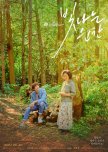
Radiant indeed! Honest. Real. Powerful. Intense. Soulful. As is the life of the Haenyeo.
Remarkable. Exceptional. A Shining Star in KMovieHeaven."Everglow" is radiant indeed. Honest. Real. Powerful. Told in few words only, but with wonderful pictures and profound scenes with soulful encounters. Full of love for the island, the Haenyeo, the sea, the landscape, life and love - in whatever form it chooses to show itself.
Go Doo-shim has surpassed herself many times in her long career as an actress and has set an unforgettable monument to many a female archetype. But in this life-affirming chamber piece that breathes pure nature, she surpasses herself a bit more: in the role of one of the comparatively few remaining, unique Haenyeo divers on Yejudo's coasts: Grumpy, dismissive, plain, robust, simple, strong, tireless, helpful, sensitive, profound, motherly, grandmotherly, friendly, old wise woman as well as tender, vulnerable, radiantly in love. With a great pain and a big heart - but she keeps both hidden deep inside of her. "Life makes life go on." Deeply connected and yet alone. Al(l)One with everything, while diving in the sea.
------------------------------------------------------------
The Haenyeo...
...are at home in the silence of the sea. Every day for up to 7 hours, in and under water, while holding their breath for more than 3 minutes. Breaking the surface, in stages they loudly blow out the air they are holding, while breathing in fresh oxygen, too. "Sumbisori" is the name of the peculiar whistling sound, for which each haenyeo finds its own variation. When they have deposited their prey in the net and their breathing has returned to normal, they launch again and dive back down into stillness. This is a world unto itself. Mentally focused on the now. Physically hardened by sun, wind and salt water. Depending on the time of year, tide and weather, several hours in the sea are followed by long breaks in order to warm up by the fire, together with the other haenyeo. Haeneyo is what women do. Haenyeo shapes the women of the island, makes them self-confident, independent and firmly connected in matriarchal community. After warming up, it's back into the water for several hours. It is an intense, existential, essential life in total surrender to the sea.
"Everglow" honors the life and tradition of the sea women or daughters of the sea in two respects, in that the story of the story has just such a monument and legacy as its subject: A documentary about the Haenyeo, which is to be broadcast on television.
Girl power and Haenyeo go hand in hand on Jejudo. Life on the island follows different rules and rhythms than on the mainland. Diving for valuable seafood of all kinds off the coasts of the volcanic island has traditionally been a woman's job. A lucrative one at that. The seabed is like extended farmland. The Haenyeo and its contribution to the cultural life on the island is undisputed and has even been included in the UNESCO list of intangible world heritage sites since 2016. Since 2017, the Haenyeo have also been officially recognized as an intangible cultural asset of South Korea. A culture that is dying out. Hardly any of the professional divers today are under 50, most are over 60. The technical equipment is almost the same as at the beginning of their career, which begins for most at about 8 years - with plenty of swimming and diving training in shallow water. From about 15 they are then considered "Baby Haenyeos". Experience and training are everything, because it's about nothing less than daily survival using enormous lung capacity, robust physicality for high resistance to the cold and a lot of practice in equalizing pressure. Once you are a daughter of the sea, you rarely get away from it. There is no retirement age. After bathing suits became neoprene suits, the time in the water between breaks could be significantly increased. Some swim out from shore, others take boats, and still others engage in some form of island hopping. Each has their sea farm, which they reap almost daily.
And each has a tremendous knowledge of nature, the sea, the wind and the tides. The women always work in community, take breaks in community and support each other in community. Haenyeo are environmentally conscious marine experts from the very beginning and pioneers of an emancipated life. (Significantly, Jin Ok is given the suffix or title 'Uncle' - as the eldest of her group, she is both a person of respect and, as the binding matriarchal head of the community, equal to any man who would otherwise hold this position in Confucian tradition.)
----------------- SIDE NOTE: --- Uprising 1948/49 ---
Since "Everglow" deals with the simple life of the now mostly old Haenyeos on Jejudo, the memories of the 72-year-old protagonist inevitably also touches on a lesser-known event in recent history that shook the island deeply: an uprising against an anti-communist government campaign. Between April 1948 and May 1949, the resistance cost around 30,000 people (about 10 percent of Jejudo's residents) their lives.
--------------------------------------------------------
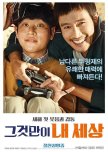
Disillusioned life scenario, yet spiked with moments as the ego steps aside + heartopening happens
A wonderful movie in many ways.This KMovie is aiming straight at the heart. This is already indicated in the international title "Keys to the Heart". Also, that the piano plays a key role - i. e. its 88 white and black keys.
The original title is more like "This only is my world" and refers in its own way to the piano, because this is the world of the autistic protagonist Jin-tae. However, this also refers to the (also limited) world of his brother Jo-ha, to which Jin-tae starts belonging. Additionally, revolving around Jin-tae (and Jo-ha) is their mother. "Keys to the Heart" is a story about that mother and her two very different sons. She left one of them decades ago as a little boy under dramatic circumstances and to date he hasn't forgotten, let alone forgiven. The other is autistic with savant syndrome.
It´s a given that the story intends to bring tears to your eyes. Yes. The story wants to get to the heart. But not generally in a tender, comforting and blissful manner. In fact, there is nothing but pain drifting around those hearts in this story. The framework of the plot draws a disillusioned, depressed scenario of the lives of ALL characters - regardless of whether they are rich or penniless, or otherwise have a more or less comfortable living. (The exception to the rule here is the autistic Jin-tae.) As if it were the most natural thing in South Korean everyday life for people to suffer. There is a good deal of social criticism in this KMovie. I think that's often overlooked in its critics or reviews.
There's the drinking, beating father; the abandoned son; the penniless son who can do nothing but box; the brutal world of dog fighting, where boxers beat each other bloody for money; the single mother with cancer; the mother with guilt; the autistic son; the depressed, suicidal, rich, once famous invalid; the Jaebeol CEO, whose money doesn't help her to be able to buy back her daughter's happiness. Eventually "Key to the Heart" is a dreary, sobering contemporary document. Not a picture of society of the crisis-ridden 1990s, no. It is a simple, unpretentious social inventory of the South Korean affluent society from the year 2018...
Now, some heart-warming light is shining into this fundamentally gloomy everyday world. (And in those of the audience as well.) In rather small spots though. These are brief details, inconspicuous moments (apart from the big spotlight of the finale, which is a bit more spectacular). However, those little spots make all the difference. Not a flash of inspiration, rather a flash of the heart, in which the injured ego steps aside for a moment: for a moment of clarity for the essential: actually, what´s NOW. For a moment, people can just let go of all grief and become open to what life has to offer just NOW: beauty, warmth, joy, hope. This NOW can transform, heal, completely change the view of the world. The world on this earth itself is the same, yes, the planet does not change its orbit because of it. It's not suddenly 'everything will be fine again'. And yet it is something like 'everything-IS-good'. ... That brings us to the KMovie's favorite quote: "Impossible is not a fact. It's an opinion." (Muhammad Ali)
Admittedly, a button is pressed when it comes to the piano music. The classics take their space. But here, too, the story does not fail to take the opportunity to point out the ego-driven business with it - the talent and passion of the musicians may be on the one hand, but the very personal interests of teachers and directors are on the other...
Of course, with Jin-tae as a young man with an autism spectrum disorder with savant syndrome, the KMovie is deliberately pressing another selected button, with the intention of moving hearts. Nevertheless, even this developmental disorder is not romanticized, yet shown as demanding and exhausting to deal with.
Particularly pithy and powerful: The contrast between the world of the buttoned-up, reserved, respectable, reasonable and properly dressed classical music scene and the childlike, impulsive and playful but brilliant Jin-tae, whose piano playing tears down walls for a moment.
At last, we are back at the beginning: a story about that mother and her two very different sons... There is hurt, sorrow, the pain of loss and guilt - all is there, what life has to offer to become estranged from each another, or to feel lonely and abandoned. And that's where love - no matter how screwed up - finds its screwed-up moments. I don't think predictability is a problem with this movie, because it doesn't want to be 'enthralling'. Yet, it wants to touch the heart, and it does. Eventually, that's good for everyone. With this movie, it is the HOW that is decisive: by sober narration of a basically rather depressing story that thrives on short, unspectacular moments (and the actors) in which 'new' NOW-decisions are made and heart opening becomes possible.
Great!
--------------------------- SIDE NOTES --- Savant syndrome ---
Savant syndrome has often been a topic in the cinema, for example in the US production "Rain Man". There are only around 100 "Savants" known worldwide (from the French 'savoir' = knowing, how to do it). Accordingly, the phenomenon has only been scientifically examined to a limited extent. In the musical field, there are various examples of Savants (like the fictitious Jin-tae here in the movie) who, without any music lessons, are able to play the most difficult pieces of music with accentuated detail after just hearing it once - solely thanks to their perfect hearing.
However, Savant syndrome usually goes hand in hand with autism spectrum disorders. This in turn refers to developmental disorders of varying severity. The people affected typically have little interest and competence when it comes to social interaction. They prefer to live in their own world. Generally, their perception is strongly focused on details and does not weight them like the otherwise socialized majority around them. Details that others usually overlook become subjectively crucial, while information considered essential to their environment may not play any particular role at all. Information is initially unfiltered, being of equal value in its perception. Thus, without the social-cognitive filters that non-autistic people learn to develop, the moment of sensory overload followed by stress is quickly reached.
--------------------------------------------------------------------------------------
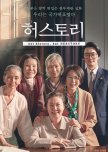
It is not a fun movie, yet it is radiating truly positive energy in spite of its appalling topic
"Herstory" is an example of a highbrow KMovie, which has real life as its subject and at the same time influences real life as an impact of the movie reception.It is about the lawsuit brought by a handful of "Comfort Women" from Busan - actual long forgotten/ignored sex slaves for the Japanese soldiers during the Second World War. The trial took place between 1992 and 1998 in Japan. This noteworthy trial set in motion the resolution of a rather dark chapter in recent Asian history.
It was about time to not look away anymore. The subject of "Comfort Women" was until then a taboo subject even in South Korea. The refered to court hearing in the 1990s was actually a milestone in the reappraisal of this chapter. Thus the KMovie "Herstory" is a poignant, publicly effective monument to this chapter in history and honoring the affected, victimized and long forgotten women (and their advocats).
"Herstory" is sensitively illustrating the painful path to this (no less painful) trial as well as its dramatic individual cases. The KMovie becomes the mouthpiecer of at least a few of those women´s fates and at the same time a touching memorial, arousing the awareness of the cruel war crimes committed against civilian women.
It is not a fun movie, yet it is radiating a tuely positive energy in spite of its appalling topic! I consider it in several respects highly valuable.
It is about empowerment and sisterhood. The cast ist outstanding.
This movie is confronting glorious ´his´stories with ´his´ rather tabooed ignominious behaviours... and thus make it ´her´stories.
---------------- SIDE NOTE --- Historical Comfort Women in World War II ---
For a long time, the fate of an estimated 200.000 Korean young women and girls, who were traumatized as sex slaves by the Japanese military during World War II, went unnoticed by the world. Until the 1990s their existence was a taboo - even in South Korea! In fact, Japan's government and military recruited (mostly) Korean young women and girls. They were used against their will in so-called "comfort stations" as "Comfort Women" for motivation of the armed forces - i.e. as sex slaves being abused by the sodliers.
Officially, this fact was (and still is to some extent) vehemently denied by the Japanese side and hasn´t been clarified for more than 5 decades, let alone talked about reparations. However, in terms of international law, what happened has to be considered war crimes, crimes against humanity, as well as slavery and trafficking in women and children - crimes they are. However, the war crimes tribunals after the end of the Second World War were more concerned with crimes against members of the Allies. So in public THOSE crimes against civilian women were forgotten.
With this particular court hearing the movie is refering to, for the first time a verdict in favor of the (comparably few) plaintiffs was at least partially reached. The ladies, who had meanwhile aged, were actually awarded a ridiculously small amount of compensation. So the verdict is still outrageous, but a verdict nonetheless. Nevertheless, as a result, the story of comfort women was publicized for the first time and an international reparation movement was launched.
Obviously the topic had appeared on the table ... but it was still not legally clarified. On the contrary. The issue as such (and its many and even more individuale cases) have still not been satisfactorily resolved ... while most of the actual victims have by now died of age.
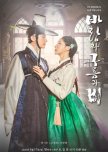
Quiet in its voice, thunderous in its impact – a drama of nuance, humanity & whispered revolution
Between Wind, Clouds and Change – "King Maker: The Change of Destiny".Some dramas tell about history – others tell how history is made. "King Maker: The Change of Destiny" does both. It's also a historical KDrama that doesn't just focus on battles or hero myths, but makes the art of face reading (Gwansang) the narrative compass: Whoever wants power must understand people – and themselves. The story takes place in the late Joseon era, a time of political upheaval and dynastic power struggles. But instead of swords, the drama talks about people who deal with knowledge – and read faces. The series is based on the novel "Wind, Clouds and Tombstone" by Lee Byung-joo and creatively reinterprets historical events.
At the center stands Choi Chun-joong, a man not only talented at physiognomy, but who has a deep sense for the movement between fate and choice. His gift for reading personality, future, and intention from a face makes him a valuable advisor, but also a target for political intrigue. Park Si-hoo plays Chun-joong with subtle intensity – a man who thinks more than he speaks, but whose presence fills every scene. At his side is Princess Lee Bong-ryeon (Go Sung-hee), who struggles with her own tragic gift – seeing the fates of others. Go Sung-hee gives Bong-ryeon a quiet dignity, shifting between vulnerability and determination.
I´d say the quiet, deep relationship between Chun-joong and Princess Lee Bong-ryeon gives the series an emotional warmth that goes far beyond grand gestures and touches through small, sincere moments. Their love is marked by separation, reunion, and the burden of fate – less passion, more loyalty. Their romance is not the center, but rather the emotional backbone – giving the political drama a human depth. It's like a river that always flows, even as the banks change. Their bond is based on shared gifts – face reading and destiny reading – and becomes a kind of spiritual complicity. It shows how intimacy lives not in big gestures, but in shared understanding. The romance is quiet, but sustaining – an echo underlying everything.
The series doesn’t follow a classic hero’s journey, but tells of entanglements: between the power-hungry Prince Lee Ha-eung, who loses himself between reform and control; between officials who renegotiate their loyalties daily; and between people whose moral decisions influence the system more than titles. Especially impressive is the calm, almost tentative narrative style, using time jumps not as breaks, but as mirrors for human maturity.
The drama convinces with a finely tuned ensemble performance. The relationship between Chun-joong and the ambitious Prince Lee Ha-eung is a prime example of ambivalence and power psychology. Jun Kwang-ryul shines as the power-conscious Prince Lee Ha-eung, whose performance captures the full moral complexity of the era, balancing ambition and regret. The supporting characters are also carefully and multi-layeredly designed – from scheming officials to tragic outsiders. They’re not just decoration but part of a system that enables as much change as it prevents. Particularly interesting is the cultural background: The art of face reading – called Gwansang – gets a tangible, almost magical significance in the series. It’s not just a trick, but a mirror for responsibility, freedom of choice, and compassion.
What makes "King Maker: The Change of Destiny" so special is its quiet, poetic narration: Political intrigues, conflicts of loyalty, and personal sacrifice are not made sensational, but are shown with respect for the characters and their development. The love story between Chun-joong and Bong-ryeon is tender and believable – it grows out of mutual understanding and shared worries, not dramatic coincidences. Their relationship stands for mutual respect and quiet strength.
The production scores with atmospheric camerawork, detailed costumes, and a fitting soundtrack. Every scene feels lovingly staged and invites the viewer to let the slow unfolding of fate and change wash over them.
"King Maker: The Change of Destiny" is not a loud drama, but a quiet, intelligent masterpiece, convincing with its humanity, well-placed accents, and deep appreciation for tradition and change. Anyone willing to embark on a journey of delicate nuances, fascinating history, and gentle romance could as well love this KDrama.
This KDrama is a moving homage to the quiet forces of change, to the power of perception and humanity. A series for heart and mind – and a recommendation for anyone wanting to feel how history, magic, and love can meet on soft feet.
--------------------------- SIDE NOTE: GWANSANG in "King Maker: The Change of Destiny" --------------------------------------
Gwansang continues to shape the cultural self-understanding of many people to this day. What appears as “face reading” in historical dramas like "King Maker: The Change of Destiny" is more than just interpreting external features. It is an echo of ancient shamanic practices, an intuitive grasp of truth—deeply rooted in Korea’s spiritual history. Even today, many people seek counsel from face readers or shamans when it comes to fate, love, or decisions. Between tradition and trend, this art lives on—as a mirror of a culture that never completely loses sight of the invisible.
In Korean culture, the art of Gwansang has a centuries-old tradition. It is the art of drawing conclusions about character, fate, potential, and even future events from facial features. The forehead as a sign of wisdom, the eyes as mirrors of the soul, the jaw as a measure of determination—these are all classic elements of this ancient teaching. But Gwansang is more than physiognomy in the Western sense: it also touches spiritual dimensions, for behind the visible form, an invisible echo often resonates—an aura, an energy, a truth between the lines.
As a cultural practice, Gwansang becomes an ethical touchstone in “King Maker: The Change of Destiny.” Here, especially through the character of the “Taoist” or "Fortuneteller" Choi Chun-joong, Gwansang is not portrayed as magic but as an intuitive science that influences political decisions. The art of face reading is not romanticized but reflected upon. How far can one really see? Where does perception end and wishful thinking begin? The face becomes a map—not for destiny, but for decision. Princess Bong-ryeon, in contrast, represents another, intuitive level: she senses destinies in advance, has visions, and follows not the logic of what is visible but the inspiration within. Their connection brings together two paths of knowledge: calculation and intuition, reason and empathy. In this way, the series shows that true understanding happens not only through the eyes—but also through the heart. And so, King Maker ultimately becomes a meditation on responsibility: those who read faces must also be able to look within themselves.
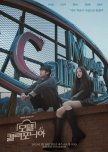
A complex story with many more deep-seated conflicts and emotional drama than it initially reveals
Prologue:"Motel California" piles up drama in reverse, so to speak. The more we learn about the past, the more we understand of the tragedy...
Dramatic. Grievous, too, yet rounded in itself. Not joyful, yet the ambivalent emotions subtly creating a strange kind of warmth, because it's about human beings. Deeply hurt, insecure, imperfect and even embittered human beings who try to put aside their suffering, even suppress it, and still live their lives as best as they can.
Demanding, because as audience we might initially be somewhat reluctant to open our hearts to these people in "Motel California". (But we should, it´s worth it.)
A bitter, moving, and yet beautiful story about despite their defect nevertheless lovable people.
"Motel California" is a healing story amidst a structurally sickening, toxic work and living environment. It's primarily about the 'good, true and proper' origin, the outer impression, the 'right' educational institution, the 'right' gender (male). Additionally it is as well about exploitation, discrimination and bullying. It is also a story about love. Primarily between a boy and a girl. The girl ultimately struggles through life as a deeply sad lone fighter after having to leave behind the only much loved, loyal companion – the only one who, in her eyes, ever made her feel warmth, unconditional trust, reliability, and care in a cold, rejecting world.
"Motel California" is a complex story with many more deep-seated conflicts and emotional drama than it initially reveals. The recurring flashbacks gradually provide more valuable insights. This helps us better understand what is presented to us "today." Accordingly, only over time do we get emotionally closer to the protagonists, i.e., in the course of the second half.
"Motel California" tells of complicated life, of great pain, and above all of the FLs pain, who barrels through life with a disturbingly repellent shell. But many others also carry injuries and scars. Wonderful actors help us feel the drama within the drama through their strong performances.
The story, based on a novel, tackles demanding material. Quite courageous, because what torments and drives the two protagonists internally is not always pleasing on the outside. Especially the FL, with her incorrigible defiance and exorbitance, is sometimes hard to bear. Moreover, her deep pain, which sometimes almost spills out of her eyes, can be quite intense. Respect!!! For daring to uncompromisingly and soulfully tackling in a KDrama the distressing, uneasy dark side of emotional realities in an otherwise highly polished South Korea. And for Lee Se-young to take on the difficult, deeply wounded, ambivalent, and insecure character of Ji Kang Hee, who fights against the rest of the world from a seemingly lost position.
This is not a light-hearted KDrama. "Motel California" is not easy fare. Nevertheless, the latent severity is repeatedly dissolved by soul-warming scenes or channeled through pointedly inserted, humorous scenes. Additionally, there are soothing details between the lines, e.g. in dialogues, mise en scene, and atmospheric lighting.
What ultimately turns out to be a love story, at first starts of somewhat clumsily. At times, it might feel like a study of an almost toxic emotional dynamic between a man and a woman. In their rather awkward addictive habit and sometimes inappropriate ambivalence the love between them still seeks its way in difficult terrain. Over time we get to know the characters a bit more – their motives and backgrounds, as well as their unresolved, unredeemed feelings of guilt. Compassion may spread. And quite a lot so. This is KDrama par excellence. It's worth sticking with “Motel California” and not abandoning the two main leads (nor everyone else) along the way.
Layer by layer, the cloak of forgetting and suppression is gently removed over the 12 episodes. This cloak protectively covered the unresolved feelings. Yet, ultimately it turns out as emotional prison that has long prevented authentic, sincere encounters and healing communication.
The 'Motel California' ultimately represents a nurturing vessel for such encounters and healing. It is a symbol for origin, stigma and opportunity alike. The 'Motel California' forms an island in the sea of cruel rumor mills, social control, social ostracism, and discrimination. The name of the motel – "California" – represents the dream of another world. The motel as an establishment, in turn, stands for what the protagonist was always ashamed of in her childhood. For what caused her to experience painful 'othering' as a child. She was different and grew up under shattered, disreputable, and ultimately tragic family circumstances. I.e. that she is different – not as she should be – was (and is) mercilessly mirrored by her environment. She was not recognized as a full member of society in a small world where everyone seems to know everything about everyone else . And the 'disreputable' that clung to her was inevitably linked to the 'motel' in her eyes – the motel as a mirror of her inconsolable, almost unbearable, and still unresolved injuries of her childhood and youth. Nevertheless, the motel is also her home and witness to her forgotten (including good) childhood memories. "Home, Bitter Home", so the title of the original novel. At last the Motel also becomes a social hub for those who are ready to find redemption. This is thanks not least to Kang Hee's father, who, with his liberal, unmistakably patient, and trusting manner, opens the field for it.
Nevertheless, I also have criticism:
Quite inappropriate in view of the difficult, emotionally complex theme of this KDrama are, in my eyes, the really intrusive product placements – almost as if a commercial break is being inserted every now and then... Cringey!
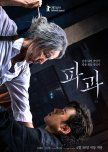
Deconstructing the myth of the invincible killer with the raw reality of an aging body
When action heroes grow old – what remains?In the case of Pa-gwa: This is NOT a late-career revenge drama. It is an anti-myth. The KMovie Pa-gwa fundamentally challenges the conventions of the action genre.
The title Pa-gwa (파과) is a clever play on words. In Korean, it refers on one hand to "bruised fruit" that is no longer fit for sale. On the other hand, it historically signifies an age (16 for women, 64 for men) marking the end of one's "prime."
At the heart of the film is Lee Hye-young, delivering a masterful performance as Hornclaw through sheer presence and minimalism. While many praise her as a "strong woman," her true power lies in being overlooked. Hornclaw is not stylized as a superhero; she is a woman who exists at the edges of the frame, rarely heroized in frontal shots. She is a character becoming increasingly invisible—socially, physically, and cinematically.
The film treats this invisibility not as a deficit, but as a societal reality. An old woman who is overlooked, ignored, and underestimated—that is precisely what makes her dangerous. The message: A society that ignores older women creates its own formidable adversaries.
The movie consistently breaks with action clichés: there are no "cool" weapons or heroic fight choreography. The battles are grueling, often messy, making mistakes. Here, violence is not a spectacle; instead, it serves as a memory of past times and pains. It feels more lifelike and less polished.
The narrative style is equally unusual: the story remains open and incomplete, refusing simple explanations or neat moral judgments. The film does not attempt to organize violence, aging, or guilt—it simply endures them. This feels more honest, reflecting a real life that isn't always logical or conclusive.
But what makes the KMovie Pa-gwa so special in my eyes is its tenderness. The film takes time for quiet moments, observing the mundane with a mindful, unsentimental gaze—completely without trying to be "cool." Eventually, this is what makes it particularly powerful and human.
Pa-gwa tells the story of what happens when action figures grow old and can no longer win their battles with ease. And indeed: Lee Hye-young is the reason this film resonates so deeply and stays with you long after the credits roll.
PS:
The KMovie Pa-gwa (directed by Min Kyu-dong) is based on the acclaimed novel by Gu Byeong-mo.
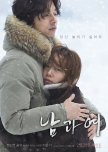
It is about the area of tension between longing, choices in life, accountability and responsibility.
"A Man and a Woman" is emotionally profound, yet subtly leading into intimate depths where it hurts, too. There are no pink ribbons. And the intimate encounter of two souls does not miraculously sort out the problems of the world in a groundbreaking way. Life is difficult. There are also unexpected beautiful moments. But life remains difficult. Is that why it's bad? Only bad? "A Man and a Woman" paints a portrait of two people who have careers of their choice and families - but life is still no lollipop. It is about having an affair. It is about wanting another life. It is about the area of tension between longing, choices in life, accountability and responsibility.Highly valuable.
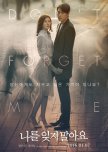
A love story, that is told in a completely unorthodox way. Impressive in a refined manner
Capturing so much feeling quite sensitively and lifelike, “Remember you” is definitely for KMovie connoisseurs - with a memorable story and two wonderful leads deeply touching the audience's soul.However, the story is not at all concerned with meeting common audience expectations. The KMovie chooses its own pace while poetically linking the loose threads into a three-dimensional pattern – in a stringent but by no means linear manner, purposefully but without any haste.
“Remember you” (or rather “Don’t forget me”, as the original title says) is mostly a love story through and through. However, it is a love story, that is told in a completely unorthodox way.
The past that lies behind – with the memory of it having the potential to ripping emotional abysses with brute force. The future, that lies ahead – with hope dwelling inside. The present – in which the ´now´ can become a safe zone. Within and throughout: the transcendent power of love.
There is something meditative about “Remember You”. We´re stumbling alongside the amnesiac protagonist through his (to him) strange present, with people coming and going. It almost feels like in a dream. He acts on the outside while inwardly commenting and silently asking his questions to an inner authority that should know... But the inner authority is mute.
The memories of the male protagonist, who suffers from amnesia, come back in fragments and immediately collapse again. The soul has found its own ways in dealing in a somewhat more bearable way with an almost unbearable reality. But ultimately, this situation, too, still is not really bearable either. The KMovie portrays a desperate psychological wrestling with reality - of the male lead on the one hand, and the female lead on the other.
Before we notice it, at the latest as soon as the puzzle has been put together, we suddenly find ourselves very close to the no less desperate inner world of the female lead. After being very close to HIM for so long and learning to feel with HIM, we suddenly find ourselves compassionate with HER emotional horror trip...
Impressive in a refined manner!
PS:
The KMovie “Remember You” is based on a short film by the same director. Based on this template, crowdfunding was used to raise funds for an international independent cinema film production. $32,000 was donated for this purpose. When it premiered in South Korea, “Remember You” grossed around $2 million already.


