
 News


I Feel You Linger in the Air: Uncut Version
57 people found this review helpful
This series is perfect ?
I Love this series too much, I will definitely watch this again. Episode 6 gave me butterflies in my stomach. I was just smiling all through. The chemistry between the main leads is out of the world. I hope it gets more high ratings,o hope people get to watch this and it will be very popular not just in Thailand but also international. It’s been a while I got hooked with a Thai bl series. ooohh my favorite couples. Bright is very handsome and Jom smile is perfect. I can’t wait for episode 7 next week. Perfect Series for me.Was this review helpful to you?
This review may contain spoilers
"Remember, your fate hangs on the tip of your blade." ~Zhou Fei
Legend of Fei is not only a Wuxia drama, but it has several cute love stories, an intriguing mystery, and a lesson that all of us should learn from. This drama is based on a popular Chinese novel with the same name by Priest, which I have not read before. (Translated version is only available as machine translation) Two large downsides to this drama were the the terrible editing skills, and unrealistic backdrop that was very obvious from time to time, but the lovable characters and fascinating storyline eventually overshadowed these disappointments. It is quite understandable that many would be unwilling to "wait" more than 20 episodes or so to finally get into the drama, and this is a barrier that everyone should be aware of before attempting the drama. With strong martial arts skills and intelligent thinking, Zhou Fei teaches us that we can achieve our dreams, but achievements are only the result of endless and persistent hard work. With many setting high expectations for a drama with their favorite actors or actresses, this rather low rating isn't very surprising, but I really enjoyed it.Honestly, I don't even know if this contains spoilers. If it does, please message me about it.
Story-8.0
With the usual pugilistic world (Jianghu), there are admirable heroes who help others, but there are also people greedy for wealth and power. Zhou Fei is born into Forty-Eight Fortress, a sect founded by her grandfather (Li Zheng) known for its good deeds and efforts toward eliminating evil. Growing up, Zhou Fei had always been taught by her parents to only do good, to work hard. Her mother seems overly strict to her, but loves her more than anything in the inside. Zhou Fei longs to please her mother, and to achieve this goal, she plans on becoming a famous heroine. After a series of events, Zhou Fei meets Xie Yun, who appears carefree, and quite annoying. Zhou Fei leaves Fourty-Eight Fortress for the first time, and along with Xie Yun, her two cousins (Li Sheng and Li Yan) and some newly made friends, they start to uncover the reasons for the deaths of her grandfather and many other martial artists. The moves for the martial arts were choreographed fairly well, and it was clear that each actor and actress had put in a lot of effort to perfect their moves. I also really liked the costumes; Although they were simple, they fit perfectly for every character, and the light-weight clothing worked reasonably well to portray everyone's personalities. Each story behind the famous heroes are very motivating, and we learn lessons along with A'Fei. The story starts rather slowly and quite boring (and a few episodes could have been cut), but to make fire, wood is needed, and I promise, as the story progresses, it becomes more and more intriguing. There is no clear plot until episode 20-something, which disappointed many viewers. The story revolves around the idea that evil may seem to win, but oh no, it doesn't. Only with a kind heart can you rule the world.
A very important aspect of this drama is the mystery incorporated into it. An item said to be able to assist one into ruling the world was coveted by countless people, and this didn't exclude the evilest of the evil. In the later episodes of LoF, the main plot is revealed, and things do not cease to captivate.
Acting/Cast-8.5
Legend of Fei has some of the most lovable characters in the history of Wuxia characters, as well as some of the evilest. There were some with some annoying attributes, such as the Third Prince, who I still don't know why he was included in the story. We have quite a few comedic duos that give us quite a show, and each and every character has their own story, no matter if their journey throughout their life was tragic, hopeful, or just mediocre. Here are my descriptions of a few of the most influential protagonists and antagonists:
ZHOU FEI and XIE YUN- A strong-willed young girl, Zhou Fei had wild ambitions, but luckily, her ambitions were to do good for the world. (and impress her mother) She and Xie Yun start on a rather bad note, but friendship quickly links them. She discovers that the world outside of her home is not all that cheerful and fun, but rather dark and scary. A hatred towards the Demons starts to grow inside her after she learns of their countless evil deeds, and she manages to kill many of their leaders through the guidance of many martial art heroes and heroines she meets on her journey. The persistence in Zhao Liying's eyes are present throughout this drama, and her acting never fails to disappoint. (I am not a die-hard ZLY fan) Our female lead matures from a girl ambitious to be the best to a young woman who is admired by the many people she had helped. (may contain spoilers:)With a complicated past, Xie Yun is not your typical male lead. He and Zhou Fei first meet when Xie Yun "steals her father". Underneath his cheerful personality hides an unforgiving identity, which Zhou Fei and everyone else learns later in the drama. This identity isn't very surprising, but is crucial to the story. He is very agile, and always manages to escape the Demons without even exerting too much energy. As talkative as he is, he is also very intelligent, although he doesn't always show this aspect of his personality. In front of Zhou Fei, he is funny but also caring. Although Wang Yibo could be considered a rookie actor, he managed to pull off the complex personality of Xie Yun, which is quite impressive.
Wang Yibo and Zhao Liying do not have that fire chemistry, but their pairing was more than acceptable. It may be disturbing to some that ZLY is 10 years old than WYB, but their interactions in the drama made me forget about this irrelevant detail. Xie Yun and Zhou Fei are our troublemakers, they are really two peas in a pod. They only want the best for each other, and will go to the ends of the earth to save each other.
LI SHENG and WU CHUCHU- Another cute couple, Li Sheng and Chuchu are very adorable as well. Li Sheng never manages to beat Zhou Fei in martial arts, and was rather jealous of her. Later, though, he discovers that he doesn't always need to be #1, because as long as he can use his strong skills to help, he is satisfied. Even though he doesn't have the strongest martial arts skills, his leadership and intelligent are two of his main strengths. I found him particularly annoying in the beginning (because he was rude to A'Fei), but his smart and caring personality eventually stole me heart. His love interest, Wu Chuchu, was born with a silver spoon, but her parents are both killed mercilessly and she spends a large portion of her time with Zhou Fei and Li Sheng on the run. Some of her early actions were very frustrating, because she was doing some really dumb things, but her determination to avenge her parents led her to even start to learn some basic martial arts skills.
LI YAN, YANG JIN and YING HECONG- Oh boy, our three troublemakers. They are quite the trio! These three never fail to make me laugh, especially Yang Jin. His motion of rubbing his head is his most famous movement, and makes him appear dumb and useless, but he has some strong martial arts skills. The actor who portrayed him did a great job in showing his funny but strong personality. His love interest, Li Yan, could be said to be even dumber than Chuchu. I love her as well, but some of the things she did were very unexplainable, and led to all sorts of trouble. She wasn't a very crucial character here, but she did manage to add some comedic elements to the show. Last but not least, Ying Hecong, aka The Poisoner. I didn't really understand his presence until I realized that he was very knowledgeable in poison, and he eventually was a very helpful friend to A'Fei and everyone else, and like the others, after undergoing a tragedy or two, he musters up the courage to stand up for what is right. I loved this trio, they are hilarious.
HEROES/HEROINES- Without the wise and famous heroes and heroines, Zhou Fei couldn't have achieved what she did. Each and every martial artist gave her priceless life lessons, as well as had some of the most beautiful stories. Although most did not have much screen time, they each played a crucial role in fighting the Demons, and passed on their skills to Zhou Fei. Li Zheng and Duan Jiuniang had an unforgivable love story, while Ji Yuncheng was an honest man who couldn't forgive himself for a certain event. Madame Ni Chang was a great woman, and saved Zhou Fei and the others quite a few times. Unlike the Demons, these wise men and women were even willing to give up their life to keep the world at peace, and they probably could have a drama just about themselves!
DEMONS- Demons are demons, evil and merciless. They do not even know what the treasure is, but spent years trying to uncover it. Without these terrible characters, the drama could not have progressed, and the actors/actresses did quite phenomenally as the evil roles they portrayed. I wish that some of them got a closure where they learned the valuable life lesson, but even if none did, their satisfactory ending was enough. Each of the demon leaders had their own detestable personality, and not all of them wanted the treasure.
Music-8.0
The music in this drama wasn't very memorable, but it was far from bad. The OST could have been more delightful with a few more songs, and it was kind of a surprise that Zhao Liying didn't sing any of them. Wang Yibo did, and the tune and lyrics fit quite nicely. As for the background/instrumental music, they were very common in fighting scenes and calming scenes, and were also a snug fit. With the mysterious but upbeat music, the audience could predict that Zhou Fei would win the battle, or that some despicable Demon was about to be defeated. In Forty-Eight Fortress or with our Yunfei couple, the soft music showed us the beauty of peace.
Rewatch Value- 8.0
If I had to rewatch this drama, I would most likely skip the first 10-20 episodes, and go straight to when I started to actually make strong connections with the characters. I did enjoy the second half of the story, and did not skip a single part of it.
Overall-8.5
The start of the drama was a little disappointing and underwhelming but the ending was not, as well as the story as it progressed. Some interactions between the characters were hilarious, while others were tense and dark. We are given three cute couples as we followed the main characters' journey to eliminate evil and help the poor civilians. No matter what happened, Zhou Fei did not give up, and her persistence was the key to defeating the Demons. She and Xie Yun have a very valuable relationship, growing from an unfriendly encounter to unbreakable love. And without the amazing acting of every actor, this drama wouldn't have been able to portray the most important life lesson, which I'll leave for you to discover.
Was this review helpful to you?
This review may contain spoilers
Cheeky, cheerful and heartfelt, drops of suspense included
“Knight Flower” is set in Joseon days, yet it is no epic, historical KDrama in a classical sense. It has endearing comedy to offer, the touch of a romance and even a touch of crime thriller, while the setting back then in Joseon is accounted for predominant neo-Cunfucian social ethics in those days. In particular, back then being widowed was bad news for women, whatsoever. (See side note). This circumstance is providing the hook for a cheeky and fresh-minded KDrama plot.In "Knight Flower", the widow simply cannot get herself to merely spending the rest of her long life in honorable, virtuous seclusion, mostly invisible to the rest of the world, trying not to be too much of a burden to her in-laws, and otherwise mourning the deceased husband (whom she never actually met) in the afterlife.
No, this widow does her own thing. She is not interested in being reduced to the virtue of mourning. During daytime, her everyday life is that of a honorable widow and decent daughter-in-law. Yet, at night she is dressed in black, wearing pants and a mask, climbing over walls, jumping over roofs and helping the poor – as "Midam", a kind of Robin Hood of Joseon. Such is her double life. All goes well, until one day...
While the plot is drawing its dynamic appeal from the actually rather sad background of a dubious tradition of treating widows (not only practiced in old Joseon, and not only back then…), the good news is: "Knight Flower", as a production broadcast in 2024, is built on intelligent emancipation, too. What is called for is not compliant bowing, but rather self-confident, creative solutions in dealing with life. Obviously South Koreans are craving for such a role model these days. The show was quite a success. People there apparently enjoyed it. So did I.
"Knight Flower" is cheeky, cheerful, and heartfelt, drops of suspense included, thus with alluring wit offering an enjoyably entertaining genre-mix.
------------------------------------------------------------
SIDE NOTE: --- Yeolnyeo or Yeolbu, the virtuous woman of Joseon ---
A loyal subject can only serve ONE king and a virtuous woman can only serve ONE husband. This perhaps briefly summarizes the core of the moral teachings of the period between the 14th century and the beginning of the 20th century. Practically speaking, this implied a widowed woman could face death penalty, if she ever wanted to marry again.
Women had to be obedient to their parents and in-laws. They had to honor their husband. And after his death the eldest son had the say... The greatest asset of a woman, besides bearing children, was her virtue. And that was eventually all that was left, if her husband might have died before herself. There was even granted an official award for valuing outstandingly honorable virtuous widows with the reputation of being a Yeolnyeo or Yeolbu. Thus they had to be particularly determined with living as a commendable model wife even after their husband´s death – according to all the rules regarding morals and daily routines as set out in detail in the book about good conduct for virtuous women…
However, the pressure on widows to be respected as Yeolnyeo became excessive over time. At some point it was even common for widows to consequently take their own lives, too, thus expressing their praiseworthy being loyal to the husband until the bitter end. In this way, they could posthumously provide their family (or that of their deceased husband) an honorable glory of virtue in which all family members could bask. Eventually, suicide was even expected of a widow – especially if she became a widow at a young age...
Was this review helpful to you?
I don't know how this drama didn't get as much hype as I expected
I haven't seen many people talking about this drama and this pissed me off a little bit because of how good it is. I just finished it and I can say this was one of the best dramas I've watched ever. I thought it would only be a comedy drama without much depth, but it was so much more than that, it was so interesting, heartbreaking and funny all at the same time.The cast of this drama is simply amazing, Shin Hyesun was the perfect choice to portrait our beloved Mr. Queen, she did an amazing job and never failed at making me laugh, and at making me love the character each time more and more.
I don't know how to say more this without getting super excited and spoiling the story, so I'll leave my review at that, and I will leave my recommendation to those who came here to decided if they'll either watch it or not.
Was this review helpful to you?
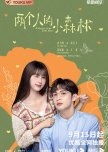
A Romance of the "FOUR" Little Forest
A Romance of The Little Forest (两个人的小森林), is another sweet basic romantic-comedy drama narrating around a bubbly girl with her cold eventually turned warm lover. But what makes this drama stand out is the chemistry and adorableness between the two leads and.... when the main couple is actually not the main couple.The drama narrative revolves around an internet beauty influencer chasing a botanic professor and eventually, both of them fell in love. The drama has any other cliche troupes you can find in other rom-com dramas, but the female lead's bubbly personality, adorable antics, and sweet funny and witty dialogues will make you want and unknowingly enjoy the drama!
Yu Meiren, the internet beauty influencer as well as a professor in ornithology (study of birds) is played by Yu Shuxin. This character is made especially for her, she is able to embody the character, and nobody can pull it off so accurately than her. All the adorable antics, carefree attitude, bubbly expressions and more. Though her character may come off as a 傻白甜 (those sweet, innocent, gullible female leads), but she is not. She is sweet and cute, but she has the brains and courage - she is willing to take risks for what she believes in and what she loves; she is not afraid to express herself. Especially during the end of the drama, where she finally comes to terms with her appearance and make-up.
Zhuang Yu, the botanic professor, is played by Zhang Binbin, and he did a great job, he manages to infuse himself into the character! Zhuang Yu is a cold and serious professor, but rather than making him a totally cold person, he uses subtle micro-expressions in the earlier episodes when Yu Meiren is around him or doing something funny. The subtle expressions definitely help the audience to understand and see the process of him falling for her.
What I loved about the drama is the chemistry of both leads and their character development after meeting each other. Zhuang Yu always reassures Yu Meiren - reassuring her that she is pretty the way she is, reassuring her well-being and more. And after meeting Yu Meiren, Zhuang Yu also became more lively! He can speak romantic words, that maybe cheesy but it is also romantic at the same time.
What I find lacking (irritating) from the drama and I believe most people find it too is... the second couple has more screen time (and probably a kiss scene) than the first couple. The second couple's narrative is also very classic, a village girl falling in love with a CEO and so on. The drama dragged the second couple's storyline so long and draggy causing the main couple's scenes to be cut by a lot. In addition, a lot of the main couple's kiss scene and sweet scenes in the drama is also cut short, the scene kiss scenes are even longer and more 🔥 than the one that made it into the actual cut. However, if you are craving more for their chemistry, you can watch the behind-the-scenes! Their behind-the-scenes are full of fun, sweetness and comedy!
A Romance of The Little Forest is truly an enjoyable drama, maybe not the best romantic comedy drama but it sure has its charm! Overall, if you are looking for a sweet romantic-comedy drama that will make you squeal do watch this!
P.s. this drama also has really good and enjoyable OSTs
Was this review helpful to you?
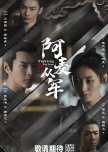
Fighting for Stupidity
When I read the synopsis I was excited with the premise of a strong female character who excels in war strategies and becomes a female general. The FL is intelligent, devious at times and cross dresses as a man, there's a lot of male brotherhood camaraderie she develops with other male characters which is nice because sometimes its not all just about romantic love. While she is talented, the parts where she goes from commoner to elite fighting soldier with top notch archery and horsemanship skills was unrealistic.The love story really falls flat in my opinion. The ML is good looking but he's a bumbling idiot supposed playboy. His character is really flat and not bright. Its hard to believe he can last as a general for even a minute. I can't really feel drawn to his character. The love story between them doesn't have any emotional pull, its a bit robotic and forced in the acting. Maybe its me but it might be more interesting to see two robots fall in love than the FL and ML.
The SML and the FL seems to have more chemistry as they are on opposing sides and the SML is smart and bold. I watched it because I wanted to see how their story unfolds even though its pretty clear the FL will not end up with the SML. They should have really developed their story more because it was more compelling and a bit more complex than the FL's love story arc with the ML.
Overall it could have been executed better, the last dozen or so episodes was a bit of fast forwarding. I completed it because I was curious how it works out between the FL and SML and how she breaks through to become a general.
Was this review helpful to you?

This review may contain spoilers
I'm a little surprised that I watched this entire show, because I was thoroughly disappointed by it early on. Too much of this drama just didn't make sense. First off - let's start with the title. While Yoon Se Na was an honest and well behaved girl, she was not lovely or playful, as many translations of the title says. I don't quite see why all the men wanted to spend time with her, because she really sucked the life out of each encounter she had with other humans. For this I mostly blame the script, and some wooden delivery of it. The show did not make me believe that Se Na actually wanted to be a songwriter, she just seemed coaxed into it by Hyun Wook. It also did not help that almost every secondary plot point was either underplayed or completely disappeared. My Rating: 6.0
In Short: This love story between a boring young girl and a completely unprofessional CEO was truly dull at times and slightly enjoyable at others. The only plot point I enjoyed was lonely idol Shi Woo, though they could have done way more with that as well. SIGH
Pros: The setting is one that I usually enjoy, though it did not feel organic in this show. However, the lighting and filming is really enjoyable, and the dog is cute. The music was also quite good.
Cons: It really bugs me when most of the characters on the show are senior management for some company, and absolutely none of them know how to do their job. Everyone at ANA was unprofessional, and let their personal feelings decide at every turn. Also, the main lead kept his secrets (and lies) for about 8 episodes too long. And the last episode of the show was one of the worst episodes I have ever seen. Somehow, our leading lady was suddenly a complete a-hole for no specific reason.
Was this review helpful to you?
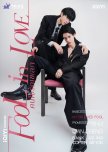
This review may contain spoilers
Just like I expected it's flawless. Completely gets you hooked just after two episodes.
I don't write reviews until and unless something hooks me up, but I'm being very honest here I love it so much, I watched it's teaser which was extremely engaging, then after few months noticed the Trailer in my YT page, I was so happy fr.It's definitely going to be toxic, but I'm really ready for itt, I've already fasten my seat belt for this suspicious ride.
I waited for few days and finally got the first episode believe me the 1st episode was more than enough to hook me up. It had all those elements which can actually hook audiance to watch the further episodes, i was a bit shocked that it has literal 20 episodes but no worries 2 episodes per week. I'm so happy, already.
I felt uneasy after watching the first 2 episodes cuz I realised I had to wait for next 7 days to watch the next 2 episodes. I'm seriously say this drama is too good, among what's releasing recently.
Just the first episode and I could already feel the tension between the MLs, the why they stared at each other, one hated those eye contacts and the other loving it more.
The why P'Ing stared at Yok everytime, he was definitely longing for Yok like literally down bad.
Though he tried his best to look good, he couldn't stop himself, couldn't stand Yok's hotness.
P'Ing's chaotic energy is fantastic, and all episodes really highlighted the intense, rebellious chemistry between the leads.
Even during their conflict, the eye contact was incredibly intense.
The sea kiss were they got caught off guard by Itt, the way Yok ran after Itt I think he actually wanted to say about him having crush on It since a long time. And Itt actually clings a lot around P'Ing, looks more like he has a crush on P'Ing that's why even a small "Happy Birthday" by P'Ing can please him that much huh, he tries to impress P'Ing in every way. But I think he's trying to get P'Ing into his trap, P'Ing acts very roughly and dry around him and his mother ( stepmom ) maybe Itt is planning to get revenge, his eyes says that.
Their bickering relationship hooked me even more, they fought like kids, so cute for real. Omg I'm definitely in love with this particular series, not a single episode upset me.
A part that looked concerning was the forced r*** part, honestly no-one would find a solution like that, Ing didn't mind it which is a big thing, maybe cuz it was Yok. That part was truly inhumane.
But if P'Ing didn't mind I think it's okay in a series, but irl this is too inhumane way to treat a human being.
The part was covered up, which is better. They argued cutely about taking responsibility and whatever.
From fifth episode onwards Yok is being too well mannered around P'Ing which is a bit suspicious for me. P'Ing playfully being adorable melts my heart, He's getting sweet, and a bit too horny I'm so damn suspicious. But maybe he's guilty for that abusive incident so he's slowly breaking his walls.
Omg P'Ing and Yok they're so cute, I'm getting cuteness agression
Was this review helpful to you?
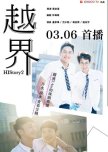
This is a very well written, well acted, well produced mini series I highly enjoyed.
The cast was very charming, their interactions felt natural, the chemistry was on point. I really liked how they included the volleyball theme. It's not only a series about cute boys falling in love, it's also about your dreams and not giving up (even though they had not enough time to explore this further). All the side characters were great to watch. It was funny, light hearted, romantic and really kept you on the edge of your seat. The music is worth mentioning too. Very, very beautiful. Unfortunately because of the low budget, the development felt rushed sometimes. Even so they did a lot with 8 episodes.
10/10
Was this review helpful to you?
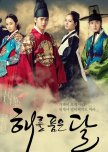
STORY - Interesting storyline! It has great drama, touching romance, some suspense and action, (somehow annoying) politics, and humorous moments. And it gets more and more exciting as the story unfolded. I was easily moved with the story. What else could you ask for? I didn't expect to have lots of laughs from this drama. And of course, you'll see a lot of sad scenes, a lot of crying. But it wasn't until the last episode that I cried my eyes out! Really. Some were really heartbreaking. Some was just too illogical, and too sad, to happen. Other than that, the ending was lovely. (You'll laugh with still tears on your eyes.)
However, I can't get away with its downsides. I think the drama lost some of its energy on the second half. (Or I guess the first episodes were just too good!) I won't say there was no boring moment because there was some time that I just wanted to skip episodes and proceed to the last, I just find it predictable. (But I'm glad I didn't or else I could have lost the story.) BTW, I hate it when one character just can't move on, being so martyr, when he deserves to be happy.
ACTING/CAST - I loved to watch this drama bec. of Jung Il Woo. But in the end, I also learned to love Kim Soo Hyun. For his superb acting, and looks. He gave justice to his role as the King. (Young Lee Hwon was equally amazing.) I couldn't say any flaw. As for Il woo, he has always been good. Though I think I love his character here less. Han Ga In was a real beauty, but I honestly thing the younger Yeon Woo did her role better. I also enjoyed watching the side characters, each of them. The younger actors also did a great job that I quite got sad when their characters got older.
MUSIC - I love Back in Time and the instrumentals. I thinks they we're all perfect for the diff. moods of the series. But to be honest, I didn't get to appreciate its OST until I listened to it after finishing the drama.
REWATCH VALUE - I'm not into rewatching but I suppose I will still watch it in the distant future. :)
OVERALL - I give it a 9 overall. I love it to bits. Definitely a must-see. =))
Was this review helpful to you?
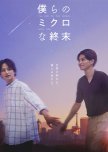
The end of the world can even change my taste in man?!
In a normal situation I would have hated Ritsu so much that I could not have enjoyed the drama. But with this set-up, I have to say, while I still don't really agree with how it turned out, it makes sense! They have found a reason to live, regardless of the end of the world, now it's up to them to make this reason flourishOverall:
The HISTORY is super interesting! Especially the little details about the characters that are revealed in each episode. And Yuuma ... I won't say anything because it is a spoiler but I loved Yuuma's part in this story, I found him strange, magical but kind of lovely
The CAST was not bad at all! I read the manga before watching the drama and I think their interpretation was quite good.
I loved the MUSIC, especially the last song! I think the music reflected the melancholy but bright world they lived in.
A little note, I didn't like masumi's comment about meguru's clothes, but it's a very small scene and he kind of redeemed himself later on
In general I recommend it! It's not the usual highschool drama, some of the themes can be a bit heavy but the execution of the plot was done well in my opinion and FOUND FAMILY VIBES!! If you like this theme you must watch it✨
Was this review helpful to you?
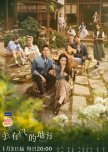
Genius screenwriters – My absolute Favourite Cdrama !
After watching nearly 100 Cdramas and an equal number of Kdramas, I finally decide to write my first review because I’ve found my favourite Cdrama (Meet Yourself = You Feng De Di Fang). I am not sure why this English title since it is not a literal translation, but I think it is quite appropriate. I have thoroughly enjoyed the journey with the Yunmiao village people. How I wish it was a real place we could travel to and stay there. There are beautiful sceneries in China but here the landscape, farms, houses, markets, narrow alleys, seaside views, and mostly the people captivate our hearts. The vision of sustainable village development resonates with me who was born on a very small island still struggling to earn income from tourism.The relationship development between the lead couple was a model of maturity, wisdom, good communication, realistic understanding of each other’s needs, mutual time and space giving, selfless love but keeping the childish playfulness, humour, and hot romance. The stories of each person were all real-life situations. I love the characters with their beautiful personalities as well as their weirdness and weaknesses. Xie nainai is indeed my heroine, I regret I have no grannies.
I have no words for the script writing. I have also watched Go Ahead another favourite Cdrama from the same screenwriters. The writers are amazing geniuses to come up with such wholesome conversations as some have said, chicken soup for the soul. I can rewatch, which I don’t usually do, just to enjoy the script so beautifully and simply worded. No frills or make believe. It was all so sincere and touching. There is no need for plots in such setting.
The actors were all top-notch. I have not watched any of their previous work, but I will follow them from now on. They made me feel part of their conversations and stories. Their acting does not feel like acting at all. They felt like real people and performed so naturally. Crystal Liu’s voice is really soothing.
The OST’s music and lyrics matched the script perfectly.
Someone said she will recommend this masterpiece drama for the rest of her life. I will do same. It is not exaggerated to say that I may have to wait for some time to get this one dethroned as my absolute favourite! I count on you dear screenwriters 😊
Was this review helpful to you?
 1
This review may contain spoilers
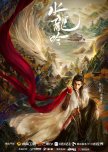
A very Chinese-flavour drama with eastern phylosophical ideas
WARNING: MAJOR SPOILERS -This post is part of a trilogy where I analyse only the cultural and historical artistic aspects, as well as two Eastern philosophical perspectives with strong presence in the drama, without tackling other elements such as wuxia themes, Confucianism, sci-fi inspiration, and so on. The links to the complete three-acts review with images are in the comments.
By accident when adding this part, I erased the previous review :
NOTE: Although the story is remarkable, the execution and direction has flaws that impact the overall result, so the final score is a balance between the outstanding aspects of the drama rarely seen in any kind of drama or serie (that gives the extra points to reach the 8) with its flaws. Luo Yun Xi and Jeremy Tsu - outstanding.acting
-------------
As we enter this THIRD and last ACT about Buddhism, the framework that gives structure to the whole story, it felt fitting to bring the classical theatre resource where a character steps in at the beginning to set the scene and offer context. Honouring that tradition, I’ll quote the answer that Mo’at gives to Jake Sully in the movie Avatar when he asks the Na’vi people to teach him their worldview and wisdom: “It is hard to fill a cup that is already full.”
This phrase didn’t just pop into my mind by chance. Buddhism is a philosophy and religion completely different from Western conceptions and beliefs, and since it sits at the heart of Shui Long Yin’s narrative, I tried my best to do justice to its principles. Although I kept things as concise as I could, this time you’ll need to be extra forgiving with me.
As actor Luo Yun Xi said himself (see ACT 2), Tang Li Ci seeks enlightenment. Let’s embark together on that search and see whether he attained what he was looking for, or if , at the very least, the journey was worthy.
Buddhism, the general framework
“All things are impermanent; they arise and they pass away.”
While Daoism is about finding harmony with the Dao, Buddhism is a path of understanding meant to transcend this world and the suffering inherent in it. It originated in India around the 5th century BC with Siddhartha Gautama who, after attaining enlightenment, became known as Buddha, or “the awakened one.”
The foundation rests on the Four Noble Truths:
1) Life contains suffering
2) Suffering has a cause (craving and attachment)
3) There is an end to suffering (nirvana and enlightment)
4) There is a path to end suffering
(NOTE 1 - Masters Puzhu and Fang Zhou // Although there is one “internal” path to end suffering, there are two “external” ways to walk that path. Puzhu represents the Buddhist archetype of the hermit who isolates himself from humanity and external distractions to walk the path. Fang Zhou represents the Buddhist archetype of the master who actively involves himself in worldly affairs with compassion.)
The ultimate goal is to wake up from the "dream" of cyclic existence, the Samsara, realising the true nature of reality. This is achieved by understanding and internalising several key principles:
Impermanence: All conditioned things are in a constant state of change.
Karma: The law of cause and effect, where intentional actions shape future experiences.
No-Self : The perception of a fixed, independent "I" is an illusion.
Nirvana: The unconditioned state, the cessation of suffering and the end of the cycle of rebirth, achieved by disolving all harmtful states of minds
So, let´s walk this path through Shui Long Yin together.
Impermanence: life as a dream or the stage of a play // “All phenomena are like dreams” - Heart Sutra
Some of the comments regarding the ending of Shui Long Yin revolve around the idea that everything Tang Li Ci did seems meaningless because no one remembers he existed. Even worse, not only are all the bad omens now living good lives, but TLC has never even existed. Was the whole drama, and all the time and emotions invested by viewers, pointless?
In the drama, Tang Li Ci voices a similar distressed question during his dream coma, and Fang Zhou’s answer guides not only him, but us, along the Buddhist path...and might add, the drama.
(NOTE 2 - Zhoudi Tower // In the dream, Tang Li Ci is disheartened and defeated because Yique YingYang is already back after ten years, and he feels that all the deaths and efforts back then were meaningless. Fang Zhou, a Buddhist teacher answers: “Even if YQYY is alive, are all the people who were able to live and enjoy life during those ten years not worthy of that?” … “In this world, not a second of effort is wasted.”)
By this point, we already know there are three stories: the original timeline, where Ye Mo kills Tang Li Ci only to realise that without emotions the Holy Son isn’t perfect and can’t achieve immortality; the second timeline, the one the drama actually follows; and the third one, the new life we glimpse at the end, where Tang Li Ci is no longer explicitly present nor ever existed.
So? Which one is real? The first one we never saw? The second one we grew attached to? The final one we only catch a glimpse of? Buddhism states that just as our dream experiences are mere appearances of the mind, so too are beings, their environments, their pleasures, and all other phenomena. The strong theatre-stage effect of the drama (ACT 1) seems to work like a visual metaphor of this.
(NOTE 3 - Tang Li Ci’s dream in Zhoudi Tower // From a Buddhist perspective, this dream and Tang Li Ci’s confusion about what was real bring up the topic of phenomena as mere appearances of the mind.
This doesn’t mean those phenomena don’t exist; it means they don’t exist on their own, only in relation to the mind. We believe the only “real” timeline in the drama is the one we just experienced because we formed a connection with it. The others feel unreal because we didn’t immerse ourselves in them, even though, at the back of our mind, we understand they existed too - but only from the moment we are introduced to them, not before.
We can see this idea represented in different moments and ways throughout the drama, through both cinematic and narrative resources: the contrast between chaos and fighting versus the calm, quiet tea scene in the Buddhist temple at the beginning; the reality in which Liu Yan lived all those years, where Tang Li Ci is a murderer and the most despicable being, versus Chi Yun believing the marks of Yique YingYang are beautiful and enhance Tang Li Ci’s attractiveness.
(NOTE 4 - All phenomena are like dreams // The quiet calm of a tea ritual and a baby sleeping at a lakeshore versus the chaos and action-packed fighting in the temple’s front yard.)
(NOTE 5 - Matrix (1999) – iconic sci-fi movie directed by the Wachowski sisters // The best way to explain it is this movie
2. Karma, suffering, and samsara: Even things aren´t “real”, we still suffer...Why? How? // “If you know your own mind and develop it, you will become a Buddha; do not seek Buddhahood outside yourself”
Every sentient being wants to be happy and avoid suffering. We tend to think that the causes of happiness or pain are external, but Buddhism states they actually lie within our own mind.
The mind isn’t a material object or a by-product of physical processes; it’s an immaterial and continuous entity, different from the body. Every action we take leaves an imprint or potential on our very subtle mind, and in time, its corresponding effect will arise. Virtuous actions bring happiness; harmful actions bring suffering. This is the law of karma, and it affects all lives, constantly.
At the beginning of Whispers of Fate, Tang Li Ci already has a partial understanding of these ideas taught by his master, Fang Zhou, and he reflects with the monk on intention and karma. When he decides to enter the jianghu, he is, without realising it, following Fang Zhou’s path to end suffering through the worldly-affairs way. At that point, his obsession and his merely intellectual grasp of these concepts and teachings prevent him from truly embracing them, as he still doesn’t fully understand what that way means or how it works.
(NOTE 6 - Tang Li Ci speaking with the Buddhist monk about intention, karma, and suffering. By entering the jianghu, he will come to learn and understand human emotions (hate, fear, love, obsession) and the deeper meaning of things, just as Fang Zhou told him many times.)
So, the world itself is the result of karma — the actions of the sentient beings who live in it. A pure world is the result of pure actions, and an impure world is the result of impure actions. Since all actions are created by the mind, all things, including the world, are created by the mind as well.
(NOTE 7 - Impermanence, karma, samsara // Every relationship and every character is shaped by karma and samsara. Hatred turns someone into an inherently bad person; attachment turns an object into something inherently pleasant and capable of making them truly happy. All mental afflictions work like this: they color reality with their own bias, and we end up responding not to what things truly are, but to the distorted version of them.)
While the body disappears at death, the mind - now called the very subtle mind, and without the memories of that life - continues to exist. Depending on the karma that grows, we reincarnate into a fortunate form (human or god) or an unfortunate one. We can’t choose; karma rules. This uninterrupted cycle of death and rebirth, without any freedom to choose, is called samsara.
3. The Path to Liberation from Suffering, and Enlightenment // “Samsara is like a wheel that turns through the force of contaminated actions performed by mental afflictions”
Mental afflictions such as attachment, hate, malice, jealousy, greed, and delusion are to the mind like clouds to the sky: bad habits that can be eradicated because they are not the sky itself. They are distorted perceptions that cling to things as if they had inherent or independent existence.
In the drama, this idea of clarity as the true nature of the mind is highlighted by Fang Zhou’s teaching: “Every person is born good” — which is also shared by Confucianism, by the way.
The strongest ignorance is the intuitive feeling that we possess a real and objective self that exists independently of other phenomena or things: the ignorance of self-grasping. Because we esteem ourselves so intensely, we feel attracted to objects and people that seem appealing, we desire to separate from those we dislike, and we feel indifference toward the rest. Therefore, attachment, hatred, and indifference arise. I’m sure you’ve already pictured countless examples from the drama while reading this.
Attention should focus on creating mental states that bring real happiness (love, patience, generosity) and also on letting go of mental afflictions completely by addressing their root: the mind’s tendency to cling to a fixed self. By tackling the causes of suffering within, external ones like illness or death lose their power to disturb us. This lasting freedom from mental afflictions and suffering is what Buddhism calls liberation, or nirvana. In other words, this is the path to truly freeing oneself from suffering.
There’s a sequence in Episode 2 that sums up everything above, so I’ll simply replay the dialogue, presented as a voice-over during the scene when Tang Li Ci is leaving the temple:
Tang Li Ci: “Masters and servants can turn on each other for money; brothers can betray and kill each other. In the end, the heart is the hardest to see through. Demons are everywhere.”
Monk: “Amitabha. Right and wrong, good and evil, they are just a thought apart. What you can’t let go is obsession. You’re very wise. You go through the sea of suffering by yourself. I believe you’ll eventually reach the other shore.”
** Some translation don't address the specific term "sea of suffering" but instead go for "salvation lies in your own hands". Although the essential meaning is the same, the second avoid the específico and direct reference to Buddhism - a bad take in my opinion as it's about Buddhist beliefs.
(NOTE 8) The path to liberation from suffering – The journey and the destination // From attachment to life, to the past, and to Fang Zhou, to loving new people and appreciating the human world and its beings, and ultimately managing to let go.
It’s worth noticing that, despite the different levels of wisdom each character had reached before the time reversal, almost all the villains’ endings carry a note of compassion. You might have thought “finally!”, but there certainly wasn’t a sense of “hate” or “I’ll wish you eons of suffering” left floating in the air.
Liberating only oneself from suffering isn’t the highest aim on the Buddhist path. Beyond wisdom, it’s kindness and love for others that form the true foundation for helping all beings reach the same state. Those who seek enlightenment do so guided by the mind of Bodhichitta: a mind that, moved by deep compassion, naturally wants to awaken in order to help all sentient beings directly.
The Buddhas are those beings that, having completely removed all traces of ignorance from their minds, have freed themselves from the dream of samsara and attained omniscient wisdom, along with the limitless ability to help others.
And with this understanding in mind, I hope you can find more meanings to the ones you´ve already found in Whispers of Fate. As for my part, the analysis of this trilogy has now come to an end.
** Epilogue (closing and ending notes) ** - I´ve link the three parts completed with images in the comments to a better review
Whispers of Fate is a drama about loss, grief, and attachments; but at its core, it’s a story that reflects on and questions what it means to be human from a very Chinese perspective, rooted in China’s history while staying in tune with its present. We see that search in every character, although I want to highlight three.
Nothing in this world is perfect, and neither is this drama. It’s a complex and ambitious project with a distinctive Chinese flavour that can look ordinary and simple on the surface, yet be slow and fast-paced, common and uncommon, all at once. And when we bring in our Western viewpoint, shaped by a Judeo-Christian background or even a modern secular mindset, we really do need to empty our cups first.
For me, the beauty of Whispers of Fate lies in its distinctive Chinese aesthetics, but also in the way it blends Eastern philosophies into its storytelling. In a way, the original title “Shui Long Yin” and its literal translation “Water Dragon Chant” is the most fitting, as the whole approach of the drama reminds me of those apparently simple tales and legends through which ancient cultures and societies explained the world, what it means to be human and why we are here.
Was this review helpful to you?
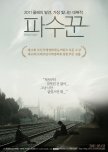
Bleak Night can be uncomfortable at times because it addresses issues like bullying, friendship (in a high school setting), the power (both good and bad) of words, and all the angst and insecurities that come along with being a teenager.
The story is told through a series of flashbacks, which takes some getting used to. The camera work is interesting, as a lot of the shots seem to be hand-held and the color palette of the film is quite gray and drab.
I was completely mesmerized by Lee Je Hoon in this film. Every time he came on screen, my eyes were glued to him. He was definitely the highlight of this film in terms of acting, even if his character isn't necessarily the most likable. Overall, the acting of the cast in this drama is on the better end of the spectrum. All the characters are well portrayed.
My only two gripes with the film: One, there is no explanation of the main character's relationship with his parents and there is a lack of a clear cut ending that satisfied me.
Still, a highly recommended film that shows the darker side of teenage friendships and one of the best South Korean films of the year 2010.
Was this review helpful to you?
Cheers to the production team for being able to produce such an phenomenal series.
Was this review helpful to you?


