
 News


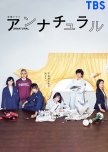
There's some changes in my review
Let me be honest, the reason I've been looking forward for this drama is because of Kubota Masataka and Ishihara Satomi. They're both my favorite J actors. But as I finished this drama, I've fallen in love with all the actors from UDI. The acting is on point and all the characters are awesome, well except from the villains of course lol.Whenever I watched an investigation drama, I will mostly judge the drama based on the cases. Unfortunately, in my opinion, the case in episode 1 is quite boring BUT other than that, all the cases in this drama is very interesting and intriguing. There are few cases that touched my heart and make me shed tears because it's so touching and sad.
This is my first Asian drama about pathology and Unnatural certainly set the bar high for my next pathology drama. Watching the procedure and the conclusion is very fascinating. I learnt a lot from this drama.
I hope there will be season 2 will all the same cast because this drama is perfection and I totally recommend this!
------------------------------------------------------ UPDATE ------------------------------------------------------
Hello, this is me in the year 2021 and I want to share something.
Recently, I re-watched this drama and I noticed that I stated "the case in episode 1 is quite boring". I want to slap myself lol. With this pandemic that's happening all over the world for already 1 year, it made me appreciate the case in episode 1 when I re-watch this drama. It hit too close too comfort with the pandemic that we're all currently experiencing. I understand the panic and chaos that happened in the drama.
With my changed statement, I hereby announce that all the case in this drama is very interesting and intriguing lol.
Was this review helpful to you?
This review may contain spoilers
A bit weird and edgy, yet refreshingly and unashamedly honest about what love life also is like
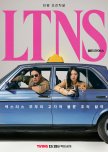
"LTNS" (Long Time No Sex) starts off where other series usually end. TVING doesn't care about age ratings. “LTNS” is unusually explicit for a KDrama. At the same time, “LTNS” presents itself as a pitch-black comedy with venomously satirical overtones. Be prepared for an edgy series that is refreshingly and unashamedly honest about what love life also is like...If desire in a relationship has been turned off over time by habit and everyday worries while instead alienation and disinterest are creeping in... what should you do? The protagonists unexpectedly find an almost absurd option to bring some excitement and “we”-time back into their relationship. With detective zeal, they set out to blackmail those in whom the fire of (actually forbidden) desire still burns happily... and in doing so, they thus try to create a (almost criminal) virtue out of their own need, so to speak.
"LTNS" has fun with scenes that convey uninhibited sexuality one moment, but are completely unerotically thwarted the next. It is somehow down to earth in a most peculiar way. Bedroom stories are being told here that we haven´t been waiting for. All of a sudden such a certain mood for certain hours is eventually collapsing like a house of cards due to a mishap or unexpected incident... A "Bravo!" in this context to the actors, too!
“LTNS” promises a special kind of bizarre, weird series delight with plenty of potshots at the mendacity concerning certain facades of a solid and sincere love life and family life that are usually and preferably presented to the outside world.
Was this review helpful to you?
 1
 1
BL to Thriller or Vice Versa?
At first, my fujoshi heart was all aflutter for some fresh BL content, but six episodes down the line, I found myself spiraling into a rabbit hole of thrills and chills instead.Not a moment of fast-forward was needed through the saga: it's a wild ride through the eerie and the unknown, with narratives that grip you, suspense that keeps you on the edge, and a raw delve into the realm of mental health. It's a murder mystery adorned with a rich blend of folkloric whimsy and literary allegory, each scene more captivating than the last. This series is where the tender allure of BL meets the pulse-racing thrill of a mystery, all wrapped up in a cloak of cultural and literary elegance.
Was this review helpful to you?

What bothers me the most is that this has the ingredients to be a very good story. It's an arranged marriage in which both parts are taking something out of the situation, in which both parties come from very different backgrounds and have different priorities: Chiwa is a hardworking young girl who has to work two jobs to make ends meet while paying for her (terrible) father's gambling debts; Hokuto is a hardworking man with a very overwhelming family, who wants to succeed in business to uncover a family secret related to his past and take revenge. The premise is good.
Now, if we add to that every cliche from Josei manga you can possibly think of, that's when things go south. Hokuto is that kind of male lead who is downright a jerk and whose backstory is supposed to make you feel for him enough to forgive him for being a possessive toxic jerk. It doesn't work for me. Chiwa is a very interesting character in premise but the moment she starts getting ~feelings~ for Hokuto, we lose her. We have, however, a couple snippets of the Chiwa who should be, I can count at least 3 times in which she read Hokuto and his family for filth, and that is the direction I wish this would have taken. Furthermore, she has, like I said, a father who is constantly getting in debts and disregards her well-being, but instead of it being taken seriously, the comic relief they (think) they're turning him into transforms Chiwa's struggle into something less important.
To that dynamic, add every other thing you can fit in 12 episodes: love triangles (plural), betrayals, paparazzi drama, multiple near death experiences for various people, grudges with daddy, slut shaming, women hating other women on principle, weird family connections pulled in the last minute and making no sense, you name it, it's all there.
I can't help but compare this with Please Love The Useless Me because a) they're both based on Josei manga b) they both came out this year c) they both have the "cold male lead/cute female lead" premise d) they both have Dean Fujioka. And, in the comparison, Please Love The Useless Me wins by a landslide. The premise of that drama was much less interesting than this one, but the character development was good and it didn't retort to the same cliches to fill the story (no girls hating girls, no slut shaming, no evil ex-girlfriend with machiavellian plans).
If you don't like the same old josei premise as per usual, you don't like the male lead treating the female lead in a questionable manner, you don't like a plot that has everything but the kitchen sink and you constantly question yourself why the girl is doing this to herself, this is not the drama for you.
Was this review helpful to you?
This review may contain spoilers
A good cute story
First things first, a warning about this drama is that there is a lack of attention to detail. Just small things like, ‘how is he not wet after being in the rain’ or ‘what happened to those cuts from five minutes ago’. There are also parts where some actions lack explanation for example, ‘how does bunny’s dad have people that beat people up. what is his occupation’.Also there is a situation where solo is drugged and almost raped by a woman and it’s just ignored. I didn’t like that but as far as I’m concerned it’s because she ran out of the building and got hit by a bus....
SoloGui:
I know people love the side couple, but SoloGui where definitely my favourite. They have a relationship built on mutual respect and honesty so they appear to be perfect, but no relationship is perfect and the flaw of their relationship I’d say is transparency. To explain, when Solo fall in love with Guitar, he falls hard. Gui was his entire happiness, all that mattered was Gui and because of this he doesn’t really think about much else and by that I mean his fiancé. He honestly never loved her because he loves Gui but he just didn’t say anything about it. He should have at least warned Gui about her. Same with when he just disappeared. However I liked that Solo never actually lied to Gui.
PhuKao:
This relationship was fifty shades of pure fluff. it was just really wholesome and cute. At first the bunny thing was pretty weird and cheesy to watch, but it eventually grew on me and I enjoyed it a lot. As they where a side couple they never had any real conflict with each other, so I wasn't that emotionally invested in them. So, when we learn that Phu needs to go to England I didn't expect it to hurt that much lol. but it did.
Kao was also the most supportive friend even when he was missing Phu, which I find so amazing. He is really the perfect friend.
PetchKhimPerthKhem (ugh):
This whole love square thing was an absolute mess. It really made no sense .
Dr. Perch has THE MOST punchable face I’ve ever seen OMG I’ve never been so frustrated. He has got to be the most useless excuse for a doctor how this idiot got a medicine degree is beyond me. He hurts and lies to so many people without even realising how much harm he’s done.
At the start I really didn’t like Khim because she didn’t know how to respect peoples boundaries and would invaded people's space, which I hope was the production mocking the fans that behave like this in real life. I think there was some development in her character, because at the end she seemed to have changed.
Initially the acting of the main couple felt quite awkward, but as the story progressed their acting, as well as their chemistry improved greatly.
I loved the ending of this drama so bloody much. Solo finally fixes his relationship with his father, and he is finally with Gui and their stepson*insert giggle*.
In the last episode, where Solo came to the farewell party and Gui kissed him on the cheek and ran away.... that was by far my favourite moment of the drama. The smile on GUI’s face was so authentic and it felt so real .
Lastly what I love of this series is the OST and sound effects. I don’t know if it’s just me but I love being surrounded by music like I can’t even sleep without listening to music so I really liked that and the intro was perfect. I literally never skipped it .
To conclude if you just want a ‘lightly sweetened’ series with many fluffy cute moments I definitely recommend this one. But be warned!! If you stay to the end it gets stressful as the main drama happens from about ep 10 before then it’s literally all the calm before the storm.
Was this review helpful to you?
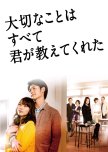
You Taught Me All the Precious Things
42 people found this review helpful
Was this review helpful to you?
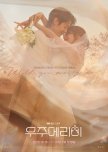
fun premise but… why are the ex’s family STILL here??
This show had so much potential but the biggest problem is 100% the ex’s family hanging around way past the first act. Like… why are they still in every conflict? Why do they get THIS much screentime?? People keep saying the leads lack chemistry but honestly they don’t; the show just wastes all their moments by stuffing in secondary characters who don’t matter to the actual romance. Every time the leads start building momentum, boom: unnecessary side drama. It could’ve been a tight, cute romcom, but the pacing drags because we’re stuck watching plotlines that should’ve ended 10 episodes earlier.Was this review helpful to you?
Unnatural features a skilled cast depicting intriguing characters with complex backstories and motives portrayed by Ishihara Satomi, Iura Arata and Kubota Masataka. This drama marks a reunion of Ishihara Satomi and Iura Arata. They were last in a drama together in 2012’s Rich Man, Poor Woman. It is remarkable the transformation Iura has made from the two roles. I only realized it was him after reading through the cast. Iura is such a skilled actor with amazing range. I will have to seek out more of his works.
I binged this drama in a couple days before the last episode aired and this drama is quite a ride. This drama is extremely well balanced and keeps its audience engaged from episode to episode. This drama does a very good job in introducing its characters backstories and delving into what makes them tick. While each episode typically offers a new case, it’s the overarching focus on its characters that kept me so engaged throughout. I’m typically pretty cautious when it comes to procedural dramas, but this drama is the perfect mix. If you are like me and hesitate about starting this drama, Don’t Be! Take the plunge! Trust me, you won’t regret it! Here’s to hoping there is a second season!!!
Was this review helpful to you?
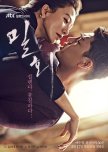
Unfortunately, I found the world surrounding the lovers to be less fleshed out and compelling. While I understand that the awfulness of most of the other major characters is meant to highlight just how terrible Hye Won’s life is despite its surface luxuries, I would have loved for there to have been more layers to the antagonists. Their universal loathsomeness did draw sympathy to the protagonists, but it also undermined the realism of the show and simplified its conflicts. It’s not hard to cheat on a husband with no redeeming characteristics, but that felt like an easy out for the screenwriter (and the audience) rather than an honest exploration of the challenges of marriage.
The directing of the show is carefully composed and the pacing slow. This allows for some lovely, unhurried emotional beats, but it can also feel a bit stifling. There were times I would have liked less precision and more abandon. The technique mirrors Hye Won’s fierce control, but when the fissures open in her life I wish the show had cracked open more deliriously as well. The main couple and the music are amazing. Everything else feels well worth losing for their stolen moments of joy.
Was this review helpful to you?

This review may contain spoilers
Strong Start But Then Became A Downhill Runaway Train
This series had a ton of potential. A show about a psychologist counseling patients with various problems and in depth look at just how each session progressed. Her own life and the life of her friends, family, and romantic interest as well the antagonist were all very strongly introduced. Each main plot and subplot were going well until about episode 29, around that time this smooth moving train lost its conductor and started to go downhill at top speed.The subplots started to obscure the main plot, the characters behavior didn't align with what they had previously done and many useless characters were brought in without a proper explanation to cause trouble only to completely vanish later in the same way they appeared. Or scenes that were shown in opening and closing credits, never actually happened. The guess is that after the first review and cut in episodes, the editing was done extremely poorly.
The main antagonist aka el creepo or YJH was forgiven or given a slap on the wrist judgment for really horrendous things. His character development was a constant tug of war between evil and some version of good. Though he was hell bent on revenge, it seemed his revenge was aimed at the wrong people and totally misguided by his adoptive father who was the real criminal in the entire plot.
The mega scandal promised in the synopsis that would evoke HD's sleep walking problem; didn't and wasn't that huge. It was also left for the final 11 episodes to sort out. HD's father was thrown into the mix and neither that relationship nor problem was solved in the end. Many of these main plots were left hanging. I'm all for a cliffhanger as I've written my share of them, but you need to tie some of the loose ends up and leave just one hanging to really grab the audience, not 36 of them. Which could speak to a season 2 but considering how poorly written and executed the second half of the drama was, do people really want to see season 2? And will season 2 have the same cast because a whole new cast would make this a disaster. Plus c-ent has a tendency to do sequels up to 5 years after the fact and at that point everyone has lost interest.
Lilli's change in men was like a whiplash, because from rich, snotty, and "cute", in a span of one full episode she fell for an average Joe cop. It was as if, the writers really had no time to develop Lilli's evolution as a woman and wrote the polar opposite of what she fell for before like an epiphany of sorts and hoped the viewers wouldn't notice.
Instead of properly closing out this series, the writers threw in another couple for HD to help cure in 2 episodes. And the ending went from el creepo crying over his mom after she tried to kill herself, to an ambulance, to suddenly out of nowhere a monologue of HD talking about her work and the patients she's helped. The last episode honestly looked like it belonged to a completely different show. There were so many inconsistencies and inaccuracies, towards the end that I'm sure I missed explaining a lot here.
I commend all of the actors on their terrific acting but only that and the OSTs were what remained of a really great and strong show at the beginning. I was very much looking forward to this series and I'm really disappointed. Would I recommend? Depends. It certainly has its strong beginning, but a very weak and inconsistent second half and ending. Judge for yourselves if you choose to.
Was this review helpful to you?
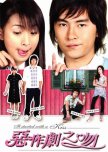
2) Storyline/Plot : This drama has the closest adaptation of the manga; it followed it literally without much change. It was faithful which made it enjoyable.
3) Acting/Cast : Like I said before this was my first Tw-drama so back then I wasn't familiar with the cast but i loved the acting plus supporting roles were extremly awesome along with all the side stories.
4) Music : I don't actually remember the music clearly but I think it was nice.
5) Rewatch value : one of the fewest dramas that I check out sometimes. If you do rewatch dramas you will definitely rewatch this.
6) The ending : It was extremly good the kind that everyone wants to see while watching a drama but I wouldn't consider it an "End" since there's a second season.
7) Overall : I am so not into chinese languages but while watching this drama I totally forgot my dislike and focused on the story.
Basically, if you're Itazura na kiss's fan you must watch this.
Was this review helpful to you?
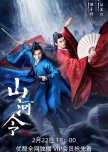
Daring, Romantic, Beautiful
After CQL (“The Untamed”), many viewers called for more dramas like it, and are pleasantly rewarded with this drama. “Word of Honor” (WoH) is unexpectedly daring, romantic and visually beautiful. Adapted from a BL novel, “The Wanderers” by Priest, this drama was expected to have the BL elements toned down, if not totally eliminated, to pass censorship, To the surprise of many, here, the show of love is blatant and unabashed; according to readers, the adaptation is faithful and they are delighted.Story
One is guilt ridden, and seeks to redeem.
One is revenge ridden, and vows to avenge.
One is young with no skills, and promises to become better.
They all have one thing in common - they’ve lost everything. When they meet, they become a family, watching out for each other. Life becomes meaningful again.
Many viewers ask the question how this drama is compared to CQL (“The Untamed”). Though of different genre, CQL is xianxia and WoH is wuxia, there are many similar parts, such as the search for some relics that everyone kills to possess, the monsters/zombies, music therapy (to heal, Wen Ke Xing plays the flute, Lan Zhan plays the guqin), herd mentality, dark can be light, and white can be black etc. They even use the same composer Lin Hai to compose the music. The visual effect of both dramas is very beautiful with amazingly good-looking actors.
“Word of Honor” is a very typical wuxia story with various sects and alliances, emphasizing on chivalry, altruism and compassion as virtues. Compared with “The Untamed”, the relationship in this drama is more explicit. Within the first episode, one would know it's more than platonic - there're more skin-to-skin contacts, and admiration words are flying everywhere. Having said that by episode 22, the BL elements become more subdue and the dynamics somehow shift to more brotherly. Nonetheless, the undertone is still the vow of “till death we part”. There is not so much of the actual plot, but this drama dwells deep into the inner feelings of the main characters – their fears, their hatred, their guilt – and how they try to redeem themselves. A lot of feelings are channeled in an unspoken way, leaving room for interpretation.
With Wen Ke Xing (Gong Jun aka Simon Gong), Zhou Zi Shu (Zhang Zhe Han) is understanding and benevolent. He has great respect and patience for Wen Ke Xing who is a broken man. Wen Ke Xing continues to use flamboyant words to cover his own pains and feelings, and constantly test Zhou Zi Shu with unanswered questions to determine if the latter can understand him truly. They become each other's soul mate, and accompany each other wherever they may go; their constant bantering and teasing is fun to watch, and their CP chemistry is undeniable. Many of the dialogues have deep meaning using analogies and idioms. The use of poems in expressing love and admiration for the other is lavishly done, making the declaration direct and yet classy and meaningful.
Acting
The overall acting is good, in particular for Gong Jun (Simon Gong) as many viewers have pointed out. He has a playful and at the same time a devilish mysterious look which helps him fit perfectly as the gray Wen Ke Xing character. His ability to change from a dark side with devious hatred in his eyes instantly into a bright, cheeky and flirtatious character, or vice versa, is commendable. All this is done aesthetically and convincingly. I particularly love all his fighting scenes, beautifully executed.
I am normally critical of Zhang Zhe Han's acting, but here, he nails it, either as the dark face rugged looking Zhou Xu or the handsome somber Zhou Zi Shu.
As many emotions are expressed through few words but with the actors’ eyes, both main leads have given a rich performance here.
OSTs
As mentioned earlier, the OSTs are composed by Lin Hai who has also composed the OSTs for CQL (“The Untamed”). For me, the OSTs here are less memorable though I have enjoyed listening to the title theme song.
WoH or CQL
I’m not trying to compare apple to apple of the two dramas. I’m just trying to answer some questions new viewers may have. When viewers express that BL not their cup-of-tea, they are being labeled as homophobes and attacked en masse by fans. But attacking others doesn’t make one less bigot.
The Chinese title for WoH is Shan He Ling, which makes me think, just because Chen Qing Ling (CQL) is successful, did they also try to copy the naming style of the title to give WoH a similar feel for the Chinese audience? Shan He in this case has less relevancy than Chen Qing in CQL (The Untamed).
For me, WoH has not touched me as much as CQL has. I have been almost in control, apart from some burst out laughter, throughout the whole drama whereas CQL has made me cry a river. I like the lighting and colors here, and the CGIs are probably done better here too. The fighting scenes here are very beautifully executed, especially with Gong Jun’s scenes (I know I’m repeating, but his fighting scenes are really very good). But the story is not as rich as CQL, the super villains are not as mysterious, and the pains not as intense. The BL elements though are very explicit which may turn some viewers away whereas in CQL, they are very subtle, expressed in thousands of symbolisms, songs, and minute actions. Some viewers even find the relationship platonic in CQL.
My Verdict
There is great character contrast - one is active and the other passive. Both characters have unbeatable fighting skills. The lavish use of poems to describe feelings is brilliant and sophisticated. Great cinematography and great fighting scenes. Visually, like CQL (“The Untamed”), this drama is beautiful. There is a lot of actions, and at the same time, the drama spends a lot of time exploring the inner feelings of the characters.
If you love watching men ogling each other openly, this drama is for you. Else skip the first 20 episodes, but then there's nothing much left to watch and you may not follow the story. Of course, all this boils down to personal taste. Some people didn't like CQL but love WoH. Likewise for viewers who have loved CQL and found WoH not measuring up. And some love both, like myself.
Though there are flaws, I must applaud the courage in producing such a work of art that does not conform. Overall, I have enjoyed this drama.
Great watch!
Was this review helpful to you?
 1
This review may contain spoilers
To let go is to embrace
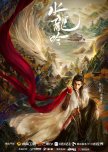
Hello, dear Wispys~ Most of us have finally reached our destination (i.e. the finale of the story), while some are still 'experiencing' the journey together with Tang Li Ci and others. It was a wonderful journey for me, and I hope it was a splendid experience for you as well! (˶ᵔ ᵕ ᵔ˶)💞Loosely adapted from the novel “Enduring a Thousand Tribulations” by Teng Ping, the drama follows its sole main character, named ‘Tang Li Ci’, on his journey to accepting certain truths, letting go of obsessions, and sacrificing for the greater good. The story begins with the lavish wedding of a young woman named A-Shui, who allegedly sold herself to City Lord Hao Wen as his concubine to pay for her father’s funeral. However, the wedding is abruptly halted when a devastating tragedy occurs mid-occasion, at the hands of a single man, as if it were a blessing in disguise for the innocent, young girl. This mysterious assailant reveals himself to be Tang Li Ci, a cruel and cunning cultivator who supposedly gouged out the heart of his saviour, who was essentially family for seven whole years. Being accused of the brutal massacre, the true young master Tang embarks on a journey to clear his name, along with his faithful friend, who is more like a devoted follower, Chi Yun. That is how he meets new people, such as A-Shui, Zhong Chun Ji, and Shen Lang Hun, some of whom later become his newfound family… Our male lead will face several confrontations and betrayals as he steers his life towards an almost impossible goal of resurrecting his deceased senior brother, Fang Zhou, and making things right.
Unlike some historical C-dramas we’ve watched, [Whispers Of Fate] draws on a range of philosophical and religious themes closely connected to Buddhism, such as “letting go of the self” and “embracing emptiness”. Therefore, I would humbly like to interpret my review through the lens of Theravada Buddhism (School of the Elders), exploring certain plot points and identifying how they are interconnected with the concepts of “The Four Noble Truths”, “The Wheel of Life”, and “The Eightfold Path”, which I will provide relevant links below to aid further understanding. (..◜ᴗ◝..)✨
More than ten years before the incident at the Hao residence mentioned above took place, Tang Li Ci (formerly known as Ajibaner Tang Jia) was rescued and taken under the wing of a highly revered martial artist, Fang Zhou, who was the eldest disciple and master of the Zhoudi Tower. Fang Zhou bestowed the name 'Tang Li Ci' upon him with the hope that he would become someone special—someone who doesn’t cling to past grievances. Seven years passed, and the bond of brotherhood between them grew deep—so deep that Tang Li Ci could not accept the fact that Fang Zhou was nearing death due to old injuries sustained during a battle with Yi Que Yin Yang at Tiandu Peak. This obsession led him down a dark path, where he practised an unorthodox technique to transfer his healthy life force to Fang Zhou while absorbing the poison harming his senior brother into his own body. However, this attempt ended in disaster, resulting in Fang Zhou's instant de@th due to Liu Yan’s interruption. Still unable to accept this loss, Tang Li Ci clung to a final desperate hope. He dug out his senior brother’s heart crystal to 'nourish' it within his own body, ensuring that it would continue to beat. As if that weren’t enough, this crafty 'fox' even stole the ice coffin belonging to Wangyu Yuedan’s father, the former leader of 'The Palace of Fallen Jade,' to preserve Fang Zhou’s deceased body inside. (Yes, I know… He’s been a naughty boy, stealing other people’s belongings… (ᵕ—ᴗ—) )
All living beings experience suffering, both physical and mental. Tang Li Ci's situation serves as a perfect example of Gautama Buddha's famous quote, "the root of suffering is attachment." This celestial being felt his world crumbling when confronted with the First Noble Truth: suffering or unsatisfactoriness (known as ‘dukkha’). His intense longing and obsession to be with Fang Zhou, who had already passed away, led him to pursue an impossibly dedicated goal of resurrecting his deceased senior brother—this is a clear example of mental suffering.
The Second Noble Truth (‘samudāya’) addresses the origin of dukkha, which is suffering caused by desire and attachment. This suffering arises from craving permanence in an impermanent world. These desires can manifest in wanting to achieve something—such as Tang Li Ci deluding himself into thinking he could bring the deceased Fang Zhou back to life—or in not wanting something, which reflects Tang Li Ci’s unfortunate fate associated with Yi Que Yin Yang. This latter aspect is a significant source of the misfortunes he has encountered.
In episodes 32 and 33, the male lead finally grasped the importance of letting go of his past obsessions, accepting them, and living in harmony with the present. From a Buddhist perspective, these small steps toward understanding one’s cravings and recognising the illusory nature of permanence represent significant progress toward the Third Noble Truth, or 'nirodha,' which means the cessation of suffering. 'Nirodha' signifies the potential to end our suffering and be liberated from the “Wheel of Life” (Bhavacakra). This concept illustrates the Buddhist belief in the cycle of Shengsi (生死), the Chinese transliteration of life and de@th, emphasising the interconnectedness of birth, death, and rebirth, as well as the teachings of karma.
Our male lead is determined to keep everyone by his side and to alter the tragic outcomes he has witnessed—the deaths of many innocent people, including his close friends and acquaintances. It is only when Tang Li Ci comes to understand his own suffering and its origins that he will truly grasp what it means to let go of these desires and embrace emptiness; this is what ‘liberation’ entails. As another quote states, “No one saves us but ourselves. No one can and no one may. We ourselves must walk the path.”
The fourth and final Noble Truth, known as 'magga', explains how individuals can guide themselves to achieve enlightenment by practising "The Eightfold Path". This path consists of right view, right intention, right speech, right action, right livelihood, right effort, right mindfulness, and right concentration. In simple terms, it is a guide that helps us move away from our cravings and towards ultimate freedom. In his final moments, Tang Li Ci reflected on the sincere wish he had made during the Lantern Festival:
“No matter how the world changes as years pass, I hope the people I care about, those who were with me, and friends who fought side by side…, can live peaceful and happy lives.”
When Tang Li Ci focuses on his desires, he becomes ensnared in the Wheel of Life once more, taking on different forms: first as a little white fox, then as a dragon. In the new timeline, he consistently serves as a guardian deity, protecting Shenzhou (神舟), which means Divine Land or Divine Continent, and its remnants. This role has led to the creation of the Legend of the Fox-Dragon. While it can't be said that he has fully achieved enlightenment—since he remains tied to that world by his attachments to friends and those close to him—it can be inferred that this protective Fox-Dragon may have finally grasped the Four Noble Truths before disappearing into the mortal realm. This occurs after he resets the world to a time before the existence of the Tianren realm and Yi Que Yin Yang.
Although time travel does not exist in Buddhism, ancient texts describe countless physical galaxies, solar systems, and worlds similar to ours (**which would be Shenzhou in the drama), collectively referred to as the “Thousand-Fold World System.” With that context in mind, here is my subjective interpretation: What if the Tang-gongzi we knew were reborn as an entirely different being in a world that resembles our own? At some point, he might have regained his memories due to his abundant spiritual powers, allowing him to ‘change the past’ and create a brand-new world filled with happy inhabitants.
And now… CUT! -ˋˏ✄┈┈┈┈ This is getting far-fetched… (๑´>᎑<)~* Let me finally present my humble insights on the drama...
Although the ending of [Whispers of Fate] may not be considered perfectly happy by all viewers, it is a drama that boasts stunning visuals, enchanting music, and a thought-provoking storyline. The production team paid close attention not only to the attractiveness of the main and important supporting characters but also to several minor characters who have only a few minutes of screen time. For instance, this includes the lesser-known members of Feng Liu Dian (House of Pleasures), the two goddesses guarding Ajibaner Tang Jia’s celestial mother during her pregnancy, along with other celestial beings.
One of the most charming aspects that captivated me was the music and the traditional instruments used. I was especially taken by Hong Gu’s arched harp, known as the Zonggaoji (originally called the "Saung-gauk" in Myanmar). This instrument is unique and rare, as it is not commonly seen in historical Chinese dramas. Among all the original soundtracks, my favourite is "春声碎 (Shattered Sounds of Spring)," followed closely by "临风吟 (Ballad to the Breeze)." "Shattered Sounds of Spring" feels like a soulful ode to Tang Li Ci’s longing and false hopes, as well as Liu Yan’s resentment towards him after Fang Zhou’s passing. In contrast, "Ballad to the Breeze" seems to convey that Tang Li Ci has finally come to terms with the truth and has moved past his earlier struggles. Additionally, the wardrobe designs for each character have been thoughtfully chosen not only for their visual impact but also to reflect the rich history of ancient China. Personally, I found Zhong Chun Ji's wardrobe choices less appealing. Unfortunately, her styling came across as somewhat over the top. For instance, her initial hairstyle at her introduction and the purple princess outfit paired with ocean-themed head accessories were particularly striking. (づ˶˃⤙˂˶)
[Whispers of Fate] can be a slow watch, and some viewers might feel that the story drags before reaching certain climactic plotlines. However, as you continue watching, you will find yourself hooked. The drama is undeniably complex, and it would have benefited from more thorough explanations of key events, such as how Ajibaner Tang Jia(Tang Li Ci) was injured and subsequently saved by Fang Zhou, as well as Tang Li Ci’s connections to Yemo and Yi Que Yin Yang. Additionally, the character arcs can be confusing, particularly with A-Shui.
A-Shui had great potential to drive the story forward with her intriguing, mysterious background. She was depicted as a pure-hearted woman who heals those around her with unconditional love and care, without any ulterior motives. However, she came across as a plain, blank sheet of paper left unused on a desk—without intention or purpose. A-Shui was one of the biggest enigmas for both Tang Li Ci and the audience. Unfortunately, her characterisation felt unsatisfactory. It would have been more effective if her relevance and importance had been hinted at in the earlier episodes, rather than being crammed into the later ones.
Despite a few downsides, [Whispers of Fate] is definitely one of the best dramas worth watching. By paying closer attention to the details and themes, we can learn a lot from these characters about their choices and their consequences. The drama offers not only entertainment but also a rich narrative filled with knowledge about ancient Chinese culture, infused with artistic heritage, philosophy, and religious viewpoints.
┈┈┈┈┈┈┈┈┈┈┈┈┈┈┈┈┈┈ . ݁₊ ⊹ . ݁ ⟡ ݁ . ⊹ ₊ ݁. ┈┈┈┈┈┈┈┈┈┈┈┈┈┈┈┈┈┈┈
The following links may help clarify the concepts I used for my review:
The Four Noble Truths-related:
https://www.ebsco.com/research-starters/religion-and-philosophy/four-noble-truths
https://buddhasartofhealing.com/blogs/thangka/dharmachakra-the-wheel-of-law?srsltid=AfmBOorLcTPTx228ED37pwiRx-P8kp8WFuUEg0Ip4NDq-Lu0NHYxWHbu
https://buddho.org/buddhism/#the-truth-of-the-way-that-lead-to-cessation
https://www.worldhistory.org/Four_Noble_Truths/
The Wheel of Life:
https://www.oxfordbibliographies.com/display/document/obo-9780195393521/obo-9780195393521-0072.xml#:~:text=bhava%2Dcakra)%E2%80%94or%2C,concrete%20form%20abstract%20metaphysical%20concepts.
https://www.lionsroar.com/buddhism/wheel-of-life-bhavacakra/
Many-worlds system concept:
https://www.quora.com/Does-Buddhism-support-the-theory-of-parallel-universes
https://www.themindingcentre.org/dharmafarer/wp-content/uploads/2009/12/R450-160524-Parallel-universes-RB150.pdf
Famous Gautam Buddha Quotes:
https://www.vedantu.com/general-knowledge/gautam-buddha-quotes
Was this review helpful to you?
Feel good
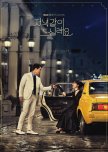
Premise of the story was good and the actors were well suited to their role.I liked the idea of having a dinner mate without knowing their names, Maybe I should try it sometime hahaha!
It was a feel good drama that made me sigh every so often. There was a mental health challenge thrown in as well. I like the way it resolved along the way.
The kdrama all in all was about trusting strangers, falling in love, embracing the past, understanding it's implication on the future, and forgiveness. It made me feel good at the end of it.
Thank you and well done to the whole cast and crew!
Was this review helpful to you?
My Golden Life
42 people found this review helpful
This review may contain spoilers
Weekend family drama, progressively challenging the concept of becoming/living as an ´adult´
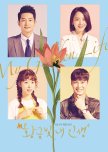
“My Golden Life” is one of those KDramas that have been writing drama-history in South Korea. It is considered a 'national' series – popularity increased rapidly, the number of viewers doubled during the broadcast and towards the end, almost half of all nationwide TV audience during the weekends, while “My Golden Life” was broadcast, watched this series."My Golden Life" is a family drama, that doesn't just get lost in family clichés, Makjang and RomCom, but instead explicitly addresses some critical contemporary issues. Additionally, given attitudes and convictions are boldly deconstructed along the way. Thus, "My Golden Life" is a rather progressive family drama, involving also the 'quite new' concept of making personal life decisions despite (and in opposition to) family interests. In addition, more than one protagonist is questioning his/her life decisions or is forced to dealing with 'failure' (up to 'depression' as a result of learned helplessness), which is also quite progressive. Whether rich or poor, such issues likewise hit any income classes - in “My Golden Life”, too. In addition, there are current long-running topics such as the (lack of) work-life balance, discrimination because of social status, and the shame of divorce, as well as the increasingly sensitive issue of 'age'.
Ultimately “My Golden Life” is progressively challenging the concept of maturing in the sense of making my own, accountable decisions and thus becoming/living as an ´adult´. What does it mean, what does it need to be an 'adult'? ´Adult´ in the sense of having grown out of the familiar nest and being able to fly with my own wings? In the sense of being challenged to apply what I have learned in my own, individual manner? Is it allowed? Actually desired? Even wanted?
Notably gratifying and astonishing: Throughout the series, practically all of the divers family members go through their personal maturing processes against the background of various contemporary social issues. Many dramaturgical motifs may be familiar, but you can be sure that sooner or later everyone will be challenged with their attitudes and decisions being on trial. “My Golden Life” is not about stumbling through life with a social reptilian brain in obvious stimulus-response pattern. And it is not about by all means controlling the environment with the arrogant mindset of absolutist power fantasies. "My Golden Life" is intelligently and systematically deconstructing the usual set screws for critical life decisions (and dramaturgical plot developments.) In the end, almost every protagonist gets challenged and in the long run actually they all come to their individual, sometimes astonishingly mature, honest and even wise reassessments and re-decisions. This is (at least in this KDrama) possible, permitted, actually prerequisite.
Strikingly symbolic to deconstruction processes of social and individual assumptions throughout the story, ´gold´ is a metaphor for the estimation and valuation of an individual life. Its meaning and value is changing throughout the KDrama, parallel to the transformation processes of the protagonists... Most of the characters initially have the conviction that money (and associated with it: status) is the prerequisite or guarantee for happiness and a worthwhile, precious life... (as on the other hand the lack or loss of money is the reason or the cause of unhappiness and equivalent to a nugatory life.) However, most of them realize over the course of story that a ´golden´ life is not necessarily one that is successful, prosperous and meaningful because of a lot of money. In fact, an elitist, privileged life - being born with a ´golden spoon´ in the mouth - eventually comes with a ´golden cage´, too... Rather, a ´golden´ life is cordial, substantial and radiant with accountability and authenticity.
Within turbulent relationship dynamics (including a bit of Makjang-style topping when it comes to plot development) the 'impoverished middle class' and the 'dirty rich Jaebeol clan' are cleverly juxtaposed against each other, thus almost offensively confronting with the exaggeration of social class-affiliation and questioning traditional mindsets; additionally, full of wit contrasting submissive obedience and self-confident rebellion. Meanwhile, a dubious, arrogantly patronizing 'Noblesse oblige' virtue is craftily criticized, too.
“My Golden Life” is sometimes funny, sometimes intelligent, sometimes outrageously provocative, sometimes infuriating, sometimes emotionally serious, sometimes touching and sometimes downright grotesque. Being set as a family weekend drama, it is supposed to be easy to digest… yet, at the same time, the KDrama is consistently keeping its unabashed finger (gently, yet persistently) on the social scrapes, quirks and deep wounds, too. An astonishingly felicitous, ambitious balancing act. Overall, “My Golden Life” isn´t long-winded, even with 52 episodes. You may as well give it a try.
P.S.:
'Reassessment' seems to be the greater moral of the story.
Meaning: Traditional structures, rules, proven patterns and given orders may be all well and good. They may give orientation and set a direction in life. They provide a certain range of tools and know-how on how you can meet the challenges of life. But ultimately, in each individual case, it is still indispensable to carefully consider the appropriate application and decide for yourself what actually should be and could be accomplished. What is it, that I want? What is it, that I can do? What is it that I think is right? And what is it, that I am willing to supply?
At the end of education and apprenticeship usually there is a form of diploma or master's degree – not for mere copying, but for suitable, at best innovative application and enhancements. And in "My Golden Life" there are quite a few characters truly having earned their award... each in their own way. Eventually, it won´t do to simply adopt what others suggest, would have done or did before. It is all about individual solutions. Traditional lifestyles and attitudes are put to the test and are systematically deconstructed - voluntarily or involuntarily. In the end, the individually appropriate reassessment and authentically fitting solution does not necessarily have to lead to an easy or obvious decision...
"My Golden Life" is thus also giving a lesson in emancipation, too - in the original Latin and also in the more modern sense. Initially, Latin “emancipatio” was the “release of the son from paternal power”. In a broader sense: the child has grown or the student has been educated, so they can hold themselves accountable for their own life tasks and work obligations and thus take responsibility and reflect on their achievements accordingly. Additionally, in a modern, more general sense, emancipation is freedom from discrimination based on group, sex or class membership…
Was this review helpful to you?


