

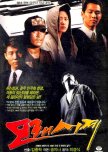
Sandglass
43 people found this review helpful
 1
1This review may contain spoilers
Haunting. Powerful. Taciturn. Unforgettable.
"Sandglass" is a KDrama that relentlessly, sophisticatedly and yet sensitively processes the pain of the South Korean people, that paves the path towards actual democracy. Here you can get a glimpse of a cultural phenomenon: 'Han', a collectively shared sense of painfully experienced injustice (see side note below). "Sandglass" is one of the first KDramas daring to use the medium of television for more than just entertainment. It is also one of the first who could even dare to do so. Here, recent contemporary history is critically targeted from all sides. And at the same time, it becomes a collective vigil for freedom of speech and opinion, for freedom of travel and for the rule of law that have only recently been painfully achieved."Sandglass" tells the story of three young people who were friends during the 1970s and 1980s - Park Tae-soo (Choi Min-soo), who actually would have liked to study but made a career as a thug in gangster milieu, Kang Woo-suk (Park Sang-won ), who hopes for the power of the law and thus studies law, and Yoon Hye-rin (Go Hyun-jung), sort of imprisoned within the golden, solid cage being the daughter of the most influential, officially tolerated casino king in the country, who systematically suplies the government with his money from gambling via anonymous bank accounts. Jumping back and forth in time, the fatal emotional bond between the three is unraveled against the background of social events. It is a dramaturgically conscientious reckoning with the military dictatorship, its abuse of power and its crimes against the people. Original film documents were seamlessly played in, i.e. during the staging of the Gwangju massacre. The presentation of the Samchung re-education camp was also staged as realistically as possible on the basis of original photos and documents. The second half of the story then goes through the destinies of the three protagonists in mafioso style: the gangster, the prosecutor, and the heiress to the casino king. The finale is on the one hand the moment of free election for the people (running in the background), and on the other hand the result of the personal (more or less free) choices of the three protagonists, who still share a world in which despite all recent tumult and uprising basically not much has changed...
More than half of the South Korean population watched the 1995 KDrama "Sandglass". It was praised and praised again. Hard to believe, that it is these days hardly available for streaming with subtitles, never mind as DVD. Apparently, those who have a DVD are reluctant to give it away. I can understand, after I actually saw the KDrama myself - first only in the original version without subtitles (wasn't that bad, because mostly there isn't much talk :-) ), then with a time delay also with subtitles (it was definitely helpful :-) ), and by now also knowing a little more about that historic background. "Sandglass" is truly a masterpiece. Yes, it is taciturn, thrives on the acting, on long shots and on purposefully used, deliberately reduced light. It doesn't sugarcoat anything. It wants to let it sink, each and every moment. The camera accompanies the events almost like a documentary. Without comment, sequences, events, moments in time stand side by side. The story unfolds like a suction and draws you in. The soundtrack supports this pull effect. The story takes its course, the course of which is known, i.e. is predictable: Park dictatorship / suppression of democratic aspirations under the pretext of North Korean infiltration / Chun Doo-hwan supreme military leader, commander of the security and finally new president by coup d´état / martial law, Gwangju Uprising and massacre / cleansing camps / June 1987 fight, abolition of censorship, end of military dictatorship / free elections in 1992. Amazing and grandiose that via TV series a critical review of those bloody 1980s was already possible in 1995. It's brilliant, too, how the protagonists with their very different backgrounds, values and goals are fatally interwoven and mercilessly swallowed up by historical events and social circumstances.
A fantastic K-Drama. Completely consistent. first class.
A sad story. Not funny. Not at all. You have to be able to get involved with the dramaturgically idiosyncratic, taciturn handwriting. (The mood should be right, so to speak.)
(And yes, it's an old ham when it comes to production quality. Screen format, picture and sound quality can hardly keep up with the Netflix era - a digital remastering would definitely be desirable...)
Anyone who is interested in the topic but can't get to the KDrama can grab an impression of the Gwangju massacre in "Youth of May" (2021), or a feeling for the time under military dictatorship and for the concentration camps in "Giant" (2010).
However, if you have the opportunity to see "Sandglass", I recommend that you go for it. Even without historical or socio-cultural interest, KDrama has a lot to offer in terms of impressiveness and melodrama.
------------------ HISTORICAL BACKGROUND INFORMATION -----------------------
Admittedly, being able to classify the historic events, helped for me. E.g. at the beginning there are scenes in which thugs and police bus-wise arrive at a building and disperse the opponent party´s event. This was actually the key historical point, marking the beginning of the massive social unrest, which resulted in actual free elections 13 years later. In fact, it was originally a comparatively small strike in 1979, which took place on the 4th floor of the New Democratic Party's headquarters. Around 200 women, workers at the textile company YH Trading Corporation, protested against the closure of their factory. Unions had no place during Yushin dictatorship, however his sit-in-demonstration was actually almost too minor, to interfere. Nevertheless, the government used the particular context at the opposition party building as a cover for a major anti-opposition operation - 'Operation 101'. Around 1,000 police officers in uniform and civilian gangs of thugs assaulted leading party members and 174 of the demonstrating women workers. Union leader Kim Gyeong-sook died while jumping out of the window.
The civilian thugs (fictional Tae-soo in "Sandglass" being one of them), were subordinate to the main money-provider of the regime (here the casino king and Hye-rin's father, who clean-washed his income for political means.)
That factory workers´ trade union action by no means was the reason for the following uprising. However the occasion served as the momentum for what was to come. Against this background, the later (fictive) encounter between Hye-rin and one of those women from 1979 becomes understandable. Hye-rin adores the by now torture-broken woman for her brave fight for democracy back then. That woman, however, never wanted a political revolt, she just didn't want to lose her job. In fact she feels betrayed and instrumentalized in a political fight that she really didn't want to fight and in which she lost everything, even herself, her dignity and self-respect.
Responsible for the politicization of events that had taken on a dynamic of its own, was actually the Park regime itself: it´s attempt to split and suppress the opposition. By demanding the party leader Kim Young-sam and his deputies to resign from their mandate provoked and politicized the public. Since this coincided with the beginning of the winter semester, the student movement, too, took the incidence for a red-hot political profile: demanding the end of the Park government. A corresponding demonstration in Busan was violently suppressed in this context. A few days later, president Park was assassinated by the head of the Korean Central Intelligence Agency (KCIA). This assassination had nothing to do with the students and their demands. Neither does North Korean Communism. It just coincided timewise with the Busan demonstration. The military, in turn, took advantage of the political power vacuum situation, imposed martial law on the mainland, installed a far-reaching investigative body and thus paved the way for the meteoric rise of Chun Doo-hwan, who was appointed chief investigator. He used his chance consistently and purposefully. After 8 months of military coup, the country had a new dictator in uniform who presented himself as the savior of the nation.
He repreatedly and systematically declared the pro-democracy drive the enemy by spreading conspiracy and infiltration theories about North Korea's ambitions. Press and public were massively manipulated with so-called K-operations (king´s operations) in order to convince the people by the good of military rule. The credo was: the military and Chun Doo-hwan were the only chance to counter the spreading, communist-manipulated unrest, in creating something like order and security. At the same time, the military units were drilled with the so-called Choongjung (True Heart) training for a particularly aggressive and efficient suppression of demonstrations. New paratrooper units were created as special forces. In addition to physical fitness, the training included the development of a strong corps-spirit and the use of massive violence and targeted abuse.
Against this background, the situation among the military units deployed in Gwangju in May 1980 can also become somewhat more understandable. On the one hand, they were brainwashed. On the other hand, to date it has still not really been clarified who gave the orders for the escalating violence in May 1980 - e.g. orders to shoot and the use of paratroopers. Internal ambivalence and irritation was common at all levels of command. But that didn't help. In the end the corps-spirit was more binding and prevailed. In this respect, the executing soldiers, as perpetrators, somehow became victims in those sad May days, too. The proclaimed enemy - North Korean Communism, which is behind the pro-democracy movement - and the unshakable pillar of power - the military dictatorship with all its arrogance - posed such a strong, effective, powerful threat, so that it was so frightening people in uniform (and without) and made them hitting their brothers and sisters indiscriminately (again, after barely three decades). Because someone had chosen Gwangju as the place of the example. And because the sides there had just turned out that way - those who lived in, studied in or visited Gwangju on the one hand, and those who were doing their military service at nearby barracks at the time. On the other hand, the political vision or just a simple wish, that everybody might finally live freely under fair conditions, seemed hopeless. Suddenly the fight was (rather apolitical) about pure survival and desperate rebellion against arbitrary violence.
Eventually, with "Sandglass" the South Korean population became seriously aware of what had really happened in Gwangju in 1980: a people´s uprising against military oppression, being brutally suppressed. Because of the propagandistic K-operations and the censorship (which was repealed only in 1987), knowledge of these events was never really able to spread. Numerous witnesses had deliberately been put into camps or imprisoned. For the television audience in 1995, these street-fighting scenes must have come as a complete shock, not only because they are terrifying in themselves (regardless of where and when), but because they actually had taken place in such brutal manner and in such close proximity completely without their knowledge. In this way, "Sandglass" also became the trigger for nationwide latest history processing. The TV production paved the way for more critical historical scrutiny in the media and also apparently accelerated the course of the trial and sentencing of ex-President Chun Doo-hwan in 1996. He was sentenced to death. (However, on appeal it was turned into a life sentence. His assets, of course, were safely parked, too. He died of cancer in 2021.)
---------------- Side note: --- NATIONAL SECURITY ACT ----
The National Security Law has been in force in South Korea since 1948 - until today. Its primary purpose was to push through anti-communist propaganda and to control or shut down opposing intellectuals, artists, journalists, students etc.. This National Security Act de facto restricts freedom up to this day and ultimately violates the 1948 Universal Declaration of Human Rights and the 1976 International Covenant on Civil and Political Rights, which South Korea had actually ratified. Fatally, it seamlessly continues a relic from the days unter Japanese rule. Several 100,000 people have fallen victim to this law over the past few decades. The verdicts resulted in prison sentences of thirty to forty years, which is among the longest in the world. It has served military dictatorships well, opening the door to arrest and torture countless times. Even after the end of the dictatorship, as late as 1989, obviously an average of 3.3 people each day were arrested, tortured and sentenced to prison under this national security law. To this day, the law is still officially considered constitutional...
--------------- Side note: --- RE-EDUCATION, CLEANSING AND CONCENTRATION CAMPS ---
A unique dubious institution during the Chun Doo-hwan dictatorship were the concentration camps for re-educating unwanted citizens. 25 such camps were set up in the aftermath of the Gwangju massacres. They served to systematically clear the streets of South Korea of unwanted people (and yet mostly arbitrarily as a military demonstration of power). The camps were primarily used for brutal abuse - any dignity was broken, body and soul pushed to the limit.
The detainees were divided into 4 categories: A implied prison; B and C an agonizing time in one of the re-education camps; D a warning. Category B and C inmates often ended up in prison as well, provided they survived the re-education camps. E.g. a former military prison in Yeoncheon, Gyeonggi was thus modified according to 'Samchung Plan No. 5'. This location officially was established to fight North Korean Communism: up to 100,000 innocent people may have gone through hell without a warrant - and rarely enough survived.
--------------- Side note: --- HAN ---
Han can be considered a collectively shared, identity-forming cultural pain in the sense of sad and angry grief. This cultural characteristic developed in the course of Japanese colonization of Joseon. There has been, and still is, debate about the extent to which Han can or cannot be considered a collective trait that creates identity. In any case, as a shared painful experience of that time, a specific form of expression of grief developed, while behind melancholy suppressed anger also resonates. Han has found its very unique solemn, deeply and sadly swinging aesthetic in Korean culture, which we can observe/feel in music, film, television, literature, poetry etc. It can be considered a collectively shared state of mind, that feeds on the traumatic experience of humiliation and abuse as a people that Joseon endured so massively at the hands of the Japanese oppressors. Han addresses helplessness in the face of overwhelming injustice. But despite all the pain and sadness, there is also something tough in Han: an inner resilience, a rebellion, that still provides something like strength in the darkest depths.
Han was further nurtured in the post-Joseon era by the separation of families into two antagonized nations. Finally those brutal 1980s, which are revived in "Sandglass" in the sense of a solidary vigil, tie directly to this collective Han - as a basic feeling that continuously and silently runs through (especially) the first half of the KDrama. A collective emotional state from which one cannot escape: the experience of suffering; the ability of suffering; the national destiny of suffering.
In the course of South Korean turbo-capitalism over the past two decades, Han as an issue has receded somewhat into the background among the younger generation. Nevertheless, there is already a new, modified, less beautiful form of expression: ´Hwabyeong´, the culture-specific Korean manifestation of a depressive psychosomatic disorder with characteristic symptoms, that already affects wide circles - as a result of suppressed anger in the face of overwhelming social circumstances experienced as unfair. (e.g. victims of any sort of bullying in school or at work etc.)
(I wonder, whether it would not be better to continue to give Han an explicit, contemporary, aesthetic expression - in contrast to the embellished, perfected facades e.g. in KPop + KDrama culture... but that would be another topic.. .)
Was this review helpful to you?
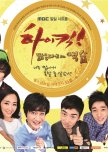
Story- Yes there are an abundance of episodes but each one is not even a half hour long and they feel so short because the writers did a great job of giving each main character a story line of their own, which fills the time nicely. What I liked about the writing is not only are most eps truly funny but some eps deal with serious stuff so you also get to feel for the characters. Really though the writing was phenomenal cause it kept me watching all the eps without getting bored. In fact they could have continued after ep 123 and I would have kept watching cause I felt like they had so much more story to tell. As for the ending, while not bad like High Kick S2, I would of liked different outcomes for some of the characters.
Acting/Characters- Whats funny is that I came into this not knowing most of the actors, and even if I did know them, there’s no way I would want to watch a 123 ep sitcom just for them. However, after watching a couple eps I realized that the casting was perfect. Every actor whether main or supporting, made his or her characters stand out. I was rooting for everyone to find their success. The main featured family really did feel like they were a family as they had good chemistry. The only loveline that managed to turn into something (Ji Suk & Ha Sun) had really good chemistry and their relationship was just so cute/funny. My favorite character though happened to be Sung Yoon (Joon Sook’s best friend) because he was just so odd but really cute/sweet/innocent. And surprisingly a character that I was completely annoyed by in the beginning (Krystal) became one of my favorites by the end (really good character development for her). There were a couple of characters I just did not ever manage to like (Dr. Yoon Gye Sang, Bak Jin Hee, and Ji Won) their personalities were awful and i even had to start fast-forwarding through their scenes).
Music- Each episode had its own OST, that being said there were too many songs to remember but I remember liking a lot of the songs within various eps.
Rewatch- While the drama is entertaining enough to watch the entire series again, my favorite part of the drama is the second half so I’ll probably stick to watching those eps over and over whenever I feel like a good laugh.
Overall if your like me and had never seen a Korean sitcom, do try this one out because it’s a lot of fun and you get attached to the characters.
Was this review helpful to you?
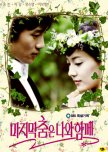
I stumbled across this drama never thinking I would really like it that much I had read the synopsis in MDL & was intrigued, anyway I was hooked from the first episode (which is rare). The main actors played their roles really well sweet without being saccharine.
What I liked best about it was the story yes its a a makjang & if you don't like that then steer clear, I personally love makjangs :D
The story had twists & turns & always kept you glued to your seat breathless with anticipation as to what would happen next. I found myself shouting at the screen at the near misses/missed opportunities for the protagonists & I am sure you will as well.
The whole look of the drama looks a little dated (fashion wise) as it is from 2004 but that didn't really phase me.
I have given a low score to the music simply because it wasn't particularly memorable to me.
Also a low re-watch score as I rarely re-watch dramas as I have too many to watch on my Plan To Watch List.
If you like dramatic, fast-paced storylines with lots of cliff hangers & good acting then this is the drama for you.
Was this review helpful to you?
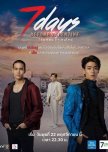
Deserves More Love!
Week after week, I would check the rating here on MDL to see if other people were seeing what I was seeing, yet the rating remains consistently poor. If you've come down to the review section out of curiosity, please don't let the low average rating scare you away! This is a beautiful show that gets better the more you engage with it as a viewer.I think the thing that might be throwing many people is actually the thing I also like most: namely, that this series is more like a stage play than a TV show. There are a limited number of sets, a relatively small cast of characters, and high dialogue to action ratio. This ties in with the main character's profession as a play actor and also serves in a metacontextual way of engaging with the act of storytelling in a rather novel way. Not only does this show have a main plot and a few subplots, but everything about it is also a love letter to the very notion of storytelling itself. Characters serve as stand-ins for the audience, the chorus, and even the storyteller in turns. It's a fun device that really adds to the depth of each and every shot, line of dialogue, and character choice made along the way.
I also have to applaud the way that this show handles religion and spirituality and the supernatural. It's also a deep dive into grief and loss. Honestly, there's so much to this show! Also, Jared is adorable and it's worth watching for each of his appearances onscreen alone.
Was this review helpful to you?
Women are the real protagonists of this story, from the wise and kind queen Inhyeon to the terrible villain Jang Hui Bin.
The plot is really interesting, full of intrigues and conspiracies.. a look at korean history and a tender and fresh love story between the king Sukjong and Dong Yi.. It may seem like a never-ending drama since it has 60 episodes, instead it was really nice and smooth..and it seemed to have really followed Dong Yi's whole life..
There were many unforgettable characters like king Sukjong, a wise leader for his people and a skilled politician but also a kind hearted and even funny person.. thanks to Jin Ji Hee's acting^^
I also loved many supporting roles..who can forget the eunuch? XD
Han Hyo Joo is one of my favorite actresses and I don't need to say that she was great as Dong Yi.
I loved the setting of the royal palace, the sumptuous and colorful costumes and the lovely music. The OST gave a nostalgic feeling to the whole drama.
If you want to know more about korean history in a beautiful and interesting way this is a drama for you^^
Ps: sorry for my English
Was this review helpful to you?
This review may contain spoilers
First 3/4 episodes : I was bored. The cast was great but I didnt understand where the drama was going, it was slow and there was no real storyline, I thought it was about the rivalry between two prosecutors but the drama didn't really develop that aspect either. From the 4th/5th episode : the drama is based on what working as a prosecutor looks like in reality and that's the only continuous storyline.
The underlying concept is showing a different side of society in each episode. Theres an episode about domestic abuse, one about fraud, one about school violence ... and so on.
And in every theme, you witness 4 sides : the victim, the assailant, the entourage and the prosecutor.
What are the hardships, the reactions and the motives of each one of them.
As soon as I started watching the drama as an observation of society rather than trying to look for a continuous drama-like storyline, I got completely hooked.
This drama takes a huge risk in trying to portray reality and using episodic stories which may seem slow or boring for the viewers but I think the drama was amazingly done within the concept chosen.
The acting was really on point. I definitely cried a couple times.
If you like realistic and emotional dramas, this one is for you, give it time ?
Was this review helpful to you?
Too Many Filters, Not Enough Depth
Before diving into this drama, ask yourself:A. Have you read the manhwa?
B. Do you hate romcoms?
C. Are you a modern feminist?
D. Do you enjoy old-school romcoms and need a filler?
If you answered A, B, or C, maybe skip this one.
This drama sticks to the classic chaebol-meets-Cinderella formula, complete with a one-night stand that leads to pregnancy. Groundbreaking? Not really. Deep? Nope. But if you’re in the mood for something light and easy, it might just hit the spot.
The leads are refreshingly in their 30s and 40s, which is a nice change from the usual 25-year-old CEOs we’re somehow supposed to believe. That said, even these “mature” characters can’t resist acting like teenagers once love and romantic rivals enter the picture. Ah, clichés—can’t live with them, can’t escape them.
Speaking of clichés, the second male lead is... a lot. He’s the kind of character that makes you want to fast-forward, and his excessive screentime takes away from what could’ve been the heart of the story: the leads building their relationship organically and navigating pregnancy together. Oh, and yes, there’s an evil sister-in-law scheming to take over the company. Because of course there is.
The supporting cast checks all the usual boxes: a quirky sidekick for comic relief, supportive colleagues, and a team director who’s self-serving but not entirely awful. They’re fine, but nothing to write home about.
As for production, don’t expect glammed-up wardrobes or high-budget sets. It’s a modest production, and that’s okay. What’s not okay? The overuse of filters. If you’re going to feature a more mature cast (which is a great idea, by the way), just embrace it! The blurry lenses are doing no one any favors.
In short, it’s a drama that knows its lane and stays in it. If you’re here for a breezy, old-school romcom with a mature twist, it might just be your cup of tea. Just don’t expect it to reinvent the wheel.
Was this review helpful to you?
Was this review helpful to you?
 1
1Emotions and their parallel to art: shaping love and searching for a ‘forever’ through sculpture
"How does one become such a great artist?" — "How do you define great?" — "To stand the test of time." — "I wonder if forever exists."Artistic, pensive, beautifully crafted, and unique in its cinematographic ways—‘Wakatte Ite mo: The Shapes of Love’ explores the vulnerability of struggling, waiting, hoping, and loving. It perfectly portrays the essence of human nature and captures love in its many different shapes under a refreshingly realistic light. It represents these themes through art in a mature and abstract manner, much like the concept of humanity and love itself.
In a world where "there is nothing more uncertain than a person's heart," the story follows the lives of artists who create art driven by their inspiration and their desire to create their own sense of forever. They are ready to put aside their usual composure and values in order to seek the heart of their loved one. For example, Kosaka Ren, the male lead, wants forever. He may seem to act in the opposite manner, constantly changing girlfriends, however this is his way of experiencing his 'forever' by always surrounding himself with the beauty of new beginnings. But when he meets Hamasaki Miu, he's ready to put that habit of his aside and sacrifice the paths he's always safely borrowed in his life to stay by her side. Another lead, Osakabe, thinks it's bad to act on lust, yet his world melts the second he sees his crush’s smile. Lastly, there is Ikushima Ruki, who wants to be with his crush but lets her be with another if it means gaining her trust and friendship first.
Ultimately, the series perfectly encapsulated the original webteeon’s overall message, reinforcing it with scenes and lines that portray its message more explicitly instead of requiring heavy analyses like it was for the webtoon’s Korean adaptation; ‘Nevertheless,’. The shortened run time allowed the leads’ journey to be explored more thoroughly without weighing down the whole series with its heaviness. Additionally, the poetic and inspirational narration made it easier to grasp its concept and allowed for a more direct interpretation of the webtoon’s work—keeping its core themes but casting aside tropes that don’t add to its main focal point.
Through Hamasaki Miu’s eyes, the female lead, Ren is the butterfly—beautiful, attractive, light, and seemingly free—giving her the illusion that he has it easy. The series adds a new meaning to the significance of butterflies: they are thought to be a symbol of freedom, but actually, they just fly the same paths over and over. Maybe the best thing they can do is just enjoy the ride. This goes for both of them because they are both like butterflies, or at least, they both try to carry the essence of butterflies by capturing their fleeting beauty through art. When Ren finds Miu, he wishes to metaphorically capture her, who is like a butterfly to him, but one who hasn't opened its wings yet.
Ren wants to approach her, mostly out of self-interest, intrigued by how she expresses her inner-feelings through art without fear, but also because of a certain fate-like pull that builds up following their many coincidental meetings. However, he is a playboy by nature—flirty and manipulative. He seems more curious about how far he himself is willing to go or devote to her rather than the other way around, not caring about her reactions and staying consistent in the attention that he devotes to her.
His push and pull plays with her emotions; his stance in his affection towards her grounded in unsteady terrain, teetering her back and forth into the territory of hopefulness and then desperation. This constant shift in Miu’s emotions highlights the overall theme of the series, which is that she can't help but hope even if she knows things will come to an end or leave a scar. Nevertheless, Ren constantly ignites these feelings of hope within her, making her want to reach out and seal the faith of their relationship—an impulsive act that mirrors his own tendency to act on impulse.
Kosaka Ren is a rather peculiar character. Since he is not good at sharing his feelings, he uses art to communicate them. Even we, as viewers, don't know him quite well and have been misguided by him many times with deceptions based on what we do see from him. For example, we don't know if whenever he picks up a call, it's his girlfriend. He never clarifies misunderstandings and viewers are prompted to believe he's a player and always the one at fault. However, in the last episode, “I couldn't succeed in becoming the most important person in her life” is a line said in his narration while the screen presents a note his mother left saying she'd be absent for lunch. This shows how he doesn't have commitment issues as is suggested throughout the whole series, but rather that he blames himself for the constant departures of the people around him in his life. Instead of being a playboy, he's the one constantly getting played and letting others tug on him like a puppet.
He's not the butterfly who comes and goes, but the others around him are, flocking to his beauty like butterflies do to flowers—which explains his longing despair for a 'forever'. “Gradually, I got used to giving people what they expected of me.” Ren only mirrors what those around him feel and how they act. He does this because he wants to avoid experiencing pain or loss, and whenever he declines their proposals, or finds himself wanting more, he always ends up getting hurt. And so, he chooses to follow the same paths over and over again like a butterfly with everyone around him, trying to please each one of them while looking for a piece of his own self through their eyes—which he eventually finds in Miu and soon enough, catches himself searching for her instead of his own self. This growth of his is beautifully captured through a certain scene, where he looks at a girl whom he doesn't actually like but plays along as her boyfriend to avoid pain—his usual toxic habit—yet only sees Miu's eyes instead of hers.
Through this endless cycle, where he has the habit of constantly putting himself last, he says he ended up losing his identity. He essentially became a canvas of however one sees him, having different versions of himself through different pairs of eyes, like a piece of art. Like someone interpreting a sculpture, Miu, as well as everyone else, can interpret him, what he says, his actions, and what is and isn’t known about him in their own way. Through Ren, who is like a sculpture, Miu hopes to find her forever. And through her, he sees yet again another chance to find his true meaning and define who he really is despite his traumas and past experiences in life. This is essentially why he leads on and makes so many people try to fall in love with him—because he wants to find the one, his true self, and his forever.
It is said by Miu’s toxic ex boyfriend that the female lead's wings are tied down, leaving only her thoughts to wander. However, there’s another interpretation suggested in the series: that her wings are rather too heavy to go forward—not tied down by external forces and submitted to others, as her ex had suggested through his sculptures of her falling to the ground and begging him to stay—but perhaps heavy because of the weight of their worth and hope, waiting for their reason to take flight in a world that keeps letting her down. The female lead, whose name means "beautiful wings," beautifully encapsulates this struggle of waiting for hope; hope that ultimately introduces itself in her life through the male lead.
From the very beginning of the series, during their first encounter, Ren recognizes this wait for hope of hers through her pleas for her boyfriend to stay. Instead of perceiving her pleas as a desperate and hopeless attempt of begging for something long gone, he sees that all she wants is to hold a promise of a future with someone, and that she has hope for something more than what she already has. This is ultimately what draws him to her.
There are a lot of similarities that the female and male lead share—their fear of abandonment, their wish to freeze a loved one’s heart in time and gain a forever happy side by side with them, and their struggles in finding what they want in life. Though Ren doesn’t express his struggles and desires aloud like Miu does, he addresses them through his fiery art, which tells another story from the nonchalant version of himself that is presented through his character and the aloof image that he lets on—reserved, quiet, and who lets other people make things up and narrate his life.
Despite their seemingly stark contrast, both faces of himself that he puts out into the world stem from the same thoughts and emotions he has. His art paints a strong image of resilience, longing desire, and determination in pursuing what he wants—emotions that give him the impression of being lost and left with nothing but wavering emotions. In real life, these feelings of his manifest through his calm composure that radiates a sense of aloofness and indifference.
This overwhelming desire to find the key to freedom and his true self drives him to act like the playboy type, not knowing who to love or dedicate himself to. His art, on the other hand, portrays his sense of lostness as something fiery and bright and that drives him to maddening lengths, putting him in a fight against society’s typical representation of love and relationships, and forcing him to confront his true feelings.
Ren, in a way, relates to Miu and sees himself in the scene before his eyes, where he sees her for the first time. Through his eyes, witnessing her meltdown opens a window of opportunity. Ren likes to capture that happiness in the brief flutter of color in his world, like a butterfly, so he’s drawn to her strong personality and wants to capture the beauty that lies in the most beautiful and intense human emotion, which is love. From that moment on, he tries to draw that emotion out of her by making her fall for him. He does the same for other girls when he flirts, all to satisfy his somewhat selfish desires to only have a portrait of pairs of loving gazes around him so that he’s surrounded by beauty. At the same time, through this tactic of his, he gets attention from the opposite gender, mirroring his mom’s absence in his life.
Even if Ren’s actions can be perceived as stemming out of selfishness, his supposed attraction to her is also beneficial to Miu because he wants to awaken this strong, powerful, and beautiful feeling of love within her. He wants to make her wings flutter and for her beauty to be set free by expressing her emotions instead of restraining them and staying tied to the past that she’s stuck in. This is vividly illustrated when he guides her to smash the sculpture where she’s begging for her ex to stay. But her perspective of it contradicts his own: he sees her beauty through that sculpture; nothing bad and submissive about it, but instead, brave for not being scared to reach out and try to grasp what she truly wanted—something he doesn’t know how to dedicate himself to doing.
Similarly, just like how Miu struggled to be freed from her painful last moments with her toxic ex that had been frozen in time both metaphorically and literally, Ren also wishes to be freed from his own struggles. For him, the butterfly doesn't represent something light and nonchalant and non-troubled as Miu had suggested, but is rather representative of a small precious thing that tries to navigate through the harsh and turbulent-winded world with its colorful yet light-weighed wings. His desire for freedom and his little efforts to cast a ray of colour in the world manifests itself through his obsession with butterflies. These insects are a recurring motif throughout the series, not only symbolizing change and growth but of which are also a statement of the short-lived but beautiful flutters that can be seen when one pushes through hardships and keeps on flying.
Furthermore, butterflies aren’t the only metaphorical symbol that has been included to better convey the story’s message to viewers. One of Ren’s characterics is the way rainstorms always follow him. These scenes in the rain with Miu hold a greater meaning than just being a rainy day. Despite his messiness, he serves as something stable in Miu’s life, like an anchor among the countless possibilities she has to navigate and the decisions she has to make as she enters adulthood. Since she feels like she doesn't really know herself and has trouble finding the answer to anything when it comes to being subjective, this inevitable journey she’ll have to face stresses her out. Ren’s strong attraction for her never ceases in its intensity, and in this, she finds a harbor in her life.
By diving into the complexities of human emotions, relationships, and the unpredictability of attraction, the series conveys the message that some things just can't be helped. The leads’ imperfect relationship is threaded with flaws and raw with hidden insecurities. The magic in their chemistry lies in the delicate yet profound interactions they share, and the space between them constantly grows wider and smaller, full of hidden meaning and unspoken words. ‘Wakatte Ite mo: The Shapes of Love’ portrays romance as something realistically hurtful and messy, and exemplifies how love is not something that is bound to be constrained to limits. It is everything but simple or straight out of a fairytale. Instead, it is a love story using its own words—not sticking to convenience for the sake of its principal aspect of romance despite the numerous physically intimate scenes.
The show’s beauty lies in its unique perspective and outlook on life that it sheds through this window of two young adults trying their best to navigate their lives. Even though we may lie to ourselves or convince ourselves otherwise, nevertheless is a word that defines us all. Our overbearing desire to act freely against others’ rules and against our own will is the human nature of our essence here on earth. "If you just label yourself as something, it'll just restrict you." is a line pulled from the series that encapsulates its essence, defining how there is beauty to be found in the unknown. As the title suggests, the shape of love looks different for everyone, just like one emotion can be represented through many different sculptures and hold different interpretations through each individual's eyes.
The series is tied up beautifully, its last scene especially goosebump-inducing—Ren knows that forever doesn't exist, and Miu knows that she shouldn't hold out for hope, but nevertheless, they come together and discover that the shape of forever is simply holding on to hope.
12/23/2024
Was this review helpful to you?
I'd recommend watching both the series and the movie, it's worth it!
There are just a few points in which they differ from each other:1. The Inner Monologues:
What the movie didn't include are the inner monologues of Gook and Taejoo, which I really loved in the series. But what surprised me was, that even tho they left them out everything still works perfectly fine, just because of the amazing acting. You'll notice that even without words you can just read everything from their faces and that's honestly so impressive.
2. The Music:
The movie gives of a different vibe mostly due to the different soundtrack.
In my opinion it was a bit more intense and emphasized the emotions of the characters better in some scenes.
What made me a bit sad was, that the part of the soundtrack which I personally love the most wasn't present in the movie as much as it was in the series (I'm talking about 'Light' by KEUM JO). In the series it was playing at the end of every episode and I loved it so frickin much!!
3. The Transitions/Cuts:
The transitions were different cuz (obviously) they can't just mash everything together and call it a movie.
Some scenes where cut short while some were a little longer than in the series. And it honestly didn't bother me at all!
I think everyone can see how much thought they've put into how to assemble every cut/transition.
Everything just works together very well
I myself watched the movie after the series but I guess the order doesn't really matter! Both versions have their charm and are definitely worth watching!
Was this review helpful to you?
A good one-time watch.
For a remake/adaptation of a Japanese movie, the thriller component has been exhibited in a much better way. I've watched both the movies and this remake was definitely an upgrade. The actors acted well, but there was scope to juice out better scenes from them which could've looked way more intense.As a thriller movie it lacked the maniacal intensity a tad bit. Watching it the first time was a decent experience. It made for a nice watch while having dinner. But I don't think I'd rewatch it.
Was this review helpful to you?
Romantic movie when you need one
There is nothing new here- the storyline has been done before many times. But what makes it really work is the actors’ sweet, intensely romantic performances. The two leads have excellent chemistry. The music suits the movie, the sets work well, the supporting actors have little screen time but handle what time they have with ease. If you need something to remind you about the importance of treating our lovers with great care and romance here it is. Highly recommended for those snowy or rainy days to lose yourself in the feeling of being swept away watching a depth of love we all want to find and keep.Was this review helpful to you?
CHOKUNASTON❤️❤️read till end btw
i would give up both my arms for chokunaston, even though there’s only been 1 ep every time they smile at eachother i am genuinely tweaking out
i am going to save up all my money so if and when chokunaston become an official gmmtv couple i want to buy their mascot keychain because this obsession is becoming too real
other than chokunaston, mickluke is actually quite sweet aswell. i appreciate kit in boys in love, what a professional procrastinator (too real). also micks character is literally so real aswell because like him i suck at playing games
also… whoever decided to give THE BARCODE TINNASIT ISARAPONGPORN an ost for boys in love, i want their hand in marriage because ‘lesson 1’ is one of the BEST osts ive heard. wouldn’t of expected anything less from barcode
im so looking forward to the rest of the episodes and also podpapangs storyline. this will be the highlight of my week im prophesying it
UPDATE FROM EP7!!!!
GUYS WTF!!!!!!! now tell my why this is the most amazing the most perfect youth drama gmmtv has like ever created. LIKE why did i never mention kenpaul earlier because guys im not even kidding, they are like the 2nd best thing which has ever happened to me like they’re so silly and i reckon they should have more screen time. AND THOSE GODDAMN TEACHERS😫😫guys if you’re reading this not sure if you should watch boys in love. all you have to do is go on to astons tiktok lives or his twt- OR just search up Chokunaston and oh my god guys you will EASILY be convinced into watching this. aston is actually too chronically online and he’s exposed himself too many times. tell me why you wouldn’t want to watch that?
oh and also regarding osts i love shot clock, bro the mv is so cute i cant even watch it anymore. also,,, lukemicks ost is lowk so good! not entirely sure how i feel abt micks singing (no offence) but luke surprisingly pulled through and like kinda ate ngl…
to be honest the only downside i have is that i feel like kitshanes screen time is a bit dragged out in a few episodes (ONLY SOMETIMES) and shane kind of just brings negative energy, but i understand thats just his character. i still love kitshane guys dont get me wrong, i just wanna see more teachers😔ONE LAST THING!!!! the montages when they go to like the aquarium or literally any sort of montage in boys of love is surprisingly like a cinematic masterpiece like BRO THIS IS CRAZY!!! like i’m not being dramatic but gmmtv really pulled through with the quality and i haven’t been bored of a single montage (usually i am with most shows) but these montages are just 😍😍😝🤭🥰especially all the chokunaston moments I LOVE THEM SO MUCH
anyways i’ll update my final review in a few more weeks😝😝
final update: this show don’t get me wrong is really good but honestly i haven’t even finished it, i’ve only got ep 12 to go and i genuinely can’t find a purpose in watching it, im just not interested to find out how it ends, and i can add kind of assume. the plot itself is actually not very good, it’s okay. BUT the individual episodes are all really fun and the quality is pretty good actually. i loved chokunaston but sometimes and poddpapang but their screen time was actually awful. micks character pissed me off and kit idk… i think luke’s acting was pretty good though, but i think it’s relatively easy to tell that this is a first project for most. i did like ken paul but then pauls character pissed me off then it threw me off a bit, idk to me they always just felt like best friends…it’s still worth a watch and i 100% think it’s very good as a comfort show or at least a youthful show. but honestly everything in life is pissing me off atm and i’m convinced nothing will be more peak than only boo. overall though i did enjoy the show, but definitely it starts off really strong but then when it gets to the middle ish it just feels like Oh, it’s definitely not bad, but if you decide to go on holiday and have 3 weeks off without watching any series, then maybe like me, you won’t have any sort of motivation to watch the last episode.
anyways sorry for the extremely long review it’s been fun updating this. don’t listen to this review, this is more like a diary for me. Or you can listen to it, i mean all in all its positive but if you think that poddpapang will get more than 3 minutes per ep, then im so sorry 😖depending what mood you’re in this might be the most perfect thing for you, it helped me get through my gcses but rn the only thing i seem to want to watch is nothing, because im so lazy and all i do is doomscrolling and checking my twt for khemjira updates. if anyone has any advice on how to stop doomscrolling and become productive and get a life, pls let me know! anyways i think im done now. bro no one’s even gonna read all this wtf am i even doing😭😭
Was this review helpful to you?
Strangely amazing
I really came into this not expecting much. The description sounded enticing, so I decided to try it out. After finishing, I can honestly say I'm quite dumbfounded. It was awesome in its own weird way, and I don't think I've ever watched a show that has made me laugh in confusion and disbelief more than this show has (in a good way).Liked:
- Great acting by everyone in this show! Especially loved SGH has Yeo Reum, as he played his character very convincingly. Not to say everyone else didn't do an equally great job, it's just that he stood out to me the most with his crazy character.
- Well done action shots and fighting scenes, I was really impressed that it was this good for a miniseries. And the guns weren't blurred! Yay!
- Quirky music that felt out of place, but fit really well given what the drama is going for. It lightened the mood, even in the darkest situations.
- Dark comedy is done really well! I enjoyed that aspect of the show greatly.
- Great intensity in the second half!
- Just the overall quirky vibe mixed with action/thriller was something right up my alley.
Disliked:
- A certain common trope was used, which I didn't really care for. It didn't matter too much, but it was just a little annoying/unnecessary. That's the only really tropey thing in this show though.
- I won't dive into this spoiler, but I was really confused/annoyed by a certain part of the show in the second half. Like I'm not sure what really happened there, but if it didn't happen, things could've ended up drastically different.
- First half definitely pales in comparison to the second half.
As for this show's rewatch value, I'd say it's very rewatchable! It's pretty short, so I'm looking forward to rewatching it later with better quality subs.
Overall, I would definitely recommend this show if you want to watch a great quirky teen action show. I do wish it was longer so that we could find out everyone's backgrounds a little more, but given the length of this show, I'm very satisfied. If you were looking for a more romance-centered show, this may not be the show for you, as romance was definitely not a focus of the drama (the romance is there but it's not your typical lovey-dovey romance drama). Well, that was my first review, so I hope it was helpful for you. Adios!
Was this review helpful to you?
This review may contain spoilers
It's okay but not a must-watch
A fast paced drama that will keep you entertained, but the end is a bit messy.The first part was interesting and really well done, but then Bongsu shows up and that's when the show starts derailing. Now I must say that I find Bongsu a very fun character to watch, the problem is that the initial story has nothing to do with him. I feel like the first part of the show is about Seong A struggling with being a shaman and having a personal/school life and falling in love with Gyeonu, the unlucky boy that hates shaman and Seong A is trying to save from dying. The second part of the show is about Bongsu and they just forget about Gyeonu's problem.
I just feel like it could be two different stories or maybe a longer drama. And they definitely should have cut-off a few characters, not that I don't like the side characters, but the time used on them could have been used for other things.
The acting was nothing ground breaking but still good and the actors had a quite good comedic timing.
Was this review helpful to you?


