

1. Inteeeeeense, If you want a lovey dovey story or a simple robbery movie it's not the case ! Violent, Brutality and Cruelty are word to describe this movie. SO if you are too young, or live in a cute world, or still are innocent, this movie isn't for you.
2. It's not the common movies with beautiful scene and happy end. I love the work of the director: from the very first second of the movie you can feel the dystopia of the world. I really don't want to spoil just to know, you can feel the reality of the hard life they have (or had) and the parallel world of dramaland without any censorship with Tattoo, Smoking, and Insult in every single scene.
3. The cast: I don't need to speak about Choi Woo Shik I think he totally suit to movie more than drama, he's a skilled actor. I was glad surprise with Lee Je Hoon (I didn't even recognize with his evolution since Fashion King) and with Ahh Jae Hong, we can plainly see a new face of him totally different from Be Melodramatic or Fight for my Way. Last but not least Park Hae Soo is so so so impressive, this expressionless face and psychopath idea are just stunning
4. The family meaning in this movie make us reflect a lot about it. Is family only blood member ? Is it more important than our own life ? Is friend able to remplace a mother place ?
So I hardly recommend this movie if you want to live intense moment and stressful scene. If you have a fragile and delicate heart it's not for you ehehe
Was this review helpful to you?
This review may contain spoilers
[I'm writing this while keeping in view that this was a Makjang.]One thing this drama does well is the pacing - you are not left hanging there for long. You want the answers? You'll get them in time. Moreover, every episode leaves you desiring more. The plot also ties up together very well; there are hardly any loose ends. The aim was consistent throughout: expose the Imperial Family. The characters involved had almost always something to do with the plot (thankfully).
Given the fact that it's a makjang, unbelievable things happen, especially in the beginning. As it progresses, the strengths overpower the flaws, in my opinion. Those makjang-y things aside, there's another reason I'm withholding points for the plot, and that's weak writing at certain areas - and poor decisions by the production team. Weaknesses emerged when the writers added fillers to an episode that could have been swapped for a more meaningful scene. Also, one of the main characters is pushed to the side because the production team overlooked his defining role in the drama.
I must say that the actors carried the drama - without them, it would not have survived. Shin Sung Rok was splendid as always (you'll love his expressions); Jang Na Ra proved she is more than just a rom-com queen - she knows how to play a ferocious, clever, and upright character; CJH was a master at portraying subtle emotions. The characters were not two-dimensional, and the actors had to make us believe that: Sunny developed from being naive to clever; Na Wang Shik had to chain his anger, and almost lost himself to it along the way, with some questionable actions to achieve his goal while still maintaining his position in the "right side"; Lee Hyuk literally jumped from different extremes as an insecure, traumatized - and rather insane - Emperor. (I would mention others too, but their performances stood out the most.) Overall, you will find yourself cheering for one character and cursing another. And be prepared to switch sides often!
The music was great. Loved each OST. Gaho's Not Over, in particular, set the right tone of suspense at most cliffhangers. What Would it Be was beautiful too. Oh, and the instrumental was good too; the mellow yet intense instrumental that they chose for heavy scenes (**spoiler** like when Sunny abolished the Empire **spoiler ended**) was a favourite.
There are certain scenes you want to re-watch, like O Sunny being righteously angry, or a few heartwarming moments here and there.
Watching this drama was a ride. Don't miss it! Despite its flaws, it has much to offer.
Was this review helpful to you?
This is not a light, fluffy romcom, nor a makjang melodrama. It's a dark satire that pokes holes in a cliched plotline, while focusing on the toll corruption takes on families and people, from the lowliest to the upper echelon. I enjoyed watching this very much and am sorry to see it go, and wish they hadn't cut 2 episodes.
This fully deserved the Baeksang Award :D
Was this review helpful to you?
Great drama!
Story - very interesting and dynamic. World class military action series.Plot - without holes in the storyline, realistic, intensive and fascinating.
Acting - Yang Yang and Jiang Lu Xia are amazing and giving their all to the roles. This is Yang Yang best drama so far. The supporting actors are indeed great and have huge contribution to the drama. Until 45 ep no bad performance all actors complement each other.
Cinematography - very professional and impressive.
Costumes and make-up - unbelievable good and realistic.
Was this review helpful to you?
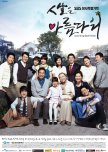
The story is not a typical kdrama story with a lot of twists, birth-secrets, evil characters etc. It's more like I was following the life events of a normal family, whit ups and downs, remaining always with the feeling that something like that could happen in real life. That's the reason why I really enjoyed the show. It is different.
The characters are very well written, all of them had theirs own story, with funny events, sad events, love stories, friendship, breakups and reconciliations, marriage, birth and death. The chemistry between all of the characters was very good, giving the feeling they're a real family.
Of course the strongest plus point is the love story of Tae Sub and Kyung Soo. I loved the way it was presented, it was not too much for a kdrama, sometimes I even had the feeling the kiss is missing (but , in the end, I think it was better without it). The other love stories were also good, but not like that one.
The acting was brilliant, everyone portrayed his character very good. After this drama i'm loving Lee Sang Woo more and I noticed Song Chang Ui. It's the first time I see him playing a main role.
If you wanna watch a family drama that's not very complicated, with a plot that flows smoothly, with strong characters, full of family-love, with good love-stories I recommend this one!
Was this review helpful to you?
This review may contain spoilers
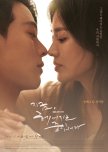
Jang Kiyong unconvincing as creative, Paris-based, free-spirited, rebellious, footloose photographer
"Now, We are Breaking Up" tries to tell a love story in reverse (e.g. it has been there already). This would be an interesting project in itself, yet...The plot is emotionally quite complex, the characters are in principle jucily interesting and ambivalent. If a KDrama can't take care of a multi-layered, complex mixture of feelings, then who can? Unfortunately, I have to say that (in my opinion) this project doesn't really work out so well with the casting.
Regarding her emotional intensity, Song Hye-kyeo is (as so often) a major factor for watching. As the heroine, here and there her reservedness, sobered by life, is perhaps a bit much. But in places this cracks open. It is this well dosed mixture and subtleness, that makes her role convincing - the experienced fashion designer in her late 30s has turned away from flirtation and rather concentrates on her work, into which she throws herself completely. Being the talented and experienced professional she is, hardly does she ever get upset by anything. ... until her encounter with the young photographer Yoon Jae-gook, that throws her (emotional) life (supposedly) upside down. Her reservedness so far operated as shelter and imprisonment at the same time. Circumstances don't really offer a chance to free herself from the corset of reason, which is protecting her deeply injured heart - never mind let herself fall and trust emotionally. This inner dynamic is not so nice to look at - or rather endure - for the viewers. But I don't think you can blame Song Hye-kyeo, as she handles this inner tension and the ambivalent moments of her complex role very well.
On the other hand (unfortunately) I don´t buy Jang Ki-yong in his role as a creative, Paris-based, free-spirited, a bit rebellious, footloose, and at the same time successful photographer. For me he behaves way too reserved, well adjusted, well-behaved - a sympathetic, dear, rich, successful boy. So unfortunately, HIS ambivalence doesn't convince me. Perhaps actor Jang Ki-yong lacks the life experience (on the rebellious side)? And since he can´t really fill this side with life, I am not convinced by the chemistry between the two leads. It doesn't get to me how the young man in his supposedly fiery manner, would be able to reignite on an EMOTIONAL level the fire of lust for life and joie de vivre (beyond work) that is still blazing somewhere deep down in Ha Yeong-eun... So the key to all further makjang doesn't really fit into the lock. Too bad. Thus the experiment of telling love in reverse didn't really work out that well.
The KDrama is not bad because of that (...though admittedly disappointing ...). On the pro side: There are freshening subplots, each with actors in good humour, who have actually won awards for their spirited performances. The setting in the creative industries is kind of charming, too. Finally, the Korean family values are (once again, but successfully as always) playing with fire on the drama front...
Was this review helpful to you?
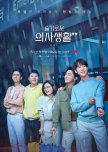
And just like that, you stole my heart away.
This is the first ongoing Kdrama in 7 years that I watched in real time. I think words will fall short if I try writing a review for this drama, regardless of it's seasons. I didn't watch the season1 ongoing bcs I never do that for any drama as I'm very impatient aand anxious to wait and think about what's the next. But sure, I was intrigued by the response it was getting during the s1 and even so I took 3 months to start it.Anyways, I decided to watch the season 2 ongoing without a 2nd thought before a month and the reasons are obvious. Morever, slice of life Kdramas without solid plots can be watched ongoing easily. I am very glad for my decison and grateful for each and every moment.
Again, this ain't a review because this dramaa is excellent in all the aspects and don't need evaluations to be judged. The writer Lee Woo Jung jakka-nim and director Shin Won Ho PDnim are my most favourites, both individually and as a PD-Jakka pair, I can blindly trust on whatever they do.
Script, story progression, twists, character development, revelations, realizations, and all other realistic elements of life are very well placed and utilized in the drama and directon work is like adding feather to a cap.
I will be pointing out the highlights of this season and I think I might spill spoilers for those who have not watched it but let me mention them anyways because you know it's a slice of life story plus apparently the concluding season. So here I go:
# The season 2 started exactly where it had ended in the season 1.
# The story continues to be aas simple as the 1st season with no solid plot development rather showing the day to day life of YULJE.
# The most important thing of Hospital Playlist is the ordinary days of the extraordinary group of 5 friends who continued to inspire, motivate and teach us various different things even in this season.
# The definite character development of Suk Hyung, becoming open and clear from being shy and introverted person.
# Ik Jun is still that lame person who loves throwing PJs despite the seriousness of the situation and I think I can relate haha.
# After few months, SongHwa returns to Yulje but also gets busier with the management of VIP ward meant for "Daddy Long Legs Funds", surgeries, lectures and helping her fellows with their thesis.
#Jun Wan is still that serious yet silly guy who gets annoyed at anything. He had to go through misery but he managed to pull off his life better.
# Jung Won, still a kid by heart, continues to learn every other day from experience and despite his indecisiveness, can stay calm.
# Jun Wan and Song Hwa are still those maad foodie pairs who eat more than half of the food and even fight w/ each other for it.
# Ik Jun and Jun Wan still get into fight out of nowhere at their 40s over silly things, pulling hairs and punching each other.
#Jung Won continues to intrigue the kids for his love for them and somehow makes them to fall for him.
# The surgery scenes are not detailed for a fact but the OT scenes with variety of shades given the situations and severity were wonderful.
# Uri best boy Uju has visibly grown up by looks and by brain. He is in fact more quick-witted now and interacts like an adult with others.
# The kumo-chukha bonding between Uju Iksun and Uju is another adorable thing to witness.
# Just like previous season, Hospital and Playlist also focuses on the life of interns, residents, staff nurses and other staffs of the institutions.
# Uri twin interns Hong Do and Yun Bok continue to win our hearts by their cuteness. Yun Bok is loved by everone.
# Hong Do is still troubled by Jun Wan who asks him critical questions every other day and bothers him even after he changes dept.
# The Winter Garden Couple tries their very best to keep their relationship a secret from the hospital except for their dearest ones.
# Just like last time, we get to see different shades of gynecology dept, few of birth givings, life of their nurses, interns and residents.
# The Band continues to come up with very good songs and acing those with their skills. Song Hwa had a contract to sing once in 2 years. I always looked forward to discover a new track evey week.
# The bonding between 2 mothers whose babies were both on VAD waiting for a heart donation was very well shown. They were the marathoners who at some point were able to reach the goal.
# Min Ah was finally able to change Suk Hyung's heart through her determination and that was the best thing about this season.
# The life of caregiver nurses of the pediatrics was beautifully portrayed and that indeed was heart-touching.
# Undoubtedly, this season also showed us the bittersweet relationship between doctors and their patients. The way the doctors and handle the patients plus their curiosity and anxiety is very realistic along with the patient's way of respecting the doctors.
# Winter Garden Couple: The foregoing romance between Jungwon and Gyeo-ul that matures with time and they learn how to open up to each other. It felt good seeeing how their bonding was becoming closer.
# Kom-Kom Couple: The development and progress in the relationship status between Min Ah and Suk Hyung that journeys from Professor-Resident to couples and this is the best thing about the this season and in fact it took the entire season to happen.
# Ik-Song: Our most favourite, IkSong who are best known for their slow-burn romance finally ended up together which was sudden bit definitely happened at the most appropriate pace. Both of them needed their time and that's completely understandable.
# Bidulgi (Dove): Jun Wan and Ik Sun had the most difficult time. The couple went through a very rough patch and had to put an end to the LDR but after years crossed paths and realized their undying feelings for for each other.
# Silver Dragon: Suk Min and Sun Bin, uri lovey-dovey residents were away for a while and had some problems in the relationship but thankfully sorted them out and continued to make us feel cute
# The friendship between Rosa and Jong Su continued to bloom even in this season and in fact they became closer buddies who hung out and had meals almost everyday.
#The bromance between Jun Wan and Do Jae Hak, Cardio- thoracic chief resident, is another best thing. The way Jae Hak adored and respected Jun Wan even when Jun Wan was his professor and also the reason behind it was so very mesmerizing.
( Idk what else but I know for a reason that I got many more things left to talk about so I shall edit this review whenever I recall something important to add)
THE OSTs.
A majority of 90% tracks, like the last season, are the covers of old songs from 1970-2000 or after that and in fact 80% were also sung by Mido and Falasol, our fav band in their band practice.
My most favourite track of this season was is "SUPERSTAR" sung by Mido & Falasol. This is very inspiring and such a mood booster I swear. I both cry and then jump outta joy listening to it.
"Rain & You" sung by Lee Mu Jin, "In front of the post office in Autumn" sung by uri Suk Hyung (Kim Dae Myung), "Is it Still Beautiful" by Seventeen, "To You" by uri Ahn Jung Won (Yoo Yeon Suk) were some slow heart touching tracks.
Similarly, "Reminisce" by uri Kim Jun Wan (Jung Kyung Ho) and "Let's Forget it" by the band sad and heartbreaking tracks. "I Like You" by Jo Yong Pil and "I Like You" by Jo Jung Suk are both jolly ones. "Already One Year" is also a favourite.
I am glad they released 5 drama version band songs for this season
I really didn't knew whether to be happy about the 2h40m finale or be sad about the end of this season but to my unfortunate, they announced the end of the entire series that made me upset. I have always trusted ShinLee pair, their work and their decisions but this came as a shocking news and I don't think I am gonna accept it any soon.
All I can do is cry my heart out. I am grateful to the entire team, the cast, the crew aand each and every single person involved with Hospital Playlist for this amazing seasons and the fabulous season that brought out all kinda emotions out of me; made me smile, laugh crazy , cry mad, be heartbroken, etc etc.
I think it's unfair that we don't get to have another season when it's them who said it themselves but I am thankful for the almost 2hours episodes that we were gifted with in this season. Hospital Playlist is definitely my most favourite after REPLY 1988 and Imma flex about it for the rest of my life.
THANK YOU UNIVERSE FOR HOSPITAL PLAYLIST
Was this review helpful to you?
This review may contain spoilers
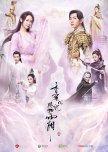
Are you bored of watching boring storylines, actors that can’t act, bad cgi, not that great of a costume/design, and most importantly no chemistry, well no need to look anywhere else this show is it, it has none of the factors above, Yay! (:Plot: You know how most shows are pretty boring in the beginning and only gets interesting around ep15 or more, well HSALF it’s amazing it’ll hook you in right from the 1st ep. it’s very comical but then you have to get your tissues ready since ALL of your emotions will be brought out you’ll get happy, sad/heartbroken, frustrated, anxious and last of all it’ll make you crave for more on what’s happening next. I love how they developed all charcters from how they were in the beginning to their personality towards the end, everyone changed significantly for the better or worse. Also the cgi and costumes were so well done that I’m just so amazed by it especially on ep61 the war scene just blew me away. Okay adding one last thing after finishing the show was I thought we were free from the demon princess but no she still got to appear for the last 2eps. Other than the demons princess thing it ended really well and was so emotional as JM vanished into air.
Acting: Hmmm what’s the word... ahhh it’s phenomenally amazing! If you watch it like seriously the acting will blow you away. I was skeptical if the casts in here can bring the charcters to life since it ain’t a easy task to do all the facial expressions and feelings in here. The leads had such an out of the world chemistry they’re literally the Perfect couple YZxDL. The acting here is so natural nothing felt forced or off.
YZ just stole my heart in this show she perfected her role so well and I’m glad that she was the one who played JM I don’t think anyone else can perfect the naiveness and pain the way she did. She’s the most pitiful charcter out of all like seriously she is, watch it and you’ll know. The cast was just perfect I’m sure some people will say that others can do better but like seriously who can other than this amazing cast from this amazing show?
Music: it’s gooood, especially Sa Ding Ding’s version it was just so emotional to just listen to it. Oh boy when it was played in the show I literally got goosebumps. All the other ost were so good that I had to search them all up and added it to my playlist. Also it’s so cool that one of the version the song were sung by the leads Yang Zi and Deng Lun.
Heck yea I’m definitely rewatching this amazingly true masterpiece many times. I don’t even know what am I suppose to do after it ends like it’s so so so hard to find a show that’s this perfect and I’m just going to say that this show is the best show ever to me it tops anything and it’s my #1 show. Totally, totally recommend everyone and anyone to watch this if they can but don’t feel pressured to watch it bc of my crazy little review.
Also if you’re in a withdrawal like me then I encourage you to watch the bts(behind the scenes) of this it’s so funny and I love how all the casts were so natural towards each other there were no awkwardness. You guys are so going to love the leads YZ, DL, and LYX after watching the bts they have such great chemistry together. To me this show can’t be rated it’s like infinite/10, that’s how good it is. I have never seen any show that tops this and let me tell you guys I’ve watched so many top rated/popular show where its not just as satisfying if compared to this. I’m sad cause after this show like everything other show will seem so bland, not up to par, and Ik for sure I will not be able to stop myself from comparing how well done this was. I don’t even know what I was doing before this show like what have I been watching? All the other shows really cannot be compared to HSALF. Also just to put this out I’m a big fan of the novel and I got to say that the show is better a lot better it went so much more in-depth and we got to know how or why a certain event or certain way someone did somethings.
So yes, overall I do recommend it, definitely do yourself a favor and try out this true masterpiece called Heavy Sweetness Ash Like Frost. 100+/10
Was this review helpful to you?
This drama started out with a lot of comparisons to Romeo and Juliet. It does have the element of two people who fall in love in spite of their family's bitter rivalry. But where the two part company is that in Mr. Shakespeare's original work you don't really get very much back story about why the Capulet's hate the Montague's. You simply know they hate each other and that the love between Romeo and Juliet is forbidden. In The Princess' Man you get a big sweeping story and you know exactly what odds are stacked against these two. They should have called this... "The Princess' Man and Her Father's Single Minded Drive to Be the King!"
The Princess' Man is packed full of action and revenge, sword fighting and battles to the death! What I'm saying is...This drama isn't just for women or those looking for a well told love story. If you are a person who prefers action, you need to know there is a perfect balance of badassery as well as a lovely and sweeping romance.
The acting in this show is stellar. I can't think of a single character in a single moment that had me cringing or thinking they were wrong for their part. Park Shi Hoo is wonderful and forgetting what I said up there...He is actually wonderful in everything he does so I wasn't surprised. Moon Chae Won is luminous as Sae Ryung. She pulls in a great performance. I loved her character's bravery and steadfastness. The plot kept me guessing until the very end and I love that I was never bored watching this show!
There is a lot going on, plot wise, and it is told to us by a writer with real story telling ability. I say that because I was also kept interested by the side character's stories as well. They were an intrinsic part of the tale, perfect satellites to the main characters and plot. I wanted to know their fates as well as the main couple's.
Let me sum up why you should watch this show in one sentence. The Princess' Man has an extremely well done and balanced combination of incredible acting, writing, directing and amazing cinematography.
I felt the music was a perfect fit for feel of the drama. There was only one song piece that felt a little overplayed. This show was so well crafted otherwise, I feel like I'm nitpicking but the music is my one 9 vote in a sea of 10's. I will watch this Lovely Show again. I can't recommend this highly enough!
Was this review helpful to you?
Was this review helpful to you?
This review may contain spoilers
All Of Us Are Not So Dead
That one girl with the alarm ringtone, girl meet me outside...I ain't finna jump ya! Also Pao, brother why? And let's be honest, most of the characters on this show were very annoying and had me wishing they'd hurry up and get bitten, but when all was said and done, I actually enjoyed myself. Let me explain.Listen, this genre is not for me, so I wasn't gonna watch it. But then I opened Netflix and it was there, and I was like, hey, I know these cast, finally something available in my country, so why not? And frankly, I am not sorry. Yes, I closed my eyes at scenes when creepy music starts playing, was yelling at characters who got under my skin, and was sad in other scenes, but overall, a nice watch for Halloween.
Okay, let me get this straight. So this old guy they called Patron, doesn't wanna be immortal but don't want his corpse to rot? And that's the legacy he wanna leave behind, that he dies but his body lives on? Why not go for the immortal thing? Also did the whole thing feel like some family issue and the whole population was just collateral damage? That mother made her family problem everyone else's, and that old guy.. Really, Bob? That's the legacy you want to leave behind? What the hell is the point of your corpse if you are still dead??? Make it make sense, Sharon!
THINGS I LIKED
- PHU: So like we were all rooting for Phu, right? Dude needs to survive, otherwise what's the point?
- Did anyone else clapped a bit when Korn, Gus, Earth and Aek showed up in that rainy scene all zombie hunter like? Same.
- When Aek saved them from Pao... cuz boy was on my last nerve. I got him, understood his reason and was with him, but damn dude, if you wanna die go die alone, don't be making all that noise. In fairness, he did wanna go alone the first time, but those humans held him back.
- Characters having backstories, and not just surface 2d stuff. It made me care for most of them.
- I like whatever it's happening to Lily, though not gonna lie, I was waiting that whole time for her to eat Win, cuz dude why is you sitting so close to her? And was Night's whole solution to get zombies high and hope they are buzzed enough for them to ran away? Hahaha lmao.
- That one annoying girl who is just there to cause drama and be in everyone's business... girl why? but also thanks for the drama. Girl just won't shut up, so every time she came on screen, I was ready for her to stir things up XD.
- That we all thought San and Non were cheating. LMAO, the delulu was strong in this one. Plus the sister was making googgly eyes at Jean so I was... very sure they were cheaters ^^shame on us.
- That random cheerleading routine. I was confused but also laughing cuz, okay stupid children, why don't you be super loud with cheers when you should be shouting the eff up cuz, you know, zombies are literally outside!!!
- That ending had me so emotional, my poor, brave Non. Season two, please.
THINGS I DIDN'T LIKE
- What part of... 'when bitten, they get infected and become zombies' did most of these people not get? Like, they'd all scream and try to go to their infected friends. Dude, your friend is trying to eat you, why you wanna run to them?
- Stupid characters getting ones I like killed. I was all in for Aek and then it was ruined cuz poor Pao decided to be a dumbarse, No, but how many people did he get killed all cuz he couldn't carry a girl and ran at the same time? Wasting his life and causing his brother more trauma in the process, for shame.
- I will not get into the whole San, Ning and Jean thing, cuz let's be real, all three hit a nerve one point or another. Though they did have their moments.
- Earth leaving everyone to die cuz he's hurting and doesn't care and hate everyone, only to go confront his zombie friend and then start fighting and screaming when the zombie tried to eat him. Like dude dafug you thought was gonna happen? A luncheon? smh.
- That one girl with the alarm clock. And the fact she didn't just hurl her phone away and let it keep ringing and ringing. Ahhhhh.
Anywho, overall, a decent watch. Plotwise, interesting origin story, haven't watched a lot of zombie movies, so this one felt very zombie and good to me. The cast ensemble blended well together, and did their best, some very well. I liked most of the characters and disliked some as well, but it all added to my enjoyment of the series. I don't like horror but I still enjoyed this, so, I'll recommend it to anyone who like any of the cast, or just looking for a decent zombie show to watch .
Happy Halloween
Was this review helpful to you?
Park Seo Joon and Kim Ji Won make such adorable leads. Both of them do a very good job playing out their roles where love lies right below the surface.
I feel that this drama focused way too much on the secondary leads story. I really felt little love for both Ahn Jae Hong and Song Ha Yoon's characters. I found their story detracting time from the lead couple.
This drama has such a fresh start when it focuses on the leads and their struggles in finding their way in the world. As the show continues, it starts to settle into a more traditional love story. As well toward the end of the drama, it throws in a lot more angst. While I found the disagreement about Seo Joon's character's career path, the birth mystery was really evocative and touching ...
Fight My Way was a good watch. The fresh start is a must watch. I did notice that as the drama started to settle into the typical tropes, I found that it got a little bogged down.
Was this review helpful to you?
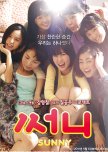
This movie is about friendship and it is very close to reality. I think that is why it made me cry so much, both happy and sad tears. It made me miss my friends and made me wonder what will happen in the future.
The story is really good! The way they switched between past and present was really cool and the movie was very well directed. The costumes and music of the past were done really well. The camera work was really good. And it was a lot of fun to watch.
The acting was very good, of both teen and adult actors. I saw Sora for the first time on We Got Married. She's completely different from how she was there! Here she is a bad-ass leader of Sunny and I loved her! The other girls were pretty good too. Na Mi reminded me somewhat of Velma from Scooby Doo :P
They cast the adult actors pretty well too. The faces matched and it was like they were the older versions of the teen actors. So props to the casting directors for doing such a good job. Also, the situations in which all of the characters were, were very real. That's what I loved the most about this movie, it was very close to reality.
Either Kim Shi Hoo-ssi loves to play characters from the past or he has that kind of a face that the directors cast him as a 80s boy. He played the same kind of role in Love Rain and I was pleasantly surprised to see him in this movie. The crush thing was so cute! It brought back memories of my first crush :P
I would highly recommend this movie even if you don't watch Asian movies. This movie is really well done, the acting is really good, the story is amazing and touching and it is definitely worth your while.
Was this review helpful to you?
This review may contain spoilers
Great performance & complex narrative re. challenges in politics during dreary SK post-war decades
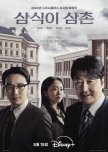
"Uncle Samsik" offers a quite interesting narrative of the complex connections between party politics and the even more crucial backroom politics during South Korea's first republic (1948-1960). The KDrama is primarily set in the run-up to the turbulent events and nationwide demonstrations that led to the resignation of the first President Rhee and the founding of the second republic. However, the nation that had hoped for real democracy and prosperity stumbled into a third one just three years later through a military coup. Although this brought the hoped for prosperity via totalitarian capitalism, it was still far from real democracy...The story of the KDrama is based on historical events, themes and people of that time, but is ultimately fictional - even if historical film sequences are occasionally interspersed as part of the April Revolution. The focus is on Uncle Samsik. For all those, who don't know much about South Korean history, Uncle Samsik is the emotional reference figure and dramaturgical bridge that holds all the politically complex threads together. Even without prior knowledge, "Uncle Samsik" offers an exciting, haunting political drama that takes place in the post-war years. It is in particular thanks to the passion of the great actors who manage to captivate the audience with comparatively 'dry' fare. It is advisable to watch the episodes consecutively so as not to lose the thread.
With a fictional plot the well-known historic events and what actually drove the political actors of that time are portrayed from different perspectives. Thus they are shown as multifaceted people with complex motives and stories. Political calculation becomes tangible through relationship dynamics and formative personal experiences. What created the conditions for that dictatorial regime and its totalitarian capitalism to torpedo South Korea into dazzling prosperity - the needs, hopes, ideals and concerns underlying the political actors - are being filled with life. And at the same time also what the young democracy still has to gnaw at today - authoritarian directive, opaquely networked and strictly hierarchically structured backroom politics.
The time in which the KDrama is set is marking the initial struggle to set the course for 'right' politics and a democratic political culture to start with. You have to keep in mind that Korea has not yet been able to gain much experience with modern, international politics and economic policy on the world market. Until the end of the 19th century, the Joseon Kingdom had isolated itself from the rest of the world and concentrated on itself. Western modernity and international influences increased during the early 20th century, especially while the Korean peninsula was a colony of Japan. The guidelines for political autonomy and independent parliamentary politics were only set in the course of the founding of the Republic of Korea as South Korea in 1948. And even then, the USA kept a close eye on the young republic. The people in South Korea had not yet been able to seriously experience themselves as political mature people of a democratic country... The south, by now isolated from its rich in raw material and industrially well developed north, was at that time one of the poorest agricultural countries in the world.
Uncle Samsik vividly depicts the conflicting feelings in the country. He represents the prevailing longing for wealth... or simply for three meals a day. Uncle Samsik's nickname already reflects what he stands for: sam (eum)sik = three meals. He (as a good uncle) grants this to his people. So actually this very basic human need was the top priority in those politically turbulent years. Hunger and poverty shaped everyday life for the many. Democracy as a political ideal may sound good, but it doesn't fill your stomach. Samsik cares about people. His political goal is to use all possible means to support those politicians who have a solid concept and can bring the country to a point where the people will soon have enough to eat. The way to get there: to consistently boost the economic power of the economically weak country (compared to the north) and thus create appropriately paid work whose salary is enough to provide for the families... even if that might imply that the people´s hope for true democracy still has to wait a bit longer...
So would I recommend "Uncle Samsik"?
Yes, but...
It's one of those things with historical dramas that deal with Korea´s recent post-war history (and with the KMovies about the first post-war decades, too... you have to want to see it. Colours, light, selection of protagonists - this is often enough inevitably not a treat. Colorful robes that were still common in Joseon times are rarely seen anymore. After the Japanese colonial period and at least since the influence of the USA in the wake of the Korean War, fashion has been completely westernized. This makes the production design comparatively rather dreary - dark suits, ties and plenty of scenes inside or in the dark. It is about scenes inside offices, hotel bars, conference rooms and bunkers instead of lushly planted palace gardens, picturesque bridges, colorful pavilions and pagodas, or the shaded, meditative palace walkways - it's all history. Politics by now happens behind closed doors. If suitable, it might sooner or later end up on the streets, too. Female characters with impact are also rare - gone are the lively days of palace ladies, servants and princesses, scheming dowagers and queens or spying gisaeng... Instead, there are lots of serious men in their (as I mentioned before) dark suits, preferably smoking and debating or giving orders in back rooms. Politics is a man's business - a power struggle that is eventually resolved with the help of thugs and cloak-and-dagger operations... (After all, women's power is at least trying to carve out some space in "Uncle Samsik"...)
In short, the setting is rather dark, complex, even complicated - and ties-heavy. Be aware.
Apart from that, "Uncle Samsik" is really well done. Vividly played and thematically differentiated, the KDrama brings those dreary, sobering post-war decades in South Korea to the international DisneyPlus audience, presenting it as a time that, despite all the prevailing corruption, arbitrariness and obedience to authority, was also characterized by a lot of idealistic passion and political hope. Once again, high-end historical drama à la KDrama...
Was this review helpful to you?
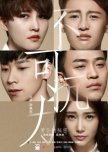
Irresistible Love: Secret of the Valet
36 people found this review helpful
After 6 years spent in England, Xie Yan (XY) returns back home. He immediately comes to find Shu Nian (SN), who resumes his role of a servant. In a sense, the two revive their childhood days after a long separation. However, SN does not seem happy about XY’s return.
What turn will their relationship take next?
Overall, the story was not exaggerated, but somehow emotions are conveyed very well – sense of injustice, annoyance, care, worry… One can feel them all very strongly during the movie.
Characters
- Xiao Nian - unlucky orphan with a great heart. Very good at hiding his feelings, after years of service he became very proficient at obeying orders, quietly accepting his fate.
- Xie Yan – selfish, dominant, possessive, but deep down also caring.
- Jiang Yao – not shown in great detail in the movie, but seems to fail to understand love.
Great actors, very natural acting.
Music – fitting, but not very noticeable or particularly good.
Other comments
- XY was too dominant, which makes the relationship become abusive, especially at the beginning. However, one might argue that by showing this characteristic so clearly, the movie emphasises that this is a problem.
- The development of their relationship could be shown in more detail and in greater depth.
- Also, the movie contains a really interesting theme of an orphan, who basically becomes a servant to the heir of his adoptive family. The aspect of SN’s loyalty and servitude is clearly shown, but maybe this could be expanded upon further.
- Some moments were a little difficult to understand, but that might be due to the quality of subtitles.
Generally, a really interesting and good movie.
Would especially recommend it to those who:
- like BL movies
- are not typical BL audience, but are looking for a romance movie with an interesting plot
- are interested in stories of orphans
Was this review helpful to you?


