
 News


This review may contain spoilers
I loved it but it was stressful
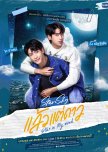
I have watched this a long time ago, but I realized I haven't made a review yet. I rewatched it recently, coincidentally. I love this couple very much. I relate to both of them in many ways. This is one of those cat and dog BLs and I was very happy with it. But it took me some time to find that happiness since every episode Dao cries because Kluea can't communicate. I love Kluea, but the guy didn't help himself nor Daonuea. It was a little frustrating, but I could take it. My BIG problem was that Typhoon guy. He was so annoying and his face made me angry. He wouldn't leave Dao alone and it got me so mad, the way he would pry into Dao and Kluea's business being so nosy and not giving up like, dude, get a hint. Dao got me stressed when he decide to "date" Typhoon too. I'm glad it's over and they're happy now being the cutest in Our Skyy 2.Was this review helpful to you?
This review may contain spoilers
A near perfect drama
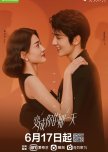
I can barely put into words how much I love this drama. It got me hooked from the beginning and I immediately fell in love with the characters. There is an amazing blend of comedy and romance as well as character development. I love how our main protagonists went from enemies to friends to lovers, nothing felt too rushed and viewers can't help but root for them all the way through. Their relationship was so healthy and it was so clear that Sheng Sheng and Jiang Yi are made for each other. The hilarious moments are so random and make me think the two leads have one brain cell split between them haha (walnut cracking scene, doing bizarre physical activity to try to switch back). The side characters were also purposeful and well-developed. Jia Shu and Tong Hua's side story was super interesting yet unexpected, while Shen Qing offered the "I feel bad for him but I don't want him with the girl" character lol. The family storylines were well done and I definitely shed more than a few tears. There is almost nothing to complain about tbh. Except, unfortunately, as with any drama, there are flaws that made this a 9.5 rather than a 10.Their breakup was justified. 100% I'll give them that. I bawled my eyes out during the whole of episode 24, which I think just showed how attached I became to their relationship. Seeing Sheng Sheng go through so much hurt within such a short period of time, and Jiang Yi feeling helpless tore me apart. They so badly wanted to be there for each other but couldn't figure out a way that would work for them. Also I really didn't expect this but I was also bawling during the whole Little Galaxy disbanding bit. Even though Little Galaxy was never a huge part of the drama, there was something about saying goodbye and all the fans thanking them for their childhood that hit so close to home.
The last episode gave me so many mixed emotions. First off, ONE WHOLE YEAR LATER. bruh. I was expected six months later max but damn okay writers. Anyway, I just felt like everything was so rushed. Jiang Yi coming back, deciding he doesn't wanna hide himself in public, then announcing that the body switching problem has been solved. I completely understood why Sheng Sheng was feeling to overwhelmed and didn't immediately say yes to Jiang Yi's offer. Something just felt off to me idk. Them getting back together was very very cute though, especially the mountain scene. BUT THEN. We realize it's a novel plot that real-life, non-fictional Sheng Sheng is writing and the beginning break up scene at the start of episode 1 suddenly made sense. While I get that having the body switching idea makes sense in a novel, I would rather have it be for real anyday. I know the novel is based off the actual relationship, but they are different from the Jiang Yi and Sheng Sheng all the viewers fell in love with. There was no need for those last 8 minutes and I kinda wished I just paused at that point.
Anyway, I will be re-watching cute scenes and BTS of this drama and missing all the characters v much.
Please, please watch this!! It deserves all the love in the world.
Was this review helpful to you?

FAILED
A good attempt that failed miserably. If you havent seen this just stay away, otherwise youd be watching "The Sandee Show".The good:
1. Good actors - Enzo and Darwin are good as Ken and Shake, Keijiee was also convincing as Heaven, even John as Romeo. I also love Yayo's subtle strong single mother acting (more on Yayo later);
2. There is a number 2?
The bad:
1. Sandee. BIG PERIOD;
2. The crying Yayo;
3. The deaths and that ghost-seeing character;
4. The second half of the story;
5. That horrible horrible Ken hospital makeup;
6. The title. How the hell did that title connect to this series? What was so extraordinary???
The moment it was implied that one character can see ghosts and then really saw one at the theater, i knew immediately that something was off with this show, and that things will turn sour. I was hoping i was wrong but damn, they had to go there and it immediately went downhill.
Tropes and my snide remarks aside, the truth is this series had so much potential in the beginning. The first few episodes can actually be considered good - the characters, the acting, the script, and specially the non-Covid plot ( Covid-related fictional stories from the Philippines is just so overused now). Remove the girl best friend and i would gladly give this show 9 gold stars out of 10. Why the heck then do i think the show failed?
It is because of the second half- when the two gay lead characters became extras and the two female characters became the leads. The first episode promised a well produced series with its two gay characters at the center of the story, not as villains, and not as a source of comedic and idiotic relief - something we havent seen in a normal Philippine primetime tv show. What they delivered instead was a confusing mess, and an attempt to give the veteran Yayo the heavy lifting in acting. The story shifted from a love story into a preachy information campaign - "End Homophobia Now" or your child or your friend could die.
The show would also like us to believe that the love between Ken and Shake is so EXTRAORDINARY, that heaven and earth will move just to bring them together even in the afterlife- something that wasnt even established enough before their demise . What little time they got in the first half is a beginning of a love story, at best, they're not even officially a couple yet. They could have spent a couple more episodes to make us believe that what they have is real love.
Also, this series became a semi-supernatural show with a cheap attempt to copy that "Sixth Sense" twist that you can see from miles away. Then they gave extended screentime for the wailing mother, and that best friend who is actually a selfish insecure b*tch. If i was the mother and after realizing what i did, i would have beaten that pretend angel into a pulp. That character lacked remorse and would forever be etched in my mind as one of the worst characters ever.
Overall im giving it a 5.5 just because of the good first half. Should you watch it? No you shouldnt. Will i rewatch? Hell no! Oh, did i mention i hate Sandee?
Was this review helpful to you?
This review may contain spoilers
A man and his personal story of greed - leading into the repulsive quagmire of a corrupt network
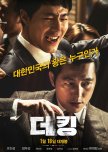
In 2017, "The King" is among the top ten movies in South Korea. The story is a prototypical example for a few extremely powerful men(!) manipulating crime, business & politics within South Korean society. In an idiosyncratic style, the movie conveys an insight into an repulsive quagmire of corrupt networks that run through all social classes. It is about the particular imbalance in the realms of public prosecutors and judiciary, which in the 1990s and 2000s was still massively determined by bribery.The protagonist tells his personal story of greed (it is always people behind a system...) This is about his climbing to the top and the correspondingly deep fall. He accompanies the events from the off while the story unfolds before the eyes of the viewer in trenchant, impressive scenes. At first, you have to get used to this particular style, but the acting, pace, rhythm and camera nimbly catch the audience by the hand and won't let go until the end.
Was this review helpful to you?
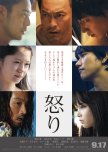
With a talented and star-studded ensemble of some of Japan's most famous names, it's no surprise that Rage shines. Ken Watanabe needs no introductions, the male leads: Go Ayano, Matsuyama Kenichi, Tsumabuki Satoshi and Moriyama Mirai who all have already made names for themselves. Aoi Miyazaki, who's been in the industry since she was four. And the up and coming, Hirose Suzu. I also want to mention the relatively unknown Takara Sakumoto who makes his debut here as an actor to watch out for.
I'll tell you why Rage is a very raw film -- it depicts Japanese rigidity. I don't say that to provide a negative interpretation but there is a lot of suppressed emotions in the society. Hence, these suppressed emotions are bottled up, be it sadness, be it anger, be it loneliness—whichever. The need for catharsis is just too high and I think Rage perfectly depicted that need and gave these characters that chance.
As I watch this film, I too, want to scream, I too want to have a tantrum, I too, want to throw things—I want to release bottled-up feelings. Lee knows how to build-up these emotions that echoes the characters' as much as he builds up the narrative. He knows how to give you the "feels" combined with Ryuichi Sakamoto's score that's just filled with too much dramatic tension, you too, would want to explode.
There are two overlaying narratives in the film, all of which were very cleverly linked not only by the murder and that the three men emerge as potential suspects but are also connected through dialogue, through visuals and through sound. The sound is really the one, to me, pushes the plot. The sounds emit the emotions, emit the passion and emit everything. Lee connects visuals from Tokyo, from Chiba and from Okinawa together with the dialogues and the sound. I think it's a very refreshing way to do so and it makes the three narrative feel balanced.
These narratives, on their own are unique but still keeps the underlying theme of trust and connection. Go and Satoshi's narrative touches on their sexuality. It is very refreshing to see an aloof, almost-silent Go that contrasts with Satoshi's fearless and enthusiastic nature. Miyazaki, Watanabe and Kenichi's narrative touches on acceptance and of family. The lonely, almost weird Kenichi forms a connection with Miyazaki, who has just been rescued by Watanabe (her father) from an abusive sex work. Suzu, Mirai and Sakumoto brings us to Okinawa, of a simpler life, of youth and of curiosity but to me is really the one that resonated with me the most.
If you really want to know who the murderer is, I'd say look at the narrative that's filled with the most rage. Look at which narrative makes you feel the angriest, the one that filled you most with rage and you will have your answer. By the second hour of the film, where it's filled with tears and screaming and throwing, you'd know. The reveal isn't what matters, it's their stories that do. Lee knows how to juggle the three narratives that three of the suspects are all likely to be the killer.
The plot does, disintegrates into a cornucopia of crying, weeping, wailing and just a lot of those (all three narratives stitched together too) so it does overwhelm and to itself, an overexcess portrayal of the characters and their narratives. But nevertheless, very very very impressive performances from the cast.
All I have to critique is probably the lack of a backbone for the killer himself. There is an ongoing question of where the rage comes from. Is it simply from surpassed emotions? Is it simply from being laughed at his pitiful state? Or is it from being pitied? We are never given a straight answer so we can only interpret.
The visuals are stunning. The opening shot of a bird's eye view of Tokyo, to the clear waters of Okinawa to the colorful houses of Chiba—it's beautiful. The visuals are great transitions and there is never the lack of varying colors to depict the scene's mood.
Finally, I just want to say that I will never look at Hirose Suzu the same again. I'm only commenting on her the most because her films are the one I've seen the most. I used to say how Suzu knows how to act, she can cry but there is blankness in it (compared to the way Fumi Nikaido tries) but seeing her, in a very very very mature role, I'm taking back what I said—Suzu deserves all the spotlight she's getting. And with such roles, it's no doubt, she can do more.
Also, Takara Sakumoto making his debut here impresses.
Ultimately, the film is about trust and connection. No, it doesn't tell you who to trust and stuff but it does tell you how it feels when someone you trusts betrays you or someone you choose not to trust just decides to leave.
Was this review helpful to you?
A Masterpiece From Start to Finish
Wow. Just wow. Against the Current is what happens when a C-drama actually knows how to tell a story. 😂 This is a masterpiece through and through.Every episode connects so beautifully to the next that by the time you reach the end, everything falls into place. No confusing plot holes. No random storylines thrown in just to drag things out. No sitting there thinking, “Wait…what just happened?” The script is simply masterfully written.
And the characters? Every single one has their own personality, purpose, and story. Nobody feels like they're just there to fill screen time.
The FL absolutely brought her character to life. She was awe-inspiring to watch—strong, intelligent, capable, and completely believable. The ML was equally well played, and together they gave us a love story that I absolutely loved.
And THANK YOU for not rushing the romance! 🙌 Their relationship develops naturally, and when they finally had their first kiss…OH MY GOODNESS. 😂 After watching their relationship slowly build, that moment was SO rewarding. It actually felt earned.
But one of my favorite things about this drama is that the FL and ML are surrounded by incredible people. From their families to the people who serve them, the supporting characters are so well written that you genuinely become invested in them too. They aren't just there to stand in the background and say, “Yes, my lord.” 😂 They have personalities, loyalty, intelligence, and their own important roles in the story.
And that's what makes the supporting cast so special. The FL and ML are already strong characters, but the people around them hold their own. Everyone brings something to the story, and nobody feels wasted.
The story itself is incredibly gripping, and every victory feels earned. The characters work for every win, which makes it that much more satisfying when they finally get it.
Against the Current kept me completely invested from beginning to end. The story is gripping, the characters are memorable, the romance is beautifully paced, and the writing is on another level.
Honestly, this is the kind of C-drama that reminds you how good a drama can be when the writers actually take the time to build the story, the characters, and the relationships properly.
10/10 for me. Absolutely a masterpiece. ❤️
Was this review helpful to you?

Li Hong Yi is Super Hot
This is another one of those isekai time travel stories. It’s tropey and I wasn’t very impressed with the beginning of episode 1 when a girl bumps into a boy and rips his suit at his important occasion. However, as the story progresses, I was absorbed into the story by the narcissist Jiao Yang (Li Hong Yi) character who is a wealthy spoilt brat and scared of responsibilities. Though the character of Jiao Yang is cliché, his look is hilarious and eccentric.To return to her own universe, Lin Miao (Kira Shi) must help Jiao Yang become the CEO of his father’s company. Though trying to avoid responsibilities, Jiao Yang also tries to prove himself, especially to his father who is almost tired of scolding him (Jiao Yang) in front of his staff. In contrast with Jiao Yang’s immaturity, Lin Miao is mature and capable, and very soon Jiao Yang falls in love with her and is inseparable from her.
Jiao Yang’s journey to the CEO seat is arduous, having challenges thrown at him at all times from all directions. Each time he takes up the challenge and faces it head on with Lin Miao by his side. Their moments together are filled with sweetness and silliness, and it is this sweet romance that has made this drama the highlight of my days.
There is not much of a plot here. Whatever insignificant plot there maybe has not been developed well. Plot holes are everywhere and illogical. I stuck on with this drama because of the romance which I really like. Initially Li Hong Yi’s hair style baffles me, but then I grow to like it for its wuxia appeal. Li Hong Yi has the charisma and look of a guy who is always being misunderstood by others and yet he adopts a I-don’t-give-a-damn attitude. Having said that, he’s desperate in proving himself to his father and to Lin Miao. Li Hong Yi’s performance is very convincing here.
Kira Shi has a mature look. As Lin Miao (current self), she’s perfect but as Lin Wei Jun (younger self), she’s overstretched a bit. I can’t say I like her as Lin Wei Jun (really hard to watch when she tries to act cute). The co-existence of Lin Miao and Lin Wei Jun is mind boggling and is not properly reconciled at the end. Therefore, despite being a time travel story, there are 2 people of the same person. This is a glaring intentional plot hole that doesn’t make any logical sense, and is very quickly swept under the carpet. The ending is sloppy. It feels like lazy writing to me. They just want to pack up and go home. What a pity. This could have been a very nice drama.
Overall, this drama is unexpectedly quite a fun watch despite the shoddy ending. I love the dynamics of the female and male leads which are perhaps the only thing that have kept me going.
Was this review helpful to you?
Synopsis is not accurate
Firstly, I would like to address that the synopsis is not accurate at all. The central line of the story is a straightforward, hard working, 35 year old woman with strong convictions who goes up against a staunchly patriarchal society where she’s underestimated and under minded at work in order to follow her passion. The romance(s) are more or less something that happens along the way from her perspective. Also, there really isn’t a strong love triangle as such, more like a rivalry between the two guys which is superfluous since she (at the time) doesn’t seem interested in either of them.That being said….
This drama was so unexpectedly good! The actors were believable and the writing was consistent with character portrayal. It had none of the tropes I abhorred about Find Yourself where the FL is immature, unsure, and doesn’t have a clue about what she actually wants- ending up with her flip flopping all over the place between two men and making both of them unsure of her.
I was also pleasantly impressed that despite the age gap, the actors had really good chemistry and were well rounded and developed characters.
Was this review helpful to you?

Saikou no Jinsei no Owarikata - Ending Planner
30 people found this review helpful
Story 10/10: As odd as the plot sounded, this drama actually has a good amount of everything(except action...unless you count Yamapi running with music playing in the background as action.) The plot is fantastic, but I think the biggest obstacle to it's success was the fact that it deals with death(every single episode), and most people would rather not watch anything that has such a heavy subject in it. Personally, I didn't mind and rather enjoyed that unorthodox aspect of it.
Acting 10/10: Flawless and usual. Every single cast member was perfect. Yamapi, Eikura Nana, the actors who play the family members, and everyone else did an amazing job.
Music 7/10: I think I remember only one song or maybe they just had one song played over and over again. I can't remember. The one song was actually pretty good (Yamapi was the singer), but the lack of their being more memorable variety is what made me give it a 7/10.
Rewatch Value 6/10: I don't usually rewatch dramas but since the success of this drama doesn't really hinge on surprise, I would give this a 6 for rewatch (which is very high for me.)
Overall 10/10: I looked forward to new episodes of this drama every single week and that is rare for me. For people who haven't seen it yet, I would say at least watch the first episode and give it a chance. I'd even go as far as saying it's a masterpiece drama that deserves more fans.
Was this review helpful to you?
Atsu-hime's evolution is believable and beautiful to watch. The story is authentic and gives you a glimpse of a closed world and how it changed after the Meiji restoration.
I highly recommend this drama to anybody who wants to see a beautiful story that is both historically accurate and understandable for the modern viewer.
The acting was stellar, believable and stirring all kinds of emotions. The music was epic, as much as the story was personal and without much of those epic scenes with wars and surreal martial arts.
I don't think I can rewatch it as a whole, but there are certain scenes that I would happily rewatch!
Was this review helpful to you?
Being a fan of Miike’s filmmaking, it was unavoidable to miss the highlighted foolish characterization, extreme violence and hilarious black humour inserted everywhere. That being said, I never expected Toyoda to do the same. After all, two different directors have entirely dissimilar way of making their pictures. Crows Explode leaned to the realistic side way too much which was a bit wrong in my opinion; don’t get the wrong idea, immersing the characters and fighting scenes in realism didn’t sound like a bad treat but when it’s over-done with this type of film then things are bound to become bothersome.
To make things clear, this film had too many similarities with its famed prequels. The fight to become Suzuran’s top leader was still used as the main thread to drive the plot. However, the fighting sequences to reach that objective were surprisingly demure and repetitive in a worrisome way. Although Toyoda tried to focus on the human emotions between his characters, he didn’t exploit his main leads’ potential to the fullest. Thus, many feelings couldn’t get pass the screen barrier to reach the watcher’s heart.
Crows Explode narrative pattern was composed of several side stories that didn’t serve any meaning at times. At the matter of fact, few of them were just used to fill the running time instead of building characters’ back stories. To some extent, most of them were heavy to watch especially with the obvious lack of fighting scenes; they became utterly irrelevant to the film’s development. Let’s not forget the near-disappearance of black humour – which I clearly don’t blame Toyoda for it. The last fighting sequence wasn’t blowing but it delivered a nice punch after all.
The entirely different cast is worrisome, isn’t it? I know that many people can’t imagine the “Crows” without Oguri Shun and Yamada Takayuki on top of them. I am a big fan of those two actors myself but shockingly, their disappearance didn’t make me feel bad. I did want them to be in here but the new faces weren’t bad at all. Led by raising stars like Higashide and Yagira, the acting department did the trick for the lack of better words. Some actors didn’t convince me much but I can’t put all the blame on them, the way their characters’ were written didn’t allow them to show a wide range of emotions or action.
The cinematography was trying to be the same as the two Crows Zero but it didn’t come out that way, I believe the yellowish atmosphere is the film’s way of distinguishing itself from the others. The musical note was the same so there's nothing to complain about in that department. The directing style and the setting of fighting sequences are debatable but Toyoda made sure to leave his mark which is more than enough to respect a director.
Watch if:
-You like both Crows Zero but make sure to watch this with an open mind.
-You like school fighting.
Do not watch if:
-You’re looking for a “copy-paste” version of Takashi Miike’s prequels.
Crows Explode had its own touch of filmmaking but the serious realistic depiction that Toyoda decided to use didn’t come out entirely right, just like it wasn’t entirely wrong. Due to its entirely different pattern, this sequel should be viewed for its own merits, comparing it to Miike’s Crows will only make it harder to watch and judge.
Was this review helpful to you?
The plot starts off very slow and realistic but has plot twists within the middle of the movie. After that happens, the plot picks up and that's what makes you more interested in what will happen next.
As for the soundtrack/OST, not the most memorable. It just was okay. The acting on another note was beautiful. I love Choi Woo Shik, Kim Dami, and Go Min Si in this movie. I really think the cast was well picked and the actors did an amazing job with the acting and portraying each of their characters.
I would rewatch this movie if I wanted to, and I am really hoping and excited if there is a PART 2 to this movie.
Was this review helpful to you?

While the director deserves acknowledgment of his dedication to this story and in bringing it to the spotlight, there are areas of the film where there was need for a more skilled, tighter hand. Nonlinear storytelling and an unreliable protagonists causes some confusion for viewers, especially those who might not be a native Korean speaker. Yet the overall moody and haunting atmosphere highlighted by a skilled use of light and music accentuates the ultimate tragedy of the film.
This is not a film that most people would rewatch; pre-knowledge of Gong Ju's story leaves the audience emotionally wracked and exhausted even before the first few minutes of the film. However, it is an important film all the same.
Was this review helpful to you?
This review may contain spoilers
Everything stands or falls with the choice of an auspicious place. Insights into Korean geomanticsm
"FengShui" is a historical KMovie that addresses the political takeover by Heungseon Daewongun and his son, King Gojong. Even more, it deals with the Korean version of geomancy - Pungsu-jiri-seol = theory about the relation between wind, water and earth - which has accompanied the country across all dynasties since at least the late 9th century. The traditional theoretical concepts, studies and observations are about which constellations in the landscape bring luck or misfortune to people. In South (and North) Korea there is hardly any building, tomb, temple, or city that was not built from the point of view of Pungsu. To this day, Pungsu is still quite popular.Against this background, one could understand the movie "FengShui" as a nice, sometimes exciting story that comes up with a pointedly, rather apolitical, and for some even esoteric explanation about the ending of the Joseon Dynasty: At last, it was the (wrongly?) chosen location of the tomb that decided the end of the empire...
In any case, the story dramatically illustrates the importance of Pungsu to the people of (Silla, Goryeo, and) Joseon. And by the way, it gives an insight into the political situation during the last decades of Joseon. Without reference to this, however, one may be a bit surprised about the scramble for graveyards and also the struggle for power at the palace would be an interchangeable one among the many stories available on screen... No matter which glasses you choose, the cast in any case guarantees top-class performance.
Eventually, if you are interested in Korean society and history, the KMovie "FengShui" opens up an understanding of the great importance regarding the harmony (or disharmony) of human life with natural events (such as weather and seasons) as well as in relation to geographic features of the landscape (such as mountains and lakes and landscape) - as they are having a direct impact on human health as well as the fortune or misfortune of personal, family or even national fate. Everything stands or falls with the choice of an auspicious place (Myeong-dang) for one's own house, grave, market square, administrative headquarter, temple, fortification, palace, etc.
The teaching goes back to the Buddhist monk Doseon (826-898). He was a Daoist master and Zen Buddhist student who adapted the Chinese principles of feng shui to the Korean landscape and cultural environment. What is special about it is the concept "grow with nature", which in this respect focuses on an analysis of the spiritual and matter-related energies of mountains and landscapes as well as their effects on human life. (Interior furniture etc. plays a minor role in Korean pungsu.)
The KMovie "FengShui" puts a Pungsu master at the center of the story. Due to the more or less favorable choice of location, he can predict and influence how the fortunes of the people affected will develop. In this case, by using this knowledge to choose the most favorable burial site, he becomes a veritable kingmaker.
By the way:
All 42 royal tombs of the Joseon Dynasty over a period of more than 500 years are largely undamaged to this day. This is worldwide unique. All are arranged in the landscape according to the teachings of Pungsu - at most close enough to the capital for the royal family to visit the tomb within one day. (The concrete design of the complex was based on Confucian specifications.)
By the way:
The historical starting point of the story is the fact that Heungseon Daewongun, a central political figure of the last Joseon decades, moved his father's tomb on the advice of a Pungsu master. The new setting somehow promised that 2 kings would come out of his family. That was actually the case. But after that, the Joseon Dynasty came to an end.
------------------------- SIDE NOTE: --- Myeong-dang and Korean Pungsu ---
Pungsu officially goes back to the monk Doseon. But there are also sources that indicate that there was already a spiritual tradition with human-nature harmony on the peninsula, the aim of which was to efficiently balance landscape and topography, natural forces and sanshin (mountain spirits) in order to determine the fate of the purposefully influencing people.
Doseon's works have not survived. But his yin-yang geomancy was handed down in the works of later Confucian scholars. In the 12th century book "Haedong-Pirok" about the secret history of the country Doseon's theories were mentioned and even expanded. 5 centuries later, Yi Jung-hwan (1690-1752) in "Tangni-chi" analyzed the topography and landscape of the entire peninsula according to these geomantic points of view.
Central to this is the concept of Gi (forces of matter) as opposed to Li (forces of Heaven and Spirit). Mountains, and in particular the central mountain range that stretches like a spine across the peninsula, are the source of Gi. The energy flows, so to speak, from the mountains into everything that the landscape produces, into the water and into the air - all that nourishes the humman being. Gi thus becomes concrete and figuratively the source for a strong, happy people.
Another central concept is "Hyeol": a place of perfectly balanced forces of heaven (cheon-gi) and earth (ji-gi) from which people benefit the most. Such Hyeol with high, positive energy potential include, for example, Jiri-san's Cheonghak-dong valley in the south of Samshin-bong peak or the location of Buseok-sa temple on Sobaek-san. "Hyeol" actually means an ´opening´. Like the 9 openings of the human body, there are also openings in the landscape through which energies can enter and escape. If you like, Hyeol could be considered acupuncture points in the mountain landscape. Knowledge and control of Hyeol thus is highly related to power. A more ancient term for Hyeol comes from the shamanistic tradition: 'Myeong-dang', the (spiritually) lightful or auspicious place. The idea behind it: Bedding the ancestors at the auspicious place can bring prosperity, power and good fortune to future generations. Bedding the kings at auspicious places accordingly brings prosperity, power and good fortune to the nation.
...The KMovie is originally named "Myeong-dang"...
---------------------------------------------------------------------
Was this review helpful to you?
Was this review helpful to you?


