

Not a love story!
If you are watching into this movie expecting a sweeping romance, you might walk away a little disappointed. While it’s marketed as a love story, the real strength of the film lies in its portrayal of pre-war tension,not just from the soldiers, but from the families quietly bracing for what's to come.One thing I actually liked was how the movie didn’t go all out showing war scenes. Instead, it kept most of that in the background and focused more on the emotions like the stress, fear and uncertainty building up before everything goes down.
The romance unfortunately, didn’t really land for me. It felt rushed and kind of half-baked. The connection between the leads is supposed to be deep and intense, but there just wasn’t enough buildup to make it believable. They have a few sweet moments here and there, but not enough to make me fully buy into the idea that they would risk everything for each other. It felt more like the movie told us they were in love rather than actually showing us.
The romance had potential, especially with the emotional backdrop of war and separation, but it needed more time I guess to feel real.
It didn’t ruin the movie, but it definitely held it back.
There are a few moments of light comedy sprinkled throughout, but they come and go without leaving much impact.
As for the performances, the acting is serviceable. Nothing groundbreaking, but nothing terrible either.
Overall, it’s a decent watch if you are into slow, emotional war stories that focus more on vibes than action. Just don’t go in expecting some epic, soul-shaking romance.
Was this review helpful to you?
Not Great
It was nice to see some sort of conclusion and get some closure from the series (which was very short and ended abruptly), but this seemed like some weird sort of Hallmark or Disney Channel production. The whole plot was meant to push the characters in one direction , but it was dumb and boring. It was nice to visit these characters again, but it could have been so much better if done right.Was this review helpful to you?

One of the most stunning visual styles in modern cinema
Nijiro delivers an amazing performance in this role. The way he bringed depth and complexity to his character, its beautiful, honestly. His acting is subtle but powerful. The chemistry between the actors is palpable, and the interactions between the characters are authentic and yet have that uncanny feeling, thet for me is what makes the horror of the movie.The direction is equally impressive. It is not an ordinary film; it's a sensory experience that will stay with you long after the credits roll.
Was this review helpful to you?

Energetic Action and Great Chemistry
"Officer Black Belt" really shows the strong chemistry between the main leads which made their partnership entertaining and enjoyable to watch. The martial arts scenes do stand out as energetic and well-taken which nicely showcased the main lead's black belt skills. The story also remains relatable through showing the everyday life like the gamer friends and the family’s chicken shop, which adds a nice "slice-of-life" touch.However, the soundtrack fails to leave a lasting impression. It does support the scenes but isn't particularly memorable.
Was this review helpful to you?

The Breadwinner's Burden
It’s a story about a typical Filipino family — complete with extended relatives and all the drama that comes with it. It follows the struggles of an OFW breadwinner, Bambi, who’s been working abroad for years. But when she finally comes home, expecting to see the house she’s been sending money for… surprise! It doesn’t exist. Turns out, her brother spent the money and even pawned the house.The movie hits hard because it’s so real. A lot of Filipinos with family abroad can relate to this. When you’re working overseas, people just assume you’re loaded. They keep asking for money until you’re left with almost nothing for yourself. Sad but true. Not everyone’s like that, but it happens more often than we’d like to admit.
It also highlights the tight-knit bond Filipino families are known for. Whether they’re going through tough times or enjoying the good ones, they stick together no matter what. That’s just how it is here.
As for the ending? Just be prepared — emotionally and with lots of tissues. 😅
And the Breadwinner is a heavy drama with just the right touch of comedy, which I really enjoyed. The production value is quiet good and the soundtrack in the end? Chef's kiss - it's deep and meaningful. And of course, Vice Ganda totally nailed the role — no surprise there!
Was this review helpful to you?
"Where is she?"
Shanghai attempted to be a noir murder mystery set against the turbulent time leading up to the attack on Pearl Harbor. The film boasted famous international stars and faces that would become more familiar. Shifting alliances and spies behind every door made finding a killer when thousands were being killed difficult if not meaningless.Intelligence officer Paul Soames arrives undercover in Shanghai to meet up with his best friend who is also an agent only to discover that he was recently murdered in the Japanese quarter. He goes to work as a Nazi sympathizing journalist in order to keep his German contacts. Within a short time he makes the acquaintance of a Chinese resistance member who is married to the head of the Shanghai triad who have a tenuous relationship with a Japanese officer. Soames becomes embroiled with all of them and their various activities while searching for the killer.
The murder mystery was honestly hard to care about. The Chinese were suffering astronomical losses due to the Japanese occupation. It didn’t help that John Cusack’s character was bland and uninteresting. His acting was equally uninspiring and lacking in depth. Gong Li was another story. She gave a strong and more nuanced performance as Anna Lan Ting. Her role as a resistance member was far more compelling and the movie would have benefited from focusing on her more instead of forcing the viewer to see nearly everything through Soames’ bored eyes. Chow Yun Fat played a supporting role as Anna’s husband. He did the best with what he could but was sidelined most of the time. Watanabe Ken’s Tanaka walked a fine line between nemesis and sympathetic character. Benedict Wong (Dr. Strange’s Wong!) played a Japanese informant and Hugh Bonneville (Knotting Hill and Downtown Abbey) took on the role of a newspaper editor.
Perhaps Shanghai was trying to do too much or maybe not enough. The film showed another angle of how vital strategic information that could have foreshadowed Pearl Harbor was not forwarded though it was more of an Easter egg than key plot point. The characters’ lives came to coalesce around a Japanese mistress and spy, that ended up being all but irrelevant. The implied chemistry between Anna and Paul simply did not work. Gong Li was believable but John Cusack sucked the life out of every scene he was in.
Shanghai had potential but failed in nearly everything it tried to do. The story and direction weren’t taut enough to be thrilling. The Shanghai matches had more sizzle than the sexual chemistry. And the murder mystery wasn’t much of a mystery. What was worth watching was Gong Li. She was gorgeous and mesmerizing as the mysterious and unwavering Anna. Chow Yun Fat and Watanabe Ken also pulled focus when they were onscreen. And it was fun to see Benedict Wong in an earlier role with that deep gravelly voice of his. Overall, Shanghai was watchable yet equally forgettable.
6 July 2025
Was this review helpful to you?

indie short movie with an established couple
Overall: I gave this an indie rating bump. 17 minutes. Aired on Cul Drama's YouTube Channel https://youtu.be/O7RpyECuUM0?si=WXi_szpfEBu-pcUa The production also made this short BL series https://youtube.com/playlist?list=PLTzMpGBkGlIYOyVq-m3cPEdl4LBIh5hjX&si=Mcsx6cMcvi6-nbEDContent Warning: homphobia
What I Liked
- established couple went thru a realistic challenge
- the supportive classmate though wasn't a fan of how it seemed she was following them
- the mom
Room For Improvement
- wannabe girlfriend cliche
- fever after what was implied
- what was camera blocked at the end
Was this review helpful to you?

This review may contain spoilers
still cliché...
There is the boy who likes the other boy and still says "He's not that way". That cliché is sooooo old and is just annoying. The bullying consists in a passive way, shunning the other boy. The end scene does not really tell us if they get togehter or not at least the boy which is not that way seems to be that way.So I don't like the premise much, the acting is a bit over medicore but for a coming of age story the actors are too old imho. Cinematography is nice, music is good but it lacks depth. Even for a short film there was not much substance.
Overall it's not bad but also not good. Even in 2020 we should expect better writing, more emotions and someone who stands up against bullying especially in a gay context. This is just medicore.
Was this review helpful to you?

This review may contain spoilers
Accountability and communication is necessary
Heaven × Candy had the potential to be a quiet, emotional tale exploring acceptance, vulnerability, and past wounds. For the most part, it was. The chemistry was believable, and the story had a grounded charm despite its low-budget, indie feel.But then came the cheating.
This isn’t just about a “bad character choice.” It’s about how the film treated that choice. The Towa cheats on Kenta not out of confusion or weakness—but as a direct, cruel reaction to his own jealousy over Kenta’s job in adult films. Kenta never hid his profession, and Towa entered the relationship with that knowledge. So instead of having a conversation—he retaliates by cheating. And the worst part? It’s never addressed. No apology, no remorse, no discussion. Just a reunion with a vague “I don’t want to lose you again” thrown in at the end.
It felt like the film skipped the most important emotional checkpoint. Love without communication is not enough. You can’t pretend betrayal never happened and wrap things up with a hug and kiss.
That said, I still found parts of the movie touching and aesthetically soft. It had its moments. But this lack of accountability made it hard for me to root for them as a couple by the end.
Was this review helpful to you?
Watch will be worth....
I just loved this movie....!It had such a gentle but powerful impact. The way Kiyoka cared for Miyo, not just as a husband but as someone who truly saw her pain and wanted to protect her, was so beautiful and rare. It wasn’t over-the-top dramatic but something about the soft pacing and emotional depth just stays with you. I think that’s what makes My Happy Marriage so unforgettable ,it’s quiet, but it hits deep.
It's a marriage of obligation slowly transforms into something far more beautiful a journey of healing mutuals understanding, and rediscovery of self-worth. Miyo’s character is heartbreaking yet incredibly relatable,, shy, kind and emotionally scarred, but never truly broken.
Kiyoka on the other hand, surprises viewers with his quiet tenderness. Beneath his icy exterior is a man who is not only capable of love but deeply loyal and protective. Their relationship is gentle and slow-burning, making every moment of connection deeply satisfying.
I’ve already watched it 5 times too and I never got bored, not even for a second. Every time I rewatch it, I notice new little details in their expressions and interactions that make me love them more. It’s the kind of love story that feels healing. I seriously wish there were more movies like this ones that show love as gentle, respectful, and slowly growing instead of rushed or toxic.
Was this review helpful to you?
With great responsibility, comes greater respect
I was all prepared to go ballistic when I finished the movie because I saw the plot twist coming ten minutes in - but I sat through it, because I could feel that I was in for something that was truly worth the watch.It did not disappoint.
The story is pretty straightforward - Bambi, our lead, is an OFW in Taiwan who returns home for her birthday and to her family who have been documenting the home she's asked them build in her stead with the money she sends home. Only, no new house and the family's spent all the house money on other projects.
A bunch of mishaps take place and somehow everyone believes Bambi is dead, but when they discover she's not, the entire family decides to scam the insurance company out of the life policy under Bambi's name.
The narrative is kind of here and there, they went hard on the comedy in the first half, heavy with the emotions on the second, a thing I've noticed in quite a few Filipino titles. The comedy was decently executed, I found myself chuckling a bit at times but it was the emotional second half that really got to me.
We get bits and pieces here and there that clues us in on the complicated family situation the characters have going on - five siblings who all have different visions and needs for their lives, and a ton of baggage amongst them are suddenly under one roof, but we never really get the full story. Until, of course, this huge blown up argument between all the family members that lasted around 20 minutes.
Every grievance they have against each other is all out in the open and it's kind of information overload, but it doesn't really matter, because they deliver on what they banked on while writing the script - emotions.
The story relied heavily on the audience sympathizing with the lead and maybe even the supporting characters, and they nailed it. Especially since all the actors delivered in aces. The acting was actually so incredible that I was moved to tears.
A couple of things that could have been worked on? The choppy narrative and I did think the characters could have been fleshed out a bit more, it would've enriched an already great movie.
This was a genuinely good movie, perhaps not something quite so innovative, but certainly worth it if you're looking for something emotional and melancholic.
Was this review helpful to you?
Don't waste your time
There was nothing there.Where was the story, I'm still confused about what the misunderstanding was and who was who.
I also hated the acting, they felt like strangers forced to interact not close friends.
I like movies, I like short movies as well but it is totally forgettable.
I skimmed through the whole thing as it didn't grab my attention.
Was this review helpful to you?

A woke movie
i though this would be a good movie, but it turned out to be a woke story of a mentally deranged slut and a gay justifying their actions. I guess now i know why this has such a high rating: aggressive push by the gay and woke community.i though this would be a good movie, but it turned out to be a woke story of a mentally deranged slut and a gay justifying their actions. I guess now i know why this has such a high rating: aggressive push by the gay and woke community.
i though this would be a good movie, but it turned out to be a woke story of a mentally deranged slut and a gay justifying their actions. I guess now i know why this has such a high rating: aggressive push by the gay and woke community.
Was this review helpful to you?
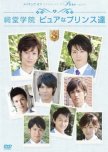
what i know is that Arata who came off as a cold, but good guy (in the previous movie), where in the description he is made out to be Gii's love rival, who is gonna steal Takumi away. turns out to be a good guy with a rough exterior, that came to "shake-up" Gii into rethinking his strategy & approach with Takumi, given the new obstacle's that appeared & would keep coming into his life, given his family & their statues in society.
didn't like his relationship with Takabayashi, but i preferred it to what we got in this movie between him & Shingyouji, cause at least Takabayashi didn't come off as a naïve, love-sick puppy that was in over his head. Shingyouji cause of his personality seems younger, more childlike & thus the whole relationship felt exploitative to me. adding to these misgiving, was the fact that Shingyouji, in his own words says that the only thing he has got with Arata is a psychical relationship, one that is always initiated by Arata. this romance/love - how?!??
the fact that Arata kept Shingyouji hanging on, throwing him bit's & pieces of affection doesn't mean love. Shingyouji was an after thought & am sure his constant adoration was a great ego massage for Arata - who on his part didn't need to do a thing, just take what was offered & use Shingyouji when he wanted.
the fact that at some point Shingyouji had enough - made me sigh in relief, cause sorry Arata is toxic & has nothing to offer Shingyouji, as he doesn't love him IMO.
even though i didn't like Gii & Takumi's relationship - at least there, Gii warmed up & showed his affection, he didn't treat Takumi like a booty call & after they finally got together they were a couple (the fact that is hasn't been smooth sailing is neither here nor there, as there no relationship without some turmoil). but with Arata there was No declaration of love, no confession other then ownership & telling Shingyouji he was Arata 's dog.... if anyone told me that, i would bite him leaving a scar for life & then leave.
but cause of the kiss/es (which admit were the hottest to date - including all movies, also admit that Arata is the best looking guy so far) everyone gaging over the "romance"?!? ok, i guess... not my cup of tea - so idk what awaits in the next movie with these two - after this movie, not that thrilled to find out lol
Was this review helpful to you?

This review may contain spoilers
My July 2025 recommendations challenge
Watch this for my July 2025 recommendations challenge by 𝑱𝒆𝒍𝒆𝒏𝒂 𝑷𝒆𝒕𝒓𝒐𝒗𝒊𝒄. Let's discuss movies…This is a classic story about two best friends who have been stuck in the friend zone for years.
Palm and Gink have been inseparable since high school. Gink's parents didn't have the best marriage — they divorced because of her father's affair. In fact, it was Gink herself, along with Palm, who discovered the truth about her father’s infidelity.
Palm has had feelings for Gink since high school and even tried to confess back then. But Gink, deeply affected by her father’s betrayal, rejected him. She didn’t want to risk losing Palm as a friend, believing that friendship is safer because "you can’t break up with your best friend.”
Over the years, they continue living their lives and each enter different romantic relationships — but remain each other’s closest confidants.
Whenever Palm breaks up with yet another girlfriend, Gink is always there to scold him— and comfort him. And whenever Gink fights with her boyfriend—no matter where she is in the world—Palm, being a flight attendant, will drop everything and fly to her the moment she calls.
Then one day, Gink begins to suspect that her current boyfriend might be cheating on her — and calls Palm to help investigate.
Then one day, Gink grew highly suspicious of her boyfriend and called Palm to investigate with her.
Amidst the chaotic emotions Gink felt about her boyfriend, Palm's long-repressed feelings for Gink also resurfaced. The tension became palpable until Palm could no longer hold back his feelings. He finally asked Gink to choose between him and her boyfriend. Shocked and overwhelmed, Gink is left stunned, unsure of what to do next.
So, what happens next?
Will they remain just friends at the end, or will something finally change between them?
That's pretty much the story without giving the spoiler. Now what I like and don't.
What I like:
+ A heartwarming, classic take on the friend-zone trope
+ Good chemistry between Nine & Baifern.
What I don't too like:
- The story doesn’t offer anything particularly new or surprising. From the very beginning, it's obvious how special Gink and Palm’s bond is—so it’s just a matter of when, not if, they’ll cross the line.
Overall, this movie is quite good. It covers every aspect of the classic "friend versus relationship" dilemma and explores all the questions about whether to cross that line, what happens if you do, and what if that relationship ultimately fails.
Was this review helpful to you?


