

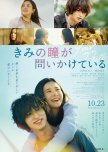
My Heart Hurts…. in a good way
I’m not usually a fan of this type of ending, but here is was very well done, I cried hard but still loved it. Not going to lie, this was a pretty heavy and emotional movie. They had a really rough time, but they became each other’s home. I also liked that you could see Rui brighten around Akari. She also seemed to have a pretty positive attitude towards life, despite everything she’s had to go through. Suku was adorable too. I loved the theme song, it fit the movie wonderfully. Ryusei is probably one of my favourite Japanese actors, I like how he portrays his characters.Was this review helpful to you?
This review may contain spoilers
it was just perfect
literally just what the headline says lolTiny spoilers? Js adding to make sure
This is a movie you should watch without knowing anything beforehand
9.5 because I was really sad at the end but perfect regardless, I feel like if the ending went any other way it wouldn’t have been as good. Because we know the how important it was to both characters . Still made me feel empty inside like omg..🥲
it was confusing and it had me on edge the whole time, but it was super exciting and the story was really good. I wish I could rewatch it again for the first time.
Was this review helpful to you?
amazing
Was just so confused the whole way with the characters thoughts and who was on whose side, but that’s what made everything at the end so much more impactful. It’s truly the kind of movie you’ll never be able to watch again for the first time. I cried without shedding any tears, it was an amazing watchWas this review helpful to you?
Glad I gave it a chance.
The thing that stuck out most to me about this movie is its cinematography. I don’t want to be cheesy but many of the landscape shots felt timeless. Despite not being in 4k and no HDR, I felt like I was brought back in time.As for the love story itself. Wholesome, sincere, and very simple. The main FL and ML don't even speak that much to each other. Not much drama or tension, and the ending felt satisfying despite the circumstances.
I’m glad I gave this a shot despite the most unassuming poster I’ve ever seen in my life. I didn’t even know the young female lead was Zhang Zi Yi.
Was this review helpful to you?
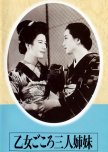
"That turned out good"
Naruse Mikio’s first talkie, Three Sisters with Maiden Hearts, made use of not only the actors’ voices but a variety of music as well. Each of the sisters dealt with poverty in their own way. This was a women-centric film and Naruse dealt with the female characters in a sympathetic manner without pandering. That’s not to say there was no melodrama, it wouldn’t have been a 1935 film without buckets of angst.Chieko tells her new boyfriend how her mother sent her older sisters Oren and Osame to work when they were eight. The mother trains 3 other young women how to play the samisen and sends them out like she had her older daughters to the street and dingy hostess clubs and bars. Chieko is the youngest and favored child who dances in a revue. The neighborhood boys derogatorily call her a “modern girl,” due to her wearing western style clothes. Osame bears the brunt of her mother’s vitriol and tries to protect the other girls. Simply buying a magazine or food with their earnings instead of turning them all over to the mother can earn a beating. Osame wants Chieko to leave with her boyfriend and get away, much as their older sister Oren had. The women have tried to steer clear of the criminal element in their part of town, but the sisters are on a deadly collision with the gangsters as two try to make their way out.
Naruse displayed the claustrophobic boundaries of poverty. Leaving town or seeking a new place to live, all required money, money the women didn’t have. They earned very little playing in the clubs and bars and spent more time fending off the advances of drunken men. Only Chieko with her “wealthy” boyfriend and kinder treatment from the mother fared well. Even she lamented that her mother hadn’t had the courage to commit suicide with the lot of them when they were younger. Oren’s husband had TB and he refused to let her go back to the seedy side of town to work preferring to live in abject poverty. Osame tried to play peace maker for everyone involved even while she worked in a job she hated. There was nothing glamourous about her work in the dim light that smelled of booze, sweat, and cigarettes.
Like many directors when they were first able to use sound in their films, Naruse made liberal use of it. Samisens played with women and men singing. The revue had a band playing while the women danced and sang. There was whistling, sound effects counting down the minutes, and a soundtrack of heartbreaking music. The version I watched was in desperate need of restoration. Many of the frames were faded and blurred and occasionally the frames would go black. The performances were strong, never delving into histrionics regardless of the situation. Hosokawa Chikako is usually first in the cast list, but Oren didn’t appear on screen until 40 minutes into the film. Tsutsumi Masako as kind and gentle Osame carried much of the story on her slight shoulders. Selfless to a fault, no one had her back in the dangerous world she lived in. Umezono Ryuko as the relatively spoiled Chieko gave an energetic but restrained performance. Often the “modern girl” in these early films could be annoying, yet Umezono and Naruse kept Chieko all too aware of the pain around her, but with hope for escaping it.
Three Sisters with Maiden Hearts could have used a few more minutes to flesh out some plot elements, but overall, it was an entertaining if bittersweet first talkie for Naruse Mikio. In Asakusa, crime and selfishness did pay, while those who were generous paid a higher price.
6 February 2025
Was this review helpful to you?
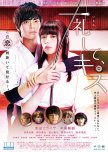
Kyudo (OK) & Red Flag ML ლಠ益ಠ)ლ
A series which talks about the glory of kyudo (magnificent), but also a pretty weird love/control story.The ML character is creepy, chronically lacking in emotion and always in hyper control mode. Miss, if you meet a man like that, run away!! You will not cure him, he will never become a kind and caring person, he will always be insecure and controlling (all the Red Flags).
That said, MASAKI Nakao's performance is superb as always!
********************************************************************
Une série tout à la gloire du kyudo (magnifique), mais aussi une histoire d'amour / contrôle assez weird.
Le personnage du ML est flippant, en manque affectif chronique et dans l'hyper contrôle. Miss, si vous rencontrez un homme comme ça, fuyez !! Vous ne le guérirrez pas, il ne deviendra jamais quelqu'un de gentil et d'attentionné, il sera toujours en insécurité et dans le contrôle (tous les Red Flags).
Ceci-dit, la prestation de MASAKI Nakao est comme toujours superbe !
Was this review helpful to you?

comforting yet heartbreaking. this movie LITERALLY changed my perspective on life
this movie is soo good although I didn’t like the sad ending but I get it at the same time. Realistic ending actually this movie reminds me of the notebook. One thing I really liked about the movie is the characters and also I wasn’t a big fan of her bsf but I’m glad she told woon ho cause I WOULD LITERALLY CRASH OUT if he just left without knowing the truth. I also like how love is described in this movie they way in the beggars said that she eats more and sleeps more that’s real love.Was this review helpful to you?

Legends of the Condor Heroes: The Gallants
31 people found this review helpful
Was this review helpful to you?
This review may contain spoilers
If you like couples who communicate about their thoughts then this show isn't for you.
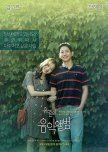
Kim Goeun and Jung Haein was breathtaking. I love how natural their acting is.But.. Let's be honest if the cast wasnt that good, no one would've watch this movie.
The story is pretty meaningless, well okay yeah i loved how pure their love is but that's all. No communication (i know that was the main thing at first but then why don't have conversations like normal human beings?)
I really hated how the FL went to Taesung to learn everthing about ML. SHE COULDVE ASK AND TALK ABOUT IT ???????
Anyways the cinematography was great, music was capturing.
If you really have nothing to watch and want to watch smt. is not that serious, go for it.
But dont expect big things from this movie.
Was this review helpful to you?
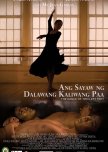
Poetry, dance and homosexual desire
I remember that I was not able to go to its movie premiere in October 2011, because I was not yet of the necessary minimum age, but the interest in appreciating it was marked since those days, when my literature teacher spoke to us in the classroom about the poetry of the main Filipino feminist poets Rebecca Anonuevo, Benilda Santos, Merlinda Bobis, Joi Barrios, Ruth Elynia Mabanglo and Ophelia Dimalanta, and of the very artistic 'Ang Sayaw ng Dalawang Kaliwang Paa' ('The Dance of the Two Left Feet'), since then hailed as one of the great milestones of audience and critical reception on the Philippine screen so far this century.My teacher told us in class about how this beautiful and moving film, winner of 7 Gawad Urian 2012 awards, including Best Film, Best Cinematography and Best Original Score at the Cinemalaya Independent Film Festival 2011 and the Pre-Columbian Bronze Circle Award at the Bogotá Film Festival that same year, elegantly presents poems by Filipino feminists that are intertwined with the dances featured in the 68 minutes of footage.
"The film is a technically sophisticated exploration of romantic longing that is both intellectually stimulating and emotionally engaging", the words of my literature teacher still ring in my ears.
Shortly after, I was able to see it, stored on a flash memory that we high school students who were interested in seeing a film of great cultural richness, originality and lyricism were passed from hand to hand directed by Alvin Yapan, one of the most respected film directors of the independent scene of that nation, also internationally recognized for 'Ang Panggagahasa kay Fe' (2009), 'Debosyon' (2013) and 'An Kubo sa Kawayanan' (2015).
The first thing I confirmed after watching the film is that with it the director has taken the potentially risky step of including in his script large sections of poetry by Filipino feminist writers, in addition to in-depth classroom debates on topics such as the myth of Orpheus and Eurydice and the nature of cinema.
Although there are a couple of clumsy moments of exposition towards the endings, which slightly break the spell, Yapan's strategy pays off thanks to excellent image and sound editing, overlaying charming dance sequences with well-chosen poetry readings and literary debates that say everything about the repressed emotions swirling around the main actors.
I was then able to see through my eyes what I read in the press about this film, shown as part of the Official Selection of the 2011 Hawaii International Film Festival, and which I consider to be much more than a gay film, as it manages to address gender roles and how dance and the small gestures that construct it become a means of communication and sexual expression, and an exploration of the game between Marlon, Dennis and Karen, its protagonists.
In this context, dance, poetry and desire serve as a vehicle to explore an unconventional love triangle that arises from the infatuation of a university student with his elegant literature teacher, who is about 40 years old.
With a well-crafted atmosphere of restricted eroticism persistent from the first scenes, I discovered that Marlon (Paulo Avelino), a student from a rich family who is doing poorly in his literature class, looks longingly at Karen (Jean Garcia), his teacher of that subject.
For several days Marlon follows Karen to discover that she also works as a choreographer and classical dance teacher. Eager to impress her, he hires Dennis (Rocco Nacino), his classmate who attends Karen's dance classes, whom he asks to teach him how to dance as his private tutor, without her knowing.
Wanting to get her attention, Marlon plans to sign up as a newcomer and impress Karen with his natural ability, after learning the dance moves in advance.
Urged by Karen, Dennis will inform that Marlon enrolled in her class to be close to her. Then the woman confronts Marlon. Marlon feels betrayed by Dennis, revealing his closeness to his classmate, whom he now considers a friend. By then, Marlon and Dennis have become inseparable in tackling the complexities of poetry and dance. They would even talk during their dance classes about how to make sense of the poems for the subject taught by Karen.
As he learns how his body should move, Marlon begins to understand the intersections between poetry and dance.
Marlon will come to understand how the poems are testimonies of Karen's choice to live the life of an artist who chooses to remain single, rather than marry into luxury. Her only passion is her dancing. To support her art, Karen teaches literature and choreography for block parties, weddings, baptisms, and other secular events.
Through their lessons, the two young men become closer, but Dennis begins to have feelings for Marlon that go beyond the friendship that Marlon does not reciprocate. Soon their friendship becomes strained and Marlon can't understand why. It is only through dance that Marlon is finally able to express what he cannot say in words to Dennis.
The two male actors capture all the curiosity and naivety of young people learning the rules and repercussions of attraction. For her part, Garcia quietly plays the older, attractive, single woman whose true feelings remain tantalizingly ambiguous.
Possessing a great deal of romanticism, the film focuses mainly on poetry, dance and art rather than the loveless relationship between the two male leads. Dennis, Marlon and Karen are transfigured into a medium to convey a love affair with the arts, lovingly enunciating every word of every poem, every twist and sleight of hand evoking a torrent of emotions none of them will ever be able to say.
I don't know how many times I've watched the film since then. Every time the images roll before my eyes I realize that 'Ang Sayaw ng Dalawang Kaliwang Paa' is a striking film in which the delicately constructed dance of desire becomes an indication of homosexual attraction that arises as Marlon's lessons with Dennis intensify, producing the expected result of attracting Karen's attention to the stage.
I am pleased with how the stories of the three protagonists are intertwined, each carefully told and fused together through words, shapes and movements. Art unites all three. There are almost never overt displays of physical or verbal intimacy. It is only through dance that the trio of characters shout out their most intimate and repressed desires.
Little by little I can see how Marlon's love interest moves from one to the other. The relationship between him and Dennis is not openly stated. Only through their looks and gestures, particularly during their dances, can I see the growing sexual tension. Marlon uses movement to express his longing for his dance partner. It is impressive how Alvin Yapan, who is also the screenwriter, makes use of the kineticism of each touch, of sliding and grabbing, to represent the desire that consumes Marlon.
Karen emerges as their guide, an orchestrator who never imposes herself. She embodies the feminist poetry she teaches and simply aims to reveal what we can all appreciate: a hidden passion so palpable that it gives weight to every step and posture of her performances.
At one point in the footage, Karen invites Marlon to dance with her, but in the middle of the dance, she passes him to Dennis. The dance culminates with Marlon and Dennis dancing, as a preamble to the final scene of the film, in which the two will assume the roles of Humadapnon and Sunmasakay on stage.
While the poems focus on the personal relationships between men and women involved in a power struggle, the dance performances will materialize the contest between two dancers. Who will take the lead? The one who assumes the role of a woman or the one who assumes the role of a man? In my opinion, this is the core of the film.
I find the use of Panay Bukidnon's epic Humadapnon to support gay criticism in popular literature highly interesting. The choreography explores the difference between Western and Eastern dance, one oriented towards the sky and the other oriented towards the earth.
Technically proficient, the film's scenes are carefully edited and the dance sequences, choreographed by Eli Jacinto, are beautifully shot, which is almost an achievement in itself.
'Ang Sayaw ng Dalawang Kaliwang Paa' is a dazzling waltz in the burning fires of desire. I can, as a viewer, feel the anguish that each of the protagonists feels. Ultimately, the film is a cultural triumph that highlights the achievements of Filipinos in poetry, architecture and dance.
Excellently produced despite its modest budget, the film features engaging visuals by lenser Arvin Viola and an eclectic score by Christine Muyco and Jema Pamintuan that works harmoniously with elements of poetry and dance to lend a metaphysical atmosphere to the proceedings.
I highly value how through the kinetic interpretation of the lyricism of poetry, the film becomes the first Philippine film to be adapted from poetry. In 'Ang Sayaw ng Dalawang Kaliwang Paa' dance and poetry join hands, using the works of leading Filipino feminist poets to talk about the plight of dancers and artists, particularly the marginalized ones.
Another thing to take into consideration is that 'Ang Sayaw ng Dalawang Kaliwang Paa' is about artistic pursuit and the status of artists in a third world country. Set on the FEU campus, home of Art Deco architecture, the film seamlessly fuses poetry and dance in an everyday setting, questioning the place of art and its role in our lives. The film also focuses on how the arts are taught in a country where such subjects are relegated to the background.
I will not tire of saying that with the film, for the first time, Philippine cinema explores the marriage of poetry and dance. Poetry as a more lyrical medium compared to fiction, lends itself more appropriately to dance performances. Focusing on feminist poems rather than just focusing on feminist issues, the film explores how feminists and members of the LGBT+ community share some commonalities in their advocacy activities.
Was this review helpful to you?

Mundane but not `that` mundane
I watched this movie because some of my friends said they liked it after watching it. At first, I wasn’t interested because I thought the story was like a classic American romcom. But in the end, I liked the whole movie. As I get older, I realize I don’t need a glamorous love story in my life. I just want to sit and drink with someone I’m comfortable talking to until late, like Woori and Jayoung. I like the chemistry between Son Sukku and Jeon Jeongseo.Was this review helpful to you?

Didn't quite live up to expectations, but still an amazing movie
I had been dying to watch this movie but unfortunately it did not live up to my expectations. I don't usually write reviews and am always appreciative of other reviews for explaining things I missed or other interpretations. While I understand the amazing things about this movie, cinematography, music, and acting, I think the plot and execution was lacking for me. Maybe it is just me or I missed something, but I wanted to share some thoughts.One of the main things was that while each of the characters was interesting and had a lot of depth, I feel like not enough time or background was given. The reason I say this is because I did not get emotionally attached to any of the characters like I usually do. I felt like Thongkam and Sek's relationship was too short lived for me to feel their connection, Thongkam and Jingna's relationship felt too sudden (I get that Thongkam was working through a lot of emotions but even so, the relationship felt very rushed and had little substance. I couldn't think of a valid why for them falling in love). Mo and Saeng's relationship was the most fleshed out and very good (though I did feel frustrated haha). And Mo and Jingna's relationship felt like it needed a bit more too as it felt like the only reason they were attached to each other was because they had been through jobs together and relied on each other for that (which isn't a bad thing, but for me it was not deep enough because "betrayal" felt a little too easy. Though if it was supposed to imply that Mo and Jingna had more of a romantic relationship, I would have like that shown a bit more. Though I feel like that wasn't the case since they referred to each other as brother and sister and I interpreted it to be more of a familial relationship.)
My other main gripe was that the social commentary aspects gelt overshadowed by the exaggerated dramatic aspect and overarching revenge plot. The revenge aspect felt a little messy and all over the place. Especially the last 15-30minutes as things felt very rushed and the whole Thongkam and Mo fight.. and how the movie ended overall. To me, the main emotion I felt was suspense and the exaggerated violence at the end felt too unrealistic, a little too illogical, and a bit predictable. I think I wished for a bit more nuance and thought provoking actions from the characters. Not sure how else to explain it..
Anyway, still really enjoyed this movie but it was not quite what I expected or hoped for.
Was this review helpful to you?
Shock effects and toxic bonds, both felt out of place in the storyline
Well, what happened here really? I have no idea. I am seated after watching this, kind of in trance, captivated, kind of having feeling of having witnessed something bizarre. But all of that happened with last 15 minute development.As for BL aficionados, this one was not it in any obvious sense. Se Joon definitely had a strange obsession with Yoon Jae's validation, but there was no indication that attraction stemmed from any romantic feelings. Then on Yoon Jae's side in one scene, you will know the main one, after he meets him, he seems more sad to see Se Joon in such state than any other consequence that led to it.
So in one way or another they seemed to care for each other. Unexpected plot. Kind of unnatural. I think there was more shock value because Se Joon was not developed as a character that he ended up being. Weird movie. I do not think I like it.
A lot of loose ends. Acting was great though. Overall, meh.
Not a recommend.
Thanks for reading.
Was this review helpful to you?

An interesting idea, but lacking better execution
After watching the movie, I was left with mixed feelings. On one hand, the concept of transferring human consciousness into a robot is fascinating and makes you think about the nature of consciousness and identity. On the other hand, the film lacks a deeper exploration of the world in which the events take place. I would have liked to learn more about the reasons for the conflict between space stations and see a broader context of this universe.The focus on artificial intelligence and ethical dilemmas is interesting, but since we were shown little about the world’s structure, it was hard to fully immerse myself in the story. The ending felt somewhat rushed and not fully developed. An additional 10–15 minutes for a better resolution could have made it stronger.
Despite these shortcomings, the film still managed to touch me, and at some moments, I even cried. I was especially moved by the story of the robot mother and her emotional development. The visual aspect is also worth mentioning—the graphics and battle choreography looked dynamic and stylish.
Overall, JUNG_E is a noteworthy sci-fi film that raises important questions, evokes emotions, and has great potential, but it lacked better execution.
Was this review helpful to you?
This review may contain spoilers
seriously bad execution
i liked the cinematography like the movie quality itself is great but the story is god awful i was hoping for the kinda romance movie where she has the guy bsf and crushes on someone else but realizes her bsf is the better choice also the time skips to the end were just stupid 0 chemi actually did anything really happen this was a wasted budget tbfhWas this review helpful to you?


