

Worth Watching
I originally wanted to watch this movie because it has some of my favorite actors and actresses in it (Song Yi, Zhang Ruoyun, Zhu Yilong, Ni Ni). I'm also a big fan of Republican Era movies and dramas.
For some of my fav actors and actresses, it ended up being like 30 seconds of screen time, which was the result of there being so many characters. I personally feel it was too many characters and it took away from the actual story and made it confusing, but that's also coming from someone who didn't grow up in China and never had a Chinese history lesson. At the same time, I totally get why the directors and creators behind the movie did it this way. It's a Chinese movie and not one that was really meant to be rolled out to international audiences. I suspect the average Chinese national wouldn't have this issue since they probably learned about all of those people in their history class lol. The point of this movie was to commemorate all of those who took part in founding the CCP, which is the reason there are so many characters and so many famous actors and actresses.
As someone who is generally uneducated about Chinese history, this was a good opener to learning more about the events of that period and how spread out the movement was. Now I'm more familiar with the names. I even paused to look up some names to learn more about their role in Chinese history and the CCP. Although it did have a lot of characters with short screen times, it did focus on a larger group of people whom the audience gets deeper insight into their lives. The film did a good job of depicting this idea of a bright future, in which the youth of China will continue to bring forth a new and better China. The interaction between the older generations and younger ones and the eventual handoff of a country is a theme within this film that I think was portrayed quite nicely. I think the film also does a good job depicting how passionate people were at the time regarding their beliefs. Overall, I think the movie was decent, I learned something and got to see my favorite actors and actresses!
Was this review helpful to you?
This review may contain spoilers
Tan Jianci shines as angsty teenage boy!
As all eyes on #TanJianci #檀建次 film debut in a dramatic male lead role for I Miss You, his career seems like it's coming in full circle with his costar from Lost. Indulgence, Karen Mok, singing the ost.I've finally had a chance to rent Lost.Indulgence from appleTV and it's such a nice gem. It's a low budget, quiet, indie coming of age film. It follows the relationships of a woman and son, Xiao Chuan, navigating the aftermath from the apparent drowning of her husband. They both had to take in the woman, Su Dan, who was injured and a unlikely friendship develops between the Su Dan and Xiao Chuan.
Tan Jianci, even at a young age, shines as Xiao Chuan. Here you can already see his knack for acting and small facial movements.
Filled with teenage angst, grownup problems, and unspoken lust, Lost.Indulgence is beautifully shot on 35mm, and remeniscent of the HK era urban narratives. Despite a rushed ending, it is still a fresh breath from all the CGI fested idol dramas.
Was this review helpful to you?
boring
I like the theme of the story which starts with the apartment paradox. but then I felt bored before even getting to the middle of the film.2 hours for a storyline like this gets boring. I did a lot of skipping just to find out the important points and it turns out it's not a problem to do it.
As for the visual effects, I admit it is very good, the make up of the actors down to the small details is also good, the acting is beyond doubt. but it's the storyline that's the problem.
because it lacks depth and is just like a flash of something that is not necessary. but I enjoyed it.
Was this review helpful to you?
Painted Skin: The Guo Jingming Edition
0 people found this review helpful
Emotionally Compelling
I haven't watched the original stories of this, nor was I aware of them, but I still liked this film.For a short film, the story was really well done. The subtleties, the way the plot moved, everything was very well thought out. They managed to hook someone like me, who is not aware of its pre-existing world and its characters, into it.
The way it was filmed made it feel like they slowed the clips in the editing process. I'm not saying it was bad, but that's just the way I saw it. It helps you feel the scenes, and feel the emotions that are being portrayed on the screen. They don't hand you out what's supposed to be said or what you have to know sometimes, so the cinematography is there to help you understand the story and the characters. I have one minor critique, though, and also minor spoilers. There's that one scene where ML and FL are facing each other while chatting very early in the film, and while FL is talking, the camera just pans away from her face like???
The acting... in the beginning, I wasn't really paying attention to the other three because they opened up the film with Wang Churan, so already, she has my attention, and I noticed something different about her acting right away. For someone who doesn't really move her facial expressions that much, I must say it was still good, she conveys depth without relying heavily on exaggerated facial expressions. But then this sad scene appeared, and there came the acting that I was looking for from this woman, ughh!! I really felt that deep in my heart. Of course, I can't forget the other two; they did really great, especially when it was focused on them. I loved the subtleties in their acting; you can tell what the characters are feeling or even what they're thinking. Like I said, the cinematography helped, and the way they highlighted each of the characters. The way the actors say their lines, there's just something about it that's very alluring.
The music was banging; it was on point.
Final verdict: Highly recommend you watch this short film, doesn't matter if you haven't watched any of its other connections. It's really good, really emotional, really well done.
Was this review helpful to you?
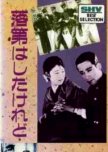
"What does flunked mean?"
I Flunked, But… was one of Ozu’s early silent films about university life. It was a warmhearted story demonstrating life’s ups and downs during and after university.Shomochi and his four buddies don’t take things too seriously as they cheat during exams and spend the evening before the big final exam cramming. Shomochi is the leader helping the others to study. He also prepares his white shirt as an answer guide. Nothing is ever that easy, especially when the house mom inadvertently collects the cheat sheet shirt along with the dirty clothes and gives it to the laundry services. The roommates panic at the loss. Much to everyone’s surprise the four roommates pass while Shomochi fails. The boys are sad for their friend, but Shomochi is devastated to not be able to graduate. Shomochi receives comfort from an unexpected source and finds his path toward adulthood and confidence. The four graduates discover the harsh reality of a disastrous economy where their diplomas mean very little.
Just as bachelor Ozu made numerous films about marriage and family life, he never attended university, so his take on it was more what he envisioned it to be than what he’d experienced. I enjoy Ozu's silent films, his style was more mobile. People moved naturally and looked at each other, not the camera, when they were talking. He wasn't rigid with filming from the mat and some shots were filmed from a higher position. The comedy felt organic and not forced. The boys had many humorous moments without delving completely into slapstick. I did miss his meticulously designed sets with the spare compositions. Of course, these were college boys and cluttered rooms were more realistic. An American movie poster and American university pennants decorated the walls. Ozu's teapot did receive prominent placement in one shot!
While there were many comedic moments, they alternated with sadness and discouragement. University life felt more insular. When the graduates faced the unforgiving economy, they were the ones needing help and encouragement. “Why did we have to graduate so fast?” Shomochi, on the other hand, moved toward maturity and finding joy in the moment.
This film shared the bonds formed from late night study sessions and walking arm and arm to a dance beat. Love brought encouragement in the darkest moments as did friendship. Maturity became a path adversity set them on. I Flunked, But… asked what it means to fail, and if one fails…what next? What happens when you do everything right but still can’t succeed? Ozu left some of those questions unanswered for the students who sought to find happiness amidst the sorrow and victory from failure.
25 February 2024
Was this review helpful to you?
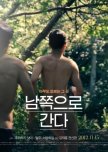
The end of the trilogy: reasons for debate and controversy
The trilogy by Korean director Leesong Hee-il, known as 'One Night, Two Days', (백야), began with the short film 'One Night, later expanded to a 75-minute film entitled 'Baekya' ('지난여름, 갑자기 '/'White Night' and followed by the short 'Suddenly Last Summer' (지난 여름, 갑자기/'Jinanyeoreum, gapjagi'), concludes with the medium-length film 'Namjjokeuro Ganda' ('Going South' /남쪽으로 간다), all from 2012, and narrating three unconnected gay-themed stories together.The strength of Leesong Hee-Il's cinematography, by itself, and continually, finds an audience for his works. Not only because of the naturalness and simplicity, at the same time as the complex way of exposing homosexuality and human relationships and conflicts, which allows us to reinterpret the essence of the South Korean LGBT+ collective (equally global), from the perspective of some of its representatives, but also in the elegance of the language, the cinematographic resources, the intelligence of the film narrative and the intellectual and human wisdom that flows with astonishing clarity and directness.
It is, furthermore, and above all, the director's ability to build powerful stories due to their humanism, which penetrate the personal imagination, especially of the members of said community, never to abandon it again.
Who who has seen the trilogy does not suffer as their own the desperation and anguish of a gay person who drags, like a heavy burden, the emotional and spiritual suffering, more than physical, caused by a homophobic attack and today, after years , returns to the scene of the events to continue judging the society that did nothing to condemn barbarism, only for the fact that the victim is a homosexual? Who has not wanted to be the companion of said person in the search not only for love, but also, and above all, for the necessary spiritual peace and answers that give meaning to their life, during a long, cold night in Seoul?
Who was not on the cruise ship that crosses the Han River while a boy, a minor, blackmails his teacher, 17 years older, whom he threatens to get out of the closet if he does not give in to his demands to spend a few hours on a hot day in his side? Who has not understood the dilemma in which the teacher struggles, caught between desire and responsibility, between desire and ethics, between good and evil? Who has not forgiven the student for blackmailing the teacher, after seeing him suffer and at the same time shout his love and happiness, while, excited, he talks to the fish or makes the teacher listen to his favorite music after placing the headphones over his ears? ears? Who has not made their own the suffering, pain and anguish, but also the joy and the touch of happiness, of each and every one of the characters that inhabit their stories?
'Going South' follows two men on a journey that, despite the short's title, has no defined direction or destination. Gi-Tae (Kim Jae-Heung) and Jun-Young (Chun Shin-Hwan) met during their mandatory two-year stint in the Korean army. From the first seconds, the existence of a secret to be revealed around these two people and their respective internal struggles becomes evident.
Its director once again exposes a constant dichotomy in the relationships of its protagonists, but now elevates it to a higher plane by placing its narrative heroes involved in the South Korean army. Shocking are the deeply subtle, uncomfortable, and highly problematic questions it raises about homosexual relationships, military service in particular, and that nation's society as a whole.
While Jun-Young, now demobilized, hides or completely denies his homosexuality, Gi-Tae, who still has some time left to graduate, is not afraid to acknowledge it and even enjoys celebrating it, despite completing his military service in a nation where, according to article 92 of its Military Penal Code, it considers sexual relations between members of the same sex as "sexual harassment", punishable by a maximum of one year in prison.
Jun-Young is taking Gi-Tae back to base after his last leave. The atmosphere around them is overloaded by the demands of one and the refusal of the other to give in. Jun-Young is quite harsh on his friend during the ride.
The characters in the medium-length film inhabit a space where they meet somewhere in the middle. It is at this moment that the director uses the camera lens to "steal" the characters' emotions and show human complexities.
One having realized that he does not want to continue the sexual relationship with his friend and asks him not to contact him again, the other is not willing to let him go, and clings to him. Inadvertently, the soldier takes the opportunity to put sleeping pills in Jun-Young's coffee. As soon as the drugs take effect, he takes the wheel and heads south, or nowhere in particular.
When Jun-Young finally wakes up, he is furious, but also furious is Gi-Tae, who confronts his former lover/friend about his broken promises.
The fight, both emotional and physical, reveals two aspects to consider: on the one hand, Jun-Young completely denies not only his former feelings for Gi-Tae, but also his homosexuality. Jun-Young dismisses his previous relationship, alleging that he had sexual encounters with his friend out of the need to fill the void of soldier's loneliness, something common for soldiers while doing military service.
And secondly, Gi-Tae is clearly losing control and has crossed the line. His erratic, illegal behavior is not justifiable, and yet we sympathize with him more than with Jun-Young, because his pain is so tangible.
Initially calm and serene, Gi-Tae's feelings are increasingly expressed through physical things, such as photographing Jun-Young in the middle of making love for the last time, not to blackmail him but to materially record the feelings that his lover does not want to admit with words. He subsequently gets into a wild mud fight with Jun-Young that nearly ends in blood and he drinks bottle of beer after bottle. His state of increasing intoxication leads him to dance alone like a lunatic in a dark highway tunnel, while music blares from the car speakers.
You can't blame Jun-Young for wanting to distance himself from Gi-Tae, who has major emotional issues that may run deeper than this particular rejection. And yet, one must ask: how desperate must one be to go AWOL from one's military base and nearly kidnap another person, acts that can only have serious repercussions?
Open-ended like all parts of Leesong Hee-ill's trilogy, 'Going South' feels more gloomy and suffocating than the two previous films, denying the viewer a journey towards the spiritual peace and happiness they dreamed of, at least from one of the characters.
As in the rest of the three pieces, the film tells a story of great visual and auditory beauty, but perhaps the most important thing is the emotional depth. The raw honesty of the film's narrative – centered on the often deeply problematic feelings of its characters, all asking difficult but very real questions – is commendable.
The finished compositional gear, the composition between musical form and film text brought to the screen, the treatment of time and changes in point of view, are formal innovations that demonstrate the filmmaker's vocation to always renew himself, supporting the three pieces that make up the trilogy, which reflect on the human condition, the complexities of the human being, the responsibilities and ethics of the gay man of our days, the homophobic ambushes that stalk him at every step, the feeling of emptiness caused by the so-called epidemic of loneliness gay, the emotional and mood disorders of homosexual men, the constant search for happiness, which implies, in turn, the fight for their human rights, and the encounters between the individual and the collective.
Note: The reviews of the remaining pieces of the trilogy, in MDL, can be found on the page dedicated by the virtual platform to each of them.
Was this review helpful to you?
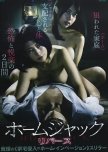
Unironically a great philosophical piece
Around the 43:39 mark when the MC asks why the girls are doing this, we see his traditional old stance versus the modern new stance from the 2 women intruders. His stance is old fashioned and contained while the women share a nihilistic albeit freeing point of view. When they debate about the value of love, what is considered normalcy, and what we ought to be doing, the women do make a good point on how you technically don't need to listen to anything society says, who make up concepts. I don't fully agree with the 2 women and take more towards the guy's perspective, but this has unironically lead to deep philosophical pondering about love, what it means to be free, and the expectations of society. The ending was also insane and was full of symbolism that hints towards the death of tradition. Overall, do we gain meaning from doing what we are told or do we gain meaning by creating our own values like the Übermensch?"Originally, humans are born to live free of any bonds." - Nami
Was this review helpful to you?
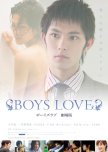
Refreshing
This is an older, lesser known BL. I've not even heard of this till accidentally discovering the poster from Pinterest. For those who are into the genre because of the romantic scenes, this might not suit the palate. However, I think this work deserves to be known as one of the "top of the line" for BL, if not one of the classics.The element that is incredibly striking is the music, and for someone who is familiar with Japanese films and style, they never fail to make the audience waver internally. As if you had lost something precious that you never owned, or reminiscing a past timeline that you have no memory of. Something about the music/score adds layers to particular scenes, emphasises on the emotion, or the linger of a facial expression. Or perhaps, this is the essence of a 2000s movie, which is rare to find these days.
For some reason, it's always the Japanese works that has ever been able to accomplish instilling this kind of poignancy, melancholic, atmosphere of life within the viewer. This film does this right from the first scene, and the 6.5 rating showcased the disappointment from those who like BL solely for steamy scenes rather than nuanced storytelling.
The quotes are a nice touch, and the exploration on the concept of love is probably the most refreshing I've seen in a long time. The subtlety makes it worthwhile to watch.
Was this review helpful to you?
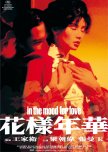
Avec des si on refait le monde
Just where do I begin?I was confused at the start, and that confusion stuck with me till the end. This was a recommendation, so I went in blind – no idea what it was about, and I don't like reading synopses. They can spoil the fun, you know?
This movie wasn't anything like I expected. It was poetic?! The cinematography was very different, almost like they give you some clips and tell you to let your imagination run wild. It was slow, silent, and reddish!!
A slow burn, kind of boring, but not in a negative way – it's hard to explain. Silent because there wasn't a ton of dialogue; we just watched them act with music in the background, very mesmerizing!! And reddish, for aesthetic reasons, giving it a hot vibe.
So, it's about two lonely married people being cheated on by each other's spouses. They discover this as they live next door. They become close, and what their relationship could be named, I don't really know – friends, lovers, absolutely not, maybe an association for cheated-on people? They were just two lonely individuals keeping each other company and trying to understand how it led to this. Obviously, they slowly fall in love.
Now, the end left me very confused because I had so many questions!! But still, the movie was brilliant. I did get the idea of 'Missed opportunities' and the 'Perhaps, perhaps, perhaps.
Was this review helpful to you?
A moment in tme, The summer of 51!
This is a true slice of life movie depicting a moment in peoples lives as it seemed to be back then, the constant when are you going to get married... single women vs. married women. The family pressure, the nuclear family values and the strong presence of loss in the background. Actually I know very little about this time in history, and even less about the pressures of marriage in 1951s japan so this is actually just me guessing. But this movie does have a feel of moving on without forget ing ones roots... Progressive in many ways, saying women can choose their own paths while still screamin the only way to happiness is marriage.The movie is kind of slow and does get to be a bit repetitive. The subs in the version I watched where a bit a head of their time making me have to use my brain a little bit to much.
If you are in to slow classics with a hint of woman can, this is not a bad place to find it.
Personally had it not been part of the syllabus for a course I am attending, I would probably not have stuck around to the end of it as I honestly did not really care if she would marry or who she would marry even if I appreciated the character of the female lead as she is actually kind of fun and cool.
Was this review helpful to you?
This review may contain spoilers
Dont forget to watch the post credit scene :>
I watched the movie right after finishing the drama, so my review is a little biased and not solely for the movie, but also in comparison to the drama. Ive rated the drama with 7 and the movie 0.5 stars more, because the movie does a lot of things right, which frustrated me in the drama. But..its also a very skimmed version of the story. So if youre looking for a fleshed out story and characters, that add something to the story, i would recommend to watch the drama, because it has a lot of loveable support characters. But its also way more frustrating than the movie. Nonetheless, i dont know if i would have rated the movie so high, if i didnt watch the drama before it, because the story feels very rushed here. Its quite shallow, but still cute and i dont regret watching the movie.The female actress is way better in the movie. I love her acting and how confident she is. She's absolutely cool and i like her a lot! When it comes to the male lead, i liked both actors. And thank god Nagasawa wasnt such a pain in the ass in the movie. It was actually cool that she told Tsugumi to which things she has to be attentive to, instead of belittling her and just telling her she wont be able to handle Ayukawas disability.
For me, the movie was a nice watch, because i dont have the dragged drama and the whole frustrating experience from the show, but i understand if people find it too shallow, fast paced or messy, without watching the drama first. I always prefer a fast paced romance over draggy, frustrating dramas, but i also cant deny that the drama has a lot of likeable support characters, who made the drama a lot of fun. The movie is kinda a best of of all the most important moments. x)
Was this review helpful to you?
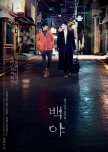
A story of great visual and auditory beauty, with great emotional depth
Won-Gyu (Won Tae-Hee), a German airline pilot, returns to South Korea after a two-year absence, but only intends to stay a single night. Victim of a homophobic attack some time ago that forces him to live abroad, a decision also motivated by his search for a place where his homosexual condition is more permissive and tolerant, he faces the judgment that the homophobic and conservative South Korean society has on homosexuality. .The protagonist tries to outwit his nightmare by living in constant transit. His home is anonymous and ever-changing hotel rooms, his connections with others temporary and rootless, of little significance to his life.
In one of those typical, completely evasive encounters, he meets Tae-Joon (Lee Yi-Kyung – (학교 2013/ Hakkyo 2013/ School 2013), a young gay delivery man on a motorcycle, whom he meets through chat websites. Despite Being a few years younger and having a less rewarding and paying job, Tae-Joon is much more comfortable with himself, including his sexual preferences.
On this basis, Korean director Leesong Hee-il writes and directs 'Baekya' ('지난여름, 갑자기'/'White Night'), a 75-minute film that has as its predecessor the short film 'One Night', with which he develops the trilogy known as 'One Night, Two Days' (백야), which includes the medium-length film 'Suddenly Last Summer' (지난 여름, 갑자기/'Jinanyeoreum, gapjagi'), and 'Namjjokeuro Ganda' ('Going South' /남쪽으로 간다), all from 2012, in which three unconnected stories are told that have gay themes in common.
Leesong Hee-il has an extensive filmography since his film debut in 2004 with the short film '동백꽃' ('Dongbaegkkoch'/ 'Camellia Project'), but is probably best known for his 2006 film '후회하지 않아' ('Huhoehaji Anha '/'No Regret'). In 2009, the director contributes to the overall project 황금시대 (Hwang-geumsidae/Short! Short! Short!), and also makes the feature film 탈주 (Talju/Break Away, 2009), before filming the short that begins the trilogy, in 2012.
As in the rest of the three pieces, 'White Night' tells a story of great visual and auditory beauty, but perhaps most important is the emotional depth. The raw honesty of the film's narrative – centered on the often deeply problematic feelings of its characters, all asking difficult but very real questions – is commendable.
Another characteristic of Leesong Hee-il's cinematography is the use of music that accompanies the images in a memorable way, with songs ranging from Western popular music to Korean ballads, being chosen with great care in the purpose. to instill a sense of peace, insane frenzy, sadness, uprooting, loss, abandonment, nostalgia or even melancholy, in contrast to the inner turmoil experienced by the characters.
With a high degree of concision, achieved within extreme brevity and economy of language, as well as by the semantic ambiguity and the interpretative potentials that the film offers, Leesong Hee-il reflects how Taee-Joon does not seek sex for the sake of it and, although not opposed per se to a one-night stand, he harshly rejects Won-Gyu. The director's goal is to expose how people relentlessly pursue a more meaningful and lasting relationship than a sexual romp, like the one Won-Gyu intends to have in a dark public bathroom frequented only by casual lovers.
However, as the night is still young, and these two almost strange individuals continue to gravitate towards each other, in this journey about the complexity of human relationships, accepting the other, emotional pain more than physical, and criticism To a society that still considers homosexuality a perversion, Tae-Joon learns, little by little, about the painful burden that Won-Gyu carries, while the latter, perhaps for the first time, sees an individual who simply accepts himself as such. as he is while accepting the other as he is.
Knowing that perfectionism can destroy creation, so he polishes his works seeking exquisiteness, Leesong Hee-il shows how Won-Gyu's internal conflict comes to the fore through the external conflict that arises when he meets again with a boy who knows about the past, before deciding to try to erase what happened in foreign lands. This climax comes surprisingly early, not to the benefit of the narrative, considering that the film begins as a short film and, perhaps, could have done even better to remain that way.
Furthermore, some of Tae-Joon's actions, in particular his decision to stay by the side of someone he barely knows and who displays quite erratic and then also violent behavior, are not entirely understandable. Be it sexual attraction, sympathy, pity, or whatever reason pushes Tae-Joon to stay with Won-Gyu, her presence is what offers the latter the opportunity to heal his past wounds and realize that a different reality may be possible.
In other words, thanks to Tae-Joon, Won-Guy comes to understand that there may be hope, which is why it's worth returning to South Korea more than once every few years, for more than a single night... and even remain in the country indefinitely.
There is an incredible beauty in the suffocating, depressing, dark, and even demented atmosphere due to the ghosts of the past that haunt one of the two characters and the intertwining of the lives of these young people. Who will not be trapped with the souls that inhabit the film? Who will remain impassive in the face of characters embodied in beings that we have once known or could be ourselves?
The entire trilogy reveals to us a filmmaker with a sure pulse to capture the audience through the use of the right phrase and image, the clarity of the speech. No wonder he is considered "one of the most interesting contemporary gay Asian directors." And in this effort to create stories, reality opens up in a multicolored fan with overlapping layers and blurred borders.
The essence of the film, which had its European premiere at the 2013 Berlinale, followed by screenings in Vancouver, Hong Kong and Jeonju and at the 27th London Gay and Lesbian Film Festival that same year, also lies in the fact that Tae -Joon could very well be precisely the type of person that Won-Gyu needs in his life, like Kyung-Hoon himself needs Sang-Woo in 'Suddenly Last Summer'.
Open-ended like all parts of Leesong Hee-ill's trilogy, 'White Night' feels less gloomy than 'Suddenly Last Summer' and 'Going South', leaving the viewer with the possibility of a long journey towards happiness. still ahead for both characters.
We are facing a stinging film, which digs into the skin and the bones not only because of what it describes, but because we are certain that beings like the main characters are not so few in a world dominated by homophobia in a conservative society that makes It makes homosexuals feel ashamed, which often leads them to blame themselves for not being able to meet the imposed criteria of normality.
Note: The reviews of the remaining pieces of the trilogy, in MDL, can be found on the page dedicated by the virtual platform to each of them.
Was this review helpful to you?
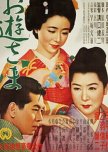
AN interesting window in to widows of the past
This is a movie that raises rhe question is self-sacrifice really the way to go... or will marrying the man your sister loves but can not marry because of stupid traditions really such a good idea?As I kept wondering who is manipulating who?
What is the point of all this?
And is this supposed to be a dram about evil sisters, the bond between sisters or a feminist agenda about emancipation to all!
OR maybe it is all of the above.
Anyway the movie is from the early 1950s so it dies give a window into passet times , not really my tipe of music as it is the type to hurt ones ears but the story being told is actually rather interesting even if the mimics, moovment and gestures can be overbearing.
Was this review helpful to you?
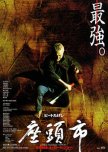
1,2,3, ambush
This is one of those movies that is so bad you are pretty sure it was intentionally made to be bad.. it could be funny if you shared that type of humour... unfortunately I do not. Some of the short dialog is actually pretty good... mimicking the good old days of the 30s... or maybe 60s cinema. Consciously ignoring any progress made since then...Watching this movie you will be subjected to som sort of short dialog (if any )blind guy gets amused, ambushers die,... repeat... Short dialog with women in trouble... women get ambushed, blind guy shows up... ambushers die... Repeat or mix the two...
An example of short dialog could go something like this:
Bad guy: Oh look I got this sward, lts test it out on the next beggar who passes by....
Bad guy ambushes the first beggar he sees pass by...
Beggar/our blind guy cuts of the dudes sward...
Showing yet again how how those on top (or on the way to the top) view those at the bottom. So yes the little dialog we get s not that bad.
Most of the men in this are bald, and some run around with spears, others with swards,The women seem to be pretty smart and there is a transgirl in here that gets misgendered a lot.
I have a lot of issues with both our so called blind guy as well as the way they talk about gender but I do appreciate some of the other parts leaving me confused and with a bit to many issues to level the score of this so bad it could be entertaining if you are in to that stuf... also so bad it is viewed as a masterpiece in some circles making me wonder what am I not getting... or it could just not be my type of sward...
Rewatch value high because you may need ot watch it a few times to get it
Also while I can not really recommend it as a whole, do watch a few scenes they are indeed kind of funny... the first time around... once you get to the tenth ambush the charm kind of subsides...
Was this review helpful to you?
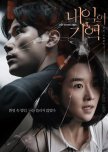
Ambiguous Chemistry, But Fell Short on its Characters and Plot Execution
"Recalled" is what I’d consider to be a "semi-solid" movie. Although we’re met with another take on the "amnesiac surrounded by things that aren't quite as they seem" type of premise, the movie does contain some of its own originality.Characters were alright, nothing too spectacular imo in the essence of being "fleshed out." Good character development of the two leads from start to finish, as it didn’t feel rushed. Other than that, I’d have to point out that the story’s flow (of events) wasn’t exactly ideal. Since we’re dealing with a narrator who’s an amnesiac, the movie juggles what’s "fact" vs. "fiction." If you’re not used to keeping up with different timelines, it’s easy to feel like your brain is utterly fried. Although I tried my best to interpret which scenes were which and what events REALLY unfolded, I’m still left with some plot holes towards the end. Also, predictability is an important factor to consider when rating thrillers and if I’m being completely honest, although I was able to predict roughly 80% of the plot "twists," I’d consider predictability to be relatively low-normal to the average viewer (unless you’re a makjang connoisseur like me).
Dialogue isnt necessarily poorly written, but noticeably lacking— what took the cake for the emotional scenes were the cinematography and acting. Speaking of acting, there were no flaws in the casting whatsoever. Although an unexpected duo, SYJ and KKW did an awesome job at portraying their characters and delivering top-notch emotional scenes. Also, despite there not being a lot of intimate scenes, the leads chemistry was really.. really good. Like, I found myself feeling like an actual third wheel the moment their eyes met (and that’s how you know it’s good). It’s really the type of chemistry that bubbles beneath the surface— I mean, I need to see these two reunite in a slow burn romance in the future or I’m suing.
As some additional notes, not only should the ending be completely rewritten, but there is one character in particular *cough* 2nd ML *cough* who was written rather poorly. I just feel like there was no depth to his character and his motives. Overall, I just found him too 2D for his own good.
Was this review helpful to you?


