

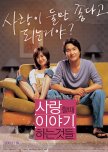
Sometime love ain't enough, and sometimes it is
Solace is a difficult movie to pigeonhole. While it is a romance, the leads spend large amounts of time apart. The pacing is slow like a slice of life and there are troubles enough for a melodrama. The leads involved occasionally find solace with each other, a gentle spot far removed from their daily grueling challenges.Somehow Lee Hye Ran has inherited her deceased father’s massive debt. I don’t understand Korean law and how it ended up with her and not her mom. Be that as it may, Hye Ran is drowning in debt and hounded by her father’s creditors. She runs a clothing shop where she often sells counterfeit clothing. Her sister is pregnant and getting married, adding to her financial concerns. Meanwhile, In Ku is a pharmacist living with his mother and mentally impaired brother, In Seob. His marriage plans fell through when the bride’s family forbade them to marry because of the brother’s condition. Neither Hye Ran nor In Ku are looking for love but fate insisted on throwing them together on several occasions. The two find comfort in each other’s company and arms, but regardless of their feelings, Hye Ran’s debt doesn't disappear and In Seob’s needs don't lessen.
Solace was a realistic look at two people for whom life could be a difficult grind. Realistically, love didn’t conquer all and solve all their problems. The film wasn’t all dreary and pessimistic. Both people were reminded of what they were missing. It instilled in them a desire to find joy in their lives whether it was listening to a familiar song or taking a hike. Speaking of music, it was a blast from another past to see a Walkman and a car with a cassette player in it. Both Hye Ran and In Ku had responsibilities they could not be released from. Opening their hearts to each other, helped them to open them to others. Sometimes love can be expressed in a myriad of ways, Solace explored love in different relationships, the joy it can bring, and the loving sacrifices people make for each other. While not a traditional romance, it was a film that stayed true to itself.
24 February 2024
Was this review helpful to you?
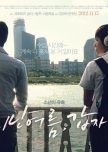
Taboo and controversial topics in a piece of goldsmithing that every lover of good cinema should see
The Korean director Leesong Hee-il writes and directs 'Suddenly Last Summer' ('Jinanyeoreum, gapjagi'), from 2012, a 37-minute medium-length film, second part of the trilogy known as '' One Night and Two Days' (백야) that include the feature film 'Baekya' ('White Night') and the short film 'Namjjokeuro Ganda' ('Going South'), three unconnected stories that began as shorts but later expanded, in the case of the first, to a 75-minute film.His vast work, like a piece of goldsmithing, armed with the finest craftsmanship, shows a filmmaker always attentive to the details, to the subtle articulations of the adventures, with which he won the applause of critics and spectators who, even after more than one decade since its release, they still look for in it the keys to unusual, totally original cinematography, which make Leesong Hee-il one of the most distinguished exponents of Korean auteur cinema in general, and gay-themed cinema in particular. both from his country and, I would dare to say, from all of Asia and much of the world.
Without forcing anything, the director of 'Suddenly Last Summer' plays with reality, stretches it as moldable material, and we end up accepting, without questioning, his invitation to accompany the protagonists on a journey about their sexuality, their relationship and their place. in society. The viewer must be attentive, since the medium-length film begins right in the middle of the story, so the beginning may seem confusing to some.
In that art of telling small things, small memories, small pleasures, small sensations..., which are not so much because, ultimately, together rejoicing, they give meaning to life itself, Leesong Hee-il, considered "one of the most interesting contemporary gay Asian directors", is a skilled filmmaker capable of captivating the most diverse audiences with the power of words and images, involving the audience, in a charming way, in his films, which are all about his favorite subject , gay stories in one form or another.
Leesong Hee-il once again touches on taboo and controversial topics in any modern society, such as homosexuality, the complexity of human relationships, the problematic situation of one lover who is a minor and the other an adult, or the teacher-student role. , and the feelings between people, which on many occasions can be inappropriate, immoral or even prohibited. However, in its subconscious development, it is not something for which individuals can be directly condemned, but those feelings must be acted upon when they are negative.
Another of the values of 'Suddenly Last Summer' and the other two films that make up the trilogy is that its director places the protagonists at some intermediate point in the story, that is, their characters have begun to realize what what they feel, and now they must decide how to act. In the most difficult moment for those involved, when some will triumph while others will falter, it is the ideal moment for Leesong Hee-il to put on the camera lens and begin to tell the story, achieving, through his raw honesty, commendable and unforgettable stories. .
In the medium-length film, its director once again exposes a constant dichotomy in the relationships of his protagonists: one of his characters hides or completely denies his homosexuality, and the other is not afraid to recognize it and even enjoys shouting to the world about his gay status.
In just 37 minutes, the medium-length film raises several controversial points. It is not only the sexuality of the characters that focuses the attention of the audiovisual. Kyung-hoon hides his sexuality from everyone around him, especially the managers and teachers and students at the school where he works. Keeping his homosexuality a secret, his sexual preferences are discovered by Sang-woo, a student of his, when they both meet in a gay bar some time ago.
In a kind of obsession with his teacher, Sang-woo threatens him to reveal everything if he does not agree to his demands, and shows him some photographs captured clandestinely during the meeting held by the two at the gay club.
Fearing that he will lose his job, Kyung-Hoo agrees to spend the day with him. However, the tension between the characters doesn't seem to be related only to Sang-woo's blackmail tactics. While it is evident that Sang-woo is not motivated by a sexual impulse, since he loves his teacher, the entire film suggests that the teacher has feelings for his student.
Sincere about his sexual orientation and love for his teacher, he will claim that he had revealed to his mother that he liked boys, as well as his love for an older man, but Kyung-Hoo's reactions are ambiguous and not transparent.
There is an uncomfortable polarity within the two characters. Due to his youth, Sang-woo is innocent and love and the freedom to be happy lead him to lose himself in a delirious frenzy that drives him to shout, excited, at the fish from the boat, or to act spontaneously and make Kyung-woo listen. Hoon his favorite music after placing the headphones over his ears. He feels transported to another world in which there is no control from society or discriminatory laws and family censorship and disapproval of their children's homosexuality.
The student believes he is invulnerable to what people will say, precisely in a country as conservative as Korea, with strong patriarchal and heteronormative traditions, where homosexuals have difficulty fitting into society and even in the 21st century, sexual diversity continues to be seen as a perversion and considered taboo. But despite his plenitude, Sang-woo is also immature and seemingly unaware of the implications of what he asks of his master.
This one, for his part, is wiser thanks to his age and experience. Kyuung-Hoon is caught between desire and responsibility, between longing and ethics, between good and evil. He is aware that a relationship of this type is not an option, but the hopelessness and unhappiness that surrounds him is evident. His face reveals deep loneliness. Drinking until you get drunk shows that you have found an escape from your sadness in alcohol. He understands that a romance like the one Sang-woo asks for, and he would like to reciprocate, would not have a good result for him. That's why you make the decision to not just deny your feelings to the person you like. She must hurt him again and again with the intention of taking him away from her forever. But the boy persists in his desire to maintain a loving relationship, not just a sexual one, with the teacher. This dilemma that Hyung-Hoon is struggling with causes him great anguish and regret. Sang-woo will not be able to understand why this man who is not afraid to give him furtive glances with a clear sexual connotation in the middle of the class, surrounded by other students, rejects him. He doesn't understand why that person with whom he spent pleasant moments in a gay club and who, like him, doesn't have a boyfriend that prevents him from formalizing a relationship, seems elusive to him.
The essence of 'Suddenly Last Summer' also lies in the fact that Sang-woo could be precisely the kind of person that Kyung-hoon needs in his life, just as Won-gyu himself needs Tae-jun in 'White Night'.
Although the fact that one is a minor and the other an adult, as well as the teacher/student relationship are socially and ethically problematic, the first problem would be irrelevant (at least if the parties involved considered it so) and would have a solution in a short term, taking into account that Sang-woo has less than twelve months left to reach 19 years of age, and with this, the legal age of sexual consent in South Korea. Leesong Hee-il voluntarily introduces this problem to play subtly and skillfully with the viewer by addressing such a complex issue, while pointing out that it can be overcome. No matter how difficult or incomprehensible their reality may be for others, the terrain where the two protagonists move is not perpetual: within a short time the young man would reach the age of adulthood and with this the hope for what each of them currently wants, but they can't specify.
Regarding his roles as a teacher-student, this problem also has an immediate solution, as we know that, through a phone call to a friend, Kyung-Hoon is desperately trying to find a job at another school.
Within the trilogy, 'Suddenly Last Summer' is the most successful film among the three. Its value also lies in the deeply uncomfortable and highly problematic questions it raises about homosexual relationships and society.
But its reach goes much further. Unlike another 'No Regret' (2006), another film by Leesong Hee-il, the focus of the medium-length film, as well as the other segments of 'One Night and Two Days', focuses exclusively on the characters' feelings, using simple narratives and many fewer twists than Leesong Hee-il's first feature film.
Note: The reviews of the remaining pieces of the trilogy, in MDL, can be found on the page dedicated by the virtual platform to each of them.
Was this review helpful to you?
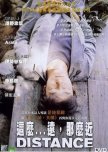
Confusing mist of ashes
This has to be the most confusing movie I have ever watched, as I had to read the synopsis over and over again to fully understand what I was watching.The camerawork is really shaky giving this a real life, documentary feel to it and the way they work with hard noises is really auful for the ears bu I guess powerfull... The story itself is pretty decent, trying to piece things together but also had me wonder who is who, how are they really connected and what is going on... over and over a gain. This could partly be due to the poor quality ecording I had access too but also due to the never ending time hops... one moment we are in the past the other we are watching/listening a kid cry in wha tI assume is the current time of the filming and then out of nowhere we find ourselvs in an interrogation room....
Leaving us with a bunch of unanswered questions... a mist of fog over a lake and ashes...
Beutiful, beautiful ashes...So I can not help but wonder if that was what they wanted us to feel confusion and ashes... therefor it gets extra points for originality and confusion
Was this review helpful to you?
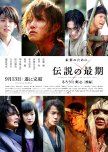
The legend never ends!!
Kenshin met his master, and I never thought he was still alive. Don't ask me why I killed the man, but well, Kenshin had to learn a new technique to defeat his enemies. However, to do that, he had to confront his own problems, and with the help of his master, he did it.Kaoru survived, no surprise there. Obviously, the first thing she does after waking from her sleep is follow Himura. As if he doesn't have enough problems, Aoshi is trying to kill him. For what? The title of "the strongest." Kenshin needs to preserve his energy to take down Shishio and his skilled friend, not deal with this. But it seems it had to be done for Aoshi to have a new start.
Sagara Sanosuke was awesome — funny, always helping, and never giving up. And Seta Sojiro, with that damn smile on his face, fighting like it's nothing. No feelings, detached, stubborn; felt like he was a robot. At the end, he shut down when an 'error' occurred.
The final battle between Kenshin and Shishio didn’t feel like a fight, more like a graceful sword dance. It was entertaining seeing more join and gang up on Shishio, but he was still breathing fire. Fujiwara Tatsuya was the best — his acting, the bandages they put on him; he portrayed the most evil character excellently.
Overall, the movie was way better than the first two, very exciting and all. But the female characters felt like they were lacking, missing the feminine touch that should have been brought to the movie. Still, it's my favorite from the Rurouni Kenshin Saga till now. Got 2 more to go, and we'll see!
Was this review helpful to you?
This review may contain spoilers
If you don’t like forced sex stay away from this one
Basically a hostage rape movie if you're into that type of thing go ahead watch it.But If sex against your will triggers of anything for you I suggest to keep far away from this one because other than the characters back stories that’s all the movie is basically about.
The actors did a great job but the storyline was to much for me
Was this review helpful to you?

Lack a point of view, too middle-of-the-road screenwriting making it rather bland despite the topic
This movie is kind of an adaptation of Cinderella fairy's tale but involving Little Riding Hood and centred around the resolution of a crime mystery...I unfortunately did not enjoy this film but it might be just a case of "it's me...not you".In terms of fairy tales adapations, I think it is lacking a strong point of view. It is sweet but not much else. I wish they went darker but the scenario went for a middle-of-the-road tone that I found a bit boring. There are too much comedy / overacting to take anything seriously, so the ending with the "life lesson" felt totally flat to me. At the same time, they are adding grim touches with the crime itself and some of the elements relating to the characters, but it is done superficially and it never get even midly frightening...
I was not impressed by the acting but the production value was alright. Special effects were overall well executed and costumes were really pretty. The music was not memorable at all but fitted well with the movie.
I would not recommend this movie if you are looking for a darker take on fairy tales. It is really a matter of taste and expectations. Personally, I enjoy a lot Kaori Yuki mangas where she often revisit in a very dark and grim way various fairy tales...I would have wished the movie to take a similar approach. Here, it is more a family movie with a mystery for which I found the resolution pretty clumsy as well.
Was this review helpful to you?
This movie is many things, but it failed in whatever it intended to be.
I don’t know where to begin with this movie. The premise of a woman trying to break free from the life under her husband's oppression while dealing with issues like migration, domestic violence, and traumas of the past is interesting enough, but it doesn’t really offer anything new beyond what’s expected. At first, it seems like a neo-noir film with a touch of lesbian romanticism, which looks promising to me, but it slowly becomes bland. As the story unfolds, the plots start to get weak and weaker, to the point that it makes me lose interest in whatever is going to happen next. The plot twist is so ambiguous, leaving the ending/resolution so unsatisfying. I couldn’t pinpoint any compelling things about this movie, and I don’t even know where this movie even stands.Fan Bingbing and Lee Joo Young both perform well, but their performances seem to be underutilized by the weak screenplay. Binbing’s character has very little development and lacks the depth to make her memorable. While Joo Young’s character has its own backstory, it’s not enough to further enhance her significance either.
While this movie delves into romance, incorporating the same-sex love scene, it's not about exploring or experimenting with sexuality in any way. And the scene doesn't significantly alter the plot and is unable to make an impact in any way other than simply establishing the sexual tension between the two women. So, is this an LGBT romance movie? No, it's not. It's more like a rough estimate that doesn't really capture the authentic queer experience.
This movie has an intriguing story and conflicts, but it failed to live up to its potential. The lack of finesse in storytelling and character growth and the failure to effectively communicate its intentions make it fall into the bad movie section.
Was this review helpful to you?
Given the confusion created in Kyoichi, Imagase promises not to reveal his infidelities in exchange for a kiss. Kyouichi accepts the proposal, hoping it will save his marriage, but their secret relationship begins to escalate and eventually becomes sexual.
Isao Yukisada's 2020 live-action film 'Kyuso wa Cheese no Yume wo Miru' (窮鼠はチーズの夢を見る) is based on a Japanese manga series 'The Cornered Mouse Dreams of Cheese', written and illustrated by Setona Mizushiro, serialized in the josei manga magazine Judy from 2005 to 2006. The book was followed by a one-volume sequel titled 'The Carp on the Chopping Block Jumps Twice' (俎上の鯉は二度跳ねる, Sōjo no Koi wa Nido Haneru).
This is a fascinating and heartbreaking film that deserves much more than being classified as BL, as well as better attention from the public.
The two protagonists are joined by Yoshida Shiori ('Chihuahua-chan') as Okamura Tamaki, Sato Honami ('Lupin's Daughter') as Natsuo, and Ohara Noriko ('Disturbed by Gymnopedie') as Ide Ruriko, whose characters they vividly embody. and compelling the idea that no matter who you are, once you fall in love with someone, your world will be turned upside down and there is nothing you can do about it.
The acting of the actresses allows human relationships to be more interesting than in a typical romantic film.
Tadayoshi Okura as Kyoicho shows talent and instincts, while Ryo Narita brilliantly plays the role he has been waiting for for a long time. The looks, gestures, words and silences of the two actors, sometimes playful and sometimes passionate, make this work even more realistic. The performances of the protagonists are especially good and indisputably express the heartbreaking but endearing love story.
The character played by Ryo Narita portrays with grace, naturalness and a certain sexual appeal the subtle changes in his emotions, which oscillate between arrogance, vulnerability and impatience on the screen.
Imagase transmits power and shows beautiful gestures that I have never seen before, but also despair and suffering. It's painful to be with him, just as painful to be away from him. His raw emotions make the viewer feel suffocated. He achieves the audience's empathy, and at times they forget the other characters present. He is the person who leaves the audience spellbound. His charm could perfectly work in the world of Wong Kar-wai or Lou Ye.
For his part, Tadayoshi Okura, with his passivity, boredom and rootlessness, also contributes to the creation of the atmosphere that the film tries to convey. Although natural, it exudes a certain air with elegance and seductive charm.
In particular, the scene in which while Kyoichi claims to be planning to marry a woman, Imagase begs him to allow her to continue seeing him, whether once a month or every six months, just to see his face, is very heartbreaking. At that moment I thought of the main characters of the American movie "Brokeback Mountain."
In this triumph of compatibility between director Yukisada and the actors, phrases said by Imagase will resonate over time, such as "When you fall in love with someone from the bottom of your heart, that person is the only one in everything", or "You have a weakness for the people who love you, but in the end, you don't trust that love and you keep sniffing out the feelings of the people who get close to you. Because of their power, these words impact and move.
Although Isao Yukisada set the standard within the Japanese and world seventh art with films such as 'Crying Out Love, in the Center of the World' (2004) and 'Year One In The North' (2005), creating an aura of mysticism, there came a period of stagnation from which only minor works emerged. But for the good of his followers, it also meant a time of meditation and intellectual growth.
We see the result in 'Kyuso wa Cheese no Yume wo Miru', a film with which Isao Yukisada returns to the path of success and expectations surrounding his productions, bringing us solid visual expression and human representation, making his narrative heroes play ruthlessly and skillfully.
The above is demonstrated when it seemed that the film was running out of breath after the first 40 minutes of its more than two hours of duration, Yukisada's virtuosity and professionalism refloated to achieve a convincing work.
While the two main characters cannot be happy, neither can the women around them. The four women who have been interfering in Wataru and Hyoishi's romance end up acting in a resigned or useful way for the development of the plot, which is probably why the director and screenwriter criticizes their characters from a feminist perspective.
In this kind of unrequited love, the film has the fascination of surpassing the original work. When one finishes watching it, one is impressed by its beauty and the helplessness it leaves in the viewer.
I leave for last my impression of the final scene of the film. When filming began, the two characters are on the shore of a calm, serene sea, but suddenly the wind blew and became intense. Someone asked to stop filming, but Okura Tadayoshi, Narita Ryo and Isao Yukisada, some in front of the cameras and the other behind it, stood firm, giving us a pulsating scene that leaves us with a lasting impression for life.
Was this review helpful to you?
An heirloom's hidden past...
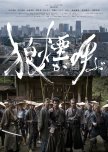
Wolf’s Calling is a stylish short film by director Toyoda Toshiaki with no dialogue. It is truly a mood piece bordering on samurai music video. This is the first film in his Resurrection trilogy followed by The Day of Destruction.A young woman discovers a rusty revolver in a box and takes it out. The memories imbued in the cold steel open up for the audience. Several samurai gather at the Mountain Resurrection Temple-Wolf. Soldiers in blue uniforms join them shouting, the only human sounds in the film. A woman’s sash and hairpin are laid out by one samurai and another carries a child’s toy implying the reasons for their solemn assembly. They silently form ranks with knowing glances. Drums echo the sounds of the approaching enemy. Weapons are drawn as well as the revolver.
An impressive cast lent weight to the performances making me wish this had been a full-length film. While the samurai might have been avenging loved ones, the real inspiration for the film had more to do with Toyoda’s arrest for possessing an illegal firearm, cleared up when it was shown that it was a family heirloom dating back to WWII. Like him, when looking at family heirlooms I wonder about the stories and people behind them.
Though Wolf’s Calling was a short film, the shots of the warriors walking through the old growth forest to the temple were resplendent. The temple was used in this film and The Day of Destruction, I have yet to watch the third film. The Young American revolver style was first made in 1905 which if they did their homework would help to date the action in the past. The music filled in for the dialogue conveying the urgency and determination of the men involved. The body language of the actors also conveyed their deadly resolve.
The film is so short that I watched it twice, enjoying it more the second time. The acting, scenery, and music gave the glimpse into the family’s past a depth that in lesser hands would have fallen flat. After watching Wolf’s Calling and The Day of Destruction which were both low budget films, I’m looking forward to trying more of his work. If you’ve never watched a silent film this might be a good gateway film.
23 February 2024
Was this review helpful to you?
This review may contain spoilers
This movie made me feel beyond anger
i m someone who likes watching fucked up movies and shows... i have a sense of darkness that i explore through cinema . i v watched many shows displaying messed up shit , and that it is why i checked this one out.This movie didnt evoke any sadness in me , my eyes didnt tear not once . I was too angry to be sad . This movie made so furious. I felt a sense of violence within me ,which is something far from my actual personality.
I just kept getting angry and fucking livid as the movie progressed. Every moment of it, made me clench my fist , curse out loud, and just want to beat up someone.
As an Idol, Jin Young proved himself as an actor with this movie . i genuinely hope he was okay afterwards because playing both twins roles . And experiencing both their feelings is just sick torture and mentally devastating. He did an amazing job as an actor, i sincerely hope he snaps out of this character asap.
About the plot , i have to say i wasnt upset at all about Il Woo s negligence of his retarded brother. He was a kid aswell , he needed guidance and supervision aswell, he was a young boy who was given a burden heavier than he deserves. However I was immensely boiling about that counselor who killed Woo Ioo . the actor was sooo convincing, i knew he was fucked up right from the beginning.
i dont wanna get too deep into the storyline, it will just make me angry all over again. but what i d like to say is , these things do happen in our reality, and special needs people and even sane people get exploited and toyed with . we live in a dark world, and this movie was a crude piece of it
PS: the rewatch value i wanna give is 0. Please dont check this movie unless you can handle it.
Was this review helpful to you?

"Now is the time to rage. If not now, when?"
In 2020 director Toyoda was angry. Very angry. Angry about the pandemic. Angry about the wealthy and politicians. Angry about the Olympics. And especially angry about apathy toward the hell many people were living in. The Day of Destruction fiercely and poetically screamed that rage out.“Draw your sword now. If not it ain’t rock ‘n' roll.”
Seven years ago, a pulsating globular monster appeared deep in a mine. Since then, a plague of some sort had spread. In 2020 after the epidemic took the life of Kenichi’s sister, he attempted to self-mummify at the Mountain Resurrection-Wolf temple (the same one used in Wolf's Calling) believing his sacrifice would quell the epidemic.
“What defines a human. Prove it now.”
An earthquake set loose Kenichi’s inner rage which turned him into a demon.
“Humans possessed by demons are exorcised by humans, but maybe the exorcists themselves are demons”
Priest Jiro believed that destroying the monster was a fool’s task. Nature gave them the epidemic so the monster must be led onto the right path. Kenichi must be guided onto the right path as well.
“Price tags on lives fluttering in the wind”
The wealthy and elite hid in their fortresses, safe from human misery all while planning on how to make money during the event of the year-the 2020 Olympics.
“Give me your anger. I’ll respect it.” “We have a voice. Your own voice. SHOUT!”
The people cried out their pain and fears. A bloody, red Kenichi fell down on his knees in traffic screaming his grief and outrage.
“Everyone on Earth is a central prayer…We’re all in the same boat called Generation.”
Humans are the problem. Humans are the solution. The division after division after division must be faced. Would prayer or self-sacrifice cause others to change or would the first step be the hardest? Changing oneself. Eradicating the monster might not be possible---healing, and coexisting might be.
“Would self-restraint for 100 years be enough?”
Shot on a small budget in eight days, Toyoda got the most out of the beautiful mountain scenery and the actors. I have to wonder if he received permission for the shots in the streets as ordinary masked passersbys walked around Kenichi as if a man in bloody red clothes shrieking and kneeling in the crosswalk was completely normal. The music and sound effects were not always pleasing but they were fascinating and told much of the story as there was little dialogue.
“Hey, Siri. How much longer do I have to put up with this?”
If we live in hell with demons and people acting like demons, maybe the screaming is necessary to wake ourselves up. Shake off the apathy and change. The Day of Destruction with its loud music and release of pent up fury might have been what we all needed, especially during the first year of the pandemic with people struggling in so many ways and losing people to an invisible monster. This film won’t be for everyone to be sure. It's abstract with lots of religious symbolism and can be confusing at times. For the most part, I enjoyed its poetic and manic response to a nightmare much of the world shared.
23 February 2024
Was this review helpful to you?

This review may contain spoilers
so much pressure
I just finished the movie a little while ago and I'm still thinking about the characters.I was so invested that my eyes were glued to the screen!! I felt tense, scared, and angry, so I'd say it's a good movie because it managed to convey such emotions to me.
The actors did a great job and it was the first time I saw Kim Nam-gil and Lee Byung-hun acting!
But some negative points I have are: Im Siwan's character died so quickly 😭 I wish he had more screen time. I felt that the ending was very rushed, they could have shown the reunion of the survivors with their families and the recovery of the infected people. Lastly, I don't know if that was the purpose, but certain parts of the soundtracks just ended abruptly, without that "fade out" so it seemed kind of strange...
anyway, it was a great movie! i recommend if you like tension
Was this review helpful to you?
Just Beautiful
This is going to be a rant while simultaneously convincing you to watch this beautiful movie.The movie at first is seemingly about a young boy named Minato who is being “bullied” by his homeroom teacher. The homeroom teacher is convinced the boy Minato is bullying his classmate Yori. We come to see different perspectives on different situations throughout the movie that truly just make your heart ache.
This movie is not only outstanding with the cinematography and breathtaking acting but the overall ending to the story.
At first you’re left with an “open-ended” feeling being to what was such a beautiful movie but to me there was nothing open ended about it.
To me the ending symbolized the end of suffering for both Minato and Yori for just being who they were as humans.
This movie does a great job at showing the subtle behavior of someone who is questioning their sexuality at such a young age.
I saw many people say they haven't watched it yet because “they’re children” and were afraid that this movie was grooming them.
First, if you’re worried about them being “groomed” then congratulations because you are part of the problem in the world with such negative lighting towards the queer community. What does it matter how old they are? If you think people don’t already know or experience their queerness before becoming an “adult” then maybe you should seek out more queer stories from the queer community.
People who clearly think other wise only watch queer films to further fetishize the gay community.
Overall I just can’t simply talk about how beautiful this movie was and will still be years to come.
You should watch it because it’s a 10/10.
Was this review helpful to you?

Speaking in baseball terms... this is not your thing
Phukan (Akarawat Prathumthong), Paper (Natthaphak Witsiri) and Bell (Sasikarn Singsi) are students at the Faculty of Architecture, Art and Design. To complete an assigned task, they must join a team of three people to develop a school project together as part of the final evaluation of a subject.Phukan will confess to his friend Bell that he is attracted to Paper, but is not sure whether or not he should declare his love, but he will soon discover that the boy has also developed feelings for him.
The first question one must ask is why there are few students in a classroom at one of the Thai Colleges of Architecture, Art and Design. And from this question, others arise: how in this short, which has no great pretensions, are the two main boys, especially Paper, much more handsome and attractive than his study partner, not perceived as attractive people by their colleagues? feminine? Why aren't they popular with girls? How is it possible that there isn't a fight between the few females in the classroom to have them on their respective teams? Only Paper's table neighbor will invite him, very timidly, to join him, but most likely it will be for the comfort of sharing nearby seats. While Bell, obviously, is already a duo with his friend Phukan, so the only thing missing is the incorporation of another person to make up the required shortlist.
If they are already assigning tasks, it is assumed that the course, even if it is the first year of the degree, has already made some progress. Anyway, by now the students should know each other, at least by their names. How is it possible that they have to resort to text messages in a digital chat to know how to call each other and also serve as an introduction to the viewer?
While they visit museums, exhibitions and art galleries and write the assignment, without the viewer realizing it, which demonstrates the little connection achieved between him and the characters, Phukan's love for Paper blossoms, only to discover that the latter has been loving him for some time. secret.
The actors in 'As Always', a short film by Thai filmmaker Patcharaporn Thiangsantia, do not achieve the necessary control of their bodies and voices to convey the emotions of their characters. Theirs are not empathetic characters, capable of allowing viewers to connect with them and their experiences. The audience does not feel and understand the emotions of the characters, so the emotional connection is null and void. This is where the failure of the audiovisual lies, in addition to its poor script.
Positive emotions such as joy at discovering love (another emotion), humor and happiness (as ways Bell reacts when learning about his friend's sexuality, or when the two boys mutually declare their love for each other), are not transmitted; nor negative emotions such as anxiety, sadness, insecurity, fear of rejection. Likewise, ambiguous emotions, such as surprise at being reciprocated, and hope, are not externalized.
In this minor work of the BL universe, repeated clichés, boring scenes, a non-existent chemistry between the lovers, and childish actions, are its main characteristics in a romance with little to prove to fans of the genre.
The short lacks a convincing plot and shows little imagination, contributing little to the genre, which has come a long way in recent years; If anything, the discovery of two new and potential talents within the BL, but with a lot to polish, as well as demonstrating the rich architectural and plastic arts culture of Thailand.
If what you are looking for is a declaration of love of fireworks and butterflies fluttering in the stomach, of those that are born under the influence of emotions, intoxicated with the nectar of the first months, those in which the loved one seems to be a perfect being and hormones awaken the most lively and intense passions... I repeat, if that is what you are looking for, speaking in baseball terms, pick up the bats and balls and turn off the television, this is not your thing.
Was this review helpful to you?
Not interested eventhough the beggining was on FIRE it quickly dropped...
Didn't want to start the second volume of this film because the first one was good to watch as a must-see but boring as a film itself but surprisingly, I decided as soon as I finished the first film to watch the next one. Maybe out of curiosity. To see what could be that new to the point they directed a second part to the film.Then, let me clarify, I dropped it at 1:25:35 out of the 2hours. The beggining, to be precise, the first fifty minutes were just incredible !! Even better than the whole first volume of the film ! But then it started being boring asf. The acting had no flavour to me from then on (sorry to the actors) and the plot was just non-existent at that point of the movie...
Was this review helpful to you?


