

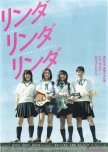
I loved it!!
I have wanted to watch this for a while now, and omg I really loved it. This was such a feelgood film without it being a typical in your face 'feelgood film' you know? It was more subtle in that I would find myself being silently smiley and happy after certain scenes. This film made me happy :)I personally really enjoyed the little scenes that didn't necessarily 'contribute to the plot', they are what made the girls seem so real. There was the smallest ever storyline that I was confused and kinda 'umm what' about but I can let it slide lol. And I also adored the scenes where they were practicing in the band room, I rewatched them multiple times just to experience them again. The way it was shot felt so natural and almost quiet and like I was actually there, watching them interact in real time.
The acting I loved. It felt like they were actual schoolgirls, they felt so real. Son is so endearing and I love her. I love how each of the girls had their own personalities but like they weren't overdone so much that they didn't feel like real life people. It didn't feel like a movie in that sense, like it didn't feel manufactured. I loved that about it.
The music was so great. When Son sang it felt freeing and youthful. I felt so proud of her. Honestly devastated the original songs by The Blue Hearts aren't on Spotify though :(
I would probably watch this again, but it was a pain trying to watch because loads of the sites that had it were super buffery, super low quality or had subtitles missing so it look me like twice the time to watch because I had to keep switching between sites HHHHHH but if I could watch it again completely free of disruption, I feel like I would love it even more. It's a quiet happy place :))
Was this review helpful to you?
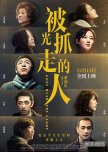
This review may contain spoilers
What's love got to do with it?
Gone with the Light was a thoughtful meditation on what romantic love is and the extent to which we need it in our lives. What happens when an inexplicable beam of light judges your relationship and love as inadequate? Do you examine yourself and your life? Or do you make excuses and justifications? Do you accept that you must live without love?One spring morning a beam of light causes a fraction of the people from the planet to disappear. The story focuses on three people left behind, Wu Wen Xue, a teacher who has been married for nearly 20 years; Lin Nan, an officer worker in the process of divorcing her philandering husband; and Kuai Zi, a small-time hoodlum who says he doesn't believe in love but is desperately searching for his partner in crime. Though not connected their paths do inadvertently cross at times.
"It's only us who can define our love." Wu is the emotional heart of the film as he wrestles with his stale marriage and the discrimination he faces at work for being morally suspicious as one left behind. Wu becomes desperate to prove he and his wife love each other even sinking to buying photoshopped pictures and a fake train ticket showing she was out of town during the beam which explains why they weren't taken together. Initially, he tries to save face during an increasingly unstable social order but soon he is forced to confront the reality that his marriage wasn't working and was built on convenient lies, both his and hers. Huang Bo gave a lovely nuanced performance that strengthened the emotional depth of the film.
"You take in my trash and treat it as treasure." Li Nan is confronted by her husband's mistress when he disappears. The two women begin their odyssey of discovering who he truly loved and disappeared with. Along the way they discover more about themselves and their feelings for the man they shared. They also uncovered parts of his life hitherto unknown, finding neither had truly understood him.
"We're all the same. We don't have love." Kaui Zi was the least developed character, someone who eschewed loved but whose desperation in finding his partner hinted more than a little at a same sex love, at least on his part. Through him we see another man who killed his wife for putting green onions in his stir-fry, an obvious demonstration that she hadn't loved him which is why they didn't disappear.
"It's already proved there's no love." A young woman whose parents refused to let her marry the guy she was in love with watched them disappear during a heated argument. The father had numerous mistresses and the mother was an inveterate gambler and neither ever showed any love toward the other. What is true love?
The light beam was never explained, which is okay, because the story was about the human response not the initial supernatural action. As one character stated, "Love is sci-fi enough." No one truly knew why the people disappeared or if it was even a good thing, but the ones left behind felt envious and ashamed, often sinking into despair. Even when the government eventually refuted the true love entanglement cause, people still felt as if their relationships and their lives had been judged as loveless. Many of the people taken were in affairs or unhealthy relationships, yet people always want what they don't have. For the people who took advantage of the gift of being rejected it gave them the chance to evaluate themselves and their relationships.
Love can be exciting, messy, complicated, pedestrian, and gently satisfying. Other times it is elusive as smoke. People find and cultivate what gives them meaning. The light beam caused those who were left behind to examine what it is they wanted, what might be missing from their relationships, and what responsibility they owned in that. Gone With the Light was a quiet reflection on love and relationships anchored by strong performances. My favorite scene was the last one. It is often during the routine and mundane where we find love, comfort, and even forgiveness. What is true love? Something you have to define for yourself. This film will not be for everyone, but if this is your type of film, you might find a hidden gem.
"The light won't give us an answer. It's a test, a projection of oneself to let us truly face ourselves and then move on in our lives."
7/14/23
Was this review helpful to you?
Great Movie is all I need to say
I watched this because I wanted to see some serial killer movies, but then I stumbled upon this and couldn't appreciate more how suspenseful and intriguing, this movie was. I really liked the pacing of the movie and the direction, too. I didn't have much expectation for this, but it turned out to be a great watch, so I'm extra happy now.It showcased how people are. Nobody is black and white, all are grey and all had to do certain things in life that are not morally correct. And they showed the Serial Killer as a cunning man and not some psycho with sharp hunter eyes and gaze shit, which I really hate. All I meant to say is that the Depiction is actually realistic, which makes this movie pretty good.
Was this review helpful to you?
I didn’t know this was after a series!
Oopsie I hate doing things out of order. But it looks like different actors play the series so that is fine.I started to not like this when I began it because I was like oh so this guy about to show up cause he don’t wanna work and wants to be a stay at home dad and is getting divorced and I was like wow he selfish. Because sometimes films have this point A B and C in movie and forget all the stuff needed in between or to build to those points or background but they ended up filling that all in I think they just wanted to keep me on the edge of my seat and angry for a minute lol. But then I saw all the things he did and I changed my mind and loved the film.
Especially the ending scene 🎬 and Sora she precious 💕
Was this review helpful to you?
This review may contain spoilers
I was fooled!! It was good!!!!!
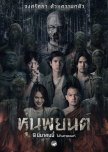
I got bored so I watched this, and it was good!!! It was unexpected towards the end. I was rooting for Te!!!!!! This plot tells the story of Tharm (Phuwin's character) he went to the temple to look for his big brother. His brother, Tee was ordained as a monk at the temple. Well Tee went MIA, and Tharm went to investigate what happened to him. Then that's when things start to get creepy and not make sense. This drama shows me that there's good and evil, even at the temple. Or like what you see is not always what you think it is?????? I had fun watching it :)Was this review helpful to you?

This review may contain spoilers
A good movie
After seeing it three times in the movie theater, which is the best way to experience this film. It's really good, I cannot help but feel with this role Zhu Yilong wants to remove himself from being seen as Shen Wei. I had a hunch Mo San Mei was the start, then getting the chance to see him as Ma Zhe it became more obvious, and I pondered if playing He Fei made me feel ready for Ma Zhe.If you get a chance to see this movie without being spoilt then it will make the experience 100000000 times better. In a nutshell - this film is really excellent - if you go into it blind, but that's tricky. I will say Zhu Yilong got to play his dream role and for once He Fei's ending is justified.
NiNi and Zhu Yilong are like the dream team of acting talent in this film with how they bounce off each other so well, it is an absolute joy to watch them act together - their argument scenes and He Fei's manic behaviour with Lawyer Chen Mai's powerful demeanour.
This film is so empowering for women - which is refreshing - and at the end I was rooting for them all and so proud of them.
He Fei was already out of favor with me because he is a gambler - red flag, red flag, even with his pretty face- which lasted for about 10 minutes then I felt cold and suspicious of him - only to be proven right. The beach scene gave me chills at how scary He Fei was, and just how brilliant Zhu Yilong is at vanishing into a role. I see some reviews on weibo of not being able to look at Zhu Yilong after seeing this film - I don't get it - he looks nothing like He Fei - the man is a chameleon of an actor - what I see on screen is He Fei not Zhu Yilong, so it didn't bother me - perhaps I'm more familiar with him or I'm able to compartmentalise. It's easy to separate the two. He Fei is a gold-digger and an asshat of a man who basically conned a rich vulnerable woman into marrying him - he wanted a sugar mama - to fund his gambling and give him a good life. He had a good life, he worked for her family's company, she helped him pay off his debts, but the whole "I swear never to gamble again" sweetie, no, you're going to rehab asap - because it's a legit addiction and he needs rehabs, but no, he gambles again - 10 million in debt this time and if he doesn't pay it he's in big trouble. What does he do? the worst thing ever.
The tag line is who is lying?
They all are - He Fei is the evil liar though, NiNi and Janice Man's characters are liars for a good cause - to bring He Fei to justice, and they do it, and it is brilliant.
Was this review helpful to you?
This review may contain spoilers
Always check the weather report before an assassination
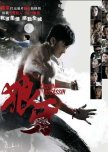
When you put the word "legendary" in your title, there is a lot to live up to. Legendary? This film won't even be memorable. Jacky Wu starred in and directed Legendary Assassin and managed to tick off the boxes for a triad martial arts movie without adding anything new or interesting to the genre. While that could be excused if the fights were…wait for it…legendary, sadly they weren't. Most of the fights were average or below average at best.Bo (Wu) takes a ferry to an island where he assassinates a drug lord and decapitates him. A possible typhoon strands him on the island and he has to lay low. If only there were news programs that had weathermen who could forecast such events. Bo's not worried, especially after he has a meet cute with the local policewoman, Hiu Wor (Celina Jade in her first movie role and it showed), and later saves her when Ken Lo and his two thieving buddies resist arrest. Ronald Cheng briefly offers some comic relief as Uncle G, the noodle shop owner. Bo goes to the police station with Hiu Wor to make a statement and enjoys a meal and camaraderie with the local force, with the exception of Tarzan-Sammy Leung-who hugely overacts. Bo and Hiu Wor have a little kung fu flirting before she's called to work. Meanwhile, Lam Suet and a bunch of baddies who landed the last boat on the island are searching for their boss' head and the person who took it. The movie follows a predictable path from there with Bo eventually having to fight 100 men to save Hiu Wor.
The problem I had with the film was that the writing, characters and acting were so bland that I didn't care about any of the characters. What should have been a tension filled and claustrophobic cat and mouse chase with the bad guys searching for the assassin was anything but. Even when the baddies crashed the police station demanding their boss' body, the fights and acting were so bad that the characters' dilemma failed to concern me. If they didn't care enough to even attempt first aid on an injured officer, why should I care?
By 2008 there were numerous martial arts movies using creative and exciting fight choreography. By reputation, Wu was an accomplished martial artist, but even the most skilled fighter still needs exhilarating choreography to keep up with the genre. Bo went up against 100 men but Wu used the same kick on at least 50 of them with the action either too slow, too sped up, or shot too close. The only fight that was entertaining was early on in the movie at the noodle shop. By the time the dead drug lord's wife started swinging a sword around near the end of the movie my eyes had nearly rolled back in their sockets at the cringe worthy acting and action.
I rate 1970's cheap martial arts movies on a curve, but even though this film was made during the time of the Nokia brick it gets no such consideration from me. I don't mind a by the numbers story if the fights are spectacular, but Legendary Assassin failed to deliver in that department, leaving this viewer with a pile of uninspired characters, uninspired acting, and uninspired fights. I found this movie to be legendarily mediocre at best.
7/14/23
Was this review helpful to you?

This review may contain spoilers
A pleasantly beneficial KMovie infusion. Quiet. Tender. Full of consolation & healing impulse
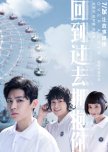
"One Day" is a beautiful KMovie. Quiet. Tender. Full of consolation and healing impulse. In addition, the story expands the usual dimensions of perception - human being sees ghost; man builds relationship with ghost. The extraordinary situation facilitates extraordinary closeness, opens up new perspectives and allows the male protagonist to look behind the obvious.The female lead character is visually impaired in life, yet specialized in sensing touch instead. The male protagonist, on the other hand, finds himself in a stage of his life, where he prefers to avoid his feelings, because they might overwhelm him. His inability to face the grief over his deceased wife, his feelings of guilt and being lost completely block him. By the way, the female protagonist is also blocked: she is in a coma.
The process of rapprochement between the two triggers a healing process, which is captured tenderly and lovingly, reaching out to the side plots, too. The KMovie knows how to touch. It might come along in an unexcited manner, yet with the perseverance of water, dealing with the stone...
After seeing the movie for the first time, I had no idea what had happened to me. It had pulled me into gentle inebriety. I had actually been sucked in and completely lost the distance.
So I couldn't write anything about it at first. I knew, l would rather want to see it again sometime in the near future. And again, it might not have been my last encounter with “One Day”. Why? Because of the overall gentle tone, the particular radiance, and the unique look&feel of this story. Because it's good.
“One Day” is not a blockbuster, no. However, in my eyes and according to my feeling, it offers a pleasantly beneficial KMovie infusion. (With wonderful acting, too.)
Was this review helpful to you?
This review may contain spoilers
It’s definitely a meaningful movie.
When I saw the ratings on this movie I thought, it can’t be that bad! I was right! This movie hits! Having to live through a few friends that chooses to end their lives early is very painful. We have to face the ultimate question why? We run around asking ourselves what could we have done to help change things for them. The bottom line is …we can’t. We can’t change what’s already done. We just have to come to terms with their decision and try to live the best we can with them in our hearts.To me that’s what this movie was conveying. So choose to love each other, be there to support each other before you live regretting it.
It’s a beautiful friendship that they had.
I thoroughly enjoyed it. The meaning behind the movie is so profound! I’d definitely rewatch this.
Was this review helpful to you?

Really Not Great
I want to start by saying... I am a huge Song Ji Hyo fan. I've watched "Running Man" for years and she was a favorite of mine from her very first episode of it. She's extremely talented and seems to throw herself into any challenge wholeheartedly. I have wanted to watch her acting for some time but had never gotten around to it until now. I thought starting with a movie instead of a drama would be the best way to go. Now, I think that was definitely not the right call."Codename: Jackal" is just not a great movie. In fact, it's not even a good movie. It's middling, and that's pretty generous in and of itself. It's an acceptable way to spend a little under two hours, I suppose, though even that is possibly debatable. I hate turning movies off once I've started them, but more than once I considered doing so for this one. I regularly checked how much time was left, just wanting to get it done with.
Any good story should have a beginning where you're introduced to the characters and key plot points, a middle where the story unfolds, and the ending where the story is wrapped up. Obviously, the middle chunk should be the majority of the story, but in "Codename: Jackal," the balance between the three is insane. You're introduced to the characters and basic plot in the first ten to fifteen minutes of the movie and the ending is basically about ten minutes long. There's well over an hour of middle where some laughs are intended, but very little is added to the plot. The characters aren't really further developed or fleshed out, the story isn't expanded, and the setting never changes. Every scene is more of the same, just with different characters making appearances and different obstacles being blundered over.
I think this movie is intended to be an action/comedy. Were there funny parts? Yes, I suppose so. The humor isn't very clever or thought provoking. It's basically juvenile slapstick, maybe slightly raunchy juvenile slapstick. There were moments when I cracked a bit of a smile, but I never laughed, even though I really, really, really wanted to be able to find something about it I loved. For the most part, this wasn't the fault of the actors. They worked with what the had been given, they just hadn't been given enough or the right stuff, I guess.
For the most part, the acting is commendable. Song Ji Hyo and Kim Jae-Joong had great chemistry and were clearly doing their best with the script they were given. It felt like much of their chemistry was wasted, but that didn't stop it from being there and obvious. Han Sang-jin as "Team Leader Shin" made for a sound, frustrated straight man trying to be the ringmaster in an ongoing circus throughout the movie. Oh Dal-Su was believable as a lecherous, seasoned detective and Seo Yi-An was excellent as the brightest and most overlooked part of the task force.
The downside in the acting department came from the most secondary of characters. When I say they were chewing the scenery, I mean there were entire set pieces with chunks missing from them, it was that bad. Seo Dong-Won as the greedy hotel/motel manager was the worst offender with Ra Mi-Ran as the lazy-yet-demanding head of maid services and Joo Min-Ha's stalker character tied for second. These roles were clearly intended to be comical, but are so over-acted, they become painfully unfunny and fully cringeworthy.
The story is not great. The really, really long middle section is a whole lot of absolutely nothing. Character motivations are never made terribly clear, and that becomes even more true once the "twist-ending" is revealed. Calling it a twist ending though is a bit misleading, since I predicted it very early in my viewing as the most logical outcome.
Production made seriously odd choices. Putting the stunningly beautiful Song Ji-Hyo in an embarrassingly cheap afro-style wig for a majority of the movie is a whole choice, but not a good one, to say the least. Many of the characters looked distractingly and awkwardly sweaty throughout the entirety of the movie. Costuming was nonexistent. It looked like the wardrobe department visited a mall in the late 90's/early 00's and shopped off the rack at Wet Seal. Again, it was a choice, and not a good one.
For a movie about an idol that is played by an idol, there was remarkably little music to take note of. Ideally, the music in the movie would be a character onto itself, but that wasn't the case here. A better OST would have made some of the movies flaws more easy to bear, because if there is one thing the Korean entertainment industry really seems to do well, it's OSTs, but the ball was dropped here. I tend to buy every OST for every piece of Korean media I consume, but I have zero interest in this one.
As for rewatch value, I find none really. Nothing about it was compelling enough that I'm going to rewatch at any point. If I ever do rewatch it, it will likely be because I want to see if it was as bad as I remember it being. Listen, if you want something light and not thought-provoking, emotional, or anything at all beyond surface-level, this movie might be right up your alley. There are much better comedies and much better action movies out there, but if you're a fan of Song Ji-Hyo or Kim Jae-Joong, then maybe it's worth additional hours of your watch-time, but I don't think there's really a whole lot of rewatch potential here personally.
Overall, the movie is decidedly okay. It's not great, but it's also not the worst thing I've ever seen. An overall rating of 5 seems most fair and honest. If some out there enjoy it more than me, more power to them, but I honestly think this is mostly just a middle-of-the-road movie. Forgettable, try-hard, and a bit boring, but not the worst thing in the world.
Was this review helpful to you?
Great idea of a movie, poor execution
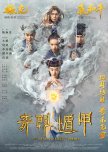
One of those adventure-wuxia high budget films plus some aliens. Story had really great potential but the way it was told was very rushed in the movie. The cast did a REALLY great job. They did the best they could with what was given. Last fight scene was epic. CGI was decent. It felt like watching a video game. The only downfall was the rushed plot. Seriously though, I feel like they did such an amazing job at everything except for the story telling part.The idea of the movie is great, I would rate it a 9/10 but the execution was a 7/10.
Was this review helpful to you?
This review may contain spoilers
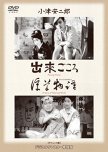
"Everyone yearns for love"
Before Director Ozu focused on upper-middle class families and father-daughter relationships, he evaluated the working class in this film. In Passing Fancy, the focal relationship was between a flawed father and son who could wind each other up but could also show incredible affection for each other.Kihachi is a widowed father who works in a brewery with his younger buddy, Jiro. After attending a book reading with a shamisen accompanying (Naniwabushi), the two men stumble across a young woman with no family and no job. Jiro votes to leave her behind, but Kihachi asks the local café owner, Otome, to take her in. Kihachi becomes quickly smitten with Harue, however, she sees him only as a kindly uncle. Jiro tends to be a jerk when he's around her and begins to avoid the café. Tomio doesn't approve of his dad's attention for Harue either. When Tomio is taunted about his dad's illiteracy and penchant for drinking after work, Kihachi tosses him 50 sen and tells him to buy whatever he wants, hoping the boy can feel rich for a day. Tomio uses the money to buy sweets and fruit and becomes deathly ill. In order to pay the doctor bill Jiro asks the local barber for a loan. To pay back such a large sum the young man plans to go to Hokkaido where laborers are being hired. He and Harue confess their feelings for each other and say their good-byes. When Kihachi discovers his plan he knocks Jiro out, leaves Tomio in his neighbors' care and heads to the boat. Kihachi must decide whether his pride or his love for his son will win out.
The story was sparse, but feelings ran deep. Kihachi realized his shortcomings as a father but desperately loved his son. Even though Tomio was at times embarrassed by his dad, he was devoted to him. Although Kihachi was infatuated with Harue he was willing to play matchmaker for her and Jiro. Jiro loved Harue, but cared for his friend and for most of the film stayed away from the young woman out of respect for Kihachi. Harue felt indebted to Kihachi but loved Jiro. Otome might have had feelings for Kihachi, but even though they were about the same age, typically, he only had eyes for someone half his age. At times the relationships felt more like a love circle or a spirograph than any other geometrical description. In later Ozu films, the nuclear family was the beginning and end of problems and problem solving, but in this film, the family is a made family. The friends and neighbors genuinely believed it was their responsibility to help each other. Rather than a nuclear family, the community was the emotional core of Passing Fancy. That's not to say there wasn't humor, it ran the gamut from an antic about a wallet at the reading, to Tomio waking his father and Jiro with a thick stick and Tomio striking childish movie poses. But even when the story turned slightly darker with Tomio berating his father and being cuffed on the head, the emotional catharsis that followed granted father and son exactly what they needed.
Before his rigid shots and perfectly formed compositions, Ozu used a more fluid style. Though he utilized lower camera angles, the characters were shown more full body than the later static shoulders and above style. The rooms were messier and more lived in. Sakamoto Takeshi (Kihachi) and Tomio Aoki (Tomio) would work together the next year on Ozu's Floating Weeds. As he did in Weeds, Sakamoto constantly wiped himself off and often sat his handkerchief on his head. Both he and Tomio scratched in most scenes, much in the way men do when women aren't present. Unlike the impeccably dressed characters of his later films, these men wore scruffier clothes and Tomio was usually dirty. Fathers in his later films were more respectable, giving more forethought to their actions. Kihachi had never seen a reason to try and save money until Tomio fell deathly ill and did little planning. Poor Tomio, children in old Japanese and Chinese films often ended up at death's door over a piece of cake or sweets of some sort.
Neither father nor son were perfect which is what made this film so enjoyable. They fought, they made up, they dealt with crises, and found a way back to each other. Neighbors took care of one another and love found a way. Passing Fancy may have been short on story but was no passing flame, it had great heart and staying power.
7/12/23
Was this review helpful to you?
What is it that we protect? The life and assets of our people?
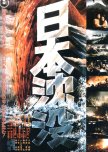
With a title that literally translates to Japan Sinks, you'd be hardly surprised that the film eventually delivers on this title. The first of many adaptations of Sakyo Komatsu's original works, Submersion of Japan stands above most disaster movies by approaching an honestly terrifying situation with calm intelligence and asking many difficult questions along the way.Racked by earthquakes and volcanoes, Japan is slowly sinking into the sea. A race against time and tide begins as the scientists work together to salvage some fraction of the disappearing Japan.
Following an unsuccessful deal with Daiei, the film rights for the novel were sold to Toho, and those rights extended to the production of a television series, which would be filmed alongside the movie and shared some of the same cast as a result. A series I plan to get to one day if I can ever find working subtitles for. It would be the first big adaptation of the book with a film remake and parody both being released in 2006, two live-action television series and an anime to boot.
With a screenplay written by Shinobu Hashimoto, a frequent Kurosawa collaborator and substantial input from the original author, Submersion of Japan tells its story from a variety of differing viewpoints from a scientist to a submarine operator to the Prime Minster himself. Like the later released Prophecies of Nostradamus, it's not all doom and gloom despite the subject matter, there is some semblance of hope sprinkled throughout. It's not a film written from the perspective of the common citizen, more so the higher-ups in trying to organise impossible tasks.
It tackles many real-life issues that could we as a species could face in our lifetime, subjects such as the reaction of countries trying to accept a mass migration of an entire nation, the fears and anxieties of the nation's people being forced to leave their homeland behind and how it affects them etc. It's a very different type of disaster film that we are used to today, where in those disaster sequences usually play second fiddle to the story at hand.
This is my first exposure to director Shirô Moritani, and hopefully not the last, and he honestly delivers some utterly beautiful direction, especially for a film of this genre. With long sweeping landscape shots coupled with some brilliantly filmed scenes of characters simply talking, it's a pretty substantial film hardly letting up the intensity of the subject matter thanks in part to the commitment of its cast. The usual cast of Toho and Toei regulars make their appearances known, you may not remember all their names by the end but you'll for sure remember their characteristics. Be it the OG Kamen Rider actor Hiroshi Fujioka or others such as Tetsurō Tamba, Keiju Kobayashi and Shôgo Shimada, every single actor delivers an excellent performance.
Released the same year as the 13th entry in the Godzilla series, Godzilla vs. Megalon, it's very clear which one of the two benefits from an actual budget. When it comes down to it, Submersion of Japan puts that money front and centre allowing the creative roots of effects director Teruyoshi Nakano to absolutely shine. Coupled with extra input from eventual Return of Godzilla director, Koji Hashimoto, the film's disaster set pieces are truly a sight to behold, especially that of the Tokyo earthquake sequence which is horror incarnate. No wonder a lot of the footage would be used by later Toho SFX movies.
This is easily the best musical score I've heard from Masaru Sato, it's dark, brooding and equal parts intense, rarely letting up to drive home that feeling of hopelessness experienced by the characters. I've not been a massive fan of his works over the past few films I've seen he's contributed to, but at long last, I've found one of his contributions that I really like.
Overall, while I can see why people rate this one so highly, I find it way too invested in many of its long and very drawn-out situations of characters talking to give it anything higher than 4 stars. Nonetheless, it's still a glorious film from start to finish and should definitely be experienced by any fan of the tokusatsu or the disaster genre.
Was this review helpful to you?
A weapon that would never be used by a rational man
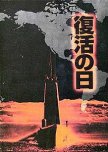
I've been looking forward to watching Virus for a long time, a bleak downward spiral of a film that's less focused on solving the crisis at hand but more focused on survival for the sake of it even though there's no real reason to anymore.A US military-engineered virus, released during a plane crash, kills almost the entire human population. The only survivors are scientists and military personnel in Antarctica, who desperately try to find a cure and save what is left of the human population from further destruction.
Virus, or as it's known in its uncut form Day of Resurrection, is probably one of the best efforts by the Japanese to break into the US market where the Japanese didn't have to make any form of compromises to their filmmaking in order to appease the US. Despite not making the impact wanted at the US box office due to it being given a limited release, Virus still holds a lot of impact even to this day and honestly, is generally terrifying after having witnessed the world go through the COVID-19 pandemic.
Based on the book by Sakyo Komatsu, yes the guy behind the likes of Submersion of Japan, ESPY and Tokyo Blackout, and one of the few of his original works that's even available in English to a degree. At the time of writing this review, I haven't read the original book but I do plan to down the line, Virus is very typical of Komatsu's works with his greater focus on humanity than the disaster. While Virus is mainly based on Komatsu's original text, the film's screenplay benefits from additions by Kōji Takada, the seemingly unknown and one-time writer Gregory Knapp and director Kinji Fukasaku. It's a fantastically written dive into humanity with Fukasaku's typical perfectionist stance giving all his characters life and to an extent the virus itself.
Speaking of Fukasaku, he doesn't compromise his directorial style when switching over to a language he doesn't fully understand as would be worrying with a film of this nature. For a man mostly known for directing yakuza movies and Battle Royale, Virus brings across all the melancholy and drama you'd expect from his films and made all the more beautiful thanks to utterly gorgeous cinematography from Daisaku Kimura. Fukasaku doesn't skimp on showing us the horrific nature of a pandemic of this magnitude, mass death and destruction on a global scale, skeletons littering uninhabited cities, riots breaking out worldwide and piles of corpses being incinerated that evoke uncomfortable reminders of days gone by. Being the biggest-budgeted Japanese film of its time, it has clearly put to full effect.
The full-star cast only adds to the gravitas of the film's excellence, featuring the likes of US actors such as Glenn Ford, Robert Vaughn, Henry Silva, Chuck Connors, George Kennedy and Bo Svenson. Considering they are under the direction of a man who doesn't even speak their native language, they all perform admirably. On the Japanese side of the cast, we have the likes of Masao Kusakari whose English can be admittedly wonky at times but the effort he puts in more than makes up for it, Isao Natsuyagi, Tsunehiko Watase, Kensaku Morita and even Toshiyuki Nagashima.
Further adding to this movie's list of strengths is the incredible musical score by Teo Macero and frequent anime composer Kentarō Haneda. Employing the efforts of the London Philharmonic Orchestra, the score is simply wonderful, while it hasn't been strictly released in a large capacity there are albums floating around out there if you desire to listen to these pieces isolated like myself. The piece that opens the movie "Adieu Mon Amor" is beautiful but the entire score is worth a listen on its own.
While the film failed to take off even in Japan, make Kadokawa the Hollywood player they wanted to be or get Kinji Fukasaku the worldwide acclaim he deserved, in its full uncut version, Virus is a surprisingly powerful, criminally underrated and compelling end-of-the-world drama worthy of your attention if you like a bit more meat on the bones of a Hollywood disaster flick.
Was this review helpful to you?
At least we'll die together, they way it should be.
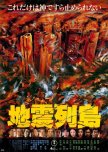
Magnitude 7.9 is another little-known Toho disaster film born from the same veins as the likes of Submersion of Japan and Tokyo Gulf Burns. I'm a bigger fan of the US title of the film, Deathquake, although the UK release titled Megaforce 7.9 does get a chuckle out of me, sounding like an extension of the Power Rangers series. Regardless, what Magnitude 7.9 does offer is what I've come to expect from these styles of films, lots of engaging character drama and stunning destruction.When Seismologist Hoichi predicts that there will be an earthquake in Tokyo of greater magnitude than the one in 1923, which his father predicted, he is ostracised by his co-workers, family and friends; eventually, he starts seeing another woman, who already has a boyfriend. Hoichi's wife wants to meet her before she will grant a divorce but when the earthquake he so predicted strikes, it becomes a true test of both character and will to survive.
This is seemingly the only big-budgeted film from director Kenjirô Ohmori outside of some drama he directed 7 years prior which I doubt anyone has heard of. It's a serviceable effort from the man, capturing what he needs and knowing what to use. There's a great use of lighting, shadows and angles throughout, Kenjirô offers enough that it keeps the viewer invested throughout the first half before taking a 180 and going balls to the wall in the second.
A lot of what makes these films worthwhile is being able to get engaged with all the human drama going on and thankfully due to the efforts of Kaneto Shindō, yes THAT Kaneto Shindō, it's a lovely look at what happens when a person's belief in something is pushed to the max and how it affects the people around them. There's still time to focus on both the higher-ups and the common folk, but not to the same extent that it was explored in the later Tokyo Blackout, however unlike that film which thrust the disaster pretty much from the outset, Magnitude 7.9 takes about 66-minutes to get to it's advertised disaster.
Speaking of the destruction, there is about 20 minutes worth of equally gorgeous and utterly horrifying set pieces courtesy of the king that is Teruyoshi Nakano. While it's not his best work it does bring to life so many situations that would not be the best-case scenario to be caught in, especially that of riding an underground train at the time of the earthquake striking or landing in a 747 as the earthquake tears apart the runway. Of course, there are a couple of reused sequences from the likes of both Submersion of Japan and the banned Prophecies of Nostradamus but even then they are reduced to only a few shots so they don't make themselves that known unless you know to look for them.
While I praised the character work earlier, what Magnitude 7.9 fails to capture is any form of attachment to a lot of our everyday protagonists. The acting isn't bad, again serviceable but you'd be expecting Toho to try and rope in a few more familiar faces than what we got. The likes of both Hiroshi Katsuno and Yoshio Inaba are welcome presences as are Eiji Okada and Toshiyuki Nagashima and all deliver sound performances but nothing that really stands out that much in the grand scheme of this genre. There are a lot of cute father and son moments that really touched my heart with them seemingly reconnecting over the father's ousting and their little embraces really got the tears going at points.
The only other major critique I have is with the music composed by Toshiaki Tsushima. It's not a bad score but the music placement is all over the place, cutting out when there would be music and overwhelming the visuals when there shouldn't be any. It all feels a bit mistimed and mismatched. It's not one I'll desperately seek out to listen to again.
Overall, I'd find it hard to recommend Magnitude 7.9 to someone who wasn't that invested in exploring the realms of Japanese disaster films, it's a perfectly fine movie don't get me wrong, but a lot of the elements in certain areas have been done better by others. It's worth it all for the destruction sequences alone though.
Was this review helpful to you?


