
 News


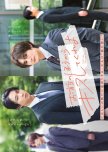
From Office Colleagues to Almost Lovers, A Mature Japanese BL Full of Romance and Unspoken Feelings
Another Japanese office romance BL, and this one is mature, realistic and surprisingly intimate. Japan really knows how to deliver slow burning romances where even the smallest gestures create so much tension. Just two episodes in, and I am already loving You Should Be the One to Kiss Me!The story follows Ueno, a handsome, serious accountant who is openly gay, and Kanda, a cheerful and popular salesman. At work, they seem like complete opposites and behave like ordinary colleagues. But behind closed doors, their relationship is entirely different.
One night, Kanda has nowhere to stay, so Ueno offers him a place to sleep. What starts as a simple favour gradually becomes a regular arrangement. Despite knowing Ueno is gay, Kanda casually strips naked, walks around completely comfortable and even climbs into Ueno's bed at night. I mean, seriously, how is Ueno supposed to resist developing feelings when this handsome man keeps invading his personal space?
What I absolutely love is how they are just coworkers at the office, yet practically living like a couple at home without officially being together. Their relationship develops naturally through everyday interactions, and the romantic tension is incredibly believable.
The interesting part is that Kanda might also have feelings for Ueno. Although he appears carefree, Ueno previously told him that nothing romantic would ever happen between them, and those words seem to have affected him. Now both men appear to be holding back, afraid to cross the line between friendship and romance. Who is going to make the first move?
What makes this BL so refreshing is its realistic portrayal of two working adults slowly falling in love. There is no unnecessary drama or exaggerated conflict, just genuine emotions, misunderstandings and unspoken attraction. I also appreciate that Ueno is already openly gay. His struggle is not about accepting his sexuality but about falling for someone whose feelings he cannot quite understand.
The acting is another highlight. Both leads portray their characters naturally, and their contrasting personalities create lovely chemistry. Ueno's restrained reactions whenever Kanda gets too close are adorable, while Kanda's complete lack of personal boundaries makes their interactions even more entertaining.
I have always enjoyed mature Japanese office romances because they feel grounded and relatable. Sometimes sharing a bed, exchanging glances or simply spending time together can feel more romantic than dramatic love confessions. And with a title like You Should Be the One to Kiss Me, I cannot wait to see who finally takes the initiative!
Two episodes in, and this is already a solid 9/10 for me. Great plot, natural acting, lovely chemistry and a mature romance that feels genuinely realistic. I love the contrast between their professional relationship at work and their increasingly intimate connection at home.
Sweet, romantic and filled with beautiful slow burning tension. Another Japanese BL that has me completely hooked, and I cannot wait for the next episode!
Was this review helpful to you?

The Chemistry is Chemistrying!
🏠 BUILT IN LOVE — Episode 2: Smiles & Spark ✨📐 THE CHEMISTRY IS LITERALLY CHEMISTRYING
Remember when I said logic meets luck and structure meets spirit? Well, someone clearly snuck an extra lesson into the company handbook titled How to Charm the Person You’re Working With — and everybody got top marks! 😏 Soul the architect-lioness has a smile that could soften even the stiffest blueprint lines, and Xinxin has noticed. In fact, these two have matching smiles — equally sweet, equally irresistible, and lighting up the screen every time they catch each other looking. It turns out that qi flow isn’t the only thing moving freely between these two anymore — the vibes are excellent.
🔥 THE SECOND FLAME
And let’s not overlook the secondary foundation quietly settling right beside them — Lada and Mim. If Soul and Xinxin are the gentle warmth spreading across a sunlit room, Lada and Mim are the embers waiting for just one breath to catch fire. You can practically feel the tension coiling between them — steady, intense, and clearly just biding its time. When that match finally strikes? I have a feeling we’re going to need extra ventilation.
🤍 MATERNAL BLUEPRINTS & HIDDEN CRACKS
Here’s the truly delightful twist — their mothers have basically already signed off on the union! It’s the sweetest thing — two maternal hearts quietly rooting for what their daughters haven’t even admitted to themselves yet.
But — and there’s always a but — just because the foundation looks solid doesn’t mean there aren’t invisible cracks. Soul walks in still carrying the rubble from a previous heartbreak — her walls are up for a reason. And Xinxin? She’s navigating her own emotional terrain, carrying the weight of unsteady paternal bonds. They may have the blessings from above, but they still need to build the trust themselves — and that’s the one thing you can’t rush or calculate.
They say you can design a perfect house, but you can’t engineer a home. Soul and Xinxin are learning that while their mothers can see the potential, only they can lay down the trust — brick by fragile, beautiful brick. And I’m absolutely here for every moment of it. 📐🔮🤍
Episode 2 done — and the walls are going up. Can’t wait to see what moves in next!
Was this review helpful to you?
This review may contain spoilers
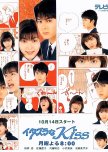
A Little 90s Nostalgia and a Whole Lot of Itakiss Charm!
Since Itazura na Kiss is a manga from the 90s, watching its 1996 Japanese adaptation felt like experiencing the story in the era it originally belonged to. The presentation, music, and humour have a distinct 90s charm, and I really enjoyed how the drama embraced that style rather than trying to make everything feel modern.What I particularly liked about this Naoki is that he isn't portrayed as a complete robot or an outright jerk. He is detached, stubborn, and emotionally reserved, but there is vulnerability beneath that cold exterior. His emotions often come through his eyes and subtle expressions rather than dramatic declarations, and I really appreciated that. Kassy's performance felt natural and understated, making Naoki's feelings believable without needing to spell everything out for the audience.
You can sense that there is something special about his feelings for Kotoko from early on, so his gradual emotional development doesn't feel as though it comes out of nowhere. He is still a teenager trying to figure out his future, dealing with expectations and pressure while struggling to understand his own emotions. His behaviour can be frustrating, of course, but I found it easier to understand him in this version. He doesn't feel like someone who is incapable of love; he feels like someone who doesn't quite know how to express it.
Kotoko, played by Sato, is loud, funny, clumsy, and occasionally downright annoying, just as her character is meant to be. However, what I appreciated most was that she had a backbone. She may be hopelessly in love with Naoki, but she doesn't simply accept everything he does without question. She can stand up for herself and push back when he goes too far, including when his behaviour affects the people around him. Her affection for him doesn't completely erase her own personality.
I also liked seeing how she gradually influences Naoki. She brings warmth and spontaneity into his rather controlled world, encouraging him to open up and become more considerate of the people around him. Their relationship isn't perfect, but there is a sense of gradual change in both characters. Kotoko doesn't magically transform Naoki overnight, and he doesn't suddenly become a completely different person once he falls for her. Their development is part of what makes this version so enjoyable for me.
The editing was another unexpected highlight. I especially loved the inclusion of Naoki's dreams, which offered little glimpses into his thoughts and feelings. Those scenes were a lovely way to communicate things he would never openly say, making his character more interesting without taking away his reserved nature.
I also adored the episode opening titles. They might seem like a small detail, but the way they incorporated Yuki's drawings and idiom-related quotes gave each episode a little something extra. Some episodes even carried that charm into the ending. These touches made the drama feel thoughtfully put together, and I always appreciate when a series uses its presentation to add something meaningful to the storytelling.
And then there is the music! The soundtrack is one of my favourite aspects of this adaptation. The romantic instrumentals have that unmistakable 90s feel, and they fit the atmosphere beautifully.
The humour is very much rooted in its era, too. It relies heavily on exaggerated characters, over-the-top reactions, and circumstances that are deliberately played up for comedy. Depending on your taste, some of these moments might feel silly or dated, but I found that they suited the overall tone. The drama doesn't take every romantic moment or character interaction too seriously, giving it a lighthearted quality that I enjoyed.
One noticeable difference for me was how the supporting characters and their romantic storylines were handled. Compared with some other adaptations, the SML's feelings and confessions didn't carry quite the same emotional weight. He often felt more like a comic-relief character than a serious romantic alternative, and the friends seemed particularly interested in gossiping about the leads rather than having much depth of their own. I didn't mind this too much because the main couple was clearly the heart of the story, but it did make the surrounding relationships feel less developed.
The romance itself also has a different emphasis here. Rather than treating every development as a major emotional turning point, the drama often lets the comedy and everyday interactions take centre stage. I enjoyed that approach because it allowed the characters to feel like young people navigating school, friendships, family expectations, and their uncertain futures. It isn't always the most emotionally intense version of their love story, but it has a sweetness that works for me.
Overall, I had a wonderful time watching Itazura na Kiss (1996) I particularly loved this interpretation of Naoki, Kotoko's more assertive side, the thoughtful editing, and the soundtrack. It may not handle every supporting character or romantic subplot as deeply as I would have liked, and some of its humour is definitely exaggerated, but the overall experience was thoroughly enjoyable.
For me, this version stands out because of its characterisation and the way it tells the story. It gave me a Naoki whose feelings I could actually see, a Kotoko who could stand her ground, and a soundtrack I will happily revisit.
Was this review helpful to you?

Simple et Efficace
Simple et efficace, pourquoi ?Parce que ça fait du bien d'avoir une série GL qui est calme et qui n'a pas besoin de grosse situation ni de gros drama pour pouvoir exister.
Les actrices jouent plutôt bien, le paysage est très beau, la qualité reste présente et on apprend également sur un sport.
On a tout aussi de nouvelles têtes et ça fait du bien !
donc je dirais que ça reste une série qui se regarde très bien pour ceux qui souhaitent faire une pause dans les dramas.
En fait, on a juste de la fraîcheur.
Et je ne parle pas que de l'actrice de Belle 🥸
Was this review helpful to you?
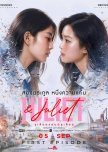
PERFECTION
Je peux clairement dire de mon côté, que cette série fait partie des masters qu'on a eu récemment !Je dirai au même niveau que Clairebell.
Le cadrage est très bien fait, le paysage est magnifique, la qualité est présente, l'acting est présent... TOUT EST PRÉSENT.
Nous n'avons même pas besoin en soi de connaître l'histoire de Roméo et Juliette.
Et c'est vachement cool d'avoir même eu ma référence dans la série.
Très belle découverte également niveau. acteurs, DE NOUVELLES TÊTES
Was this review helpful to you?

This review may contain spoilers
A Different Take on Itazura na Kiss, with Its Own Charm!
I started watching *Kiss Me* because of Mike Angelo and Sucharat Manaying, and it turned out to be quite an interesting experience, especially as someone who genuinely loves the original *Itazura na Kiss* story. This is only my second version of the story so far, and while writing this review, I also started watching the 1996 Japanese version. I haven't watched all the adaptations yet, so my perspective is still limited, but I already know that the original story and its characters hold a special place in my heart.*Kiss Me* isn't simply a copy-and-paste adaptation. It takes the familiar storyline, rewrites certain situations, and gives the characters a different personality and dynamic while still following the broad progression of the original story. I can appreciate the effort to make it feel more contemporary and give it an identity of its own. However, I have mixed feelings about some of the changes because, for me, they also take away part of what made the original characters and their relationship so distinctive.
For anyone unfamiliar with the story, it follows two people with exceptionally high IQs but very different emotional intelligence. TenTen is a brilliant, cold, and seemingly unreachable guy, while Taliw is an academically challenged, clumsy, dreamy girl who falls hopelessly in love with him. She is much more straightforward about her feelings, even when he makes it painfully obvious that she isn't his type. The first part follows Taliw as she pursues TenTen and tries to win his heart, while the later part explores their relationship after marriage. At its core, it's a story about two very different people learning to understand each other, although their journey is certainly not without frustration.
One of my biggest issues with this adaptation is that I felt both leads became less extreme versions of their original characters. I understand that adaptations need to make adjustments to fit their own setting and audience, but some of those changes made the characters feel more ordinary to me.
TenTen is still intelligent, academically gifted, and cold on the surface, but he also shows a gentler side quite early on. He feels much more approachable and socially integrated than the original Naoki Irie. The childhood connection between the leads is also expanded considerably, making it feel as though TenTen has been emotionally connected to Taliw from the beginning. He becomes part of her wider social circle, and their interactions sometimes feel more like those of friends who are secretly dating than a relationship in which one person is persistently chasing the other.
For me, this changes the nature of their relationship quite a bit. The original Irie is emotionally awkward and difficult to read, and even when he eventually falls in love, he doesn't suddenly become a completely different person. His emotional limitations are part of who he is. TenTen, on the other hand, feels more capable of being affectionate and charming when he wants to be. His behaviour comes across less as emotional awkwardness and more as a mixture of prejudice, stubbornness, and his own judgments about Taliw. That makes him a different kind of frustrating ML, and I don't think the two characters are interchangeable simply because they occupy similar positions in the story.
I also felt that the class differences were toned down. The original story has a more noticeable contrast between the leads' academic abilities and social positions, which contributes to the imbalance in their relationship. Here, their world feels more like an ordinary student environment, and the distinction isn't as pronounced. Again, this isn't necessarily a bad change on its own, but combined with the altered personalities, it makes the story feel more like a regular rom-com inspired by *Itazura na Kiss* rather than the same story with a fresh presentation.
Taliw was another interesting change. She is still clumsy, naive, hopelessly in love, and not particularly bright academically, but I liked that her character had more layers to her silliness. She isn't just stupidly in love with TenTen; she can be genuinely clueless about everyday things, jokes, idioms, and metaphors, which adds another dimension to her character. Some of her moments were genuinely funny, and I appreciated that the drama gave her enough time to show this side of herself.
At the same time, she has more self-esteem and emotional awareness than I expected. She knows what she feels, expresses herself directly, and can sometimes understand a situation emotionally better than TenTen does. She is also surrounded by loyal friends who support her, which gives her a stronger sense of belonging outside her relationship with him. I found her more natural and less exaggerated than some versions of Kotoko, whose excessive enthusiasm and clumsiness can occasionally become too much for me. Taliw still has her silly moments, but she doesn't constantly feel like she's performing for the audience.
However, this is also where I felt the adaptation lost something important. In the original story, Taliw's decision to stop pursuing TenTen carries a certain emotional weight because of how long and one-sided her pursuit has been. When she finally reaches her limit, it feels like a genuine turning point in their relationship. In *Kiss Me*, because the leads already share a more familiar and comfortable dynamic, that same kind of decision doesn't carry quite the same impact for me. Their relationship feels less like an unrequited love story gradually changing into something mutual and more like two people who already have feelings for each other but aren't properly communicating them.
I also noticed some changes to iconic moments. The first kiss, which is supposed to feel cold and hurtful to the FL, is presented in a much sweeter and more playful way here. The hospital kiss from the Japanese *Mischievous Kiss* version, which was one of the moments that introduced me to this story in the first place, is also changed in its setting and circumstances. I understand that adaptations need to reinterpret scenes rather than recreate every moment exactly, but these changes alter the emotional meaning of some of the original scenes.
That said, I still enjoyed seeing how the drama recreated certain moments in its own style. The studying-at-the-table scene was one of my favourites from the original story, and I thought *Kiss Me* did a beautiful job bringing it to life. It retained the charm of the moment while making it feel natural within this version. I particularly liked how the drama rewrote familiar plot points to achieve similar developments without simply repeating the original scenes word for word.
The chemistry between Mike Angelo and Sucharat Manaying is another major reason I enjoyed this adaptation. Their pairing works wonderfully, and their interactions feel lively, playful, and natural. Mike has a certain charm as TenTen, while Sucharat brings warmth and personality to Taliw. I especially enjoyed the little moments when Taliw managed to leave TenTen speechless. Their dynamic made the romance entertaining even when I wasn't entirely convinced by the changes to the story.
The soundtrack deserves a mention as well. It complements the romantic atmosphere nicely and adds to the overall charm of the drama.
One thing I particularly appreciated was that *Kiss Me* didn't feel obligated to reproduce every detail of the original storyline. It takes familiar situations and develops them differently while retaining the broad progression of the relationship. For viewers who found the original characters too extreme, especially Kotoko's behaviour or Irie's coldness, this version might be a much easier watch. Taliw feels more grounded in certain aspects, and TenTen has a more visible gentle side, making their relationship more accessible to viewers who prefer a conventional rom-com dynamic.
On the other hand, if you're a fan of *Itazura na Kiss* precisely because of its unusual characters and the frustrating, awkward, and sometimes uncomfortable dynamics between them, you might have mixed feelings about this version, as I did. I missed some of that original characterisation, and I sometimes felt that the drama softened the very traits that made the story memorable. The ending also felt a little short to me, and I would have loved more time with the couple and more romantic moments after everything they went through.
Ultimately, I enjoyed *Kiss Me*, even though I wasn't entirely satisfied with all its changes. It has its own charm, a lovely pairing, a good soundtrack, and some beautifully recreated scenes. I can understand why viewers who didn't connect with the original might prefer this adaptation. For me, though, the original story and characters still have a special appeal that this version doesn't completely capture.
I wouldn't call it a bad adaptation at all. I simply think that, in making the characters more approachable and the romance more conventional, it loses some of the quirks and emotional dynamics that made the original so distinctive. Still, I'm glad I watched it, and I'm looking forward to exploring more versions of this story and seeing how each one interprets these familiar characters.
Was this review helpful to you?

Starts Well, Ends Lost
The story gets off to a good start. The first few episodes suggest it could be an interesting proposition, but as the episodes go by, everything unravels until it ends up making no sense at all. What initially seemed like a plot with direction turns into a series of situations with no logic or coherence.The female lead follows a similar path. At the beginning she looked like a character with potential, but she ends up being almost impossible to watch, and that drags down a large part of the experience.
On top of that, there is a complete lack of chemistry between the leads, largely down to the script. The relationship never feels believable or generates any interest, and without that bond the drama loses its main driving force.
The villains don’t help either: they are pathetic and one-dimensional, with no motivations or nuance to make them even remotely interesting. They simply serve their function in the plot, and they serve it badly.
All in all, this is a drama that isn’t worth the time invested. I honestly don’t know how I managed to finish it. I don’t recommend it.
Was this review helpful to you?
It's MELOdrama!
Everything screams MELO in this show from the beginning. And as one it shall be scored.It's OVERdramatized, with absurd courses of events at every corner, impossible plot etc.
BUT it's still hooking, intense. Sometimes it makes you laugh with absurdity happening on the screen. Sometimes it makes you "ugh, nonono😒" with overstepping boundries/going overboard.
Big plus is the arcs were not dragged. A lot is happening and you won't be wondering when finally smth simple will be said that would clear everything up.
I really enjoyed the OST too.
Not being a fan of melodramas, I haven't thought once of dropping it - because I'd started it not being aware what it is.
I think many viewers might've expected something else and that's why they were so disappointed.
Was this review helpful to you?

Where the Mask Ends — A Female-Centered Drama That Actually Understands Its Heroine
It's been a long time since a Chinese drama made me feel this emotionally involved. *Where the Mask Ends* feels less like watching an ordinary television series and more like witnessing extraordinary theatre unfolding before my eyes.What makes this drama special is how confidently it places its female protagonist at the center of everything. Wei Rao is not simply a woman surrounded by powerful men or a heroine waiting to be rescued. She drives the story. She is intelligent, calculating, fiercely independent, sometimes manipulative, yet deeply empathetic. She understands how to use people without losing her humanity. Her ambition is rooted in something much more compelling than power: her determination to obtain justice and reclaim control over her own destiny.
Tian Xiwei delivers a remarkably layered performance. Her ability to move between vulnerability, defiance, humor, calculation, and devastating emotional pain is fascinating to watch. She gives Wei Rao contradictions that make her feel genuinely human rather than artificially perfect.
And then there is Lu Zhuo. What I love about their relationship is that their chemistry begins almost immediately, yet their emotional connection develops through increasingly complicated circumstances. He doesn't exist merely to rescue her. He gradually learns to understand a woman whose wounds, ambitions, and emotional defenses are far more complex than he initially realizes. Their relationship is built on attraction, confrontation, loyalty, and the difficult process of understanding one another.
But perhaps the biggest surprise is the supporting female cast. The mothers, aunts, grandmothers, and other women are absolutely magnificent. Their performances are unapologetically melodramatic, almost theatrical, and I mean that as the highest compliment. They can give you goosebumps. Episode 16, in particular, contains acting so emotionally intense that I genuinely felt as though I were standing in the same room with the characters.
The direction deserves enormous credit. The story moves quickly, the power dynamics constantly shift, and the characters are rarely as predictable as they first appear. Even the morally questionable women are given enough emotional intensity to make their presence unforgettable.
What I appreciate most is that the drama allows its heroine to be clever without making everyone around her stupid, strong without denying her vulnerability, and ambitious without sacrificing her capacity to love.
I'm writing this before the finale, so my assessment is based on the episodes released so far. But one thing is already certain for me: *Where the Mask Ends* has given me one of the most memorable female protagonists and some of the most emotionally powerful ensemble performances I've seen in a long time.
Was this review helpful to you?
The last episode saved this otherwise messy drama
I was wondering how a textile/design major might end up doing research in robotics. I need not worry. The grad school part is mostly window dressing.I was surprised when the leads had their first kiss at the end of EP.2. I thought this was going to be a straightforward romance. How wrong was I. It ended up being quite a ride.
Both our leads are unassuming yet they are the centre of all manners of strife. When they are going well, it is sweet, but it can turn toxic so easily.
We have multiple confessions and rejections, misunderstandings, jealousy, health issues, interference from family and friends and the crowd favourite: noble idiocy. It is manic and counterproductive. The cup overflows!
The ML feels ambiguous. He is weak when he should be strong. He played the noble idiot card TWICE when he needed the FL the most. He overthinks everything.
On the other hand, the FL is headstrong and wears the pants in this relationship. However, the script is not kind to her either. I can only imagine her character sounded better on the storyboard.
This brings us to the supporting cast. The self-confessed nutjob has some serious personality issues. This is sad as he is no villain. Just a petty man child. He can be super annoying and needs to be put in his place, which the ML failed to do repeatedly.
I gather the three original team members are meant to be comic relief. They spent most of their time roleplaying 30-year-old virgins. The script sidelined them rather than using them creatively. Some of the more draggy scenes are centred on their antics. Enough said
The one bright spot is Professor Lee. I'm getting second-lead vibes from him. He has feelings for the FL, but he is destined to be the tragic hero. He is a good man who deserves better. May the drama gods find him a soulmate soon. Amen.
I hung in there because of sunk cost. Our writer-nim heard my prayers and it all came together during the last EP. After playing all the "will they, won't they" tricks, the show finally delivered the ending we craved. It is sweet . . and a little prosaic.
I wanted to love this drama, I'm a fan of the leads, but it fought me the entire way. It might mirror reality, but is that what we want to watch? Peace.
Was this review helpful to you?
Peonies flourish against the current
Superb acting, interesting story, very good costume/wig department. Overall the drama reminds me of Against The Current for its themes, cinematic captures and the feeling. Highly recommend watching it.Story concentrates on women and their lives in men's world, that strengths can look like many different things and no, you don't need a man to save you from every little thing all the time. It's about relationships, solidarity, survival and mutual respect between women (and some men) while men play court intrigues, talk cryptic while hunting and uphold patriarchy like their lives depend on it. Bonus - the protagonists have real opposing forces against them and problems that are not solved within ten minutes of them showing up. The catch is not that the villains are hard to identify - they are in plain sight the whole time - but that greed and evil is as persistent and unrelenting as kindness and good.
Camera work and editing is very saturated, beautiful colours on sets. Almost feels like there is a little bit of a brown sepia filter on the camera. The shots are not necessarily dynamic or exciting, but setups are always beautiful. Songs used were pretty, but they didn't fit the mood for me every time.
The tone of the drama feels mature even though characters are young to begin with. There's a little bit of lightness with humour once in a while to dilute the almost oppressive levels of manipulation and human wickedness. It gets dark.
And yet again I see a problem with horses - a standing horse who's breathing so hard the person on top of them is vibrating, is either sedated with drugs, has been made to move a lot for a very long time to make it tired and calm or the weather is so hot it's hard to breathe. Either is harmful for the animal. Besides, they straight up kill a horse for jumping on someone. I'm not even going to get into that, but it did sour the mood for me. At least other animals looked quite happy and lively, so at least maybe no one was drugged to be on set.
The ending was so abrupt it gave me whiplash. But, as there are so many unfinished things, there has to be another season, which there is - hurray!
Was this review helpful to you?

A good watch!!!
A series of unlikely events but we love it all the same. Storyline was interestingly different. kept me going until the end and both leads did bring the characters to life. bizarre plot but it worked and the end was worth the watch.No curve balls here. watching CZ was the icing on the cake. not just a pretty face but the man has range, he was funny, hw was serious, he was angry, he was in love and we belived it all. The FL lead did a great job too.. very believable acting on her part. You could feel the love between the two.. no sizzling chemistry here but pure love and you could feel it between these two.
Was this review helpful to you?

Enjoyed the copious amounts of fluff and sugar, but objectively this is quite bad!
I liked the basic -however stupid- concept of Take Charge of My Heart & thought perhaps the older cdrama iteration of the same could be better & for quite a while it felt that way. Cute leads doing high school level romance in a University setting has been working somewhat okay for the first 2/3rd of the show, awful love triangle notwithstanding. Unfortunately the never too consistent plot completely loses coherence in the final -aka last 6- episodes.Was this review helpful to you?

My First K-Drama ever and my first review
This was my introduction to K-Dramas and may I say it was quite the introduction.It held my attention all the time, it's a simple history, with vengeance, a little bit of romance and some kinda predictable plot twists but very well executed.
I'm kinda suspicious to talk about it because I hold it pretty dearly near my heart. But in my opinion it's a must watch if you like action and a lil bit of investigation.
I really liked the chemistry between the ML and the FL, but the highest point in this regard in my opinion gotta be the FL and the main antagonist, pretty cool dynamic and in the final fight you can see the grit and emotion between them.
Was this review helpful to you?

This review may contain spoilers
หุ่นพยนต์ (Hun Payont)
หุ่นพยนต์ (Hun Payont) is a 2023 Thai folk-horror film directed by Mike Phontharis, the filmmaker best known for the popular Pee Nak franchise. Blending traditional Thai animism, amulet culture, and intense supernatural terror, the movie dives deep into the dark side of blind faith and sacred talismans.Here is a comprehensive review of the film, breaking down its lore, strengths, and overall impact.
1. The Premise & Plot
The story follows Tam (played by Poom Chadwick), a young man who travels to a remote island village to find his older brother, Thee, who has mysteriously gone missing after moving away to work.
Upon arrival, Tam discovers a tense community dominated by fierce devotion to Hun Payont—a life-sized, sacred effigy of a revered and deceased monk named Thong. The villagers believe the statue protects them from harm, brings good fortune, and punishes wrongdoers. However, as Tam investigates his brother’s disappearance, a series of gruesome and unexplainable deaths plague the village. The villagers immediately blame a curse, while Tam suspects human foul play tied to the terrifying power of the effigy itself.
2. Key Strengths
Rich Cultural Lore: The film’s greatest asset is its exploration of Hun Payont—real-world sacred effigies woven from threads, metal, or sacred materials imbued with spiritual power through black or white magic. It translates traditional Thai folk beliefs and amulet culture into a compelling cinematic threat.
Creepy Atmosphere & Practical Effects: The visual presence of the Hun Payont statue is genuinely unsettling. The film excels at building dread around a stationary object that feels like it’s always watching.
Fast-Paced Suspense: True to director Mike Phontharis's style, the narrative moves at a brisk pace, keeping viewers hooked with escalating tension, sudden twists, and high-stakes confrontations between modern skepticism and ancient superstition.
3. Areas of Critique
Tonal Shifts: Like many modern Thai horror films, Hun Payont occasionally struggles to balance its genuinely dark, bloody horror elements with lighter, comedic side characters. While this helps diffuse tension, it can sometimes pull viewers out of the atmospheric immersion.
CGI vs. Practical Horror: While the physical set-pieces and the eerie presentation of the statue work brilliantly, a few of the CGI-heavy sequences in the climax feel a bit rushed compared to the grounded, psychological terror of the first two acts.
4. Final Verdict
Who it’s for: Fans of Thai folk horror, supernatural thrillers, and stories rooted in traditional Southeast Asian mysticism.
Hun Payont succeeds in turning a revered spiritual guardian into a symbol of collective paranoia and dread. It offers a thrilling ride that questions what happens when faith turns into fanaticism.
Was this review helpful to you?


