
 News



They're so cute damn
I really love this series for it's soft vibe. If you want to watch a cute BL fluff, I'd definitely recommend this one !It's currently ongoing so I haven't finished it yet (right now there are 9 episodes released), I'm really curious about how it's going to end.
It's an average popular guy x loner trope, but I still find the characters appealing, and how they're united by their love for BL is pretty sweet. The actors are pretty good too (I really like the one that plays Serizawa).
Something I think would be good to improve is the side characters. I hope they finally get their moment to shine (maybe a side couple ? 👀) and aren't just there to support Serizawa and Suzuki.
Was this review helpful to you?
This review may contain spoilers
Started off really well and then veered too much towards being abusive and non-con
This started really well...it seemed like just the right dose of delish red-flag all set to be humbled by healing love...but then with each episode it veered too much towards being abusive and non-con stuff....not what I was expecting..this has now become a tad too toxic for my taste. Will drop this....but I must admit that the acting is top notch!!BL-Needle Score: 8. High BL-ness
The successful, arrogant cocky and eldestson-heir to a business empire, Ing, is all that and some more...untill he meets the young senator's younger bro Yok and is instantly smitten...Ing is set to try and use all his charms, attitude and connections, but Yok seems to see through all of it and essentially outs Ing in place, albeit without being arrogant or disrespectful....its clear that the formidable Ing that most people around are in awe of, has met his nemesis in Yok
This promised to be really yummy, messy, and a rollercoaster ride of emotions, and I was so sat...only to be disappointed with each passing episode...a tad too toxic for my taste
Verdict: If you dig toxic and sexual-predator male lead stories that has non-con sexual advances, then this is just right
Was this review helpful to you?
A must watch
I've got so much to say about this series.Gemfourth's portrayal of Barth and Tanrak was INCREDIBLE, I couldn't imagine any other actor give life to those characters the same way as they did. Fourth really managed to make me feel every single emotion Tanrak had to go through.
I really love the characters because yeah, they're flawed, they don't always do or say the right thing but that's what makes us human.
The cinematography was beautiful, I loved every single scene even from a cinematic way. The soundtrack was amazing too, it really fits the vibe of the series and I still listen to it from time to time.
Definitely a must watch, I would totally rewatch and recommend, it was so worth the wait. The themes that were explored in Ticket to Heaven really made me emotional, I relate to Barth so much :(
Probably my favorite BL series of 2026 !
Was this review helpful to you?

Really loved this series
Soul Mate explores a whole lot of themes, and it was kind of unexpected when I clicked on this title. Grief, homophobia, the problems in our society... At first, I thought it would be just an over dramatic tearjerker, but it was actually way more than that.Both main actors did an amazing job with the portrayal of their characters. They poured so much into them to give them life, it was beautiful to watch.
The cinematography was exceptional, especially the scene at the church, the train and when they walk around the city.
On the more negative side, I started to lose my interest at some moments (I found the script a bit exaggerated, especially around the middle of the series), even though I quickly got into the story again.
Overall, I wouldn't consider a BL, but it still is a romance. I don't regret watching it at all ! :D
Was this review helpful to you?
? When Loving Someone Means Letting Them Go ?
OVERALL IMPRESSION🌟I am genuinely conflicted about this drama! I started off loving it because it transformed a familiar betrayal storyline into something unexpectedly emotional. The FL had devoted her life to her husband and son, only to watch them favour another woman. However, the ability to communicate with her husband's younger self introduced a heartbreaking question: how could a man who once loved her so deeply become someone capable of hurting her so cruelly? I found the story beautiful, devastating and ultimately much sadder than I wanted.
WHAT I LIKED💖
• I loved the unusual connection between the FL and the ML from 18 years earlier. Watching his younger self's devotion and the sacrifices he made to win her love was incredibly touching.
• His anguish upon hearing how his future self treated her was heartbreaking. He loved her so much that he was prepared to sacrifice their future together to protect her from himself.
• I appreciated the emotional contrast between the young man who cherished her and the husband who had forgotten her worth.
• Both leads eventually built successful lives, yet neither completely forgot their love. Their reunion carried so much unspoken longing.
• I respected the FL's decision to protect herself, even though I desperately wanted a different outcome.
WHAT I DISLIKED⚠️
• The husband and son were absolutely horrible to the FL. Their disrespectful, deliberately hurtful remarks, often made directly in front of her, were difficult to watch.
• I hated how another woman could enter the FL's own home, belittle her and behave as though the FL was somehow responsible for everything.
• The FL had sacrificed so much for her husband that she became paralysed, yet her family showed so little appreciation for her suffering.
• Her son's cruelty was especially upsetting. He saw his mother as a cripple rather than recognising the tremendous effort it took for her to walk and continue caring for them.
• I really disliked the ending. I understood the FL's reasoning, but emotionally, it left me devastated. I had hoped so desperately that their reunion would bring them happiness.
PRODUCTION AND PERFORMANCES🎭
• The contrast between the ML's younger and older selves gave the story its strongest emotional impact.
• The younger ML's anguish was particularly convincing. His heartbreak made me feel the weight of a love that had somehow turned into cruelty.
• The time-crossing conversations added emotional depth to what could otherwise have been another predictable story about an ungrateful husband.
• The leads' unresolved feelings made their eventual reunion especially moving.
FINAL THOUGHTS💭
This was a beautiful but incredibly painful love story. I understood why the FL couldn't simply forget everything she had endured, just as I understood why the younger ML believed letting her go was the only way to save her from his future self. Both sacrificed something precious because they wanted the other person to have a better life. Still, I cannot pretend the ending didn't upset me. After watching their love, separation and years of unresolved feelings, I desperately wanted them to find happiness together. I respect the FL's choice, but my heart wanted something else entirely. Perhaps that is what made this story so powerful: sometimes loving someone with all your heart doesn't mean you are destined to spend your life together. A deeply emotional, worthwhile drama that left me heartbroken.
Was this review helpful to you?
An amazing watch
It was an amazing drama. The story is overall really touching. Even though I kind of saw the ending coming, it doesn't change my love for this drama.The cast is great (I especially loved the one playing Kang Jihoon's best friend).
I wouldn't necessarily recommend to someone searching for a cute romance or just for a BL, because even if there are romance elements, the plot still centers around the fantasy part (Shin Jaewoo's time travel)
Overall, I wouldn't rewatch, but I definitely recommend !
Was this review helpful to you?
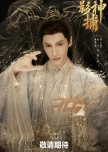
Nice Story But...
The story is interesting. But cannot get past Shen Yu Jie. I wish they had chosen another female actor for the role. Her acting is not good at all - canned expressions and unnatural. Luo Yun Xi is always lovely and graceful as ever. But he seems to have been typed cast into such roles. I wish they'd give him other roles to play to show his spectrum as an actor. Despite the Luo Yun Xi and Alen Fang combination in this drama, the support role of Shen Yu Jie's character can't seem to pull everything together.Was this review helpful to you?

This review may contain spoilers
This is a 'grab all you can' steamy, mess of a show, for all of us smuthounds
That grab (gulps)...you could almost feel it.....lololol...this is a full-on red flag, ravenous, smutty show that doesn't mean to be 'right' in any way...the constant blurring of boundaries, carnal advances, almost bordering on harassment only flies because both the leads seem to be into it....in other words don't go watching this one if you get triggered by red-flag behaviour.Bl-Needle Score: 8.5 High BL-ness
The boss bullies, pricks, tempts and manipulates his new rookie employee who worships him,...all to rile him up and prime him for the picking....what boss tramples on his junior in front of entire team just so that they can be 'fierce' with them in private!! The synopsis promises a competitor to boss and with that, it can only get messier...you get the drift I guess...lol
This is a no-brainer, smut show and the smuthound in me loves it so far...but don't go looking for logic in this
Verdict: Yes, watch if you like messy smut!!
Was this review helpful to you?
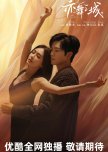
This review may contain spoilers
Show is a drama not a romance
Ok, show doesn’t make sense at times. Maybe because I was prepared by reading reviews and comments but it didn’t bother me that much. I still kept watching.Everyone is saying no romance. But for me there was, although not much. When you compare ML with 2FL and FL you can feel the difference. He really loves her in his own very flawed momma boy way. I felt not so much love the other way around, the love from FL for ML was there but more conveyed trough words than trough actions and looks. After watching the whole show with all the flashbacks I believe that ML was more into FL. But that’s ok. Romance definitely wasn’t the main story. Show is a drama and the romance is there to create the drama not the other way around. So the titel can be deceiving.
Another comment I read al lot is: FL is a bad mother for leaving her son. But in the and I understand her. She needs to heal first. And it’s not that she had a real part in sons life. Especially the last episodes.
Was the drama defying logic? Yes! Does it have flaws? Yes, major ones. Especially in the writing. And by letting every villain getting away with the major crimes. But if your can turn off your brain and moral compass at times it’s really a decent ride. Enjoy!
Was this review helpful to you?
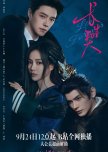
Promising Concept, Botched ScreenWriting
Princess Ningjia and Royal Guard Ning Changyue were granted immortal life after the tree spirit Yutu was moved by their display of devotion and love for each other. Fast forward 3000 years later, both are now living in the modern era as Song Yiqiu and Ning Changyue, although they both had fallen out from each other, the former trying her very best to avoid seeing the latter. But as they are bound by immortal oath, Ning appears when Song is involved in a car crash while trying to save a pregnant woman, and Ning asks if Song would give their relationship a try again. Song is tired of living forever, and agrees to do so if Ning would help her break the immortal oath, which involves them finding the tree spirit Yutu who reveals that they had to find a particular map (which is in a form of painting) to break the curse. They go on the last leg of their life together as couple again to break the curse, where Song finally figures out what her true feelings is towards Ning when she encounters her past love interest who had reincarnated as Lu Huai.First off, ive been setting my eyes on Alan Fang ever since A Journey to Love. So I am kinda ready to ‘like’ this drama. The comments looks promising so i went on to watch even though ive never been into minidrama. Well, unfortunately enough, this show definitely ticks the boxes of “why I don’t like minidrama”.
Lack of character build-up? Check!
Abrupt plot hijack? Check!
Characters that don’t make sense? Check!
As much as i liked Alan Fang, I didnt quite like the personality of his character’s modern self. The extreme jealousy is cringy, the clinging to FL is too tropey, and the immature banters are eyeroll worthy. While ML acts immature with his jealousy, FL isn’t any better either. She is selfish and shallow, always thinking about herself and her own feelings and never of ML. She plays victim a lot and I honestly hated her character throughout the series.
Why did the screenwriters write thousands-year-old characters to act like freaking adolescents finding some monkey love i could never guess. They both don’t look like people with thousand years old experiences. They were supposed to be married to each other at some point of their immortal life and yet they acted like they just caught the eyes of their crush. All those awkward moments that’s supposed to be romantic looked so lame instead and incoherent to their hundreds century old background. How did a couple of lovebirds who went through life and death fall out so bad they never explained it either. And the last arc with the eunuch was so ridiculous and dragged down my rating even more. The only thing that was consistent throughout the series are the awesome songs, that definitely managed to save the rating from getting lower. It’s really a pity, the series couldve been an interesting one if they had more backstory and realistic personalities fitting for millennium old characters that should have been wiser and more mature than my 70yo grandma.
Was this review helpful to you?

This review may contain spoilers
A gentle reminder that not everyone is privileged enough to be comfortable in their identity
Yes, 10 stars is a high rating for what seems like an ordinary BL. And yes, I'm slightly obsessed with Masaya Sakuragi, so I can't even pretend to be unbiased, haha. Now that that disclaimer is out of the way, let me make my case for why I think it really is worth the 10 stars I gave it.Like with many JBLs, when you look deeply into the story, there's a lot to love. On the surface, this is the usual popular, outgoing boy falling for his shy schoolmate. But for me, this show was an honest exploration of why some people have a harder time owning their identity than others.
Harutora has an easy life. His parents love him, he's athletic and popular, and most importantly for the story: he passes as straight. In fact, we even have a moment where someone says something homophobic to him, assuming he's straight, and he quickly puts them in their place by letting him know that he's gay. In short, Harutora hasn't experienced any drawbacks to being gay, so naturally he wishes that Sui senpai could be more like him.
But Sui has none of the comforts Harutora has. He's visibly effeminate, and he comes from a home where being gay is not acceptable. He quickly becomes his schoolmates' punching bag, and so he learns to roll with it and make fun of himself first before anyone else can do it. Harutora is the first person who lets him know that there's nothing wrong with him, and the scene of him meeting Harutora's family is one of the most beautiful moments I've seen in a BL. (Shoutout to the special episode of The Servant Prince for another heartwarming moment where a gay couple is showered in total love & support.)
Harutora is patient and considerate, and he slowly opens Sui senpai's eyes to a world where it's okay to be gay. Where you're loved for just being yourself. Of course there's the stereotypical "homophobic parent who quickly comes around", but it's worth noting that none of this would even be happening without Sui finally believing that he's worthy of love. It takes a lot of courage to ask your parent to accept you, even if they don't quite understand you, and I really enjoyed watching Sui's journey to get to this place. A very well-deserved 10 stars, if you ask me (even discounting the power of Masaya's charisma, lol.)
Was this review helpful to you?
Hooked after one episode
I’m already LOVING this show after just the first episode! 😭 The main couple especially has completely caught my attention, and their chemistry and visuals are STUNNING. The production quality is also so good—it genuinely looks like so much effort has gone into every scene.
Love the concept
Tailai production never disappoint....
I haven’t really gotten into the second couple yet, but I’m definitely
tuning in every Thursday and Friday because I NEED to
see how their story develops. 👀
Was this review helpful to you?
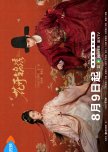
I Don’t Even Know How to Explain It, Just Watch It
There’s something really heartwarming about Road to Splendor. The storyline, the plot, and especially the acting all impressed me more than I expected.I actually took a break from watching it because it was still ongoing at the time, and somehow ended up finishing it a month or so later. Maybe because I watched a lot of it in a marathon, there were moments when I felt a little bored or overwhelmed. There was just so much happening and so many things packed together that I sometimes needed a break from it.
But even with that, I still think the story and the acting are absolutely worth watching. There’s something about the way the characters and their journey are portrayed that makes the whole drama feel genuinely warm and memorable.
I honestly don’t know how to explain it better without getting into too much detail. Just watch it. That’s probably the best review I can give.
Was this review helpful to you?
This review may contain spoilers
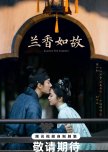
Going Against the Current: A Love Story Beyond Romance
“When I became engaged to my wife, her name was Shen Jialan. When I married her, her name was Xu Lanxiang. The red thread has always bound me to the same person.” Those are Jin Qi’s last words to Lanxiang, and honestly, I think they explain their relationship better than any romantic confession could. He loved her intensely and almost completely. He went against his family, society and even his own interests for her. I would not necessarily call him the perfect lover, but I can confidently say he was the best husband for her. Yet throughout the drama, I kept asking myself: what exactly did Lanxiang feel for him?For a long time, I genuinely wondered whether she loved him at all. Jin Qi’s eyes were always full of love when he looked at her, while Lanxiang’s feelings were much harder to read. She was a good daughter, mother, wife and daughter-in-law. She cared about him and his family, protected them and stood beside them, but so much of what she did seemed to come from responsibility, principles and righteousness rather than romance. At one point, I thought perhaps they were simply life partners and companions who understood each other, rather than soulmates in the conventional romantic sense.
By the end, I changed my mind. Lanxiang did love him. But her love was never going to look like Jin Qi’s because romance was never the centre of her existence. Jin Qi could love one woman as if she were his entire world. Lanxiang could not live that way because life had already taught her that love was only one part of existence. Her family was destroyed, her engagement broken, she was forced into slavery, betrayed, humiliated and eventually forced into another marriage by imperial authority. Her mother’s last word to her was simply “live.” After surviving all that, how could romance possibly become the most important thing in her life?
She wanted freedom before she wanted romance. She wanted her parents to live peacefully. She wanted to protect the people she considered family. She wanted to write her own stories. She wanted to survive without becoming another person controlled by power. And perhaps most importantly, she refused to let revenge consume the rest of her life. She had every reason to hate the Lin family. She had a blood feud with them, yet she did not spend her life trying to destroy them. That alone makes her different from the countless revenge-driven protagonists we see in historical dramas. She suffered injustice without becoming obsessed with reproducing that injustice onto someone else.
That is also why I stopped blaming her for not loving Jin Qi in the same way he loved her. Love is not a transaction. Someone loving you ten times more intensely does not create a debt that you have to repay. They loved each other, became husband and wife, raised children and shared an entire life. For me, that is enough. Their relationship becomes more meaningful precisely because they are not the usual “two people who live only for each other” couple.
Their marriage also begins with a serious problem: Jin Qi forced it. He genuinely believed he was protecting her by giving her security through an imperial edict, but his good intention does not erase what he did. From Lanxiang’s perspective, he was still another powerful man making a life-changing decision on her behalf. That is why her emotional distance makes sense. It takes years before she can separate the man he becomes from the man who once took away her choice.
This becomes one of the most interesting contradictions between them. Jin Qi’s rebellion against the world is often about protecting Lanxiang, while Lanxiang’s rebellion is about refusing to be controlled by anyone, including Jin Qi. He thinks love gives him a reason to act. She thinks love should never become a reason to control another person. Their is different. Even when Jin Qi eventually understands this, he can never completely experience the world the way she does because he has never lived through the same loss of identity and freedom.
That is why the scene in which he finally discovers who Lanxiang really is works so well for me. He does not expose her or use her identity against her. Instead, he burns the evidence and essentially tells her that from now on she is simply Lanxiang, his wife, regardless of where she came from. There is no grand romantic speech necessary. They just look at each other. That quietness means more to me than a dramatic confession would have. It is almost as if, after everything, he finally understands that loving her means allowing her to exist as the person she chose to become.
And then there is the red thread. Jin Qi literally ties himself to Lanxiang and wishes that in another life he could still marry her. It is incredibly romantic, but what makes the scene painful is that Lanxiang’s life continues after his ends. He dies before fifty, while she lives on for many more years, losing almost everyone around her one by one. She does not die because her husband died. She continues living. She continues writing. She continues raising the next generation. Eventually she finishes the story of the Shen family and dies peacefully at old age. That ending is very Lanxiang. Jin Qi’s love may have been the great romance of his life, but Lanxiang’s life was much larger than her romance.
This is why “Against the Current” fits them so well. Jin Qi goes against the current loudly. He was expected to become a scholar but chose the sword, married the woman he loved despite the circumstances, resigned from an important position when he no longer believed in the court, and repeatedly put himself between his family and danger. He even trains his daughter in swordsmanship rather than deciding that being a girl should limit her.
Lanxiang goes against the current much more quietly. She does not want wealth or political power. She simply wants to live freely, and in her circumstances even that is a radical desire. She survives through intelligence, observation and patience. She writes under another name, finds ways around rules rather than simply smashing them, helps women escape terrible marriages and repeatedly chooses solutions that minimise bloodshed. Her rebellion is not always loud, but it is constant.
I especially loved the way her intelligence is connected to writing. Lanxiang cannot physically change the entire society around her, but she can write stories. The woman who once had to survive by hiding her identity eventually becomes someone who records the experiences of women living under that society. At first she writes about herself and the Shen family. Later her perspective expands. She begins recording the lives of women more broadly. That makes her writing almost an alternative form of resistance. History may be written by those in power, but Lanxiang preserves the experiences of people who otherwise might disappear from history.
The drama also understands that “freedom” does not mean the same thing to every woman. That is one of the strongest aspects of its female ensemble for me. Some women want financial independence, women who want love, women who want status, women who want to escape an abusive marriage, women who want children, women who want careers and women who simply want a peaceful family. Lanxiang does not represent every possible version of womanhood. She is simply one version. That is important because sometimes dramas become so obsessed with creating one “perfect independent woman” that every other woman is reduced to a lesson designed to make the heroine look better.
Du Cuique, Zhao Xingtang, Lü Jier, the Lin sisters and others all have their own desires and reasons for trying to escape their circumstances. Their choices are not always admirable, but that does not mean their desires are meaningless. Du Cuique’s ambition, for example, comes partly from wanting to escape the position assigned to her. Zhao Xingtang’s obsession with money is also understandable when you realise how little control she has over her marriage, family and reproductive life. Even when these women make terrible choices, their desperation is often recognisable.
That is why I found the drama most interesting when it allowed different women to pursue freedom in different ways. It becomes weaker whenever it seems to say, “This is the correct way for a woman to live.” Lanxiang’s philosophy is powerful precisely because she arrived at it through her own experiences. It does not need to become a universal instruction manual.
What I cannot deny how much the drama gave me outside the central romance. It genuinely feels like a whole-life story. We see a girl become a young woman, then a wife, mother and eventually grandmother. We see people enter her life, change her, leave her and eventually die. The drama does not treat time as something that exists only between major plot events. It makes time visible.
One of my favourite examples is the woman selling chrysanthemum greens. First she is a young girl selling vegetables. Years later she is selling the same greens with her newborn. Years later she is still selling them, now with a girl and a boy running beside her. Nothing dramatic has to happen in those moments. The vegetables remain the same while the people change. That is such a simple way of showing that life keeps moving even when the characters themselves are caught up in huge personal struggles.
That idea affected me more than I expected. Watching Lanxiang see women from her own generation slowly disappear into old age made me think about my own life. I am in my early twenties, my mother is in her fifties, and my grandmother is in her eighties. Watching this drama made me realise that the woman I see as “my mother” was once a young girl too. My grandmother was once young, active and carefree. One day I will also look back at this period of my life from somewhere much further away. I find that kind of reflection difficult, and this drama made me confront it.
That is why the later parts hit me much harder than I expected. The deaths are not only there to create tragedy. They create a sense of time passing. People who were once central characters become memories. Families change. Children become adults. People who were once enemies end up helping one another’s families. A woman who began as a carefree girl becomes a mother. A former servant becomes a respected wife. A divorced woman builds a different life. Someone who once betrayed another person eventually helps that person’s family. Life is messy like that.
The drama repeatedly shows that everyone is trapped by something. Lanxiang is trapped by her identity and history. Jin Qi is trapped by family responsibility and political power. Other women are trapped by marriage, money, social status or reproductive expectations. Even people who appear powerful are negotiating with someone above them. That makes the world feel more believable than a simple good-versus-evil story.
I also appreciated that Lanxiang often chooses strategic resistance rather than simply relying on Jin Qi’s authority. The divorce storyline is a good example. Instead of having the powerful male lead crush everyone for her, she looks for a legal route within the existing system. The rules may be unfair, but understanding them gives her another kind of power. That fits her character much better than simply becoming someone who solves every problem through status.That philosophy is one of the reasons I think the drama's social commentary is stronger when it is embedded in the story than when it is spoken directly.
The production is another major strength. The costumes, sets, cinematography and historical atmosphere are beautiful, and I particularly liked the visual sense of time passing. The drama often feels like someone actually thought about how to frame a historical household rather than simply putting actors into expensive costumes.
Liu Xueyi absolutely surprised me as Jin Qi. He could easily have become frustrating because of the forced marriage and the intensity of his love, but Liu Xueyi gives him enough restraint that his internal conflict is visible even when he barely moves. His eyes do an absurd amount of work. I could see his love, jealousy, guilt, worry and helplessness without needing a speech.
I had a more complicated reaction to Tan Songyun’s Lanxiang. I understood her intellectually before I always felt her emotionally. The character deliberately hides a lot of her feelings, which suits Lanxiang, but in a romance where one person loves so intensely, I sometimes wanted clearer evidence of what was happening inside her. Her eventual realisation that she loved Jin Qi therefore felt meaningful, but it was also something I often had to infer.
Ironically, that emotional imbalance may also be part of why I became so attached to Jin Qi. Because his feelings were so visible, I kept waiting for Lanxiang to meet him somewhere emotionally. She did, eventually, but on her own terms and at her own pace. I don't think that makes their love unequal. It makes their lives different.
The supporting relationships were another major reason I stayed invested. The friendships among the maids, the siblings, the parents, the children, and even former rivals often felt more alive than many dramas make their secondary romances. I particularly liked the way women helped other women survive, whether through small acts of kindness, sharing information, protecting each other or simply making life slightly less miserable. The little household interactions often gave the drama warmth when the larger political story became heavy.
What ultimately makes this drama special to me is that it is not really a love story disguised as a historical drama. It is a life story in which love is one part of a much larger existence. It is about family, friendship, responsibility, survival, social position, injustice, ambition, motherhood, ageing and the choices people make when every available choice is imperfect. It allows its characters to live with consequences instead of resetting their lives after every arc.
Lanxiang is especially memorable because she does not spend her entire life trying to win. Sometimes she simply wants to survive. Sometimes she wants to protect someone. Sometimes she wants to walk away. Sometimes she accepts poverty over power. She can be stubborn, complicated and even selfish, but I think that is part of why I believe in her. She does not owe the world a perfectly inspirational version of womanhood.
So yes, this is probably my drama of the year. Not because every part is flawless. The heroine can be too capable, the themes are sometimes overexplained, some supporting characters are underdeveloped, and the later story becomes more exaggerated than I would have liked. But the ambition of telling an entire life instead of just one romance is something I rarely get from historical dramas.
I started watching it wanting to understand why it was called Against the Current. By the end, I realised the answer was not simply that Jin Qi and Lanxiang rebelled against society. They were both trying to decide what kind of people they would become inside a world that had already decided what they were supposed to be. Jin Qi fought the current loudly. Lanxiang moved against it quietly. Neither escaped completely, but they found their own way to live.
And maybe that is enough. They loved each other, even if they did not love in the same way. They became husband and wife, raised children, lost people, endured hardship and eventually reached the end of their lives. Jin Qi wanted the red thread to continue into another lifetime. Lanxiang simply continued living in this one. For me, that difference is not a flaw in their love story. It is the reason I will remember them.
Was this review helpful to you?
Tangled Ties and Blurred Lines
Update after Episode 2 — DroppedWell, unfortunately, the chemistry arrived, but the story never did. After two episodes, Twisted Tie feels less like a drama with passionate encounters and more like a string of sexual encounters desperately searching for a plot. The chemistry is outstanding, and there was genuine potential in the characters and their complicated workplace dynamic. But instead of developing those elements, the series seems primarily interested in finding increasingly creative opportunities for physically intimate activity. I’m certainly not opposed to intimate scenes, but I want them to serve the characters, relationships, and larger narrative—not substitute for them. With only five episodes total, we’re already 40% through the series, and I still don’t know what story it’s trying to tell. That’s enough for me. Dropped after episode two.
Twisted Tie — First Impressions After Episode 1
Well, that escalated quickly! 😂
Twisted Tie wastes absolutely no time establishing the physical attraction between its two leads, and the chemistry is unquestionably one of its strongest assets. The acting is convincing, the kisses are passionate and natural, and the tension between Kang Do Jin and Lee Seon U is palpable. But after the first 20-minute episode, I’m still trying to figure out what kind of story we’re actually being invited into.
Kang Do Jin is a demanding, blunt, perfectionist team leader who apparently missed the management training session on delivering constructive feedback. His criticism of rookie employee Seon U’s architectural design isn’t necessarily wrong. His point about sacrificing functionality for aesthetics is valid, as is his argument that clients don’t lower their expectations simply because an employee is inexperienced. But there’s a difference between maintaining high professional standards and unnecessarily humiliating someone while enforcing them.
Seon U, however, is interesting in his response. Rather than resenting Kang’s criticism, he acknowledges its validity and genuinely admires him. He’s polite, deferential, and determined to improve. That dynamic becomes particularly interesting once the episode begins layering obvious attraction underneath their professional relationship.
And importantly, that attraction does not begin only when Seon U makes the first move at Kang’s apartment. Even before they leave the office, Kang is already invading Seon U’s space in a way that feels far more intimate than necessary, leaning in close instead of simply keeping things professional. Add to that the fact that Kang insists Seon U spend the night at his home because of the storm, and it becomes clear that while Seon U may initiate the first kiss, Kang has already been quietly provoking the tension between them.
Away from the office, Kang reveals a considerably more relaxed, playful, and provocative personality. He even acknowledges the contrast himself, telling Seon U that if he behaved like Team Leader Kang in his private life as well as at work, it would be suffocating. He clearly recognizes the distinction between his professional and personal identities. And when Seon U continues behaving like the polite, deferential rookie, Kang encourages him to relax and leave that workplace persona behind.
What caught my attention wasn’t simply this contrast between Kang’s two personas. It was his apparent fascination with breaking through Seon U’s carefully maintained professional composure. That becomes especially interesting the following day, when Kang’s criticism grows even harsher, eventually provoking Seon U into an angry confrontation.
And Kang seems absolutely delighted.
There are several possible motivations for this behavior. Is Kang overcompensating professionally after their intimate encounter because he doesn’t want anyone noticing a change in their relationship? Or does he genuinely enjoy provoking Seon U, pushing him until that polished, deferential exterior finally cracks? My initial impression leans toward the latter. Kang seems to get a particular satisfaction from bringing out the less restrained, more confrontational side of Seon U.
It’s an intriguing character dynamic, particularly because Kang himself clearly distinguishes between his professional and private personas. Perhaps he’s trying to discover who Seon U is when he stops being the respectful young employee and allows himself to respond more spontaneously.
But here’s where I’m still undecided about the drama itself.
We have two attractive leads, strong performances, outstanding physical chemistry, a complicated workplace power dynamic, and a supervisor who seems to enjoy provoking his subordinate. All of that establishes a potentially interesting relationship. What it hasn’t yet established, at least for me, is a compelling overarching narrative.
What is the central conflict? What is at stake beyond the obvious complications of a supervisor and subordinate becoming physically involved? What will make me emotionally invested in these characters rather than simply entertained by their attraction?
I don’t know yet. And that’s not necessarily a criticism. It’s only the first episode, after all.
There is plenty of potential here. The acting is strong, the chemistry is excellent, and the characters have enough complexity to make me curious about their motivations. Whether that develops into a genuinely engaging story or remains primarily a vehicle for provocative encounters is something we’ll have to discover.
With only five episodes, though, I hope the writers give us something substantial to invest in beyond the undeniable heat between these two men.
For now, I’m interested enough to continue watching, but I’m withholding judgment on the story. The chemistry has arrived. I’m waiting to see what the writers do with it.
Was this review helpful to you?


