

Lousy Writing, Another Botched Adaptation
I just can’t stand the trope of dumbing down and weakening a female character just so the male lead would outshine her. In the novel, Chu Zhao could almost stand side by side with Chu Qiao from Princess Agent (the novel, not the tv adaptation), somebody who is forged with blood and sweat with an exceptional mind of a strategist. And this she accumulated not by mere chance like how this weak adaptation portrayed, but from her 20years of being the empress of the land before the emperor turned his back on her and connivingly killed her by the hands of others. Chu Zhao is supposed to learn her lesson from her past life, and put extra effort to relive her life so the past tragedy won’t ever take place. It makes sense in the novel, but in the adaptation here, she miraculously supposed to be brilliant after dying right after being crowned empress, WTH now? 😵💫 the premise is so blatantly stupid that it made Chu Zhao ridiculous sight to behold.In the novel, Chu Zhao doesnt flinch at the sight of blood, and she definitely doesnt shudder when holding the sword. This doesnt hapoen just because she’s the lead character, but because she is the daughter of a frontier general who had seen enough blood on the battlefield before she made the mistake of abandoning her father for a luxury life in the capital in her past life. As for Xie Yanlai, he too shouldve worked on his own merits through blood and sweat that eventually became the shield for the current reborn Chu Zhao. The novel had been a female centric piece where Chu Zhao never needed much saving from the ML (heck the ML is mostly away from her 80% of the time), plus even as a spoiled brat of her past life, Chu Zhao had rode and killed the enemy alongside her father, so why the heck would she need swordsmanship lessons from Xie Yanlai? Like, seriously Mr Screenwriter? 😒 That sword lesson scene that turned into quite a sexual tension is too laughable. And excuse me, Chu Zhao went into shock just because she stabbed someone to death? OMG I was so mad to see that. That is not Chu Zhao at all! It is so funny (and particularly annoying) that the screenwriter just had to put down the FL so much so the ML could make his own mark, while desperately try to build up the romance between them. The show lost its substance when they laid foundation with the shallow background of the first life and went hyperdrive on romance instead.
The way FL would huff and puff at every crisis also made my eyes roll. The actress definitely went a little extra on that part. She’s also lousy at trying to look bold and fearless, let alone to embody the conniving aura that novel Chu Zhao has. I especially cant stand FL’s bewildered expression whenever her plans is foiled. It’s just too bad, i was looking forward to see another badass FL after Tian Xiwei’s phenomenal portrayal of Fan Changyu. Honestly Chen Duling’s Chu Zhao went off track so bad I cant even force myself to watch on just for the plot. And i just can’t stand it when they push the romance onscreen so desperately. Chu Zhao is the only reason I even wanted to watch the show, and for them to turn this character into an unrecognizable one is just too disheartening.
I was so excited for the adaptation after reading the novel, too bad it did not only fell short, it actually stumbled right into the mudpit. Instead of focusing on court politics plot and FL’s military merit, they went on full blown romance buildup right off the start, when it was the very last thing to happen in the novel. To make matters worse, I failed to feel the couple’s chemistry even when they try so hard on that part. What a total disappointment after so much hype about the series. This is what you get when you try to cramp up 390+ chapters into 24 episodes. This is also a downside that I read the novel first, i already have a set of expectation waiting to be fulfilled, and when the show failed miserably at this, you get a bad review. The novel had been so good with total sense, i just dont get how did the screenwriter manage to turn it into an abomination. It wouldve been such a good show.
Was this review helpful to you?

it's okay series
it's okay I like the storyline the actors are doing good it feel like the storyline is going to fast for me and the main chemistry is not really there it's like they're just walking through the episodes real fast. they need to see more chemistry with it too they're not giving that chemistry at all. the other characters are doing great in their roles on the series I'm still watching it for the other characters than the main characters. The main characters are not keeping the show going it's the other character that is in my opinionWas this review helpful to you?
This review may contain spoilers
How to build a house on ashes, dust, and ruins
Betrayal. Obsession. Possessiveness. Manipulation. Non-consensual acts. Threats. The destruction of trust. People sacrificing themselves for someone who has hurt them. The possibility that love can mutate into something terrifying without necessarily ceasing to be love. = ashes, dust, and ruinsNow the house:
Too many things to say about that. It never bodes well.
Since some kind soul connected Double Helix with A Round Trip to Love, I'm going to treat it as such.
The problem is that with A Round Trip to Love, I saw the devastation in comparison to their youthful, careless, unconditional love versus the extent to which such passion, love, and devotion can destroy a human being. And then that human being is ready to destroy another human being without there being any evidence, without there being any justification for it, even on the emotional level.
Because if we say "rape" in a fictional world, it always and primarily should refer to some sort of symbolism and not a literal translation into what it means in real life.
And I'm just shocked that I did not recognize A Round Trip to Love in Double Helix. And in retrospect, since I finished both, I see why that is.
There was an incredible amount of love, passion, tension, and expectation if you watched it in two hours. The scale of a whole series is...
And here comes—I am going to altogether skip everything I wanted to say and any yapping I could have inserted.
What I lack absolutely in Double Helix is any sort of both/all-sided tension.
And what I mean by that is that I perceive (as a problem) both of the characters as very flat. The passion, the exaggerated emotions, the tension—it's all there beneath the surface, but the surface is so thick and flat. You kind of cannot get into it.
The series is literally "tell, don't show," while A Round Trip to Love was exactly the opposite. It was "show, don't tell." It was creating a visceral reaction inside of you through what you had seen, experiencing it with the characters.
And Double Helix is the exact opposite.
You were told everything.
Sometimes there was, like, scrutinizing details. I have a lot of forgiveness toward A Round Trip to Love just based on the emotional connection I had there. It spoke to me on a level where I could understand how this could create this reaction (in other characters).
In Double Helix, I feel nothing. Like, zero. Absolutely nothing whatsoever in terms of connectability.
They are so literally inside their brains, inside their logic, inside the logic itself, inside the descriptive level of storytelling.
Sometimes they break character, and it's very strange because you can see there is potential. If someone had directed it differently, it would have been such a roller coaster, as it's supposed to be.
But if I imagine rape, I imagine it the way A Round Trip to Love showed it, not the way Double Helix showed it.
And then, if we are talking about symbolism and how much BL series should be emotional—because this is the primary attraction for people who want to unwind and want to feel, not think—I cannot help but think about you telling me, not showing me, as a flat way around certain topics you didn't want to discuss.
I cannot help but think about it.
You had taken out of real life certain ideas about how not to do it and how not to mess with people, not make them angry, not turn them against you.
And I understand that feeling/need. Esp. as a creator.
But it's unforgivable for me in art, specifically.
So I get that Double Helix might be way more digestible than the aeons-old, two-movie-only A Round Trip to Love for wide audience who do not know what they are gouing into.
And I see that you could have worked with the actors differently, and I see an incredible amount of quality in the series, which is why it is so devastating for me that you opted for avoiding certain controversial topics.
Like, look, you could have skipped it altogether. People would have been much happier.
Or you could have done it in a very visceral way, as A Round Trip to Love did.
But this is somehow sort of halfway—not to offend anyone, not to please anyone—which is maybe why it has such a good rating, to be honest.
But it's nowhere near where I imagine pushing art, at least a certain branch of art, because I feel like it's highly needed and it has its place.
I mean, people these days are obsessed with not showing, only telling. And I cannot imagine not having these boundaries broken.
Something that is so supposed to be connected with love, passion, sex, gender—if you flatten it, you are doing a great justice to composed minds, and you are doing a great injustice to the animals we have inside ourselves.
I think it absolutely has its place - creating for composed minds.
I'm just not sure *this* story specifically is a great choice for doing it on.
So, in a weird way, I perceive Double Helix and A Round Trip to Love as absolutely separate—two units and two different stories, to be honest—dealing with the same topic, basically, doing approximately the same journey, but not really.
And I really appreciate that you did not devastate me (as thoroughly as you could) because I could not think of the things that happened in Double Helix as rape in a way that would give me a visceral reaction (and incapacitated me and my ability to do other things during the day).
I do know it is rape.
I see it as rape sometimes.
I know other people will see it as a rape.
Sometimes it's very questionable what it actually was though, which is how it was intended to be done.
But you never showed me anything over the top. You never went as far as Revenge Love in terms of kissing or showing anything physical getting together.
You never really showed me, without any doubt, maybe with one exception only, that a noncon/rape was non-con/rape.
And you never showed me—which is the greatest reason why I am even composing this whole freaking review—you never showed me a proper reaction to the insanity you had told me about.
You told me about and showed me the greatest injustices. You showed me things unforgivable, unforgettable, traumatizing— incredibly traumatizing. Sometimes more traumatizing for audience than for the characters themselves.
You spoke about them very lightly, in a very scientific (flat, distatnt, disengaged) way.
And it's not what I wanted from characters, to have such sterile reactions to it.
Especially with the second main male lead (in this case, it would be Cheng Yi Chen / Xiao Chen), I kept thinking: what is he like? What does he think? What does he _feel_?
I had a very hard time getting into his character.
I just don't know what that dude thought. How he perceived what was going on. If he even was into Lu Feng or not.
I don't know what he felt.
I don't know anything about that dude.
He looked like paper for the first main male lead (Lu Feng in this series, in Round Trip I would say the importance was equal or switched), who did all of the acting there (at least some very normal emotional psycho of them all).
And the minimalism of the second main male lead (Yi Chen again) —I just couldn't get him.
If these things were done to me, if they were even threatened toward me, I would definitely have significantly stronger reactions.
Even if I trusted that person, and loved that person and could forgive that person, I would have significant reactions to what was being done, said and threatened.
Some things didn't even make sense.
That dude literally endangered your brother's life on the stairs, possibly damaged his walking ability, and the thing you do after four years of being married to someone else and running away from him (Lu Feng) is return (crawl!) back and explain yourself to him, excuse yourself to him. Ask for understanding/forgiveness.
But on what grounds?
((...because you married, i know, but things were ambiguous between you when you left. So why? It's not how it would look like really.) He did not find you. He never did anything to help your brother. Things around him always seemed to get worse, and 3/4 of the times he did it to both of you.)
I mean, I'm sorry if it is in the original material, but here it is not shown or told properly.
On the bright side, it's the only shortcut I have any problem with, which is a very, very positive thing to say (the brother off the stairs thing).
It's even partially forgivable.
I would still love this to make more sense and be more rational (the brother off the stairs thing).
But...
I mean, you are dealing with non-consensual sex, you are dealing with rape, and you are dealing with two insane people who still, despite all of this, want to get together.
I cannot imagine this being set within the boundaries of logic.
If you want to do it, the only way to do it is emotionally.
But you skipped all of the emotions out of the story.
So it just does not make sense to me.
Despite all of what I have said and all of the complaints I might have about this—and there would be a shit ton of them—I love it.
I loved A Round Trip to Love.
I think I get it on a level that many people just cannot stomach or don't get at all, because they haven't experienced certain things in their life—or maybe because they did.
But it's such my blood type of story.
Again, most normal people would imagine it's all about the rape.
It's not.
I promise it's not.
It's not about the non-consensual stuff.
If not among two real-life people, if it is only me being affected by what I have seen through storytelling, it speaks to me volumes on a symbolic level.
No one wants to have anything to do with this shit in real life.
And I would be very saddened thinking or assuming that anyone who watches these types of audiovisual projects would then go and do something like that in real life—that they would take a lesson out of it, that they would somehow transfer it literally into their life or excuse themselves with it.
But on a very symbolic level, where there is only purity and symbols, it speaks so loudly and represents something so important to me.
I can't explain it.
But it's there.
And I believe it's the reason why we all return to something that today's youth would call toxic relationships, toxic dynamics, or toxic characters.
It's not only about that.
If it was only about that, we would refuse it, and it would stop working the moment we put a finger on it.
But this is not it.
So yes, I do love Double Helix.
I just think that if it had been done the way I imagined it and had taken lessons from the good examples of A Round Trip to Love, it had the potential to be a much bigger fire than even Revenge Love, probably.
Especially if someone had really written it with the loopholes it has.
And it has incredible loopholes beneath the surface level.
You could have dived into so many things with a depth I can't even explain.
But I do love it.
I love this type of storytelling.
I love this type of intensity.
I love this type of depth.
I love this type of meaning.
I love it.
And if this has a third, fourth, and fifth adaptation where they would actually show what I am talking about here right now, I would love Double Helix for what it is.
It's an abbreviation and a specific type of portrayal of how love, no matter how pure, can maim people to the point and level that they don't recognize themselves and still be slaves to, and sacrifice everything for, the person they love, no matter how much they hurt them.
And how the other side has an incredible amount within themselves for forgiveness, if it matters to them.
The capacity for forgiveness you have for someone you love—it might be parents, it might be brothers, it might be lovers, it might be a child—is vast.
It's endless.
The condition there should be that you both know the game, you both know the downsides and upsides of it, you know the boundaries, and you are able, no matter how much the other side is raging and at their worst, and no matter how much they need help—either yours or some professional's—you can still see them in it, in the animal that lashed out.
So, yeah.
I mean, if you don't have real-life traumas, if you are not overly sensitive, watch these types of series.
They really are no... They have their place, is what I want to say.
And I hope for more adaptations of this story because it deserves them.
Because there are so many unexplored places there.
Thanks.
Thank you very much.
---
Perceived possibility that the described things are wrong on my side: 30% (scientist/analyst) / 50% (human) / 70% (creator).
Was this review helpful to you?
it was okay
I watched it's was okay the storyline wasn't the best but like the actors in this series and that's the only reason I really watched every episode after episode one I was really bored with the series. The main couple got born after the first episode and the side couple really wasn't interesting In my opinion not like the other series that the actors are in. they could have did way better with this series then what they did it but I would rewatch it just to watch the first episode over that's the main reason I would rewatch it other than that it was all rightWas this review helpful to you?

Women's Empowerment
I was expecting this to be just Historical Romance with politics in it, I mean, we can't really avoid politics in these types of settings, but lo and behold, it was actually more than that as you dive deep into it.
The main selling point of this drama is mostly about women's empowerment, as we see our main FL go through a lot of challenges, hard carrying her entire clan without the help of men. Mind you, i'm not the perfect target audience for this drama as i am a man, and when i caught onto what they were trying to sell me on, i find it really annoying at first, as I thought that it was too in your face that yes, women can actually work hard to provide for their family, especially for that era where it would be frowned upon, but as i kept watching because really i'm here because of Zhang Jing Yi, slowly my feelings towards this show changed. I would say it was actually handled or written well, because it's not women's empowerment for the sake of being woke or making a statement. They are uplifting women without trying to bash the other side, and it was told in a good way by showing you the journey.
As for the romance, i can't really say that i loved it, because i couldn't really feel that much chemistry from the Main couple, though there are times when it would make me smile, but not enough to make me giggle. I'm not a fan of ML's acting at all. It's too robotic for me, especially in here, where a lot of women experience a lot of bad experiences, so there will be a lot of emotional scenes, and you compare that to ML, it would really pale in comparison. His own sideplot is actually badass, and it was nice to see how it tied up at the end.
And speaking of acting, the best acting award goes to Lu Yu Xiao, my god, she couldn't be more impeccable here. I've seen her in other dramas before, but her performance here definitely deserves an award. Her character was surely a challenge as she's playing someone who has a mental illness/impairment, but she nailed it.
I am by no means an expert in politics, i'm not even in touch with my own country's politics, but based on what was shown to me here, I fairly enjoyed it. It was a clown fest at first, as politics always is. I like how they kept pulling twists and turns leading up to the resolution of it. I wouldn't say it was bad, but it could've been a lot worse. Probably the best decent ending we can get. I love the last arc by the way, that was definitely a switch up to me, i think that was one of my favorite parts of the drama, and how that ties everything up together neatly.
Overall, this drama is decent in my opinion, again not the right target audience for this, but i can see this being popular amongst women as it was written well. Some parts can be improved, but ehh, that's just me.
Was this review helpful to you?

Another life saved by pretty privilege.
It was a complex plot that explores a lot of important themes with some classic tropes executed decently well. It obviously was not going to be jaw-dropping because vertical dramas usually have lower budgets and a shorter length, but it was pretty well made. You could tell the actors and writers truly care about the characters. It could have been more impactful and significant if it was an official drama.Was this review helpful to you?

Up, Up, Up and down to the bottom pit!
positive:the twist and turns were fabulous,
i started the drama despite knowing the ending didn't follow the author's way. after watching mouse i was somewhat hopeful, but,
negative:
i am mortified!,, what just happened at the last 2 episodes? such a good plot was just wasted with the cliché, i will sacrifice myself for her protection.
in the end truth was revealed and boom! another disaster.
Was this review helpful to you?

Neither amazing nor bad
The drama is pretty much what synopsis tells you and yes there had been many dramas with pretty much similar set up and plot so if you are here for something unique or unheard of...this might not be for you. Let me tell you first hand...this drama is not for you if you don't like Story of Minglan type of dramas or to be precise slice of life genre. The story is pretty much balanced so far in terms of pacing. The best part about it is that they did not stretch unnecessary details in the plot to tire the viewers. So if you have a question why something is happening like that...you will get the answer in (most probably) the next episode. I am loving all the characters so far but the plot ultimately circle around the main leads. Bailu and Ryan both are good in terms of expressing emotional scenes and that has been their strength in all their previous dramas. I did not like any of their dramas that recently aired in the past. What really disappointed me was the storyline and character dev and here as well I found the plot quite simple as well despite them being so smart to deal with the things that could kick up a storm in the royal palace. I do find that questionable at times as FL spent most of her life in the mountains...yes she had all the bookish knowledge but would that be helpful pragmatically? Both of them are shown pretty much cooped up inside their palace so I find it quite unbelievable that they could do so much this easily. But it is still early to really make up my mind about it all and I am waiting for the moment that would make be so compeled to wait for the next episode desperately. So far it is a simple plot with beautiful cast. Obviously with revenge plot but despite having some similarities with the drama theLove like the galaxy, it is really very weak in world building and character development. But I will keep my fingers crossed till the last episode.Was this review helpful to you?

This review may contain spoilers
Maybe I shouldn't be awful to people because one day I might need them to be nice to me.
This drama frustrated me more than it impressed me, and honestly, that's the main reason it got a 6 instead of a lower score.My biggest issue with the series was the complete lack of character development. The entire story revolves around people in their forties dealing with regret, failure, insecurity, and lost dreams, yet by the end it felt like most of them were still stuck in the exact same place emotionally.
Dong-man was the character that tested my patience the most. For twenty years he failed to debut as a film director, and instead of processing those feelings in a healthy way, he spent most of the drama criticizing other people's success. He constantly talked down on movies, celebrated failures, and acted bitter whenever someone else achieved something.
Now, I understand where that bitterness came from. Watching your peers succeed while you remain stuck in the same place for decades would make anyone feel insecure. But understanding a character's behavior doesn't automatically make that behavior acceptable.
What annoyed me was how little accountability the story expected from him. This man would attend his friend's movie premiere and still find ways to talk trash. These weren't random acquaintances either. This was the same friend group he had spent twenty years with. At some point I stopped feeling bad for him and started wondering why they were still putting up with him.
The friend group wasn't perfect either. Some of them looked down on him and treated him like the group's punching bag. But unlike Dong-man, they still supported him and continued showing up for him. If they were truly as petty as he was, they would've dropped him years ago.
The funniest part is that Dong-man's big realization comes only after his own script finally gets approved and he gets the chance to direct a film. Suddenly he experiences the same fears every creator faces: anxiety, pressure, and the possibility of failure. Suddenly he wants to apologize and make peace with people. Suddenly he realizes how difficult it is to put your work out into the world.
And all I could think was: *"So you understand now because you're the one standing in the arena?"*
Not because you finally understands that other people worked hard for their success.
Not because you realize you've been unfair.
But because now you hope people will be kinder to you than you were to them.
That entire realization felt incredibly self-centered.
The ending was also rushed. The drama spent episode after episode building emotional conflicts, only to wrap everything up so quickly that it didn't feel satisfying. For a story that wanted to be realistic and character-driven, it needed a stronger payoff.
That said, I didn't hate the drama. It had some genuinely good dialogue and explored themes like loneliness, insecurity, failure, and the fear of being left behind in life. A lot of the struggles felt real, even when the characters were driving me insane.
Overall, this drama had interesting ideas and realistic themes, but it desperately needed stronger character growth. I spent twelve episodes waiting for people to learn from their mistakes, and by the end it felt like I had learned more than they did.
Was this review helpful to you?
 1
1This review may contain spoilers
A Cracking Premise That Crumbled Under Its Own Laziness
— my honest, probably too-long thoughts after 20 episodes of Ashes to Crown (The review for the final four episodes is included at the bottom of this review.)I went into Ashes to Crown with sky-high expectations. Chen Duling leading a rebirth revenge epic? Born as the daughter of a frontier general and later crowned Empress, she was ultimately murdered on her birthday by the husband she had loved and trusted for years. wakes up three years earlier, and decides to systematically destroy the ambitious prince who used her? Sign me up. The MDL synopsis promised political scheming, battlefield grit, and a love line with the black sheep of a powerful clan. I thought I was getting The Story of Minglan meets Nirvana in Fire with a desert aesthetic. What I actually got was a drama so riddled with lazy storytelling, baffling production choices, and plot holes you could march an army through that I spent half my watch time genuinely angry.
Let’s start with the thing that slapped me in the face within minutes: this show does not trust its audience to have a single working brain cell. The entire first episode is basically an audiobook. Chu Zhao’s voice drones over scene after scene, narrating her entire tragic backstory — her mother’s death, her marriage to Xiao Xun, the betrayal, the strangulation, the rebirth — while the visuals basically act as wallpaper. I kept waiting for the drama to actually show me something: a flashback triggered by a specific object. This nightmare bleeds into waking, a conversation where someone else reveals a piece of the puzzle Chu Zhao missed. Nope. Just Chu Zhao’s disembodied voice explaining everything like she’s reading her own Wikipedia entry. I’m not exaggerating when I say you could close your eyes for the first forty minutes and miss absolutely nothing important. That’s not television. That’s a podcast with pretty people standing around.
And speaking of pretty people — can we talk about the male lead’s makeup? Because what on earth was that? Zhou Yiran’s Xie Yanlai is supposed to be a hardened soldier who’s spent five years on the brutal frontier under General Chu Ling. He’s the guy who shows up in a fight and kills a hostage and her captor with a single arrow because he’s ruthlessly efficient. But the makeup department decided that what he really needed was a ghostly pallor that made him look like he’d wandered off the set of Word of Honour’s Ghost Valley. I kept expecting him to pull out a soul-sucking flute. It was so distracting that every time the drama tried to sell him as this dangerous, physically imposing warrior, my brain just went “that man needs some sunlight and probably a sandwich.” It’s a small thing, maybe, but it’s emblematic of a production that never quite figured out what tone it was going for — gritty desert epic or ethereal romantic fantasy — and ended up failing at both.
Then there are the plot holes. Oh, the plot holes. Within the span of about two episodes, Chu Zhao transforms from a naive girl who was literally tricked into her own murder into a political mastermind who outmanoeuvres a prince who’s been orchestrating a coup for years. She single-handedly saves the imperial grandson, talks her way past a corrupt guard commander, convinces a dying emperor to change his succession decree, and gets herself named Grand Princess with the power to oversee the new child emperor. All of this happens so fast that my head spins. The emperor’s logic — that making this random frontier general’s daughter the Grand Princess will somehow bind her father’s 200,000 troops to the throne — is the kind of reasoning that only works if everyone in the room is contractually obligated to agree. And don’t get me started on how Xie Yanlai, who just a few scenes earlier was pointing a sword at the emperor’s neck, ends up as the commander of the Imperial Guard. The drama just… moves on. It happens, and you’re supposed to nod along.
And yet. And yet. I can’t say I hated all of it. Because buried under the audiobook voiceovers and the ghost makeup and the logic that crumbles if you breathe on it, there are moments — real, genuinely affecting moments — where Ashes to Crown remembers it has a soul.
When the drama leans into its emotional core instead of its plot mechanics, it can be genuinely moving. The revelation that Chu Zhao’s mother, Mu Mianhong, was not the refined Capital noblewoman she’d been told about but a fierce Northern Desert warrior who faked her death to protect her daughter — that arc landed. Chu Zhao’s reaction isn’t triumphant or even grateful. She’s furious. She confronts this woman who abandoned her, demands she perform the calligraphy and painting of a proper lady, and when Mu Mianhong can’t, Chu Zhao throws her out. It’s messy and hurt and completely honest about what it feels like to discover your entire origin story was a lie. And when Mu Mianhong later rides into battle, explosives strapped to her body, to clear a path for her daughter’s army, the tragedy of it hit me square in the chest. She spent nineteen years hiding to keep Chu Zhao safe, only to die in a blaze of fire to keep her alive one more time.
Chu Ling’s death is another moment where the drama stops rushing and lets the grief breathe. His final letter — dictated to Xie Yanlai on his last night — apologises for nineteen years of warfare that made him a hero to the empire but a distant stranger to his own daughter. “I wish I could have simply been your father,” he writes, “not a general, not a legend.” Chu Zhao, reading those words, realised all the years she spent resenting him for his absence when he was silently dying to protect her future — it’s the kind of emotional payoff that a revenge story needs to feel earned. That scene justified a lot of the earlier mess for me, at least temporarily.
I also have to give credit to Chen Duling, who does her best with material that often lets her down. When the script actually gives her something to play — grief, cold fury, the desperate fear of losing another person she loves — she delivers. The moment in Episode 13 where she confronts Xie Yanlai about the Bloodburn Pills, an arrow aimed at his heart while memories of everything he’s done for her flash across her face, is a genuinely tense, emotionally complex scene. She’s not just angry; she’s devastated that the one person she trusted might have helped kill her father, and she’s fighting herself as much as she’s fighting him. The dubbing does her no favours — it creates an emotional distance that her face is working hard to overcome — but she’s visibly trying, and that counts for something.
The political chess game between Chu Zhao and Xie Yanfang (Xie Yanlai’s older brother) also has its moments. Xie Yanfang is that rare antagonist who isn’t cartoonishly evil; he’s just terrifyingly pragmatic. He saved Xie Yanlai’s life as a child, gave him medicine that seemed miraculous, and has spent years cultivating loyalty — all while quietly manipulating everyone around him. When Chu Zhao and Xie Yanfang acknowledge their “tacit understanding” across the battlefield of court politics, recognising that they’ve been playing the same game from opposite sides, it’s a genuinely satisfying beat. The drama is at its best when it lets its smart characters be smart, showing us their calculations through actions rather than telling us through voiceover.
Even some of the smaller players shine. Deng Yi, the venal Grand Tutor who openly admits he doesn’t care who sits on the throne as long as he keeps his position, is a refreshingly honest portrait of political survival. His scenes with his elderly mother — who mistakes Chu Tang for Chu Zhao and cheerfully encourages her son not to “let such a good match slip away” — are oddly endearing. And Xiao Xun, before the script defangs him, has moments of genuine menace. When he whispers, “I will not make the same mistake twice” after being outmanoeuvred at the coronation, you believe him. For a while.
But then the drama has to do plot things, and it fumbles — repeatedly. The pacing is a mess. The first half barrels through major events so fast that character deaths barely register before we’re on to the next crisis. The Emperor dies, the Crown Prince dies, the Third Prince dies, and it all happens in such a blur that I felt like I was watching a highlight reel rather than a story. Then, around Episode 17 or 18, the drama suddenly slams on the brakes. We get an extended subplot about an exam cheating scandal that, while thematically relevant to Chu Zhao’s consolidation of power, eats up screen time that should be building toward the Northern Desert confrontation. The literary club storyline with Chu Tang, while providing nice moments for a supporting character, feels like wheel-spinning. After hurtling through the plot at breakneck speed, the drama suddenly seems unsure where to go.
Xiao Xun suffers the most from this aimlessness. He starts as a genuine threat — a man who orchestrated a coup, murdered a crown prince, and strangled his own wife when she outlived her usefulness. But as the series progresses, he’s outmanoeuvred so consistently that he stops feeling dangerous. By the time he’s reduced to hiding in Xiaonan, hoping his father and Deng Yi will somehow salvage things, I’d stopped worrying about him altogether. A revenge story where the villain isn’t scary isn’t satisfying — it’s just the protagonist punching down.
Characters who seemed important in early episodes also drift into irrelevance. Zhong Changrong, Chu Ling’s loyal deputy, fades into the background after a strong start. The mysterious Longwei Army, introduced with great fanfare as a secret elite force, gets mentioned occasionally but never becomes the game-changing element it was set up to be. The mirror visions of Chu Zhao’s past self — a genuinely intriguing device that could have externalised her trauma and inner conflict — appear sporadically and then vanish, as if the drama forgot about them.
review for last four eps -
And then I watched the last four episodes, and honestly, I wish I hadn't bothered. The ending left me feeling absolutely nothing — which might actually be worse than hating it, because at least hatred is an emotion. Everything played out exactly the way this drama has been operating since episode one: the princess gets cornered, the odds are impossible, and then — surprise! — the hero swoops in at the literal last second to save the day. It's a move that might work once or twice, but by the finale, I'd seen this exact rescue beat so many times I could have choreographed it myself. Tension doesn't exist when you already know the cavalry's going to show up because the script can't think of anything else.
And speaking of the hero — where did Xie Yanlai go? He was practically a guest star in these final episodes, reduced to popping up occasionally to swing a sword or deliver a longing look before vanishing again. For a drama that spent twenty episodes building this central relationship, the back half seemed to forget that the male lead was supposed to be, well, a lead. His absence drained whatever emotional stakes the finale might have had. By the time the credits rolled on episode 24, I wasn't moved or satisfied or even particularly angry. I was just tired. Tired of the same beats repeating, tired of the drama promising intensity and delivering predictability, tired of watching a show that had every ingredient for greatness and still managed to serve up something this flavorless.
Was this review helpful to you?
This review may contain spoilers
Perfect drama for the summer! something refreshing and high school love is just what i want to watch....am in love with zhou keyu and bao shangen's acting, the visuals, the height difference, the chemistry is just fire and perfect, can't wait for more episodes. The ml character is so good and so is the fl just hope we get a cute ending and the story is amazing btw Was this review helpful to you?

real BL series
a 10 out of 10 more BLs need to be like this great Is everything that BL's needs I have watched this multiple times. it had no cut scenes everything was seen that was supposed to be seen in this series without no re-edited scene like other BLs do when they cut their delete scenes that don't need to be cut or deleted. worth every episode I have no complaints on the actors for the actual show and need a box set I would definitely buy it for sure. it was so entertaining and interesting for bl. in my opinionWas this review helpful to you?

If you liked Study Group and Taxi Driver, give this a watch!
As the headline and many other reviews suggests, Teach You A Lesson can be described somewhat lazily as "Taxi Driver in a school setting". But in reality, it is so much more than that. Teach You A Lesson is a wonderfully complete cinematic masterpiece, with its fair share of funny and serious moments. Almost every episode presents its own unique problem in the South Korean school system, tackling the issues of gangsterism, bullying, drugs and more. The main cast always finds a way to give the villain(s) "a taste of their own medicine", with lots of immersive action and emotional situations. On the topic of the main cast, you will find that each and every one of them play an important and unique role to resolve issues as a team, with each member excelling at different things. Overall, Teach You A Lesson is an incredibly thought-provoking critique of the flaws in the South Korean education system, allowing the audience to step in the shoes of both the victim and the perpetrator. If you ever find yourself rewatching, there are lots of hidden details and foreshadowing that you might have missed. Happy watching!p.s. there is a slight pinch of romance
Was this review helpful to you?

it's good series.
so far it's good I'm not complaining about the storyline it's mature enough for me. I love the acting. the The partnership is okay too with this series. I would rewatch it it's on my list of BL's too rewatch and that list is very small it's not that many I would rewatch but this may it on my list. can't wait for the next episode to play out. I'm really enjoying the series and the way the storyline is going. and the actors are doing an incredible job. so I will be continuing to watch this series it will not be dropped by me. me not dropping it change really fast we going removing scenes I'm done.Was this review helpful to you?
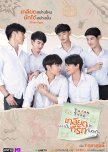
This review may contain spoilers
If I was told, I could either jump on a pool filled with fish or rewatch this again, I would jump.
You just have to shut your brain while watching this. It hurts my mind and personally offended me. The only thing I like here is the chemistry. The story was not it.I'm sure if this happens in real life, they would not even last a month. Tharn literally sexually assaulted a man with trauma of being sexually assaulted. Type was an asshole and I kind of get it but I don't condone any of his behavior.
And what's with the antagonist ending? Am I supposed to feel sympathy for him after what he had done? He literally should be in jail for doing something like that, especially, to someone that look like a minor plus other things he did. And I feel kind of weird with Tar and his brother relationship.
I personally like that Type was able to talk to his friend. I see the chemistry between the characters and I like it especially when Tharn literally kneels and beg to Type. Great plot twist though, at that time I really didn't expect it. I was shocked.
It's kinda hard to rewatch the whole show but I would probably watch some parts of it again. It was good back in pandemic, i guess since the bar in low but rewatching it physically pains me. Some scene is good if you don't know the context, maybe stick to watching Tiktok edits on this one.
Was this review helpful to you?


