
 News


This review may contain spoilers
not bad but not good
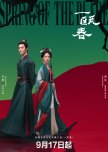
My genuine small review of *The Spring of Blade* is that it was SO good. The first 20 episodes really kept me hooked, and I was genuinely enjoying the chemistry and everything. But idk why, the last 10 episodes were just so-so. It was mostly unnecessary drama and rage-baiting.I’m not offended that they actually gave Qingru’s character a happy ending too. She was spoiled because of her mom, and she wasn’t really the villain. She only hated the FL because her Chunzhi gege liked the FL, and honestly, that whole thing was somehow realistic. But damn, the last 10 episodes were SO draggy. It even made me question what happened to Shen Che and that girl who was with him (I forgot her name 😭). I thought they were going to show some romantic spark between them, but nothing happened. Okay, that’s not really a bad thing tho, but I skipped SO many parts of the last 10 episodes because of how draggy it got. 😭
I’m honestly kinda disappointed because I loved both leads, and XZX is one of my favorites. Bai Shu too — bro has been in SO many dramas from 2025 to 2026. Almost every drama I’ve watched since 2024 somehow has him in it 😭 hardworking fr.
Anyways, everything else was fine. The first 20 episodes were genuinely so good, though. 🫠
Was this review helpful to you?
This review may contain spoilers
The acting in some scenes is terrible
The plot is predictable, the chemistry feels off, and some of the acting is just hard to watch for example ..actor playing Wan is honestly hard to watch... his acting just isn't working for me. The excessive skin smoothing is also distracting, but dmd uses this same filter in almost every series, so idk what to say at this point 💀Was this review helpful to you?
A Weirdly Charming Mix of Comedy, Mystery, Chaos and Some Issue
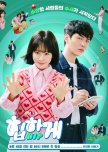
Behind Your Touch is a drama that's hard to put into words. It feels like a comedy, a story, a murder mystery and a small‑town character drama all at once. It sounds like a mix – and honestly it is – but surprisingly it works more often than it does not.Behind Your Touch is strongest when it is funny. The idea itself is a laugh: Bong Ye Bun, an awkward and inexperienced veterinarian suddenly can see a person’s memories by touching their backside. It is such an idea that it could easily become annoying but the drama uses it for real funny moments. Han Ji Min’s timing was especially enjoyable. Her chemistry with Lee Min Ki and Suho made many entertaining moments in the story.
I also liked the setting. Mujin feels like a character of its own with its residents, ridiculous situations and colourful personalities. The supporting characters added a lot. Many of the funniest scenes come from their interactions rather than the main plot. The relationship between Ye Bun and her grandfather is one of the emotional parts of this drama giving her character warmth beyond all the comedy.
Drama keeps me watching with its mystery. What starts as a supernatural comedy slowly turns much darker when the murders begin. I liked the contrast between the comedy in one scene and the seriousness of the murder investigation in the next. Behind Your Touch does a job of making you question the characters and keeps enough mystery about the culprit to maintain interest.
Jang Yeol is another character in Behind Your Touch. His serious impatient personality contrasts nicely with Ye Bun’s nature and their partnership slowly becomes one of the best parts of the drama. Their bickering, misunderstandings and eventual trust make their dynamic a joy to watch. I especially liked how their relationship developed through working rather than following a conventional romance story.
"Why I Rated It 7.5/10."
Behind Your Touch has its problems. My biggest issue is the inconsistency. The jump from comedy to a much darker murder mystery can feel abrupt. There are moments when drama is completely ridiculous followed by scenes of murder, trauma or danger. While this contrast can be interesting it does not always blend smoothly.
The pacing becomes uneven in the half of Behind Your Touch. As the central mystery becomes more important some of the comedy loses its impact. Some of the investigation does not feel as tightly written as it could. There are moments when I felt the story stretched developments instead of moving naturally toward the end.
I also think the supernatural ability could have been used creatively. The concept is probably the unique thing about Behind Your Touch but as the story goes on it sometimes feels like a convenient plot device rather than something fully explored. I wished this series had pushed that idea further.
Still despite these flaws, series remains very entertaining for me. It has a premise, memorable characters, plenty of genuine laughs an interesting mystery and a surprisingly emotional side beneath all the craziness.
Behind Your Touch is not a balanced drama and the mix of comedy and thriller may not work for everyone.. When the balance is right it is extremely fun to watch.
Overall, 7.5 / 10.
Behind Your Touch is an entertaining drama with a fantastic premise, memorable comedy, a fun cast and an intriguing mystery. It loses some points because of its pacing and sometimes awkward shift, between comedy and darker material but overall it was a unique experience that I enjoyed considerably more than I expected.
Was this review helpful to you?
Blades that made Spring possible
I expected a regular revenge drama.Instead, "Spring of the Blade" turned out to be a story about "weeding out the remnants of an old, corrupt order and making way for something new"—wrapped in a character-driven suspense drama that gradually unfolds like a game of cards: some cards revealed, most hidden, every character holding their own hand, hiding their motives and bluffing about what they really know.
The basic plot is familiar enough: an honest official is schemed against by corrupt officials, his clan is exterminated; a woman is killed in the name of family honour; and the escaped children grow up carrying the consequences and seeking revenge.
Sounds familiar?!!What really sets this drama apart is the storytelling.
The drama constantly gives you just enough information to form a theory, while leaving enough unsaid to make you question it. Cryptic conversations, hidden motives, characters who rarely reveal everything they know, seemingly insignificant details that turn out to matter...almost every episode gave me something to chew on.
And what I particularly appreciated was that the mystery wasn't mysterious just for the sake of being mysterious. Everything eventually had an explanation.The major secrets were revealed, the loose ends were tied up, and the revelations remained logically consistent with the world the drama had built.
That made the rewatch especially satisfying. I watched all episodes and then went back and rewatched them. 😂 Knowing what I knew, so many earlier conversations and little details took on a different meaning.
The characters are another major strength. They are complex, layered, well-written and rarely as straightforward as they first appear.
Xie Shu is a particularly memorable villain—not because he looks or behaves like a stereotypical villain, but because he can appear perfectly reasonable while manipulating the people around him. The writing and the performance work beautifully together, especially through the subtle expressions and microexpressions. This is the kind of villain you can actually imagine encountering in real life.
The performances overall were powerful, with everyone bringing something to their complicated roles.
And then there is Xu Kai...a dream come true on screen.❤️🔥
The man had surprisingly little screen time and still managed to rule every scene he appeared in. ❤️🔥😍 Shen Run was such a complex character, often carrying several emotions at the same time, and Xu Kai portrayed all those layers beautifully. His expressions, microexpressions, the way his eyes conveyed what he couldn't say, his voice, the tonal shifts, his body language and sheer screen presence...and that voice ❤️🔥❤️🔥 just added another layer to it all. Everything came together so naturally that you could actually feel what was going on beneath the surface.
He somehow made every appearance impossible to look away from❤️🔥
FL, on the other hand, is where I felt the biggest disconnect. QY is actually a very well-written and genuinely complex character. I could understand her motivations, her guarded nature, her grief, her anger and the contradictions in her choices. But I didn't always feel all those layers coming through in Zhou Ye's performance as convincingly as I would have liked. In a drama where so many actors carried their complicated characters so strongly, ZY's inability to portray the role became particularly noticeable.
My other major criticism is the Shen family storyline. There are essentially two cases unfolding alongside each other, and while Xie Shu's side is fleshed out considerably, Shen Run's family history feels much thinner. I wanted more of that story—the relationship between his father and Xie Shu, what actually happened back then, and the events that shaped Shen Run himself.
The OST and BGM were another quiet strength. They were appropriate to the scenes and several pieces stayed memorable, amd many times carrying hidden subtexts.
And visually, this drama absolutely knew how to make an impact. Some episodes delivered grand, powerful sequences; others gave us pure shock value; and then there were the quieter moments where one cryptic line or tiny detail had me reaching for my imaginary detective board again😂 .
Honestly, almost every episode had something memorable—whether it was the visuals, the performances, the clues or the dialogue.
So yes, the basic revenge framework may sound familiar.
But "Spring of the Blade" is much more than its premise.
It is suspenseful without being incoherent, complicated without becoming incomprehensible, and romantic without making the characters' entire existence revolve around romance.
Romance for the heart❤️🔥
Mystery for the brain🔥
Schemes for the detective in me😂
"Spring of the Blade" gave me the whole package. It is a great example of how a seemingly familiar plot can be elevated through coherent storytelling, complex and well-written characters, and powerful performances.
Was this review helpful to you?
A Winter Sun Wakes the Wind in Spring Hills' Dream
2 people found this review helpful
idk how to move on from thiss masterpiece T_T
BEST BL DRAMA IN 2026 IMO,i really lovee it like everything about this drama is so beautiful. im tired of those toxic top in Chinese bl (no hatee just a lil bit tired) but now we have Xu Changyang, this man is like a green forest lovee him sm T_T if you say this drama is boring or whatever then there is something wrong with u bcz this drama is a MASTERPIECE. thank you Zelia for making this drama and thank you for choosing Liu Jingyu and Kuma bcz they really match the character i love them 🥹🥹🫶🏻🫶🏻🫶🏻🫶🏻Was this review helpful to you?
Gorgeous Chemistry, Stunning Visuals, But a Slow and Uneven Story
Amidst a Snowstorm of Love is one of those dramas that is wonderfully beautiful to look at, but unfortunately, the story doesn't always have enough substance to go with its beautiful appearance.Without a doubt, the greatest strength of this drama is the romance between Lin Yi Yang and Yin Guo; their first meeting, taking place in the snowy setting of Finland, immediately establishes the atmosphere for the entire drama. The snow, the quiet music, the warm cafés, the beautiful locations, and particularly the way in which Lin Yi Yang looks at Yin Guo all contribute to making their relationship seem very dreamy and as if it were a winter romance film.
I actually preferred the little romantic scenes to the major ones as well; some of the most enjoyable aspects of the drama were Lin Yi Yang looking after Yin Guo, taking notice of the small details about her, supporting her career, the conversations they had, the awkwardness as they became closer, and the quiet times when they just looked at each other. Wu Lei and Zhao Jin Mai had a very natural chemistry and on several occasions their expressions conveyed more than what they actually said.
I also liked the part of the story concerning billiards. Even though I am not very interested in the game, the drama succeeded in making it appear elegant and fascinating. Lin Yi Yang's connection with billiards and his choice to go back into competition added a bit more depth to his character, and it was also pleasant to see his friends and the way they supported him. Certain of the emotional scenes involving his friends, in particular the ones when they realise that he is finally returning to something he once loved, were surprisingly moving.
This is also the point at which my greatest issue with the drama lies.
The pace is simply too slow for me. Although a slow-burn romance can be excellent if each episode contributes something significant to the characters or the story, in this case there were a number of scenes in which it seemed that the drama was merely prolonging moments that could have been considerably shorter. The romance does progress, but the general plot at times gives the impression that it is not moving forward.
I also thought that the drama did not make adequate use of its potential, since Lin Yi Yang's past, his connection with billiards, his retirement, and his return to competition could have generated a great deal of emotional and dramatic tension. Rather than that, most of the serious issues are settled in a rather easy manner, which is why the drama at times comes across more like a series of lovely romantic scenes than as a fully developed narrative.
For me another problem was that once a certain point had been reached, the relationship became a bit repetitive. There are plenty of nice glances, hugs, kisses, dates and sweet moments—which are pleasant—but I wished for more substantial conversations and a greater deal of character growth. I wanted to get to know Yin Guo and Lin Yi Yang as individuals just as much as I enjoyed seeing them as a couple.
It includes no unnecessary toxic love triangles or frequent misunderstandings, and Lin Yi Yang is one of the more caring and supportive male leads in today's C-dramas; his quiet confidence and the fact that he supports Yin Guo without attempting to control her were truly refreshing.
Even so, beautiful cinematography and excellent chemistry can only take a drama so far. Although this drama offered me many scenes that I enjoyed, it didn't provide me with a story that I could love just as much.
Overall, 6.5/10.
Although it has a beautiful romance, stunning winter scenery, and a nice main pair, it is too slow, not sufficiently plot-driven, and lacks the necessary emotional or dramatic impact for me to give it a higher rating. I did enjoy the journey, but I don't believe that the journey turned out as memorable as the visuals and the chemistry had led me to expect.
Was this review helpful to you?
This review may contain spoilers
There's a Love Story Somewhere Between Trauma, Beautiful Locations, and a Killer Zombie
I was ready for a modern romcom, and Can This Love Be Translated? gave a psychological twist to the genre which I enjoyed. Cha Mu Hui (played by Go Young Jung) was driven by trauma to succeed, but she was hindered by her lack of self esteem. A devastating accident put her in a coma, and when she woke up her first movie had gone viral and rocketed her to fame. Ju Ho Jin (played by Kim Seon Ho) was an interpreter whose rigid rules and private angst had trapped him in a suffocating existence for years.The Good:
• After Cha Mu Hui's coma, she began having hallucinations involving her role as a killer zombie, Do Ra Mi. The zombie was relentlessly hateful, critical, and demoralizing. Mu Hui was understandably frightened and alarmed with each appearance. Do Ra Mi was outgoing, fearless, and dismissive of Mu Hui's inability to cope. Eventually, the hallucinations morphed into Do Ra Mi taking over Mu Hui's body for longer periods of time. Do Ra Mi was the best part of the show as the most interesting and original character. It was rewarding to watch her styling and attitude slowly change as Cha Mu Hui began to face some hard truths about her life with Ho Jin's support. Now, I want to watch a drama starring Do Ra Mi!
• I enjoyed the different languages.
• The locations were stunning: Japan, Canada (magnificent mountains and dramatic landscapes), Italy, and South Korea.
• Hiro, the Japanese actor, cracked me up by referring to Mu Hui as "Zombie" as if that were her name.
The Bad:
• This could have been a fun romcom with Do Ra Mi, but it ended up being light on comedy and romance and veered into a melodrama with serious topics like murder, mental illness, and child abandonment, etc. Do Ra Mi was fun, but dissociative disorders aren't. It didn't feel like the right ratio of romcom to angst.
• I think it was at a Farmer's Market in Canada where a stand featured pineapples. Don't think pineapple growing is a thing in Canada!
• For being a drama about languages and translations, it was frustrating that only Korean was subtitled. I wanted to know what the Italians and Japanese were saying, too.
On a less serious note, Mu Hui fell off a several-story building and was in a coma for six months. My devoted drama watching has taught me that Koreans and Chinese fall off terribly tall cliffs and walk away with just a scratch or two. This has been well documented.
I've added a half star for Do Ra Mi, that crazy zombie killer.
Was this review helpful to you?

This review may contain spoilers
Typical recycled friends to lovers story
It's those typical "ruin the friendship or regret it" type of story—nothing spectacular but unfortunately nothing new as well. I think the only other thing that stood out is that the other guy has some health problems after drinking (which didn't really went anywhere). It's like he just had that, drinking is not good for him, and that's it.But you know what, let's give credit where credit is due, these main leads are actually ACTING and not just delivering their lines. Their cute moments are actually cute because they make it look like it is. For me, that should still account for something.
Overall, I'd give this one a chance but probably ONLY when you are in-between series and just really want a change of pace.
Was this review helpful to you?

This review may contain spoilers
Jesus almost got me / I don't know how many prayers he overheard
“Love Letter” belongs to a particularly significant period in the evolution of the Dramaverse – the era of the drama seasons: it was released at the same time as “Summer Scent”, shortly after “Winter Sonata” and alongside, amongst others, similar dramas such as “Stairway to Heaven”. In many ways, everything seems to point to the great Korean romantic melodramas of the early 2000s: intense emotions, fate, sacrifice, past traumas and a classic love triangle destined to further complicate the protagonists’ lives. Yet “Love Letter” takes a less predictable path than its structure might suggest, introducing a surprisingly significant religious element into the melodrama, which transforms the usual romantic rivalry into a far more complex conflict between emotion, vocation, guilt and sacrifice.The religious element, in fact, is not merely a decorative feature or a device used simply to further complicate the love triangle: it is one of the cornerstones around which the entire story is built. Faith plays a part in the characters’ backgrounds, influences their choices, fuels their feelings of guilt and, above all, introduces into the usual romantic conflict a question that romantic melodrama does not typically pose in these terms: what happens when love for another person clashes with a vocation that is considered superior to any earthly bond?
This gives rise to a tension that runs through virtually the entire drama, because none of the main characters is simply called upon to choose whom to love: each must come to terms with what they believe to be right, with what they desire, and with what they feel they must sacrifice.
Here, the figure of Andrea becomes central. His personal story initially appears to follow the most classic of providential paths: an oppressed child, a lost family, an uncle who is a priest and who appears almost as a saviour-figure, and a new life within the religious community. Andrea therefore grows up linking his own salvation to his faith and, above all, to the conviction that he has been given a sort of second chance.
When, years later, love for Eun-ha enters his life, the conflict is not merely about his desire to be with the woman he loves: it means calling into question the very foundation upon which he has built his identity.
Jung Yoo-jung’s arrival at college completes the love triangle, but not just that one: an almost brotherly bond immediately develops between him and Andrea, though this is destined to fray when Yoo-jung falls in love with Eun-ha and begins to see his friend as a rival. From that moment on, ‘Love Letter’ follows a fairly classic trajectory for Korean melodramas of the era, characterised by jealousy, misunderstandings and family revelations that constantly shift the balance of power.
The discovery of their respective identities and the links between their families introduces a new rift, whilst Yoo-jung’s jealousy compounds the pain of a past that suddenly takes on a different meaning. Even Andrea’s decision to take her vows, rather than resolving the conflict, paradoxically ends up fuelling it: the love remains there, unresolved, and the letter that Yoo-jung hides from Eun-ha becomes one of the many small gestures through which the protagonists are gradually deprived of any choice.
The love triangle thus inevitably begins to unravel, with Eun-ha increasingly torn between the two men and Yoo-jung, in her attempt to win what she desires, repeatedly crossing the line between love and possession. It is a dynamic familiar to the melodramas of that era, but here it works because it ties in with the story’s other two main themes: family wounds and the conflict between emotion and vocation.
It is, however, through Eun-ha that the love triangle ultimately takes on a different perspective. Gradually worn down by the rivalry between the two men, torn between her love for Andrea and Yoo-jung’s persistent marriage proposals, she finds herself facing a far more dramatic conflict, which the story reveals only gradually: the discovery of a serious heart condition, accompanied by uncertainty about how long she has left to live. From this point on, the melodrama shifts significantly in tone, as the usual romantic indecision gives way to the anguish of a future that might suddenly cease to exist.
His gradual isolation, his hesitations and apparent second thoughts thus take on a different meaning, whilst his sense of guilt towards Andrea ends up fuelling the conviction that his illness may be a punishment for having distanced him from God.
The conflict between feelings and vocation thus takes on a more truly existential dimension, in which the problem is no longer merely a matter of choosing how to live out one’s love, but of facing the very possibility of losing it forever.
Eun-ha’s tragedy reverberates through the two men, who are already tormented by increasingly fragile certainties: Andrea gradually loses his footing between his vocation and love, whilst Yoo-jung allows himself to be consumed by resentment. Both thus seem to lose touch with who they once were, just as Eun-ha’s illness forces the love triangle into a completely new perspective.
Just when the love triangle seems irreparably broken, it is the illness itself that ultimately mends, at least temporarily, what the romantic conflict had torn apart. Faced with the very real possibility of losing Eun-ha, rivalries and grudges are pushed into the background: Yoo-jung returns, first and foremost, to being the doctor who can try to save her, whilst Andrea must finally face up to the possibility of losing her, no longer able to put off making her own choices. The very person who had divided them thus becomes the force that compels them to find their way back to one another.
It is no coincidence, after all, that almost all the main characters are connected to the medical profession: in “Love Letter”, faith and science are not set against one another, but curiously end up converging precisely where the protagonists’ lives are most at risk.
It is perhaps here that the true ‘miracle’ of “Love Letter” takes place: not so much in Eun-ha’s fate, but in the mending of the three protagonists’ feelings. Andrea finally realises that his calling need not necessarily overshadow his love for Eun-ha, whilst she gradually stops viewing that love as a sin to be atoned for; that moment on the beach, which in a conventional melodrama would probably mark the beginning of their love story, instead becomes its definitive form: a moment of mutual acknowledgement that does not open up a new path, but clarifies the one they have both now chosen.
What also holds together a narrative structure so rich in twists, second thoughts and repetitions is the excellent work of the cast, who are called upon to portray characters that could easily have lost credibility under the very weight of the melodrama.
Jo Hyun-jae, Soo Ae and Ji Jin-hee, however, manage to keep the various nuances of their characters consistently recognisable, accompanying their transformations without reducing them to the usual roles of a love triangle. Andrea, Eun-ha and Yoo-jung thus remain three deeply human figures, each with their own contradictions and weaknesses, and it is probably also thanks to this solid acting that “Love Letter” manages to see it through to the end without losing the delicate balance between love, faith, guilt and sacrifice.
The ending – which, in a story so full of twists and turns, could easily have undermined everything that had been built up previously – turns out, instead, to be perfectly consistent with the characters’ journeys. It does not seek spectacular solutions nor does it resort to a final twist to astonish the viewer: it simply brings to a conclusion what the sixteen episodes had set up, allowing love, vocation and sacrifice to finally find a place where they can coexist. It is a conclusion that does not shy away from melodrama, but brings it to its natural conclusion, and is probably the best outcome the drama could have hoped for.
That old fairy tale from Andrea’s childhood inevitably springs to mind – the one about the rope that came down from the sky to save the child from his loneliness. That rope, which seemed merely a symbol of hope, ends up running symbolically through the entire story: first, someone reaches out to Andrea; then it is Andrea who reaches out to someone else. It’s comforting to think that the ultimate meaning of ‘Love Letter’ is indeed this: not that love must necessarily triumph over faith, or faith over love, but that both can take on a different form without ceasing to be what they are.
7 ½
Was this review helpful to you?
Una obra de arte
Honestamente, perdí la cuenta de cuantas veces he visto The Untamed desde la primera vez que lo vi. Lo vi por primera vez en 2020 y desde entonces le he hecho rewatch tantas veces, es de las mejores series que he visto la verdad, la trama, la actuación, los personajes, es HERMOSO y cada vez que lo veo me da tanto sentimiento en especial ciertas escenas 😭💔 Jamás podré superar esta serie tan grandiosa y siempre siempre la recomendaré, TIENEN QUE VERLA POR FAVOR es una joya y aunque al principio puede que piensen que son muchos episodios, cuando la hayan terminado de ver VAN A QUERER MAS EPISODIOS 😭 50 no son suficientes, amo tanto esta obra de arte y la podría ver mil veces! Necesito más de ellos 🥹Was this review helpful to you?
This review may contain spoilers
If You're Faint of Heart, Move On: A passionate and unreserved ode to a tragic masterpiece
[Italian Version Below / Versione Italiana in Basso]ENG
Written with impeccable rigor and directed with the grandeur of a cinematic blockbuster, Mr. Sunshine is a fierce, breathtaking eulogy. Its true emotional power stems from its undeniable historical roots: while the personal trajectories are dramatized, the story of the Righteous Army is devastatingly real. It is the chronicle of a forgotten people who fought to their last breath against Japanese annexation, and knowing that this resistance actually happened makes the viewing experience profoundly, painfully heavy.
~ The Premise ~
Set in Joseon at the turn of the 20th century — a fading kingdom under the predatory gaze of foreign imperial powers — the narrative weaves the fates of five individuals trapped between personal desire and historical catastrophe.
~ A Monumental, Handcrafted Production ~
In an era dominated by cheap digital effects, Mr. Sunshine stands as a masterclass in cinematic craftsmanship brought to television. The obsessive attention to period detail, the majestic cinematography, and the decision to forgo invasive CGI in favor of meticulously constructed real sets — now preserved as a visitable museum — give the series a rare tactile authenticity. Every frame, from the ambient lantern light to the dust on the road, breathes the air of grand cinema.
~ The Roof Scene: Recognition Without Words ~
While contemporary shows rely on artificial contrivances to manufacture "chemistry," Mr. Sunshine builds its emotional core through pure visual poetry. The rooftop encounter between Eugene Choi and Go Ae-sin — two masked snipers in the dark, enveloped in the smell of gunpowder — is a masterclass in subtext and tension. Without uttering a single line of dialogue, their eyes lock, recognizing each other's soul and tying their tragic fates together before ever learning each other's names. It is romance stripped of fluff, elevated to historical destiny.
~ Anatomy of an Unforgiving Era ~
Go Ae-sin (Kim Tae-ri): The absolute antithesis of the passive heroine. She rejects the gilded cage of nobility not out of self-absorption, but to wield a rifle, becoming the fierce pulse of a nation refusing to die quietly.
Eugene Choi (Lee Byung-hun): The outsider without a country, whose internal conflict between personal vengeance and tragic devotion forms the show’s emotional bedrock.
The Antagonistic Triad: Gu Dong-mae, Kudo Hina, and Kim Hui-seong drive the narrative with extraordinary psychological depth. None exist as mere structural foils; each carries the weight of an era that leaves no one unscathed.
~ The Final Verdict ~
This is not passive background noise. It is a visual and narrative powerhouse engineered to perform open-heart emotional surgery — and it demands that you respect every single second of that heartbreak.
Now go enjoy it for yourselves. And if you're faint of heart... move on.
Recommended for: Lovers of epic historical blockbusters, fans of tragic yet deeply dignified romances, viewers who appreciate exquisite cinematic craftsmanship, and anyone ready for an unforgettable emotional journey.
---
ITA
Se siete deboli di cuore, tirate dritto: Un'ode passionale e senza riserve a un capolavoro tragico
Scritto con un rigore impeccabile e diretto con la magnificenza di un kolossal cinematografico, Mr. Sunshine è un'orazione funebre feroce e mozzafiato. Il suo vero potere emotivo scaturisce dalle sue innegabili radici storiche: sebbene le traiettorie personali siano drammatizzate, la storia dell'Esercito della Giustizia (Righteous Army) è devastantemente reale. È la cronaca di un popolo dimenticato che ha combattuto fino all'ultimo respiro contro l'annessione giapponese, e sapere che questa resistenza è avvenuta davvero rende l'esperienza di visione profondamente e dolorosamente pesante.
~ La Premessa ~
Ambientata nel Joseon a cavallo tra il XIX e il XX secolo — un regno in declino sotto lo sguardo predatorio delle potenze imperiali straniere — la narrazione intreccia i destini di cinque individui intrappolati tra il desiderio personale e la catastrofe storica.
~ Una Produzione Monumentale e Artigianale ~
In un'epoca dominata da effetti digitali di poco conto, Mr. Sunshine si erge a lezione magistrale di artigianato cinematografico prestato alla televisione. L'attenzione ossessiva per i dettagli d'epoca, la maestosa fotografia e la scelta di rinunciare a una CGI invasiva a favore di set reali finemente costruiti — oggi conservati come museo visitabile — donano alla serie una rara autenticità tattile. Ogni fotogramma, dalla luce soffusa delle lanterne alla polvere sulla strada, respira l'aria del grande cinema.
~ La Scena del Tetto: Riconoscersi Senza Parole ~
Mentre le serie contemporanee si affidano ad espedienti artificiali per fabbricare la "chimica", Mr. Sunshine costruisce il suo cuore emotivo attraverso una pura poesia visiva. L'incontro sul tetto tra Eugene Choi e Go Ae-sin — due cecchini mascherati nel buio, avvolti dall'odore di polvere da sparo — è una lezione magistrale di sottotesto e tensione. Senza pronunciare una singola linea di dialogo, i loro sguardi si incrociano, riconoscendo l'uno l'anima dell'altra e legando i loro tragici destini ancora prima di scoprire i rispettivi nomi. È un romanticismo spogliato di ogni orpello, elevato a destino storico.
~ Anatomia di un'Epoca Spietata ~
Go Ae-sin (Kim Tae-ri): L'antitesi assoluta dell'eroina passiva. Rifiuta la gabbia dorata della nobiltà non per egocentrismo, ma per imbracciare un fucile, diventando il battito feroce di una nazione che si rifiuta di morire in silenzio.
Eugene Choi (Lee Byung-hun): L'emarginato senza patria, il cui conflitto interiore tra la vendetta personale e una tragica devozione costituisce la spina dorsale emotiva dello show.
La Triade Antagonista: Gu Dong-mae, Kudo Hina e Kim Hui-seong trascinano la narrazione con una profondità psicologica straordinaria. Nessuno di loro esiste come mero elemento di contrasto strutturale; ognuno porta su di sé il peso di un'epoca che non lascia nessuno indenne.
~ Il Giudizio Finale ~
Questo non è un sottofondo da guardare passivamente. È un gigante visivo e narrativo progettato per eseguire un'operazione a cuore aperto sulle vostre emozioni — e pretende che rispettiate ogni singolo secondo di quel dolore.
Ora andate a godervelo. E se siete deboli di cuore... tirate dritto.
Consigliato a: Gli amanti dei kolossal storici epici, chi cerca una storia d'amore tragica ma di immensa dignità, gli estimatori del grande artigianato cinematografico e chiunque sia pronto per un impatto emotivo indelebile.
Was this review helpful to you?
Mi BL favorito
Yo hace mucho que vi este BL, literalmente cuando estaba en emisión y desde entonces SIEMPRE ha sido mi bl favorito. Han habido muchos más que me encantan pero my beautiful man es de los mejores que he visto porque la actuación es perfecta, la trama es perfecta, todo es perfecto, no saben como me encantaría volver a ver este BL como la primera vez que lo vi 😭 Me hicieron sentir tantas cosas, en serio que me encantó cada capítulo y también de la segunda temporada y de la película, yo daría mucho porque ellos hicieran otra serie juntos 🥺 La verdad es que se los super recomiendo, no a todos les gusta pero entre mas lo ves mas entiendes porque a muchas personas nos gusta y la verdad es que vale totalmente la pena 💖 Lo he visto varias veces ya, este BL junto con the untamed y revenged love son LOS BLS que podría ver muchas veces sin aburrirme.Was this review helpful to you?
This review may contain spoilers
good story poorly executed
i think its a good story slightly poorly executed as if first few episodes did not know how the story would build the friend who is introduced makes absolutely no sense he does not question who is the duplicate of the two . the friends meetup when they looked the same how did the rat know who real moon jae was the officer that is . Noja had no role what so ever! he was only used by rat to probably kill moon jae when at the same time he did not wanted him to actually kill. Noja end up backing moon jae for what , money? no backstory for noja with the rat not much still gets tangled .i do not write reviews but this story was so badly executed i had to.
Was this review helpful to you?
Was this review helpful to you?

Nv Ban Nan Zhuang Wo Bai Wan Le Shan Hun Zong Cai
0 people found this review helpful
? HIS WIFE, HIS MALE ASSISTANT—AND HIS COMPLETE IDENTITY CRISIS
OVERALL IMPRESSION🌟This familiar unknown-spouse storyline received a wonderfully fresh twist through cross-dressing, workplace romance and an ML who became convinced he was falling for another man. The escalating misunderstandings were ridiculous in the best possible way, while Shu Tong and Zhong Xi’s natural chemistry made the romance surprisingly convincing.
WHAT I LIKED💖
• Zhong Xi’s disguise was among the most convincing I have seen in a short drama. She changed her mannerisms, behaviour and overall presence rather than merely putting on a suit. She was beautiful as the FL and genuinely handsome as An Qi Ming!
• I loved that the FL was technically competing with herself for her husband’s affection. Every jealous misunderstanding became funnier because the ML had no idea that his wife and irresistible assistant were the same person.
• Shu Tong was excellent as the sharp-tongued, possessive and increasingly bewildered ML. His attempts to explain away his attraction as professional concern were priceless.
• The central irony was perfect: the ML wanted to divorce the wife he barely knew because they lacked an emotional connection, yet unknowingly fell for her once he finally spent meaningful time with her.
• The leads’ chemistry developed naturally through working together, teasing and growing mutual respect. Their relationship felt playful without becoming childish.
• I appreciated the drama’s handling of consent. When either lead was drugged, the sober person refused to take advantage, avoiding one of C-short land’s most unpleasant clichés.
• The ML did not blindly accept the scheming woman’s claims and was capable of answering back instead of allowing her to manipulate every situation.
• The FL’s brother and the ML’s childhood friend added their own amusing chemistry and strengthened the comedy without overshadowing the leads.
WHAT I DISLIKED⚠️
• The misunderstanding occupied a considerable portion of the drama. I found it entertaining, although viewers who dislike prolonged secret identities may become impatient.
• I would have preferred more kissing and romantic scenes once the leads’ feelings became clear. Their chemistry was strong enough to support considerably more romance.
• Although the disguise was unusually successful, certain physical details still required the usual suspension of disbelief.
PRODUCTION AND PERFORMANCES🎭
• Shu Tong once again demonstrated why he is such a versatile and experienced actor. Whether portraying a scumbag, romantic lead or confused husband questioning everything he knew about himself, his performance remained smooth and natural.
• Zhong Xi’s expressive comedy carried much of the drama. Her timing, charisma and ability to create two distinct identities made the familiar script feel new.
• The direction and supporting performances elevated an old premise through clever comic situations, lively pacing and well-handled emotional turns.
FINAL THOUGHTS💭
This was a pleasant, clean and hilarious romantic comedy with no abusive ML and no exhausting revenge plot overwhelming the relationship. The twists, misunderstandings and identity confusion produced plenty of laughter, while the leads’ effortless chemistry gave the story genuine sweetness. Shu Tong and Zhong Xi remain a classic pairing, and their performances transformed a familiar trope into something memorable. Highly recommended—and I would happily watch it again!
Was this review helpful to you?


