

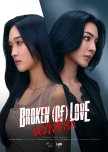
Highly recommended for sapphic lovers/and open minded human beings
Broken of Love (also known as Huachai Cham Rak) is an intense Thai Girls' Love (GL) revenge drama that has captured attention for its high-stakes emotional conflict and cinematic quality. Produced by Fabel Entertainment (founded by Faye Peraya herself), it marks a significant milestone in her career.Arisa is a woman fueled by a singular, cold purpose: destroying the powerful business tycoon responsible for her mother’s death. She infiltrates the enemy's world with surgical precision, only to encounter an unforeseen complication—Lalin, the tycoon’s daughter. As Arisa draws Lalin into her web of manipulation, she finds the lines between her "target" and her "heart" beginning to blur. The story isn't just about falling in love; it’s about the agony of realizing the person who heals your wounds is the child of the person who gave them to you.
Cast Performance
- Faye Peraya (as Arisa): Known for her commanding screen presence, Faye delivers a masterclass in "restrained intensity." She portrays Arisa with a sharp, icy exterior that occasionally cracks to reveal deep-seated trauma. Her ability to convey complex emotions through just a look—shifting from vengeful to vulnerable—is the anchor of the series.
- Atom Pariya (as Lalin): Atom holds her own remarkably well against Faye’s veteran energy. She brings a natural sincerity and "deliberate" charm to Lalin, making her character more than just a victim of the plot. She plays Lalin as a woman who is observant and bold, refusing to be a passive player in Arisa’s game.
- Supporting Cast: Nina Yarinda (as the antagonist Wei Ling) provides a formidable presence that makes the revenge plot feel genuinely dangerous, while the rest of the ensemble helps build a world that feels immersive rather than just a backdrop for the romance.
Why You Should Watch It
1. High-Quality Production: Unlike many web-based series, Broken of Love feels like a feature film. The cinematography, horizontal aspect ratio, and moody color grading give it an expensive, "big screen" atmosphere.
2. The "Enemies-to-Lovers" Twist: It takes the popular trope and adds a dark, psychological layer. The conflict isn't just a simple misunderstanding; it’s a moral dilemma that keeps you questioning if a happy ending is even possible.
3. The Faye-Atom Chemistry: Their dynamic is built on "yearning and tension." The series prioritizes emotional payoff and storytelling, making the romantic moments feel earned and deeply impactful.
If you appreciate a story where love is a battlefield and the characters are as flawed as they are beautiful, this is a series you can't miss.
Was this review helpful to you?

This review may contain spoilers
While I understand the disappointment from BL fans who expected more from this series, I think many people misunderstood what the story was trying to be. I do not think Soulmates is perfect, and I will talk about the issues I had with it later, but I also think it has many positives that are often overlooked.I do not think the director or writer were scared of making this a BL. Instead, I think the fact that the relationship was never made explicitly romantic was intentional and part of what made their connection unique. The series presents Ryo and Johan’s relationship as something that exists between friendship and romance rather than fully fitting into either category.
One of the reasons I believe this is the storyline between Ryo and his friend. The series did not avoid topics like LGBTQ identity or homophobia, which it easily could have done if the creators were truly afraid of making it queer. To me, that subplot shows that the writers were aware of the audience’s expectations and intentionally chose to keep Ryo and Johan’s relationship undefined.
Their bond was not written as a typical friendship or a conventional romance, but as something more personal and difficult to label. That is why I think the idea of them being soulmates fits the story better than forcing their relationship into a specific category.
I will continue this review in the future (my issues are with the mix in the mood and how the storyline felt at times incomplete and messy)(i loved the creative view, the relationship and the acting)
Was this review helpful to you?
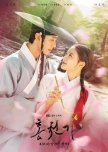
This review may contain spoilers
A Great Cast Doesn’t Translate to a Good Drama
I decided to watch Lovers of the Red Sky because it stars Kim Yoo-jung, Ahn Hyo-seop, and Gong Myung. Having such high hopes for this good lineup, I was ultimately left disappointed. While the drama isn't entirely bad, it certainly isn’t great either.The Story: We meet Hong Cheon-gi (Kim Yoo-jung), a blind girl whose dad is a famous painter, and Ha Ram (Ahn Hyo-seop), a boy who has the "gift of water." In the first two episodes, a massive supernatural event happens, during which Cheon-gi gets her sight back and Ha Ram loses his. They get separated and don't meet again until they're adults. By then, Cheon-gi is a brilliant painter and Ha Ram is a blind royal astrologer who can read the stars. They then become entangled, and a love story starts. It gets complicated by different factors, including when Grand Prince Yangmyeong also takes an interest in Hong Cheon-gi.
Too Slow and Too Chaotic.
The biggest issue is that the story never actually hooks you. The pacing is incredibly slow, and honestly, some parts are just plain boring. I found myself skipping through a lot of it. Take the whole painting contest in episodes 5 and 6—I get that Cheon-gi winning was important for the plot, but did it really need that much screen time?
The plot picks up slightly in the middle, but it still fails to maintain momentum. I am usually a classic binge-watcher, so the fact that I had to take a prolonged break from this series speaks volumes.
Instead of focusing on a solid, well-paced conflict, the writers chose a chaotic need for twists: the evil spirit requires a magic ring to be contained, the ring then has to be broken, the restoration suddenly requires two divine painters instead of one, and they even throw in a Hwacha (a green-eyed goblin).
Flat Main Characters
Ahn Hyo-seop’s performance here doesn't compare to his work in other dramas. I’ve seen him thrive in Dr. Romantic 2 and Abyss, as well as his subsequent hits like Business Proposal and K-pop Demon Hunters. His acting in those roles was far superior. Perhaps the role of Ha Ram was too restrictive for his talent, as playing a reserved, blind character who must constantly mask his intentions is no easy feat. He is supposed to be driven by a deep desire for revenge for the past slaughter of his family, but I just didn't feel that burning hatred or drive from him at all.
Plus, his character's logic makes zero sense. He lives a double life as Ilwolseong, an elite information broker who is supposed to know everything. Yet, despite having 20 years to look into the tragedy of his childhood, he somehow never found out that the king's portrait burned, that an evil spirit got loose, or that his own dad had a ring to control it. How did an omniscient information broker miss that?
The show also breaks its own rules by the end. We're told they can't touch because it triggers the evil spirit. But right at the end—when he's supposed to be losing control of the spirit—he holds her hand perfectly fine to give her the ring. Then, literally five minutes later, the spirit randomly flies out just because he's stroking her hair.
Kim Yoo-jung is also underutilized here. She was amazing in My Demon and Dear X, so we know she can act, but her script here was just weird. She says "Is that true?" a ridiculous number of times. Her character also suffers from emotional whiplash; one minute she’s incredibly bold, and the next she’s acting like a shameful, apologetic little lamb when things go wrong. She goes from fiercely determined to crying in deep despair at the drop of a hat.
Lack of Chemistry
Having witnessed Kim Yoo-jung's electric chemistry with Song Kang in My Demon, her dynamic with Ahn Hyo-seop feels incredibly limited and flat. Furthermore, Ahn Hyo-seop had much better chemistry with his co-star in Business Proposal than he does in this drama.
The Supporting Cast
Gong Myung plays Grand Prince Yangmyeong, who starts off as a free-spirited, gentle prince. I'm actually watching his new 2026 drama Filing for Love right now, and he is so much better in that. In this role, however, he felt totally unimpressive and had the most meaningless lines. It got even worse when he started liking Cheon-gi; he turned into an annoying, possessive guy who treated her like a prize to be won.
As for the villains, I ended up skipping almost all of their scenes. They didn't bring anything to the plot other than constantly repeating, "I want the evil spirit for myself." The evil Royal Shaman, in particular, annoyed me from day one.
The Saving Graces
The true highlights of the drama belong to the minor supporting cast. Jo Ye-rin, who played the Tiger Goddess (Ho Ryeong), and Cheon-gi’s two best friends (played by Hong Jin-ki and Hong Kyung) gave highly convincing, good performances.
The absolute cutest part of the entire show is the final episode, seeing the main leads genuinely happy while interacting with their on-screen children. They looked so natural that I'm guessing both actors just really love kids in real life. It was a sweet note to end on, but definitely not enough to save a messy, chaotic script!
Was this review helpful to you?
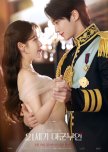
Could've been a movie instead.
ML: BWSFL: IU
FL2: Gong Seung Yeon
MS: Yoo Soo Bin
FS: Lee Yeon
We learn early that the King treats the ML as if he's nothing or at the very least less than. This makes the rest of the writing for him, weird. He defies the Queen Mother (FL2) but is still written as he's less than. So he's loud but quiet, it makes little sense. The MLs acting is not bad but not good. he's boring, he's not funny, not charming. I get his only expression is supposed to be stoic because of how his father raised him but besides his looks, there's little reason for the FL to be interested. (they could've done more to show us why he's trying to not exist but be seen by the Queen Mother).
The FL is born out of wedlock and is not considered noble. So her story is she has to scratch and claw her way to the top. It's implied that she's intelligent and fierce, which they neglect to use in any of the scenes or episodes.....what a waste. Her acting was good but not great.
FL2 her story is explained through a sentence or 2 from the ML. She seems to have an interest in the ML but the writers missed and never delve into it. Another shame. (Her acting SAVED this show for me, otherwise it was a snooze fest). Best acting in the series.
The MS/FS we get to see them and their struggles nearly every episode. Honestly they have more chemistry than the ML/FL. They also kept me intrigued when the ML tried to put the audience to sleep with his monotone voice and bland acting.
This could've been a movie instead of 12 boring episodes or if they wanted, they could've made it 16 episodes and given us more story and what happened between the ML and FL2...?? They could've showed us how the FL became fierce and intelligent.
Was this review helpful to you?

This could have been absolutely fabulous
This little series of dramas could have been absolutely fabulous.The plots (without many exceptions) were really clever until the final couple of scenes where we were left with too many ambiguous endings so I docked a point for this alone. The actors were great but there was no close connection between each of the mini series’ so there was a lack of continuity even though the characters were all at the same school.
I came for Sammy and Perth and although they acted really well in their respective segments I felt that in Sammy’s episodes whole thing was a bit dull with no real conclusion so all her heart break and confusion went to waste. Whereas in Perth’s episodes I loved that he stuttered and stumbled his way through his embarrassingly shy confession and if you didn’t know he was a BL star, you would totally have believed he was a shy heterosexual young man.
Would I watch again? No
Was this review helpful to you?
Unique,well designed
So yeah the ending was sad. I will blame yuewan for all this because he played that fiance role even after cheating. He couldn't able to choose one and not even able to address all of this while guesan was alive. I mean he should have controlled himself before indulging in physical relation with guesan. Nonetheless good storyline, superb acting too , nice sensual music. Everything was well done in compare to the length os the series. Tho it could have been more detailed as in the last eps of addressing the relationships with his fiance and his step brother. Anyways , definitely a great watch!Was this review helpful to you?
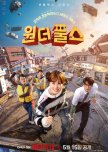
A delightful breezy well-balanced drama full of A-level comedy, action, thriller and sci-fi
If you're in need for a fresh short format comedy to binge watch to you engaged and amused all the way through, this is the perfect recommendation.I loved everything about this one, the story, script, characters, production, cinematography, acting and direction.
this is how you produce a short-format 8 episode drama! Keep it to the point and engaging, no moment wasted on needless side plots, while making the best use of the time for world-buildup and character backgrounds just enough to make them endearing and the story engaging. I appreciated above all that despite the story never taking itself seriously and even most of the action sequences had a strong dash of comedic elements to it, I liked how the humanitarian and emotional messages came through showing us a group of ragtags misfits who receive mainly their community's ridicule overcome their inner self-worth issues and form a strong bond.
Personally, I didn't mind the sudden tonal shifts from slapstick humor, to action, to traumatic dark scenes, to suspense scifi, it made the ride all the more crazy and bingeable . I found the romance which was not the main genre here to be cute and sweet, and the main leads conveyed a nice chemistry overall.
I loved the quirky characters, the witty dialogue, the hilarious moments, the spooky sci-fi, and above all I found all actors 'performances to have been great (even Cha Eun Woo for the most part) but shout outs go out to Park Eun Bin of course. this is one actress I will be following in the future.
Nothing has been announced, but in case there will be a sequel, I will be looking forward to it.
Was this review helpful to you?
This review may contain spoilers
Big Budget, Big Disappointment
I started watching it with excitement, thinking I would get to see beautifully written characters in beautiful clothes. But nope, that was not the case.Initially, it seemed as though Sung Hui-Ju was a no-nonsense character, and she gave as good as she got, but we never saw that throughout the drama. In fact, she cowered when confronted with the marriage contract by the media. The only time we see her show "power" is when it was directed at her family. She never thought anyone in the palace a lesson. She was played like a fiddle. I was expecting a showdown between her and the queen mother. The only thing she managed to do at the palace against the enemies was donate to the palace when they needed funding and play the recording of the prime minister. I only saw a flashy character with no strength.
For Prince I-an, the queen mother was right; their bloodline was weak. The only person he punished was Lord Inpyeong, and I am sure it was because the Queen Mother insisted. I would have expected him to show us that he would have made a better monarch than his brother and his nephew before proposing abolishing it. Because he said he was coveting the position initially.
Hui-ju got the short end of the stick from her contract with the Prince because she never used the power marrying him gave her before he proposed to abolish the monarchy. At the end, he became a jobless bum living off his wife. As her brother said, she likes the trophy type.
The drama had actors like Jo Jae-yoon, who everyone knows can play a very good, love-to-hate villain. But we didn't see him do anything else, though trying to kill the Prince is significant, but it didn't feel enough. And there were a lot of under-utilised actors. Like the King's maid, Hui-ju's father, the royal secretary, and many more.
Generally, Korean dramas need to stick to 16 episodes because their stories can be so rich compared to their Western counterparts that squeezing them into the 12-episode format will end up destroying the industry. I would like to think the emptiness of the plot was due to them having to edit a lot of things and remove parts that could have given the drama more flesh.
Just my 2-cents. Also, we don't get to see what happened with the prime minister. He did try to kill the Prince and blackmailed someone from the royal family.
Was this review helpful to you?
This review may contain spoilers
Short drama to watch to escape from reality
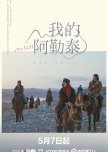
This is my first introduction to Kazakh culture and hearing the language being spoken. It was beautifully created. I was interested in each character, both with good and bad intentions behind their actions. I was surprised that halfway through the drama there was shift in the atmosphere, when the previous character from the first episode came back. He was a complex character, yet he was still selfish. I was soo stressed because of him. When the horse got killed, that moment wrecked me, I should've known that it was foreshadowed from the beginning of when the two leads met through Batay's horse head :( such good storytelling, wish we had more episodes. The cinematography was beautiful, it felt familiar to me, because my family live in the mountains, but the way the drama captured the ranch was so much different. The growth of the characters adapting to new environments was done excellent. Highly recommend it to all.Was this review helpful to you?
Nothing unique other than the worl building
It is frustrating to see same type of rom-com drama over over again , nothing new found . It is like regression manhwa , every single one of them seem same. The wold building was good, It was frustrating to see the MC to be too forgiving . IU's acting didn't feel natural , it felt kind of forced , but it was good . Her acting in when Life gives Tangerine was the best but here it felt like something is missing or character is not going with her. Overall good experience , but that not good to say wow this is the best. FMC was strong in the beginning but wth happened that she started to become so timid , not attacking enough , I thought she and queen mother would have a fight around the crown , whole story involved she was poisoned and sob strory ,mc crying for her , and she woke up tensed for him ,then mc got into fire and she is crying , MC got up , get the crown and abolished the crown . Story could go far and much more exciting , it felt like they finished it hurriedly. Btw if you wanted to show a strong fmc , then show a strong villain too, Inpyeong didn't even have enough screen time , revenge was not satisfying enoughWas this review helpful to you?
This review may contain spoilers
Tragic but so good
So far I’m loving this so much. like I know it’s gonna get sadder but for now I’m loving the characters! whoever did the castings thank you cause omg the Main leads are killing it. also with the second episode are we possibly getting a hint that the brother/doctor is gonna be the 2nd lead couple with the other guy. I was a bit iffy till I remember in the dialogue that he is a senior that got held back so if I do that math he should be 18/19 which is legal. so far I’m loving this but omg like wdym he’s probably gonna die soon due to the tumor like😭 and then all the scenes with his grandma make me tear up like this poor kid. but on the radio in that scene where he is in the car and then he puts his headphones on, we hear that what was being said is that meteors hitting earth in 3 months and I remember there’s a scene in the intro where there standing apart with what looks like to be meteors crashing down so is this gonna be even more tragic😭😭 They really said the fatal brain cancer plot wasn’t enough so let’s add in the end of the world trope like what🥲🥲 so far there only two episodes out at the time of my review so who knows what’s in it for this drama but I will say I’m loving it so much and I need more! like this is definitely a drama I will be watching every time an episode drop even though it might get really sad…..Was this review helpful to you?
This review may contain spoilers
A Proustian Drama with a Searing and Complicated Message
Introduction:This is an expansive drama that encompasses so much that it is hard to know where to begin. Right from the beginning, China itself is one of its main characters. This remains in a way the distinguishing feature of all C-dramas. Although they may appear superficially similar to K -dramas and J – dramas and T – dramas, they have a unique feature in that China and its fate always features in these dramas but not in any obtrusive way.
The Main Protagonists:
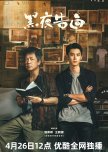
The building Yuanlongli International Garden in Weiyang, Sichuan is the site of this drama. It is a labyrinthine housing complex meant to embody a possible China, a capitalist China? Or is it an illustration of Hong Kong which is being formally integrated back into the mainland on 30th June 1997 (which is when the drama begins as it spans two more years, 2002 and 2015, shuttling shuttles between these three years which mirror each other)? One is not quite clear. This building complex is, however, a world unto itself housing a brothel, apartments for people to live, and myriad small businesses. The extremely wealthy and the not-so-wealthy all seem to be housed in this space. Although it is meant to be a community, it is in fact anything but. It is a scary urban jungle and the principle underlying it is the survival of the fittest. One has to kill here or be killed. The lives of the two main female protagonists, Qiao Suqing and Xu Meng are concrete manifestations of this principle. Qiao Suqing who is suffering at the hands of an extremely abusive employer and bearing with all this misery just because she is getting paid handsomely (Is this again the drama’s reminder of what capitalist relations ultimately are?). The other protagonist, Xu Meng, is suffering at the hands of an extremely abusive father who is forcing her into prostitution and loan sharks to pay for his medical bills. Xu Meng and Qiao Suqing become very close and the ordeals they are facing bring them into an intimate relationship with each other. Xu Meng decides to take the law into her own hands by engineering the murder of Qiao Suqing’s employer. In a scuffle with her sick father, who is forcing her to flee from Weiyang, she pushes him back in self-defence and he ends up hitting the edge of a wall and succumbs to the ensuing head injury. Xu Meng watches him die, calls her friend for help, who pitying her plight decides to help her get rid of the body. It is not quite clear as to why they have to do this. It was not that Xu Meng deliberately killed him. She could call the police and resolved the matter in a civil manner. But she does not. Is it because of the world in which she has lived, where one has to either kill or be killed, where one cannot trust anyone other than themselves, be it even the state authorities? Her profound inability to trust anyone is confirmed later in her own confession to the police. She is as much a victim of this world as she is a protagonist who intentionally murders. Together, Xu Meng and Qiao Suqing dismember the father’s body and decide to stage a disappearance. Xu Meng is supposed to have disappeared with her father as they were being chased by loan sharks. It is this disappearance, which becomes the central case around which the drama revolves. It is “solved” twice, once in 1997, and once again 2002 when the head of the father is found, both times unsuccessfully before being finally solved in 2015.
The other main protagonists of this tale are the young police officer, Captain Ran Fang Xu and his mentor He Yuanhang and the mentor’s daughter, He Xiaohe. Captain Ran is an orphan, who is brought up by his grandmother. He is a bright and extremely honest young man. He is a product of another possible China. A China that does not abandon its orphans, that educates them. Captain Ran is a topper in the State Police Exams and this disappearance of Xu Meng and her father is his first case. He cares about everyone around him, is painfully conscientious and whoever comes to know him cannot but help liking him. He and Qiao Suqing fall in love and the drama contemplates the tantalizing possibility of the two getting married before snuffing it out in a gut-wrenching manner with the death of Captain Ran in a car accident engineered by a jealous Xu Meng, who does not want to let go of Qiao Suqing. Ran is particularly fond of his mentor’s daughter and substitutes as her father when her real father is away on business paying very close attention to her studies, making sure she never goes astray, but without suffocating her rebellious nature. Before he was killed, Ran had almost solved the disappearance having zeroed in on Qiao Suqing but does not know of the role of Xu Meng, until just before his death when she stands before the dying Ran. It is He Yuanhang and his daughter, who carry his work forward and bring the case to its true conclusion. In this process, the role of memory, especially of the Proustian memoire involuntaire, is beautifully illustrated in this drama. Be sure to catch those scenes for their cinematographic prowess and their literary texture.
The fate of the protagonists and the that of building complex somehow takes its stroll alongside the fate of China itself, from the return of Hong Kong in 1997 to the entry of the Chinese men’s football team into the 2002 World Cup and more confident, socially developed, infrastructurally sound China of 2015, where even small town police stations, through the initiative of their officers and state budgets are able to have state of art evidentiary archives to facilitate the tracking down of criminals. Indeed, the memory of the protagonists is contrasted to that of the memory of institutions and that of the state. The moral seems to be: without memory no civilization is possible.
In addition to the main protagonists the minor characters are painted equally well and with great sensitivity. The cement factory owner, a former gangster who is imbued with a great sense of responsibility to this workers, who flees the country, returns for personal revenge and for discharging that responsibility, before committing suicide, the photographer from Guangdong who spies on his girlfriend Xu Meng because he is deeply disturbed by her work as a prostitute, a quack healer who devises remedies which he administers on himself and his patients and in the process is poisoning both himself and his patients, all of these are beautiful painted pictures, whose poignancy forces one to stop and reflect.
The Dramatic Structure:
Although the dramatic structure is that of an edge of seat whodunit with detectives trying to uncover traces of wrongdoing in a struggle with murderers who try ingeniously and meticulously to erase every trace of their crimes and with time itself which is the biggest eraser of traces, there is another struggle at the play throughout the drama. This is the struggle between two ideas: the idea of a corrosive Darwinian individualism, where everyone for themselves, where the fittest survive and one kills or one is killed, represented by the building and its main female protagonists, Xu Meng and Qiao Suqing, against the idea of a wholesome socialism where the law serves the people and individual initiative is supported by society and society is in turn strengthened by individual initiative represented by Captain Ran and his mentor. Captain Ran’s initiatives are supported by society, like his becoming a police officer despite being an orphan with not much means and he in turn strengthens society, like his convincing the authorities to finance a state-of-the-art archive in the criminal division of Weiyang. In this struggle between these two ideas, there is no guarantee that socialism will win as evidenced by the murder of Captain Ran by Xu Meng. The drama does not fall for the idea that only individualism can produce geniuses and socialism only rewards mediocrity. Both socialism and individualism can produce genius, Captain Ran and Xu Meng respectively. But only socialism fosters its geniuses towards the good while individualism simply abandons its geniuses to their own devices, which can in many instances turn them into monsters, as shown by Xu Meng’s life.
The Message:
The drama goes to great lengths to show that the circumstances in which we find ourselves determine the way we act to a great extent. But at the same time, it forces us to ask whether those wretched, difficult circumstances should absolve individuals of blame, especially when they resort to crimes like murder. The moralizing that the drama resorts to in the end, when pronouncing judgement of the two female protagonists will sound very vapid to the viewer. And I think the vapidity is the very point. The force of circumstances can be so overwhelming that the law does appear like an ass. Are these two women really deserving of the death penalty and life imprisonment, is something every viewer will ask. The drama complicates its seemingly simplistic answer with the demolition of the building complex in the last episode, which has been announced in a middle episode, and which is a reality against with the father and the daughter are racing in order to find the truth of the disappearance. The demolition seems to suggest that although individuals do have a responsibility towards living a good life, circumstances dictated in large by social structures inevitably shape the actions of individuals. So, without radical social transformation, which the demolition symbolizes, no good is possible.
Was this review helpful to you?
 1
1Power struggle for a powerless monarchy
Perfect Crown is a surprisingly entertaining blend of royal melodrama, satire, romance, and comedy — and one of the few dramas that genuinely made me laugh out loud. The proposal scenes alone are worth watching. Seong Hui Ju practically stalks the Grand Prince with her outrageous confidence and calculated coquettishness, switching effortlessly between elegant heiress, shameless flirt, and media darling whenever it suits her agenda.Hui Ju is the second daughter of Korea’s wealthiest conglomerate family. She has everything — intelligence, beauty, wealth, ambition, and an impressive record of success. In many ways, she is clearly more capable than her brother, yet her father remains cold toward her and continues to favour the male heir. Deep down, Hui Ju believes that despite all her accomplishments, she will always be lacking because she is both illegitimate and a woman.
Grand Prince I-An mirrors her frustrations almost perfectly. As the King’s second son, he spent his childhood constantly being reminded not to outshine the Crown Prince. Handsome, capable, charismatic, and adored by the public, he nevertheless lives permanently in second place. Then tragedy strikes: after ascending the throne, the Crown Prince collapses under the burden of royal duty. A mysterious palace fire kills him, leaving behind a five-year-old son. I-An becomes Prince Regent — the man with all the power and responsibility of a king, yet never the title itself.
But whispers follow him everywhere. The Queen repeatedly accuses him of murdering his own brother in order to seize power. Did he really set the fire? Or is he merely the perfect scapegoat?
Even the Grand Prince himself remarks that the role of a constitutional monarchy is essentially “to do nothing”. Yet despite that, people constantly scheme, compete, and sacrifice for the prestige, influence, and social standing that proximity to the monarchy brings. The irony is almost amusing — they are not fighting for actual power as much as for the symbolism, status, and reverence attached to the Crown.
One detail I particularly enjoyed was realising that the Grand Prince had already fallen for Hui Ju years ago during their school days. Long before the drama confirmed it through flashbacks, his reactions around her gave him away completely. The fact that he still remembered she was his junior from high school after so many years was a dead giveaway. Correctly predicting a hidden emotional thread before the reveal always gives a certain satisfaction when watching dramas.
What makes Perfect Crown especially fascinating is its fictional modern monarchy. The drama borrows heavily from Korean royal aesthetics — the ceremonial robes, palace settings, hierarchy, and Confucian undertones — but mixes them with distinctly Western royal customs. Korea never had a modern constitutional monarchy; the Joseon dynasty effectively ended under Japanese occupation during the Second World War. In this fictional world, the royal etiquette feels oddly British and European. The formal nods instead of deep bows, ballroom-style dances at banquets, gentlemen inviting ladies to dance, horseback riding, tuxedos, and carefully staged public appearances all resemble European aristocracy more than traditional Korean court culture.
That contrast actually became part of the charm for me. The entire drama feels like an alternate-universe Korea where royal traditions evolved differently.
Still, some scenes are hilariously absurd when viewed realistically. Hui Ju openly stalking the Prince Regent may look romantic and entertaining on screen, but in real life, that would probably trigger a national security crisis. The sheer boldness of her behaviour is both shocking and amusing.
Then there is Prime Minister Min, who seems permanently attached to the royal family’s every emotional breakdown, scandal, and crisis, as though running the country is merely his side hobby. He and the Grand Prince constantly stride through scenes surrounded by perfectly dressed entourages like they are competing in a luxury fashion campaign. Byeon Woo Seok looks exactly like a runway model in impeccably tailored tuxedo-style coats. Steve Noh, meanwhile, carries himself with such imposing elegance that every scene involving the two men becomes a visual spectacle of power and prestige.
The actor portraying the child king deserves special mention. Cute and undeniably adorable, he delivers an impressively emotional performance for someone so young. His expressions feel natural and heartfelt, especially in the scenes confronting his uncle, where he breaks down in genuine tears streaming down his face. It is a remarkably convincing performance from a child actor.
The drama also stirred criticism over the coronation salute sequence, with some viewers arguing that it made Korea resemble a colonial state rather than a sovereign monarchy. Personally, I was more distracted by Prime Minister Min’s “rosary,” which looked nothing like a proper Catholic rosary and more like an ornamental string of decorative beads.
What ultimately keeps the drama engaging is the emotional conflict beneath all the glamour. By the end, you are left wondering whether Prime Minister Min will remain loyal to his principles or abandon his morality in pursuit of love and power. There is something tragic about the possibility of a deeply principled man slowly turning rogue.
And the ending itself is wonderfully ironic: characters spend years fighting desperately for something, only to discard it almost immediately once they finally obtain it. Perhaps that is the point — sometimes people pursue power, status, or love simply because they believe they should, only to eventually realise that it was never truly what they wanted.
Overall, Perfect Crown is dramatic, funny, glamorous, ridiculous, romantic, and immensely entertaining. It may not be historically accurate or politically believable, but it never pretends to be. Sit back, enjoy the spectacle, and let yourself be swept away by the royal chaos.
Was this review helpful to you?
WELLLLL
it started out great and went flat hill. I heard a lot of bad reviews about this especially about the acting and the plot but I didn’t care because I don’t mind watching trashy acting especially when they’re fine and are my favs so I still tuned in cause I was curious about the plot and because of IU. it started out so good that made me wonder why people hated it, but it went downhill to the point that the last two episodes I was skipping the hell out of it. So much was going on and it was confusing I could not even tell who are the villain cause everything was just off😭. I really like IU that why I tuned in and she was perfect for this role and I love her performance and for byeo woo seok he was okay I guess was there for his face and nice body. tbh I don’t think this is bad just the ending lol could have been betterWas this review helpful to you?
30 Billion won, Massive Hype, Commercial Stars… So How Did Perfect Crown End Up This Mediocre?
*Perfect Crown* came in with everything — a massive ₩30 billion budget, commercial star casting, constant media buzz, and aggressive marketing positioning it as a “must-watch” event drama. But what actually unfolded was a disappointing final product that never lived up to any of that expectation.1. The writing and direction for "Perfect Crown" were completely all over the place.
2. Never ever cast two weak actors together. IU is a limited-range actor who needs a strong director, screenplay and co-stars to truly shine. BWS is the same too, except IU is still the better actor between them. Someone please send BWS to an acting academy ASAP because the audience has suffered enough.
3. Gong Seung-yeon is the actual star of this drama, alongside a few other supporting actors who were genuinely doing their job as actors. Despite the limitations of the script, GSY still managed to shine, unlike the main leads.
4. IU and BWS… sorry to say this, but there was genuinely no spark in their chemistry. Nothing at all.
5. A whopping ₩30 billion for only 12 episodes, a prime-time MBC slot, one of Korea’s biggest female celebrity, and currently one of the most popular male actors — this drama was very clearly marketed as a massive “event” series built on commercial casting. So hearing that its average rating was only 11% honestly felt underwhelming. Those numbers would be perfectly respectable for a normal mid-budget drama, but not for a project promoted on this scale. What makes it worse is that a few recent dramas with far less hype, much smaller budgets, and barely any aggressive marketing still managed to pull similar ratings.
6. Truthfully, most people — and probably even the production team themselves — expected this drama to reach the level of massive hits like Queen of Tears or Crash Landing on You considering the amount of money poured into it. Especially for a channel TV drama, this kind of budget is usually invested only when the expectation is record-breaking ratings and massive cultural impact. But it couldn’t even cross a 15% peak rating (the starting mark for major hits), let alone come close to touching the records those dramas achieved.
Conclusion:
While the drama is not a failure in any strict commercial sense, all that money, marketing, and media play still resulted in a product that felt underwhelming. "Perfect Crown" ultimately proves that popularity and hype can never replace strong writing, acting, chemistry, and storytelling.
Was this review helpful to you?


