

The Greenest Flag Drama I’ve Ever Watched
Love Me, Love My Voice honestly became one of my biggest surprises. I went into it with almost no expectations. I had heard people talk about it for long, but I never expected to love it as much as I did. I’m genuinely shocked by how attached I became to this drama.I will admit, the beginning was a little hard to get into. The first few episodes felt very slow and awkward, especially the romance. But honestly? The awkwardness felt realistic. He’s introverted, she’s shy, and their relationship starts in a very natural way. It wasn’t some dramatic, instant-love kind of romance — it was just two people quietly falling in love, and I ended up loving that simplicity so much.
Sometimes life gets overwhelming and busy, and you just need a drama like this: something calm, soft, comforting, and completely non-problematic. Watching this felt like a reset button. I was smiling from ear to ear the entire time.
At first, I genuinely thought the sweetness was TOO much. And I mean too much. I’ve watched countless dramas, and this is probably the first time I’ve ever had to pause because something was overwhelmingly sweet. It was beyond sweet — almost unreal. But after a while, you settle into their quiet everyday life and start craving more of it. By the end, I honestly felt like 33 episodes weren’t enough. I could have watched another 10 episodes of them just living life together.
This drama completely depends on whether you feel the chemistry between the leads. Because the plot itself is extremely simple — it’s basically just two people falling in love. If the chemistry works for you, the show works. And for me, it worked perfectly.
The chemistry was amazing. Their relationship felt warm, comforting, mature, and incredibly healthy. No unnecessary misunderstandings, no dramatic breakups, no toxic behavior, no random tragedy — not even a tiny “car accident for angst” moment. I’ve genuinely never watched something this non-problematic before, and somehow it still kept me completely invested.
It reminded me a lot of Amidst a Snowstorm of Love, which makes sense because they’re from the same writer. You can definitely see the similarities. But honestly, Love Me, Love My Voice has even less plot — and somehow I still loved every second of it.
I also think Tan Jianci was absolutely perfect for this role. The character felt so natural for him. His passion, perfectionism, calmness, teasing side — everything fit him perfectly. And Zhou Ye matched him so well too. She had exactly the right amount of softness and shyness for the role, and together they created such a comforting dynamic.
One thing I really loved was how culturally Chinese the drama felt. The outfits, music, food, scenery, cinematography — everything had such a strong Chinese identity and atmosphere. It felt very intentional and immersive, and visually the drama was so pleasant to watch.
The voice acting/dubbing industry aspect was also really interesting. Since voice actors are such a huge thing in China, it was nice getting a glimpse into that world and seeing these characters balancing ordinary lives alongside their careers.
And honestly, the friendships were just as important as the romance. I loved the group dynamic so much. Everyone had chemistry with everyone. The trips, dinners, performances, casual hangouts — all of those scenes added so much warmth to the show. It wasn’t just a romance drama; it was also about friendship, comfort, passion, and found family.
I absolutely loved the side characters and the secondary couples too, which is why my biggest complaint is that most of the side couples only officially got together near the end. I really wish we had more time actually seeing them as couples instead of waiting until the last episode for confessions.
Overall, I absolutely loved this drama and genuinely cannot recommend it enough — but only if you enjoy slow, slice-of-life romances with almost no conflict. This is not a drama for people who need constant tension or dramatic twists. The entire show is carried by chemistry, comfort, healthy communication, friendship, and pure softness.
This might honestly be the greenest-flag drama I’ve ever watched.
And finally, the OST was AMAZING. Tan Jianci’s voice was absolutely beautiful, the performances were wonderful, and every musical moment felt heartfelt and immersive.
This drama honestly felt less like watching a story and more like spending time with people you grow to love.
Was this review helpful to you?
My royal hope turned a bit cold!
What I like about this show is even though romance is a big part of it, I feel like the main plot is all about self growth, acceptance and dealing with past traumas that have a direct impact in the current life & i fuck with it so much.It is funny, interesting and the acting is great. The chemistry is believable and essentially just full of good stuff.
Now, I hope the show doesn't merely focus on the romance aspect because I feel like it can be so much more. I hope the MLS, thanks to e/o, will be able to thrive and finally heal and be happy because they both deserve it and turns out they did!!!!
HOWEVER, past ep 7, the writing started to become a bit wobbly and it became a bit caricatural and way too dramatic...the number of car accidents was quite ridiculous, the weird past/present life, the villain story etc....it was a bit meh but the drama is still fun and easy to watch!
Was this review helpful to you?
Old story and yet!
I will try to keep it short because I do not think too much words are needed for this one.- There is great writing
It's an old story, one i am very familiar with and yet the writers managed to surprise me and catch my attention from the first episode and that until the end. The ending felt extremely realistic and actually matches quite well the real life events and yet it carries a certain optimism & emphasises that there still are ppl fighting for the truth, ppl ready to take accountability.
- There is great acting.
A very competent ensemble of actors that make you believe every single lines and breathes. The chemistry is alive, the talent and line delivery is impeccable.
- There is a story.
A heartwrenching and quite dumbfouding case of serial killer that will make you think how could this have happenned? It shows you all the human's mistakes, it enlights the darkest creases of humanity.
It is a very well creafted drama in his globality, one that seriously stood out by how complete it felt. Highly recommend.
Was this review helpful to you?

A delightful and moving healing drama about the power of grace and of being present
There were so many times throughout this drama that I laughed out loud, sighed, clapped, and even teared up. It explores the cost of holding onto unnecessary guilt and blame and the power of forgiveness, all the while maintaining an uplifting and fun vibe using the contrast between the busy home shopping network world of the city, and the quiet, small town serenity of a mushroom farm.If you like a slow burn super romantic drama with great chemistry, absurd but hilarious humor, and that thoughtfully tackles real issues in a genuine way, you will enjoy this drama.
--THE STRENGTHS
Why I recommend this drama:
--- Hilarious.
There was not one episode I didn't laugh out loud, like cackle level laugh. Usually more than once. The comedy is absurdist, breaks the fourth wall often, isn't afraid to go all in, and never takes itself too seriously. The cast seemed to be having a BLAST.
--- Aces main couple, like truly a wonderful pair.
The main couple had great chemistry. You could feel how drawn they were to each other from the start. Their romance felt organic and subtle yet at the same time passionate and loud. I rooted for them from the start, and they are one of the few romcom couples lately that I feel are actually perfect for each other on a soul level, and who will be really happy together for a long time. I enjoyed every single scene between them.
--- Meaningful character arcs for the main leads.
As the show goes on more and more is revealed about what the two leads have been through in their lives, and all their actions, even the ones that are frustrating, truly felt rooted in genuine past experiences that shaped who they are. Even the short period of angst in the drama felt necessary when you consider what they've been through and the depth of the pain they were trying to learn how to face. I connected with their struggles and enjoyed the layers underneath each character.
- Well connected plotline and emotional arcs.
Too many dramas have a plot that seems to unfold separate from the emotional arcs of the characters, so that the drama ends up feeling disjointed or superficial. Not the case here. The plotlines of the contamination backstory, the current day cosmetic acquisition, Yejin and her mother, Mechoori and his lost dream, all weave together and ebb and flow along with the emotional arcs ebb and flow, resolving in a way that felt perfectly aligned. It's really satisfying and makes all the emotional notes hit quite strong. To the point I actually shed tears more than once.
-- A more complex view of relationships and forgiveness
This show focuses a lot on the cost of not forgiving ourselves and others, and the power of showing grace and letting go of revenge or making others suffer like we had suffered. All of the resolutions felt earned and I really connected to the uplifting and positive message as someone who has had a lot of experience with this in my own relationships in life.
--THE WEAKNESSES
That said, the drama wasn't perfect. And I have to point out its flaws as well:
--- The 2ML is one dimensional, bland and unfortunately not played very well by the usually more compelling Kim Bum.
Useful only for adding superficial angst and comedy to the main leads story. Luckily he doesn't have a ton of scenes, and he does start to feel a little more two dimensional in the second half. There was a lot more that could have been done with him, so he feels utterly wasted as a character.
---Uneven execution at times, especially for anything other than the main leads story.
The bones of the story were really well sketched, and when things came together well it hit SO well, as detailed above. And there were times when the side characters were SO funny and well done. But there were times where the side plots with the villagers felt a little thin, where some of the side character's acting felt weak and distracting, where the pacing felt a bit off, or where certain side characters or side plots got more attention than they merited even though they lacked depth.
The above reasons are why I gave it an 8.5. If we're talking just about the main leads story it would be a 10/10.
This was one of those dramas where the weaknesses were never more than mildly annoying for me but the strengths hit SO well, so overall I thought it was a a good drama well worth the watch.
Was this review helpful to you?
A battle of wits and stunning proses!
What an interesting movie that was!A battle of wits, a dialogue-heavy two hours feature and not one second of boredome. The exchanges kept me on the edge of my seat and sure, some of the wittiness and stunning proses gets lost in translation but the delivery is so magnificent that you can, imho, easily move past that. The writing is quite unbelievable, the dialogues are so enticing and grip your attention and some of the proses are actually explained furthermore, which is nice. It truly felt like watching a battle of wit, a battle of words and I was genuinely fully into it. It rought certain subject up and will make you think after your watch, about ideas and opnions shared throughout their verbal tiki-taka.
The acting was very VERY good, the chemistry quite palpable, I mean what an incredible duo! Yuki Yamada surprised me by how great he was and how well he faced Sato Jiro! Bakudan is not for everyone but if you enjoy proses, study of characters; feature that leave you with thoughts and heavy dialogues, you will absolutely love this and I genuinely recommend it!
Was this review helpful to you?
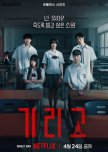
A fun watch for horror fans, but content warnings for suicide and self-harm intrinsic to the story
I'm a huge fan of any death game-esque type of horror, and while this isn't really that it is close enough that I decided to give it a watch. I'm happy that I did. I found the writing to be pretty solid; the characters were consistent (and clever!), the balance of humour and horror was good, the pacing didn't drag, and the worldbuilding/explanation for the horror felt pretty well thought out. The soundtrack was simple and beautiful, doing a great job of creating an atmosphere without being too distracting. The acting was 10/10 (to me), and the visual effects were excellent. The story overall felt more character-driven than "get us to the next scare/gross out" driven.It occasionally verged a bit too close to feeling like it might go into fantasy-adventure territory for my taste, but that's more of a matter of preference and really wasn't so bad until after the plot had been essentially wrapped up. There might be some confusion around the fate of one character, but I think that may be intentional as it seems like they may have been trying to set up a second season without leaving the show on a cliffhanger. I'm not giving a perfect score mostly because I feel like for a horror show, it wasn't especially creepy or scary. It was suspenseful, and got intense at times, but to me it is missing a bit of that sense of fear and consistent heightened emotions that I usually go to horror for. However I did enjoy the relationships between characters being such a big focus.
Overall I enjoyed it, I would say that this is more of an easy/light watch for a horror fan who's okay with a bit of gore (so long as scenes of suicide and self-harm are not a trigger for you, if they are then I would say you should avoid this show). It's not too intense, but it also isn't boring. If you don't like horror, you won't like this (because it's horror). But if you're horror-neutral you should be fine.
Was this review helpful to you?

This review may contain spoilers
Could be better
I’d been waiting for the series Soulmate ever since it was announced, especially because of Taecyeon’s involvement. I was really curious how they would approach the relationship between two men in this case — considering it’s a Japan + Korea and streaming on mainstream Netflix. And honestly, I’m not surprised by the way this story was presented.The fact that there are no romantic scenes in the series isn’t the issue for me. Feelings can be expressed in a hundred different ways. But I’m not sure I’m convinced by the idea that they wanted to portray a “pure” kind of love between the two characters. I know BL relationships are often overly sexualized and that romantic scenes sometimes add nothing to the plot, but here, honestly, one lingering look and one brief touch of hands would’ve been enough.
I don’t really buy the argument that they simply wanted to show the purity of this relationship. In my opinion, in mainstream Asian cinema the real reason is still fear of how this kind of relationship will be received, so it gets reduced to bromance instead. I’d genuinely like to read opinions from people who see it differently and why, because maybe I’m missing another perspective.
Personally, I think we should find some kind of middle ground between excessive sexualization and completely avoiding the subject of intimacy. Are we really supposed to believe that two young people wouldn’t want any deeper physical closeness over the course of years? That’s hard for me to believe.
The story also has a few plot holes, but I’m not that bothered by them since I understand this is just a fragment of several years of the characters’ lives. The ending, in my opinion, could’ve been better.
Was this review helpful to you?
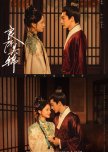
Ye Xian is the main hero of the story and he completely deserves it❤️??
Why the heck the ending is so abrupt?...looking at Ye Xian's death scene literally made me cry ....the story went so abrupt ...I myself was completely devastated....sometimes the scenes were too much dragged ...it was a very good start but at the end ..it was kinda disappointing . I'm speechless ...I want to see WiNWin performing well as main lead in another drama....everyone acted very well , I love the child emperor...he too has performed very well but yes one more thing the FL sister who is also the second female lead ..got very less screen time .. couldn't see more of her ..like how her love life went with Mu Zidi ...I thought of seeing something more .. perhaps with so many characters dying ..its kinda C Trauma...not a real happy or satisfactory ending .Was this review helpful to you?
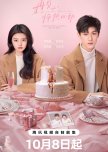
When the Wrong People Escape Accountability
After a painful breakup during university, former sweethearts Shen Xingruo and Lu Xingyan unexpectedly reunite years later on a reality dating show designed to reconnect exes.To generate angst, the writers keep the female lead on friendly terms with the love rival long past the point of credibility. The rival displays the same possessive, suffocating behavior that once drove her away from the male lead, while abusing his professional position to pursue a personal vendetta against ML. As someone shaped by childhood trauma from her parents' abusive marriage, she should recognize these warning signs. Instead, she repeatedly allows the rival to undermine a man she still clearly has feelings for, while tolerating his constant intrusion into her romantic life.
Rather than earning complexity through consistent characterization, the rival is artificially softened through moments of uncanny emotional insight into couples he barely knows and a redemption arc that clashes with his systematic efforts to sabotage the central couple. Most revealingly, he confesses his feelings to the male lead as a calculated provocation before ever telling the female lead herself, weaponizing his feelings rather than honestly expressing them.
The drama's contrivances occasionally tip into comedy. A scene in which the male lead delivers what he believes is news of the female lead's father's death begins with an awkward resort announcement, as though a death notification requires a warm-up act. Later, the plot collapses under escalating misunderstandings and manufactured trauma designed to destabilize the female lead just enough for the rival to make his move.
What makes this especially frustrating is how the drama handles the rival's exit. Instead of giving him a genuine reckoning, it reframes his retreat as noble self-sacrifice. In reality, he remains a manipulative and hypocritical figure whose obsession is mistaken for romance and whose possessiveness is mistaken for protectiveness. The hypocrisy peaks when he warns off the female rival for mere suspicion of behavior he just openly admits to himself. Even more implausibly, the female lead entrusts a comatose male lead to his sole care the day after hearing him declare how much he hates him.
Ultimately, the drama bends character logic and accountability around a wish-fulfillment fantasy in which multiple desirable men remain devoted to the female lead. The rival is redeemed through the intensity of his feelings regardless of the damage they cause, leaving obsession, manipulation, and willful blindness largely unexamined. The result is a central romance weakened by interference the drama works far too hard to excuse.
Was this review helpful to you?
This review may contain spoilers
A Splendid Story; Fire the Editors
Overview:Compared to how much I have ranted and raved about this drama, my rating is harsh; it aligns with my brain not my heart – let me explain. From the start, the audience can immediately tell that this drama is of a different standard, whether it is the cast, the story, or the camerawork. The first few episodes are entirely to build up the plot, making it relatively easier to understand. After that, the romance progresses slowly but steadily, leaving you on the edge of your seat, wondering what's next. But by around episode 30, it feels like the editors gave up and just started doing whatever. A mess, honestly. Now, the plot is still understandable, but it becomes slow, boring, and almost redundant. The scenes are sloppily placed around as if the editor threw a die to determine what they would edit next. If not for the outstanding acting of ALL of the cast, it could have gone much worse. 'A Splendid Match' is most definitely not a bad watch, but it will not meet the same expectations it created from episode one. If you don't want to end up disappointed or unfulfilled, you can stop watching at around episode 30 or just a bit after GJZ and CYY's wedding.
Context:
Originally, this drama had 36 episodes, but the editors got bored and let their imagination fly to the Vegas casinos. They really gambled and did anything yet also everything. So happy to be a mess. By editing the drama to become 40 episodes, they cut a lot of CYY's scenes, especially the ones with GJZ. In particular, there is a line where he says 'I don't care about anything except for my wife.' They had the NERVE to cut that out.
Some people have mentioned that this was done in favour of Winwin, as he has strong backing in the industry. Before anyone throws a fit, this isn't hate towards him; the industry is fraudulent and we need to admit it. It would make sense considering the amount of 'highlighted' scenes YX has, but to replace CYY's scenes with his is ridiculous.
Story:
The story in itself is wonderful, mostly. From the start, there is a clear understanding of what each character wants, but it doesn't categorise them into the good v. the bad. These characters are genuinely three-dimensional; they have fears, joys, angers, motives, plots, etc. You really want to see what happens next because this drama feels real. The characters have become alive, and don't act for the sake of the plot, but 'for themselves'. The politics is well-written, and it's noteworthy to mention FHL who embodied nuance. He really represents the fact that if you do something to such an extreme, you often end up on the other end of the scale. Even if he gambled on innocent lives, he believed that he did this for the good of Yan and its people. For once, the politic-centric plot is watchable and not the same 'good' v. 'evil' debate repackaged (though barely) with overly-confident leads.
It's a shame that the editors started playing Russian roulette 3/4s in. The final arch wasn't difficult to understand, but confusing in terms of progression and motive. It felt like the characters were just wandering with no sense of direction. Again, as I have barely mentioned, this is due to the editors cutting and adding scenes randomly. It's amazing how much editing affects the entire plot, because after losing a sense of direction, the audience then loses a will to watch it. Not to mention the ending is beyond underwhelming. It cuts with CYY carrying GJZ out of a burning mansion to the voiceover of a eunuch reading the Emperor's edict. You expect that there's another scene, literally anything, to give you some closure about what happens next, but no, that's the end. 'The end!' the editors happily say, probably.
While the editing may have been ridiculous, it must be mentioned that the filmmaking did not disappoint. In particular, the battle scenes in the last three episodes were amazing. They encapsulate the terror of war, and for once, the leads in a C-Drama are visibly, actively fighting their enemies. In particular, I liked how CYY made sure his enemies were completely dead but slicing their throats, even if they had already been stabbed. The need for detail was perfect.
(Take this with a grain of salt.)
Many readers of the original novel have also mentioned that the setting has greatly changed. For example, in the novel CYY had two children with his first wife: a son and a daughter. The son is CXQ and falls for GJZ, but she ended up becoming his step-mother.
Characters:
CYY – I think San Ye might be one of my favourite characters ever written. Granted, it may be thanks to Ci Sha's immaculate acting, but wow, he is just so likeable. Whether it's his intellect or his mannerisms, everything is just likeable. He proves to the audience that he IS a splendid match with GJZ, because he genuinely respects her. Instead of wanting to control her in the name of 'love,' he fulfils his promise of letting her remain free, even after marriage. A lot of MLs in dramas say that on the surface, but at the end of the day, they all end up controlling the FL, one way or another. But CYY isn't like the others. CYY thinks through all matters seriously and rationally, yet remaining enough emotion to balance out his rationality so that his decisions represent the best answer possible. He is a wise man, and that alone makes his likeable.
GJZ – For one, Zhao Jie's character development is perfect. While she may act irrationally and stubbornly at the beginning, you literally cannot blame her, considering she is still a child. But after the death of her mother, she is forced to become more mature, no longer letting her emotions get the best of her. She learns to take care of things in a more sophisticated and well-rounded manner, and her tasks have far extended business and family matters. The change between these two time periods is evident (must mention that Ren Min portrayed it very well). At the end of the drama, her growth is immeasurable and GJZ shows that she is indeed a splendid match with CYY. They quite literally complement each other.
YX – There is a lot of debate of this character, and I can see why. Similar to GJZ, he also goes through a strong character development arc, but he is forced through it slightly later than her. At the start, his irrationality really gets under your skin. Especially in the scene where he whipped GJZ, I didn't think that anything the writers did could ever make his character redeemable. Yet somehow, he IS likeable by the end of the story. Personally, I believe it has to do with the contrast between an emotionally unstable YX v.s. a YX who is forced to shoulder responsibilities as the head of his family after his father's death. Once he starts realising that his actions have consequences, he acts more clear-headedly. Some people may criticise his hot-headed behaviour in comparison with CYY, but it must be mentioned that YX is around 10 years younger than him.
CYY & FHL – Personally, CYY and FHL reminded me of two different ends of the trolley problem. CYY would rather sacrifice one person he knows to save the trolley full of people, while FHL would sacrifice the 5 innocent people he doesn't know. Technically speaking, CYY would want no one to be sacrificed, but he is still not written to be a character of 'goodness,' making him so much more likeable. FHL in general is just a character of nuance. He has humane sides to him (e.g., his love for his wife, the reforms for the country, etc.), but they're convoluted by his ever-increasing need for control. Simply put, you can't deem him as entirely 'good,' nor entirely 'evil.'
CXQ & GL – Their roles seriously reversed. At the start of the drama, I thought it wouldn't be bad if GJZ ended up with CXQ, because their love really was just puppy love. It was cute, it was simple. With GL, everything she did was infuriating. The schemes she would get into along with her mother to argue with GJZ's mother were beyond redundant. But somewhere along the line, CXQ revealed his true colours as a narcissistic, self-obsessed, maniac. I couldn't help but roll my eyes whenever I saw him preach about his so-called 'love' for GJZ. On the other hand, GL really matured after her mother was sent away to the monastery, and she was forced to recognise her situation in the Gu family. It's nice to see how she moved on from believing that marriage is the only way out for her, to rejecting the proposal of a respected family because she wanted to live for herself.
Cast:
Can you believe that not a single person in this cast let me down? I can't, and I'm overjoyed.
Ci Sha as CYY – Ci Sha's acting has never failed me. No matter what scene it is, he is always able to perfect it. Especially in scenes which require great detail, this man always delivers. He really makes you believe that CYY walked straight out of the novel. Acting involving his eyes seem to be a strong point for this man. After the first battle when they carry YX's body back to the military base, Ci Sha acts out CYY's multiple layers of emotions SO WELL. Words cannot describe what CYY was feeling, yet Ci Sha's acting can. I know I'm really putting him on a pedestal here, but I am beyond impressed.
Ren Min as GJZ – Again, Ren Min did spectacularly. At first, I wasn't sure about this drama because I have not watched her dramas before, and I didn't think her demeanour suited it so strongly. But I was proved to be terribly mistaken by how well she portrayed GJZ.
Dong Sichen (Winwin) as YX – Winwin really outdid himself here. I have watched a bit of his acting in 'Perfect Match,' but never properly finished as I didn't like the storyline, so I wasn't sure about what to expect from him. Often, when an idol starts pursuing acting, they are rightfully criticised; the industry provides them with so many resources, yet these rookies can barely act. However, this is most definitely NOT the case for Winwin. While I have mentioned that the industry may be biased towards him, he lives up to his name of acting well. YX's character cannot be an easy character to portray considering how many different emotions he must show. Whether it's the innate frustration he has for his weak body, his anger and helplessness towards the world, his love for GJZ, etc., Winwin grasped the situation well. Compared to the impression I have of him based on previous memories (NCT, variety shows, etc.), he completely changed in his portrayal of YX – which is a good thing because it shows he can act! I am genuinely and pleasantly surprised by him, and I look forward to his future projects.
Was this review helpful to you?

First drama to NOT leave me with unanswered questions
Before I start, I’d like to mention that I only started this drama after seeing one of the scenes with Cha Eun-woo smoking on TikTok, however, it most certainly DID NOT disappoint.At first, I thought it was some Korean version of Stranger Things, but now that I finished it, it’s everything Stranger Things didn’t manage to be.
Chae-ni, our lead character, is the most unhinged woman I’ve seen in a drama, in a big role. She cannot take almost anything seriously, she acts like a teen although she’s in her late (?) twenties, she has so much personality that I can’t imagine how her heart manages to keep her alive! Most interesting and entertaining (and not at all polite or dainty like most) female lead I’ve met so far!
Lee Woon-jung? Introverted, selfish (at times), traumatized, powerful, with a white tank and a cigarette in hand? God, I couldn’t keep my eyes off the screen. I won’t comment any further due to spoilers, but don’t forget the reason why I started this series!!
The guys are very funny as well, especially their dynamic with and without Chae-ni and Woon-jung. A father who’s family is basically ignoring him, a true 90’s Karen, social services’ worst enemy, whose insane stories drive people away from him, ends up hanging out with a guy who’s been bullied by his entire class during high school, whose job is to peel onions, and whose best friend is none other than the town’s crazy neighbor. What could go wrong with such a diverse friend group? To say the least, A LOT, especially due to their lack of money. The first episode reminded me a lot of The Blair Witch Project, actually.
The only thing I didn’t like about this drama was that there is a credits scene where they kinda hint we might get a season two? I don’t know what more they could do about the story though, as far as I’m concerned, most of the questions were answered and there are little to no plot holes to fill!
Overall, worth every second and every bag of chips eaten in front of the screen, especially since it had a little bit of romance sprinkled on top!!
Was this review helpful to you?
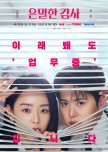
Love this show so much
Love chemistry between them and funny stuffIt’s a very endearing story I’m praying it has wonderful romantic ending
I’ll be waiting to last episodes
One of few new shows where I’m bored in some part of it and continue to watch
Although I hate waiting for next week to come
I will continue to watch hoping I’m crying at end
Was this review helpful to you?
This review may contain spoilers
Interesting story, terrible ending
From the beginning, this series was characterized by an interesting premise that started slowly but surely, with characters that promised a lot and plots in which you hoped that the antagonists would receive what they deserve, however, all this was eclipsed and I could say forgotten with the last 7 episodes, with very abrupt editing cuts, plots that were not relevant that were closed very quickly without any sense and closures of character arcs that left a lot to be desired like Chen Xuan's Qing or Ye Xian's. And the worst thing is the end of the series, a hasty ending that does not feel like an end at all, which leaves us with a disappointment and a feeling of not having absolute closure to the story or the characters that we were loving so much in the previous episodes.It would have been a better series if it had another ending or at least another additional episode to close the plots that were left unfinished and at least see the lives of the main characters without intrigues involved.
Was this review helpful to you?
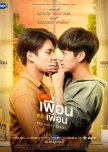
Squandered potential
This show has a lot going for it. The actors are great, there's believable chemistry, the premise of the story is classic and evergreen, and the build-up of the romance is extremely sweet.So why have I dropped it after 10 episodes? The simple answer is that every ounce of tension was killed off after episode 6 and it never recovered. I was enjoying myself immensely until episode 7, even found myself thinking about the characters while I was going about my day. I think that's also why I'm so disappointed and uninterested in finding out how this ends.
Without spoiling too much, there's an important scene in the relationship that is immaculate. I think the show would almost have been perfect for me if that was the second to last episode, and things wrapped up after that scene. Unfortunately, the show had to go on for another 6 episodes, so they injected a meaningless time skip, introduced a silly way for the boys to continue playing games with each other, and chucked a whole bunch of project placements into the mix. The pacing of the next couple of episodes felt baffling, as the relationship between the leads was both regressing and skipping ahead at the same time. In one scene they're joking and hurting each others' feelings, and in the next they act like they've been established lovers for years. When I dropped the show, it felt mostly like how it does when me and my bestie flirt with each other as a joke.
Maybe this thing gets better in the last two episodes. Maybe not. All I know is that I don't have it in me to watch another drawn-out scene of a boy fiddling with a printer, or complimenting how healthy and delicious this iced tea is.
Do better!!!
Was this review helpful to you?
Still, my biggest bias in this drama is definitely Ren Min and Winwin. Ren Min acted so well here. Her chemistry with both the male lead and second male lead was amazing, and she handled every emotional scene perfectly. One thing I always love about Ren Min is her crying scenes. She cries so naturally, and her tears fall like waterfalls. The emotions feel real and sincere instead of forced, which is why I always enjoy watching her emotional scenes. She has this special ability to make viewers genuinely feel the sadness, pain, and heartbreak of her character.
I especially loved her scenes with the second male lead because I was never bored watching them together. Their interactions felt soft, emotional, and very natural. Every scene between them had this emotional tension and warmth that made their chemistry stand out even more for me.
Ye Xian played by Winwin was honestly such a perfect role for him and definitely one of the most memorable characters in the drama. His acting was amazing, and he portrayed Ye Xian’s gentleness, loyalty, sadness, and quiet strength beautifully. Even though his character had a tragic ending, I think it was executed very well and emotionally impactful.
His death scene while fighting on the battlefield as General Ye Xian was heartbreaking but meaningful at the same time. It showed his courage and dignity until the very end. I also loved the letters he left for the female lead, his mother, and his sisters because they were so touching and beautifully written. One of the most emotional parts for me was his message about how he would rather die on the battlefield than slowly die in bed because of his illness. Knowing that the doctors only gave him a limited time to live — only three years because of his sickness — made his decision and sacrifice even more heartbreaking and meaningful. Despite his condition, he still chose to fight bravely and live with honor until his final moments.
Overall, A Splendid Match is truly a beautiful Chinese drama with strong acting, emotional storytelling, and unforgettable characters. After finishing it, I’m honestly hoping even more that Ren Min and Winwin will collaborate again someday, but this time as the main female lead and male lead together. I really think an enemies-to-lovers story would suit them perfectly, especially in a republican-era drama. Their chemistry already feels natural and emotionally engaging, so imagining them in a story filled with tension, misunderstandings, hidden feelings, sacrifice, and slow-burn romance would be amazing. Both of them also have visuals and acting styles that would fit the elegant and emotional atmosphere of a republican drama beautifully.
The letters of Ye Xian were honestly one of the most painful and heartbreaking parts of A Splendid Match. They were written so beautifully yet filled with so much sadness that every word felt heavy emotionally. What made the letters even more hurtful was knowing that Ye Xian already accepted his fate before going to the battlefield. He wasn’t writing simple goodbye letters — it felt like he was quietly preparing for his final moments while trying to leave comfort and love behind for the people he cared about.
The letters to the female lead, his mother, and his sisters were especially touching because you could feel how much he loved them, even while hiding his own pain. Instead of complaining about his suffering or fearing death, Ye Xian chose to speak gently and calmly, which made the scenes even more heartbreaking. Sometimes the quietest pain hurts the most, and that was exactly what his character showed.
One of the most emotional parts was his message about how he would rather die on the battlefield than slowly die in bed because of his illness. Knowing that he had lived for years carrying the burden of having only a limited time to live made his words even more painful. It showed that deep inside, Ye Xian already understood that his life would not be long, yet he still chose to live bravely and protect others until the end.
What made those letters unforgettable was how they reflected Ye Xian’s personality — gentle, selfless, loyal, and tragic. Even in his final moments, he was still thinking more about the feelings of the people he would leave behind instead of himself. That’s why the letters hurt so much emotionally. They didn’t feel overly dramatic; they felt sincere, quiet, and full of acceptance, which made them even more heartbreaking to watch.
I honestly think “My Love Letters” would be such a beautiful title for a future drama starring Ren Min and Winwin. The title itself already feels emotional, nostalgic, and romantic, which matches the kind of chemistry they showed in A Splendid Match. Their scenes together had this soft emotional tension that made even simple moments feel meaningful, so a drama centered around letters, hidden feelings, and emotional longing would suit them perfectly.
I can really imagine them in a republican-era enemies-to-lovers story with the title “My Love Letters.” Maybe they start as people who misunderstand or oppose each other because of family conflict or political differences, but slowly develop feelings through anonymous letters or messages they secretly exchange. Ren Min would fit the emotional and vulnerable scenes perfectly, while Winwin’s calm and gentle aura would make the romantic tension even stronger.
The drama could have themes of longing, sacrifice, healing, and slow-burn romance — the kind of story where emotions quietly grow over time instead of happening instantly. Both of them have visuals and acting styles that fit elegant and emotional storytelling very well, especially in historical or republican settings. And knowing how expressive Ren Min is in emotional scenes, especially crying scenes, combined with Winwin’s soft and melancholic acting style, I think they could create something truly memorable together as main leads someday.
Hopefully they really get another chance to collaborate again in the future because their chemistry honestly has so much potential.
Was this review helpful to you?


