
 Celebrity


This review may contain spoilers
**This is one of the most emotionally truthful dramas I have ever watched.**
Throughout almost the entire series, I was mesmerized by how tangible its emotions felt. Everything was so painfully recognizable. The performances—especially Kim Go-eun’s—were unbelievably natural, to the point that I could understand both Eun-jung and Sang-yeon completely, even when I disagreed with them. The story was engaging and often surprisingly gentle, but more importantly, it felt *real*.And then came the final episode.
It did not seem to be trying very hard to make me cry. There was no desperate attempt to force an emotional reaction, yet my tears came uncontrollably. I rarely cry while watching dramas, and I have seen similar tragic stories many times without feeling much at all. Sometimes I can even feel when a story is trying to make me pity its characters. I never felt that here. The story itself was tragic, of course, but I do not think the illness, the assisted death, or the tragedy of the circumstances was what made me cry. I was crying because, through Kim Go-eun, I felt like I was looking directly into Eun-jung’s heart.
That is what makes her performance so extraordinary. People often praise great acting by pointing to one unforgettable crying scene or one particularly powerful moment. Kim Go-eun does something much harder here. She is phenomenal in *almost every tiny moment*: a brief reaction, an embarrassed smirk, a change in her eyes, the way her throat tightens when she is trying not to cry, the smallest hesitation. I never simply *saw* Eun-jung’s emotions—I felt them. Whenever the camera returned to her face, I could almost immediately sense what was happening underneath it. Her performance was not one spectacular scene. It was fifteen episodes of microscopic, consistent, completely believable human behavior.
And Park Ji-hyun was incredible too. Sang-yeon is such a difficult character to portray because she is neither simply lovable nor simply terrible. She can be selfish, jealous, hurtful and infuriating, while at the same time being deeply attached, vulnerable and painfully human. Both actresses made it possible to understand two people who could hurt each other terribly and still remain profoundly connected.
What I love most about the series, however, is that it never turns their relationship into an idealized friendship full of unconditional loyalty, nor into a hollow relationship defined by betrayal. It is something much more difficult to write: a *real* long-term relationship. We see the very first feelings that formed between them, and then we see how those feelings change over decades. Admiration becomes jealousy. Love coexists with resentment. Attachment can produce hatred, and sometimes you can even end up hating the very thing you love—or hating the fact that you hate it.
Almost nothing happens simply because it would make the story more dramatic. Things happen because they feel like things that could actually happen between real people. That is why the relationships are so unpredictable—not because the drama constantly tries to surprise us, but because real life itself is not written around clichés.
This is also why, after finishing the finale, I initially felt disappointed. I had been waiting for some enormous final message that would tie the entire series together, and I did not get one. Some characters' futures remain unresolved. But a few hours later, I realized that this was probably exactly right. The series was never trying to construct a perfectly closed narrative. It was portraying one relationship—and only showing the parts of other people's lives that mattered to that relationship. In real life, most people do not receive a neat conclusion to every person they once knew. Some stories simply stop being part of ours.
The same thing applies to its themes. I usually prefer stories built around one central idea, but I am glad *You and Everything Else* did not force itself into having one grand message. It touches on many different things—transgender identity, assisted death, childhood experiences, the relationship between parents and children, loneliness, envy, love, resentment, forgiveness, memory and art. They do not all exist to prove the same thesis. They simply exist, the way different lessons and experiences coexist in an actual life.
The treatment of assisted death especially stayed with me. The drama does not seem interested in telling the viewer what to think. Instead, it gives space to the different emotional, moral and personal dimensions surrounding such a decision. Considering how sensitive and legally complicated the subject remains in South Korea, I thought the series handled it with remarkable restraint and care.
I also kept wondering whether the writer had drawn heavily from her own life, because some of the writing felt almost *too* specific to be purely imagined. Eun-jung being a screenwriter makes this even more interesting. There are moments where she talks about storytelling and about whether certain scenes should be removed because doing so would make the audience lose the emotional context behind a character's final reaction. Watching those scenes, I sometimes felt as though the drama was quietly commenting on its own construction—and perhaps even on the ending we were watching. I cannot say the series is autobiographical, because I found no evidence for that, but it is remarkable how deeply lived-in the writing feels.
Sang-yeon's name is another detail I kept thinking about. She explains early on that the “yeon” in her name means *swallow*, and she wants to live like one: free, wandering and unattached. But by the end, the metaphor becomes much more complicated. Sang-yeon really is like a swallow, just not quite in the way she initially thinks. She can leave places, people and parts of her life behind with extraordinary ease, but she cannot truly detach from certain people. She keeps moving, yet she always seems to have somewhere—or someone—to return to.
The scene near the ocean makes this especially clear. She realizes that she has always been the kind of person who leaves things behind and expects them to remain exactly where she left them until she comes back. That, to me, is the tragedy of her idea of freedom. Leaving does not necessarily mean letting go. In a strange way, her departures depend on the belief that what she loves will still be there when she returns. She is a wanderer, but not necessarily a person without a home. Perhaps she is someone who can leave almost anywhere precisely because, somewhere deep inside, she always believes there will be something waiting for her.
And then there is Eun-jung.
I genuinely think Ryu Eun-jung may be the most emotionally mature and fully realized character I have ever seen in a drama. Her maturity does not come from being flawless or endlessly kind. It comes from the fact that she learns to live with the complicated things inside herself without allowing them to destroy the people around her. The conversation about the empty space left by an absent parent also stayed with me. I like to think Eun-jung really listened to Yoon Hyun-sook all those years ago—that instead of allowing the absence of her father to define her, she gradually filled that empty space with other good things and became the person she eventually became.
That is perhaps what makes this drama feel so complete to me now.
At first, I thought the ending had left something missing. Now I think nothing was missing. The series did not need a final revelation, a grand statement, or a perfectly tied-up future for every character. It had already given me what it wanted to give me: a relationship shown across decades, with all its love, envy, cruelty, tenderness, distance, dependence, mistakes and forgiveness.
And perhaps this is what makes their relationship feel so true to me. Long-term friendships in real life can become incredibly difficult to define. The longer two people have known each other—and especially when that relationship began at a very young age—the deeper the attachment can become. You accumulate years of memories, shared experiences, expectations, disappointments and versions of yourselves that only the other person remembers. Love and dependence grow deeper, but so can jealousy, anger and resentment. These feelings do not necessarily replace one another; they can exist simultaneously and become intertwined.
That is also why the people we are most attached to can hurt us more deeply than almost anyone else. When someone has become such a fundamental part of your life, protecting the relationship can mean exposing yourself to more pain. The wounds they cause can reach places that the actions of almost anyone else simply cannot. And walking away from such a relationship—or even trying to leave it behind emotionally—can be far more difficult than leaving almost any other relationship, because you are not only losing a person. You are confronting years of your own life that are inseparable from them.
That is what *You and Everything Else* understands so remarkably well. It does not romanticize lifelong friendship, but it does not reduce it to betrayal and resentment either. It shows that a relationship can contain love and hatred, dependence and distance, admiration and jealousy, tenderness and cruelty—all at the same time. The longer and deeper the relationship becomes, the more complicated those contradictions can become.
It feels less like watching a conventional story and more like being allowed to witness a real life closely enough to see all the tiny emotions underneath it.
I honestly don't know how you even write something this emotionally precise.
**A masterpiece.**
Was this review helpful to you?

The worst GMMTV GL
This was totally unexpected from the series, that it would be the worst thing gmmtv ever produced.it's extremely upsetting that Emibonnie were casted for ts.
there's no proper plot. the dialogues or characters don't make sense.
no chemistry between the characters at all. even the actresses are failing to deliver chemistry. the only good thing about it was Jay..
I feel really bad that they had to ruin my experience about EB like this.
what's unbelievable is that the same crew made HSF
Was this review helpful to you?
The first episode is a bit understated and somber because of the FL's condition and the aura of regret surrounding her and Woo-jae, but Ep 2 gets much more spirited and funny right from the opening scene.
I really enjoy the dynamic between the twins and the fact that they're figuring things out as a team instead of the usual monologue-driven exposition in this type of story. Makes it feel very different from Lovely Runner, etc.
The body swap stuff is a lot of fun because so far it's more about the personality swap than the gender swap. The fact that it's siblings adds an extra layer of familiarity and bickering that feels fresh. Bona in particular is totally killing it as the brother.
Also, the time slip storyline is getting really interesting...
I could be wrong, but I'm sensing that I'm going to like it more and more as it goes rather than less and less. But we'll see.
Was this review helpful to you?

Very nice!
I really enjoyed this series. It had a good story, great visuals and good music.Ping and Teshow have a lot of chemistry and their kisses are very good.
Ping is a great actor. Teshow is good, but there are moments that his acting still looks a little bit rehearsed, so he needs a bit more practice in acting.
Sing and Chimon had great dynamics and good chemistry, i would like a series with them as mains.
I really recommend watching this!
Was this review helpful to you?
This review may contain spoilers
warm family comedy drama
this drama is about two families with totally different vibes living in qingwu town. the cao and qi families both welcome a new baby—and end up swapping them. the conflict builds from misunderstandings between the caos and qis, and honestly, their bond just falls apart.this drama really shows how toxic asian parenting can be. qi shi has a dominant mother and a passive father, and she deals with albinism while struggling to succeed. i don't want to blame anyone, but qi shi's struggles start with her mom's bad temper and qi zhi causing trouble. qi's mom is totally self-centered and has zero self-awareness. like, why is she always yelling and blaming her kids for reasons only she thinks make sense?
on the other hand, cao xin's life looks great, bright, and smooth as butter. but nobody knows his struggle against his dad's pressure to study abroad and unilaterally decide his future. when cao xin confronts his dad and says he doesn't want to go, i was honestly so relieved. finally, he has the courage to speak up for what he wants.
the complexity of their characters shows that it's just life.
the script is so good, and the details are totally nailed. it's not just about the main leads; every single character has their own story. the plot flows smoothly, the timeline is pretty clear, and the character development is great. the pacing is good too—slow, but not dragging.
though the writer must have been high when they came up with the baby swap plot, because logically, the older kids in the cao and qi families should have been old enough to realize their siblings got switched🥴 and seriously, i am so not okay with qi shi and qi zhi getting back together. like, after everything they did, their ending is still staying together?? what about the younger siblings, don't you feel bad for them???
sadly, the romance between xin and shi is super, super thin, and the second couple actually stands out more. there's zero explanation for how their feelings even grew—just an ambiguous smile, and boom, they're together in the very last episode. if only there had been more bonding between cao xin and qi shi instead of their older brother and sister, i would totally rewatch this.
overall, it's such a warm family comedy drama. everyone nailed the chemistry and the vibes, and the ost really fits the atmosphere.
Was this review helpful to you?
I hope they don’t get stuck making the same kind of BL series over and over again.
The series was fine overall. It had a really good cast, and the actors did a great job portraying their characters. The actors who played the fathers were especially great—the parents really shined and brought a lot of light to the series. The feud between the families also added more color and tension to the story.Ping is an experienced actor, and I think he did a good job carrying Teshow along throughout the series. Their tennis games also felt realistic, which I appreciated, although I do think the story could have explored the tennis aspect much more deeply. There was so much potential there for the sport itself to become a stronger part of the story.
Honestly, I misjudged this series when it was first announced back in December 2025. I had my doubts about it, but in the end, I think it turned out alright.
That said, I hope GMMTV continues to improve the production and storytelling of their future series. Sometimes, it feels like they’re becoming more focused on producing actors who can carry cute BL stories rather than developing series that are as competitive and layered as Last Twilight, Bad Buddy, or A Tale of Thousand Stars.
I hope they don’t get stuck making the same kind of BL series over and over again. There’s so much potential in these stories beyond the romance, and I’d love to see them explore the deeper and more interesting parts of the characters, their worlds, and the conflicts they’re given.
Overall, Match Point was better than I expected, and I’m glad I gave it a chance.
Was this review helpful to you?
This review may contain spoilers
Actually, this drama has a good storyline and the basic plot is quite interesting. But after episode 8, the story starts becoming repetitive and a bit messy. The same things keep happening again and again, and Little Jane’s brother is always causing problems. They also keep treating Big Jane as if he isn’t really one of them, and they don’t even try to get help from him when they have problems.I understand that they had already done a lot for him before, so I can understand why they might not want to depend on him. But because of the way they treat Big Jane, I just didn’t really feel that strong connection or love between them. For me, their relationship didn’t feel as deep or convincing as it was supposed to.
And Little Jane keeps hurting Big Jane and leaving him every time. Even when he loses his memory, he ends up doing the same thing again. At some point, it became frustrating to watch because I felt like we were just going through the same cycle over and over again.
I think I completely lost interest after episode 9. At that point, I just wanted the drama to end quickly.
When I first saw the trailers and added this to my watchlist, I honestly thought it was going to be something like TharnType. I thought it was going to be exactly my kind of drama and maybe even become one of my favorites. But unfortunately, it turned out to be the complete opposite of what I expected.
As for acting Big Jane is good-looking, but I don’t think he is strong enough for this character, from the storyline and the character itself, Big Jane is supposed to be a strong and dangerous character. But somehow, this actor doesn’t really give me that feeling. I don’t know exactly what it is, but he just doesn’t have the strong presence that the character needs. So for me, the dangerous Big Jane character doesn’t really suit this actor.
As for Little Jane, he is not a bad actor, but I wouldn’t say he is particularly good either. His emotional delivery needs some improvement. Especially when he cries, sometimes it looks like he is smiling, so I couldn’t really feel the emotion in those scenes. However, when it comes to showing emotions, I think he is slightly better than Big Jane—maybe only 0.5 better. Neither of them delivers the emotions as strongly as they should.
Actually, both Big Jane and Little Jane sometimes fail to deliver the emotions properly. There are scenes where I feel like the emotion should be much stronger, but their acting doesn’t fully make me feel what the characters are supposed to be feeling. they do have chemistry, but it’s not really chemistry-ing for me. 😂 There is definitely something between them, but their chemistry doesn’t stand out enough to make me fully invested in their relationship.
Overall, the storyline had potential, but the repetitive plot, messy parts, emotional delivery, and the way the relationship was handled made this a huge disappointment for me. Definitely not what I expected from the trailer, and honestly, one of the worst experiences for me.
Was this review helpful to you?
This was everything that Bad Buddy should have been!
I'm one of the few people that absolutely hated Bad Buddy. I felt like there was absolutely NO CHEMISTRY between OhmNanon. No hate, I just didn't vibe with them. Really happy for you if you love(d) them. When I first heard that Ping was going to GMMTV I was stoked. I secretly hoped he'd be paired with Dew, but after watching this series, I definitely understand why they put Ping with Teshow. I was afraid that Match Point was going to be a carbon copy of Bad Buddy and that GMMTV was going to do TeshowPing dirty. But, I'm happy to report that it wasn't. This show was so much fun, loved the characters, the actors, and was happy to see that this show was everything that Bad Buddy should have been. On a side note, I like the SingChimon pairing as well. Not sure if it's permanent but they were really cute together. I highly recommend this show. It was so good.Was this review helpful to you?
This review may contain spoilers
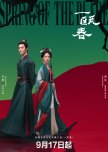
Xu Kai’s Shen Run Deserved a Better Story
Spring of the Blade is a 30-episode, female-centric revenge story following Xie Qingyuan as she schemes her way back home to clear her mother’s name. Along the way, she reunites with her childhood playmate, Shen Run.Shen Run is probably one of my favorite characters Xu Kai has portrayed. He’s such a stark contrast to Xu Kai himself—the guy who grabs cart noodles when he’s home and is known for his infectious laughter.
For a while, it felt like Xu Kai was stuck playing either the cold, emotionless male lead, the aloof and silly jealous guy, or being diminished to almost eye candy in female-centric stories. Then he surprised me with his portrayal of Chen Huai in Eight Hundred. And now, with Shen Run, he continues to show me that he has always been capable of portraying complex, nuanced characters—you just have to give him the chance.
Suddenly, all those silly, arrogant expressions from Gu Yanzhen feel darker and scarier. The cold stare of Bai Jue feels more deadly. And the longing expressions of Mei Zhuyu now feel more heartbreaking.
Despite this amazing display of Xu Kai’s acting range, Shen Run is unfortunately stuck in a story that seems determined to wallow in its own “woe is me, I’m a low-budget drama” mentality.
And anyone can argue with me that the budget is the problem, but I think that’s an easy cop-out. I’ve seen lower-budget dramas do much more with stronger writing and more thoughtful filmmaking.
The technical presentation of Spring of the Blade itself leaves much to be desired. What is actually holding this production back from using its locations to their fullest? There is beautiful architecture all around them. Where is the creative use of natural lighting? The intentional framing? The camera movement? A limited budget may restrict what you can build, but it doesn’t prevent you from being creative with what you already have.
And that is especially frustrating because Spring of the Blade gave us so many promises in its character-establishment episodes: two revenge stories, two parallel character arcs, and the promise that their paths would eventually collide in a way that would leave us breathless and filled with longing.
Instead, somewhere along the way, we’ve found ourselves wondering what is even the point of watching this.
The twists aren’t twisting, and the thriller isn’t thrilling.
I feel like what happened to Shen Run has, by now, become something of a norm in C-dramas trying to cater to an overwhelmingly female audience. And, to me, it’s also a representation of what can happen when numbers and analytics begin dictating storytelling—when audience demographics, investor interests, and celebrity followings carry more weight than the story itself.
Female-centric storytelling isn’t the problem. The problem is when creating a “female-centric” story is interpreted as requiring everyone and everything around the female lead to be diminished rather than allowing multiple characters to be fully realized.
Because a great female character doesn’t need the characters around her to become smaller for her to become bigger. If anything, putting her opposite equally complicated, compelling characters gives her more to fight against, more to love, more to lose—and ultimately, more room to become unforgettable herself.
And that may be my biggest disappointment with Spring of the Blade.
What I’ve ended up looking forward to most is Xu Kai’s portrayal of Shen Run—a man I desperately wish had been placed in a better story about love, revenge, and loss.
Was this review helpful to you?
A good love story with a great additional cast and many memorable moments
I remember the first episode of this series really annoyed me. Rival sons, rival dads, school AND tennis (yawn), I thought OMG too much cliche. Personally I find tennis THE most boring sports to watch there is. So it hit me with VERY adverse conditions.That said, now in hindsight, I felt like this was one of the great series of the season, and Teshow and Ping are both great new discoveries especially with Teshow having his first MC role and I think first BL, I forsee a great career for him. I hate to say it, but he clearly shone out the most in the series. There is a bit that comedic element when you have seen the dads being so many dads and uncles by now, but then for them I am glad they have their steady income. It's still weird when you have seen them as evil dads, uncles and whatnot so often now. XD
Despite being not the first rival to lovers series and a sports added I am not interested in, the development of the characters, their love and the surrounding characters was all well made and fit good into a greater story. The plus side of the "nasty dads" was, they never were against their sons being gay, which was a happy change for one, so it was easy for me to see not a 100% turnaround but some sort of progress to coexistence and supporting their sons. We got good visuals, the sidecouple BoatKong could have had a bit more development (teacher Kong looks so handsome ^^), but then there is always the question what to spent time on, MC or SC, and in this case I guess it was best to push fully on the MC, especially given they are still both more or less new. Given what is so oddly called the "facecard" I wasn't surprised the followers of Teshow, now to the industy, really blew up rising during the show. He just has this natural charisma which is difficult to "learn".
Anyhow, I felt in the end the series did all things right, bringing a fresh air into a well know plot type and still feeling well and not boring at any moment, playing out a wide arrangement of emotions and situations. Espeically, unlike a number of BL series, Bay and Sun were "normal" and believable characters, one you could imagine to be real "like you and me", and not weird over the top caricatures. While not one of the totally sensational all time remember hits, I am confidentaly rating it a
9/10
Great career start, we hope to see more!
Was this review helpful to you?
A Winter Sun Wakes the Wind in Spring Hills' Dream
2 people found this review helpful
The best bl I've watched in years
This show would be a solid 10 stars for me... If only it weren't for the second couple Haoyu and Han Lu.To be fair I do think their plots added relevant commentary on the Chinese Showbiz industry, but their story was so disconnected from main plot and their characters just don't seem to work together. I rewatched this series and completely skipped every single one of their scenes and NOTHING was missing from the story. You can not see that they're in love with each other by watching them interact (as opposed to the other couples, who managed to portray their connection wordlessly throughout the show). I've seen some fans speculate that it may be an artistic choice; that they were trying to portray two young people who foolishly beleive that they're in love. If that really was the intention then they've succeeded, but it's still hindered the watching experience.
Other minor weak points of the show for me was Qinlang's acceptance speech, which compared to the extremely well thought out dialogue throughout the show, felt quite jarring and fake. I also was a bit put out by how Qinlang's grief was portrayed. I understand that his philosophical outlooks on life allowed him to "get over it" quicker, but I think that more remembrance, if not sadness, could have been shown. The switch in mood from one episode to the next felt unnatural.
Now, don't let my critiques discourage you from watching this show because it truly is a masterpiece!
The other pairings were amazing. The main couple had this uncanny romantic tension from the get go, yet they didn't rush their story either. The characters feel so grounded and the story is amazingly written. Not to mention the cinematography and the music!
I feel like the positive part of my review is too short to give the show justice, but I do have places to be so I'll leave it here.
Just give this a go, I'd recommend it to everyone if I could!
Was this review helpful to you?

The Beauty Inside
The Beauty Inside is a charming and emotionally engaging romantic drama that manages to turn an unusual fantasy premise into a surprisingly heartfelt story about love, identity, and acceptance.The central concept is what makes the drama immediately intriguing: Han Se-gye mysteriously changes appearance for a period of time, while Seo Do-jae, despite his own unusual condition, becomes the person who sees beyond appearances and falls in love with who she truly is. The romance develops with plenty of warmth, humor and touching moments, while the drama also explores the pressure of living under other people's expectations.
Seo Hyun-jin and Lee Min-ki have excellent chemistry, and their performances give the relationship genuine emotional weight. The supporting cast also adds a lot of charm, particularly Lee Da-hee, who brings a lively energy to the story.
The drama is not without flaws. The premise occasionally becomes repetitive, and some of the later episodes lose a little of the freshness and momentum of the beginning. Nevertheless, the emotional payoff is satisfying, and the overall tone remains warm and enjoyable.
Beautifully produced, funny when it needs to be and genuinely touching at its best, The Beauty Inside is a romantic K-drama with a memorable premise and a lot of heart.
Was this review helpful to you?

This review may contain spoilers
This is genuinely a family-friendly series
It’s a nice opening scene, and I don’t think I’ve seen a series about a group of boys entering a school that’s becoming co-ed for the first time. So, it’s a first time for the school and a first time for the boys, too.The actors are genuinely funny. They’re still young, so their acting isn’t quite there yet, but I think that’s understandable for a campus-type series. There’s something charming about watching them figure things out as they go.
I hope this really captures what a high school campus feels like nowadays. It’s almost like a window for fans who didn’t get to experience what the new generation’s high school life is like. I just hope other productions don’t start copying this concept right away—give it at least 4–5 years, hahaa. 😭
This is genuinely a family-friendly series, and I found it really comforting to watch.
Hopefully, this will be the last campus series I watch this year. 😂
Was this review helpful to you?
I LOVED EVERY SECOND OF THIS DRAMA! ❤️ One of My Favorite Historical K-Dramas!
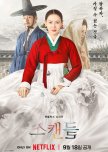
I honestly LOVED EVERYTHING ABOUT The Scandal! ❤️ From the very beginning to the final episode, I was completely hooked. The storyline, the emotions, the characters, the relationships, the twists, and the overall atmosphere all came together so beautifully. I didn't expect to become this attached to the drama, but by the end, I was genuinely sad that the journey was over. This is only my **third historical K-drama**, and somehow it managed to leave a really special impression on me. ❤️Ji Chang-wook was PERFECT as usual! There is something about watching him in a drama that makes it so easy to get invested in his character. He completely delivered here, and I absolutely loved watching him throughout the story. And then we have Son Ye-jin, who was a completely new experience for me because this was my first drama with her. She honestly did NOT disappoint me at all! I loved her acting so much, and she made such a strong impression on me. She was absolutely wonderful to watch. ❤️
And Nana was fantastic too! This was only my second drama with her after Justice, and once again, I really enjoyed her performance. I loved seeing all these characters develop and interact with each other, and the cast made the entire story so much more enjoyable. The acting, chemistry, emotional moments, and tension kept me invested all the way through. There were so many moments where I just wanted to keep watching because I needed to know what would happen next!
And that ENDING!!! ❤️❤️❤️ Honestly, one of the best-fitting endings I have seen that proved one fact.
# DESIRE HAS A PRICE , A VERY EXPENSIVE ONE
I loved how everything came together, and it felt so satisfying after everything the story had taken us through. As someone who isn't usually a huge historical K-drama watcher, I am genuinely surprised by how much I loved The Scandal. Only my third historical drama, and it has already made this much of an impression on me. ❤️ I loved the cast, I loved the storyline, I loved the emotions, and I loved the ending. I LOVED IT ALL.
Was this review helpful to you?
 1
This review may contain spoilers
The winners take it all
Smart and consistent writing, nice pacing, relatable setting, good casting and generally strong performances – not to mention a buttload of TeshowPing chemistry – are the most important ingredients responsible for "Match Point" being a very solid BL, possibly the best GMMTV released so far in 2026. Compared with other shows, this one is about something, has real heart and made me emotional, even teary, several times – which surprised me at first.The story is almost entirely focused on the main couple – Bay (Teshow) and Sun (Ping) – and deceptively simple, based on the well-known trope of "enemies to lovers". However, this is not a retelling, remake nor rehash of "Bad Buddy" nor "Head 2 Head" – the show's take on that trope is its own. And it is a good take – for several reasons. The backstory is grounded and feels genuine – a conflict between two neighbors (who used to be friends), which engulfs their families, splits one of them and threatens to split the other. The execution is almost perfect, relying on mutual resentment between Bay and Sun mixed with a barely hidden longing for ending the feud and becoming friends again. This is neatly combined with both main characters being the right age to realize what they feel and want as well as being able to act upon those feelings and desires.
The show's good pacing stems from how evenly the content was spread over all 10 episodes. We get the setup and most of the cast introduced in episode 1, by episode 2 we know Bay and Sun do not really hate each other and that Bay is attracted to Sun, in episode 4 they end their rivalry, Bay confesses in episode 5, Sun is won over in episode 6 and they become a couple in conclusion of episode 7. This leaves 3 episodes to convince Bay's and Sun's fathers to end their conflict and solve other problems. There is something to do, to solve, to deal with in every episode – Sun's and Bay's story progresses nicely, fueled by their dynamic or external events, and the show never runs out of steam.
Let us also appreciate the value of having two main characters who feel relatable and behave like actual humans – something many currently running BLs seem to have a problem with. "Match Point" accomplishes this by the virtue of its writing as well as the very good work of Ping and Teshow. Sun is more mature than Bay, more hesitant, shy and thoughtful, careful, calm and collected. Ping infused his character with fragility and vulnerability it required, while being strong and driven – like every athlete should be. Bay is a different animal altogether, but also undergoes the biggest change: from cocky and antagonistic through confused and curious to loving and dedicated. It all comes across surprisingly believable. Teshow does a great job here using his physicality, in particular his eyes: they tease and provoke, they are hungry and eager, they greedily devour Ping – but they can also be loving, gentle, tender and sad. Both Sun and Bay are emotional, horny teens, but when they have to – they act in a rational, proper adult way, supporting each other, being there for each other. And they can actually talk with each other about what they want (and what they do not want), what they fear etc. – there is hardly any miscommunication between Bay and Sun. From episode 5 onwards they play on the same team – and that team keeps winning.
There are many comments regarding "Match Point" expressing regret that Boat (Sing) and Kong (Chimon) were not given more screen time and their relationship is underdeveloped. I do not see that as a flaw nor a problem. This series is not about any of the supporting characters – not about Bee's and Chun's enmity, not about Chun's family problems, not about the people from the tennis club and not about Boat and Kong. I do, however, think that both of them fulfill a very important role in the story – they provide contrast for the main couple and act as a mirror for Bay and Sun and their relationship. Supporting characters usually do not do that, but it is a very good way of utilizing them without giving them too much screen time. While Bay and Sun have a troubled, but intense past of a childhood friendship and later rivalry, which turned into mutual attraction, Boat and Kong appear to have always been on friendly terms and their attraction seems to have always been there. Bay and Sun gravitated towards each other, collided and became one – for Boat and Kong the mutual pull was not strong enough and they drifted apart for years. Bay and Sun are both passionate – about what they do, what they like and about each other; by comparison Boat and Kong seem settled, even a bit resigned, cautious and muted. Since this is a love story, there are no actual opponents; instead there are obstacles to overcome – and those are very different for the main couple and the supports. Once Bay and Sun end their rivalry, the only real obstacles for their relationship are external – mainly the conflict between their fathers. For Boat and Kong all obstacles are internal: it is not the lack of mutual attraction or feelings, but years spent on not acting on those feelings, growing apart and ending up in a limbo of awkwardness, with both of them hesitant or even afraid to say or do anything to change it, even when the opportunity is there. This is where the mirror works best: Sun and Bay fight and win everything they wanted – Boat and Kong give up and lose years they could have spent together. Good to see a reminder like that in a BL.
The show's OST consists of two songs, both performed by Ping and Teshow: the fast paced "Love Match", which was used in opening credits and has a thematically matching MV, and "ได้เวลารัก (Love Time)", a soft romantic song for a fresh couple/ship; there's a dreamy quality to both the song and its MV. Both songs do not get overused in the show, appearing when they need to. The same can be said about music – background music – in "Match Point" in general: it is not intrusive, overbearing nor too loud (like in so many shows). Take the episode 8 rooftop confrontation: minimal background ambient can be heard when Bay proclaims his love for Sun and is pleading with Chun – and the music does not turn into loud cacophony once Chun gives in. More Thai shows could follow that example.
I left the best for last: TeshowPing. I mentioned already that each of them is doing great in this series, but – like with all BLs – its heart is its ship. This was the biggest surprise of the show for me: Ping and Teshow work brilliantly as a couple. Both are visibly comfortable with each other, which makes their interactions – the rivalry, the banter, the intimacy – feel natural and genuine. Amazing job for their first project together. They and their chemistry are the show's biggest assets and the reason why I impatiently waited for every episode. Crazy kids got my heart beating faster – that is something very few BL ships can do. Their appearance in "Match Point" was enough for TeshowPing to earn a place in a small group of my all-time favorite ships, next to YinWar, BounPrem, MarkOhm and SeaKeen.
Was this review helpful to you?


