
 Celebrity


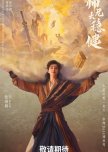
É muito bom
Eu comecei a assistir esse drama por causa do ao rui Peng, não sabia que ia dar tantas risadas haha. É muito engraçada e leve gostei da história e da dinâmica entre os personagens, estou no começo, e por enquanto estou ansioso pra assistir toda a série. Resumindo, gostei muito, e vale muito a pena se vc procura algo engraçado.Was this review helpful to you?
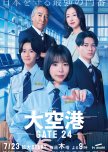
A Pleasant Viewing Experience
Coming on the heels of some shows I didn't like very much, Mori and her coworkers at Gate 24 were a breath of fresh air. Not overly complicated, easy to follow plots, an interesting view into Immigration and Customs in Japan. With her occasional "Oh my" Mori was the center of this show and though her expressions and reactions were purposely limited in range, she was a reliable commodity and delivered the expected smiles. My list of Jdramas I've watched is just a tenth of Kdramas and I'm not going to say this was a masterpiece by any means, but it was entertaining and light.Was this review helpful to you?
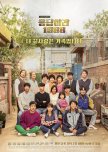
Nostalgia for an Imperfect Time
*Reply 1988* illustrates that nostalgia doesn't require rose-tinted glasses. Everyone has experienced various ups and downs in their lives, particularly in their youth. But there's something to the concept of found family and the hurt and love that is born out of that. This show is a reminder that the people in our lives matter more than the things we accumulate, or the money we make, or the places we go. A life is meaningful when we love and are loved in return. Friend love, family love, romantic love. Love for a time and place that seemed infinite but passed all too quickly.> I regret being unable to say my final farewell to that place where we won't be able to gather like that again.
> To the things that are already gone. To a time that has already passed. I want to say a belated farewell.
> Goodbye, my youth.
> Goodbye, Ssangmun.
> A time so warm and pure, that's why we miss that time so badly.
> Can you hear me? If you can hear me, reply. My 1988, the days of my youth.
Was this review helpful to you?
Was this review helpful to you?
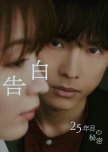
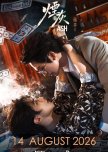
Turning the pages of time
The story of an awkward boy who saved a girl, and what began as an infatuation slowly grew into an obsession…or perhaps, in a less intense way, watching and lurking from afar while believing he was her guardian angel. It is a rather eerie way of loving someone, but there are people who do exactly that. Sota simply made it his life for 25 years.The mystery was compelling and the drama’s intensity was subtle in a very Japanese way…this is not a K drama after all. There are no huge emotional explosions or overly dramatic confrontations. The acting is restrained, sometimes even dry for viewers used to the heightened emotions of Korean dramas, but it works for this story. I’ve enjoyed the entire series, although I have to admit the finale felt somewhat underwhelming and predictable.
What I enjoyed most was how the story progressed one step at a time. Murders happened, secrets surfaced and slowly we began to understand what truly happened 25 years ago. And after all that mystery, to be honest, much of it comes down to one of the seven deadly sins…envy. Or perhaps one of the Ten Commandments: do not covet your neighbor’s wife. Amazing how something so basic can create consequences that last for generations.
The foundation of the story is actually quite simple, but its delivery is subtle and layered. For me, watching this series was like reading a mystery novel…turning one page after another and peeling away one layer at a time. Every chapter revealed another secret, another lie and another person connected to the past.
And then there is Sota and Mariko. What started as something that could easily be called creepy eventually became something more complicated. Sota finally understood that loving someone does not give you permission to make yourself part of their life. His apology was perhaps more meaningful than his confession because, for the first time, he wasn’t asking Mariko to understand his love…he was acknowledging what his love had done.
In the end, 25 Years of You wasn’t really about who killed whom. It was about what happens when love, envy, guilt and secrets are allowed to live for 25 years. I may have wanted a stronger finale, but getting there was the best part.
Sometimes the mystery isn’t about the final page…it is everything you discovered while turning the pages.
Was this review helpful to you?
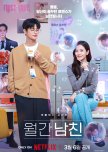
Romcom with substance
It’s been ages since I watched a K-romcom that I enjoyed this much. It’s got everything— an interesting premise (women turning to fantasy boyfriends when disappointed by IRL men), a well-built story with no sagging plot or filler episodes, just enough angst (not a lot) and Chemistry!!Chemistry everywhere… lots of famous K-heartthrobs in cameos, and the chemistry is playfully overdone, but still fun. And the chemistry between Jisoo and Seo In Guk is perfect.
The OST is cheerful and catchy.
It’s short (10 episodes), totally binge-worthy and will put a smile on your face.
Was this review helpful to you?
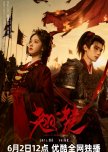
Just Finished Ashes to Crown…
finished Ashes to Crown and honestly… what a ride 😭the mystery, revenge, political intrigue, the cases… everything kept me hooked. i really liked how the story doesn’t rely too heavily on romance and actually gives the plot room to breathe.
and Chen Duling as Chu Zhao??? she fits this role SO well. calm, smart, capable, and you can really feel the character’s strength without her having to overdo it. her chemistry with the ML is also really good 👀
the whole drama has this mysterious atmosphere that makes you keep wondering what’s actually going on. plus the visuals and costumes are gorgeous.
no spoilers, but if you like cdramas with a smart FL, mystery, revenge, court/political intrigue and a good romance on the side, give Ashes to Crown a try.
definitely one of those dramas where you watch one more episode and suddenly it’s 3am 😭
Was this review helpful to you?
This review may contain spoilers
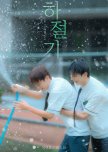
This series had me giggly
Episode 1 alone had me giggling so much. And the way Cha Do Hyeon controls Yeo Eun Ho with his words and actions hit different. I LOVED it. The series was off to a strong start, and it stayed steady throughout. The only speed bump for me was the ending because I'm very tired of fake-out dream sequences.I didn't like that Yeo Eun Ho wakes up and is like, "It was a dream." It's misleading when it's apparently a subconscious process there to show emotional growth, and he's visualizing a scenario where he confessed & embraced his feelings much sooner. That all could have been done without a fake-out dream sequence. It was misleading and confusing. I would have much preferred to see them deal with Yeo Eun Ho's obvious insecurity & unhappiness with the direction his life is going outside of his relationship. They just have him coasting by in life because it's easier than trying to do something else & if I'm being honest, it was too realistic.
I don't watch these dramas to be called out, okay.
It also would have been nice if they had done more with the school & developing the characters outside of the romance. What they did was fine, but it didn't feel like they were in school. They were just sitting in a classroom. Thankfully, there were at least plenty of extras, so the world didn't feel empty. It makes it feel like they had a bigger budget even though they might not have.
The acting was really good. I love Kim Do Min's acting, & he's adorable! This was Seong In Ho's first role & I think he killed it. He was a bit robotic, but I think that's what they were going for. They had really good chemistry as well & the kisses were something else. I also haven't seen hand-holding this good since Themepo.
I had a lot of fun watching this series; it was cute & easy, with the only real disappointment for me being the ending.
P.S.
Beating your kid with a golf club for smoking is both wild and valid.
Was this review helpful to you?
This review may contain spoilers
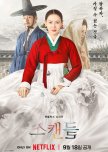
A Masterpiece of Psychological Tension and Aesthetic Brilliance Beyond Genre Clichés
Despite the heated controversies dividing audiences, The Scandal stands out as a high-caliber artistic achievement. Director Jung Ji-woo has delivered a bold, mature, and visually hypnotic series that deliberately breaks away from the conventional tropes and comforting clichés of traditional K-Dramas.The performances from the cast are nothing short of masterclass level. Ji Chang-wook delivers one of the most daring and layered performances of his career. Stepping completely out of his usual "good hero" comfort zone, he masterfully explores the darkest, most ambiguous depths of his character. Alongside him, the extraordinary Son Ye-jin proves once again why she is a master of her craft, commanding the screen with a chilly, subtle, and captivating psychological tension.
The widely criticized slower pacing is, in reality, a deliberate and sophisticated directorial choice. It provides the necessary breathing room to unravel the complex backstories of the leads and to fully immerse the viewer in the rigid, unforgiving social hierarchy of the Joseon era.
While it is somewhat understandable that such a sharp departure from traditional Korean drama boundaries caught some viewers off guard, the widespread disappointment regarding the mature content is difficult to fully defend. Given that this series is an explicit adaptation of the classic epistolary novel Dangerous Liaisons, how could anyone realistically expect a story stripped of its sensuality and nudity? Intimacy and physical seduction are the very engine of the original plot's dramatic conflict.
In this adaptation, the passionate scenes never devolve into cheap, gratuitous voyeurism. Instead, every intimate sequence serves as a vital battleground for the ruthless psychological warfare and power dynamics between the protagonists.
The Scandal is certainly not a show tailored for everyone. However, for those who appreciate a narrative proud of its own distinct identity and artistic freedom, it is a highly rewarding, unforgettable experience.
Pros:
Masterclass Acting: Ji Chang-wook and Son Ye-jin deliver career-defining, deeply complex performances.
Artistic Departure: A refreshing break from standard K-Drama tropes, offering a mature and gritty psychological narrative.
Stunning Aesthetics: Exceptional cinematography, meticulous Joseon-era set designs, and a brilliant musical score that amplifies the tension.
Faithful Adaptation: Boldly respects the core themes of the original source material, Dangerous Liaisons, without watering down its essence.
Cons:
Deliberate Pacing: The slow, atmospheric rhythm requires patience and might not appeal to viewers looking for a fast-paced plot.
High Maturity Level: The heavy focus on explicit sensuality and power dynamics makes it less suitable for audiences expecting a traditional, light-hearted romance.
Was this review helpful to you?

This review may contain spoilers
well formed story. Just needed to wrap up Ga On better
Great show that left lots to think about and reflect on. only complaint is that I wish Ga On's antagonists were wrapped up better. They said they would get back to the guy who led to his parents murder but never did. He was revealed and ostracized to his family, but he still had all that money and was never fairly prosecuted. There was also GA On's professor who was let go so that he could "live in hell". However, based on his parents' murderer, the professor will live a happy life without repercussions.Was this review helpful to you?
 1
 1
This review may contain spoilers
You Don't Have to Be Perfect to Be Worthy of Love
The Early Spring was one of those dramas I had been anticipating for a long time. I discovered Jing Boran this year through Sunset Secret Regret, and after that I started following every teaser, update, and bit of discussion surrounding this drama. I even watched the chaos unfold in the comments while it was airing. I am very much a binge watcher, though, so I waited until it finished before joining the watch party. By then, I had already seen friends either drop it or absolutely love it, so I honestly had no idea which side I would end up on. I only knew one thing: I was definitely going to watch it.Originally, I didn't even plan to write a full review because I thought I could probably describe my feelings about it in four lines. But while watching, I kept questioning myself because my interpretation of the characters was so different from a lot of what I had read, including discussions around the characters and even some of the cast's own interpretations. I can completely understand what frustrated people about this drama, and I can see why certain things annoyed viewers. The funny thing is, many of those exact things were what I enjoyed most.
At its core, The Early Spring is about one simple idea: you don't have to be perfect to be worthy of love. And I think that is exactly what the drama is trying to show through Luke and Flora. This isn't a story about two perfect people finding each other and building a perfect relationship. It is about two deeply imperfect people with their own insecurities, baggage, personalities, expectations, and emotional limitations who somehow fall in love and spend six years trying to figure out how to make that love work.
And yes, they make A LOT of mistakes along the way.
Luke is introduced as a brilliant, successful, arrogant, sharp-tongued creative director who has extremely high standards. He is proud of his abilities and has very little patience for people he considers incompetent. Flora, meanwhile, is a newly graduated young woman who moves to Beijing with a clear idea of what she wants from her career. She gets rejected by Luke during her interview, only to somehow land the job anyway and end up working under him.
Their first interactions are not exactly warm. Luke doesn't think she meets his standards, while Flora is determined to prove him wrong. But I really enjoyed watching them slowly learn from each other. Luke begins to respect her consistency and willingness to learn, while Flora gradually realizes that beneath his cruel delivery, many of his professional lessons are actually valuable. His words can be unnecessarily harsh, but his standards and advice about surviving the corporate world often contain truths she needs to hear.
This was probably my favourite part of the drama: the workplace itself.
The corporate environment felt surprisingly realistic to me. The office politics, competition, professional expectations, workplace conflicts, power dynamics, mistakes, difficult clients, career pressure, and the constant need to prove yourself all felt believable. I could relate to so many of those situations, which made the business side much more interesting to me than it might be for someone who is mainly watching for the romance.
And unlike many dramas where the business storyline exists mainly to give the leads somewhere to meet, here I actually found the professional and romantic stories equally compelling. I could watch Luke and Flora dealing with a workplace problem and be just as invested as I was when they were dealing with their relationship. For me, that balance is one of the biggest reasons this drama worked so well.
Their relationship develops gradually. They meet, challenge each other, admire each other, become attracted to each other, and eventually cross a line neither of them expected. After their one-night stand, Flora decides she wants to stop because she is worried about what a relationship with her boss could do to her career. Luke, however, wants to continue and proposes a secret relationship. They agree on their own terms, including keeping it hidden even from their closest friends and family.
I found the whole argument about who suggested the secret relationship first surprisingly funny because, to me, it was obvious. Flora was the one trying to end things, while Luke was the one asking her to stay and suggesting a secret relationship, and she agreed with her own conditions. So the idea of turning it into some major question of who suggested the relationship never really mattered to me. They both made the choice.
I also appreciated that Flora was an adult who understood what she was doing. She wasn't completely powerless in the relationship. She had her own boundaries, made her own choices, and knew that being with Luke could affect her career. At the same time, I absolutely recognize the uncomfortable power dynamic. Luke was her boss, and some of the ways he treated her were genuinely cruel. Calling it a consensual choice doesn't erase the fact that the professional hierarchy made the relationship inappropriate and complicated.
What kept me invested in Luke, though, was that the drama didn't simply present him as a perfect green-flag hero. He is possessive, jealous, impulsive, emotionally immature, and has a terrible temper. His sharp tongue can hurt Flora badly. But I also loved how self-aware he could be after those moments. He constantly questions himself, recognizes when he has gone too far, apologizes, and tries to understand her. His growth happens through all those arguments and mistakes rather than through one magical transformation.
For me, Luke was actually much easier to understand than Flora.
His feelings are usually visible through his actions. He protects her, helps her, worries about her, makes himself available to her, introduces her to his friends, and repeatedly tries to understand what is happening between them. Even when he is angry, his attachment to her is never particularly difficult to see. He also doesn't play games with other women, and when there is a female friend who could potentially create jealousy, he makes his boundaries clear.
He is far from perfect, but I found him incredibly watchable. Jing Boran also deserves a huge amount of credit here. He manages to make Luke arrogant, sexy, frustrating, vulnerable, childish, jealous, funny, and genuinely affectionate without making the character feel completely one-dimensional.
And yes, I enjoyed his jealous and possessive moments. Not because I think possessiveness is healthy, but because they reveal so much about him. Luke is someone who struggles to process his emotions properly, so when he feels threatened or insecure, his first reaction is often anger. But you can also see him slowly learning to handle those emotions differently.
Flora was more difficult for me to understand.
I liked her independence, determination, professional ambition, and internal strength, but I struggled with how little she communicated her feelings. Her insecurities about their relationship make sense in the beginning, especially because they are hiding it and because Luke is her boss. But after several years together, I kept asking myself why she still didn't let him into the most important parts of her life.
The agency incident, the sexual assault situation, her housing problems, and especially the death of her friend were all things I found incredibly difficult to understand her hiding from him. He was not just her boss anymore. He had been her boyfriend for years. Yet she repeatedly handled major problems alone instead of allowing him to be there for her.
And that is where I think the drama becomes much more interesting than simply asking who was right and who was wrong.
Neither of them is completely right.
They are both victims of their circumstances, but they are also responsible for the choices they make. Flora's inability to communicate makes Luke feel excluded from her life, while Luke's controlling nature and sharp words make Flora feel unsafe about opening up to him. They keep triggering each other's worst qualities, and instead of fixing the underlying problem, they repeatedly patch things up and continue.
That cycle can absolutely become frustrating, and I understand why some viewers felt exhausted by it. But I actually think that repetition is part of what the drama is trying to show. Their relationship isn't difficult because one person is secretly evil. It is difficult because two people can love each other deeply and still be terrible at loving each other properly.
The marriage storyline was one of those moments where I really wanted to shake Flora. She suddenly starts thinking about marriage because her friend is getting married, even though she and Luke are already going through a serious emotional crisis. And Luke's reaction made sense to me because he was already questioning whether he actually had a place in her life.
He had introduced her to his friends. She had never really done the same with him. Her roommates were clearly part of her emotional family, but Luke remained strangely confined to those four walls of their secret relationship. That distinction matters.
I don't think Flora didn't love him. I think she loved him in her own way, but she never fully made room for him.
And that is why I found Luke's frustration before the final breakup understandable. When he asks whether she even considers him her boyfriend, that isn't simply jealousy. It is the realization that after six years, he still doesn't know where he stands in the rest of her life.
The drama also does a good job of showing why Luke became the way he is. His childhood, his relationship with his father, and the lack of emotional warmth he received explain a lot of his emotional immaturity. They don't excuse his behaviour, but they help us understand it. I particularly liked the contrast between Luke's professional competence and his complete lack of emotional competence.
Thankfully, he isn't left there.
One of my favourite parts of the drama is watching Luke slowly recognize his own behaviour and change. He learns that being successful, intelligent, attractive, and capable doesn't automatically make him a good partner. He has to learn empathy, communication, restraint, and how to let another person have their own choices.
The chef, Luke's close friend, was also such a valuable character. I loved his conversations with Luke because he often acted almost like Luke's emotional translator. He could look at Luke's behaviour and immediately understand what was actually going on underneath it. His advice helped us understand where Luke and Flora were emotionally at different points in the relationship, and I really appreciated having someone who could challenge Luke without simply judging him.
And then there is the chemistry.
Honestly, this is where The Early Spring completely won me over.
Jing Boran and Sun Qian have fire chemistry. Their scenes together have a natural intimacy that made me believe these two people had been deeply attracted to each other for years. Their physical scenes are surprisingly intimate for a C-drama, but they never felt gratuitous to me. The attraction is an important part of their relationship, and the drama isn't afraid to acknowledge that these are adults who genuinely desire each other. Their chemistry also exists outside those scenes, through looks, silences, teasing, jealousy, arguments, and the small moments between them.
The acting from both leads worked particularly well for me because neither character is easy. Luke can be incredibly frustrating, while Flora can be difficult to read. Jing Boran gives Luke so many tiny emotional changes that you can often understand what he is feeling before he says anything. Sun Qian similarly captures Flora's insecurity and gradual professional growth, even when I personally struggled to understand some of her emotional choices.
I also loved that the story doesn't reduce Flora to Luke's girlfriend. Her career matters. Her professional growth matters. Her friendships matter. Her ambitions matter. Watching her enter the corporate world as an inexperienced graduate and slowly become someone confident and capable was genuinely satisfying.
And this is another reason I loved the business side so much. The drama understands that these two people have lives outside their relationship. They aren't just waiting around for the next romantic scene. They have careers, colleagues, friendships, family problems, professional ambitions, and personal failures.
Even Luke's relationship with his friends added something important. I especially liked seeing him have people around him who could call him out and help him understand himself.
I also have to mention Luke the dog. I don't care how serious the drama gets, give me a cute dog and I'm automatically more invested.
The biggest weakness for me was the ending.
After spending so much time building a six-year relationship and showing us exactly how complicated these two people are, the final stretch felt rushed. Their reconciliation needed more time. Luke's personal growth deserved more exploration, Flora's decision to let him back into her life could have been developed more carefully, and I wanted to see them actually work through the things that had broken them apart instead of having everything move so quickly toward the conclusion.
But somehow, I still didn't care as much as I probably should have.
Because by that point, I was already completely invested in them.
I didn't need them to suddenly become perfect. In fact, I think that would have gone against the entire point of the story. What mattered to me was seeing two flawed people finally understand that loving someone doesn't mean they will always behave perfectly, and being worthy of love doesn't require becoming a perfect person first.
You don't have to be perfect to be worthy of love.
That is what I ultimately took away from The Early Spring.
It is messy. It is frustrating. It is sometimes uncomfortable. There are choices I absolutely would not defend in real life, especially considering the workplace power imbalance. But it is also one of the most compelling relationship dramas I've watched this year because the characters feel like actual imperfect people rather than carefully constructed romantic ideals.
And for me, that made it incredibly watchable.
I came for Jing Boran after discovering him in Sunset Secret Regret. I stayed for Luke, Flora, the workplace story, the complicated relationship, the chemistry, and the endless arguments that somehow kept making me want to understand these two people a little more.
The Early Spring may not give you a perfect love story. It gives you something much messier: two imperfect people who love each other, hurt each other, grow, fail, try again, and eventually find their way back to each other.
And honestly, I loved that.
Was this review helpful to you?
Not Worth Starting If You Can't Finish
Only two episodes available for non-members and nothing in the free episodes would make me pay 15 dollars.My rule is, if a show makes me drop it, it gets the rating of how many episodes I got through.
DROPPED 2/10
Was this review helpful to you?

The best adaptation of anything ever made
With creativity, you can truly take something, recraft it and make it better or rather the best version of itself.I usually do not compare different versions of adaptation but this was miles ahead of every adaptation of Hana Yori Dango. They took the manga, recrafted it, modernized it, added dimensions, layers and depth and presented us a cinematic universe where every character, every emotion reached to our core. The plot was very simple, rich boy b*llies and later falling in love with poor girl in a high school setting. But it never ended at that. They added layers after layers. They highlighted the rich society, the pressure the children of rich families face and how they turn them into something they do not want to be. How power is craved and what power can do. It showed the struggle of financially unstable society and the monopoly business tycoons do. It showed a toxic mother and her relationship with their children and on contrary how a warm family, even in struggling conditions can laugh at the meal over the last piece of pork. It also taught us bravery, that you do not need to bow down to power just because you do not belong to the same place. How self pride is the biggest courage. It showed the value of friendship, love and memories. I love how they portrayed every female character with so much of grace, even fif they are hurt, even if they are doing evil, even if they are just existing, they are highlighted. While the drama should have been more male centered I was joyous to see how much importance the women of the story were given to. I absolutely despised Thyme and I did till the very end but I am glad he got his redemption arc which was not just last 2 episodes. He proved himself. Anyways RenGorya for life.
The direction is like watching a 16 episode movie, rather a series. GMMTV didn't hold back on the budget. The color grading made it perfect. The screenwriting was amazing, it kept me hooked without a single second wasted on anything unwanted. The crew did fabulous with the set with even the smallest details holding major significance. I love how the frames managed to capture so much at a time. Every angle, every change of lighting, even the clothes. The sound engineering was cleverly domne. The editing made it the finest. Everything held a significance and fit like a piece of puzzle that gave this the masterpiece F4. The praises can never be enough for the incredible job done. This is the epitome of cinematography.
The cast was solid and solid is my best compliment. I couldn't believe Tu and Dew were first timer. They captured every emotion perfectly. The real life characters were the perfect mirror of the original manga. A more perfect casting cannot exist. Every actor and actress made the entire series even better. It truly felt like they took me in with them to the F4 universe. I especially loved Dew's acting. I genuinely couldn't shred my image of Ren.
I usually get bored of hetero romantic series but F4 was not just that. It was journey of people and their lives. No wonder it became so popular.
Was this review helpful to you?
This review may contain spoilers
Friendship Over Romance
RIP Huang Bo, the Left Chancellor, and Di Nian. I didn't expect to be so deeply affected by the Left Chancellor's death, though I certainly cheered when the Right Chancellor was finally gone—good riddance! My heart goes out to Zhili, who is now left as a widow raising her son alone. I also really yearned for a final scene featuring Fuzhi and Zhishu in the last episode, but at least they survived, which is more than I can say for some of the other couples. Ultimately, the friendships in this series far surpass the romance, and I am perfectly fine with that. Rating: 8.5/10Was this review helpful to you?
Not the terrible drama that some of the reviews make it out to be.
Seeing all the negative reviews, and being a huge JCW fan, I initially started to feel disappointed. But then I decided to just sit down, watch the drama, and judge it for myself instead of letting other people’s opinions influence me.And honestly? I’m glad I did.
The first two episodes immediately caught my attention, and I also found the story quite clear. I genuinely don’t understand some of the comments saying that they “don’t understand what’s going on.” To me, the story is actually pretty straightforward. There are layers to the characters and their motivations, but that doesn’t mean the plot itself is confusing.
I also think the main leads have quite a lot of chemistry considering the characters they are playing. This is not a classic romance or a straightforward love story, and I think that’s precisely what makes it interesting. There is something deeper going on between the characters than simply “who is going to end up with whom.” If you’re expecting a conventional romance, then I can understand why you might be disappointed, but that doesn’t mean the drama itself is confusing or badly written.
Another thing I really appreciated is the way the drama shows aspects of everyday life and professions from that period. We get to see things such as silk and paper production, as well as everyday habits and subjects that might have been considered taboo at the time, such as smoking and sex and even religions. I found those details interesting because they added something to the world-building and made the historical setting feel more alive.
I should also mention that I haven’t watched the older Korean adaptation, nor have I read the original French novel, so I’m judging this drama entirely on its own. I’m not comparing it to the previous adaptation or to the original story.
And no, I also don’t think the drama is as slow as some people claim. I’ve watched Korean historical dramas with 16 episodes where the plot barely moved forward for most of the drama, so compared to those, I really didn’t find the pacing here particularly problematic. There are flashbacks, side characters, and slower moments, but that’s hardly unusual for a Korean historical drama.
For me, this was a well-structured story with beautiful cinematography, great aesthetics, and solid direction. I especially enjoyed the way the drama created its atmosphere.
Now, for the negatives.
The character that annoyed me the most was Nana’s character. And just to clarify, I knew who Nana was, but I honestly had no idea she was such a big name or that she was so well known as both an idol and an actress. That said, I found her character to be the most annoying, monotonous, and sometimes simply uninteresting character in the drama.
I also have to say that, personally, I don’t think her particular look fits a historical drama very well. I know that many Koreans, especially actors and celebrities, have had cosmetic procedures, but sometimes you see a face in a historical setting and it just feels a little out of place. That was unfortunately the impression I got with her.
Overall, I really don’t think this drama deserves all the negativity surrounding it.
It’s not perfect. It has its flaws, and I can understand why some people might not connect with it. But it is definitely not the terrible drama that some of the reviews make it out to be.
Honestly, I think if people stopped reading all the reviews beforehand and simply watched it with an open mind, they might enjoy it much more. Maybe some viewers were expecting a straightforward melodrama with lots of romance and cute kisses on the cheek, and this simply wasn’t that kind of drama.
Personally, I found it interesting, beautifully made, and much more enjoyable than I expected after seeing all the negative reviews.
So yes, I’m very glad I decided to judge it for myself instead of letting the internet do it for me.
Was this review helpful to you?


