
 News


This review may contain spoilers
Gambler knows That the secret to survivin' Is knowin' what to throw away And knowin' what to keep
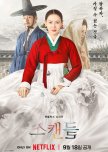
Beyond the inevitable connections with the literary roots of Laclos’s epistolary novel, “The Scandal” captivates through its ability to bring together different languages, eras and sensibilities without being reduced to a mere transposition of a pre-existing model. It is a multifaceted work, in which the subject matter of the eighteenth-century narrative meets Korean melodrama, the rigour of Joseon-era social conventions and a contemporary sensibility towards desire, repression and appearances.This ongoing dialogue between seemingly disparate elements manages to make the whole thing interesting: even as codes, cultures and even the way in which eroticism is portrayed change, certain dynamics remain surprisingly recognisable. The respectable façade, the obligatory conventions, what is permissible to desire and what must instead be concealed – these belong to a specific era, but not necessarily to that era alone. In this way, “The Scandal” uses the ‘classic’ not to look back nostalgically at the past, but almost to observe ourselves through it.
The literary inspiration would inevitably lead the viewer to draw constant comparisons with Laclos’s original work and its most famous film adaptations, but “The Scandal” gradually establishes its own identity by refusing to become trapped in a mere transposition of the source material. Rather than simply reproducing its plot developments, the drama retains certain fundamental mechanisms and reworks them within a structure in which seduction, manipulation and desire become the true driving forces of the narrative.
The wager lies at the heart of this plot: it begins almost as a game, a challenge between two people who know each other all too well, but ends up turning into something far more serious when its consequences gradually slip beyond the control of those who conceived it. Surrounding it are seduction – exercised as much through the body as through words – and manipulation, which finds one of its preferred tools in the written form of letters. In short, the game works as long as its architects can consider themselves masters of the rules; but when feelings, desires and consequences begin to elude their control, even the story’s architects discover they can no longer govern what they have set in motion.
It is above all in the letters that the connection with Laclos becomes most evident, but also most interesting, because the drama manages to transform them gradually, along with the relationships between the characters.
They are not merely a tribute to the epistolary form of the original novel, but become the very driving force behind the story: they preserve memories, shape identities, fuel seduction, reveal feelings and, when they fall into the wrong hands, can become weapons. It is through their correspondence that Cho-won and Lady Cho get to know one another as young people, finding in writing a space of freedom that social conventions deny, particularly to her; Those same letters then become a record of a feeling which, stifled by an arranged marriage and family rules, turns into distance and resentment.
Years later, Cho-won once again uses the written word as a tool of seduction, this time to win over Hui-yeon: the letters allow him to gradually enter her most intimate space, where gestures and the body cannot yet reach. Here, however, the mechanism begins to slip beyond the control of its architects. Hui-yeon, now imbued with a new sense of self, puts her feelings into writing, and that letter takes on two opposing meanings at once: whilst for Lady Cho it may be seen as tangible proof of a wager now almost fulfilled, for Hui-yeon it represents a genuine confession, the most sincere declaration of love ever made. For Cho-won, now wavering, those words can no longer be reduced to the simple logic of the game.
Writing, which began as a tool of manipulation, has given rise to a genuine emotion that can no longer be controlled by those who brought it about.
From that moment on, letters gradually cease to belong to those who write them.
Even on an erotic level, the written word thus takes on a significance that is anything but secondary. Although it is a series intended for an adult audience, “The Scandal” does not rely solely on imagery to convey its sensuality: certain nude scenes form part of a much broader construction of desire, in which the gaze, the gesture and, above all, the spoken word contribute to gradually revealing what the characters have long repressed. Indeed, it is certain letters – with their sometimes surprisingly explicit language – together with the conversations of the village women and the drawings used to tarnish Cho-won’s reputation, that introduce an erotic element which the imagery then merely serves to complement. In short, sensuality is often first imagined and articulated, and only subsequently embodied.
Gradually, “The Scandal” seems to move further away from the simple mechanics of seduction. Desire arises not only from physical proximity, but from what the characters imagine about one another: from the words they receive, the glances they interpret, the expectations and the images they construct in their own minds. To seduce, then, means – even before winning over a body – to construct a presence in the imagination of others. And when that construction begins to coincide with a genuine feeling, the game loses its original nature.
This mental construct – passion constrained by social norms, and the body language that shines through the words and letters – probably defines the erotic and sensual nature of the story better than any image, in keeping with the body’s gradual liberation from the social roles that have long held it captive. Desire arises in the mind, is fuelled by words, takes shape in the imagination, and only then becomes reality.
From this perspective, Hui-yeon proves to be the drama’s surprisingly most multifaceted character, capable of developing a fully realised narrative arc: a woman who is already ‘dead inside’, a virtuous and chaste widow, driven by extreme resolve to be reunited with her deceased husband, whose identity is built entirely around her grief. She longs to die in order to be reunited with a man she never truly had the chance to know.
The paradox arises from a desire rooted in absence—that of her dead husband—but through Cho-won’s letters she ends up confronting a presence that speaks to her, provokes her and seduces her. In that exchange of letters, the presence initially imagined through words gradually becomes a real, tangible desire: the very possibility of imagining herself in a relationship with a man. It is this element of vitality which, through desire, gradually restores her sense of her own existence. The erotic discovery thus becomes the transition through which Hui-yeon comes to perceive herself once more as a living person.
Hui-yeon’s transformation is also achieved through a performance built primarily by subtraction. Nana explores sensuality without making it immediately visible: the mourning clothes, the composure, the subtle gestures, the glances and the hesitations gradually construct a body that seems almost to disappear behind the social role that governs it. When the femininity that this role had repressed finally emerges, it does not therefore appear to be a sudden transformation of the character, but rather the revelation of something that had always been there beneath the surface. The body that is finally revealed is almost the visible consequence of a sensuality that Nana had already established whilst she was still fully clothed.
But the dynamic works precisely because it is a three-way interplay. Son Ye-jin builds the character of Lady Cho through equally rigorous control, often relying more on what she implies than on what she states explicitly: half-finished sentences, intonations, piercing glances with which she seems able to make others confess even before they have decided to speak. Her rhetorical and storytelling skills allow her to continually reweave the threads of the situation, even when the mechanism begins to slip from her grasp. It is significant that she gradually loses some of that composure precisely when she realises she cannot exert the same control over Cho-won: behind the strategist capable of manipulating others, a woman emerges who is deeply dissatisfied with the life she has been assigned, ultimately forced to come to terms with the loss of the one love she had truly desired.
Ji Chang-wook, by contrast, begins with an almost playful seduction, portraying a Valmont-like Cho-won who seems to take particular pleasure in exercising his skills: a smooth talker, a libertine, perfectly aware of the ease with which he manages to win over the women he meets. All of them, that is, except Lady Cho. But even this confidence gradually shifts as the game produces consequences that can no longer be attributed to the logic of the wager. His demeanour changes in tandem with the character’s growing realisation, right up to the finale, where that seemingly absolute freedom proves to be far more fragile than it appeared.
In short, the three actors must carry a complex and largely static story, in which the conflict plays out primarily through words, letters, glances and power dynamics: Son Ye-jin is almost always confined to domestic spaces, and even the visual style often eschews the most immediate glamour. It is the sort of narrative that could easily have become theatrical in the least interesting sense of the word. Yet if it manages to maintain tension, it is also because the three protagonists succeed in shouldering much of the narrative burden, transforming control, seduction and the gradual loss of control into a form of action that requires no grand external gestures.
At the end of the day, what remains is the fate of three people who have each, in their own way, sought to control the desires and circumstances of their own lives, only to find themselves trapped by the consequences of their choices. It is perhaps precisely in their different outcomes that “The Scandal” reveals its most bitter aspect: none of the three truly returns to the life they had imagined, because what has been repressed, sacrificed or pursued for too long inevitably comes back to haunt them.
In conclusion, “The Scandal” seems to succeed on several fronts: it draws on Laclos’s literary legacy without becoming bound by it, making the letters not merely a tribute to the epistolary form, but one of the story’s true driving forces; it constructs a self-aware sensuality, relying more on words, glances and the gradual discovery of the body than on exhibitionism for its own sake; it finds in Nana, Son Ye-jin and Ji Chang-wook a cast capable of carrying a narrative that is anything but straightforward, transforming even the stillness of the settings and relationships into dramatic tension.
But perhaps its greatest merit lies precisely in its ability to bring culture and entertainment together without one having to be sacrificed for the other; In the end, Cho-won and Lady Cho’s gamble becomes the drama’s own. A gamble which, on balance, paid off.
8 ½
Was this review helpful to you?
This review may contain spoilers
I know I'm late to the party glad glad I didn't watch weekly or I would've dropped it and dropped series barely get a glance again but I watched 3 episodes per day. It felt odd watching 9 episodes - usually series have even numbers and I know this is a fan favourite. Sorry if you get confused as I still don't know any of the character's names.I felt it was a mix of a rom com and more drama, angsty series and I didn't like the mix. I've watched plenty angsty, drama, toxic dramas that do have the occasional rom com moment which helps move the plot but in SCD it just didn't work. I liked the first 3 - probably due to action - middle 3 was okay, the last 3 the amount of times I was going to drop but was like I'm nearly done the series so I'll just push through then we get added characters.
The actual story had potential with a deputy turned leader with an university student but was bland. I was thinking maybe because it was a slooooooooooooow burn but that wasn't the issue as done right it can be better than your typical romance. The pacing is what either makes or breaks a series forget about the romance aspect for a minute - it was so dragging. I thought due to the setting it would be a roller-coaster where you're trying to keep up with everything as I thought it was an area of rivals gangs trying to 1 up each other but no - another area that had potential but yet again not explored.
Was I the only one interested in the sister and her husband's story. I was intrigued on her illness and how that impacted her relationships with others. I think Quong Long liked the brother and that is why the wife never felt love from him but then they get killed and their story gets wiped and the whole getting revenge was only mentioned at most twice in the rest of the episodes and I get he needed to move on from his family but he seemed hell bent on getting revenge as it seemed liked Quong Long supposed killer said it was part of a bigger story so the audience was lied to. Maybe the supposed killer was lying to rile up Li but I felt robbed of something had potential to develop further.
Then the detectives, at first I was confused on their role as they came in the middle of the drama and this could've been we know the police is on the MC trail making the audience feel like the MC relationship is fragile and numbered making us anxious on the development of their relationship but no. I felt like I was watching 2 dramas in 1 as they didn't do much interaction and I hate that because the drama feels chunky and mitch matched - is that a word. They didn't cross paths till the end. Then the ending - come on. I hated it. I actually quite like open endings but only when I feel like I got my times and energy worth especially as a bombshell was dropped on us in the last 5 minutes piquing my interest yet again to be disappointed again as motivation, trauma, right and wrong could've been explored.
Communication is key to any type of relationship and I get communication can be hard due to being scared of the reaction, scared of your own feelings and other reasons but seriously I felt like the MC had no proper healthy communication in any of the drama.
Was this review helpful to you?
Excellent Cinematography, not so excellent story telling
I really wanted to enjoy The Scandal, especially because the cinematography is absolutely gorgeous. The visuals, costumes, and overall atmosphere were easily my favourite parts of the film. The actor/actress were okay, not exceptional but also not terrible.Unfortunately, I found the pacing of the story much less compelling (may be they should make it 10-12 eps instead of 8). I also felt that many of the sexual and overly explicit scenes added very little to the plot or character development. Rather than making the story more impactful, they often felt unnecessary and distracting.
I also have to admit that some of the vulgarity felt surprisingly modern for an ancient setting. I found myself wondering whether people in that period could really have been quite that openly crude.
Ultimately, I didn’t particularly enjoy the plot or the amount of nudity, but I can't deny that the film is beautiful to look at. For me, the cinematography was by far the strongest aspect of The Scandal.
Was this review helpful to you?
Great Chemistry and Fun Screentime Marred by a Rushed, Sidelines-Heavy Script
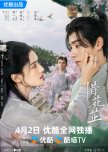
Introduction: A Compromise of Quality Over Quantity 👍👎Blossoms in Adversity (惜花芷) features a genuinely nice script with highly entertaining lead chemistry and fantastic comic timing. The shared screentime between Hu Yitian and Zhang Jingyi adds immense fun and intrigue to the early narrative. However, the production heavily compromised on quality in favour of quantity, resulting in a narrative flow that drags in places only to deliver an incredibly fast, sprinted ending.
💔 Lacking Emotional Dynamics & A Flat BreakupWhile the everyday bantering and romantic chemistry are strong, the deeper emotional dynamics between the main leads severely falter when high angst is required. This is especially evident during their breakup arc, which completely lacked emotional gravitas and felt rushed right through. Instead of lingering on the painful weight of the separation, the script just rolls along to the next plot point, draining the relationship of its emotional stakes.
🕵️♂️ Sidelined Trajectories: The Weather Bureau Spy ArcThe heaviest flaw lies in the late-stage plot structure. The espionage portions set within the Weather Bureau become so aggressively Female Lead-centric that the story structure breaks down. Not only is the Male Lead frustratingly sidelined and underutilised despite his immense potential, but the main villain is completely pushed to the margins as well. This complete erasure of the antagonists eliminates the potential for a thrilling, high-stakes cat-and-mouse game, leaving the final conflict feeling incredibly flat.
Final Verdict ⏳A highly engaging historical watch with great comedy and an easy-to-love main duo, but held back from an 8+ score by its rushed finale and poorly balanced character focus. Any future re-watch for me will target specific chunks of their shared screentime just to enjoy the leads' fun chemistry and early intrigue, skipping the deflated spy arcs and final sprint entirely.
Was this review helpful to you?
An Intriguing Rebirth Story Broken by Inconsistent Execution
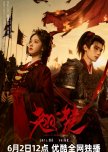
Introduction: A Tale of Two Halves 👍👎Ashes to Crown (翘楚) opens with a gripping, tightly-paced political revenge script [🖨️]. The first half is exceptionally strong, balancing sharp court maneuvering with fantastic cinematography. In fact, if not for the intriguing story and Zhou Yiran’s strong performance, this drama would have scored lower, as the editing becomes incredibly bad in the later episodes 😕. Unfortunately, this flawed second half and flat execution severely drag down its high potential.
⚔️ The Action: Crisp Beginnings vs. Artificial Warfare
The early-game martial arts choreography is a huge highlight, showcasing crisp and authentic swordplay by the Male Lead. However, the realism crumbles during the later battle scenes. The Female Lead enters open warfare without body armor, executing fights that look entirely artificial with no physical power or weight behind them, severely breaking immersion.
💔 The Romance & Character Underutilisation
The palpable chemistry between Chen Duling and Zhou Yiran is undeniably good, but their relationship logic falters. It is highly implausible for a heavily scrutinised court Regent to publicly indulge in a slow-burn romance surrounded by observant ministers and guards. Furthermore, poor final-arc editing completely wastes Zhou Yiran’s momentum, leaving his deeply capable character underutilised and his late-game scenes feeling flat.
Final Verdict ⏳
A fast-paced and entertaining watch with great lead chemistry, but be prepared for a weaker second half that leaves you wanting more. Any future re-watch for me will likely be around 15 episodes, focusing purely on the excellent first-half intrigue, lead chemistry, Zhou Yiran's crisp early battle scenes, their later slow-burn romance, and the swordplay training for the female lead.
Was this review helpful to you?
I Wanted the “Wow,” Not More Questions
I’ve never written a review for a show I rated this low, but I really felt like the casting and storytelling could have been better.I didn’t particularly care for Son Ye Jin’s acting, and I honestly think a different casting choice may have worked better for the role. She was one of the main characters who threw me off, along with her husband. I just didn’t connect with them the way I expected to.
The storyline started off feeling like it was really going somewhere, but then it seemed to go all over the place. New storylines were introduced without being fully developed or completed, leaving us wondering what happened to certain characters and how their stories actually ended.
I think the show could have benefited from building more momentum with each storyline and extending the series to 12 episodes. That extra time could have given the characters and their stories room to develop and, more importantly, given the audience some real closure. Instead of finishing with, “Wait…what happened?” I wanted to finish thinking, “Wow!”
That being said, although I rated the show a 7 overall, Ji Chang Wook was refreshing to watch in this role. I don’t think I’ve ever seen him play such a mature, grown-up character. He usually has such a youthful look and energy in his roles, so I truly enjoyed seeing this more masculine side of him. He even looked like he had put on weight, which added to that mature presence.
For me, Ji Chang Wook and Nana were the best casting choices in the entire show. They stood out, and I genuinely enjoyed watching them.
Was this review helpful to you?
This review may contain spoilers
Beautiful and emotional piece of work
I genuinely loved how the story unfolded—it has became my favorite drama .hats off to female lead qi shi as both younger and adult ,both made me love and cry at the same time. I am amazed to how female lead acted with a character of albinism and male lead cao xin was brilliant i loved his character. it wasn’t just about romance, but also about family, growth, sacrifices, and the emotions that come with life. The characters felt real, and their journey kept me emotionally invested throughout.Some moments were truly heartwarming, while others broke my heart. I cried like a fool .i am so happy that i decided to watch it .The chemistry between the leads and the way their relationship developed made the story even more special.
A drama that made me smile, cry, and feel deeply connected to the characters. Definitely one of those stories that stays with you even after you finish watching it. ❤️✨.i will definitely watch it again and again.
Highly recommended if you love emotional stories with meaningful relationships and beautiful character development.
Was this review helpful to you?
This review may contain spoilers
Sadly becomes same old story.
What lost me was the FL saying you're perfect but ...if only you were successful. ML perfect in every way including his life philosophy. Too many dramas prioritize wealth, lots of virginal cinderella BS stories. Here we have a real Renaissance man and we cheer him joining the rat race? FL wanting high end brand shoes and clothing that always her handicap . I guess I'm sick and tired of shows selling lifestyles of the rich and famous as goals for happiness. It's grotesque.Was this review helpful to you?
I don't know why people don't write a review on this drama.
I think that because Western Propaganda has brainwashed so many people, the word communism deters people from saying good things about any drama that has anything to do with communism, which is quite sad. But if you have visited both China and the United States, you will see the contrast between what the West says and what reality is. Now, let's get back to drama.This is the only modern drama I've watched in a long time that captivated me from start to finish. The number of episodes is perfect because too many plot twists can get stale and create awkwardness. There is almost no wasted characters; almost everyone is an agent of some sort, and it keeps me on my toes in most scenes. The characters are great and are well-acted.
I have watched it twice, and it's fun to see perspectives from different angles because some characters are double or even triple agents, so re-watching it gives fresh perspectives on what they are thinking and why they made their choices.
I know people must give this bad ratings JUST because this is a drama is centered around communists, but this is China's history, and they are the winning party of their civil war. My real rating is 8.5/10, but I will give more to balance the bad-faith ratings of this drama.
If you are open-minded, you should check this drama out. It's a good drama!
Was this review helpful to you?
Watch for a thrilling story and Xu Kai
Introduction: The Illusions of Love and Duty 💔This drama easily deserved a solid 8/10 for its gripping suspense, phenomenal acting by Xu Kai, and thrilling plot, if not for the deeply unsettling, toxic relationship dynamics masquerading as love. I am giving it an overall 7/10 because the sheer toxicity leaves a bitter aftertaste.
In most crime thrillers, crime is driven by pure malice. But in Eight Hundred, the tragedy is born from a far more insidious poison: the suffocating selfishness of people who believe they are doing the right thing. At the center of this web is Chen Hui, a young man utterly hollowed out and destroyed. He is not a victim of criminal masterminds, but the casualty of a structural tug-of-war between his father’s self-righteous "justice" and his girlfriend’s desperate "will to live." Neither side ever truly loved Chen Hui; they loved what he could provide for their own narratives.
1. The Father (Chen Hongbing): The Self-Obsession of Righteousness 😇
Chen Hongbing is wrapped so tightly in the armor of a "righteous police officer" and the legacy of a heroic family that his morality has become performance art.
The Ego of the Paradigm: He is obsessed with his identity as the unyielding protector of the law. This rigid adherence to righteousness is less about protecting the town and more about maintaining his own pristine self-image.
Weaponizing Justice Against Family: When he begins to suspect his own son, his investigation becomes an exercise in psychological cat-and-mouse rather than a father trying to pull his son back from the brink. His "righteousness" demands a villain to conquer, even if that villain is the child his family failed to emotionally support. By choosing the role of the infallible cop over the messy, protective duties of a father, he seals Chen Hui's fate under the guise of legal duty.
2. The Girlfriend (Gao Songge): The Obsession with Living 🫂🌵
Gao Songge’s struggle with uremia is tragic, but it breeds a claustrophobic, devouring obsession with survival.
The Black Hole of Survival: Songge’s "love" for Chen Hui is entirely conditional on his ability to keep her alive. She watches him descend into a dark, illicit drug ring to fund her medical bills, accepting the fruits of his moral decay because her desire to live overrides her care for his soul.
The Parasitic Devotion: Her self-preservation manifests as a terrifying silence. Despite holding the intimate knowledge and connections of the operation—details that could clarify Chen Hui's exact, compromised role and potentially shield him from the absolute worst legal consequences—she refuses to step forward to take the full blame, even when an ex-Police officer hands her the opportunity.
The Silent Spectator: Rather than executing a grand, selfless sacrifice to save him, she chooses to live. She allows Chen Hui to take the entire brunt of the legal fallout, quietly watching him bear the ultimate weight of the consequences. Her love was fundamentally parasitic; it required Chen Hui to destroy his moral compass and lay down his own future so that she could continue to have one.
Conclusion: The True Meaning of the "800-Meter" Radius 😓
The "eight hundred meters" of the title isn't just a geographical boundary of a mining town; it represents the suffocating psychological boundary drawn by the people around Chen Hui. He ruined his life to buy more time for a girlfriend who was too obsessed with living to care about his destruction, only to be hunted down by a father too obsessed with being a saint to save his own son. In the end, Chen Hui’s tragic fate is the only authentic thing in the entire series—a stark reminder that when love is weaponized by ego, it becomes the most lethal trap of all.
Was this review helpful to you?

This review may contain spoilers
A Different Kind of Thriller
This is basically a serial killer thriller but with a pretty interesting reversal of the usual formula.Normally....these kinds of dramas are about detectives trying to catch the killer while we follow along as they slowly piece together the clues. Here....we don't really get that. We follow the victims first and the one constant connecting all of them is the serial killer. We are not really watching the aftermath of the murders either. It's more like the beforemath lol. We see these people living their lives, getting to know them and whatever is going on with them, and then suddenly... he strikes.
And that honestly got me. The drama does a really good job of making you think you are watching some ordinary life drama getting invested in someone is story and then BAM. The guy appears and everything goes to hell. You already know you are watching a thriller but the way it hides the actual threat until he appears makes the whole thing work.
And I HAVE to talk about the music when the bodies are discovered. Good fucking god. It was genuinely nightmare-inducing. There is something about the music kicking in at that exact moment that makes the whole scene so much worse. Sometimes you do not even need to see much. The music alone tells you that something is very.... very wrong.
I also really liked the length of this. It does not feel like the story is being stretched out just because it can. Everything feels pretty contained, and honestly.... dramas like this really benefit from that. Quality over quantity.
Major spoilers ahead.
What I found most interesting is that by the end, we're still left wondering....is he even real?
Because almost all of the deaths can be explained as suicide or accidents. There is not really any physical evidence pointing to murder.... which is why most of the detectives don't see these cases as connected at all. There is one detective who becomes convinced that there is actually a killer behind them....but even she has very little concrete evidence to work with.
And this is where the drama gets really interesting because we are obviously shown the killer. We see him interact with the victims. We see the connections between him and these deaths. So as an audience we are naturally going to believe that what we are being shown actually happened. But the drama keeps leaving just enough room for another explanation.....we do not see him kill.
Maybe all these connections really are coincidences. Maybe the detective is seeing patterns because she believes there has to be a connection between the cases. And because almost every death can technically be explained without a murderer being involved....you can't completely dismiss that possibility either.
Except for the hair cutting.
That is probably the strongest piece of evidence that something really is going on. It is such a specific and bizarre detail that keeps connecting these cases and it is much harder to just brush it off as coincidence.
And then there is the final murder..... where the guy is deliberately choked. There is no suicide or accident explanation to hide behind this time. Someone actually killed him.
So by the end I think the question shifts from "is this guy even real?" to "okay, if he is real... what the hell is he?"
Because the way he appears with different identity, appearence and disappears, the way he seems to be able to show up anywhere, and how effortlessly he kills people makes the supernatural explanation feel weirdly plausible. I know that sounds completely far fetched lol....... but the drama does such a good job of making him feel almost unnatural that I genuinely would not be shocked if there was something more to him than just being some random serial killer.
And honestly a huge part of why that works is Kagawa Teruyuki's performance.
He creeped the fuck out of me.
The man barely has to do anything. There is this one particular thing he does with ...each victim... exactly once. He just stares at them. And not a normal stare either. He holds it for this ridiculously uncomfortable amount of time, without saying anything, until the silence itself starts feeling threatening.
And once you have seen him do it with one victim,....you immediately recognise it when it happens again. The second he starts that stare....you are just sitting there thinking, "oh no".
You know something is coming. It is almost like a little ritual that tells you this person's time is up.
That is what made him so creepy to me. He doesn't need to constantly act threatening or go around looking like a psychopath. Sometimes he is just standing there....looking at someone, and somehow that is enough.
I also thought all the supporting actors were great. The drama relies pretty heavily on us buying into these people's lives before everything goes wrong, and they all did a good job of making their individual stories feel convincing enough that the murders actually hit.
Overall, I really liked this. I like that even after everything, the drama doesn't completely hand you an answer and walk away.
And that fucking music when the bodies are found is going to stay in my head for a while.
8.5/10. Highly recommended.
Was this review helpful to you?

This review may contain spoilers
Missed potential
First of all, the story was good, but the casting was kinda disappointing. It could've been better. And the second thing is fashion; oh god, after seeing the I was very disappointed. Like, why does she have to dress like a grandma? And the hairstyle was same whole the time. And lastly, the age gap is way too much. After all, it could've been better.Was this review helpful to you?
This review may contain spoilers
Predictable but still surprising storyline.
I think the plot is quite interesting, I've watched a series with a plot like this before "Character (2021)" only this one is spiced with a bit of bromance. As for Dew and Tee, I was impressed by the truly satisfying acting. The real main character is Off; I already knew he was the villain when he first appeared. The story doesn't have many plot twists, but the ending is a bit of a twist from what was initially predicted 😋Was this review helpful to you?
I really enjoyed this drama. ❤️ It was fun, romantic, and genuinely made me laugh, especially because of the dynamic between Ruan Sixian and Fu Mingyu.
I really liked Ruan Sixian as a character. She’s stubborn, determined, and refuses to give up on her dream of becoming a pilot. I enjoyed watching her work hard for what she wanted and eventually prove herself. Her journey from flight attendant to pilot was definitely one of the strongest parts of the story for me. ✈️
And Fu Mingyu… 😂❤️ I actually felt so bad for him sometimes. The way Sixian keeps giving him a hard time after everything he did to her was honestly hilarious. He starts off as this arrogant, sharp-tongued CEO, but once he falls for her, he becomes so much softer and almost ridiculously cute. I really enjoyed watching him go from annoying her to desperately trying to win her over.
Their relationship was probably my favorite part. I loved the “she rejects him, he chases her” dynamic, and their interactions made me laugh so many times. Their chemistry worked really well for me, especially because Sixian doesn’t suddenly forget everything he did—he actually has to work to earn her trust and affection.
I also liked that the drama gave Sixian her own story outside of the romance. Her career, her dream of becoming a pilot, and everything she goes through to achieve it are a big part of the drama, and I liked seeing her become more confident and capable along the way. ✈️❤️
The one thing I really didn’t love was the ending. I know it was a happy ending, and I know everything turned out well, but somehow I just didn’t feel the ending. 😂 It was sweet and everything was wrapped up, but emotionally it didn’t quite work for me the way I wanted it to.
I also wasn’t a big fan of the way the time jump was handled. How can we just skip all those years and then find out afterward that three or four years have passed? 😂 I understand why the time jump is there, but I felt like the directing could have handled the passage of time much better and made us feel that change instead of simply telling us about it afterward.
Overall, though, I really enjoyed this drama. It was funny, romantic, and I got very attached to the characters. The romance, the banter, Sixian’s determination, and especially poor Fu Mingyu suffering because of her 😂❤️ made it a really fun watch for me.
A little note: I felt so bad for Fu Mingyu. 😂 He really suffered for everything he did to her. ❤️
Was this review helpful to you?
Delightfully Funny RomCom That Loses Its Way at the End
My Royal Nemesis took tired cliches and transformed them into pleasingly familiar tropes to be appreciated. Viewers were treated to all those things we've come to love about K-dramas: the music, scenery, family relationships, and romance.The Good:
• The leads were wonderful together.
• This was definitely a case of Reduce, Reuse, Recycle. The reduced 14 episodes told the story without getting too caught up in peripherals, as so many longer dramas do (although, it could have cut out the FL's rival and rival's mother, the ML's two aunts, and FL's best friend at the very least). It recycled and reused freely of K-drama tropes:
• The White Truck of Doom foreshadowed the inevitable with its initial appearance.
• How would we know if our couple was falling in love without falling particles? The petals of tree blossoms showered down on our couple as expected, but that wasn't all. We were also treated to bubbles, snow, frost, and confetti. I don't doubt there were more floaties that I missed.
• I relished the music. Of course, Melomance from Business Proposal played, and I heard a song from Itaewon Class, too. I'm sure there were more that I didn't recognize, but they felt familiar.
• Product placements were loud and proud but done in an amusing manner that gently poked fun at the practice.
The Bad:
• Both main leads were on fire at the beginning of the drama. As it proceeded, they lost their drive and personalities. Some of their transformation was understandable, but the changes were too abrupt, and they nearly became unrecognizable.
• Tension and momentum were broken by Grandma's bus trip. It was so long and unnecessary. A drama that started strong began to bore me. The story came to a screeching halt just as things were getting interesting.
• The drama worked best when it stuck to comedy and teasing parody. When it tried to become a tearjerking melodrama, it lost its way.
• The set parameters of how the soul switch worked got messy at the end and didn't follow the rules of what had been established.
All in all, it was a pleasant throwback to romcoms of previous years, and I thoroughly enjoyed myself. It could easily have received a much higher rating if the tone at the first of the drama remained strong and true to the end. Unfortunately, it didn't, but it was still worth the watch.
Was this review helpful to you?


