Editorials


This review may contain spoilers
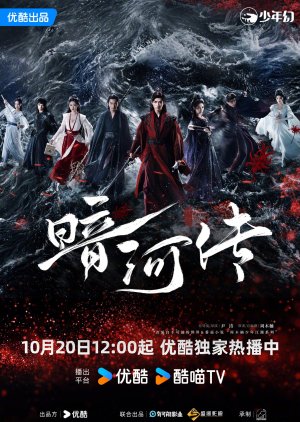
Rich, atmospheric and utterly entrancing, Blood River is all those things and more.. It’s a fantastic concept that kept me enthralled till the last episode.. Blood River is an adventure in all the best ways.. The characters are interesting, memorable and have quirks and distinct personalities that make them feel vividly alive.. For me, this drama shines.. It’s a world filled with assassins and clans whose loyalties are written in water, where every character seems to whisper an unfinished feud.. It’s a place where righteousness is fragile, trust is a rare currency and the river runs dark with history and betrayal.. The action begins right from the first scene and never really lets up.. There’s no onerous worldbuilding, no tedious introductions, Blood River gets to the good part immediately..Blood River has beautiful visuals and some breathtaking sequences, along with masterfully crafted fight sequences.. All wrapped in that dark, moody vibe, it was pure bliss.. And in that same vein, this drama introduces a whole lineup of compelling side characters.. While the main characters are good, the side characters are all really interesting too.. None of them are particularly well developed, but there are intriguing dynamics at play..
No idea why Peng Xiao Ran is listed as second lead or even a main lead.. Her only role seems to be lovesick for a character we are barely invested in.. Honestly, she wouldn’t be missed if she wasn’t in the drama.. She is completely underused and her story arc feels disconnected from the main plot.. The supporting cast had far better storylines to be honest.. There’s nothing else to her outside of being the girl who desperately looks for love, she has no real personality, no aspirations and nothing beyond the basic 'love me, love me, look at me' behavior..
Chang Hua Sen was really good here.. I actually felt he was even better than Gong Jun in terms of screen presence and performance.. Gong Jun’s facial expressions looked odd at times.. Even in the final reunion scene, he looked like he had eaten something bad and was wondering why the camera was still rolling..
If I had to choose a favorite character apart from the two male leads, it would be Bai He Huai.. I loved her mannerisms and her costumes were really beautiful..
Now, the world building here is rich, detailed enough and well thought out.. The plot stays consistent and true to itself.. The pacing fluctuates a bit in the last 18 or so episodes but mostly stays fast paced thanks to the huge number of fight sequences.. And that last fight was really something.. I liked that they didn’t show the main leads as overpowered, we actually got a long, hard fought battle where they had to go all out to take down their foe..
Overall, Blood River has the full spectrum of feelings.. From good to bad, joy to frustration, excitement to depression.. It puts everything together in a well balanced plot with a weave of storytelling that pulls you as far away from reality as you can possibly get.. Blood River might not have been perfect and it definitely stuck to some of the mid cliches I expected but I was pleasantly surprised by how much this story kept me interested.. Even with such a large number of characters, it managed to make me care about their lives and the outcomes of their struggles.. Well, except PXR I guess..
Then why did I rate it only 8.5?? Because the last few minutes of the drama disappointed me.. I watched 38 episodes of their struggle to reach the other shore only for the result of all that hard work to show up as a subtitle.. Like you couldn’t give us a 10 minute sequence?? And what was that whole happy ending after 12 years thing?? Just stupid.. There was absolutely no need for it.. If you are going to give us a last minute reunion, why bother separating them at all?? Was that separation even necessary?? I honestly don’t understand this obsession with time jumps for happy endings..
Well, them getting a bittersweet kind of hope instead of a dramatic ending fits the wuxia tradition, since it rarely gives perfect happy endings.. I guess it works as the completion of Su Mu Yu’s journey, with Bai He Huai returning as the light in his life and it gives an ending that isn’t fully happy or tragic, just human..
Was this review helpful to you?

This review may contain spoilers
"One is not Born to Kill"
Originally I wasn't sure I was going to watch this one though I loved TBOY and had watched DY. I just wasn't sure GJ could pull off a complex character as SMY, as he's commonly known to have a one note face. But in this case it worked plus the addition of CHS as SCH was right on point. It can be watched as a standalone or as I enjoyed comparing with TBOY.Pros: Here we really delved into An He or Blood River and the pasts of many of its characters which was the best part; especially the main 2. Everyone starts somewhere, with different lives and names. As SMY said on numerous occasions "no one is born to kill." The show really reminded me of peeling back an onion. Reason being is because just as in episode one it seemed that the guys were going to be able to get out on their own and create a new An He, they were met with a new host of challenges. They would clear those challenges away and then something else would pop up. They always knew that they were as I like to call them the three ghouls sitting in some platform, a dungeon that they thought were the ones that dealt out the missions as in who to go kill, but it turns out that there was as mentioned above a whole onion to be unraveled(ie Shadow Sect who's figure head was none other than father of consort Xuan aka Prince Xi and Wu Xin's mom from TBOY and above him a shadowy Eunuch responsible for his share of massacres). SMY at first was not on board with the change and turning An He into something new as well as walking in the light and swimming or going to another shore so they were just like any other sect. He he grew to that idea even when SCH did tell him that he could leave if he wanted to, but because of how close they were to each other to the point where there were times during the series, you could swear they shared a brain cell. Originally SMY was supposed to be the patriarch and SCH head of the Su family once all the other three families older heads were gotten rid of, but for whatever reason the opposite happened and for those of us who watched and enjoyed TBOY; this fateful decision proved to be the unfortunate demise of many innocent souls later on.
I'm not going to go too much into the other series, but with this one, what was great was that even though it was a darker drama, it had a lot of comedic standpoints, as well as gave a lot of history and backstory on both of its main leads, as well as some side stories of other leads . It gave you a much more deeper understanding of who SMY really was and never changed even in the later series, however, something changed in SCH though in this one, he was comic gold and the actor that played him did a phenomenal job. I will say that every person for, however, long or short they were on screen did a great job. I was very worried to be honest because SMY and SCH coming from the other series are very complex characters so for these two actors to pull them off so well was a wonderful thing to see.
Even though we ended up losing two important characters, though they played minor roles, and it was sad they did essentially help their family members, even though not by blood escape. I did feel a slight bit of déjà vu for those who did not watch TBOY, prince number one because I don't remember his name and his actions nearly perfectly match those of as I called him the asswipe prince or number seven in the other series. Absolutely everything he did the underhanded tricks, trying to kill off his brothers and uncles and everyone else humanly possible just to get that throne, the only difference was that prince asswipe also had the help of the now older SCH who was a completely different person then who we saw here, though we did see the beginning of this person, and it was mentioned by another character how he can go from laughing to talking normally to deadly serious to lethal in a flip of a switch.
Again, because I am a huge fan of the other series I really liked how a lot of that series sons played their fathers or even themselves if they were old enough. The one that took me a little bit to understand was SMY's father because his hair was different and he smiled a lot, and his clothes were different. It took me a few flashbacks to realize that this actor actually played SMY himself in TBOY. The sad part was that they all ended up in An He (trained to be brutal assassins) because someone decided to take it upon themselves to slaughter a town or a clan, and then these boys and girls as children would end up in An He. No one was born to kill.
I loved how they had both the CGI fighting scenes and the regular fighting scenes on wires or even without wires and it was just spectacular. This series was very rich in the storytelling and I'm not going to go into every single bit of it because then what will be your point in watching it. In the timeline of the universe DY goes first, then this one, and then, TBOY; though I do not remember exactly how many years in between each. I'm sure that there are much more knowledgeable viewers in the comment section. Every single character except maybe the two goals had a purpose, and my favorite were the younger family. Once all the trash was gotten rid of subtract of course the original patriarch even though he was a stone cold killer he understood loyalty, which are two things that usually would contradict each other, but in a way he sort of reminded me of the Italian mob. There was even a father-daughter duo. He was part of the organization and she was a miracle physician (they only reunited by accident in the beginning of the episodes,) who fell in love with SMY and vice versa, thankfully romance was not even on the radar, but there were a little glimpse between them and two other side couples, one of which unfortunately perished. The sets, the costumes (all were beautiful), music everything landed as it should've.
Cons: I'd have to say I don't have too many of these things that bugged me. One would be the age difference of certain characters, especially when talking about both DY and TBOY; it seemed like some actors between DY and this one did not change in age at all or this one and TBOY and then you had young prince number two who will eventually become the real emperor already blind, and his sword deity is the same exact age as when he saved him in the third film as an adult so that already does not make sense. I think what they should've done was cast appropriately so you could go with a timeline if that's what you were going with. Also, where did Prince Langya's Frost poison go? For people watching this as a standalone, it may not pop out much but for those that then we'll go on to watch the third series, these age discrepancies will become glaring and confusing. Another glaring issue was I guess you can call them couple number two she was MYM and he was basically the future leader of the Tang clan and they fell in love. Now, in the third series when she recounted their meetings to the Wushuang in the bar, she says every single time we met, which was a total of three times it was because she was going to kill him, which in this series we see is completely false. She came onto him first she was flirting with him until she got him to reciprocate her feelings. She even saved his life a few times as he did hers, so that false narrative is very much unnecessary, especially since in this series, they promised that once all of their obligations were done, they would reunite and be together. I wish this type of writing was more consistent, standalone, or not.
Also, where did ghoul number three go after he was done helping our guys with getting rid of the other two? He literally vanished without a trace and we never saw him for the remainder of the series. It's these types of things that I'm not a fan of. If you're going to have someone who's even remotely important to some kind of cause then you need to exit him out properly.
The other thing I didn't understand was the master of SMY and SCH when she saved SMY she also knew that fire palm thing which was supposedly taboo in their organization and then when she saved BHH a.k.a. SMY's lady, she made her father swear that he could not tell SMY that she was alive. He had to lie and say that she was dead, and that basically went on for 12 years until they reunited and that happened after the ending credits of the last episode for three minutes they did not speak, they stood 10 feet apart like you would see in a Xianxia; which this wasn't. By this time, the third series had ended and An He was disbanded but because for 12 years, he thought she was dead, he had become a shell of his former self and I think it also in a way contributed to SCH getting away with a lot that he did. So that one woman set in motion, a domino effect just because of her studies (or lord knows what) in the medicine valley that harmed so many people. I think it was a good thing that they closed them out with the proper reunion, not just the voiceover before the credits, but they should have at least hugged.
Would I recommend it? I 100% absolutely would. Whether you watch this is a standalone or is in conjunction to the other two or however, you want to watch it. It is wonderful storytelling with rich backgrounds and you really get to know the characters that in series three which happened first were very much on the sidelines because other folks were important. Definitely give it a shot.
Was this review helpful to you?
 1
1 1
1 1
1This review may contain spoilers
Final Review: BR — A First-Time Viewer’s Critique of a Standalone Wuxia That Mostly Delivers
NOTE: I watched episodes 1-14 wrote the first review for these episodes; 15 days later, finished it & then wrote a review for episodes 15-38. I watched each episode as it came out on Youku. I expressed the last 4 episodes.!! THERE ARE SPOILERS - STOP READING NOW !!
Disclaimer:
I came into Blood River completely blind. I haven’t seen the previous installments, nor am I familiar with the overarching universe or the new/returning characters. My only preconception was that it’s a wuxia drama centered around an assassin organization. I did, however, watch the anime adaptation — which, while visually engaging, suffered from breakneck pacing and failed to sustain my interest beyond 3 episodes.
Going into the live-action version, I had neutral expectations. I didn’t particularly like or dislike SMY in the anime, though I found SCH to be a more intriguing character.
Plot and Pacing
(Minor context: I am reviewing this purely from the perspective of a first-time viewer — without prior knowledge of the Blood River universe.)
The opening arc, spanning Episodes 1–10 (“Protect the Patriarch”), mirrors the anime’s fast pacing but manages to pull it off far more effectively. Despite the influx of new characters introduced within the first several episodes, I rarely felt disoriented. Each new figure was distinct enough to register, and their relationships within the Dark River organization were established with surprising clarity.
The storyline is refreshingly straightforward for a wuxia of this scale — easy to follow, yet compelling enough to keep me watching episode after episode. The balance between action and plot is particularly strong during this stretch. The choreography is sharp, the stakes are clearly defined, and most importantly, the series manages to feel different from much of what’s been circulating in C-dramaland lately.
Confession: I even found myself staying up past 11 PM on weeknights just to catch new episodes on Youku.
From Episodes 10–14, however, the narrative shifts. The “Protect the Patriarch” arc concludes, making way for what appears to be a new storyline. By Episode 12, with SMY departing for Tiaqui City, the series introduces a fresh roster of characters and a heavier dose of exposition. Here, for the first time, I found myself needing to rewind and reread dialogue to catch the nuances. Remember I have not seen the other installments.
This portion lays the groundwork for the next major arc — delving into Dark River’s origins, its founders, and the internal conflicts threatening its survival in the future. The pacing slows noticeably, transitioning from action-heavy spectacle to political maneuvering and ideological conflict.
So far, this structural shift makes sense: Episodes 1–10 thrive on intensity and violence, fitting for a story about the dismantling and rebirth of an assassin order - The Patriarch. Episodes 11–14, on the other hand, begin the slower work of exploring why this world exists as it does. Whether the series can maintain momentum through this tonal pivot remains to be seen — but fourteen episodes in, I’m still invested enough to keep watching.
Acting: GJ as SMY
Up to Episode 14, GJ’s portrayal of SMY fits the character almost too well. The role demands restraint — SMY is defined by emotional stillness, intelligence, caution, and self-discipline. He’s a man who is calm to the point of monotony, and GJ captures that essence convincingly.
Critics may call him wooden or expressionless, but that criticism misunderstands the assignment. SMY is expressionless. His quietness isn’t an acting flaw; it’s a character trait. GJ’s performance succeeds precisely because it doesn’t overreach.
That said, subtlety doesn’t mean flatness. There are moments where GJ’s microexpressions and composure speak volumes:
Episode 2 (39:40) — The duel with Mu Yinzhen of the Mu family: understated control amidst intensity.
Episode 8 (28:00) — His promise to personally kill the Mu Family Head after Dragon’s death: contained fury.
Episode 10 (12:25–15:00) BUT ESPECIALLY (!) 14:00 - 15:00 — His confrontation with SCH’s recklessness: quiet authority - absolutely love this scene.
Episode 12 (41:24) — The negotiation scene: tension conveyed through silence and gaze rather than dialogue. His smirks...
Whether GJ can sustain or evolve this portrayal through later arcs remains to be seen. For now, though, his performance is measured, faithful, and tonally consistent with who SMY is written to be.
Verdict (So Far)
14 episodes in, Blood River has proven itself more cohesive and engaging than expected — particularly for viewers unfamiliar with its earlier installments. The first arc’s relentless pacing transitions into a slower, politically charged second act, setting the stage for deeper conflicts.
GJ delivers a performance true to character, if not particularly emotive, while the production’s fight choreography and world-building stand out among recent wuxia offerings.
I’ll reserve full judgment until I finish the next 10 to 12 episodes, but for now: Blood River has earned my continued attention.
FINAL REVIEW: BLOOD RIVER — A First-Time Viewer’s Critique of a Standalone Wuxia That Mostly Delivers
Completed Episodes: Final episode 38 on 11/07/2025
Before diving in, a disclaimer: I approached Blood River with no prior knowledge of its wider universe. I haven’t seen The Blood of Youth, Dashing Youth, nor any earlier installments. My exposure was limited to the anime adaptation—visually striking but narratively rushed, losing my interest by episode three.
Entering the live-action series, my expectations were neutral. I held no strong opinions about SMY from the anime, though SCH stood out as the more compelling character.
Just FYI -
My experience of Blood River is colored by one thing: despite trying to avoid spoilers during episodes 1–14, I ended up reading viewer discussions and summaries for later arcs. That inevitably shaped how I interpreted episodes 15–38, though I’ll try to speak honestly about how the show functions for a newcomer.
Here we go - 2nd review starts now:
Episodes 14–16 usher in what I’d call the Wanjuan Tower Arc—the first major tonal shift in the drama. The pacing deliberately slows as we explore SMY’s childhood and the ideological roots of his vendetta against the Shadow Sect. As a new viewer, the emotional clarity of this arc was invaluable. Only later did I learn the broader implications: SMY isn’t just tearing down a corrupt institution; he’s pursuing the truth behind the annihilation of No-Sword City and avenging his father. This arc culminates in one of the show’s best sequences—visually stunning, narratively efficient, and anchored by a spectacular duel.
Cinematography: The Show’s Unquestionable Triumph
If Blood River excels in anything consistently, it is choreography and cinematography. Episode 16’s SMY vs. Xie Zaiye (“Arrow Guy”) battle is a standout—precise, balletic, and almost hypnotic. It’s the kind of fight that invites rewinding or dropping playback speed just to absorb the intricacy. While some viewers cite distracting music, I found the score well-integrated and complementary across the series.
Additionally, frequently overlooked, the fight between SMY & The Heavenly Officials in episode 14 was an absolute stunner. It is also when the humorous line, "But your father took me there!" was spoken.
Performances: A Mixed but Largely Successful Ensemble
I initially focused on Gong Jun (GJ) as SMY in earlier episodes, but after finishing the drama, four performances stood out:
1 - SCH
A strong casting choice. The actor brings ambition and calculated mindset to SCH—never tipping into full villainy, yet clearly setting the stage for ideological divergence with SMY. As a viewer unfamiliar with previous timelines, I found their dynamic well-executed, layered with mutual respect and inevitable conflict.
2 - BHH
Ya Yutong is delightful—cute without infantilization, grounded without overcomplication. Her chemistry with both SMY and SCH works because she supports their roles without feeling decorative. A deceptively simple character handled with care.
The following I added 11/09/2025 about BHH character (48 hours after finishing) -
I’d argue that BHH is actually a significant character—one who quietly strengthens our appreciation of SMY and SCH’s relationship. She was never meant to be the focus, nor was she written as a member of the trio. She wasn’t a character the audience was expected to invest in deeply from the start. And yet, by episode 38, we feel her absence because SMY loses her.
Through SMY, we end up caring about her too. We want her to live, to stay healthy, to make it out safely—not just for her own sake, but because we can’t bear to see SMY carry yet another burden. That’s exactly why she was written the way she was. She isn’t quite a side character; she’s someone we root for because SMY roots for her. This “wooden fish” of a protagonist genuinely likes her, and through her, he finds a rare sense of comfort and happiness.
And at the end of the day, that’s what we want most: for SMY to have something—anything—that makes him happy.
Added part ends.
3 - MYM
The actress does what she can with limited material. Her screen time is noticeably reduced (likely due to cuts), and while her presence is meaningful to the plot, her characterization lacks the texture it likely holds in other adaptations. Still, she plays a vital role without overstaying her welcome.
Real quick - was I the only one who thought that they were going to kill her off for two minutes straight in episode 36?!?
4 - SMY - Gong Jun’s Make-or-Break Role
Gong Jun’s performance will split audiences, especially in episodes 1–6 where his stiffness is unmistakable. But here’s the important nuance: the stiffness suits SMY’s emotional state in the story’s early arc. And critically, GJ grows into the role. His expressiveness increases as the arcs shift, and by episodes 33–38, his emotional density and physical acting peak.
His line delivery—a long-standing critique since Word of Honor—has unquestionably improved. Faster diction and jaw tension remain, but the progress is clear, especially in emphasis, pacing, and emotional tonality. Is he a “very good actor”? Not yet. But is this his strongest performance since WOH? Absolutely.
5 - Zhuo Qing (The great eunuch)
The quiet menace makes him a worthy foil in the final episode 37 battle, elevating the tension and giving SMY & SCH a truly epic showdown. The divider scene when SMY came to negotiate with the Shadow Sect leader immediately establishes him as someone not to underestimate — calm, calculating, with that sly smile that hints at hidden schemes. He manipulates situations, making the battles feel smarter and stakes higher.
Mid-Series Arc (Ep 17–24): The Weakest Stretch aka No-Sword City Revenge or Zhou Ye An Identity
This portion of the drama, aesthetically gorgeous as it is, feels narratively thin. The arc functions more as a visual interlude than a compelling plot engine. Despite strong costuming and set pieces, the emotional engagement dips, and neither SMY nor the ensemble stands out. It’s not bad—just the least involving segment of the series.
The Final Arcs: From episodes 25–38, Blood River gains substantial momentum.
Ep 25–28: “Blood River in Tianqi City” Arc
This arc forces SMY, SCH, and BHH into political intrigue as they navigate Prince Linya’s orbit. The ideological divergence between SMY and SCH subtly sharpens here. The show stops teasing their differences and starts articulating them.
Ep 29–31: “LYT Master & Puppets” Arc
This is where tension truly spikes. SCH’s quiet retreat and secret dealings raise legitimate questions—especially for new viewers who lack context from earlier works. The duel between Blade of Nanjue and SMY is a highlight: elegant swordplay with emotional stakes.
Perhaps most impressive: SMY’s injury is narratively honest. He isn’t poisoned for convenience nor weakened by contrived plot devices. He’s hurt because he pushes himself relentlessly to protect those under his care. That authenticity deepens both his characterization and the SMY–BHH relationship.
Ep 33–38: A Near-Perfect Landing -
Going into episode 30 I wanted 3 things for the ending:
1 - I wanted a "weak" SMY. I didn't want SMY or SCH to have an easy win in the slightest. I wanted bloodshed, sacrifices, deaths. At this point, if BHH would have died which in turn would have resulted in an elevated plot someway-somehow, I would have been okay with it. In episode 37, I got it. SMY finally meets an opponent who pushes him to the brink, fulfilling the narrative necessity of testing a protagonist who otherwise risks invincibility. But he needed help. He needed SCH. And SCH came through. Without SCH intervening SMY would have died. I GOT THIS.
2 - I wanted BR to be a true standalone. I feared a rushed ending. Instead, Blood River delivers a satisfying, self-contained finale. Episode 37’s battle is the kind of sequence that cements a wuxia adaptation’s legacy—visually exhilarating and emotionally explosive. After 38 episodes you can watch TBOY or DY if you really want to but you do not have to. Thus making BR a phenomenal standalone. I GOT THIS.
3 - I initially wanted a full SMY–SCH fallout—a dramatic rupture, a “you lied to me” reckoning. But the drama chooses loyalty over melodrama. And after rewatching 33–38, I admit the show made the right call. Preserving brotherhood is essential for this timeline. I DIDN'T GET THIS.
Deaths:
Yes, people die — and the ones who needed to die for the story’s impact actually did. SMY’s strongest acting comes in these final episodes.
Final Thoughts
1. If you’re coming for romance: don’t. You’ll leave disappointed. This is not a romance-first drama, nor does it pretend to be one.
2. If you’re coming for visuals and choreography: you’ll be rewarded. Episodes 1–6 are a taste of what the show continues to elevate.
3. If you’re coming for brotherhood, loyalty, and the ideological push-pull between SMY and SCH: the drama delivers, even without requiring prior knowledge of the universe. It is a standalone and is a great one.
4. The major fight in episode 37 is phenomenal.
Gong Jun’s SMY — A Career Step Forward
To summarize:
1. Line delivery: improved significantly.
2. Portrayal of SMY: layered, especially after episode 10.
3. Room for growth: absolutely.
4. Did he surpass his WOH peak? In my opinion, not yet, but SMY shows that he can.
By the final episodes, I found myself not only invested in SMY but actively looking forward to GJ’s next project. Blade of Vengeance in 2026, anyone?
Final Verdict -
For newcomers like myself. Just watch it. Blood River is not flawless, but it’s visually stunning, narratively earnest, and anchored by a protagonist who grows right before our eyes.
You just have to put your trust in him similarly how everyone in the show put their trust in him.
Was this review helpful to you?

 1
1Unfinished Business.
Blood River/暗河传 ushers in a new era for Beili’s mysterious and powerful assassin's guild Anhe/暗河 or Dark River. A spin-off in Zhuo Munan’s shared universe, it peels back the curtain on the legendary shadow force that lurks behind Dashing Youth (少年白马醉春风) and The Blood of Youth (少年歌行). The tale ignites when Anhe’s long-reigning Patriarch is grievously injured and poisoned, unleashing a vicious succession struggle. Two prodigies, Su Muyu and Su Changhe, are thrust into leadership. As they seize the reins and wrestle free of their shadow masters, they discover that “going legit” is a blood-soaked tightrope.What hooks me hardest is the drumbeat insistence that Anhe must forge its own fate, not remain someone else’s concealed sharpest blade. That single theme slices straight to what I dislike most about Zhuo Munan—and the whole crop of self-styled “new wuxia” authors—stamping their seal on the genre. Real jianghu, the martial world at its molten core, is anti-establishment: outlaws and exiles who swear by their own code, patriotic yet allergic to any throne. In Zhuo’s realm, however, these legendary warriors morph into palace guard dogs for a dynasty that’s rotten, amoral, and utterly undeserving of their spilled blood. Blood River is the lone exception where the author finally gets it; it’s the only one of his works I’ll crown true wuxia in the classic sense.
The opening succession arc is pure lightning. Su Muyu clings to his oath to shield the fading Patriarch, pitting him against sworn brother Su Changhe’s hunger for a quick, clean coup. Changhe’s ambition burns naked; Muyu’s conscience is the thin leash. The script keeps spotlighting their clashing creeds yet repeatedly yanks the rug before the inevitable clash, letting plot contrivances dodge the showdown. Still, every sidestep plants seeds that bloom in The Blood of Youth, leaving a ghost of unfinished business between them. They’re magnetic characters shackled by a writer who chose to avoid conflict to tell the safe, crowd-pleasing story. That is all well and good but as a result, their character stories are not fully realised; the tension and conflict in their values never comes to a head.
I adore the pitch-black premise, but the drama starves its leads of the crackling personality and bromance that turned The Blood of Youth into legend. Writing Su Muyu as a stoic and boring slab is a fatal misstep; it’s a role that doesn't leave much for anyone to work with, let alone Gong Jun, whose acting is still a work in progress. He does not share a natural rapport with Chang Huasen and their bromance never establishes solid footing because of Muyu's vapid, and forced romance with Bai Hehuai. Romance is already not this writer's forte and it is made worse by the casting of an actress with the screen presence of Muyu's limp, overcooked noodles. Gong Jun’s voice work is serviceable whereas Chang Huasen is elevated by a stellar dubber and gains a depth and menace that Gong Jun's flat delivery can’t match. The saving grace? Supporting firecrackers—Li Daikun’s diabolical yet weirdly sympathetic Mu Ciling (my ride-or-die), plus the grizzled Patriarch, cunning Su Zhe, steadfast Lord Langya, and Spiderwoman Mu Yumu.
The drama could have told a much tighter story had it bowed out after the power struggle or the Swordless City arc. At that point, it is a natural parting of ways as it is clear that Muyu and Changhe are on different paths. Stretching further turns Muyu into a rudderless ghost; his dream to reclaim his name and rebuild Swordless City evaporates without a whisper. He becomes everyone else’s errand boy—doctor's assistant, failed chef, Changhe’s glorified wingman to ferry Anhe to the “Other Shore.” In a gut-punch twist, Changhe goes solo with his own hidden agenda and is never held accountable by Muyu for abandoning Anhe at its darkest hour. It mirrors Lord Langya surrendering the throne to an unworthy heir, then looking over his shoulder to keep catastrophe at bay instead of living the life of adventure in jianghu with the love of his life that he gave up the throne for. In a similar vein, Muyu is tied to Changhe and his vision and ambitions for Anhe.
The finale lands realistic, bittersweet, hopeful—yet screams that the villains quietly won. Like the story itself, the jaw-dropping fight choreography peaks in the first half and the sequences feel repetitive in the latter arcs. The writer’s boast that Muyu and Changhe wield true agency is as laughable as the handy twelve-year antidote to puppet poison.
Verdict: A damn fine wuxia that still feels half-told. 8.5/10.
Was this review helpful to you?

The biggest draw of this drama for me is the karmic bond at the heart of it between, borrowing characters’ own words, two men walking different paths paving the way for each other. What connects stoically principled Su Muyu and ruthlessly ambitious Su Changhe is twenty years of shared history, shaped by life and death situations, as they climbed the ranks of the Blood River sect from ‘nameless’ to the best assassins of their generation. Both swear to lead the sect towards a brighter future but their clashing principles and mismatched ambitions make the shape of this future unclear.
The drama has a strong, tension-filled opening that hooked me right away. The fight for succession with constant reversal of fortune, followed by the struggle to cut off all the invisible hands controlling the assassin sect from the shadows were fast-paced, thrilling, and saturated with intense music and spectacular fight scenes. Despite being thrown into the action right away, the stakes are clear, twists plentiful and the backstabbing enjoyable:) The characters' introductions were unique (Mu Ciling<3) and held a lot of promise. The friction between Muyu and Changhe coming from their, uhm, conflicting life philosophies;) together with the clashing loyalties and personal ambitions within the sect’s three families, made for a compelling watch.
The following chapter with Muyu shedding his ‘umbrella ghost’ identity and setting out alone to conquer the ghosts of his past followed the typical wuxia scenario of everyone under heaven scheming against each other. It was still enjoyable but a bit too tangled and unresolved.
Then the story takes a weird turn. All that effort to break out of the dark and shake off all control, only to end up in the cesspool of court politics?! I didn't agree with Blood River taking stakes in that royal power struggle at all. They should've reinvented themselves far from the imperial court instead. On that note, I’m confused about the rules of this Beili place when it comes to the relations between court and jianghu. Shouldn’t those be separate? How come martial sects are aligned with different court powers, including sword deities working as city guardians and babysitting royals?
Palace politics and zombies/puppets are two of my least favourite things (edit: forgot the story also had spiders! Brrrr!) so I was very impatient for the story to move on, but it turned out to be the final arc. It dragged and left the Blood River story feeling unfinished.
Muyu is the unquestionable protagonist, but he’s also the one that confused me the most. What did he truly want? A sword master of such calibre, is he really without ego and would be content to spend the rest of his life living in obscurity as a physician’s assistant? What about his father’s legacy and rebuilding No-Sword City? Or was that only his dream because he knew it was out of reach?
If we’re to believe those who crossed swords with him, he’s got a complex emotional landscape ranging from unbridled defiance to gentle forbearance. His song talks about a fire inside him that can never be put out and a battle he’s fighting against himself. I would’ve loved to see more of this complex inner world reflected in Gong Jun’s portrayal. His normally (endearingly) expressive face is quite difficult to read in this drama. For a character torn by inner conflicts and two identities you can hardly glimpse it under the stoic facade and colourless delivery. Personally, I think it would’ve been better if he was dubbed by an experienced voice actor.
Fortunately, Changhe’s purpose is written very clearly, which makes him a very compelling character. He dares to dream big and has patience and cunning to realize his goals. I liked him best when he got out of control and his crazy was showing;) I wish he was given a more detailed background and space to tell his own story though. He often refers to his difficult past, but we’re barely given any details. His personal revenge completely lacks emotional impact as a result.
Muyu’s love interest, the miracle doctor Bai Hehuai, seems fun, quirky and capable at first but fails to have any meaningful development. Her candid personality often clashes with Muyu’s reticence for comedic effect, but their lukewarm chemistry and moments of awkward dialogue (I thought she’ll never stop listing her endless jianghu connections) make some of their scenes a bit of a snoozefest. I’m also not a fan of this type of fake exuberant acting. Generally, the romances in this drama somewhat lack substance and veer too much into sentimentality for the overall darkish mood.
To sum up, this is a grand fantasy spectacle with dark atmospheric visuals and a melancholic tone. I’d recommend it to anyone in the mood for a suspenseful and action-packed wuxia, featuring ‘born to fight their fate’ (anti)heroes.
P.S. I just read what happens to Muyu and Changhe in Blood of Youth, which is supposed to be the continuation of their story 👀 It's kind of hard to believe because loyalty is one of Changhe's defining characteristics here and I just can't imagine Muyu ever letting it happen to them. If that version of the story is canon, then I'm sticking with this fanfic:)
Was this review helpful to you?
Blood River 's never disappointed!
Gong Jun's portrayal of Su Muyu is both clever and tragic. His ability shines through in everything from his dialect to his battle scenes. The plot becomes more thrilling and interesting with each episode. As the novel progresses, the characters' backstories expand, exposing surprising alliances and rivalries. Each twist keeps viewers on the edge of their seats, ready to see what happens next. Moreover, the production combines a dark, cold tone and fantastic lighting to illustrate the world of assassins. Many scenes employ long-take camera movements to heighten the realism and intensity. The costumes and settings are based on traditional martial arts, and the mystery of the "underground organisation" is flawlessly integrated. Scenes of secret societies hidden in the shadows of mountains and the Valley of Divine Doctors are convincingly shown. 10/10.Was this review helpful to you?

Blood River: Shadows and Loyalties
🔹 Can loyalty redeem a lineage cast in shadows?🔹 Would I rewatch? Yes
📕 Overview
🔹 38 episodes, wuxia drama
🔹 Adapted from the novel Tales of Dark River (暗河传) by Zhou Mu Nan
🔹 Blood River follows the realm’s most feared assassin organization, jointly run by the Su, Mu, and Xie clans
🔹 Gong Jun plays Su Muyu, leader of the Spider-Shadow unit, who serves directly under the Patriarch and becomes entangled in a fierce succession struggle after the Patriarch is poisoned.
🔹 Chang Huasen plays Su Changhe, a conflicted heir whose ambitions and loyalties collide as the balance of power within the guild starts to crumble
🔹 Su Muyu is sent to find the elusive healer Bai Hehuai (Yang Yu Tong) while keeping his dying master safe from rival assassins and political betrayal
🔹 For me, this drama stands out for bringing back a darker wuxia vibe and moral conflicts
🌸 How It Felt Watching
🔹 Each episode blends storytelling with martial arts combat that keeps the story addictive to watch
🔹 Tone: suspenseful, emotional, and morally complex
🔹 Themes: loyalty, justice, betrayal, power, redemption, brotherhood, fate
🔹 It reminded me a little of another wuxia drama, Whispers of Fate (2025), but with a stronger emotional core built around found family and conscience
✨ Cast & Acting
🔹 Gong Jun as Su Muyu: He doesn’t often show emotion, but his fight scenes are incredible to watch.
🔹 Chang Huasen as Su Changhe: Plays a man who walks the line between charm and ambition, making every encounter unpredictable
🔹 I felt that the supporting characters, from healer Bai Hehuai to the guild elders and even the smallest roles, helped bring this martial arts world to life.
🎵 OST 🎵
🔹 Converge (汇) by YOUNG-G
🔹 River (河) by Zhou Shen
🔹 Lucky to Meet You (幸逢你) by Xiao Jun
🔹 Dusk Snow (暮雪) by Liu Yu
🔹 Don’t Forget (不忘) by Liu Yu Ning
🔹 Dusk Snow (暮雪) by Yang Yu Qing
🔹 Moon in the Lake (潭中月) by Huangzi Hong Fa
🎞️ Production Style
🔹I liked how the director and team gave each setting its own rhythm and presence.
🎥 Cinematography
🔹 The cinematography moves fluidly between close, suspenseful shots during duels and wide, open frames, highlighting the grand scale of the martial arts world.
⚔️ Martial Arts Choreography
🔹The martial arts choreography deserves special mention.
🔹It balances precision and danger so gracefully that every fight feels like a poetic dance
☕ Tea Notes
🔹 What worked: I rated it 10 stars because the story, performances, visual effects, and music created a strong impact
🔹 The martial arts choreography and technical detail give this fantasy wuxia drama the polish and scale of a blockbuster film.
🔹 What didn’t: At times, the pacing felt slowed
☕ SpillTheDramaTea’s Rating: 10/10
🌿 Tea-Scale: Rich, layered, and full-bodied
✏️Blood River asks whether the bonds we build through blood, loyalty, or pain can truly help us break old cycles and find new hope.
Was this review helpful to you?
This review may contain spoilers
Guilty binge despite its many shortcomings
This is one of those series that has enough flaws that you know you shouldn't be enjoying but yet can't help but to keep watching. The obvious and successful draw here is the brotherhood between our main leads. Although the acting isn't the greatest, the bond is endearing enough for me to find myself continually rooting for them and smiling at their scenes.Positives:
- As mentioned, the brotherhood bond works. There are additionally a nice abundance of other interesting characters (almost too many). They both show character growth through the series and validate reasons for their individuality.
- For those who love action, there's plenty of it in this series to be satiated. The special effects are a hit or miss but nothing offensive.
- The plot moves relatively swiftly and while the lore is not necessarily unique, it was still interesting.
Negatives:
- One of the glaring downsides is the majority of the female characters - particularly the female lead. She didn't give a good impression from the beginning and she didn't have any character growth throughout. She also had zero chemistry with the ML but alas, her healer role was necessary. I just wish they stopped casting women in the series to be so... minimal and love hungry.
- The dialogue was too childish at times for a group of assassins. There are better ways to convey the message other than literally saying "I don't want to be a bad guy".
- It's another one of those series where despite huge and glorified attacks, people die from the tiniest cut on the throat.
- Because the cast was so huge, characters just popped in and out of scenarios and there's not much attachment to them.
Overall, it's definitely still a great low-stress entertaining series to watch. I did skip through almost all of the romance scenes which thankfully didn't last too long at a time. And although the ending was abrupt with too many missing plot holes, I did appreciate how it ended.
Was this review helpful to you?
This review may contain spoilers
Playing with the audience's emotions for commercial gain, without even providing a logical reason.
The ending lacks weight and conviction, which robs it of its charm. Why did the male lead's master save the female lead only to keep it a secret? Why did they have to wait 12 years to reunite? After watching 40 episodes, ending with them just staring at each other after 12 years apart—where is the emotional impact in that?If it's an action drama, the purpose of the fight should be clear. It shouldn't just be stated in words, but felt through the characters' emotions and actions. Otherwise, don't bother fighting; just go play extreme sports instead.
Was this review helpful to you?

 1
1⭐️More Than Wuxia: The Human Realism Behind Blood River ❤️
In my view, Blood River is the best Wuxia drama in recent years. Whether in terms of narrative depth, character complexity, martial-arts choreography, or post-production visual effects — you can truly see the effort and sincerity of the entire cast and crew. It became a dark horse hit in the Chinese market this year.The novel Blood River carries a strong realistic tone and a melancholic undertone. Because it was written by author Zhou Mu Nan in his thirties, it reflects a certain life experience and depth of thought. Compared to his previous works — The Blood of Youth and Dashing Youth, which were written in his twenties — Blood River reveals a more complex view of human nature.
❤️When writing The Blood of Youth, the author was particularly fond of Su Mu Yu, a “villain” character from the assassin organization Dark River, so he decided to write a standalone story just for him. However, he didn’t expect that the characters would “grow a free soul of their own” — wanting to decide their own fate. He later admitted that he regretted writing the sad ending of SMY and SCH too early in The Blood of Youth.
Therefore, he suggested readers treat Blood River as a parallel timeline. Actor Gong Jun also said during a livestream that this story is an independent one and should not be linked to The Blood of Youth. In this story, SMY and SCH could never become enemies.
In this timeline, they will forever remain the best brothers and soulmates. Even if SCH makes mistakes, SMY will always pull him back in time. There exists absolute trust and tacit understanding between them. During the internal turmoil within Dark River, both of them wanted to give what they believed was best to the other — SCH wanted to give SMY power, while SMY wanted to give SCH freedom.
In SMY’s future plans, SCH is always there; he would never abandon him. Others call SCH a bad ‘dog’, but SMY thinks that although this dog is a little wild, he is a good boy. He lets him grow freely, tolerates his temper, and occasionally disciplines him when it comes to matters of principle. Even when the puppy causes trouble, he always covers for him.
SCH has always listened to SMY. He treated those SMY cared about as family and protected them. Knowing SMY longed for an ordinary life, he spent years saving money to buy him a house. Knowing SMY would never save for himself, he secretly stored up a fortune of silver for him.
SCH also treated his Dark River brothers and sisters well — watching over them and helping them find happiness. His bad reputation in the martial world came from taking on all the dirty work SMY refused to do. He didn’t care — he only wanted to protect SMY’s kindness and moral bottom line. He has a tragic childhood. Growing up this way taught SCH that only by becoming strong could he protect himself and those he loved. Because SMY raised SCH from a young age and taught him many of his principles, SCH’s fundamental nature is shaped by that guidance — beneath everything, he is a genuinely kind-hearted person.
SMY’s childhood and his father’s teachings became the healing force that guided him for life — making him gentle, kind, and morally upright. SCH, on the other hand, lost his family as a child and became a wandering orphan. He was trained into a killing machine later. Fortunately, with SMY’s companionship, his life wasn’t entirely consumed by darkness. And with SCH by his side, SMY didn’t have to bear his hatred alone. After more than twenty years together, they became inseparable parts of each other’s lives, treating the other’s life as more important than their own — mutual bonds and redemption.
Even their names carry meaning:苏暮雨 (Su Mu Yu),苏昌河(Su Chang He). 双日(Sun)为昌(Chang) - two 日(suns) together form 昌 (Chang),落日(sun)为暮 - The sun at dusk is Mu (暮),雨(Yu, meaning rain)汇成河 (He, meaning river) - Rain flows into a river. They are literally written into each other’s names.
SMY’s weapon is also fascinating — it’s an umbrella that hides 18 swords within. The umbrella shelters him from wind and rain, and also protects his family. It symbolizes protection and gentleness. The sword represents judgment and punishment. It stands for justice and decisiveness.
Together, they imply that beneath his gentle exterior lies a sharp, rational mind. In darkness, it is easy to fall. What’s truly difficult is holding onto oneself. One cannot defeat fate, but one can still maintain dignity within it. At the very beginning of the first episode, he asks himself, “Why do I wield a sword?” He is searching for the meaning of his existence.
True freedom is not “doing whatever you want,” but “being able to refuse what you don’t want.” Su Mu Yu is exactly this kind of willful yet innocent person. As long as he is strong enough, he has the right to remain innocent.
This story is told from the perspective of the assassin organization, but these assassins are not emotionless NPCs. They are living human beings. No one is born wanting to be a killer. They just wish to live like ordinary people — to have family, friends, and peaceful afternoons basking in sunlight — instead of living every day in fear, not knowing if they will see tomorrow’s sunrise. Sadly, even after exhausting their whole lives, they could only reach what ordinary people have at the very beginning. And they can never come close to the characters from “The Blood of Youth” or “Dashing Youth,” who are born with talent, powerful family backgrounds and wealth.
They didn’t want to kill. They hope to become a legitimate martial sect, to change public prejudice, and to stop being despised or excluded. But for shadows to walk under the sunlight is extremely difficult — it can’t be done overnight. Blood River is not an idealistic story of passionate young heroes traveling the martial world, nor a satisfying revenge tale. It’s a reflection of reality — just like the lyrics from the ending song River:
‘Like destiny drifting with the waves, winding and twisting.
Who can wade across the river of darkness?
Is there really a far shore waiting?
We spend our whole lives,
Pouring out every color of our souls for just a glimpse of light.’
Life is uncontrollable. Many are driven by fate, struggling their entire lives just to survive, searching for meaning or an answer. Yet even when hope is dim, they still devote everything to chase that single glimmer of light.
When they first stepped out of Dark River, only to realize that the outside world was just a bigger dark river, all they could do was grow stronger — to rely on their own willpower and faith to move toward the far shore. But in truth, as long as one’s heart faces the sunlight, one is already on the path toward that far shore.
As SMY once said:
‘道阻且长,然行则将至’-The road ahead is long and full of obstacles, but if we keep walking, we will reach it.
Was this review helpful to you?
This cast took a story that had very little to work with and made it something.
Full disclosure:I like Gong Jun. Infact some would say LOVE HIM DOWN...and when i heard of his character setting in this drama i was PSYCHED!ASSASIN....Girl....nothing hotter than a professional murderer.....😂😂😂
I was quite impatient for this so i searched for the donghua first to watch before it released...and then i remembered why i didn't really like Blood of Youth that much and why i didn't bother with the other one....
This entire story series has very little plot.
Blood of youth felt like i was watching mortal kombat, with people introducing themselves, fighting, admiring one another's skill, then moving on to level up and fight someone else.
This makes it a cute visually appealing drama but not really one I'd ever rewatch or think about much after its finished.
When i watched the donghua i realized that Blood of Youth even had the advantage of Integrating every storyline in the series and giving all of them endings...so it generally had more going on.
That's why i believe even the last installment didn't do as well, Blood of Youth seems to have said all that needed to be said and it left the already very low overall plot of the series dwindled.
Tales of Dark River donghua proved that. It was exciting to watch....but if anyone asked me what happened ....i could explain it in 4 sentences and leave nothing of relevance out.
It's got that one storyline, and that storyline is basically an elaborate tug of war between a bunch of assasin families and a lot of talking.
Like....a lot of these characters have to tell us about their pasts or generally narrate a lot of things since this is solely about the fight...and that can get tiring.
I didn't even see a need to see the last episode of the donghua....I just didn't care at that point....but from that disappointment came worry.....how will Gong Jun, the rest of the cast and the writers pull this off?
How would ANYONE pull of such a story that's both shallow and complicated?
Luckily they somehow did.🙀🙀🙀🙀🙀
They fleshed out the plot enough to give it meat and more substance but still maintained the original content and general parameters of the donghua. The cast was well chosen, though there is some excessive use of makeup.
The production quality is good....Maybe too good at times cause i felt my eyes burn and blur at some of the dark accent.
I like the music and the pace is fast....thank lawd it's fast, so much that although the original story is a drag....its a fast moving drag.
The line delivery from the actors is also Ok....I'm not seeing any excessive signs of dubbing.
Overall this is an 8/10...but that's cause the story its cant be anything above that no matter who acts in it.....but I'll give it a 9.78 cause being able to make something of this is an achievement .....maybe my rating will change later on.
Was this review helpful to you?

 1
1 1
1Action-packed and Exciting, except for the unsatisfying romances and Gong Jun
**edited to increase rating from 8.5 to 8.75 after watching Dashing Youth. Blood River is so much better**Subjective Gut Rating: 8.75
The title of this review sums up how I feel about “Blood River”. Going into this, I really have low/no expectations. This drama aired while a few other costume dramas were airing, and it didn’t seem to have a lot of buzz. But the plot sounded interesting and different, and I didn’t hear too many complaints. I ended up really liking it. You can watch “Blood River” as a standalone drama, even if you haven’t seen “Blood of Youth” or “Dashing Youth”. I dropped “Dashing Youth” and even though I watched “Blood of Youth”, I forgot everything except for a funny and bald monk.
Plot/Pacing
The introduction of the assassin organization and its hierarchy could be confusing at first. It introduces many characters, fighting moves, sects and specialties right from the start. But as we’ve seen in similar drama setups, most of these characters are unimportant and will disappear soon. So, if you can’t remember them all, it’s all good as the ones that you should remember will show up again and again. “Blood River” could be divided into 3 big arcs. I enjoyed the first 2 tremendously, as they really focus on the fall of the old and the rise of the new Dark River (the assassins). It’s full of exciting events, interesting twists and excellent action scenes. The last arc is more political and the pacing is slower comparatively, but not draggy slow. The drama really kept my attention for all 38 episodes. The pacing was great and I kept on saying to myself how much I am enjoying this and that it’s such a pleasant surprise. Because it has a huge cast, I feel that the drama is unable to fully develop each supporting character’s personal stories to make me love them. Therefore, I am not as invested in their stories as much as I have wanted to be.
Acting
Oh, Gong Jun. Where do I start? He’s just not good. I haven’t seen him since “Word of Honor” because none of his dramas after that hit were interesting to me. I finally get to see him again and it’s such a disappointment. His character is stoic and a little standoff-ish, and Gong Jun gives me a blank face. I look at his big unexpressive eyes, and they are dead. What's worse was his voice. I applaud him for dubbing, but he seems to be intentionally lowering his voice for this ‘serious’ character, and he sounded like a monotone robot. With poor acting and poor voice dubbing, he was the weakest link. The other disappointment was Peng Xiao Ran. She’s so underutilized in this drama and she should NOT be listed as a main character. Not only was her acting so average, her voice acting/dubbing was just as bad as Gong Jun’s (ok, maybe a little better). She’s not monotone, luckily, but her voice and her character don’t match well. Chang Hua Sen (which so many viewers are in love with) did fine, though not excellent. But I think his character gives him more to play with compared to Gong Jun’s. My favorite acting in this drama goes to Bai Shu (Prince Langya) and Li Dai Kun (madman Mu Ci Ling). Bai Shu’s voice matches his character’s charisma. He doesn’t have too many scenes but he has screen presence. He definitely shows up to be THE Prince, not like the First Prince and the laughable young-looking emperor with a beard. Li Dai Kun is such a scene stealer as the madman. His looks, overdramatic hysterics and crazy laughs are all so fun to watch. Each time he shows up, I wonder what kind of chaos he is going to bring.
Romance
Ahhh.. another disappointment. I don’t mind the slow burn romance between Su Yu Yu and Doc Bai He Huai. I actually like that they started off as acquaintances, then friends and then something more. Unfortunately, the development is lacking. There’s no spark and no chemistry between the two. The drama just did not spend any time on this romance. On the other hand, Mu Yu Mo and Tan Liang Yuen had such excellent chemistry in episode 1 during their first encounter. A flirty girl trying to lure, seduce and trick a stoic guy. What a great setup! Unfortunately, after a couple episodes with very few scenes, they disappear for another 20+ episodes. Also barely any development of this romance. The beginning and the ending conversation are memorable, but due to the lack of development, it couldn’t deliver an emotional impact on me. What a wasted opportunity! I really wonder if this is due to the screenwriter's inability to adapt the novel well, or if the novelist is incapable of writing a decent romance storyline.
Production
I already complained about Gong Jun and Peng Xiao Ran’s voices and dubbing above. The dubbing in this drama is only average as a whole. The costumes, sets, accessories, hairstyling are all good enough for me to enjoy the drama. You can tell this is not a big budget S+ production. I think the money goes into all the action scenes. I LOVE this about “Blood River”. It not only relies on CGI fighting, but also actual sword fighting scenes that WOW me. I was so pleasantly surprised! There are also many fight scenes throughout the drama. So, if you don’t like fights, this is not the drama for you. Most of these fights are exciting and fast-paced. In fact, I think they intentionally sped up the fights in the first episode, but they slowed down later on. The last big fight with the eunuch might be my least favorite, because there’s a lot of talking and preaching during the fights.
Despite some of my complaints, I have a really good time watching “Blood River”. I like it so much that I am tempted to pick back up the dropped “Dashing Youth” and watch that again. I would definitely recommend this drama, especially because I think some of my complaints are pretty personal and subjective. The journey of the rise of the new Dark River is well-written and exciting. But if you are watching this for romance, then you better skip this one.
Series Watch Order
1) Dashing Youth
2) Blood River
3) The Blood of Youth
Completed: 11/12/2025 Review #641
Was this review helpful to you?