This review may contain spoilers
Dont get fooled by bad reviews here!
I almost believed the people here who speak so badly of this drama. I was so afraid it would be the classic cliché where a friendship breaks down because of love, but it's the complete opposite. It breaks with many clichés that I'm already tired of in Korean dramas, like first love from childhood or the rival becoming unbearable because of jealousy. What a great work, full of freshness, memorable, well-developed characters, setting, and story in just 12 episodes! Now it's competing for my Korean drama of the year alongside Goodboy. And this is coming from someone who has seen more than 200 K-dramas.Was this review helpful to you?
Confused who is the actual FL
This drama started off so great with the two FL friendships, struggles, family life, dreams, hopes and ambitions. The entire narrative as to why JH disappeared was not addressed properly. YR seems to have not shared the fact that JH left to save YR’s life with anyone, including JP. The 7 year time jump with the JP and YR suddenly being so close felt forced. The whole JP being so crazy in love with YR after JH showed up made no sense. JH was JP’s first love and he didn’t even bat an eyelid when he found out JH vanished because of YR and broke up with him because YR was in love with him. It’s like she absolutely didn’t matter. YR and Jung Hyun felt more organic and I rooted for them more than YR-JP. JH and YS felt more organic and heartwarming. It felt so incomplete that they didn’t show them getting together. Also, even though YR is supposed to be FL JH carried the show. The fact that everyone was mad at JH when YR was in the hospital made no sense. That was absolutely not JH’s fault and moreover she literally did something similar for YR without any recognition or acknowledgment by anyone. JH was so ready to sacrifice everything for YR’s family and their friends but they all treated JH as an afterthought (except YS who was the only one who valued or recognized her). Overall the drama started of with so much potential, great actors, excellent cinematography and realistic 80’s depiction. It was disappointing how hodgepodge the second half was.Was this review helpful to you?
Loved it
Oh my goodness, this is such a great show about youth! If you love dramas set in a slightly old-fashioned or nostalgic setting, I definitely recommend it. The storyline feels so heartfelt and real, and the characters’ emotions really stay with you long after each episode ends. It’s touching, inspiring, and beautifully dram from start to finish.Was this review helpful to you?

This review may contain spoilers
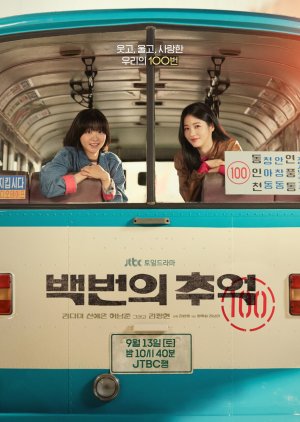
Friendship Over Rivalry: The True Triangle in A Hundred Memories
When we talk about love triangles, we usually picture rivalry, jealousy, or even betrayal between two friends. That’s the cliché. But A Hundred Memories dares to flip the formula. Ko Yeong Rye is in love with Jae Pil, but Jae Pil is drawn to Seo Jong Hee. The twist? Yeong Rye and Jong Hee aren’t rivals—they’re best friends. That choice changes everything.It’s a premise that echoes Truffaut’s Jules et Jim (1962), where friendship and love collide in a way that feels honest rather than melodramatic. Or think of My Best Friend’s Wedding (1997), where the story doesn’t end with the expected romantic “win,” but with a bittersweet acceptance of friendship over rivalry. That’s the same kind of vibe A Hundred Memories might be leaning toward.
What are the possible outcomes? One: Jong Hee could renounce Jae Pil, leaving nobody with anyone. Two: once Jae Pil shows clear interest in Jong Hee, Yeong Rye would realistically back away—because being the “second choice” is painful, maybe even unbearable. And three: there’s Jong Hee’s brother, the law student, who already seems intrigued by her. He could easily become the unexpected twist in this delicate balance.
And then there’s that closing scene of Episode 4. Jae Pil accidentally runs into Jong Hee, now wearing her work uniform. His silence and stare linger too long—it feels exaggerated, almost as if the uniform itself carries judgment. If it were me, I’d have gone with something natural like, “Oh, what a surprise, I didn’t know you worked here.” But the direction makes his hesitation about status clear. Is he truly shocked… or is the drama emphasizing how much appearances still matter in this world?
We’ll see in Episode 5 if he softens his reaction or doubles down. Either way, it’s a fascinating tension between natural storytelling and heightened drama.
Episode 10 Update
With just one weekend left before it ends, the series chooses stability over catharsis.
After Hee and Rye finally face each other and admit they love the same man, the show instantly cools everything down. Hee realizes—without anyone having to tell her—that she has no real chance against Rye. From that point on, she practically disappears from the episode when it comes to Pil: no contact, no exchange, just her own tension with her mother and the brief encounter with Rye’s brother. It’s a deliberate narrative choice: the script removes her from the love triangle and reframes her as a social mirror rather than a romantic rival. The result is an emotional void—the triangle doesn’t resolve, it simply fades away. A Hundred Memories shifts from the inner fire of feelings to the outer order of hierarchy. Visually stunning, yes, but clearly a choice for stability instead of catharsis.
The preview for episode 11 confirms it: love is no longer the battlefield—Miss Korea is. Where they once competed for affection, they now compete for validation. “Let’s play fair this time,” Hee tells Rye, barely touching her hand. It’s the echo of everything before: two women who once hurt each other trying to win the same man, now standing as equals in a symbolic arena. It’s not reconciliation; it’s acceptance.
Meanwhile, Hyun drifts into narrative limbo. His arc promised maturity and balance, but the script reduces him to a bystander. Unless the finale gives him purpose again, the ending risks feeling uneven. Because if this episode proved anything, it’s that A Hundred Memories knows how to close chapters with visual grace—but not always with emotional justice.
Was this review helpful to you?

A Hundred Memories
This review covers the pivotal first six episodes of 'A Hundred Memories,' examining its unique setting, the intricate plot progression, character dynamics, and the controversial mid-series twist.Setting the Scene: Nostalgia and Working-Class Youth
'A Hundred Memories' immediately captivates by immersing viewers in 1980s South Korea, specifically focusing on the strenuous, yet close-knit, lives of bus conductresses at Cheonga Transportation. The initial episodes are visually stunning, masterfully capturing a genuine sense of nostalgia through period-accurate fashion and cinematography. The tone is a compelling blend of slice-of-life youth drama and commentary on social issues, highlighting the hardships and camaraderie of working-class life, particularly in terms of labor conditions and the restrictive gender roles of the era. This unique backdrop makes the drama a distinct and pleasant early watch.
Plot Dynamics: Love, Loyalty, and Loss
The first half of the series diligently establishes the core emotional conflict: the tension between deep friendship and emerging first loves. The story centers on the intense bond between the two leads: Go Young-rye and Seo Jong-hee. The introduction of Han Jae-pil, a wealthy amateur boxer with a painful family past and a dynamic character who disrupts their world. While Young-rye harbors an unrequited crush, Jae-pil is initially drawn to Jong-hee and Jong-hee to him. Young-rye suppresses her feelings, a choice that underscores her profound loyalty to her friend.
The Catalyst for Chaos, the narrative turns sharply with a series of escalating crises:
Trauma Resurfaces: Jong-hee's traumatic past is exposed when her violent, abusive brother attacks her publicly. Jae-pil intervenes, resulting in a physical altercation where the brother is stabbed (a non-fatal but serious crime).
The Confession and Breakup: Jong-hee discovers Young-rye’s hidden feelings for Jae-pil. In a moment of complex emotion, Jong-hee breaks up with Jae-pil to protect her friendship with Young-rye, just as Young-rye had done.
The Work Incident: Amidst this personal chaos, Young-rye experiences backlash after successfully organizing a strike that wins better work conditions and work compensation for a colleague who was hurt on the job. Because of this, her boss harbours ill feelings towards her and accuses her of stealing. When he attacks her, Jong-hee steps in and stabs the boss with a pen to protect Young-rye. Fearing severe consequences, a panicked Young-rye urges Jong-hee to run away and disappear, promising to take responsibility. Jong-hee reluctantly flees, leaving everything behind. This devastating event triggers a seven-year skip. This narrative device has been the drama's most contentious point, as it feels so forced, highly dramatic, and life-altering, solely to justify separating the central characters and resetting the romantic chessboard.
The sudden shift felt like a disappointing leap into conventional melodrama, abandoning the initial charm of the youth slice-of-life genre. And perhaps that is intentional, forcing us viewers to wonder how the characters' relationships evolve after the seven-year time jump. I, for one, would love to see Go Young-rye come to realize how precious Jeong Hyeon is and how much more deserving he is of her love. I find him genuine with his love for her and her family.
Detailed Character Analysis
Go Young-rye (Played by Kim Da-mi)
Go Young-rye is the central protagonist and emotional anchor of the story. She is intelligent, responsible, and fiercely loyal, constantly battling her circumstances to be a pillar for her family. She is defined by her immense emotional capacity, which enables her to organize a successful work strike while simultaneously sacrificing her first love for the sake of her friend. Her defining moment is her frantic decision to force Jong-hee to flee, a choice that burdens her with immense guilt. After the seven-year skip, she is shown to be inseparable from her best friend Jae-pil. This closeness suggests her original, suppressed feelings may now be realized, which might set up a complex, guilt-ridden reunion.
Seo Jong-hee (Played by Shin Ye-eun)
Seo Jong-hee is a charismatic, confident, and slightly mysterious friend. She finds a genuine, deep, and healing bond in Young-rye's friendship after fleeing what we come to realize is an abusive family past. She quickly develops a romantic connection with Han Jae-pil after confirming that her friend didn't have feelings for him. Her sudden forced departure after she stabbed her and Young-re’s boss to save her friend's life is the central tragedy of the first half. She is seemingly absent for the subsequent seven years, but her eventual, hinted return is the key plot device for the second half, I believe, which is destined to force a confrontation about broken loyalties, lost time, and the painful consequences of the decisions the two friends make to save each other’s lives.
Han Jae-pil (Played by Heo Nam-jun, just wow)
Han Jae-pil is the wealthy heir and aspiring amateur boxer who carries his own emotional wounds. He is the unintentional object of affection for both friends, forming the love triangle. He shows genuine interest in and sincere feelings for Jong-hee, actively protecting her from her abusive brother. After seven years, he now seems to be best friends with Young-rye. His post-jump development would seem to revolve around the ambiguity of his current feelings: is his connection to Young-rye purely platonic loyalty and shared history, or has his feelings evolved in the vacuum left by Jong-hee? His emotional state is the time bomb set to explode upon Jong-hee's unexpected reappearance.
Ko Yeong Sik (Played by Jeon Sung Woo)
Ko Yeong Sik is the older brother of the female protagonist. He is a highly capable student attending a prestigious university to study law. He embodies the complex archetype of the "hope of the family" brother. On the surface, he can be blunt and grumpy, but this shell conceals a deep sense of responsibility. He is carrying the weight of his family's collective hopes, financially supported by Young-rye's sacrifices. He provides the emotional justification for Young-rye's dedication and appears to be developing a soft, complicating affection for Jong-hee before the time jump. I'm just not sure how this translates after the jump, if at all.
Jeong Hyeon (Played by Kim Jung Hyun, I adore him)
Jeong Hyeon is Ko Yeong Sik's best friend and fellow law student from a wealthy chaebol family. He harbors a quiet, unrequited love for his friend's sister. A deceptive nonchalance characterizes his personality; he is always watching and ready to step in to support Young-rye when needed, which makes him a hero in my eyes. His steady, hidden affection positions him as a reliable contender, a character whose feelings for Young-rye are unclouded by the guilt and complex history that ties her to Jae-pil and Jong-hee. My hope is that Young-rye wakes up to his genuine love for her and her family. He is far more deserving of it. At least this is what I hope the second half and seven-year jump bring to this story.
Was this review helpful to you?

feel back and relax
I’ve just started A Hundred Memories and I’m already hooked. From the very first episode, it draws you in with heartfelt storytelling, layered characters, and a nostalgic atmosphere that feels both emotionally rich and visually authentic. Set in 1980s South Korea, the drama doesn’t just lean on retro aesthetics for charm — it uses the era meaningfully to explore themes of dreams, sacrifice, and friendship.The main characters — Go Young-rye and Seo Jong-hee — are immediately compelling. Young-rye is hardworking, grounded, and relatable, a young woman juggling dreams of going to university with the burden of supporting her family as a bus conductor. Jong-hee, in contrast, is vibrant, charming, and confident, but not without her own complexities. Their bond feels real, and watching their friendship unfold against the backdrop of growing tensions (and possible romance) adds depth to the story.
What really makes this drama stand out so far is how it captures the feel of the 1980s. The uniforms, the buses, the handwritten tickets, even the sound of old radios and bustling stations — it all brings a wave of nostalgia, whether you lived through the era or just appreciate stories grounded in a time of transition. It gives the show a warmth and sincerity that’s hard to fake. The atmosphere is comforting, even as the story deals with serious themes like societal expectations, lost opportunities, and emotional wounds.
The pacing has been well-balanced so far — thoughtful but never slow — and I’m genuinely curious to see how the characters grow, especially with the hints of a love triangle and family pressures simmering beneath the surface. I’m particularly interested in Jae-pil’s backstory and how his relationship with the girls will develop. There’s a lot of promise here for emotional depth, and the chemistry among the leads makes it easy to get invested.
Overall, A Hundred Memories is shaping up to be a beautiful period drama — nostalgic without being overly sentimental, grounded in relatable struggles, and filled with the kind of sincerity that makes you want to keep watching. I’m definitely excited to see more, and I have a feeling this one is going to leave a lasting impression.
Was this review helpful to you?

Beautiful Story of Life, Love, and Friendship
I'm only writing a review because the top reviews feel like they were written by children who lack the attention span to absorb a series like this. The focus of A Hundred Memories is on two women, both struggling in life, who become each others support system. The characters are beautifully drawn, their personalities wonderfully complimentary.The romance is a secondary focus and used mostly to shed light on the relationship between the two women. If you're looking for a romantic kdrama, this might not be the best choice. This is about the bonds of friendship and the many ways in which life will test those bonds.
Both women have wonderful arcs. Both actresses delivered fantastic performances. And the period setting was lush and immersive. If you enjoy stories about women, sisterhood, and found families - this one is for you.
Was this review helpful to you?
This review may contain spoilers
Mixed Feelings, Love the Story but Directing Not So Much
I love a lot about this show. There aren’t too many shows that are set in the 80s of Korea and this gave me nostalgia of something I never experienced. A lot of the dynamics, setting and structure was refreshing and breaks some cliches. It did made me feel like I was growing up with them and loved seeing the friendships form. I love seeing the siblings and the parents get the screen time and their relationships. I almost wish there was more time to see all of the stories in more detail and throughout the years. But at the same time almost shocked how much happened in 12 episodes. There is too many thoughts that I have but loved so many aspects that I can’t even place my mind on. I don’t understand the low rating as I feel people may rate on the their personal feelings of the characters when they are sent to be seen like this by the viewer. However, most of my negative thoughts are on the directing and the actors did an amazing job!Production:
Firstly my mixed feelings is about the structure of the show. Half was set in their “childhood” while the other was their adulthood. I liked how it almost felt like two shows put together and have enough to be reminded of the beginning of the story as the past them. Even with moments of the friends and the families. However, I felt they almost have too much time to Jong Hui and Jae Pil story. It had me wondering who was going to end up with who and if it was the leads then how they would do the 180 which is not necessarily a bad feature as it kept me curious. It almost made it seem like Jae Pil had no other choice but to like Young Rye. For them to have Jae Pil and Young Rye to be together, they should have given more scenes of what happened in the seven years time jump. As well as how Mr. Ma almost lost touch with the main characters.Even the confession scenes and ending romance seemed rushed and was more devoted to the Jong Hui story that almost made her the main lead. I did want Young Rye and Jae Pil to end up together but wish there was more moments of Jae Pil realizing he liked her. Their relationship did seem genuine and were so cute to see together! One odd factor that one really mentioned is how the boys in the beginning are in high school while the ladies were around 21 and 23. it just didn’t sit right with me to see Jong Hui (23) have Jae Pil as her first love for a high school student.
Characters:
These comments don’t reflect my rating of the show just how I feel about the characters as they are meant to be portrayed and the actors did a great job to make me feel these ways about them.
Jong Hui was an annoying character for me. In the second half she was always there, I get how it showed that she missed them and liked her life there but it was almost overbearing. She somehow made it into the confession scene and limited moments we had with the main couple, even in the very end making it seem all three were dating. Like I get it but understand the boundaries. She also had no respect for Young Rye relationship and feelings. Throughout the first half, Young Rye suppressed her feelings so she could make her two friends be happy even “letting go”her first love for them to be together. However Jong Hui, after the seven years she was gone and knowing Young Rye liked Jae Pil, kept going and trying to get with him. She ended it in the past “for Young Rye” but then regrets it later. She eventually BLAMES her for breaking up with Jae Pil while Young Rye is dating him. There were times she took a step but I believe not for them to be happy but bc she felt insecure about herself and didn’t know how to “catch up” to the relationship Jae Pil and Young Rye built (which she states). People may say it was selfish for Young Rye to get with Jae Pil but she understood he boundary even after Jong Hui was gone and never confessed. Jae Pil was the one who did after the seven years. Also Jong Hui and Jae Pil only had at most a 6 month “situationship”. So Jong Hui was more selfish and disrespectful to her “most cherished best friend”. I do like her with Young Rye brother but again felt like a second option.
I love Jae Pil’s character and ever more the actor. At times I did feel that the character was leading Young Rye on like in the beginning. However loved their long friendship was always something more for him and he knew it but never expressed it until he had some competition. The actor does an amazing job of being nervous to express his feelings to both of the female leads. I also love when dramas show the real feelings of the male leads life and shows that he has struggles with his father. He has a sensitive side and the crying from the actor felt real and raw. I wish he did more dramas where he was the man lead.
I also wish Jeong Bun ended up with her daughter’s father. And if not at least gave her daughter’s father a chance to prove himself or even them make the father more genuine to her in the past. She gave him no relationship with his daughter.
Was this review helpful to you?

This review may contain spoilers
A Hundred Memories: What Doesn’t Return
Set in 1980s South Korea, A Hundred Memories is a slice-of-life drama where a backdrop filled with analog and nostalgic elements embraces both the pain and beauty of everyday life — like a wildflower blooming through concrete.The beginning is slow and subtle, but as the minutes pass and life unfolds, what once seemed like coincidence gains weight, revealing itself as fate through the gentle lens of Ko Youngrye — the eldest daughter in a humble family of five. After her father’s death, she puts her dreams on hold to help her mother support the family by working as a bus fare collector at Cheong Ah Transport. On what appears to be an ordinary day, two meaningful encounters take place: her eyes meet those of Seo Jonghui, who would later become her coworker, and Han Jaepil, her first love. And so begins an emotional journey where young hearts must navigate new and conflicting feelings.
I’ll admit I have a bit of a bias against love triangles, so I started off wary, expecting the cliché of two best friends fighting over the same man to feel shallow. But A Hundred Memories made it work — at least in the beginning. I still remember the thrill of wondering who the final couple would be (good times).
After all the emotional weight and tension of the first part, the seven-year time skip changes everything. The relationships lose their grounding, and much is left to the viewer’s imagination.
YR’s feelings endure over time, and her bond with JP grows deeper and more intimate. Meanwhile, JH lives a life of appearances, feeding the ego of her adoptive mother who forbids her from reconnecting with her past. When that connection finally happens, it triggers an inner conflict — the past she remembers so fondly no longer exists. People have changed, matured, and she seems to be the only one who changed on the outside but remains the same confused JH inside, lost in a role she can’t escape.
Watching A Hundred Memories was a meaningful journey. Even now, I’m not entirely sure how I feel about the series. The issue wasn’t with the main characters or the final couple — I quietly rooted for YR and JP, and I didn’t dislike the idea of JH and JP either. For me, either pairing could’ve worked as long as it made sense. Still, I wasn’t fully satisfied. After the rush of the ending faded, I was left with a bittersweet feeling and the sense that something was unresolved. Honestly, I missed a sincere and emotional reconciliation between the girls — they made a point of showing their downfall in the rain, so why not show the healing and forgiveness too?
That said, the supporting cast was delightful. I really enjoyed the development of the relationship between YR’s friend and JP’s friend — it was the breath of fresh air I needed after getting so annoyed with driver Kim. Oh, and I missed seeing more of YR’s brother — he definitely deserved more screen time!
Was this review helpful to you?
Insufferable love triangle, lost it's value in part 2
They threw away all the potential built in part 1 and turned it into a soap opera slash makjang mess in part 2. Whoever wrote part 2 should never be allowed to write again.How is it that all the misfortunes fall onto Jonghee’s lap, and all the qualities of a male lead are given to Junghyun, yet we’re still expected to root for the main couple?
Jonghee and Junghyun were well written, layered characters, but they ended up being used merely as tools to push the main couple together. The romance in part 2 felt like a checklist, another cliche from kdrama land, where the first male and female leads must end up together no matter what.
Jaepil was more interesting in part 1, when he was decisive, broken yet soft, he knew he liked Jonghee so he actively pursued her. The hate his character received later on is understandable given how poorly written his development became. We were not given enough foundation on how his heart moved to Youngrye other than Youngrye was the one who takes care of his personal (and family's) needs.
Youngrye in part 2 fell into one dimensional main lead syndrome. She eventually got everything while Jonghee had so little, yet lost so much. This contrast made some of us can't help but symphatize with Jonghee rather than Youngrye. The only thing Youngrye's character showed in part 2 was her being a lovesick. She was supposed to be ambitious but the only thing she chased was Jaepil. I cannot comprehend how she still clung to her bestfriend's ex after everything that happened to Jonghee without feeling guilty (and after the grand monologue of ending her unrequited love!). I blame the writer for her such an out-of-character degradation.
This drama would have been so much better if it had focused on female friendship instead of forcing them into rivalry. It could’ve been heartwarming and soul-lifting, but instead, we only got an insufferable love triangle. I genuinely feel sorry for the actors. The only silver lining is maybe the hype from all of this madness could help the actors to be more selective in accepting scripts.
Was this review helpful to you?

A Retro Ride with Heart
This drama gave me major retro vibes — think Reply 1988, but with its own beautiful twist. It’s got everything that makes a slice-of-life drama hit right in the feels — the helplessness of a son who just wants to give his family the world, the desperation of a daughter doing everything she can to protect hers, genuine female friendship, and of course… a classic K-drama love triangle (because what’s a retro story without one, right?).What I absolutely loved is how Hundred Memories reminds us of the tiny joys we often overlook — having dinner together, laughing through struggles, realizing that happiness isn’t about wealth but about being surrounded by people who truly care for you.
✨ Favorite moment? When the mother has an accident and the daughter realizes how important money is — yet still refuses to sacrifice love and relationships for it. That scene hit different.
P.S. Finished watching this on Oct 21 — and trust me, the ending is so satisfying. No loose ends, no heartbreak hangovers — just a beautiful, full-circle closure. 💛
Was this review helpful to you?

1950s values - shallow/blinded women competing. doormat women doting on stoic parastitic guys
The first few episodes while they are bus conductors are cute and ok and even powerful social commentary. That part shows young ppl putting in effort to move forward in life, and "UglyFriend" as a powerful force in social change and worker's rights. BUT THEN THE CHARACTERS NEVER GROW MUCH IF AT ALL.After the time gap, this drama went totally trashy and promoted 1950s relationship between YR the doormat and JP the entitled male brat
The ONLy good part was the MrQueen King actor, he was awesome, and Sang Cheol taking Single Mom on a honeymoon and saying he will do his best to bring home a honeymoon baby. And scenes of him and Mr Kim the driver talking about handing off the fatherhood and Mr. Kim peeking at the church. The rest... forget.
The rest was trash - the narcissist JH and her abuse of YR being mean etc, YR as the naive baby girl doormat sucking up to JP, and JP as a robotic poker face using YR and then playing with JH
YR is somehow supposed to be good for being a naive immature doormat who taks cute like a little girl and thinks cute like a little girl and crawls on the floor FOR YEARS to catch any sign of polite and cold kindness of the fat as@ Jae Pil, who finally bestowes his princely charms because he realizes he needs YR as a personal servant for free the rest of his life.
The characater of JH is immature, mean, shallow to the max, and the most disturbing thing is how many of the audience found her charming and angelic and even accused YR of backstabbing her. All the narcissists in the world love JH ....
OVERALL THE DRAMA IS ABOUT TOXIC RELATIONSHIPS THAT DO NOT ADVANCE AT ALL BC PEOPLE DO NOT CHANGE
IT IS HOPELESS
and that is very western. This is Netflix. THe drama is about ordinary toxic ppl doing toxic things and not fixing their messes. It is a study in toxicity. REading the comments and reflecting on the drama should be a required homework for every psychiatrist, psychoilogist and social worker.
THIS IS JUST 10000% TOXIC
and worth watching just to analyze all the shades of it
The acting is good so you get to see how real life plays out
TERRIBLE, DISAPPOINTING, HOPELESS, NO CHARACTER GROWTH, JUST TOXIC, **** DEAD END ****
YR, JH and JP are very realistic toxic characters from real life. And that is why it is so frustrating to watch YET ANOTHER character like that for 12 hours. Nuff already. We saw it all. We see it every day. We do not need to see that anymore! We need to see the solutions.
This drama skillfully and cunningly endorses "1950s" type of people and relationships as commendable, so in fact it promotes the status quo in sexism, catering to men, women competing and backstabing each other for men, shallow ambition of being in a peagant, shallow ambition of waiting around a guy, women not thinking further than their nose, men ennjoying privileges and personal servants for free, etc. This drama could have been set in Goreo or Joseon or before, and it would be the SAME plot.
And that dead-end just stating problems and never showing any hope for any solution is the trademark of western media.
For a piece of art to be truly a piece of art, it has to give some ideas for solutions and has to show some transformation.
This particular drama is useful as a study in toxicity because you can dig through the layers and you can see the comments of the audience and realize the toxicity in the society and the false beliefs.
**** So this drama is useful like a dissection class at the medical school. **** But someone needs to start producing art with solutions, ie. some healing ideas and solutions.
Was this review helpful to you?