News
News 

This review may contain spoilers
Upon further reflection...
When I finished this, I was satisfied. Just satisfied. It was alright. The body swap thing wasn't cloying and overbearing, the chemistry was there, even the side characters that had the potential to be annoying were okay. The humour from the villagers was fine, and the 2FL wasn't a challenge.But the more I think about it, and look back, this was actually deeply satisfying in the way the story was told and concluded. Usually, when it comes to the body swap thing, I have very little patience but somehow, the way this was done, I found myself just seamlessly falling into the story with the swaps. I was expecting her being the prince to have a greater impact on the palace because of her medical background, and when that didn't happen, I was a little disappointed, but by the end it made more sense.
When it is revealed in the end that the body swap was a mischievous god attempting to help Yeol fulfill his childhood wish of wanting to save the person who saved him, I felt a sense of completion. It wasn't the underlying theory or shadow hanging over the plot, it was just another quirky reveal. It explained why they swapped without invalidating any of the story that came before.
I was also initially angry that they didn't just execute the bad guy. But when you think about it, neither of the leads ever lept into taking lives. They always believed in the ability of people to change and in the idea that if you give someone a chance to reflect, they'll eventually see the error of their ways. It seems wildly naive, but in today's dire world, I think it's a sentiment that's desperately needed. I have come to appreciate the fact that they stayed true to themselves in the end.
Finally, the end. I was glad that she saved herself and Yeol in the final confrontation, and I was also so happy that they didn't get married while he was the king. His logic made sense and it restored stability to the kingdom while he did what needed to be done until he could hand over. Of course, that means they would've had to wait for years before they could finally be together, but we'll just overlook that part.
Ultimately, I'm not changing my initial rating (8/10), but I'm leaving this review because after sitting with it for a few more hours, I realise I really appreciate this drama for what it is, and I will definitely miss tuning in every week.
P/S: the supporting villagers and 2FL were all very charming and adorable to watch too. 2FL having a mini bi-crashout over the body swaps was so funny! 😂
Was this review helpful to you?

This review may contain spoilers
Robin Hood Robbing Hearts
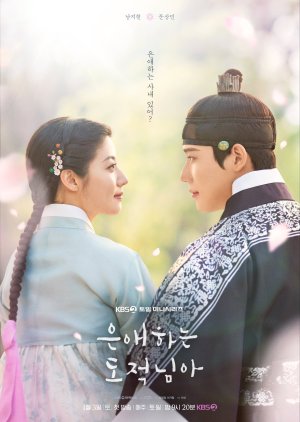
To My Beloved Thief is set during the dark days of the Joseon era. The kingdom was ruled by a tyranny whose greed knew no bounds as it caused oppression of the weak resulting in hunger and injustice. He looked the other way as his ministers filled their granaries robbing the weak in plain sight. Amidst all this madness however, arose a Robin hood by the name Gildong whom the weak praised but the rich condemned. The twist is that our Robin Hood is a she. A low-born female physician named Hong Eunjo.Grand Prince Dowol and Eunjo are the central focus here, with their lives being intertwined through an unexpected switch in bodies. While switching bodies can come off as overdone, here it serves as more than a plot point. I loved how it puts the characters in the other's shoes, forcing the prince to understand what it is like to live as a commoner, and Eunjo to understand what it's like to be trapped in a royal court where political dangers are ever so suffocating. This switch truly brings "walking in someone else's shoes" phrase to life here, and I appreciated how it is through this very experience the prince finally understands why the woman he loves became Gildong.
Unlike most fluffy romances, this is a romance between two people who have a lot that separates them, right down to their backgrounds. A romance where politics and social standing make a normal love story impossible. One where class, danger, and saving their country takes precedence above anything else. Their love never gets in the way of the greater crisis; instead, it strengthens the will they have to fight and overcome it.
This drama boasts excellent acting from its leads. One such example is the fiery nature of Hong Eunjo, played by Nam Jihyun. Also worth mentioning is Moon Sangmin for his role as Grand Prince Dowol; someone who has the grace and power of a prince but also enough kindness to complement her character nicely. And, while I'm at it, another commendable performance is that of Hong Min Ki as Im Jaeyi; whose cold yet warm personality was both frustrating and brilliant.
While the core plot may be somewhat cliché, its twist and turns kept it fresh and interesting. One particular thing I adored about this drama was how the second female lead, Hae Rim was well-written. She was a sweet woman who truly cares about the people; who doesn't get jealous over unrequited love and accepted her defeat in a gracefully dignified way. Better yet, the two female leads are friends and avoid the typical rivalry, with each girl offering support and strength to one another, which felt very appropriate for their respective worlds.
However, not everything was so brilliant; some parts of the plot did seem rather convenient. Im Sahyeong escaping, for example, didn't feel right considering everything he had done; a criminal being left at liberty without being guarded felt like a cheap ploy to push the plot forward. Another cliché was applied in the tense scene where the villains took an eternity to breakdown the door just so that the couple could express their undying love toward each other before they could attack them smh; one surely has to switch off their brain to stomach such scenes lol. In any case, in the grand scheme of things, those rare moments of foolishness were just a drop in the bucket.
The cinematography was okay however, there were scenes that stood out to me; like when the leads accidentally kissed under the blossoming trees and the moment the courtesans successfully escaped from the palace and tossed off their robes into air...how liberating that was.
Finally, this particular drama is like a romance novel which happens to feature politics within its story lines. It is based on empathy and unity of purposes; a love that is built through shared objectives rather than through romancing. If you seek a drama that features interesting characters, background knowledge, slow burn love, and political elements, then this may be the one to pick.
Was this review helpful to you?

A 16-Episode Masterpiece I Couldn't Stop Watching
I was initially hesitant to start this drama because 16 episodes can sometimes feel long, but after seeing so many positive comments, I decided to give it a try. Wow—I was glued to the screen the entire time! The episodes passed so quickly that I didn't even realize I had watched half the drama in one go. I haven't had that sensation with a long-form drama in a very long time. This drama reminded me exactly why I love K-Dramas so much.The script, pacing, and production were perfect. Palace politics can sometimes be boring, but here the story flows seamlessly. I loved how the soul-swapping wasn't just a gimmick; it was done perfectly to give the characters depth and help them understand each other's worlds. The chemistry between Eun Jo and the Grand Prince was incredible—they were truly head over heels for each other.
One of the best parts was how everyone supported one another. I loved that Jae I wasn’t a typical "second lead" trying to force them apart; instead, he helped them along the way. Seeing a story where the characters actually stand by each other was so refreshing.
The finale was done perfectly—everyone got exactly what they deserved. I really appreciated that the writers followed historical events and didn't force an unrealistic ending just for the sake of it. The glimpse into the modern-day era at the very end was such a nice touch and really tied everything together beautifully.
This drama is proof that with the right script and acting, 16 episodes can fly by. It’s romantic, clever, and politically engaging. I highly recommend it to anyone who wants a "binge-worthy" historical drama that stays strong until the very end!
Was this review helpful to you?

This review may contain spoilers
I'm confused, don't let yourselves get confused too.
I watched the series from beginning to end, but initially I had hoped it would be a good series, but unfortunately that hope disappeared over time. I watched it by fast-forwarding and rewinding, feeling bored.The story was fragmented. It lacked coherence. Is it a Hong Gil Dong drama? A revenge drama? A king's overthrow? A love story? A soul-swapping drama? Or is it the famous Korean noble, slave, concubine equation? What is it? The subject matter was fragmented. There should be coordination and unity between the fragments. This didn't happen. No event was explored in depth; it was treated abstractly and simply. Therefore, I can't place the story anywhere.
There's a minister. This minister has seized complete power by lulling the king to sleep with incense, slowly poisoning him, making decisions as he pleases, and enforcing them. He has puppets. He has everyone bound. But there's no tightness in his control. It just goes on as it is. No one objects, no one fights against it. Nothing happens. It's like, "Go ahead, my servant," and he just goes along with it.
But there's a clever girl, a concubine's daughter, neither noble nor not, somewhere in between. This girl is a caregiver for the minister's father. Then, he tells her he's marrying her to his son, but he marries her to his own father.There's such a strange twist. The girl is intelligent and is on her way to becoming a doctor. As luck would have it, the minister's son is also a doctor and the head of the police force. However, he's hardly a doctor; he's a daddy's boy, dim-witted, and a errand boy, killing when ordered. That's the kind of person he is. In the end, he dies too.
Our girl is a doctor and also a Gil Dong who helps the poor. She's good at archery; she hits her target.
Our prince is the king's brother. The king is constantly sedated, so he thinks he's ill. He believes so too. But after meeting the girl, he realizes this isn't the case. Because he mingles with the people, he learns about certain things, and he figures out that she's Gil Dong. Also, this treacherous minister has a son who is handsome and holds a position in charge of the police. She's also the daughter of a concubine. He resents her for this reason. He tells her, "What are you doing here? Go sit at home. You're the daughter of a concubine. What does this have to do with you?" He belittles her, but also belittles himself, and doesn't want her to join his family. He knows she'll be married to his grandfather, and the girl knows it too, but she doesn't speak up for her family's sake because it affects her father.
Ultimately, this Gil Dong girl and our prince fall in love. They solve the problems one by one. However, they can't get married. The boy is noble, the girl is a slave. Even this prince becomes king in place of his brother. They still can't get married because he can only be a concubine, not his wife. Therefore, in the end, their bond is revealed by a ribbon. They experience a spiritual exchange. It's believed this began when the girl saved the prince from drowning when he was about to drown at the age of 7-8. This is revealed at the end of the story. The prince abdicates the throne and marries the girl. Happy ending. This is my simplified explanation. Of course, the series is more complex. Those who like this type of thing can watch it as a lighthearted read. However, the actors are good. At first, I didn't see any chemistry. Because the male actors are young, and the female actor is older. The age difference is obvious. But you get used to it over time while watching. I found the actors successful. The men are young and handsome. They will be very good actors in the future. They show their potential. Their physiques are also very good. But I especially liked Ha Seok Jin, who played the King. He really improved in episode 15. He was excellent. He's become my candidate for Best Supporting Actor this year.
It's a drama you can watch without expecting too much.
Was this review helpful to you?
To My Beloved Thief is a perfect 10
To My Beloved Thief is a perfect 10, masterfully blending historical sageuk with witty body-swap comedy, thrilling heist action, and heartfelt romance. The drama shines with a strong, multi-dimensional female lead and a charming hero whose chemistry brings both laughter and emotional depth to every scene. Its pacing is engaging, the stakes are high, and the story balances humor, suspense, and tender moments effortlessly, making it an addictive watch that leaves viewers both entertained and emotionally invested from start to finish.Was this review helpful to you?

This review may contain spoilers
Healing Across Worlds: How To My Beloved Thief Turns Soul-Swapping into a Story of Destiny and Class
Many period dramas explore similar themes, but each approaches them differently. While soul-swapping is not a new device, TO MY BELOVED THIEF uses it sparingly and purposefully—as a tool to tell a story about healing, acceptance, and destiny.It has been a while since I’ve loved a period drama this much, especially one rooted in fiction and fantasy. What stood out to me is that it is not driven by political conflict or revolution. Instead, it centers on social class differences—an especially sensitive issue during the Joseon era. Because of this, the characters’ thoughts, emotions, and choices toward one another feel believable and justified.
Whenever characters from different social classes interact, they discover something new about each other and begin to imagine the possibilities of a different life. This is where the soul-swapping element becomes meaningful. Beyond the theme of destiny between Eunjo and Yeol, it serves as a bridge between two worlds they believe they belong to. Through soul-swapping, they gain a deeper understanding of perspectives far removed from their own. This newfound empathy shapes how they respond to others and ultimately defines Gil Dong as a central symbol of the series—someone who embodies two sides of a society where hierarchy dictates one’s place.
The drama’s impact would not be as strong without its solid screenplay. The writing thoughtfully develops each love story, showing how words can shape another person’s understanding of their own emotions. Even the love square works uniquely because the characters influence and transform one another through their differing worldviews. Their dialogue clarifies feelings, reshapes perspectives, and moves hearts into alignment.
I also appreciate how the series balances romance, drama, and fantasy. Rather than relying solely on the soul-swapping premise to bring the leads together, it focuses on life itself and the world around the characters. This gives the story depth and makes it stand out from other dramas in the genre.
Overall, the series is truly one for the books. The strong character dynamics and compelling performances by Nam Ji Hyun, Moon Sang Min, Hong Min Gi, Han So Eun, along with a talented supporting cast of veteran actors, make it a must-watch.
Was this review helpful to you?

Twists, Turns, and a Body Swap Done Right
What sets this drama apart is its beautifully crafted plot. It’s a clever fusion of folklore, actual history, supernatural elements, and fantasy, all tied together with twists and turns that keep you glued to the screen. The pacing? Spot on. It gives the story and characters room to breathe, develop, and surprise you with interesting narratives throughout.Now, let’s address the elephants in the room. First up: the body swap. Yes, that one. But here’s the thing—it’s woven into the story so seamlessly that it doesn’t feel awkward or forced. No cringe humor, no over-the-top antics. Just a well-executed plot device that works.
Second elephant: the age gap. A sensitive topic, sure, but let’s give credit where it’s due. The leads deliver powerhouse performances with undeniable chemistry. Nam Ji Hyun may be five years older than Moon Sang Min and look more mature, but their acting is so top-notch, you’d never call it a miscast. That said, the real casting head-scratcher? Choi Won Young as the father of Do Sang Woo. A father at 12 years old? Really? For Hong Min Ki, it works, but for his older brother? Not so much.
Speaking of Hong Min Ki, let’s talk about this rare gem of a second male lead. His gray character is so layered and compelling, you could build an entirely new drama around him. Every time he’s on screen, you’re hooked, wanting more depth, more exploration, more him.
The entire cast, honestly, is beyond expectations. It’s one of those rare dramas where every performance, every detail, feels meticulously crafted. From the writing to the production, it’s a masterpiece you simply can’t skip.
Was this review helpful to you?

Historical done right
Its been a while since I saw such a beautiful historical drama, highly recommend it.Plot kept me entertained, along with excellent performances from the cast. The ost adds a magical touch to this drama.
Nam ji hyun and Moon Sang Min are so amazing here. Even supporting characters have depth to their actions.
Was this review helpful to you?

‶It is you. Silk shoes. Flower rain. There you are. My delicate Flower. “
A physician by day and righteous thief by night gets the attention of an idler prince-turned-detective in the Joseon era: a tale of love, class, and political intrigue.✅️ Beautiful story and exquisite writing.
✅️ The best part of the drama was definitely the dialogues between the leads. It felt like reading a classic book.
✅️ The performance of the actors was excellent, the emotions were portrayed really well.
✅️ No unnecessary story lines, clean and neat progress of both the plot and the character development. The pacing was well executed with nice comedy and romance mixed in.
✅️ The secondary characters were good and held weight to the story instead of being a baggage.
✅️ Good camera angles and the cinematography was top notch.
⚠️ The soundtracks and the music could have been better.
⚠️ Nothing new or different.
Overall, very good. Highly recommend for those who like to watch good romance with a touch of fantasy and politics.
Was this review helpful to you?
This review may contain spoilers
powerful characters pretend to be powerless while villains with zero legal standing run the show
The most offensive part of the 16 episode at approximately 60 minutes each drama is how it treats Joseon-era law like a buffet—the writers pick the rules that torture the characters but ignore the ones that would actually solve the plot.This slave trap that it constantly promotes shows that it is happy to enforce rigid, archaic "parental rights" and "slave status" to justify a scene where a legendary, high-skilled female lead is reduced to a passive widow waiting to be beaten in a courtyard. It strips her of her physician intelligence and thief agency just for a cheap damsel in distress moment.
Yet, five minutes later, the show ignores the most absolute law of the era which is treason and we are expected to believe a bastard concubine’s son (2ML) can arrest a Grand Prince (ML) and survive.
The Male Lead is perhaps the most frustrating hero in recent K-Drama history.
When the Queen Dowager—the only person with a functioning brain—rightfully orders the 2ML’s execution for arresting royalty, the ML stops her.
The Result of "saving" his rival, he directly causes the next hour of misery. He allows the very man he saved to stand in a courtyard and challenge his marriage proposal. The rivalry isn't "epic"; it’s a self-inflicted wound. The ML isn't a "noble strategist"—he’s a spineless martyr who values a "political chess game" over the immediate physical safety of the woman he supposedly loves.
The chemistry is non-existent because the Female Lead (Eun-jo) has the personality of a dry loofah.
Is it Survival or Stupidity? The show blames her "aloofness" on survival, but it’s actually Noble Idiocy in its purest form. She stands silently in a "Triangle of Incompetence" while two men—one who shouldn't legally be able to speak to the other—fight over her like she’s a piece of furniture.
When the Grand Prince offers a literal royal decree to extract her from a house where she was just almost stabbed to death at the end of episode seven, she hesitates. At this point, her "independence" feels less like strength and more like a lack of common sense.
The show is a mess of shambolic logic. It forces us to endure the nonsense of a high-status Prince being bullied by a low-status bastard, all the while the "badass" female lead stands by and watches.
My final thought: In the warped logic of this script, the father is being framed as a "tragic figure" who thinks he’s protecting his daughter’s moral purity.
The father thinks a Royal Marriage is just a different kind of "ownership" or a political cage.
He is so obsessed with the idea of her being "free" that he’s willing to let her stay in a house where she is literally a slave being beaten.
If the ML asked, "Why was it okay to sell her to a dead man's house of stabbers, corrupted murderers but a Prince is too much?" the father would have no answer, and the plot would end. The writers keep the ML silent to keep the misery going.
The last couple of episodes were decent, but he didn’t make up for the dross that happened before
Was this review helpful to you?
This review may contain spoilers
Like most viewers, I started watching this drama with no expectations. I've seen several NJH dramas, but I've never seen an MSM drama before.But, d*mn, this is Gold.
Great script, poetic dialogue, amazing cast, great acting, beautiful direction, setting, and costumes. Perfect storyline, addictive soundtrack, and no unnecessary villains (the stepbrother, the grand prince's mother, the concubine, and even the king aren't bad guys, though they are troublesome in some ways). Most importantly, the clean ending. I've rarely seen a drama with such a satisfying ending.
The two leads are visually stunning, and the way they delivered the story was mesmerizing. Plus, the balance of the story? The writer is a genius. I loved everything about this drama, especially the Dodo couple. And Daechu. He is so entertaining, that I love his scenes so much ^^
This will definitely be my favorite drama for a long time. Thank you to the TMBT production team for creating such a masterpiece.
Was this review helpful to you?

I think I might be a Moon Sangmin fan now
I opened my Netflix account and hit play on the first suggestion I got. I was immediately glued to my seat wide eyed and filled with joy. I Watched episodes 1-6 in one sitting and didn't even notice the time pass. I woke up the next day eager to watch the remaining two available episodes and I cannot stress enough how excited I am for the weekend to come so I can watch more.I wasn't interested in this drama at all I didn't know anything about the plot either,mostly because Moon Sangmin to me is one of those actors that other than being really tall and handsome doesn't really add much, but in this drama he proved me wrong in the best way. He plays the proud arrogant prince to perfection and does the slightest tweaks to his expressions to portray the body swap convincingly I don't have much to say about Nam Jihyun, because she has always been fantastic in everything I've seen her. Both leads have great chemistry with each other and are doing a great job with the body swap, I love the supporting cast and I love,love, loooove everything about this drama so far.
We're only halfway through though so I'm just hoping that it doesn't fall in quality too much in the second half.
Episodes 9-10 were amazing!! so good in fact that I'm now terrified that as per usual they'll fumble the ending. I really really hope the keep up this level until the end, this is a great drama, with great cast, great acting and such a fun plot, this totally makes up for how disappointing Moon River was for me.
There are only two episodes left of this series and this might just be wishful thinking but, I think this is going to be one of those rare times that the ending holds up maybe because I went into it expecting nothing or maybe it is this good, I don't know, but It keeps surprising me I truly cannot wait to watch how this ends.
I am completely satisfied with how this drama ended especially because of the cameo in the last episode 🤩😍😍. I really don't have anything else to add, if you're reading this and you haven't watched, go give it a go, it is really fun beginning to end. 😁
Was this review helpful to you?