

 23
23 43
43 8
8 1
1 1
1 1
1 1
1 1
1 1
1 6
6 2
2 3
3 1
1 1
1 1
1 1
1 3
3 1
1 3
3


This review may contain spoilers
Crowned by Hype, Dethroned by Writing
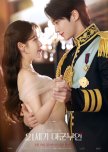
Perfect Crown was one of those dramas that had everyone seated long before the premiere even aired. A cast lineup led by IU and Byeon Woo Seok already sounded like a recipe for success, and adding Gong Seung Yeon and Noh Sang Hyun into the mix only raised expectations higher. The premise itself also sounded promising: a modern Korea still ruled by a constitutional monarchy, where noble blood determines opportunities, status, and power. It had all the ingredients for a layered political romance with emotional depth. Unfortunately, this drama became a reminder that a strong cast and an interesting premise cannot fully save weak execution.
The story centers around Seong Hui Ju, the illegitimate daughter of Korea’s wealthiest conglomerate family. Ever since she was young, Hui Ju grew up painfully aware that she would never be treated equally simply because she lacked noble status. At school, noble students were given privileges she could never access. At home, she constantly compared herself to her father’s legitimate son and resented the cold treatment she received. Those experiences shaped her into someone fiercely self reliant, ambitious, and desperate to prove herself. She builds her success through hard work and eventually becomes the CEO of Castle Beauty, but beneath all her confidence is still a girl trying to compensate for years of feeling lesser than everyone else.
Hui Ju is introduced as someone narcissistic and media obsessed, constantly showcasing her achievements and luxurious lifestyle. At first, I honestly struggled with IU’s portrayal of the character. Not because she is a bad actress, but because this type of role feels outside her natural forte. IU shines brightest in emotionally wounded characters with quiet vulnerability, so seeing her act coquettish, flashy, and almost arrogant felt awkward at times. Still, the more the story progressed, the more I understood that Hui Ju’s personality itself was meant to feel performative. Her confidence is basically designer armor. She challenges the status quo at every opportunity, whether through her words or by boldly showing up to a palace banquet in a striking red modern outfit while everyone else stayed within tradition.
That same banquet introduces Grand Prince Yi An. Much like Hui Ju, Yi An quietly rebels against the rigid royal expectations surrounding him. His untied hunting costume and melancholic demeanor practically turned his entrance into Byeon Woo Seok’s personal runway show. Visually, their first meeting as adults was stunning. Fire sparks flying, Yi An noticing Hui Ju standing confidently in red, the slow motion eye contact. Blandly beautiful is honestly the best way I can describe it. The drama looked expensive, but emotionally, I felt very little.
Flashbacks later reveal that Hui Ju and Yi An actually attended the same school, with Yi An being her senior. Their first interaction at the archery range was genuinely cute. Hui Ju openly voices her resentment toward the inequality between nobles and commoners while still respecting his royal position, and Yi An immediately becomes intrigued by her. Like every classic drama cliché, the prince falls for the girl who dares to challenge him. The problem is that the drama never develops that fascination into anything deeper. We are constantly told Yi An has loved her for years, but the writing barely explores why beyond “she’s different.” Did he ever try to know her better? Did he admire her resilience? Did he understand her loneliness? The emotional depth simply never arrives.
The turning point comes when Hui Ju’s father begins arranging marriages for her with wealthy commoners. Feeling insulted and cornered, Hui Ju decides that the only way to secure her future is to obtain noble status herself. Naturally, her eyes land on the kingdom’s most untouchable bachelor: Grand Prince Yi An. I actually enjoyed watching her desperately try to secure a meeting with him. Yi An ignores every request until she addresses herself as his 후배, the title he always used for her. It was obvious the writers wanted that word to become Perfect Crown’s signature romantic phrase, but the execution lacked impact. By the end, it never carried the emotional weight the drama clearly intended.
Yi An also faces pressure from the palace. Queen Dowager Yun Yi Rang arranges his marriage to someone she can control in order to maintain political influence over him. Refusing to become her puppet, Yi An accepts Hui Ju’s proposal for a contract marriage instead. From there, the drama focuses on palace politics, public image management, fake relationship tropes, and of course, the inevitable transition from fake love to real love.
The issue is that Hui Ju and Yi An’s romance never truly convinced me. Their relationship felt surface level from beginning to end. Yi An’s love mostly came across as fascination, while Hui Ju’s feelings seemed built from proximity and repeated moments of nonchalant love bombing. Yes, they had cute scenes. Yes, they had emotional scenes. But it often felt like the drama was stitching together random romcom moments without properly building the emotional foundation underneath. A collection of pretty scenes does not automatically create a memorable romance. At times, I felt more chemistry from the lighting department than from the actual couple.
Ironically, the relationships surrounding the leads carried far more emotional depth. Prime Minister Min Jeong Woo, played by Noh Sang Hyun, completely stole my attention. Jeong Woo’s feelings for Hui Ju felt believable because the drama actually showed his quiet care and long standing admiration. Noh Sang Hyun portrayed yearning so well that every glance toward Hui Ju carried emotional weight. I genuinely found myself rooting for him instead. When Hui Ju revealed her marriage to Yi An was only contractual, his visible relief honestly gave me peak second lead syndrome. Him telling her to marry him instead if she only wanted noble status? Sir, I understand you completely.
Another unexpectedly compelling relationship was between Yi An and Queen Dowager Yi Rang. Before their history was revealed, their scenes carried a strange mixture of political tension and unresolved emotional intimacy. The hotel scene where Yi Rang barges into Yi An’s room after spotting a woman’s bag while Yi An casually appears in an untied bathrobe practically screamed unresolved tension louder than the OST itself. Yi Rang ended up becoming one of the drama’s strongest characters. Once a bright young woman with dreams of her own, she sacrificed everything under her father’s greed to maintain her family’s legacy as producers of queens. Her guilt over the late king’s death, her complicated bond with Yi An, and her desperation to maintain control all gave her layers the main romance lacked. Gong Seung Yeon was phenomenal here. She carried herself with such commanding elegance that she genuinely felt like royalty.
The political side of the story also had potential but suffered from rushed writing. Yi An spends most of his life stepping aside for his weak older brother because tradition dictates the eldest must rule. Even after his brother, the late king, secretly wished for Yi An to inherit the throne instead, Yi An continues suppressing himself for the sake of peace. But after repeated assassination attempts and Hui Ju getting hurt because of palace schemes, he finally decides to ascend the throne himself. I was genuinely excited to see where the story would go from there. Then the drama immediately pulled the rug out from under everything.
Yi An’s very first decision as king is abolishing the monarchy entirely. Excuse me? That twist felt painfully underdeveloped. If dismantling the monarchy was always the endgame, the story should have planted those ideological seeds much earlier. Instead, it felt like the writers suddenly realized they needed a clean ending where everyone could conveniently move on. Hui Ju gets to continue her business life without dealing with royal restrictions, Yi Rang gets closure, and Yi An becomes a romantic hero who destroys the system for love. It sounds poetic in theory, but in execution, it felt shallow.
Jeong Woo’s downfall frustrated me too. His sudden villain arc because Yi An “wouldn’t let Hui Ju go” felt inconsistent with how passive he had been throughout the story. If he truly loved her that deeply, why did the drama barely show him actively fighting for her before the final stretch? Even his exposure was anticlimactic. One conveniently recorded conversation suddenly destroys him, and after his final confrontation with Yi An, he practically disappears from existence. The drama simply forgets to address what happened to him afterward. Plot hole kingdom, your crown is slipping.
Toward the end, the relationships that emotionally worked best for me were actually the family dynamics and the side characters. Hui Ju’s relationship with her family slowly reveals itself to be far more loving than it initially appears. Early on, her father and brother seem cold, manipulative, and hostile. But later episodes reveal that much of their harshness came from wanting Hui Ju to survive in a ruthless world. Her father’s fury after she gets hurt and her brother risking his own reputation to protect her genuinely moved me. I would also like to formally apologize to Sir Brother for doubting him.
The secretaries unexpectedly became my favorite source of romance. Aide Choi Hyeon and Secretary Do Hye Jeong had more natural chemistry in a few scenes than the main couple had across the entire drama. Their relationship progression actually made sense. Watching them slowly bond after work and awkwardly show interest in each other was adorable. Also, that kiss scene? Not a camera angle trick. Not a dead fish kiss. A real REAL kiss. Thank you for your service.
Visually, Perfect Crown is undeniably beautiful. The cinematography, palace sets, and costume styling were all impressive. The OST lineup, especially songs by Sam Kim and RIIZE, was also pleasant to listen to. However, the music rarely blended memorably into the scenes themselves. I also remained deeply confused by the drama’s worldbuilding choices. One episode gives us traditional palace banquets in hanbok, the next gives Disney prince cosplay energy mixed with modern suits and gowns. Sometimes it felt elegant, other times it felt like the costume department spun a roulette wheel before filming.
In the end, Perfect Crown is a drama filled with beautiful ideas but lacking emotional depth. Beneath the luxurious cinematography and star studded cast is a story that constantly settles for clichés without fully exploring them. The romance feels underdeveloped, the political arcs feel rushed, and many character motivations remain frustratingly surface level. Still, despite all my complaints, I kept watching every week. Not because I was deeply attached, but because the drama remained an easy watch with enough pretty moments to keep me entertained. If you go into Perfect Crown without overthinking the logic or expecting layered storytelling, you may still enjoy the ride. Just do not expect the crown to fit perfectly.
The story centers around Seong Hui Ju, the illegitimate daughter of Korea’s wealthiest conglomerate family. Ever since she was young, Hui Ju grew up painfully aware that she would never be treated equally simply because she lacked noble status. At school, noble students were given privileges she could never access. At home, she constantly compared herself to her father’s legitimate son and resented the cold treatment she received. Those experiences shaped her into someone fiercely self reliant, ambitious, and desperate to prove herself. She builds her success through hard work and eventually becomes the CEO of Castle Beauty, but beneath all her confidence is still a girl trying to compensate for years of feeling lesser than everyone else.
Hui Ju is introduced as someone narcissistic and media obsessed, constantly showcasing her achievements and luxurious lifestyle. At first, I honestly struggled with IU’s portrayal of the character. Not because she is a bad actress, but because this type of role feels outside her natural forte. IU shines brightest in emotionally wounded characters with quiet vulnerability, so seeing her act coquettish, flashy, and almost arrogant felt awkward at times. Still, the more the story progressed, the more I understood that Hui Ju’s personality itself was meant to feel performative. Her confidence is basically designer armor. She challenges the status quo at every opportunity, whether through her words or by boldly showing up to a palace banquet in a striking red modern outfit while everyone else stayed within tradition.
That same banquet introduces Grand Prince Yi An. Much like Hui Ju, Yi An quietly rebels against the rigid royal expectations surrounding him. His untied hunting costume and melancholic demeanor practically turned his entrance into Byeon Woo Seok’s personal runway show. Visually, their first meeting as adults was stunning. Fire sparks flying, Yi An noticing Hui Ju standing confidently in red, the slow motion eye contact. Blandly beautiful is honestly the best way I can describe it. The drama looked expensive, but emotionally, I felt very little.
Flashbacks later reveal that Hui Ju and Yi An actually attended the same school, with Yi An being her senior. Their first interaction at the archery range was genuinely cute. Hui Ju openly voices her resentment toward the inequality between nobles and commoners while still respecting his royal position, and Yi An immediately becomes intrigued by her. Like every classic drama cliché, the prince falls for the girl who dares to challenge him. The problem is that the drama never develops that fascination into anything deeper. We are constantly told Yi An has loved her for years, but the writing barely explores why beyond “she’s different.” Did he ever try to know her better? Did he admire her resilience? Did he understand her loneliness? The emotional depth simply never arrives.
The turning point comes when Hui Ju’s father begins arranging marriages for her with wealthy commoners. Feeling insulted and cornered, Hui Ju decides that the only way to secure her future is to obtain noble status herself. Naturally, her eyes land on the kingdom’s most untouchable bachelor: Grand Prince Yi An. I actually enjoyed watching her desperately try to secure a meeting with him. Yi An ignores every request until she addresses herself as his 후배, the title he always used for her. It was obvious the writers wanted that word to become Perfect Crown’s signature romantic phrase, but the execution lacked impact. By the end, it never carried the emotional weight the drama clearly intended.
Yi An also faces pressure from the palace. Queen Dowager Yun Yi Rang arranges his marriage to someone she can control in order to maintain political influence over him. Refusing to become her puppet, Yi An accepts Hui Ju’s proposal for a contract marriage instead. From there, the drama focuses on palace politics, public image management, fake relationship tropes, and of course, the inevitable transition from fake love to real love.
The issue is that Hui Ju and Yi An’s romance never truly convinced me. Their relationship felt surface level from beginning to end. Yi An’s love mostly came across as fascination, while Hui Ju’s feelings seemed built from proximity and repeated moments of nonchalant love bombing. Yes, they had cute scenes. Yes, they had emotional scenes. But it often felt like the drama was stitching together random romcom moments without properly building the emotional foundation underneath. A collection of pretty scenes does not automatically create a memorable romance. At times, I felt more chemistry from the lighting department than from the actual couple.
Ironically, the relationships surrounding the leads carried far more emotional depth. Prime Minister Min Jeong Woo, played by Noh Sang Hyun, completely stole my attention. Jeong Woo’s feelings for Hui Ju felt believable because the drama actually showed his quiet care and long standing admiration. Noh Sang Hyun portrayed yearning so well that every glance toward Hui Ju carried emotional weight. I genuinely found myself rooting for him instead. When Hui Ju revealed her marriage to Yi An was only contractual, his visible relief honestly gave me peak second lead syndrome. Him telling her to marry him instead if she only wanted noble status? Sir, I understand you completely.
Another unexpectedly compelling relationship was between Yi An and Queen Dowager Yi Rang. Before their history was revealed, their scenes carried a strange mixture of political tension and unresolved emotional intimacy. The hotel scene where Yi Rang barges into Yi An’s room after spotting a woman’s bag while Yi An casually appears in an untied bathrobe practically screamed unresolved tension louder than the OST itself. Yi Rang ended up becoming one of the drama’s strongest characters. Once a bright young woman with dreams of her own, she sacrificed everything under her father’s greed to maintain her family’s legacy as producers of queens. Her guilt over the late king’s death, her complicated bond with Yi An, and her desperation to maintain control all gave her layers the main romance lacked. Gong Seung Yeon was phenomenal here. She carried herself with such commanding elegance that she genuinely felt like royalty.
The political side of the story also had potential but suffered from rushed writing. Yi An spends most of his life stepping aside for his weak older brother because tradition dictates the eldest must rule. Even after his brother, the late king, secretly wished for Yi An to inherit the throne instead, Yi An continues suppressing himself for the sake of peace. But after repeated assassination attempts and Hui Ju getting hurt because of palace schemes, he finally decides to ascend the throne himself. I was genuinely excited to see where the story would go from there. Then the drama immediately pulled the rug out from under everything.
Yi An’s very first decision as king is abolishing the monarchy entirely. Excuse me? That twist felt painfully underdeveloped. If dismantling the monarchy was always the endgame, the story should have planted those ideological seeds much earlier. Instead, it felt like the writers suddenly realized they needed a clean ending where everyone could conveniently move on. Hui Ju gets to continue her business life without dealing with royal restrictions, Yi Rang gets closure, and Yi An becomes a romantic hero who destroys the system for love. It sounds poetic in theory, but in execution, it felt shallow.
Jeong Woo’s downfall frustrated me too. His sudden villain arc because Yi An “wouldn’t let Hui Ju go” felt inconsistent with how passive he had been throughout the story. If he truly loved her that deeply, why did the drama barely show him actively fighting for her before the final stretch? Even his exposure was anticlimactic. One conveniently recorded conversation suddenly destroys him, and after his final confrontation with Yi An, he practically disappears from existence. The drama simply forgets to address what happened to him afterward. Plot hole kingdom, your crown is slipping.
Toward the end, the relationships that emotionally worked best for me were actually the family dynamics and the side characters. Hui Ju’s relationship with her family slowly reveals itself to be far more loving than it initially appears. Early on, her father and brother seem cold, manipulative, and hostile. But later episodes reveal that much of their harshness came from wanting Hui Ju to survive in a ruthless world. Her father’s fury after she gets hurt and her brother risking his own reputation to protect her genuinely moved me. I would also like to formally apologize to Sir Brother for doubting him.
The secretaries unexpectedly became my favorite source of romance. Aide Choi Hyeon and Secretary Do Hye Jeong had more natural chemistry in a few scenes than the main couple had across the entire drama. Their relationship progression actually made sense. Watching them slowly bond after work and awkwardly show interest in each other was adorable. Also, that kiss scene? Not a camera angle trick. Not a dead fish kiss. A real REAL kiss. Thank you for your service.
Visually, Perfect Crown is undeniably beautiful. The cinematography, palace sets, and costume styling were all impressive. The OST lineup, especially songs by Sam Kim and RIIZE, was also pleasant to listen to. However, the music rarely blended memorably into the scenes themselves. I also remained deeply confused by the drama’s worldbuilding choices. One episode gives us traditional palace banquets in hanbok, the next gives Disney prince cosplay energy mixed with modern suits and gowns. Sometimes it felt elegant, other times it felt like the costume department spun a roulette wheel before filming.
In the end, Perfect Crown is a drama filled with beautiful ideas but lacking emotional depth. Beneath the luxurious cinematography and star studded cast is a story that constantly settles for clichés without fully exploring them. The romance feels underdeveloped, the political arcs feel rushed, and many character motivations remain frustratingly surface level. Still, despite all my complaints, I kept watching every week. Not because I was deeply attached, but because the drama remained an easy watch with enough pretty moments to keep me entertained. If you go into Perfect Crown without overthinking the logic or expecting layered storytelling, you may still enjoy the ride. Just do not expect the crown to fit perfectly.
Was this review helpful to you?


