
 News



 6
 7
 1
 2
 1
 3


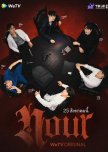
NOUR … I Paid $1.99 for Answers!!!
I paid $1.99 for this finale and somehow the writers gave me feelings instead of answers. I was promised a supernatural mystery. I got immortality, murder, trauma, blood, sex, doomed romance and enough emotional damage to ruin my evening. Fine. I accepted all of that. I was invested. I was theorizing. I was ready for the big reveal.And then the finale basically said, “Here are three more questions. Good luck.” EXCUSE BUT FUCK ME?
James is dying, and Ken respect his previous wishes (you’d be stupidity you didn’t see that coming), and James survives somehow. Chita killed James’ father. Ken and James apparently have some deeper connection. Ji and Chita are emotionally destroying me. And what do I actually know?
FUCKING Nothing. I paid TENCENT $1.99 for two episodes and got ripped off.
The worst part is that I can’t even say the series was bad because the acting was good, the chemistry eventually worked and the emotional scenes actually hurt. Boss, Tongtong and Phoom gave me everything. I was laughing, crying, screaming and staring at the screen like I personally had to solve the mythology.
But I shouldn’t need a ouiji board, three red strings and a second degree in Nour history to understand what happpened in the finale. Mystery is supposed to make me curious. This made me feel like the writers forgot to upload the final explanation.
I cared about James and Ken. I cared about Ji and Chita. I cared about Chita’s suspicious limp, Ken’s immortality and every emotionally damaged man making terrible decisions because he was in love.
And this is how you repay me? With vibes? I want my $1.99 back!
Or just give me the missing episodes, the mythology explanation and a PowerPoint presentation titled:
“What the Hell Was Going On in NOUR?” Because I didn’t stop caring. I cared so much that I noticedd the story forgot to answer its own questions.
Was this review helpful to you?
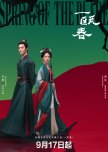
If Romeo and Juliet had lived…it would still end tragically
This Was Always Qingyuan’s StoryTechnically, Spring of the Blade could have ended at Episode 24. We had the wedding, the honeymoon, our two tigers finally together…and we were on a high.
But this is a Chinese drama after all. Of course we weren’t getting off that easily.
Looking back, this was always Qingyuan’s story first, and Shen Run’s second. And to understand Qingyuan, we had to understand the tragedy of her mother and father…two people caught by circumstances who ultimately chose very different paths. One surrendered to greed and ambition. The other lost her life because of it.
And damn, the actor playing her father practically took over these final episodes. The versatility of his performance made him feel like the lead while Qingyuan and Shen Run became supporting characters in their own drama. What surprised me most was discovering that underneath everything he had done, he too was a victim of circumstance. That doesn’t erase his choices, but it makes the man far more complicated than the villain I originally thought he was.
Even the silver coin feels appropriate. Judas betrayed for silver, and here again silver becomes a symbol of betrayal…the price placed on loyalty, family and eventually someone’s soul.
Maybe that’s what Spring of the Blade was really about all along: greed and what we’re willing to sacrifice for it.
My problem remains the same. I would have preferred much of this Xie family history to come before the rebellion, allowing the political story to become the climax rather than interrupting it and then returning to the family mysteries afterward. But once again, we’re back to my biggest complaint…30 episodes simply weren’t enough.
Give this story another twenty episodes and suddenly Shen Run’s past, Commander Hu, Shen Che, the rebellion, Lady Hong, Grandma Chen and all those crazy Xie women could breathe.
I suspect the writers had a choice: finish with the rebellion and leave the Xie mysteries behind, or return to where everything began and give Qingyuan’s story its closure.
They chose Qingyuan. And perhaps they had to. Because no matter how much I loved Shen Run…this was always her story.
Was this review helpful to you?

Turning the pages of time
The story of an awkward boy who saved a girl, and what began as an infatuation slowly grew into an obsession…or perhaps, in a less intense way, watching and lurking from afar while believing he was her guardian angel. It is a rather eerie way of loving someone, but there are people who do exactly that. Sota simply made it his life for 25 years.The mystery was compelling and the drama’s intensity was subtle in a very Japanese way…this is not a K drama after all. There are no huge emotional explosions or overly dramatic confrontations. The acting is restrained, sometimes even dry for viewers used to the heightened emotions of Korean dramas, but it works for this story. I’ve enjoyed the entire series, although I have to admit the finale felt somewhat underwhelming and predictable.
What I enjoyed most was how the story progressed one step at a time. Murders happened, secrets surfaced and slowly we began to understand what truly happened 25 years ago. And after all that mystery, to be honest, much of it comes down to one of the seven deadly sins…envy. Or perhaps one of the Ten Commandments: do not covet your neighbor’s wife. Amazing how something so basic can create consequences that last for generations.
The foundation of the story is actually quite simple, but its delivery is subtle and layered. For me, watching this series was like reading a mystery novel…turning one page after another and peeling away one layer at a time. Every chapter revealed another secret, another lie and another person connected to the past.
And then there is Sota and Mariko. What started as something that could easily be called creepy eventually became something more complicated. Sota finally understood that loving someone does not give you permission to make yourself part of their life. His apology was perhaps more meaningful than his confession because, for the first time, he wasn’t asking Mariko to understand his love…he was acknowledging what his love had done.
In the end, 25 Years of You wasn’t really about who killed whom. It was about what happens when love, envy, guilt and secrets are allowed to live for 25 years. I may have wanted a stronger finale, but getting there was the best part.
Sometimes the mystery isn’t about the final page…it is everything you discovered while turning the pages.
Was this review helpful to you?

great chemistry but it fell off the cliff
Melody of Golden Age started as the kind of costume drama I enjoy…murder, mystery, palace intrigue and a marriage born out of circumstance, with two strong personalities slowly learning to trust each other. Shen Du and Yan Xing had enough chemistry and push-and-pull tension to keep me invested, and Ding Yuxi could say more with a stare than some actors can with an entire page of dialogue.But 40 episodes is 40 episodes…and boy, did I feel it. By the second half I was fast-forwarding through several episodes because the story became redundant, with scenes that either dragged or simply stopped making sense.
The plan Shen Du and the Queen devised to expose the culprit was one of my biggest frustrations. So many people were tortured and killed as part of this elaborate scheme when I kept thinking…why not simply arrest him? Sometimes writers become so determined to create a clever twist that they forget the audience is sitting there asking the most obvious question.
Then came the palace finale…a fiasco. After investing so many hours in the mystery, I expected something tighter, smarter and more satisfying. And the divorce…was that really necessary? It felt less like something these characters needed and more like another obstacle the writers needed to fill the remaining road.
In fact, I would have preferred a completely different ending. Let Shen Du finally restore his family name and reclaim his glory…but at a price. Let him lose the woman he loves. And let Yan Xing choose Pan Zi and the life of adventure they once imagined…two people riding away together to see the world.
Now THAT would have been an ending.
Shen Du gets everything he fought for except the one thing he ultimately wanted most, while Yan Xing chooses freedom and a new horizon. Two victories…and one beautiful tragedy. Sometimes love doesn’t have to win for the story to have a satisfying ending.
There was a very good drama buried inside Melody of Golden Age…unfortunately, it was buried somewhere inside 40 episodes.
I enjoyed the journey…but I would have packed considerably lighter.
Was this review helpful to you?
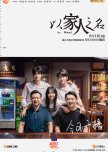
The best family Chinese drama
Go AheadI have always loved family dramas because family is where we first learn about love, sacrifice, disappointment, forgiveness…and sometimes pain. Perhaps it also comes from growing up in a culture where family remains at the center of our lives. We may leave home, build lives of our own, and travel far away…but a part of us will always long for the place and the people who first made us feel that we belonged.
Go Ahead tells the story of three children…Li Jianjian, Ling Xiao, and He Ziqiu…who grow up together not because they share the same blood, but because two loving fathers create a home for them. Li Haichao, especially, is the heart of this family. Through his cooking, patience, and unconditional love, he becomes the mother and father these children desperately need. Ling Heping may be quieter and often absent because of his work, but together these two men show that fatherhood is not simply about biology…it is about showing up.
What makes this drama so beautiful is that it does not romanticize family. These characters carry wounds from abandonment, guilt, rejection, and parents who sometimes cause more pain than comfort. As the children grow older, time and distance pull them apart…and returning home does not immediately heal everything. They must learn that becoming adults does not mean leaving their childhood pain behind. Sometimes we carry it with us until we finally find the courage to face it.
The romance may become part of the story, but for me, the real love story is this family they created. The performances are warm, natural, and deeply moving…especially the wonderful chemistry among the three younger actors and the two fathers. They made me laugh, cry, and remember that DNA may make us relatives…but love, sacrifice, forgiveness, and the choice to remain in one another’s lives are what truly make us a family. For the way it made me laugh, cry, and reflect on the meaning of family, Go Ahead easily earns a place among my Top 10 Chinese dramas just as Reply 1988 is on my top list for K-drama. This is not simply a story about coming home…it is about realizing that home has always been the people waiting for you.
Was this review helpful to you?
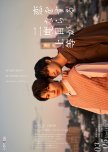
What the heart truly wants
Ever wonder what happened to our first love, our first kiss…or the innocence we carried during high school? Those memories remain forever etched in our minds and hearts…no matter how many years have passed.Fast forward to our adult lives, when we believe we finally understand who we are and have complete command of our emotions…or so we thought. Then one familiar face suddenly walks back into our lives, and we become that awkward teenager again…uncertain, defensive, and terrified of being hurt.
That is the heart of Love Is Better the Second Time Around. Season 1 is not simply about rekindling a first love…it is about confronting a past that was never given a proper ending. Miyata and Iwanaga may be older, accomplished, and outwardly confident, but love exposes the parts of themselves they never completely outgrew. Their playful banter, lingering looks, stubborn pride, and moments of vulnerability made their relationship believable. They were not merely starting over…they were deciding whether an old love deserved a different ending.
The four handsome and genuinely talented actors brought warmth, subtlety, and emotional honesty to the story. There was no need for exaggerated drama because even their quietest expressions spoke loudly. Sometimes the most powerful emotions are found not in what is said…but in everything two people are still afraid to say.
Season 1 asked whether first love could be recovered. Season 2 now asks an even more difficult question…after finding each other again, can they accept everything that happened during the years they were apart? Loving someone means accepting the memories you did not share, the people who came before you, and the insecurities that continue to follow you. A second chance is not a clean slate…it is choosing to love someone despite everything already written on it.
Perhaps love really is better the second time around…not because we are necessarily wiser, but because we finally understand what we stand to lose. First love teaches us how deeply we can feel…while a second chance teaches us how to stay.
Was this review helpful to you?
The Joybof Sex, the KBL way
I’m not usually a fan of short dramas, but something about Sexual Lesson fascinated me. Yes, I won’t deny that it was sensual…the title certainly delivered…and the two actors showed the kind of natural chemistry other BL performers could learn from. But the biggest surprise was how it presented the art of sensual intimacy in only three episodes totaling twelve minutes, yet still managed to give it context and depth…no pun intended. Korean BLs can be hit or miss, but this little drama definitely hits the spot…and you may even learn a trick or two. My partner has always said my greatest strength is my tongue…Ahahaha!Was this review helpful to you?
The sun rises at the horizon
I’m not a big fan of period dramas because the history buff in me becomes an annoying companion. I notice costumes, props, language and whether people behave according to the period. The British have practically perfected this genre and set an unfairly high bar. Edge of Horizon takes place during one of Thailand’s great periods of upheaval, when an old social order was beginning to give way to something new. Fascinating history. Unfortunately, for much of the series I felt less like I was watching the dawn of a new age and more like watching the sun slowly kiss the earth goodbye.This series was HEAVY. Misery piled upon misery accompanied by haunting music seemingly determined to squeeze another tear out of me. Happy moments were so few that when one appeared I wanted to put it in a glass case for safekeeping. I understand what the writers were trying to do, but emotional manipulation works better for me in a two-hour movie. Stretch it across an entire series and eventually my tear ducts begin demanding overtime pay.
But somewhere underneath all that sadness was a beautiful love story.
Phop and Tinn came from two different worlds separated not simply by wealth, but by class, title, family and the expectations of their time. Yet Inn and Ongsa made me believe these two belonged together. Their chemistry never needed fireworks. Sometimes it was simply a look, a touch, or Tinn staring through those enormous expressive eyes as if Ongsa had been instructed to break our hearts without saying a word. And then there was the music. That beautiful song sung by Ongsa, its melody returning again and again, became almost the heartbeat of their relationship.
Their love was forbidden, genuine and ultimately sacrificial. Phop wanted to change the world so that people like them might someday live as equals, while Tinn was willing to walk away from the privileged world into which he was born simply to live beside the person he loved. Ironically, the political story I sometimes found burdensome eventually became essential to understanding their relationship. You cannot separate their love from their time because the world itself had to change before their love could breathe.
And finally…the sun rose.
After spending episode after episode preparing myself for another tragic BL ending, the writers actually allowed these two to have something resembling happiness. Not reincarnation. Not meeting again in another lifetime. Not one lover staring wistfully toward the horizon remembering the man he lost. They survived long enough to discover that perhaps the world really could change.
Karen Carpenter once sang, “You and me against the world.” That could have been Phop and Tinn’s anthem. But by the finale, I realized the story was asking something slightly different: what happens when two people stop simply fighting the world and begin believing that the world itself can change?
Suddenly the title makes sense.
The horizon isn’t where the sun disappears. It’s also where the sun rises.
Was this review helpful to you?

The standard to beat
I’ve seen Bad Buddy when it first came out but never wrote a review. In the absence of some truly meaningful GMMTV series I decided to rewatch one that always stayed with me. Though I never shipped these two actors, TBH I don’t ship anyone I just like chemistry when I see it. And these two truly reflects real chemistry through friendship and camaraderie. Regardless of how their fans felt I am grateful they both made this and aim sure they will always remember his time together, creating a fun series about an odd couple, oil and water and yet together makes an awesome pair.I don’t like violence and their relationship softened every blow that I wanted to be a fly on the room they share. I don’t think there has been another like them, maybe High School Frenemy with the same trope and aim glad they ended here. I wanted their careers to grow like my favorite actors from China’s Addicted.
Was this review helpful to you?
School Trip: Joined a Group I’m Not Close To
0 people found this review helpful
When high school ions collide!
Leave it to the Japanese writers to come up with some of the best BL titles. This show gives me Boys Over Flowers vibes, but without all the drama, cruelty and pain. It’s a beautiful coming-of-age story, clean, wholesome and just feel-good. First love, first crush, first kiss…there’s something wonderfully innocent about watching two young people discover what it means to like someone for the very first time.In a BL world where red flags, dominance and complicated relationships often seem to be the main ingredients, it’s refreshing to watch a story built simply around chemistry. And I mean that literally: positive and negative ions naturally attract each other, and all they need is that little spark. Our two protagonists are awkward, shy and completely unsure of what they’re feeling, yet somehow you can see the attraction growing before they even understand it themselves. For all the shy geeks like us who grew up awkwardly trying to figure out where we fit in the world, there’s a comforting message here: maybe there really is someone out there who will see you, understand you and like you exactly as you are.
What I also enjoy is how much this feels like a glimpse into Japanese youth culture. There’s a fascinating contrast between Japan’s reputation for rules, discipline and social conformity and the space it has historically created for different forms of expression, including boys’ love and yaoi. Compared with some of the more intense fan cultures we see elsewhere in Asia where shipping, celebrity pairings and obsessive fandom can sometimes become overwhelming, this feels much more relaxed. The story is allowed to simply be a story, and the actors are allowed to be actors.
But the best part is watching these two boys awkwardly grow into their relationship. Their chemistry doesn’t explode overnight; it slowly blooms. Their friendship deepens, their confidence grows, and every little glance or moment of hesitation feels meaningful. And it isn’t just about the two of them. The people around them gradually become part of their journey, too. I especially loved the older brother’s observation that they’re incredibly lucky to have found each other—and you can feel that he wants them to have something real.
Maybe that’s why this series is so enjoyable. There’s no need for excessive angst, toxic relationships or manufactured heartbreak. Sometimes we just need a little fantasyland to escape into, a place where first love can still be awkward, innocent and beautiful.
I may have found one of those rare BLs that leaves me smiling instead of emotionally traumatized.
Was this review helpful to you?
A story of love’s redemption
Who doesn’t love movies about second chances? There’s the ubiquitous Groundhog Day and If Only. I can’t even count the number of times I’ve watched this trope, and somehow, every time, it still feels good. Why? Because who doesn’t want redemption?We live our busy lives, often forgetting about what really matters until it’s too late. Regret is what makes us human, and sometimes, it is that very regret that can consume us. Watching this beautiful rendition of love and redemption, brilliantly brought to life by Arthur Chen and Zhe Yu, reminded me of something simple: in life, don’t wait for a second chance.
I’m a big fan of Arthur Chen. His debonair looks, his presence, his attitude. I enjoy all of it. I also like the fact that he is controversial and has, at times, been the subject of attempts to “cancel” him in China. Can you imagine living inside a bubble where you are expected to live up to standards that even ordinary people couldn’t sustain?
And in this movie, the chemistry between Arthur Chen and Zhe Yu is palpable. It sparkles. I especially cherish the way they look at each other. There’s an authenticity in those moments that makes you forget you’re watching actors. Their chemistry doesn’t feel manufactured; it feels lived.
I’m glad I watched this despite all the controversies surrounding Arthur. At the end of the day, I believe we should be able to appreciate art for what it is. If we judged every artist solely by the life they lived, there would be so much art, music, literature, and cinema that we could no longer enjoy.
Sometimes, the art deserves to stand on its own.
And perhaps that is what Yesterday Once More ultimately reminds us: we may wish for a second chance, but the real gift is recognizing what matters before we need one.
Was this review helpful to you?
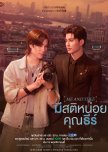
a RomCom it lacks
I watched this series because of Phuwin. He’s an actor I’ve followed with great curiosity because of his versatility and willingness to take on different roles. I’ve always enjoyed the chemistry between Pond and Phuwin, whether in more serious dramas or lighter projects, and they generally complement each other well.That said, Me and Thee was a little difficult for me to follow. Perhaps it’s because it leans completely into sitcom territory rather than romantic comedy. It lacks the emotional warmth and gradual character development that I usually associate with a good rom-com. Maybe the intention was simply to entertain without asking the audience to think too much and perhaps that’s exactly how it should be watched.
I love comedy when it’s done well because comedy is all about timing. Robin Williams once remarked that comedy demands more emotional honesty and skill than dramatic acting, and I tend to agree. Making people laugh while keeping the characters believable is one of the hardest things an actor can do. Unfortunately, much of the humor here felt forced rather than effortless, making it difficult for me to fully connect with the characters.
I couldn’t help comparing it to Eddie Murphy’s performance in Coming to America. He played a prince with impeccable comedic timing, yet never sacrificed the sincerity of the character. The film balanced comedy and romance beautifully, proving that a rom-com can be hilarious while still allowing its characters to grow.
I’m certain Pond and Phuwin will continue to take on more projects, and I hope they keep challenging themselves with roles that push their range. Pond’s performance in Dalah: Death and the Flowers revealed a far more intense and commanding side of him. His portrayal carried a quiet anger and confidence, and his command of English added another layer of authenticity to the role.
The WillEst pairing also brought a refreshing dynamic to the series. Although they were only in supporting roles, they injected a different energy into the story. I just wish their characters had been given more screen time and substance, as they weren’t enough to add the depth the series needed.
Overall, Me and Thee may appeal to viewers looking for a lighthearted sitcom, but it didn’t quite deliver the blend of comedy, romance, and character development I was hoping for. The cast certainly has the talent; this time, I felt the material simply didn’t allow them to showcase it fully.
Was this review helpful to you?

So worth the watch
One of my favorite team, Sea and Keen has that chemistry that seems so genuine and cannot be fabricated unlike others. Sea has this smile that is so beautiful and Keen has the eyes to match. And it shows in the way they look and smile at each other. Yes great actors can emulate this but they can’t sustain it. From Only Boo! which drew me to them, every show is consistent. And more than any other pair these two is who I always look forward to watching. Though late in seeing this series I am enjoying every minute of it.Was this review helpful to you?

Intellectually written and a refreshingly different themed series.
This series brought me back to my youth when my math teacher used to tell us, “Math does not lie.” Words can be manipulated, but arithmetic cannot, it is either right or wrong.Loosely based on a true story, Under the Microscope tells the fascinating story of how a mathematician exposed the injustice committed by powerful, land-owning nobles through the undeniable logic of mathematics. It is an enlightening reminder that facts can prevail over influence.
What I appreciated most was how refreshingly free the series was from the usual C-drama clichés: no excessive CGI, no endless 15-minute conversations, and no unnecessary filler storylines. Told in just 14 episodes, it proves that great storytellers don’t need superfluous writing. Even J.R.R. Tolkien’s The Lord of the Rings trilogy was adapted into films totaling under 10 hours. Sometimes, less truly is more.
The acting was close to perfection. It reminded me of the classic Chinese films I grew up watching, where performances felt natural rather than theatrical. Zhang Ruoyun delivers an outstanding lead performance, but what impressed me just as much was the strength of the entire supporting cast. Every actor felt authentic, a testament not only to their talent but also to the director’s ability to guide each performance with realism and restraint.
Does the story drag at times? Occasionally. But because the series is so concise, the few slower moments are easily tolerated. I especially enjoyed the constant back-and-forth between the protagonists and antagonists, where neither side gained an easy advantage. The understated ending was exactly what a grounded, intelligent drama like this deserved. It didn’t need grand spectacles or explosive finales to leave a lasting impression.
Under the Microscope is proof that intelligence, compelling performances, and disciplined storytelling can be far more captivating than flashy production values
Was this review helpful to you?
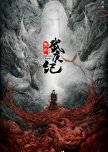
Slip episodes and save yourself the headache
This show reminded me of Avengers: Infinity War, so many heroes and characters that it became hard to keep the story together. The only thing that held it together was the ultimate villain. Unlike Infinity War, which told its story in one movie, Burning Flames stretched everything across 40 episodes with endless 15-minute conversations, the usual Chinese drama blood-spitting scenes, and the classic “win the battle but lose the one you love” ending. In the end, this is really a love stories of the hero and the villain. Add the cartoon-like CGI, and the whole show often felt like a live-action cartoon.I skipped many conversations and even a few episodes just to get to the ending, yet I still understood the whole story. That tells you how much unnecessary filler there was. Long dramas like this often feel like Swiss cheese—full of holes that are filled with scenes that add very little.
I’m a big fan of Allen Ren and have watched several of his dramas. I know he can act, but a weak script gave him very little to work with. The rest of the cast often felt like they were overacting, which I think was more the fault of the direction than the actors themselves.
The repeated flashbacks, always with the same emotional music, became tiring. Once or twice is enough. I didn’t need to watch the same sad scenes over and over again. Instead of adding emotion, the loud music just became irritating.
Some people will probably disagree with me, and that’s fine. But I don’t think mediocre should ever become the standard.
Was this review helpful to you?


