
 News




YOU are welcome to defend BUT I don't give a Fish
K-Drama Imitating the West While Distorting Joseon HistoryKorean historical dramas have always struggled to find a balance between authenticity and creative storytelling. However, The Scandal of Chun Hwa takes this struggle to a whole new level, presenting an unrealistic, westernized, and outright problematic depiction of Joseon-era Korea. Instead of staying true to the rich cultural and historical aspects of the period, the drama tries too hard to mimic Western storytelling—only to fail miserably.
Joseon Era or Western Fantasy?
One of the biggest issues with this drama is how it distorts historical reality just to fit into a Westernized narrative. Korean directors seem obsessed with copying and pasting everything from Hollywood, even when it makes no sense in a Joseon-era setting. The characters talk and behave as if they belong in a 21st-century Western drama rather than a Korean historical period. The storytelling follows typical Western tropes—weak kings, overly dramatic romances, and forced "girl boss" empowerment that ultimately contradicts itself.
Women Objectified in the Name of "History"
The drama shamelessly uses its historical setting as an excuse to objectify women. A major plot point involves the protagonist, a princess, being unknowingly drawn in erotic paintings that are distributed as part of a secret business. The show tries to romanticize this as a tragic yet thrilling element, but in reality, it only glorifies the exploitation of women. Even more disturbingly, the king—her own father—is portrayed as a powerless figure who does nothing to stop this humiliation.
If the goal was to highlight the struggles of women in Joseon Korea, the drama completely misses the mark. Instead, it treats the suffering of female characters as entertainment, all while dressing it up as a "progressive" story. This reflects a deeper issue in Korean dramas—where so-called "female empowerment" is often nothing more than a woman being used, discarded, and then "saved" by a rich or powerful man.
Korean Society’s View on Women—Then and Now
The drama unintentionally exposes how little has changed in Korean society regarding the treatment of women. Instead of addressing these issues in a meaningful way, it reinforces them under the guise of storytelling. Women in this drama (and many others) are still seen as objects—whether for power, revenge, or entertainment. Despite Korea’s economic rise (thanks largely to the influence of the U.S.), societal views on gender remain deeply problematic.
If this is what Korean entertainment considers "empowerment," then it's no wonder that their dramas continue to struggle with meaningful representation. True empowerment isn’t about selling a woman’s body or suffering for male entertainment—it’s about giving female characters real agency, respect, and strength beyond just being used as plot devices.
Final Verdict
Instead of being a fresh take on historical drama, The Scandal of Chun Hwa is just another attempt to copy Western storytelling while failing to respect its own cultural and historical roots. Worse, it reinforces outdated ideas about women under the illusion of empowerment. Until Korean entertainment stops treating women as objects—whether in Joseon Korea or modern-day Seoul—it will continue to be stuck in this shallow and contradictory cycle.
★☆☆☆☆ (1/5) – Disappointing, unrealistic, and problematic
Was this review helpful to you?

ML is good but can't be compared with Legend like Jim Carry
concept of drama come from Jim carry's movieand ML was doing really good with his acting and still doing Great
thus i give story less and acting More points
concept of ML character is inspire from Hollywood movie Lier Lier (1997)
but it doesn't have any story after 2 episodes or they don't wanted to write one themselves
so they practical copy script from Love is for suckers {{ Choi Si Won and Lee da hee }}
FL casted her friend on a dating show then she herself got involved with him, to add some spice they have SML and
a first Love common between whole universe( she is first love of everyone) don't had budget to cast other first loves for side character so they have to share first love
ML is acting Good and his character is weird but its weird not hot, I don't understand this Females in drama who cling on to someone who doesn't give a fish about them,
SML dude move on, you are far better off,,, Find your SUNSHINE CHOI SU YEON in this drama
Story doesn't have that which make you wait for next Episode,
its 4th episode and Love triangle is already cleared up, ML and FL
only love triangle i apricated in dramas was
EMPRESS KI, Goryeo king vs Yuan Emperor
Was this review helpful to you?
But this drama is more than just a historical slice-of-life—it subtly yet powerfully critiques the harsh realities of the time. One striking moment in the first episode encapsulates the unfairness of Korean society under dictatorship: the young female lead wins 37 votes in her elementary school’s class president election, yet she is only made vice president. Meanwhile, the rich boy, with just 27 votes, is declared president. It’s a small, almost casual moment, but it speaks volumes. In 1980s Korea, wealth mattered more than democracy, and power was never truly in the hands of the people. The drama doesn’t just show the struggles of the working class—it exposes the deep-rooted inequalities of a system where money and connections ruled.
From the very first episode, one thing becomes clear: the talent in this drama is unmatched—even the child actors deliver performances worthy of praise. Too often, young actors in period dramas are overlooked, used as placeholders until the adult leads take over. But here, the child actors are just as mesmerizing as their older counterparts. Their raw emotions, expressive eyes, and natural chemistry bring the early scenes to life with an intensity rarely seen. The young female lead’s heartbreak at experiencing injustice for the first time, the nervous ambition of a child trying to prove herself—all of it is portrayed so authentically that it sets the stage for everything to come.
Throughout the series, historical details are woven in with subtlety, painting a vivid picture of the era. Mentions of the average Korean lifespan being just 52 years serve as a quiet yet haunting reminder of how difficult life was—how poverty, labor conditions, and lack of medical access meant that survival itself was an accomplishment. Rather than explicitly focusing on this fact, the drama lets it linger in the background, shaping the urgency and desperation felt by its characters.
At the heart of this masterpiece is Park Bo Gum, a man so effortlessly perfect he seems sculpted by the gods themselves. While other actors rely on makeup, lighting, and editing, Bo Gum wakes up looking ten times more handsome than anyone else in the industry. He is the bones of beauty himself, a face so naturally flawless that no embellishment is needed. But beyond his breathtaking visuals, his performance is just as powerful. With quiet intensity, he embodies the weight of a man who understands that life is fragile, fleeting, and unfair. His every glance carries emotion, his silences speak volumes, and his struggles feel heartbreakingly real.
Set in the aftermath of the Korean War, the drama paints an intimate yet expansive portrait of a nation trying to rebuild itself. The cinematography does not romanticize poverty but instead respects it—showing the grit, the pain, and the small moments of joy that kept people moving forward. Each frame is steeped in history, from the bustling markets where vendors sell tangerines with tired hands to the dimly lit workshops where men labor for a future they may never see.
And then, there is the music—a masterpiece in itself. The soundtrack is a rich, immersive blend of traditional Korean folk music, carrying the weight of centuries in every note. It is sweet as honey to the ears, a sound so pure and evocative that it lingers long after the episode ends. In a time where modern music has become a chaotic barrage of noise—where groups like BTS and BLACKPINK dominate with overproduced beats—nothing compares to the depth, soul, and cultural richness of these folk melodies. This music doesn’t just accompany the drama; it breathes life into it, grounding the story in history and emotion in a way that no trendy pop song ever could.
The fantastic female lead IU , who delivers a compelling performance as a woman navigating societal oppression and personal loss. Their chemistry is not the glossy, dramatized love story of period dramas—it is raw, imperfect, and painfully real, much like the era they live in.
Then, in Episode 3, the drama takes another bold step, presenting a marriage arrangement that might seem shocking to modern audiences but was completely normal at the time. The 18-year-old female lead is set to marry a divorced 30-year-old man, not out of love, but out of necessity. In exchange for financial security and money for college, she is expected to handle all household chores, care for his elderly mother, and bear his children. It is a transactional agreement, one that neither side questions, because survival comes before romance.
While today, such an arrangement might be met with criticism or outrage, the drama refuses to impose modern judgment on the past. Instead, it portrays the situation with honesty—showing how, in an era of extreme poverty and limited opportunities, marriage was often not about love, but survival. The female lead does not end up going through with the marriage, but the scene is a stark reminder of how different life was just a few decades ago. It forces the audience to reflect on how love, choice, and agency were luxuries that many could not afford in those times.
Beyond its compelling storytelling, When Life Gives You Tangerines is a reminder of the resilience embedded in Korea’s past. It does not seek to sanitize history or beautify hardship. Instead, it tells the truth—the truth of a nation, the truth of its people, and the truth of survival. It is a gripping, unfiltered portrayal of 1980s Korea, a time when democracy was an illusion, class determined fate, and the poor had little more than their will to endure.
For those craving a drama that values realism over spectacle, this is an unmissable gem. It is not just a story—it is a living, breathing piece of history, brought to life with care, respect, and an unwavering commitment to authenticity. And at its heart stands Park Bo Gum, the bones of beauty himself, proving that true perfection requires no embellishment.
Was this review helpful to you?
This review may contain spoilers
Went downhill little to early just after 9th episode out of 24
Mess start at after 9 episodes and story went downhill from the pointOur ML even after 9 episodes remain robot which drives away FL from his house like a Idiot a brainless robot pretending to be some genius professor
they marriage lasted just 2 episodes what loser of a professor.
when we reach 13th episode professor started claiming FL as his property which belong to him
at end of episode 15 he turn into a coward from robot
after that i give up on this
7/10 for episodes until 9 and -3.5 for after that.....
so 3.5/10 is final rating this show deserve.
Was this review helpful to you?

The biggest issue? Na In Woo. After some miraculous weight loss transformation (because that’s totally original), he takes over as the lead, and the drama nosedives even further. His acting is as exaggerated as ever—he’s the undisputed champion of overacting, turning every scene into a melodramatic mess. If you’ve seen his older works, you already know what to expect: over-the-top expressions, awkward delivery, and an inability to carry emotional depth.
The worst part is that this could have still been watchable if they had leaned into comedy. Instead, the writers actually thought they could make a serious drama out of this weak "lost childhood love" plot. The story kept going in circles for what felt like an eternity, only to lead to an oddly unsatisfying ending. It felt rushed and sloppy. Too many unnecessary side plots were added, only to be either completely forgotten or hastily wrapped up in a way that made them feel pointless.
And then there's the dialogue—absolutely terrible. One of the most ridiculous moments was when the second male lead actually told the male lead, "Please transfer the ownership of Kang Hee Si to me." This just proves how Korean society—or at least this drama—treats women as objects that can be owned and transferred. What kind of writing is this? It’s 2025, not a feudal-era drama!
Ironically, Na In Woo is only getting attention now because of his recent hit drama, which, let’s be real, was a success solely because of Park Min Young. His presence had little to do with it, yet suddenly, he’s being cast as a leading man. Motel California is proof that popularity doesn’t always equal talent.
If you’re looking for something engaging, skip this one. The slow pacing, uninspired plot, terrible dialogue, and Na In Woo’s unbearable acting make it a tedious watch.
Was this review helpful to you?
This review may contain spoilers
FAKE growth drama
Wang Manni1. Emotional Protection: Manni's decision to shut herself off from serious relationships might be seen as a protective measure after her painful experience. This could be interpreted as a form of self-preservation rather than growth, as it reflects a fear of vulnerability rather than an active engagement with her personal development.
2. Acceptance vs. Growth: Accepting the possibility of not finding love and focusing on personal contentment can be a valid personal choice. However, it might be perceived as a form of resignation rather than growth if it seems like she has given up on exploring meaningful connections due to past hurt.
3. Narrative Implications: By not depicting Manni actively pursuing or engaging in new relationships, the narrative could be viewed as suggesting that she has not fully grown beyond her past experiences. It might imply that her growth is more about career success and personal satisfaction rather than overcoming personal challenges and exploring new possibilities in love.
4. Character Complexity: True growth often involves facing and overcoming fears and challenges, including those related to personal relationships. If Manni's storyline ends with her retreating from the possibility of love, it could be seen as a lack of resolution in her character arc, leaving her personal growth incomplete.
In Summary: If Manni’s character is portrayed as closing herself off from the possibility of serious love, it could suggest a form of emotional retreat rather than growth. Effective character development typically includes not just overcoming past obstacles but also actively engaging with new possibilities and challenges. If her journey ends with a focus solely on career and personal contentment without addressing or exploring her potential for future relationships, it might be seen as a missed opportunity for portraying comprehensive growth.
XIAOQIN
Xiaoqin’s decision to return to Chen Junsheng and her apparent lack of change might suggest that she did not fully break free from her past or overcome the issues she faced. This can be seen as a failure to achieve the personal growth or resolution that might have been anticipated.
Was this review helpful to you?
This review may contain spoilers
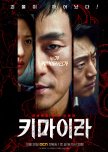
ENDING was garbage
So the real Chimera at end survive and lived a happy lifewhile an innocent family got killed and there kids never even got to meet as sibling
ML should have killed his mother and himself for even being born
MLs father who he captain han destroyed a whole family just because he wanted to sleep with that woman........
ML birth was a great sin in itself ,
she lost her child in fire,, she was pregnant with director child and took picture with cop then her child died and she started killing people then cop arrested her into his bed
and framed other man and then killed his pregnant wife
after knowing all that how ML can breath ? how he is so shameless to defend his parents ? do he not feel ashamed to be even born out of those two monsters ?
Was this review helpful to you?
This review may contain spoilers
-1000000/10 .......If i could give it
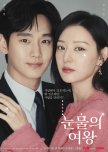
I am Already expecting Some OVERLY supportive people, sucking up for dramaand you all know i don't give a F about you, and this is my reviews so if you have opinion then write your own reviews then coming telling me your bullshit.....
https://www.koreaboo.com/stories/uncanny-similarities-queen-tears-bears-real-life-heiress-story/
article come after my review.
In 1999, she (Lee Bo Jin) married Im Woo-jae, known in the South Korean press as "Mr. Cinderella" because of his humble background, as an "employee of a security service affiliate of Samsung Group". They separated in 2012, and have one son together.
this drama look to much favoring Male lead
its like IM WOO JAE paid for this whole drama with all his received Alimony,
trying to make FL and ML victim while in real life
Im woo jae the real idiotic monster used to beat his pregnant wife
just after watching first episode this look like a PR Stunt of IM WOO JAE
Real IM woo Jae isn't handsome or smart but, UGLY AND FOOL
even in drama ML is called smart so many time but he act like fool every time,
he believe whatever unknow people tell him about his own wife, Stop calling your self smart
ML why don't you just die if your suffer after marrying most PRETTY and rich woman on Korean peninsula ?
Just DIE ML, for humanity sake jump in HAN River, and do not try to swim
why was he acting like a cry baby give us a reason that can justify him
Second ep and Low life ML is feeling happy about his wife's upcoming death, now he put down his victim mask and his evil ugly truth is showing
i was thinking of watching this but after seeing that Monster smile, yes that is what EVIL IM WOO JAE was in real life
all he care about was getting some money from his wife's corpse. Great work ml, should have Casted an ugly man
what kind of inhuman man is ML, someone he claim to love just 3 year ago, is about to die and selfish low life think he is going to be free, then he should be one die,
WE NEED RAMSAY BOLTEN here to flay this man Alive
there is no redemption arc for this if they make them end up together after he celebrated her death that's just worst
ML if your not materialistic then what you think your are Parasite ?
Rename this drama to Parasite 2.O
there love was years ago for ML, just 3 years, in those 3 year his daddy changed 10 of his mothers
THIS ML is SO called Smart even illiterate people are far more smart then this Parasite idiot.
SNU should talk action against this people for mention that a Idiot like ML studied at that university.
hearing that Idiots like him are Alumni of SNU, seriously degreed and defame SNU
it like saying all Idiots in Korea come from SNU, Seoul Nation University
SNU SNU" is a fictional term used in the show to refer to a form of sexual intercourse. " Death by SNU SNU" humorously implies that the act of having sex with the Amazonian women is so intense and physically demanding that it could potentially result in the death of the male,
how ML can live with himself, he and his ugly family is full of parasites, ungrateful
Dropping after second episode which made ML irredeemable for me, he can not be redeem even
Was this review helpful to you?

This review may contain spoilers
Dropping after episode 2
ML is A Son of a bitch most wicked slut most have given him birth to be born lesser then human shitCharacter of Male lead is a criminal while acting as a detective, cheap batman of korea , only thing korean know is how to follow american like a pet dog
Trasspassing isn't even a crime in korea
get caught on a scene like that and you can just walk away because you daddy got some cheap value bank notes inside your Asshole
Korean law was written by criminals in favour of all criminals
i even downloaded whole show before starting and now deleting after just 2nd epsiode
Was this review helpful to you?
This review may contain spoilers
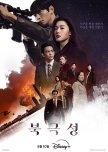
Tempest: A Disgusting Recycled Version of Red Swan With Jun Ji Hyun
This drama treats itself as overly self-important, but the execution makes it hard to take seriously. The female lead is portrayed as if she’s the most crucial figure in South Korea’s survival, a diplomat so important that even the president personally interferes in her private life. In reality, ambassadors work behind closed doors, negotiating with careful words and securing national interests quietly, not being turned into celebrity-like figures with the president dictating whether they should divorce or accept minister positions. The idea that the president is heartbroken because she married his political rival, and that she alone can sway the nation’s future, feels like an inflated fantasy rather than political reality.The attempt at political depth collapses further in the execution. The church scene was outright uncomfortable: the male lead secretly films a married woman, romantic music plays, and she knowingly stares into the camera as if inviting him. It doesn’t read as diplomacy or duty — it reads like an adultery drama in disguise, dressed up with diplomatic jargon that doesn’t mean much, because realistically, South Korea’s foreign policy is dependent on U.S. approval anyway.
The action sequence in the first episode is equally unconvincing. The male lead notices the soldier targeting the FL’s husband but doesn’t act, seemingly waiting for the husband to die so he can “save” her. The soldier miraculously spares everyone else but delays shooting the FL until the ML arrives, and then — conveniently — decides it’s time to pull the trigger. The directing makes it look intentional, as though the plot needed the husband to die for the romance to kick in. What’s worse is the framing: while the FL holds her dead husband and the ML holds the dead soldier, the camera lingers on their eye contact like we’re supposed to feel a budding romance in that tragic moment. It’s manipulative, disgusting, and undermines the seriousness of the setup.
Overall, instead of giving us a believable political drama, Tempest feels like a rebranded Red Swan — but now with diplomats and politicians instead of chaebols and business elites. The forced romance, especially with a married (later widow) FL, destroys any credibility the story could have had. What could’ve been a sharp, serious drama is reduced to another recycled melodrama with dirty, unrealistic romantic overtones.
Was this review helpful to you?

This review may contain spoilers
just 10 min and ML is man-child crying because of some rubber bullets
what kind of weak police officers Korean are A man crying in broad daylight because of some rubber bullets and there chief is pacifying him, is he police chief or his nannyif they made this show to laugh at Korean police then it will be good
JOKERS calling themselves han river police who clean river
so basically they are Cleaners but pretending to be police
16 min and this so called police stole key and run away like cowards
there is one so called strong woman who like raising Man child without having her own child
and a Ajuma who understand why he act like child because he is a child between his leg
this drama proves that Korean Man have tiniest thing there....
do not waste your time on this and find something better if you want to watch police show... they are cleaners, cowards, crying adults and thief's
Was this review helpful to you?
After King killed her father she fall for him
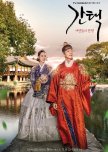
In whole drama it was clear that king order FL father to be killed but will never once our FL will blame him for her fathers death which was clearly was a choice between his criminal mother and innocent father in lawi already know she is going to be His majesty's woman no matter whT he does he fail to protect his first wife he killed her father himself and how she was able love that man no matter what his circumstances
how a daughter can understand her fathers killer,
You can watch how Ha Ji Won played same dilemma when she was clearly in love with Emperor but decided to kill him for her fathers revenge
Was this review helpful to you?
CRINGE
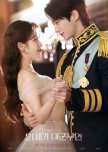
This drama isn’t just misguided—it’s intellectually dishonest in the way it frames power, hierarchy, and identity. It borrows the aesthetic of a modern democracy while quietly reintroducing a system built on birth-based privilege, and then expects the audience to find that romantic.Let’s be clear about the setup: modern-day South Korea is one of the most advanced democracies in Asia, built after decades of struggle against authoritarian rule—especially after events like the June Democratic Struggle, which pushed the country toward free elections and civil liberties. Against that backdrop, creating a fantasy where royal blood still defines status isn’t just creative liberty—it’s a reversal of hard-fought political progress.
And the comparison the show unintentionally invites is uncomfortable. When you build a system where identity, privilege, and even personal worth are dictated by birth, you’re not far removed from rigid authoritarian structures. The difference between calling someone “royal” versus “supreme leader” becomes largely cosmetic when both rely on inherited or unquestioned authority. Figures like Kim Jong Un don’t wear crowns, but the system around them functions on a similarly unchallengeable hierarchy—one where status is absolute and socially enforced.
Of course, the show will argue it’s a “constitutional monarchy,” like United Kingdom or Japan. But even in those real-world examples, royal families are largely symbolic, stripped of actual governing power. Here, however, the narrative treats royal status as socially superior, emotionally desirable, and personally transformative—which completely undermines the idea of equality in a democratic society.
Seong Hui Ju’s obsession with becoming “more than a commoner” is where the writing collapses entirely. She is already part of a chaebol family—a structure often criticized in South Korea for concentrating wealth and influence in the hands of a few conglomerates. Yet even that isn’t enough for the story. It insists that true fulfillment lies in bloodline, not achievement. That’s not social commentary—it’s glorified elitism.
And then there’s Yi An, portrayed as a tragic royal who “has nothing.” But what does he actually lack? Not status. Not public adoration. Not systemic protection. The drama wants sympathy for someone insulated by the very hierarchy it refuses to critique, while simultaneously elevating that hierarchy as something worth aspiring to.
What makes this especially problematic is how it mirrors real-world systems of discrimination. Whether it’s class stratification or caste-like thinking, the core idea is the same: people are ranked at birth, and no amount of merit can truly change that. Instead of challenging this mindset, the show indulges in it—wrapping it in romance, wealth, and visual appeal so it feels less like oppression and more like fantasy.
What makes this drama particularly disturbing isn’t just its premise—it’s the values it quietly promotes.
In the real world, elitism and discrimination still exist, but they are widely recognized as flaws in society—problems to be challenged, reduced, and ultimately eliminated. Entire democratic movements, like South Korea’s push toward equality after the June Democratic Struggle, were built on rejecting rigid hierarchies and inherited privilege. That’s the direction modern societies strive toward.
This drama does the exact opposite.
Instead of questioning elitism, it normalizes it. Worse—it romanticizes it. The idea that people would *aspire* to become part of a hereditary elite, not through achievement but by birth or marriage, is presented as understandable, even desirable. That’s where it stops being harmless fiction and starts feeling ideologically regressive.
The central relationship makes this even more uncomfortable. A contract marriage—something that should carry emotional, social, and ethical weight—is reduced to a transactional tool for status climbing. And what is the “necessity” driving it? Not survival. Not safety. Not even power in any meaningful democratic sense. It’s simply the desire to become “royal.”
That raises a fundamental question the show never answers: what is the actual value of this title?
In a true constitutional monarchy—like United Kingdom or Japan—royalty is largely symbolic. They do not govern. They do not hold real democratic power. Their status is ceremonial, not functional. So why is this drama treating royal identity as the ultimate prize, something worth sacrificing autonomy, love, and dignity for?
Seong Hui Ju’s decision is especially troubling in this context. She is already wealthy, influential, and independent—yet the story suggests that none of it matters unless she acquires a title tied to bloodline. It reduces her agency to a bargain: trade your personal life, your emotional freedom, even your sense of self, in exchange for a socially constructed label that holds little real-world value.
That’s not ambition—it’s submission to a broken value system.
And the show never seriously challenges that system. It doesn’t ask whether this hierarchy is valid. It doesn’t show meaningful resistance from society. Instead, it presents a world where people accept these divisions and even strive for them. That’s what makes it feel so disconnected from reality—because in reality, such systems are increasingly criticized, not admired.
At its core, the drama sends a troubling message: that identity by birth is more important than identity by choice, and that social elevation—even if meaningless in practical terms—is worth personal sacrifice.
In a modern democratic context, that isn’t just outdated—it’s deeply unsettling.
In the end, this isn’t clever world-building—it’s regression with better lighting. It takes a society that fought to escape rigid, top-down control and imagines a version where people willingly chase it again. That’s not just unrealistic—it’s deeply uncomfortable.
Was this review helpful to you?
This review may contain spoilers
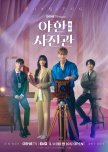
Extra Ordinary by both leads in just 1st episode
Beautifuli shouldn't judge a drama by just 1st episode
but to this i am giving 10/10 for good starting
Stunning Kwon Na Ra
amazing start of a story that has fantasy element
Both leads act like real people , there interaction with each other is look real and Normal
JOO WON and Kwon Na Ra both give adult Character vibes not
a adult behaving like child in most of dramas
........................................................................................................................................................................................................................
........................................................................................... ...............................................................................................................
................................................. .....................................................................
............................................................................................................................ ......................................................................
.................................................................................. ..............................................................................................
.............................................................................................. ............................................
.......................... ................................................................
........................................................ ............................................................................
......................................................................... .................................................................
......................................................................................... ..............................
................................................... ................................................................................
.............................................................................................. ................................................................
........................... .....................................................
.................................. .........................................
......... ..................................................................
............................................................................................ .........................................................
............................................................................. ......................................................................
............................................................................................................................. .....................................................
............................................................................................ ..................................................................
....................................... ............................................................................................
..................................................................................... ...........................................................................
.................................................................. ........................................
........................................................ .......................................................
.................................................................. ...............................................................................................................
................................................................. ..................................................................................................................
..................................................................... ....................................................................................
.................................................................................................. ..........................................................
....................................................................................................... ..............................................................................................
....................................................................................................................... .........................................................................
............................................................................................ ...............................................................................................................
.........................................................................................................................................................................................................................................
Was this review helpful to you?

This review may contain spoilers
Started were mature then turn into same triangle drama
i was interested when i watched first Episode so i continue but then comes the 5th episode and it become same drama with all otherwe until end will not find the reason this woman seem obsessed with a mute dumb man he don't even look that handsome to be obsessed over him. he isn't Hyun bin
why would SFL be in love with a man who doesn't even save her life and left her to die, normally people hate that person but in KDRAMA world even ML left SFL to die she still shows how obsessed she is with that heartless selfish shit,
i loved 4 episodes of this show to with i am giving 6.5 rating and dropping this show,
after watching ep 5 there was no need of SFL in this and it could have been a healing drama of 8 episodes
but since they have to make it longer so it can earn more advertisement money they introduce a SFL who will be so cunning still pitiful because this NICE jerk left her to die.
people pretending to be nice and kind are worst then those who act indifferent
Was this review helpful to you?


