

A story about life goes a long way
This is clearly not the best drama of 2018. It is the best drama of all time. Before delving any further, if you're wondering if there are spoilers in this review, rest assured there are none (or just a pinch of it at most).Story and General comments:
If you are looking for fantasy, this drama is not for you. If you are looking for a typical romance drama, slowly walk away now. The beauty of My Mister is in its simplicity. What I mean by simplicity is that it's not a typical k-drama involving a rich chaebol falling for a poor normal-life-living girl, or the male lead having super powers or some crazy disorder. It is just a story between one Ahjusshi, one girl and one (hella great) neighbourhood. If there's one spoiler-ish statement in this review, it'll be this one - Though as many of you may have read from comments and reviews, this story is not about romantic love between the two leads. That said, I have never personally felt more love between two characters in any other show (not limited to just k-drama) as I did in My Mister. That's the power of great story telling - the love between two people that transcends the conventional love and romance of what we know and have come to understand. And yet, there is so much more to the story; something you will have to experience for yourself as mere words are just inadequate and will not do the show any justice.
Acting:
Another concern that many viewers had before the show aired was about IU's acting. Though she has improved along the years, her acting is good at best with some occasional great moments. This has changed with My Mister. IU's acting was simply exceptional and her performance in My Mister is hands down the best out of all her dramas. And as for Lee Sun Kyun, must I say more? His acting is and has been exceptional and it is no different in My Mister. Poured his heart out for the role and the viewers felt every breath of it... literally.
Music / OSTs:
One big factor for me personally is the Music / OSTs of a k-drama. Yes a drama may be well written and well acted, but if the OST is not up-to-par, the drama will just end up being forgettable many years down the road. I kid you not, I was playing the OSTs on repeat the whole day for weeks and even up till today, I am still listening to it on a daily basis. It is just that good. Props to Sondia, Vincent Blue, O.When, Jung Seung Hwan and even IU (she wrote the song for JeHwi) for creating what has to be one of the most memorable OSTs of any k-drama.
Conclusion:
What more can we ask for? A story that shatters the proverbial glass ceiling of k-drama standards; acting performances that exceed all expectations; music that will stick with you on repeat for a very long time. My Mister is not just another k-drama but an important precedent for k-dramas as it is not afraid to revitalize the conventional formula and reinvent the storytelling wheel.
I would like to end this review with one word - Masterpiece.
Was this review helpful to you?
This review may contain spoilers
it isnt as bad as what other reviews said
maybe because mandarin is a language i speak almost everyday and I ve watched plenty of Chinese and korean dramas, but I don't find the plot confusing or messy. Yes, you have to understand what they are saying and honestly, subtitles don't seem to do the show justice. Basically, its about a girl who travelled to the present from 10 years ago [2011] due to a super full moon energy wave after her boyfriend pushes her from a cliff [not a spoiler] because of some secrets she know. in the present [2021], she met the male lead as the universe tied them together and they discovered all the secrets [she lost her memory as she travelled here] like who set a trap and conned his father etc midst of this main story line, there's someone using her for scientific research and they made her return back to time [2011] which allowed her discover more secrets. i wont speak more about the plot but its worth to watch if you like mystery solving! i will update this review when the last 6 episodes uploads :DEDIT: COMPLETED
FREAKING WORTH TO WATCH, I CRIED MY ASS OUT. THE ENDING IS SO BAD BUT SO GOOD PLEASE WATCH JUST FOR THE SAKE OF THE ENDING. EP 18-24 IS WHERE SHIT STARTS, WHERE IT GETS REAL AND SO SAD 10/10
Was this review helpful to you?
Story: The story was really good! A high school student pretending to be a 27 year old office worker seems absurd but it was totally believable. The mystery surrounding Lee Min Suk's brother was very intriguing but it wasn't the main focus of the drama and was only dealt with in the few last episodes. The drama focused on Lee Min Suk and how he grew as a character. The noona romance was okay too though I wasn't that invested in it. The star of this drama for me was Lee Min Suk. I went in thinking it was going to be like City Hunter, you know a quest for revenge and everything. But this turned out to be completely different. This drama wasn't intense, it was cute and funny. I loved how they used old drama cliches and gave them a twist to make them funny or different. I especially liked that Yoo Jin Woo's story was progressed along with Lee Min Suk's and he was given his due importance too.The story was very well-written and the pace of the drama was really good.
Characters: Seo In Guk did an amazing job as Lee Min Suk (and Lee Hyung Suk). First of all, I've always acknowledged that Seo In Guk is good-looking but during this drama I realized that he is gorgeous! Especially as Lee Hyung Suk (even though he appeared for like 1-2 episodes). Secondly, Seo In Guk is an extremely talented actor! And this role showed his talent to the fullest. He played the role of a high schooler so well, unlike someone else (Lee Min Ho I'm looking at you), that it was hard to believe that in real life he is 26. Lee Min Suk was endearing and funny and adorable. But I also loved the scenes where he got all serious and mature. I loved seeing him grow from a boy into a man! Seo In Guk's portrayal of both brothers was so good you could see who was who with the way he stood and talked. While Lee Min Suk was kinda sloppy, as expected of a kid, Lee Hyung Suk stood with confidence. Where Lee Min Suk talked in a cheery way, Lee Hyung Suk's voice was grave and serious. I simply loved Seo In Guk's acting in this drama!
Jung Soo Young is a character I would rather not talk about. She was uncomfortably painful to watch. I understood her character really well and I got where the writer wanted to go with her but Lee Ha Na's portrayal of her was not good. Jung Soo Young is a character I could have loved had Lee Ha Na did her justice. Soo Young is a socially awkward girl with seemingly no talents. I get the character. It was Lee Ha Na's job to make that character relatable, even likable. But the way she played her it felt like Jung Soo Young had some mental disability. Which was really very uncomfortable for me to watch. But of course, I did get used to her and then she didn't bother me much. But I never felt connected to her. I did feel sorry for her but only a little.
I loved loved LOVED Lee Soo Hyuk as Yoo Jin Woo! I loved how this time the broken bad boy was not the male lead but the second lead. And Lee Soo Hyuk played him really well! And did I mention how gorgeous Lee Soo Hyuk is?!! Because he is really gorgeous!! I could stare at him all day! I loved his story arc and how it all played out. I loved this broken bad boy with a good heart! But I never, for one second, believed that he was actually in love with Soo Young. I felt like he needed someone and since Soo Young was previously obsessed with him he figured she would be a good person to keep by his side. I never felt like he actually, honestly loved her.
All the minor characters were great! The office people were your typical office people, gossiping and judging. They also provided very good entertainment. Team Leader Kim was very funny and so adorable! Jo Han Chul did an awesome job playing him and I loved seeing him onscreen! I loved how he cared so much about Lee Min Suk and all his anxiety breakdowns (I seem like a bad person saying I enjoyed his breakdowns but really, they were funny and added for comedic purposes). Jung Yoo Ah (Soo Young's sister) was super annoying at first but like her sister she became tolerable. I loved Lee Min Suk's friends! They were so supportive and super funny, with their chuppa chuppas and stuff! Lee Min Suk's dad was awesome! He wasn't his real dad but he cared so much for him that it was heartwarming and so beautiful. My favorite though was Min Suk's grandfather (his adoptive father's father)! Kwon Seong Deok was amazing, playing him and he was so funny and adorable and it was so heartbreaking! I really loved him! I loved how the minor characters played a more important role in this drama than they usually do in dramas.
Romance: I honestly believe Seo In Guk has good chemistry with everyone. Be it a girl or a boy, he has good chemistry with all. Just look at his previous works. He had amazing chemistry with Jung Eun Ji AND Hoya in Reply 1997. Even as a second lead he has awesome chemistry with the female leads (see Master's Sun). It was no exception in King of High School. He not only had great chemistry with Lee Ha Na but also with Lee Soo Hyuk! BUT I was not as much invested in the romance and the main couple as I would have had it not been for Lee Ha Na. The couple wasn't all that bad but they couldn't pull on the strings of my heart like the InHyun couple (Queen In Hyun's Man) & the Reply 1997 couple (Jung Eun Ji and Seo In Guk). So that 'something missing' thing I was talking about was my lack of love for the main couple.
Ending: The extra episodes really weren't needed. But I didn't mind them much. Most people are not satisfied with the ending and to be honest if I would've written this I would've ended it differently too but it wasn't that bad and I don't have much of a problem with it.
Overall: All in all this was a really good drama and most people might not have the problems with it that I did so I highly recommend it for anyone who is in the mood of a good rom-com.
Was this review helpful to you?
Who is the big bad wolf?
This is a passionate fantasy fairytale that unflinchingly explores the thin line between love and hate and many emotions in between with a dark intensity that will not appeal to everyone. Hidden within this dark, at times ugly complexity is a simple, intense mythical love story that is beautiful in its fleetingness.Once upon a time, Xing'er, the lonely young daughter of a feudal lord befriends Langzai, a wild orphan boy raised in the forest by wolves. Even before they understand what it means, they fall in love and form an unbreakable bond. But after a terrible misunderstanding, Langzai is whisked away by the tyrannical, paranoid and evil emperor Chu Kui who weaponizes him. When they meet again, Langzai is the fearsome Prince Bo, a ruthless, lethal military leader who keeps the mad, bad despot's internal and external foes in check. And Xing'er has grown up to be the beautiful Princess Ma Zaixing, a pawn whose family's military might is coveted by both Chu Kui and the rival Jin king. A damning accusation, divided loyalties and duty forces them to be mortal enemies and opposing forces push them towards what appears to be mutually assured destruction. Can true love uncover the truth that can defeat the darkness in their souls and free their land from evil?
This drama is not plot driven; the story is easy to follow with a few well conceived mysteries to be revealed but the villains are known from the outset and there are no shocking twists. It is very well paced and the action and battle scenes are ferocious, brutal and gripping. Rather it is largely a character driven drama where the main protagonists fight for who they choose to be and who they want the love of their life to be. It asks the question - who is the big bad wolf or who are the monsters? Is it the wolf in wolf's clothing or the wolf in sheep's clothing?
This character drama is made especially memorable by the many well cast and compellingly delivered roles. They are difficult roles to convey because all of the main characters are flawed and they all have inner animal avatars. When they are tempted or threatened their most primitive instincts emerge and we see both their best and worst selves. To properly appreciate this drama, it is important to keep this in context because the writing does not try to sugarcoat or suppress these traits, instead it gives them free rein to build into raw moments of enraged conflict, unimaginable pain, dark passion, misguided loyalty, pure love and violent hatred. All of the characters make mistakes both selfish and well-intentioned mistakes with heartbreaking and irreversible consequences.
The styling and costumes of the characters are designed to accentuate their inner animals and each of them are written to highlight their inner animal's associated personalities and strengths and weaknesses. We know that Langzai/Bo Wang (Prince Bo), the titular character is a wolf. Xing'er/Ma Zaixing is a butterfly, the least complex, most single minded character of them all. Ji Chong is an eagle and Bao Na is a horse. Yao Ji, the most underrated character in this drama is an enigmatic, treacherous and wise snake (I think). Her relationship with Bo Wang is the most surprising, complex and interesting relationship in the drama, much more so than both Bo Wang and Ji Chong's relationship with Xing'er. I wonder how many supernatural abilities these characters were originally endowed with before the censors erased all of that stuff.
The following is a deeper discussion of the main characters and their relationships that inevitably contains mild spoilers. You can stop reading here and come back to the rest after you are done with the drama.
I initially mistook Xing'er for a frustrating character - weak, naive, unwilling to grow up and one dimensional. But that is her nature - she is a butterfly - a delicate, transitory being that is a symbol of youth, joy, love and beauty. Female butterflies mate only once and then they die. Her goals are simple and she is pure hearted but she is by no means weak; on the contrary she is single minded and unyielding in her love for Langzai and her determination to recall him from the darkness that is Bo Wang. Her heart is gently cruel in its lack of capacity to to let anyone else in. This kind of role is both very easy and very difficult and Li Qin pulled it off phenomenally (despite a shrill and atrocious voice dubber). I could feel her pain and disillusionment and teared up as I watched Xing'er innocence and love of life get extinguished into the strong, mature, revenge driven but indifferent Ma Zhaixing.
Bo Wang is a sexy, magnificent, conflicted and tortured beast of a character that I loved to hate in the beginning and hated to love at the end. He is the big bad wolf, a ruthless predator with savage methods but he is also highly intelligent, passionate and devoted to his pack or his family. Wang Dalu's portrayal is so vivid and potent that I could see a wolf lurking behind Bo Wang's every facial expression and gesture - I can't believe I have never watched this actor before. The scorching chemistry between Bo Wang and Xing'er is the most outstanding feature of this drama. Both actors have such intense screen presence that anyone that shares the screen with them becomes invisible. Their passionate, tormented kisses and the intense longing in their gazes give lie to their often toxic verbal exchanges. Their relationship scales the tortured depths of hatred and despair to the breathtaking heights of love and ecstasy. They are so convincing and moving as a couple that all of their love rivals pale in comparison.
Ji Chong is an eagle, a bird of prey that can see the big picture from high above and swoops down opportunistically and tactically to force the lovers to face each other as mortal enemies. Like Bo Wang, Ji Chong also tries to save Xing'er by changing her; in this matter he and Bo Wang have a common agenda. While their methods are diametrically opposite, the outcome is the same in that they both cause her to suffer enormously. Bo Wang pushes her away harshly and cruelly while Ji Chong albeit charmingly, imprisons her with duty and obligation to her clan. Bo Wang loves her enough to give her up but Ji Chong more selfishly and somewhat naively tries to wheedle and manipulate his way into her heart. Ji Chong and Bo Wang are both ultimately well intentioned but make many mistakes and are thus equally responsible for all but erasing the Xing'er they love. I am very impressed that Xiao Zhan chose to play such an interesting, endearingly immature and flawed second lead rather than yet another insipid and suffocatingly noble and selfless one. Just as with his iconic interpretation of Wei Wuxian, Xiao Zhan's blinding charisma compels us to forgive Ji Chong's flaws and weaknesses and even empathize with him.
Surviving to exist is not important to Xing'er who only cares that she rescues her Langzai so that they can retreat into the forest away from the two legged monsters that walk the world outside. With this in mind, the drama's ending is not just good, it is also fitting. As someone who loves such beautifully flawed and even dark characters, I find Xing'e and Langzai's mythical love story to be unforgettable so this has to be a 9.0 possibly even a 9.5 for me. I can understand why others may find the themes too darkly disturbing and judge the characters much more harshly.
I will end with a nursery rhyme I vandalized for @sony_t:
Wheedle eagle, pudding and pie,
Kissed the butterfly and made her cry,
When the wolf came out to play,
Wheedle eagle flew away.
Was this review helpful to you?
This review may contain spoilers
A Plot that Betrays the Title
This review is not for you if you haven’t watched the show. It’s a rant—an emotional outpouring—but one I believe the community of fans needs to hear.Finishing this show was exhausting! I’ve read several reviews, yet none seem to address the glaring issue I had with it.
At first, I was captivated by the premise. The show laid a strong foundation, introducing three main characters with compelling backgrounds. It beautifully conveyed the idea that family isn’t about blood or legal ties—it’s about love and connection. I wholeheartedly agreed.
But then came the 10-year time skip, and the show completely derailed. One particular moment sealed my disappointment—Hae-jun makes an offhand joke about marriage that, in hindsight, foreshadowed the troubling path the story was about to take.
Is family just a joke in this show? How do you go from being family to being lovers?
“As long as they’re not blood-related,” some might argue. But don’t you see? That logic only works if they were never truly family to begin with. If they genuinely saw each other as siblings, the idea of romance wouldn’t just be uncomfortable—it would be unthinkable.
The relationship between a brother and sister is fundamentally non-romantic. If Ju-won really saw the San Ha as a brother, she should have consistently shut down his feelings. Instead, within an episode or two, she agrees to date him. I kept asking myself, Do you realize you’re falling for the man you called your brother your entire childhood?
The show started with a powerful message: family is more than blood or legal ties. But in the end, it contradicts itself. Hae-jun struggles with the concept of a chosen family and only finds peace when his biological mother returns. Meanwhile, San-ha and Ju-won end up romantically involved. So what was the point of it all? In the end, blood and documents still define family in this story.
Perhaps this is a cultural difference, but as an African, I know family to be sacred. It isn’t something shallow. It is taboo to even introduce the idea of romance within family.
And that brings me to my final realization: they were never truly a family. They were just close neighbors who played house as children. The show never truly encapsulated what its title promised.
I was honestly too irritated to enjoy the rest. The only way I could finish was by mentally erasing their childhood memories—because otherwise, it was unbearable.
Was this review helpful to you?
A deeply romantic classic wuxia
This drama is actually very different from the original novel. The first fourteen episodes follow the novel, but then the rest diverge greatly and essentially becomes a very different story. There are significant changes to the character of Zhou Zishu, and there is a major show only plot-point that makes his dynamic with Wen Kexing completely different. The plot itself is also nothing like the one in the novel, and several side-characters were given bigger roles in the overall narrative and even different characterizations. Tian Ya Ke, the source material, is a fairly straight-forward story, while Word of Honor is more like those dramatic, old-timey classic wuxia stories.First off, kudos to the scriptwriter! The pacing is top-notch, not too fast nor too slow. Nearly every scene ties in to the overall narrative, not a single episode feels draggy or unnecessary. No fillers to be found here! And while non-mandarin speaking watchers may miss this, it is very clever how the script incorporates poetry into Wen Kexing's dialogues. Not only is it a very clever way to subtly showcase his flirting, it also adds a layer of depth to his character. Since he grew up in the Ghost Valley and did not have his parents to teach him, it implies that he taught himself literature and the fact that he always uses poetry to express himself shows how proud he is of it. The tiny details are also impressive, like the difference in Gu Xiang's character when we first meet her. She acts like an exaggerated version of a young girl, and slowly becomes more and more genuine as the story goes on. The director did confirm that this is because Gu Xiang hardly ever leaves the Ghost Valley, and so she was trying to copy how she thinks normal girls act. I really appreciate scriptwriting that incorporates characterizations into details like this, because it feels very natural. It also gives the show good rewatch value because after you watch all the episodes and see everything that happens, you suddenly notice the subtle details you missed when you watch the show again.
There are many, many details that allude to future events, and dialogues that seem almost flippant in the beginning end up steamrolling you once you realize its significance in later scenes. Wen Kexing's "as a wanderer in this world, all I need you" sounds like casual flirting at first, but then you see how much depth that sentence holds once you see how their story ends.
The fighting choreography is very good, and really embodies the "fighting" in the classic wuxia I grew up watching. It's not just fighting, but also a sort of dance that reflects the dynamics of the characters. Sparring is basically Zhou Zishu and Wen Kexing's love language, and you see the evolution of their relationship in their fights too. Their fighting scene in the pink forest, in the lake before Zhou Zishu takes his mask off and in the ending are very similar to each other, but with small changes that reflect the evolution of their relationship. The way the story uses tropes to show the romance between the two main leads is excellent. The sparring in the pink forest, for example, is a common romantic trope in classic wuxia, and so is the hairpin scene in the latter episodes. Another noteworthy detail is that in the first episode the romantic connotations of giving a person a hairpin is shown in the scene between Zhou Zishu and his shidi's lover.
I really want to express how happy I am with the casting choices, especially with Zhang Zhehan as Zhou Zishu. Most actors can show strong emotions convincingly enough, but with characters like Zhou Zishu it's important to cast actors that can nail scenes that require nuance and subtlety. It was wonderful watching him transform from cold and sarcastic to warm and playful, and it was all done so subtly I actually didn't realize how much he changed until I was watching a scene and realized that not only was he the one teasing Wen Kexing, he was also the one initiating skinship??? And there's this specific scene in episode 12 where they're drinking together outside and when Wen Kexing calls out to him, you can see how he frowns and mouths something briefly before responding. It was a small but significant detail, showing the gradual decline of Zhou Zishu's hearing. There are many more details like this scattered throughout the show, and I really appreciate this kind of subtle storytelling versus scripts that are too on the nose and obvious.
Gong Jun also played Wen Kexing very, very well. He really embodied Wen Kexing's many faces, and it was wonderful watching his character slowly unravel. And although it's not necessarily a requirement for me, I love how well they match the physical characteristics of their characters. Zhang Zhehan is very athletic and has a very good physique, which just makes him much more convincing (visually) as the powerful leader of an assassin organization. Zhou Ye was perfect as Gu Xiang, her acting in episode 35 was especially chilling.
Also, a more personal opinion, but I like how they stayed true to the novel and portrayed both Zhou Zishu and Wen Kexing just as "masculine" as they were in the novel. I strongly dislike it when danmei adaptations make a character too effeminate. Of course, if the character is portrayed that way in the novel, then I have no issues. The problem is when when adaptations take a canonically more "masculine" character and portray him too effeminately, even when it's not the case in the original novel. Luckily, that did not happen here. There is something refreshing about a danmei that does not limit the personality and characterization of its characters based solely on supposed bedroom dynamics, and Word of Honor's casting and overall portrayal really delivered on that front. They really stayed true to Priest's (the author) work in that aspect.
As much as I enjoyed this show and gush about the script, it does have its shortcomings. The usual issues in the continuity of themes and the pacing of the last five or so episodes. Regardless, for me, the things the show did right definitely outweighs its shortcomings. Those who are expecting a faithful adaptation of the novel may not be happy with the direction this show eventually took, but as a stand-alone it really holds its own. With the issue of censorship in danmei adaptations, I did not expect this show to be as deeply romantic as it turned out to be, and I am still in awe of how they managed to pull this off. They could have gone for the fanservice approach, where they just give us suggestive moments without any real payoff, and yet they chose to develop the relationship properly and give it a real sense of intimacy and depth.
And lastly, I love that the ending credits song is essentially a summary of their romance. It starts with Zhou Zishu talking about his melancholic life and wanting to roam the world as an aimless wanderer, then Wen Kexing responds by lamenting about his own struggles and how it's a shame that he didn't meet Zhou Zishu earlier, and that he wants to give up "the adventures on horseback for a quiet life". Zhou Zishu then responds by saying he agrees to spend the rest of his days with Wen Kexing and the song ends with both of them singing ''I will be with you forever" at the same time. So yeah, kudos to whoever wrote that song because it really fucked me up after the ending. This show is insane and I am thankful to everyone who worked on it.
I love this drama so much!
Was this review helpful to you?
Was this review helpful to you?
This review may contain spoilers
Cinematographically perfect but story...
I have serious disappointments with this drama. Cinematographically perfect. The soundtrack is wonderful. The acting is so awesome. The outfits are great. But i think there is a problem with the progression and finale of the story. The script could have been written better.First it was extremely stagnant until almost episode 15. So I think it should have been at most 16 episodes. Also, it was unnecessary for all men to fall in love with just one woman. Hina was a lonely and powerful character who deserved to be loved. She was more patriotic and brave than Ae-shin. There was incredible chemistry between him and Dong-mae. You can feel that sexual attraction even when they're just side by side. What a pity! I am most sorry that such fates were written on them. Moreover, this screenwriter wrote the second couples very well in his other dramas. E.g. descendants of the sun, goblin, hwi-seong was my favorite character in the drama. cute but lonely character who is happy with simple things. his way of death was ridiculous. He had to survive and support the struggle with his writings. What a pity! There was no chemistry between the main couple. I couldn't feel this throughout the drama. all I saw was the extreme age difference between them. moreover, the way the man died was very dramatized. it didn't affect me at all. Also Ae-shin's character was contradictory. For her, love was more important. It went beyond the patriotic woman image that was featured in the first episodes. I could not understand what she wanted to do. She couldn't make me feel her patriotism.
Was this review helpful to you?
This review may contain spoilers
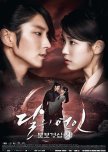
Messy & Inconsistent Script At Its Finest
Can you see how cool is the entrance of drama? Will the drama stay cool and maintain its quality? Boy what a roller-coaster ride the drama gave its viewers – it will certainly stay with me for a very long time without a doubt.Unfortunately, the only thing the drama did right is that they made Wang So a sage and a wise king. Other than that (aside from Lee Jun Ki & Kang Ha Neul’s amazing acting), I have nothing good to say about this drama. Sadly to say, this is one of the worst Kdramas I have ever seen (this probably because I usually drop bad dramas but I didnt for this one obviously since I dont love myself lol). This drama has one of the worst writing, directing and editing I have ever seen from a Kdrama. And for me this is a big indication of how awful is the drama since I dont really notice all those before (except bad scripts in general) but I truly feel it with every fiber of my being with this one.
Script: The script is the worst offender of this production. I seriously confuse why this writer got hired since her writing is very inconsistent and terrible. It is full of plot holes, unexplained happenings, dragged and rush script, poor characters’ developments and most of all, full of ridiculous and illogical plots. It seemed like her characters didnt seemed to function like a normal human beings would. I need the drama to make sense but I find myself wondering most of the times of why this and that happened. I need a legit and reasonable reasons for something to happen. Not just something you pluck from the sky thinking that you can fool the audiences. We have brains Ms. Writer, you cant expect us to buy your ridiculous plots again and again.
Directing: People said good thing about the director and his previous works but the direction quality of this production is pretty awful in general. The close-ups, soap opera zoom style and no direction input to new actors (according to Seohyun) made the directing suffers greatly esp for sageuk dramas which are known for quality production. I expect a creative directing or pretty shot from the director but instead I got the opposite of what I’m hoping for.
Editing: Hands down the worst editing I have come across from a Kdrama (and I have seen really a looooot over the years). The choppiness and shoddiness of it is out of this world. They dragged the storyline in the beginning and squeeze everything in the last 5 episodes. The fact that we have like 2 time-skips in a matter of 2 episodes are just laughable. And the fact that some of the plots didnt make sense due to the editing makes it really jarring and dreadful. I dont expect this from a pre-produced drama obviously.
Acting: Like I mentioned above, Lee Jun Ki is soo amazing as Wang So. His eyes conveyed lots of emotions and it just break your heart when you watch this drama as his character is very tragic and unloved. Kang Ha Neul is amazing as well. His characters is so underdeveloped and later forgotten by the time we reached the end (he has like 3 minutes screen time in the later episodes lol – what are you doing Ms. Writer?). The actress who play Lady Oh was great and IU improved a lot as the drama progressed. The rest of the actors are pretty much forgettable esp Seohyun as Woohee.
Soundtracks: Got to admit that the drama has one of the best OSTs for this year. But unfortunately, most of the songs are not suitable for a period drama. Why put a rap as part of the OSTs? And English words in the songs are so jarring when it was played as the background music. For goodness sake this is a sageuk and not a modern day drama. To have ‘baby baby boy’ playing at the background really killing you softly inside. :P
Money: This is a million dollar pre-produced drama but I really cant see where all the money went to. Goryeo and the Palace looks empty most of the times. Where are the servants, guards, armies, noble men, and the citizen? Why the attempted coup looks fake and underwhelming? Why the wigs look so fake? Why we can see the net for the mustache? Why the sets look cheap? Why the Palace only limited to the grand hall, court room, king’s bedroom and the hallway?!! Where did all the money went to?
I’m glad I didnt really care for any of the character so this drama didnt scar me like The Slave Hunter and Warrior Baek Dong Soo did. The writing got pretty bad at the end that I dont have emotional attachment to any of the characters anymore. One thing for sure, I will stay away from the writer’s future work – I ain’t gonna put myself in the same situation ever again.
By the end, I just want to see how this mess will conclude and boy it didn’t disappoint – I spent my time rolling my eyes watching the last 2 episodes (no tears since I was so mad with the ridiculous plots). :P Like I mentioned above, the only thing the drama did right is that they made Wang So a wise king. But thinking back, they should make him go all evil and greedy so the reasons behind everyone leaving him (even Ji Mong) will make more sense. I dont mind a tragic ending but I need it to make sense. I give this drama 4/10. I try to rate it higher but this flawed, and awfully illogical executed drama didnt deserve anything more than a 4.
--------------------------------------------------------------------------
Major roll-eye (◔_◔) to the writer for her insistence of making Wang So the most tragic character ever – with very illogical reasons for everyone to leave him at the end of the drama. >.>
Wang So is a flawed character without a doubt – his obsessiveness or him killing the monks and horse but somehow Wang So’s fate is just very tragic from the moment he was born right until the end where he is left alone and lonely.
It is more tragic then any other Kdramas’ characters because it is his own family who dislike or abandoned him. Its not his friends or people that he has no blood relation but his own family members.
1) He lacked of love since he was a little kid. His own mother hurt him and left that big scars on his face and later throw him away.
2) His dad use him as a captive and send him away to other tribe to console some lady who lost her son (What a terrible childhood!). And he is not loved by the lady or his adopted family (Surprise surprise ◔_◔).
3) The tribe lock, starve and sent him to the wolves that he ended up having to burn his only friend that is Mr. Tree since it was so cold during the winter (or is it because of the wolves?).
4) His Crown Prince brother, Moo ask him to replace him during the masked dance since he think someone is going to assassinate him. So its okay for So to die on his place? Both of them learn martial arts so its weird for Moo to ask him that request (But of course, So’s life is not that important I guess?).
5) His father’s reaction after the mask was removed – not worry about him being injured but quickly call for Moo and his safety.
6) He killed all the monks (what a fool lol!) for his evil mother but she still disowned and disgusted with his existence (stop Ms. Writer, stawp!!!).
7) All his brothers except Baek Ah didnt treat him right. Moo used him for the dance/marriage and Eun is too dumb(?) to care about his feeling when he ask So to show his scars. The rest just plain hate him without any legit reasons.
8) His mother call him for family dinner only to ask him to kill Moo. Attempt to use him to do her dirty work instead of accepting him as her son after he proved his worth for her attention.
9) The woman that he love; Soo didnt trust him enough that he ended up having to kill Eun with his own hands. By the time Soo decided to stop thinking about the future and be honest with him, it was too late.
10) His loved ones; Beak Ah & Soo are used again & again that forced him to do things that he hate to save them from harm.
11) He never wanted to be a King but later changed his mind since he is tired of bloodshed and everyone using him when they are on the throne (His father –> Fight Kitan, Moo –> Marriage with his niece, Yo –> Using Soo to threat him). He wanted to stop the killing cycle and Yo’s ruthless reign (Or so he thought ◔_◔).
12) He didnt want to marry evil princess Yeonhwa but the love of his life Soo said ‘its okay’ to straighten his position as the King and assured him that she wont give up and she is okay with the arrangement. (Which she didnt since no one will be okay with that kind of arrangement tbh).
13) His happy times with Soo are so brief that she left him and stay with Jung because she is pregnant. She is not honest with him and trust him enough that he will protect her and the baby. She probably think So will treat her like his father did to Lady Oh.
14) In the end, despite writing all those letters how she love and yearn for him, she still doesn’t trust him enough to tell him about their daughter. She probably think he would not respect her request about wanting the girl to stay out of the Palace. (Of course she couldn’t tell him via the letters, but still! ಠﭛಠ)
15) Everyone leave him for such ridiculous reasons; Baek Ah (??) and Ji Mong for he only loyal to the weak King Moo? Really? Why are you feeding us this crap Ms. Writer??!!1 And why I’m still watching? lol
16) Have to live the rest of his lives alone and lonely with someone that he hate. Cant love his son as it is a product of an evil Queen Yeonhwa...
Was this review helpful to you?
This review may contain spoilers
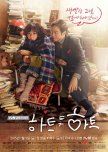
I had no idea when I started watching this drama that I would love it. Also, my girlfriend who has never watched a drama with me actually watched this entire drama and liked it. She was really annoyed at some of the angsty parts, but enjoyed it over all. This drama is well written and the directing and acting is excellent. I think this has a good balance of silly vs angst. I am not a huge fan of rom/com, but this had just enough melodrama also. I really love how the writer has the main couple communicate and that their issues don't last very long. It makes for a nice paced drama. I really think it is hard to go into much of the story line with out revealing spoilers. However, there is one point that I think is really important. Holding in secrets and lies will eat at your soul. Also, no one can be happy with you if you aren't happy by yourself Side note: I have read people that are upset because Yi Seok calls Hong Do ";ugly" through this drama. Normally I would agree, but he is doing it at first because she wouldn't believe him when he said she was pretty so she wouldn't trust him and follow him to recovery. Later he calls her that as a form of endearment. I don't think in any way the writer meant that as Yi Seok putting Hong Do down.
Chun Jung Myung is one of the most natural actors. His portrayal of Yi Seok is emotional and I was completely invested in his character. Choi Kang Hee is not everyone's favorite actress, but I like her. She was perfect as the troubled and quirky Hong Do. Poor Lee Jae Yoon as Detective Jang. Will he ever be in a drama where he gets the girl? Or at least the girl he is originally in love with? Ahn So Hee is so cute as Se Ro. I enjoyed her character immensely. She seems cocky and shallow, but she is really caring. It is amazing that she came from that family.
Jin Hee Kyung really knows how to pay the crazy biatch mother (I'm not even sure or her name). I really hated her from beginning to end. The other actors are good too.
I really enjoyed the music in this drama.
I will probably rewatch this at some point.
If you like a good love story with some comedy and some melodrama that is paced well, then I think you would enjoy this drama.
Was this review helpful to you?
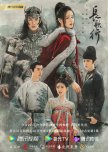
The Ballad of Li Chang Ge
The drama tells the story of Li Chang Ge (Chang Ge is transliterated as “Long Song”, hence the title of this drama), a princess of the great Tang who after inadvertently getting embroiled in the vicious court politics of the royal family, ends up on a journey of self discovery during her self-imposed exile. Along the way, she discovers the true meaning of friendship, love, justice and sacrifice for the greater good.When I first heard about this production and read the synopsis some time early last year, and based on the cast involved, I fully expected it to be a romance-driven “light” historical featuring popular young idols. I then came across the trailer towards the end of 2020, which totally changed my perception - the drama looked every bit the dramatic and potentially epic production it was rumoured and publicized to be, while the outstanding OST songs by powerhouse performers sensationalized it even further. Since then my expectations were exponentially raised and I had been patiently waiting for it to air. Having completed it months later, I’m happy to declare - my expectations are utterly fulfilled!
Production
The Long Ballad is adapted from the China Animation Golden Monkey Award and Golden Dragon Award-winning manhua Chang Ke Xing by renowned writer Xia Da. It is directed by prolific HK director Chu Yui Bun who has notably helmed dramas such as Singing All Along, Noble Aspirations I and II, Ashes of Love and Skate into Love. Due to legal proceedings over intellectual property issues between the writer and the publishing company, this historical fantasy manhua remains incomplete, thus paving the way for the award-winning screenwriter Chang Jiang to develop the screenplay and, in particular, the ending to the story. She has a formidable portfolio of works comprising The Advisors Alliance, Growling Tiger, Hidden Dragon, Secret of Three Kingdoms and Novoland: Eagle Flag. As a result, what we get is a very well produced and executed historical drama.
Technical Aspects
The drama features extraordinarily innovative visual presentations. In particular, the transitioning of ALL battle scenes from live action to manhua and donghua formats. Although not everyone is pleased with this and would prefer to see real action, I actually found it to be quite refreshing and artistically delivered. Additionally the usage of “monochrome against colour” juxtaposition to re-create memory flashbacks in certain scenes is creatively rendered.
Cinematography for the most part is quite exceptional, where overhead photography of the cityscape of Chang’an is featured, and some immersive camerawork for certain scenes particularly at Liuyun Abbey, and the cherry blossom valley in the grasslands. The indoor cinematography and the effective use of lighting ensures that the scenes depicted are never dim or dull. The use of soft filters and vibrant colour palettes provides a generally pleasant and vivid viewing experience.
The CGI effects are sparingly applied, although principal photography took place in Hengdian. While certain blips are exposed, on the whole it has been adequately presented. The horse-jumping at the bridge scene isn’t the most realistic, for instance.
Because this drama isn’t a full fledged wuxia, the fight choreography depicted is more grounded and practical. That said, there are demonstrations of “martial prowess” by the likes of the Taoist priestess Madame Jing Dan and the roving swordsman Situ Lang Lang in one of the more breathtaking moments of action. On the other hand, I can’t really comment on the action scenes on the battlefields, since they were not depicted as live-action. But generally there’s more than enough fight scenes to make up for the lack of massive sieges and battles.
Story and Characters
Despite being historical fiction, certain events and characters depicted are based on actual historical records of 7th century Tang Dynasty. The Xuanwu Gate incident, Emperor Taizong, the war between Tang and the Ashina clan of the Eastern Turkic Khaganate, among other depictions. The elements of both fiction and reality are seamlessly interwoven and thrillingly executed over the course of the entire 49 episodes. The drama has a very lively start and the pacing of the storytelling has largely been brisk and engaging. Multiple locations are showcased which sustains the momentum of the plot and provides viewers with a variety of scenery to savour. From the Tang Dynasty’s imperial city of Chang’an to the frontier city of Shouzhuo, the preceding Sui Dynasty’s ancient capital of Luoyang, the grasslands of Mongolia and the Northern Desert of Mobei.
There’s no question that the quality of the storyline is very good, which is attributed to the excellence of the source material and screenplay. However, as much as this drama is plot driven, it is also made that much more compelling by the depth of its central as well as supporting characters. I quite like the way most of the characters have been written. Apart from having sufficient character development, in particular Li Chang Ge, Li Le Yan and Hao Du, the interactions and chemistry between everyone in general are realistically and convincingly portrayed. This applies across the board to all the political factions as well as those without affiliations. I also think that the portrayal of women in this drama is deserving of praise. The major female characters are multidimensional and each of their respective story arcs is very satisfyingly fleshed out.
Cast and Acting
This is the fourth time I’ve watched Dilraba Dilmurat, having seen her in Swords of Legends, Liu Shan Men and The Flame’s Daughter. She delivers a commanding performance here and I think she has improved markedly since the last time I’ve seen her. Her portrayal of the FL made me even more invested in her character and thus her journey of redemption. The same feeling applies to Zhao Lu Si, whom I last saw in Dating in the Kitchen. This young lady is very versatile indeed and it is especially gratifying to see her infuse the character of Li Le Yan with so much believability and relatability.
As far as Wu Lei is concerned, many people seem to still view him as that baby-faced teenage bodyguard in Nirvana in Fire who has never really grown up to adulthood. Since NiF, I’ve seen his gradual development in productions such as The Imperial Doctress, and Fights Break Sphere. He has indeed matured into a fine young man with well defined chiselled features and his casting for the role of Ashile Sun is on point, where he gives a fine overall performance. My second time seeing Liu Yu Ning since Ultimate Note, he seems to excel in very similar roles - the stone-faced and distant sort of characters. However, his portrayal as the misunderstood and rather pitiful Hao Du is nothing short of commendable. It took a while but I eventually warmed up to his characterization. I saw a bit of Alen Fang in Jiu Liu Overlord (which I didn’t complete) previously and I think appearance-wise he does suit the character of Wei Shu Yu the way it was meant to be portrayed.
It’s worth mentioning the notable performances of the supporting cast in the form of veterans Geng Le, Cheng Tai Shen, Lu Xing Yu, and Yang Ming Na in the roles of Li Shi Min (Emperor Taizong), Advisor Du Ru Hui, Governor Gongsun Heng and Princess Yi Cheng respectively. Special guest stars who deserve acknowledgment are Sa Ding Ding, (the renowned singer who also contributes a track for the OST), Liu Hai Kuan (of The Untamed fame) and Richards Wang (In a Class of Her Own), for their memorable appearances as Taoist Priestess Madame Jing Dan, swordsman Situ Lang Lang, and King of Mobei Yaoluoge Pusa respectively.
Soundtrack
As usual, my habit of compiling the track listing for posterity. This drama has some of the most unforgettable songs ever composed and performed for a historical production. Featuring powerhouse singers Zhou Shen, Sa Ding Ding, Zhang Bichen and Jin Wen Qi. In addition, the lovely second couple contributes a song each.
Cocoon 繭 by Zhou Shen 周深
The Direction of Light 光的方向 by Zhang Bichen 张碧晨
If Return 如若归来 by Sa Dingding 萨顶顶
Falling Sand 落砂 by Jin Wen Qi 金玟岐
I Wish You Were My Long Lasting 多麼願你是我恆久的歌 by Zhao Lu Si 趙露思
A Love Like Before 一愛如故 by Liu Yu Ning 刘宇宁
Overall
Well made, well executed, well acted. The Long Ballad is a drama well done. If you’re a C-historical fan, do yourself a favour and get this on your watchlist asap. If you’re not a regular watcher of this genre but are intrigued by the premise, this drama would represent the perfect starting point in watching your first historical C-drama. As an added bonus, don’t worry about the curse of the C-historical for this one. Rest assured, you may enjoy it with a peace of mind.
Was this review helpful to you?
 1
1 1
1 1
1"I love dreaming, because in my dreams, you're actually mine"~ Victor ( Pov )
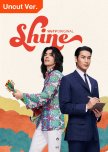
WARNING - This is my review according to my own feelings , if you don't like it then I have nothing to do . Don't come here to argue with me .Shine is shining brilliantly . MileApo's " Kinnporsche " created a STANDARD for every BL watcher, so we had high expectations and look they actually haven't disappointed us . The cinematography was top tier , sometimes felt like watching a hollywood movie.
This is a tale of 1969-1971. Apo Natawwin's acting deserves all the awards. He literally gives micro expressions in every episode. His role Trin holds aura. But the most interesting part is Tanwa , how did Mile play this beautiful and unique role ? In Kinnporsche, he was a scary mafia but here is a free spirit. The duality is insane. Once again proved, how professional he is .
I have to talk about another important character Victor. You will naturally like him . He deserved the honour of a MAIN CHARACTER. The chemistry between him & Trin , Gosh this pair stole the spotlight for me . Sometimes I felt , Victor and trin had better chemistry than Tanwa and Trin . Not as a MileApo fan but as a BL watcher I really wanted this couple badly. Why not ? His love for Trin is pure but poor him .
Although shine is shining but in a corner of a dark room probably Victor's soul is screaming
"I love you like a silent movie loves a talkie—I can feel every emotion, but you can never hear me."
Give this drama a try , you will not regret.
Was this review helpful to you?
Story: Same old same old- jerk guy falls for the naive country girl despite himself and ruins every chance at the relationship by being a jerk. Nothing new, but I always get sucked in anyway so....
Acting/Cast: Great. I was especially surprised that some of the Kpop stars were as good as they were. It can go either way most times. I wasn't familiar with any of Monsta X's previous acting work (if there is any) so I was happy with how they played the overworked boy band. Such a stretch -_- And Yoon Bora was adorable, no complaints here.
Music: Daebak! There is nothing that gets on my nerves more than when a drama is centered around the dance or music world and the songs are crap. Not the case here! Especially since Monsta X is involved and performed their own music. I downloaded it immediately after I finished the episode it was in.
Rewatch Value: Although i really enjoyed this one I much prefer Noble, My Love as far as rom com webseries, but this was a decent one wrapped in a couple of hours worth of marathoning.
Overall: It wasnt the best, but darn it, it gave me the warm and fuzzies. So if you're in that kind of mood I suggest this and say enjoy!
Was this review helpful to you?
Unmyeong (Fate) is a strange thing.
"BOSSAM: STEAL THE FATE" overally is not something very good but it's moderately average and worth a one time watch. But Bossam indeed is a different kind of Sageuk (historical Kdrama) and let me first time tell why you should watch it.1. The drama's basic plot is totally new. Bossam being an old Korean tradition could be something new for the natives but it's undoubtedly unknown to the huge number of int'l audiences.
2. The first of the drama basically is a romcom-story happening in the premise of a historical period. Royalty, Nobility and system, everything is related but politics and diplomacy have minimum involvement.
3. Be it joyous or melancholic, this drama has many warm poetic moments unlike other historicals which are full of tragedy with lots of angst.
4. Whatever amount of diplomacy has been shown in the script, it is very very skillfull. And it's like there's lot more diplomatic progression than wars and fights or stunts.
5. Jung Il Woo goes shirtless in the 1st episode itself showing his bulky transformation :p (not a spoiler at all) and that's quite a sight to witness. Also, he runs a lot in this drama.
STORY & SCREENWRITING:
Bossam is set up in the premise of Joseon era and is based on a age old traditional custom. Bossam basically is the forceful abduction of a widowed woman by wrapping them inside a sack and marrying them off with a man. Even though it has politics and diplomacy, as it should've since it's a sageuk, it has equal amount of warm slow-burn romance story and basic storyline involves cohabitation and mutualism. It's about how Bossam-ing a widowed woman by secret local peddlers changes the fate and lives of all the people involved as well as influences the entire system of a nation. The plot line development is very nice till the 8th episode with a vibe of uniqueness but after that a major revelation took place which changed the entire drama and made it a typical historical Kdrama where certain influential Minister is after the King's dethronement to get hold of the power. And after 10-11 episodes things become repetitive like someone plotting treason, scheming to kill another, preparing to defeat another in courtroom, rescuing someone in need, getting caught, etc etc... All these things happened back ti back in an alternative manner hence became boring and uninteresting to a certain level. They should rather have made it a 16 episode drama without dragging the story by writing the same thing over and over again.
DIRECTION & SCREENPLAY:
Well, it is the same as I described the story writing above. The screen-editing, organization of scenes and sound editing were pretty good till the major climax of 8th episode but after that the director could not do much given the script turned typical. It ain't that bad till the end though it could have been a lot better. So I would say the entire 2nd half is still finely bearable.
CAST & ACTING:
The casting for the respective characters is actually good. Jung Il Woo and Kwon Yu Ri picked a good script and justified their characters pretty much good. Other supporting characters were nice too but the problem is with the drama characters developed by the writer. The Female Lead showed a character development to a certain extent tbh but Jung Il Woo's character went downhill with a major revelation about his past. I expected a stronger him after the twist but the character instead lost it's essence. Shin Hyun Soo's character is very very annoying; he plays an important role in all the tragedy and helps the leads many a times, however he ruins many a thing in the 1st half of the story for his stubbornness and stupid desires. The little kid Ko Dong Ha who played Jung Il Woo's son did great in whatever he was given but after first half that pretty nice character didn't have many scenes and finally became lost towards the end. The supporting roles by Shin Dong Mi and Lee Joon Hyuk were pretty funny and compatible who made us laugh at many instances. Kim Tae Woo as the King has a complicated character. He gets charged up most of the times screaming and throwing things. Lee Jae Yong as the main antagonist played his character very very well and his acting his highly commendable.
OSTs:
To be very honest, there are plenty of OSTs and all of them are very good. Most of them depict either warmness or melancholy which were produced given the storyline. Even though the story becomes typical after the 1st half, the sound editing and OST organization is good. Special mention to the OSTs titled "Love Song", "Song of Destiny",
"Along the Trail", "Collar" and "Song of Bau". I loved especially "Song of Bau" which has a touch of traditional Korean music and it's so heart touching. "Angular Stone" is a track which is melodious and catchy one. Notably, in most of these songs traditional Korean musical instruments have been used.
There is no significant work of cinematography in the drama but the camera works is beautiful at places where they intended to capture hearts with the scene's warmness.
ENDING: It is rushed. I had a hunch from the ending of 18th episode that the last 2 episodes will be rushed in order to bring the drama to an end it did happen for which I wasn't surprised at all. I am okay with how the drama ended because at least that is reasonable but again I hope they would have ended it at 16th without dragging.
To be honest, I expected them to keep the storyline and screenplay as it is for the first half of the drama where they lived a common life staying in small houses, dealing with poverty and facing the odds together and. Even the kid's to part should be have been seen more. I would have loved to see the entire drama as a modern day story happening in a historical period with least politics, that'd have been a unique thing in the group of sageuk. So I am a bit disappointed to be honest.
So Overally, the drama is not bad rather I would say it's moderately average for which I give 7/10 hence indicating that it's worth giving a one time watch. I feel they dragged the ending to some extent for which many things became repetitive but in the end they had rush IDK why. They had the potential to do better but so be it since it's a over anyways. I started it because of the high ratings that I saw in articles saying it is MBN's highest rated Kdrama in their 10 years of history. Historical dramas getting immense recognition from Knetz is actually a big deal and It indeed is the best among all the MBN dramas tbh but it could have been better. You should try watching first 6-7 episodes and decide for yourself actually.
P. S. I will simp for the first half of the show.
Was this review helpful to you?
Before writing this review I was thinking how would I state my opinion about this seeing all the good reviews; should I be diplomatic or what? then I just decided to frankly spill it all out.
2-Storyline/Plot : It wasn't bad but it wasn't one of the greatest storylines that I've seen. The first episodes were somehow captivating but then it took the wrong turn, the kind of turns that made me skip many parts to get over with it.
3-Acting/Cast : Lee Min Ho was the main reason that I didn't drop this, I got to see him in a mature role after Boys Before Flowers but his character wasn't that appealing and it's all due to the stupid setting of the storyline.
Son Ye Jin wasn't bad as and actress but she was really annoying character since it was one of tthose usual dumb Korean female lead.
The supporting roles were good enough to get this drama going.
4-Music : It wasn't bad. Sometimes, it matched the scenes.
5-Rewatch value : Not one of the dramas that need to be rewatched.
6-The ending : It was your usual rom-com expected ending.
7-My impression: To be honest; not in a good way. At first I literally devorated the episodes but then I was waiting for the end.
I just lost intrest in the middle and I couldn't find my way back because there were too many boring moments that made me skip many parts.
8-Overall : I respect people who really loved this but it wasn't that special for me. I won't recommend it or cut it off, I just stated my opinion, you need to let your taste decide for you.
P.S: If you're not Min Ho's fan then don't waste our time on this drama.
Was this review helpful to you?


