

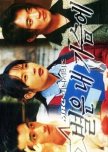
From the first episode I knew I was going to like this drama. It starts off with Yun Hee as a high school student, taken out of an orphanage by a friend of her father. She's taken into his rich family and inherits an arrogant step mother, an annoying step sister and a creep step brother. Typical Cinderella start out. But the story progresses little by little until Yun Hee is already half way through college. The time gaps, I will note, did confuse me a little. They're implied by change of hair or change of events, it's not stated how much time has passed, rather something you have to pick up on yourself.
The story overall was good. While nowadays it may be clichéd, Star in My Heart was one of the dramas that paved the way for modern Kdramas. To me, I found it really refreshing and a nice change of pace. There wasn't the over amount of angst and drama, but rather just the right amount. Another thing I loved was the lack of confusion between the leads. There was some, but they understood each other. And the love triangle is really hardly there at all. But it didn't take away from the drama at all, actually it made me like it more.
The acting was done really well. Choi Jin Sil did an excellent job as Yun Hee, and I was really sad to hear about her death. Yun Hee was a character who stood up for herself. She had her limits and didn't let the petty things get to her. And the actress also portrayed someone else in the drama, really contrasted her original character. Ahn Jae Wook as Min Hee was also really well done. I loved his character! He has such an amazing voice, too, and I'm pretty sure he was singing live during the show. Most of the times in modern dramas it's often lip synching through audio when it's supposed to be live. Cha In Pyo as Joon Hee was also a favorite. Not getting as much screen time until later on, but becoming one of the most important characters in this drama. His character was always supportive and he knew what he was doing as a leader.
Other characters, such as Yi Hwa, Yi Ban and their mother did their roles fine. Yi Hwa was probably the most annoying character in the drama, but her mother followed closely behind. Yi Ban was annoying, but I found his character pathetic and wimpy and couldn't help but laugh at his character on screen at serious moments.
The music was the best part of the drama. The soundtrack has become a favorite of mine now. As I mentioned above, Ahn Jae Wook has an amazing voice! Such songs as "Forever" and "Hurt" have lingered in my head even after I finished watching. The theme song "Always Beside You" is also nice. As are all the instrumentals.
I don't normally rewatch that many dramas, simply because there's always a drama I haven't seen calling my name, but I can see myself rewatching this one some time down the road. As I mentioned before, it was a refreshing and nice break from the modern Kdrama.
Overall, I would recommend this drama to anyone looking for a change of pace or something that would nowadays be lesser known. If you're the type who doesn't like to watch older dramas, maybe because of the quality, then maybe this is not for you. The quality I found to watch I felt was good for a drama 15 years old. You're not going to get much better than that unless you buy the drama.
I think I'll always picture the leads look the way they did in this drama.
If you do decide to watch it, keep in mind that the fashion may not be what you consider "good" simply because the styles have really changed since then. The lack of cellphones as well. Only one character had one in this drama. And the difference in the sound of the music. I, personally, love a lot of things from the nineties so I loved the music. But I understand that may not be the case for some.
Anyways, hope this review convinces you to check it out! It's worth that much at least (:
Was this review helpful to you?
This review may contain spoilers
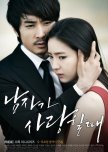
It is really impossible to write a review for this drama without getting my blood pressure up. The people that waited week after week for this drama will truly understand my pain.All the writers of this drama need to be under some kind of witness protection program because they have succeeded in angering so many people including myself that had to sit through 20 eps of this BS. This drama was written under the influence of some serious narcotics.
The acting gets a 9 because they did a good job of conveying the foolishness the writers were spilling out.
Trying not to give away any spoilers, I'm a strong believer of the saying "don't bite the hand that feeds you". Well in this drama there's a lot of biting and chewing and an attempt to amputate the hand that was doing the feeding.
In this drama you get to witness ungratefulness at it's max and decisions that make you question the way some men think.
The drama was good and cute up until about episode 10 when the writers decided to play "how far can we piss off the viewers". In all honesty, the drama could have been done in 16 episodes or better still 10 episodes.
We could have done without all the crap from ep 11 to 19 and 20.
The only take a way is the OST. There are some really good songs in this drama....The drama had some good potential that was played with.
If you want to sit through this be my guest but make sure to drop by for an "I TOLD YOU SO".
Writing this without spoilers was seriously challenging....off to take my blood pressure meds
Was this review helpful to you?
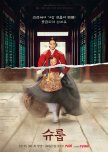
The Drama of 2022 That Has Everything You Could Ever Want
I think it's safe to say this is one of the best things I've ever seen.I loved this drama so much.
I've never written any reviews on here before, but I think this one deserves it.
The drama has ended, but it will always be with me.
I was sceptical about the drama having only "16" episodes (there were so many stones unturned), but everything was executed well.
They gave us an excellent, satisfying ending; it has to be one of my favourites. Everything tied together perfectly at the end.
I have a lot of respect for the writer; it was their first drama, yet all the elements were perfect, and they included so much in just 16 episodes!
The characters were all complex and interesting.
I love Kim Hye Soo, and she was brilliant in this. Her character is one of the best female leads I've seen. She's strong, understanding, kind, and just the best. All of the Grand Princes were perfect; they had their flaws, but that's what made them so lovable. I adored getting to know them and their stories.
All of the characters were fantastic, including the Queen Dowager in all her evil glory (I despise her guts, but her character is admirable).
I think Under The Queen's Umbrella is severely underrated; people automatically deem it boring because it's a historical, but I have to say, I never felt bored, not even for a second.
This is one of those gems that surpasses all your expectations. (Even though I actually had a lot of expectations because I love Kim Hye Soo)
Historicals have a stereotype, one of being boring, but sometimes you need to look at the broader picture and give things a shot.
This drama is full of everything you could want: mystery, action, romance, politics, strong characters, and more!
This was a heartwarming and lovely show, and it is one I will rewatch time and time again.
Highly, highly recommended!
If it's not obvious already, I give it a 10/10.
No, scratch that; this drama deserves a 1000/10. (I still can't believe it is the writer's first drama. Everything, and I mean everything, was perfect.)
Was this review helpful to you?
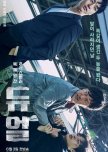
I started this hoping for action and serious topics. I wanted plot and not romantic shenanigans. The drama starts off being pretty much all about a cop looking for his kidnapped daughter. This guy, however, is far from likable, and I found it difficult to sympathize with him in his plight. Why? Because he was, to put it simply, crazy, violent, and screaming. Lots of screaming. Lots of swearing. Lots of beating up suspects without evidence, heavy police brutality. This dude cared for nothing and no one but his daughter and wouldn't hesitate to brutally assault anyone he perceived to be in his way.
That's where Clone #1, Sung Joon, comes in. Don't worry, I won't spoil anything. He has no memory of who he is, but Chief Jang decides poor Sung Joon is the key to finding his daughter. When these two meet, this is when the story really kicks off. I hated the detective for the first 2 episodes, but he does become more tolerable thanks to Sung Joon, who is kind and warm and patient where Chief Jang is crass, rude, and prone to fits of random rage.
So for the first part of the drama, I watched because I was invested in the development between Jang and Sung Joon. I thought they were a great pair and really balanced each other nicely, and I'm a sucker for any kind of non-romance relationship focus. Chief Jang treated Sung Joon like a tool at first and didn't see him as a human being at all, and I wanted to see that change. There was some mystery and plenty of action for the first 6 episodes, but then it slows down and becomes mostly just drama and mystery with action sprinkled in.
Eventually, the plot moves away from the father-daughter focus and we realize that ultimately this is a story about two clones. It's a sad story. Don't watch this if you don't want a ride on the rollercoaster of emotions. One clone is "evil," selfish and out for revenge and the other is kind, selfless and willing to put his life on the line to help near-strangers. But the characters are not simple, and evil clone is not actually just an "evil clone," but is a deep, complex character that will remain in my mind pretty much forever.
What is the story really about? It's about clones learning to be human. It's about a father and his daughter. There's also an evil dude who wants to cure his illness and there's his evil spawn who aren't really worth mentioning but the story isn't really about them. No romance, just friendships and family relationships. Yay!
Without Yang Se Jong, this drama would be nothing. His portrayal of three characters is something you really have to see for yourself. But let's say I had to keep reminding myself that it was the same actor. He brought the clones to life in a way that made me feel like I personally knew them. The other actors are good too. And JJY is so much more tolerable when he's not screaming his head off.
It's not a perfect story, and there are aspects I wish had been different (more interactions between the clones, more father-son bonding with Jang and Sung Joon, less of the secondary cop characters), but these factors don't change my love for this drama. I can't stop thinking about it and have already rewatched most of it 2-3 times.
Was this review helpful to you?
Was this review helpful to you?
A refreshing journey that won't fail to bring a smile to your face.
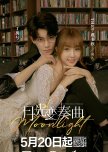
What a journey it has been! it initially started with 0 expectations but ended up being one of the most memorable rides. And it actually raised my standards much for fluffy rom-com now, as it has nothing which I truly despair or get annoyed by, but lots of sweet moments and cute fluff that will give you absolute pleasure.. and pain in the muscle of cheeks.If I talk about the plot or the theme of the drama. It's quite simple without any complexity. Bit or I'll say a lot unrealistic coz of the number of coincidences it has.. or should I call 'Fate' that brought our leads together.. not just together but living under the same roof hehe. Having a bit cliche story I actually liked its pace and the direction with perfect execution from character personality development to the story progression. Being 36 episode drama plus rom-com it had the most chances to become draggy or have unnecessary parts but actually, nothing happened like that, it never left its track consistent till the end. So the story is really cleverly written and stick to its main concept until the last moment.
Now let's talk about the soul of the show its characters. Wow, what can I say about them? I liked the characters more than the story itself. Having three-dimensional human-like characters (Which many writers forget almost all the time) who act like humans, can do mistakes, and not fit in the mold of 'Perfection.' Chu Li at first glance you might feel ah another naive, innocent FL are we getting here? I mean drama doesn't have a 'Strong Female Lead' tag not to forget she is such a cutie pie and adorable, but being badass, rude/arrogant, having power, or physically strong doesn't make strong female leads for me. Hardworking, passionate about their work, strong-willed, having their own goals, principles for life and actually working on them this defines a strong character in my opinion and Chu Li nailed it with being cute and having that bubbliness in her what a balance it was!
Zhou Chuan no I'll say, Mr. Fox, okay I love him.. not him his character lol. Mr. Fox was such a sweetheart and MOOD. I mean there wasn't any moment or scene of him that I didn't enjoy or had good laugh at. He just brightens every moment. He can be a jerk for everyone totally arrogant dude but when it comes to his loved ones he becomes a sweetheart lol...His awkwardness, not able to express what he feels in the starting was felt so natural. The writer did a great job in case of portraying his character as a 'Writer'.. like his stubbornness his passion for his work all things were dealt with in the right way realistically.
So when Mr. Fox and Monkey come together it's a perfect match.. they have quite different personalities but they compliment each other. Their bickering, fights, the development in the relationship with being each other's first love it's quite enjoyable to watch. The chemistry rocks, and how can I forget how much they trust each other and form such a strong bond together... Surely the best aspect of the drama.
Talking about second leads... I'm the type of person who actually doesn't care about second leads at all most of the time I'm not even interested, but honestly, I was invested in the plot of the second lead's story too! they had great chemistry having their own interesting plotline which actually doesn't try to overlap with the main concept of the story.. so yeah I enjoyed their screentime too!
How can I forget the sizzling chemistry between our Mr. Fox and Jiang Yu Cheng... I never craved for the screentime of ML and SML together but I actually did here.
In the acting, they did a really good job portraying all characters I don't think I can imagine this different cast.. and yeah another fact I was glad that dubbing was with the original voice of actors.
So I was engaged to the story from the start to end more than that I was much invested in our main leads who never disappointed me or let me down... for me, it was an amazing drama which I loved thoroughly... I don't rate any rom-com 9.5.. actually never lol, but it was worth it!
Was this review helpful to you?
This review may contain spoilers
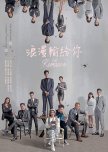
If you're sick of the typical tropes in Taiwanese romance novels or in Taiwanese/Korean/Japanese romance dramas, then this one is for you.Kind of like Extraordinary You and W: Two Worlds in that main characters travel between a fictional literary world and a "real world," but more focused on the love line and hilarious references to other works in Taiwan, Japan, and Korea.
The leads are all eye candy and the dialogue is friggin' hilarious. If you have been watching Korean drama in recent years you would understand some of the references a little more -- they paid homage to Crash Landing On You, Secret Garden, Goblin, Descendants of the Sun, and more. The way the main characters describe drama tropes is A+ and if you regularly consume rom coms you'd understand -- "oh, shower scene again?!" "how do people kiss in the morning? did they even brush their teeth?"
Unfortunately, while the story spends so much effort making fun of tropes, it later on becomes tropey in itself and thus slightly hypocritical, with a nasty second female lead and unexplained attraction between male and female leads. It's almost as if the leads are in love because "the writer wants them to be," so that was disappointing :( (especially since the female lead is a regular consumer of romance novels and would understand the power of warm second male leads! Why she falls in love with the first male lead is ???? to me, though I see why it's necessary for plot development LOL.
I would also appreciate it more if Qing Feng could make a greater comeback in later episodes -- as the real world writer, for example.
Still would recommend for the comedy factor, and if you like to ship leads -- the second male lead here is superb. I love his character so much and the script didn't do him enough justice :(
The rewatch value goes to the many joke scenes, like the certain kdrama remakes :0)
Was this review helpful to you?
STORY
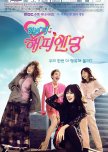
The drama is equivalent to all the dramas that center women, namely Sex and the City, Mistresses, Gossip Girl, Girls, I Need Romance ect. The show revolves around a pack of 4 girlfriends, depicting their lives, the problems, the difficulties and implications of dating and other relationships for people in their 30s. The main premise of the show is that everyone, no matter what has happened in their lives or what mistakes they have done, deserve a happy ending, and if they fight hard enough, they will get it! Secondly, the show presents a very realistic -if you ask me- image of the dating scene nowadays -not only in Korea per se-, how unrealistically high people's standards are, and how picky they are, being materialistic, searching for, money, visuals, other than character in their potential partner.
We get to see the life of each woman, and each story makes a point about relationships. Even if all the characters are in their early/mid 30s, i think it is safe to say that everyone can somehow relate to the problems they depict as they are universal.
Story 1: A divorcee who is afraid that she will end up forever alone, kind of scared to let herself be free and enter a relationship, and deep inside feels she doesn't deserve to be happy because of her divorce. This story is the main story of the drama, like 70% of it. It features a love triagle, that you will hate, believe me, but in the very end, it was the most essential love triangle i have ever watched in a kdrama. It wasn't introduced just for the ships, but it depicted serious realistic facts like love vs friendship, which love is valid and which isn't ect. At the same time this story presents several realistic questions a person in a new relationship may have, they can be stupid like 'why doesn't he/she want to kiss me - Is he/she the right person for me?', or more important like 'does he/she have money issues? Does he/she want to scam me?'.
Story 2: Forever single. A girl in her mid 30s having been single in like... forever. I believe many people could relate to her, she was introduced as the 'funny' one of the quartet. We get to see all her struggles to find true love, along with several questions (and reminders) that i could sum up in this proverb 'Whatever shines, isn't gold!'- and vice versa.
Story 3: The more serious, borderline melo, sub-story. A married woman who goes through a divorce and faces serious health issues. Her story is touching, and moving and could have been a great stand-along/spin off show. Her story poses ideas like 'Don't give up on yourself, on your marriage and generally on happiness. Problems are there, pain will always be there, but we have people around to rely on, don't give up on them or yourself, pain will pass!'
Story 4: The (Wanna-be) femme fatale of the quartet. She was also supposed to be funny along with story 2. A woman with attachement issues, but what happens when she meets her match? This story was left on the sidelines, but yet it managed to make some worthy points like 'no relationship will work without trust and letting your guard down. You should know which person is worthy for you to do that, and you should take on the responsibility of getting hurt and of hurting that person'. This story had the potential to hit issues like career problems for people in their 30s, but it didn't which was a waste.
I, generally, don't have any drawbacks to point out, other than the fact that the drama spent too much of its time overanalyzing the first story, hence the rest of the stories being somewhat underdeveloped/underapprecciated. It is arguable to say that stories 2-3-4 were more interesting than the main one.
ACTING
Exquisite acting, as expected by such a talented ensemble cast!
Jang Nara was a worthy leading actress, her character was superficial and fluffy, maybe too much at some points. I loved her more emotional scenes and i wished she had more, she has more to offer than this.
Yoo In Na, was lovely and adorable, expressing the mindset complexity of such a person perfectly. Yet she was cute and only a teeny tiny bit stupid and just too good of a person for her own good. Great acting, for a character and a side story that needed more screen time.
Yoo Da In. My personal favourite, as a melo lover, her story moved and touched me. She expressed difficult and unique feelings perfectly, she was luscious and easy to understand and relate even when she didn't have as much screen time as she deserved.
Seo In Young. Her story was pushed to the sidelines, it comes, therefore, as no surpise how her character was kind of forgettable as well. She was good and i have nothing bad to say, other than she was kind of overshadowed by Yoo In Na, as they were both the 'funny' characters.
Kwon Yool, was very good, his acting could be described as emotionless or/and cold, but i do believe it was his character being like that. I cannot say i loved him, but i had no problems with his acting.
Jung Kyung Ho. And we finally get to the king of the show. You know what is amazing? How he managed, in a show that focuses on women, and had 4(!) female leads, to rise above everyone and have the most important, interesting, touching, funny and adorable character of everyone. His acting could have been as forgettable as KY's but he managed to own the show! True king!
RECOMMEND/REWATCH
Many people argued how this was boring, i disagree, this actually had so much more to offer than other soulless rom coms, it actually had something to say other than just cheesy romance or insignificant comedy. However, this is not a show for everyone. People who know and like the shows that i mentioned above, or/and like rom coms in general, will, probably, like this one. Other people don't spend your time meaninglessly, move on. As for me, someone who generally dislikes rom coms, i loved this one, i don't know if this says something about me or the show...
I loved it, but would i rewatch it? Not really, it was great for the 16 hours i spent on this, and i will savour it for what it was.
Was this review helpful to you?
First, our 2 main leads stay in line character throughout the drama. Their character grow, but in a more subtle way which is what I love most about them. Their coming back together is convincing because we get see little by little what made them separate in the first place, and we see how each one of them resolve the issues they had, and how it brings them back, only to be there for each other, and for no other reason. It feels organic and you're with them all the way, and they stay true to their character that you have come to love. In the end, you feel that it's a healthy relationship where both are equal and working together to make it work this time
Second, the comedy stays throughout the drama, up until the last episode. Each episode has a few funny scenes involving our male lead who can be adorably petty. He might be petty, but it was never done in a dramatic or serious way, but mostly in a comedic way. It's actually amazing for a korean drama since most rom-com turn melo half way through which annoys me in a way that I'm like "I didn't sign up for this". So basically this drama gives you what it promises in that sense.
If you are looking to watch a drama for those 2 reasons, then I'd recommend it. Its totally for you!
IF you are looking for a story about how a man turned millionaire overnight, or about details on smart business decisions, if you are looking for interesting 2nd leads that don't turn cliché and show growth and dignity, if you are looking for camaraderie or even bromance, well you won't be finding any of those things here. The bromance was sorta a let down but that wasn't the focus of the story ;)
Overall I really enjoyed the drama for the 2 reasons mentioned above even when everything else went crazy at one point (those are what FFW button is made for :P).
Was this review helpful to you?
This review may contain spoilers
The thing about this show is that starting from the first scene right to the end, there is nothing that can be considered filler content. Nothing is done without reason. You are given a puzzle of a story but the truth is it's not about the answer to the puzzle but about the things you learn getting to it. In a time, where people only want guilty pleasure and happy happy happy, this show gives a voice to so many children who are ignored every day. I'm one such survivor and this story got to me in a way that is hard to explain. Children of Nobody. Can there be a more heartbreaking phrase? The actors made it so you get lost in the fantasy and even root for the villain at times I believe that was the point. That people lose their way. N's story was the saddest and no spoilers but I'm glad finally in a TV show this topic was touched. Honestly just a phenomenal script and acting I wish there were more like this one. Was this review helpful to you?
This review may contain spoilers
Okay!… but a little disappointed
Cha Eunwoo is one of my favourite celebrities, and I was no doubt excited for this drama ever since it was announced. However, as a reader of the original webtoon, there are a few issues I had with the drama.I’ll firstly start off with the many things I enjoyed about this drama:
The first few episodes were genuinely interesting and executed the story in a fun, witty manner. The production quality was top notch and the mix of CGI and real life action for Haena’s dog form was hilarious! The pacing for the series was engaging and I even rewatched the first few episodes while I waited for new episodes.
While people like to complain about Eunwoo being typecasted, he played his character very well and it remained true to the original character depicted in the Webtoon. Actually, I was surprised how he managed to make Seowon cuter! But I guess that is very possible when played by Cha Eunwoo hehe. And don’t get me started on those kissing scenes !! Hoyyy do you want me dead, Eunwoo!?!!?
Park Gyuyoung has become one of my favourite actresses after this series! She was very funny. It was a bit of a 180 compared to the last time I saw her in Celebrity. But she looked so warm and amiable in her light brown hair!
Now… while I did enjoy the series for the most part, I must now complain.
As I had been anticipating this drama for over a year before its release, I was not happy to hear that it would only have 14 episodes. And even worse, they were going to air once a week.
Um… Okay. Can’t be that bad right? Wrong.
I can imagine it would be much more enjoyable to binge this series, however, watching it while airing was exhausting considering the first few minutes of each episode would be a recap of the last. Like thanks! I totally forgot what happened during the single episode you gave me last week.
And to make matters worse, there was the repetition of the typical Kdrama MONTAGE! That’s right. They did it almost every episode to remind you that indeed the main characters looked at eachother 4 episodes ago. And yes.. they KISSED 2 episodes ago… Oh and remmeber that time they went to the park!??.. SUCH A WASTE OF SCREENTIME. It is just such lazy storytelling.
In the Webtoon, we got more insight to Seowon’s family, yet in the drama we literally don’t know anything about him. No, seriously. Instead we got almost 2 whole episodes of the most BORING historical backstory flashback in the history of fantasy Kdramas. The romance was cute between their past lives.. But I can’t believe they decided to change Bogyeom’s character that much… He was so irritating here.
The last 4 episodes of this drama were a snooze feast. I literally used to rush to watch this every Wednesday night as soon as it was released but there came a point where I dreaded it because I do not wanna know about some petty God’s tragic love story…
Basically. If you’re gonna make a Kdrama adapted from a Webtoon, don’t make it worse than the original?! There were SO many opportunities to make it better, instead we got the same montage over and over.. ITS TIRING.
If I wasn’t a Webtoon reader I’d probably be okay with this drama. However, having the original plot in mind I had the bar set higher but the drama was just too much of a disgrace for me.
Was this review helpful to you?
 1
1Great Story, Amazing Acting, Best of Chen Feiyu
Just as I thought Chen Feiyu’s acting somewhat lacking in Ever Night, he gives me a bombshell here in this drama. While I thought only Song Weilong has those eyes with words that cannot be spoken, Chen Feiyu possesses those similar irresistible gazes that make the viewers' heart ache. As I thought this drama is "just" another youth drama with immature characters and silly storyline, this story touches the real challenges of youth in the cutthroat IT world today.Lighter and Princess or L & P, is adapted from a popular novel. "Lighter" depicts the lighter that the male lead possesses whereas "Princess" is the nickname given to the female lead by the male lead. The story is narrated by Zhu Yun (Zhang Jingyi) of her encounter starting in her freshman year in college, 2012. The story has a span of 7-8 years with four years in college, 3 years in adulthood (not shown in details), and the current year of 2019. L & P has also come to mean "Lucky and Power" in the story.
In college, Zhu Yun is an innocent girl, but she is not naive. She is intelligent but unafraid to ask questions and to admit errors. She is obedient and responsible, at home and at school; she is the perfect daughter all parents want – an obedient child who never lies nor defies the parents. Having said that, Zhu Yun later begins to tell white lies and secretly defy her mother who is judgmental. I wish Zhu Yun had stood up to her mother and given her an ultimatum: “accept us or lose a daughter”. Zhang Jingyi puts up a perfect performance here as an uncertain and yet determined Zhu Yun. The actor’s adorable adolescent look and demeanor make her so convincing and lovable.
In romance, a perfectly good girl has to meet a totally opposite character. Here, Zhu Yun meets Li Xun (Chen Feiyu), an outrageous, arrogant, untamed, super intelligent, confident and unconformable character. Li Xun is a very misunderstood character, not only by people around him, even many viewers also don't understand him and therefore condemn him.
Here, I want to address some criticisms from viewers about Li Xun. Many viewers complains that Li Xun is misogynistic. Li Xun is definitely not a misogynist. He looks down on people not because they are women but because they are being mediocre. Those people he looks down on are usually people who get to high positions through connections, either they have powerful relatives, or they bribe their way through; these people do not have substance. This is a common phenomenon happening around the world. People buy their credentials and tout themselves as the experts, sitting in high positions, receiving high salaries and benefits, claiming credits for everything, while the real people doing the actual tasks receive measly compensations and no recognition. This is what Li Xun despises. He despises people with no substance but still have no self-realization to try to improve themselves further. And to improve, he laughs at those for reading and memorizing from text books. For him, improvement means getting your hands dirty, making mistakes and learning from the mistakes. Contrast his attitude towards Ren Di. He likes Ren Di because he feels she is authentic, pursuing her passion even against her father's will. He helps her in every way he can: financial support, a place for her to live, and extra school credit points from his coding club, etc. All these prove that Li Xun is not misogynistic.
Despite how Li Xun looks and behaves, deep down, Li Xun is a decent and kind person who loves his mother and sister dearly, and cares for all his friends even he himself is in a dire position. He is compassionate but doesn't give a damn how others think of him. Only Zhu Yun knows how he thinks, puts up with him and stands up for him throughout.
Both Zhu Yun and Li Xun are classmates in computer programming. But Li Xun is well ahead of his class as he is a computer whiz kid and a brilliant programmer but he doesn't use this skill for hideous crimes. He humiliates everyone as they seem childish to him with their shallow knowledge of the course. Everyone hates him for his badassness, and yet loves him for his ingenuity. Li Xun doesn’t follow frivolous rules; he finds generally people only care about how things look on the surface and not the substance inside, so he calls them fake. I love how he looks at everyone, a classic condescending look. Li Xun is a person with an attitude, and for me, that's Chen Feiyu’s natural look; Chen Feiyu fits into the Li Xun character seamlessly as if the character is written for him. In real life, if your boyfriend is such a character, I empathize with you, but in a romance, this type of personality captures the viewers’ imagination. I am so in love with this character.
According to readers, in the novel, Li Xun is flamboyant and has many girlfriends but none last long. Here in the drama, the Li Xun character has been whitewashed – instead, girls throw themselves at him, but he doesn't even look at them as if they are non-existent; they usually leave him alone after getting humiliating scolds from him. None of the girls attract Li Xun’s attention, until Zhu Yun comes into his sight. With her, he experiences jealousy and longing, and with him, she always believes in, no matter what. I really love how their relationship develops, slowly and steadfastly. It takes half of the drama for the trust and love to blossom before the couple is officially together.
College life ends at Episode 22, and the kids graduate, each starts their work life, further education, or something else (spoiler). Three years whizz past, present life continues. Our characters struggle with life, career and revenge. This is the beginning of romance 2.0, mature, steamy and sensual. Here we can see the growth of the characters compared to their college years.
The official sound tracks and background music are beautiful, capturing the ups and downs of our characters, and the mood of the story. I'm so glad that my favorite singer, Zhou Shen, sings one of the songs, Fireworks.
My Verdict
For me, not one episode is considered redundant or boring as I relish every scene and every moment. I really enjoy watching how the characters being carefully explored in detail, giving viewers multiple dimensions of the two main characters, both have flaws, both learn from their mistakes, and grow to become better person of their own. The writing of the characters is very realistic. In life, all of us could come across many of these characters: a child with outrageous hair color and an attitude, a sister who is also the perfect daughter, a classmate or a colleague who sabotages your projects and stabs you on the back, even the parents of Zhu Yun are the typical Chinese parents that many Chinese viewers can empathize with. There are many fine and sweet improvised moments of the love birds; this is candy for any romance buffs. The love is pure and deep, and reciprocated. The sacrifices are relatable. The humor is subtle and delightful. Not least, Chen Feiyu is a heartthrob.
In China, the Li Xun character is an outlier, but in the west, he’s a norm. Therefore when he's being called a "bad boy", my heart aches. What bad boy? Just because he doesn't conform to the norm? It upsets me that such a beautiful soul is being treated so unfairly by a society that demands conformity. Many people are fearful of making life changing decisions. Li Xun is decisive and fearless. Once he makes up his mind, he doesn't look back. For me, this is a highly valued quality and is well depicted, among others, in the multiple times he helps the hesitant Zhu Yun in clicking the submit button.
As Zhu Yun puts it, “He never looks back, confident, courageous, energetic, care-free. Forever with a determined direction, never with self-doubt.” These are the qualities all viewers would be inspired by the character.
Towards the last few episodes, the writing becomes soften with somewhat conflicting messages; everyone, including Li Xun, compromises in achieving a win-win outcome. The writing even has Li Xun get back in line with what society expects of him, and what it means by success - wealth. Nonetheless, this slight change of tone has not reduced my excitement of the Li Xun character and my enjoyment of the overall story.
This drama captures my heart, my imagination and my emotions, hence deserves a 10/10.
TWO THUMBS UP!
BRAVO!
Was this review helpful to you?
Was this review helpful to you?
'Finding Happiness Again'
The New Beginning.Not having some great story, relatively some or to be honest many plot holes doesn't mean that drama wasn't good, there's nothing like perfection. Having some cons is a good thing from my perspective. So now let's talk about drama. Fluffy, comedy, sweet, light with mild romance (Don't expect too much even romance is in main genres) ... it's the full package fluff drama but it also gives some messages which make us think about ourselves our life and the decision we made.
The story wasn't perfect but the execution was done well, kind of predictable still a fun and interesting journey. Really like the character development wasn't just about only one character but about every... the journey of learning something and it was for everyone that at the end you can see not phenomenal but at least a good change indeed!
Talking about the cast and acting... for me everyone was perfect for their respective roles and characters really liked Bahn Ha-Ni's both version the younger and the present one it's always great to see two different sides of the same character though I can't say they both are same haha.. the ML was definitely chocolate boy, adorable, liked the chemistry between them but still I won't say we get much romance here.
So overall it was a good show indeed won't say very good, coz I didn't get answers for some of my questions and had some plot holes but it's really good and light show indeed!
“We all do things we desperately wish we could undo. Those regrets just become part of who we are, along with everything else. To spend time trying to change that, well, it's like chasing clouds.”
Was this review helpful to you?
#Letsgetdrunk!
Perfect in every single way.I went into this drama absolutely blind - i saw Eun Ji (who i love since R97) and “female friends drinking alcohol” and i thought to myself: this might be nice. And it was not JUST nice. It was perfect. In a span of 12 unusually short episodes, this drama managed to fulfill each and every single of my drama desires/needs.
STORY - the concept of 3 friends vs. the world is not unique. We’ve all seen at least 5 dramas with such theme. But why WLDN feels so good and refreshing?! Most of the issues the main leads go through are not new but the way our main leads carry though the mishaps is so much fun. The writer wasnt afraid to explore harder topics (though oftentimes only marginally or very nonverbally) like depression, lgbt, sex, harassment, patriarchy… this might seem like an explosive/too stacked mix but it was executed quite well in my opinion. And the dialogues were so good!
The drama started with very hilarious and bizarre comedy (imo on par with Chief Kim and Pegasus Market) and then it suddenly slipped into drama with very serious topics. The transition felt almost seamless.
CHARACTERS - at first, the main leads seemed very one-dimensional - weirdo Ji Goo, beauty Ji Yeon, worcoholic So Hee, creep Kang PD. But oh boy, do they all have LAYERS. And such beautiful and interesting layers to boot!
Ji Yeon is one of the most interesting and funny characters i've seen in a drama these days. So unapologetically feminine and over the top. So Hee and her endless inner (and outer) battle with her feelings. And jI Goo - seemingly so strong on the outside but in fact very vulnerable, too. Despite some of their character traits being overexaggerated for entertainment purposes, all of them feel like real complex women who are able to be both strong and weak, emotional, rational and irrational... And their friendship is something so beautifully written and perfectly acted by all 3 main leads!
OTHER ASPECTS - visually, this drama was so much fun - be it cute outfits for all main leads, nice coloring of the scene/shot, or the food/alcohol aspect of the drama. I am no expert in the field of camera technique, but i quite enjoyed the camera movement. idk…i didnt pay much attention to ost (cause the drama was stacked in other departments) but all the main leads sang a song for this drama and the songs are pretty good!
CONCLUSION - i love this drama so much. I found the finale a little … lacking but i suppose they are hoping for season 2. The rewatch value is high for this drama - especially early episodes when the characters are only showing their layers and the comedy is just perfect. With this drama i cried both - happy and sad tears (I actually shed so many different types of tears!) so it seems like it will be perfect for a rewatch during the time when one needs to unwind so many emotions. I had a really great time watching WLDN and it gave me all sorts of warm and fluffy feelings!
Was this review helpful to you?


