

The female lead is annoying to a point where I stopped feeling any empathy around her at all. A lot of people hate loud and excessive FLs and while that is a thing of taste (not mine, because I love screaming FLs, I even like most of Hwang Jung-eum characters), this is not the reason why the FL here is so annoying. Is mostly because the writing makes her unlikeable, the reasoning behind her every move is motivated by selfish reasons only. She is supposed to be this empowering and admirable woman but in fact she's a lying, unreasonable woman who is never hold responsible for her own mess.
Now, about the (various) male leads... This is tricky, because is more of a "the best of the worst" type of situation. The ML is probably the lesser evil from the three (there's a fourth one, but he's not exactly a candidate and if he were, he would be the best one easily). He is a bit creepy and annoying, but relatable at times and you can feel some empathy towards him considering he really does suffer a lot in this. The other two candidates, one is pure evil and the fact that he does terrible things in the name of "I SAW HER FIRST SO I SHOULD GET HER!!!" is villain-like and yet it's never portrayed as That Bad. The other one is not exactly evil, just a bit bland, and ironically the writers seem to have forgotten about him by the end.
The only joy I found in this came from the two kids and the bar owner and the mom. But that's like 7% of this mess. It's really not worth it.
If you're looking for romance, AVOID THIS ONE.
(It doesn't have even two whole episodes of that)
If you're looking for a strong lead character who is a single hard working mom, AVOID THIS ONE.
(She is really the worst)
If you're looking for a great story about the korean movie industry, AVOID THIS ONE.
(They forget about the movie by episode 6 or something and unfortunately this topic is never touched in any substantial form)
If you're looking for comedy, for the love of GOD, AVOID THIS ONE.
(I don't remember laughing at all in this, there isn't a single hint of comedy)
If you're looking for a frustrating show with frustracting people and poorly written characters and situations, THIS IS YOUR DRAMA.
Was this review helpful to you?
This review may contain spoilers
There are times, I think, when nothing beats a KDrama from the early 2000s
"Spring Day" is a love story told in a triangle. So drama in drama feels right at home here. And "Spring Day" has a lot more to offer in the proven makjang-mix to really heat up the story. If the merry-go-round isn't going straight forward, than simply because it's going backwards.Three is one too many. Being well aware of the consequences and where the story must lead towards, it is nevertheless the path that paves the series pleasure of cathartic ups and downs. You can get really upset about this and that. The rhythms of the soundtrack whip your emotions through the most varied of situations. The assorted mix of (by now long) proven actors give the protagonists their three dimensional profile. None of those characters is really grippy, smooth or edgeless, though. Whether brotherly relationship, romance or parental relationship, it´s all full of sometimes touching, sometimes pathetic ambivalences – sometimes hurting, sometimes soothing and hurting at the same time. In short, the KDrama presents quite some space for compassion and catharsis.
There are times, I think, when nothing beats a KDrama from the early 2000s. I couldn't have timed my ´Spring Day´ better (in Spring 2023). After a flood of stories about contemporary scheming, autocratic backroom politics, bullying among students and misogyny, "Spring Day" feels like an island in many ways. The world is not safe there, on the contrary. Makjang rocks the turbulence upwards. Nevertheless, there are 'only' personal destinies and family tragedies here that do not have the social impact of some current series topics. We get thrown around in an ambivalent emotional swell between 'soothing' and 'hurting'. In the end the story is told to the end. The ending may or may not please, but it has its ending. (A lot of recent KDrama with current underlying social issues tend to deep down leave a thorn after the end of the story, as the social swamp that fueled the story remains a given reality and lingers on…)
------------------------------------------------------------------------
By the way:
With "Spring Day" in 2005, Go Hyun-jung marks her comeback after a War-of-Roses divorce with a Jaebeol of the Samsung Dynasty. So in 2003 she actually had just finished her own Makjang drama personally. Eventually, she was able to free herself from the obviously tormenting clutches of her husband and his dominant, oppressive family, who (so it is said) permanently devalued her because of her humble origins, simply making use of her beauty for bearing pretty children. Yet the price for liberation was high. Above all, she had to leave her children behind and give up visitation and custody rights. Although she was able to re-establish her life somehow against all (by her husband´s family deliberately implemented) odds , she (so it is said) still is not allowed to see her children to this day.
Was this review helpful to you?
It's good, but...
Given the limited budget, this is extremely well-made, with obvious passion invested by everyone involved, which I've come to expect from this group. The cinematography and directing are wonderful with fantastic performances pulled out of talented actors, the music selections ar great, and the German subtitles are first rate, so I hear.It's great to see Art Pakpoom in a leading role again, and Michael Kiettisak puts in another top-tier performance - he may be the most underrated actor in BL - I'm still haunted by his horrifying abuse victim in Call It What You Want.
The story, however, prevents these ingredients from reaching their full potential. It perhaps tries to do too much - social commentary, messaging about how short life is, wanting to be a '90s Gregg Araki film, horror, adventure, romance, comedy...
So while I appreciate how well-done this is, the big question is, did I enjoy watching it? Not really. It's very violent, it's a bit all-over-the-place as a genre, and commentary about the corruption in society and the human condition are either extremely unsubtle (like who gets to go to the bunker - that was hammer-over-the-head commentary), or undermined by the contrasting trio of antagonists. Because the villains were all psychopaths, they contributed no meaning. If we're looking at different choices in how to spend the last two weeks of your life, basically good people versus people who want to violently murder as many people as possible before they die says nothing. There is nothing about them identify with, you can have no sympathy for them, they have no point to make, they're just evil and must be destroyed.
Why not have people who are so greedy that they steal and accumulate wealth, or so desire power that they try to rule everyone else? Or even if they had wanted to have sex with as many people as possible before the worlds ends, that would be relatable, for sure if everyone looks like the cast.
So as a result, the series gets bogged down in with a large amount of screentime being chewed up by horrible people who have nothing to do but have surprisingly graphic and sweaty sex (probably the most realistic sex scene ever in a BL) and kill people, which they do, a lot (unfortunately the killing, not the sex).
In addition, instead of examining how impending doom might affect the course of romance, the main pair fall into a depressingly conventional seme-uke pattern, where Art acts like a Victorian twelve-year-old, when even a Victorian twelve-year-old would throw up her hands, say 'f$%& propriety', and want to bang Golf and his brother 24/7 if the world were ending. But Art acts like a kiss on the cheek in a completely abandoned world is scandalous. Art has no agency and is helpless and useless, requiring Golf to do everything for him.
Everything is too predictable, and you end up stressed out knowing characters you don't want to die are going to die, stupid decisions to be made are telegraphed - decisions that are inexplicably out of character, which is lazy writing.
And to get it out of the way, there was an incredible amount of criticism of the faulty astrophysics - if the moon were on a collision course with the Earth, the Earth's gravity would break it up, and there would be horrendous natural disasters, so this is too unrealistic. THAT'S the line you're going to draw in the sand? There are BLs where one of the main pair is dead, or a vampire, nobody sweats after running a mile through Bangkok in the afteroon while wearing a wool suit, every male student at the school is gay and rich, you can turn a straight guy gay if you trip and have him catch you - but not having earthquakes and tsunamis in a project that likely had a 5-figure budget is unacceptable? Anyway, the moon crashing into the earth is symbolic and metaphorical - it doesn't need to be realistic.
So do I recommend this? Yes, unless you don't like gore. All the positives I mentioned at the top make it worth your time - this isn't a rehashed plot, it's not full of tropes and cliches, and you get to watch very attractive people who can both act and look great with their shirts off. If that seemed like a lot of criticism, it's because I think this could have been one of the best BLs of all time instead of merely good. While the characters are largely more appealing, this doesn't quite have the polished genius of Call It What You Want.
Was this review helpful to you?
This review may contain spoilers
Fan Service at its Best
First, let me warn you by saying don't look for these to strictly adhere to continuity. It's really fan-centric one-shots meant as a gift by the actors and producers. For example Byeong-In is in one episode as the captain of police at the same time Cheoljong is looking at the Queen's Dictionary which has notations about voting and gold/dirt spoons, which occurred later. In another segment, Hwan is sporting the sunglasses he first wears in episode 20 whereas all but the prequel seem to indicate the stories taking place right before or immediately after the banquet.Segment 1 - SY and CJ meeting for the first time as adults. More So Yong centric than Cheoljong. At least they did manage to flesh out her character just a little bit. The prequel is beautifully shot with CJ romanticized and looking like Prince Charming from a storybook to the Nth degree. It has a dreamy quality to it.
Segment 2 - An absolute hilarious acknowledgement of the fans' comments about the similarity in looks and build of Prince YP and Byeong-In.
Segment 3 - Focused on the flirtations of the Royal Chef and Lady Choi
Segment 4 - KDramas are known for several tropes, one of which is the jealous lover. Didn't fit into the narrative of Mr. Queen too much, though they did manage to fit in one small scene towards the end, so the producers created this one-shot that is jealous KDrama lover overload. Very, very funny and really showcases the comedic timing of Kim Jung Hyun.
Segment 5 - Card game gone extreme between the Kim powerhouse siblings with poor So Yong's father caught in the middle.
Segment 6 - The most enigmatic one. This segment had some moments of comedy, but it had a strange undercurrent of wistfulness and melancholy as well which is tied into the wishes each character makes upon seeing their first meteor shower.
Overall, it was just fun watching. The comedic elements were ramped up and more campy than usual. The segments were definitely poking fun at the characters and storylines while at the same time trying to give fans elements that they couldn't necessarily incorporate into the main drama.
Looking back, I also feel that it supports my reincarnation theory. Prequel hints at the idea of destiny, middle segment answers the question of where the love and attraction is stemming from, and the last gives us the promise of reunion for the soulmates.
Was this review helpful to you?

A melancholically beautiful, heartbreaking and heartwarming tearjerker! + Underrated!
This series needs to be higher rated! The series is beautiful in terms of story and values despite its melancholic approach. It's a heart-breaking yet heart-warming series that teach us the values of life and grief. What's more, it makes us believe in eternal love even though the time of the couple is painfully short.In terms of character development, the series shows a complete picture how love develops a person silently yet does not change that person. Koichi is still Koichi, Micchan is still Micchan but they become better versions of themselves - love and being loved.
Regarding casting, Komiya Rio and Inoue Sora excellently and vividly depict Koichi and Micchan. It's not exaggerating to say withouth Rio and Sora, the series wouldn't have been that successful and tearjerking. Chemistry overflowers and very good acting skills.
The director/ screen writer also did their best in telling us a story that is not just heartbreaking but heartfelt.
Please don't miss it!
Was this review helpful to you?
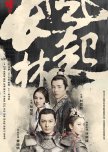
Nirvana in Fire Season 2: The Wind Blows in Chang Lin
32 people found this review helpful
Story:
The story is much more different than the story of NIF1. In this drama, the theme focuses more around familial ties as well as loyalty and righteousness towards the emperor, the country, and the people in general. Overall I loved the story, although I must admit that the final few episodes were just a tiny-bit underwhelming.
I personally feel that the characters in NIF2 were much more "human" and relatable than the characters in NIF1. But the plot in NIF1 is a bit more complex since it focused more on the political aspect rather than the familial aspect. I sincerely ADORED so many of the characters. I loved Pingzhang's cautiousness and wisdom, Pingjing's playful and carefree manners, Lin Xi's calm and collected poise, Qianxue's love and understanding, Tingsheng's awesome fathering skills and loyalty to his brother and his country, oh I could go on with Xun Fei Zhan and Lin Jiu, and etc.
Plus every time they hinted at or mentioned someone from NIF1, the feels would really start to hit :')
Acting:
I'm sure everyone was in doubt towards the actors when the casting was first announced. Much to my surprise, HXM did wayyyyyy better than I expected. LHR is very young (only 20 yrs old) and I think for his age, he did amazing and portrayed his character of Xiao Pingjing very well, from playful/carefree young lad to a changed/more solemn young man. I loved the female actresses too; TLY and ZHW both portrayed their characters very well. And of course, all of the supporting casts that Daylight Entertainment likes to reuse in all of their productions also acted very well.
Music:
Opening theme is a variation of the opening theme of NIF1, with a slightly more hopeful melody (as with the more happy ending than in NIF1). I love the ending theme song as well (both the female and male versions). Instrumental was good too.
Rewatch:
There are A LOT of specific scenes that I think are very worth rewatching, such as a lot of the early wuxia-fighting scenes were wonderfully filmed. And of course, all of the deep and emotional family scenes (Tingsheng and Pingjing!) as well as the daily Xiao family shenanigans. I wouldn't rewatch the whole drama though, but there are a lot of scenes I will definitely rewatch.
Overall:
Absolutely loved this show. Compared to all the sequels of movies/dramas I've ever seen in my life, this is a sequel that can almost be equal to its prequel. Both NIF1 and NIF2 are equal in my heart, and both have their pros and cons. Definitely worth giving it a shot if you've seen NIF1 and are debating or not whether to watch this!! If you haven't seen NIF1, then by all means, watch this, because this is still a very good quality drama on its own.
Was this review helpful to you?
This review may contain spoilers
Not a good story
Not worth it to watch 42 episodes.We generally expect only one ML & want FL to love only ML through the series.
Here it was shown as the FL doesn't have any feeling for ML anymore due to some conflicts between families, and almost tried to develop feelings for SML.
It looks like writer tried to give same importance to ML & SML which caused this disaster.
ML significance gradually reduces & SML significance gradually increases after the divorce between FL & ML. we can tolerate this for 1 or 2 episodes but as an audience how do you tolerate this for around 10 episodes, ML wasn't even there in some episodes.
At the end, FL came back from US after 3 years & she still doesn't know what she wants. FL gives hug to SML as a friend after forgiving him, but it is not shown whether FL would like to get back to ML or not ? ML clearly would like to get back to FL but FL mind is not clear.
FL called both ML & SML as good friends & even sang a song for them.
FL & ML will only be friends ? will they become couple again ? it was left for audience imagination.
After watching 42 episodes, you will not like FL character anymore & you would feel FL doesn't deserve ML (FL doesn't show any regret for leaving ML).
Was this review helpful to you?
This review may contain spoilers
Not what I expected...
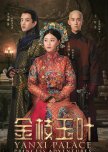
I was excited to hear about this sequel starring the daughter of Ying Luo and non-biological son of Fu Heng, but now that I've finished, it was rather disappointing.It started off strong, with beautiful costume/production/music and the plot was developing smoothly. They used the same OST and BGM from the parent story, Story of Yanxi Palace, so I liked the nostalgic feel to it. Especially the dramatic BGM that was added at certain moments.
However, as there were only 6 episodes, the pacing was rather fast? I couldn't catch up. Prince Chaoyong didn't have as much screen time as Fu Kang'an, but he started off not liking Zhao Hua and then in episode 2 or 3, he suddenly started loving her? One minute Zhao Hua didn't like Fu Kang'an and later, she did. Then, when he betrayed her and she disappeared, it got even more confusing. I didn't get what was going on. I'm guessing they didn't have the time to explain it so they rushed it at the end when Zhao Hua and Prince Chaoyong got married and the truth was revealed as the plot twist. I suppose it was satisfying to find out Zhao Hua got her revenge on Princess Siwan, Fu Kang'an, and Prince Chaoyong, but I wish they showed the process more instead of just throwing it out there at the end with a few words.
I feel like with the limited 6 episodes, the falling in love and later betrayal of Fu Kang'an wasn't as heartfelt to me as a viewer. Everything happened so fast. There wasn't enough time for me to take in each character and how they slowly grew to have feelings for another. The plot twist revealed at the last minute of the last episode also didn't land well for me. I wish they explained it more?
The plot twist for how Fu Kang'an was not the Emperor's son was greatly executed though! I was shocked and loved how they revealed it through Wei Ying Luo's speculations. :) My favorite scene of the drama. I just love it when Wei Ying Luo has the upper hand and reveals it. Really reminded me of the parent story. I loved seeing the old cast too, it was nice that they didn't replace them and got them all back to act their parts. Wei Ying Luo's scenes were the most satisfying parts to watch- especially when she went to Fuca House after Zhao Hua disappears.
Overall, super fast-paced, historical romance but it was nice to see the old cast if you loved the parent story. Plot was alright, used up all the cliches for the romance and was rushed in my opinion for 6 episodes. Some scenes could have been better explained. Give it a try if you miss Wei Ying Luo and you're curious about her daughter, Zhao Hua, who is more like her mother than others believe.
The actors seem to do a good job overall but the plot got me confused and was the problem for me. Production was top-notch like the original story with its beautiful sets and costumes.
"Everybody says I'm not like my mother. They're wrong."
Was this review helpful to you?

Home is a feeling, and this felt like home
This will go down as one of my favourite feel good dramas because of how much I loved every single thing about this show, from the actors to the characters they played, to the writing. I felt compelled to write this review, because I hope & want more people to watch this show, and shower their love for this gem.The writing was definitely the winning aspect of the show, which was perfectly complemented by actors who brought the script to life. Whoever that casted for this show needs a raise because replacing any of the actors would not make this show what it is. The acting was A1 and the entire cast had explosive chemistry together. I believed in their world, and wanted to be a part of it so bad. Their interactions together (right from the main leads to the supporting cast) felt real, organic and fun. Watching them made me feel like I was third wheeling because it looked so intimate. Conversations would sometimes start at point A and end at point Z, making me grin. The fun was well balanced with the heart, in the way the characters looked out for each other, loved each other & supported each other. I connected with them, & rooted for them each step of the way like they were real people that I cared about.
Kitagawa Eriko clearly surpassed herself with this drama, giving us a peek into a mother and daughter's heartwarming journey, a journey of unrequited love & a journey of friendship. The writing was sensitive in the subtle way that the writer didn't feel the need for the characters' relationships to be defined or confined by terms. They were all special to each other without having the need for their relationship to be spelled out. Aoi/Gon and Sora/Hikaru did not need to be partners for their relationship to be any more complete. You can see there was unrequited love there, but it wasn't presented in a heart-breaking profound way. It was what it was (and I loved that they were all self aware of each other), & you can see that they would still continue to love each other regardless. Sora and Aoi, despite not being real mother/daughter were probably more intimate than any mother/daughter. All the characters were friends, yet they were more than that, and I love that the finale did not give us an answer to this. They may or may not be any more. It’s like a puzzle where every piece forms a crucial part for it to be complete. It’s the same thing with this drama. Each character came together to make this what it was & they would continue to exist in each other's world. They are all inseparable regardless of how their relationship to each other changes.
There was no major dramatic moment or climax or decision that the characters had to make, and this is where the writing shone so much in keeping you engaged with the characters' emotional states. The world of Uchi No Musume felt small sometimes with just these small group of characters interacting with each other, yet it was huge & limitless at the same time, thanks to how progressive & real it was. Don't ask me to describe the plot of this show because I don't know how to.
I love that the show represented characters of different age groups (right from college students Sora/Hikaru to old man Shinchiro) & subverted society's expectations of how they were to behave or be. And the show never told us that, it showed us that in the way the characters interacted with each other & in the representation of the turmoils they faced. Aoi despite being a 40 year old was ditzy. Sora despite being an otaku was not socially awkward. Irino who looked to be image conscious turned out to be a sincere & mature guy. Gon who seemed mature but was somewhat a manchild looking for love. Shinchiro despite being 70+ had romantic relationships & was technologically advanced. Sally acknowledging that she had toxic parents & was looking for the stability that calm 70+ Shinchiro offered. Wataru who did not have romantic relationships because he was waiting for his school friend (the show mocked this trope).
The ending OST was beautiful & while I don't know what it means, it always uplifted me each time it played with the credits rolling. The styling was on point (keeping the characters in mind). I love how all of them dressed comfortably most of the time. That felt real. The set design was extremely beautiful, esp Aoi's room which had clouds on the wall, and stars on the ceiling. I want a room like that so so bad. I love how Aoi's big white, expensive house was contrasted with Odaya's design that felt cheap and warm yet claustrophic. Interesting how most of the cast interactions happened there, in that little space, making it look all the more intimate.
I don't know what else to say except that it's been a long time since I watched a show that had me so attached to the characters, and their world that leaving this makes me feel sad. They will always be a part of me, and many years to come, I will be thinking of what they are up to. These were not just characters. For me, they were real people that exist somewhere in this universe.
S2 please, writer san!
Was this review helpful to you?
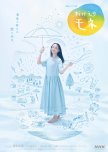
Welcome Home, Mone!
This drama is the 104th NHK Asadora series in the network’s long line of serialised dramas that air a 15-minute episode every weekday morning. It is my second ever Asadora, following Oshin back in the 1990s.Okaeri Mone translates as welcome home Mone, which refers to the titular character of Nagaura Momone. The premise focuses on Mone’s journey of growth, healing and love where she struggles to overcome the burden of a traumatic past before eventually determining her path in life and finally realising her aspirations of being a weather forecaster. Set in 2014 and spanning some seven years up to the present day, Mone’s story begins from her hometown of Kesennuma Bay in Miyagi Prefecture as she travels to the coastal city of Tome and subsequently Tokyo, before completing a full circle by returning to her home.
Based on the original screenplay written by Adachi Naoko (Code Blue 3) and directed by Masae Ichiki (Yae no Sakura, Idaten) and Tomohiro Kuwano (Amachan, Idaten). Takagi Masakatsu (Mirai, Wolf Children) serves as composer while the theme song Nanairo is performed by the popular alt-rock band, BUMP OF CHICKEN. Principal photography took place in Kesennuma Bay, Tome City, Sendai and Tokyo.
As far as the production quality and technical execution are concerned, I have absolutely no complaints. The exotic filming locales comprising the rustic fishing village, expansive mountainous forest reserves, gorgeous coastline are utterly breathtaking to witness, which is credit to the wonderful cinematography. I love the upbeat and inspiring theme song, Nanairo, that accompanies the title sequence during every episode.
The same goes for the quality of the screenplay which manages to convey the weekly story arcs of the main plot in a cohesive and coherent manner. There are many themes explored, as is typical in a long running Asadora. There is no shortage of the rainbows and sunshine involving heartwarming moments of family bonding and camaraderie among friends. We also see the infusion of bittersweet moments relating to tragedy, loss and trauma arising mainly from the 2011 Tohoku Earthquake and Tsunami which sadly impacted Kesennuma Bay, the setting of the drama. Perhaps the only reservation I have is on the subplot concerning the sibling relationship and the interactions between the childhood friends where some tension and angst are present, which I felt was somewhat needlessly stretched.
The character design of the main as well as supporting characters is generally well developed to imbue them with the necessary depth and realism that allows an attachment as well as connection to be formed with viewers. This certainly was the case for me and none more so than the eponymous main character of Mone, along with her parents, grandfather, the doctor friend and her colleagues at the Weather Experts in particular.
It’s worth mentioning the inclusion of technical aspects pertaining to weather forecasting and analysis of meteorological data which plays a major part of the premise of the drama. In addition to that, the aquaculture practices in the form of oyster cultivation and farming is featured in detail due to the involvement of Mone’s family in oyster harvesting and supply. I appreciate the fact that the technicalities of these real-life activities are showcased in a straightforward and uncomplicated fashion which integrate seamlessly into the storytelling.
In terms of the cast, major kudos go to Kiyohara Kaya. This is my first time seeing her and what an absorbing performance she has delivered. Such incredible talent to breathe life into the character of Mone. Throughout the entire 120 episodes, I was simply immersed in her portrayal and rooting for her during the many pivotal moments of her journey. From her depiction of insecurity, uncertainty and vulnerability right through to her maturity as a person and a professional in projecting the self-confidence of a seasoned meteorologist and weather forecaster. I'll be keeping a close eye on her projects from now on.
Sakaguchi Kentaro’s awkwardly charming Suganami Koutaro is quite fascinating. Initially displaying tsundere-like traits, he gradually evolves into a more endearing personality which subtly complements Mone’s down-to-earth personality as part of their blossoming relationship. Mone's parents are portrayed by the experienced Uchino Seiyou and Suzuki Kyoka. They have a rather amusing story arc in an extensive flashback sequence while their numerous memorable scenes together are quite wholesome to observe. Nishijima Hidetoshi's calm demeanour fits the charisma of his weatherman Asaoka Satoru. Likewise I really enjoyed Takaoka Saki's interpretation of the sophisticated Takamura Satoko. Asano Tadanobu needs no introduction and his depiction of Oikawa Shinji is probably the most emotional among the supporting cast.
From my perspective, Okaeri Mone has been an utter joy to watch and an extremely worthwhile experience. From the cultural facets to the intricacies of weather forecasting as well as the beautiful landscapes of Miyagi Prefecture, there is much to savour in this very well-made production indeed.
Was this review helpful to you?
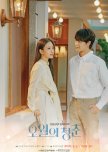
I've never resonated with anything else alike
I had watched Lee Do-Hyun in '18 Again' which drew me to 'Youth of May' and it left a deep impression on me unlike any other drama has done. The relationships between the characters and their families deeply resonated with me and left me feeling bitter sweet and happy throughout. I'm glad I had the chance to experience this story and watch as these actors and actresses poured their hearts out into the development of it. This has become a fan favorite of mine now and I look forward to what the cast will put out in the future. This will always be a production work I'll remember. As a side note I without a single regret purchased all the songs that comprise the soundtrack of 'Youth of May' on iTunes, do give them a listen.Was this review helpful to you?
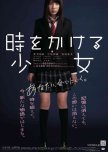
So I rated this movie so high because I really wasn't expecting to like it, but by the end I was bawling like a baby, and any film that can do that is a good one in my books.
Was this review helpful to you?
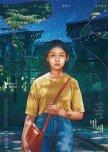
This review may contain spoilers
I'm neither a movie person nor am I experienced in writing reviews. But I got a chance to watch this movie in Seoul today with English subtitles and really came to like it a lot, so I want to give it a try while the impressions are still fresh.I went into the film not really knowing what it was about but being somewhat curious, since it's critically acclaimed and was received very positively here in Korea. It's even said that there were people who watched it over hundred times because they liked it so much!
To break it down, the film is about a young girl - Eunhee - living in Seoul in 1994, struggling with all kinds of problems that come with human relationships. She is the youngest of three, growing up in a somewhat disfunctional but probably quite typical family - fighting parents, a brother that hits her, a rebellious sister, who secretly dates and stays out the night against her parent's will. Eunhee rather draws manga than to study hard like her parents want her to, she has to confront unreliable friends and lovers, and overall is trying to find out how she is supposed to live her life, apart from the expectations that society confronts her with. The focus always stays on Eunhee. She is the person leading us through the year 1994.
The big reason I liked this movie so much is because I related deeply to the protagonist Eunhee. Of course a lot of things happen to her that I never experienced - some things are quite Korea-specific, for example. But then there also more universal struggles Eunhee has to face to which probably many young girls can relate to: the overall feeling of being a little lost, discovering the flaws and struggles of the people around her, learning to stand up for herself, trying to find people that accept and love her for who she is opposed to all the indifference and criticism that she grew up in, and of course fighting parents and annoying siblings.
One part that really hit home for me was when Eunhee one evening witnesses her the parents fighting, blaming each other for the misery of their children, with everything ending in violence and tears. Then, at the next day, she finds them both sitting in front of the TV in daylight, laughing together at the same jokes, as if never anything happened. Eunhee just looks at them, with a certain numbness in her expression.
Another thing the movie nailed was the multi-layered depiction of the characters close to Eunhee. The mother, father and brother all had scenes where they said something bad that made you hate them in this moment. But, at another point, you learn that even though they are wrong in many things, they after all care deeply about the two young girls in the family - even though they can't express it properly. It's not an excuse, they say and do things that are plain wrong, but you come to realize that they, like all of us, simply are imperfect humans, after all.
The movie was filmed beautifully, with the camera sometimes resting on a particular point, in order to really capture the atmosphere of the moment. A little artsy, but never over the top, just enough to deepen the impression. For the acting, I didn't discover any awkwardness. It was flawless for me (but I'm really no expert here).
If I had to criticize anything, it would the small plotline about Eunhees romantic relationship to another girl. The other girl was really sweet and the relationship cute, but it ends very abruptly in a way that made the audience go "Huh?" (- Eunhee: But didn't you say you like me? - Other girl: But ... that was last semester). Maybe they didn't had a better idea how to wrap this up.
The review is already long as it is, but I have to say it again. It was wonderful to have a movie with a protagonist that you can relate to. The movie industry is still heavily men-dominated (in Korea just like in the US), so they naturally like to tell stories about other fellow men. Meanwhile little girls are normally deemed not interesting enough to tell stories about them - especially not the quiet, struggling ones. Here I finally had a story in which I could discover some parts of myself in. I think this is why "House of Hummingbird" touched me so deeply.
Was this review helpful to you?
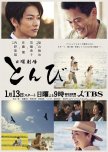
For me the story was nothing special, a single parent raising his child with the help of his friends. It's not a plot that stands out to me but boy how wrong I was! The story was emotional, sweet and touching for beginning to end as we see the characters grow and learn through the course of their life. I loved the setting and the time period of the plot as it wasn't something I had expected - covering the childhood and adulthood of Akira. It gives the chance to bond with the character as you watch him grow into an adult and in turn grow to love them. For me, the story was executed flawlessly, there weren't any plot holes and any questions were answered. It's a slow paced and a slice of life kinda drama but there is never a dull moment.
As mentioned I watched this for Sato Takeru he was brilliant throughout the whole series. He played his role perfectly as such a complex character, who had experienced many downs in his life, in such a simplistic and innocent manner can be down to the actor. The child actors that played Akira were also brilliant as it can be difficult to carry the same character through various people, but these actors made it feel like they were all the same person.
But as the story develop my focus turned to Uchino Masaaki. He was wonderful playing the "dumb" dad he portrayed his character beautifully and realistically I've never seen any of his dramas but he was incredibly in this! He made me cry, laugh, cry, laugh, crying and laughing at the same time! His acting draws you into the story and despite my bias towards Takeru, Masaaki brought this story to life. A round of applaus to the supporting cast as well because without them the series would lose it's spark. The support from his friends are enviable when watching it you think "wow, I want friends like him." The whole casting had great chemistry and bonding there isn't much more I can compliment on cause it was simply brilliant.
The music is very simple and nothing memorable but does well in emphasising the emotions of the characters.
I will definitely be rewatching this series again because it's just beautifully made and well executed. For me it's a absolute gem! The story and acting ticked all the boxes for me parenthood, friendship, loss and growth through a genuine and realistic story. The bonding between friends, father and son was exceptionally beautiful. There was never a dull moment and before you know it you've already finished it and wanting more. The story was simple and geunine along with great characters and acting this is really a must watch! It makes you appreciate the things in life you take for granted.
Was this review helpful to you?
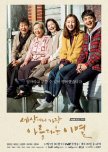
This review may contain spoilers
Very humane. Tangible. Touching, yet not maudlin. Sad, yes. But unpretentiously radiating, too.
"The Most Beautiful Goodbye" is a KDrama that consists of only 4 episodes. However, they have it all and are completely sufficient to leave their mark in the sand. We are confronted with the limits of healthcare system - when medicine no longer has a solution to offer and people are left with themselves and what they are: mortal beings. In ruthless directness, the viewers are confronted with what many people (all over the world) might at some point face in one way or another.The family here is not particularly rich and not particularly poor. The individual protagonists are not particularly successful and have not particularly failed. Everyone lives their (South Korean) life as best they can. Not very happy and not very unhappy. With a tendency not to not be so happy. But they are actually not really unhappy either. In fact, everything could be quite nice, but everyone is just too busy with themselves. The WE becomes self-evident and rather annoying... until the day the finitude of being was knocking on the door...
However, hello-wake-up does not imply everyone starts reinventing themselves, overcoming their weaknesses and becoming better people. It does, however, force them to reflect on what they have and what they have forgotten (to love) (consciously) despite everything being taken for granted. In stumbling everyone is searching for an expression of their own feelings. At least they try to be a little bit more alert about what is going on in their life.
Very humane. Tangible. Touching, yet not maudlin. Pretty close to life. People are clumsy, speechless and helpless, as akward as it gets. It is a lesson in compassion, triggering your own experiences, when it comes to similarily unprepared being confronted with any form of (unwanted as it is) final farewell.
Sad, yes. But unpretentiously radiating, too.
Was this review helpful to you?


