

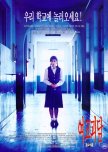
STORY OF A GHOST THAT NEVER LEAVES THE SCHOOL!
I remember watching this in my younger years n all these years, had an impression on this as a SUPER Scary Horror n so was my fav back then.SILLY ME! 🤭
(Maybe, back then it was scary to watch the physical assault/ violence towards students by teachers, mysterious deaths, Suicide / hanging etc..
hmm, all problematic issues for a young person )
Now as an adult, re-watched n I don't find it so 😂.
But Yeah, still I find the VIBE of that water dripping bgm music in the ghost haunting scenes, EERIE n is my favourite horror suspense scene bgm still ! :)
n So I say, it's a Good horror watch!
(Check out my Reviews for other movies in this Franchise :) )
****
Plot is Good.
The Twist about the ghost, that concept in the end is different.
Story of a Ghost, which never leaves the school! (Funny n Sad at the same time !!)
SAD! A Student as a Ghost forever stuck, in search of a True Friend! :(
****
The first half of the movie is a bit irritatingly SLOW Paced .
There is this feeling of unclear confusion throughout the movie.
Maybe that's bcz the flow of the story is not smooth, editing is not so good.
(For eg, Ji oh n Jae yi Looked like Rivals/strangers in their intro scene but in immediate next few scenes, looked Very close, all of a sudden!? ,
Close enough to sacrifice their lives!? :o )
But the last 30 mins n the Ending give a clear picture of everything n clears every confusion !
****
That "water droplet dripping" BGM gives the Eerie Horror Vibe
That amount of physical assault of students by teachers is unacceptable 😱
****
My Rating is 6.5 / 10.
(Actually 6 for the story, direction etc
but 0.5 included for that bgm music in horror scenes that truly created the tensed horror vibe )
Was this review helpful to you?

The movie is funny
The reason I decided to watch this is because of sort of a mislead in the cast but the i found a original reason to watch it that is the actor who really is there as the other one is not really there but there's the actress with that same name lol but the actor who makes me keep watching it till the end is Liu Rui LinWas this review helpful to you?

It’s incomplete drama because of unexpectedly incident
Love syndrome the beginning becomes full complete storyline if the director who directs this won’t die . I watch love syndrome the beginning first episode it’s not that much bad casting acting is good not bad . Also actors was handsome too. But I like old love syndrome III actors more than this actors . Legends that Olds can’t be replaced old is gold . But sadly when I hear about the actors who perform love syndrome III not perform together bl drama anymore it’s kindly sad me because one actor who perform as “it “character he lefts career as a bl . He is no longer perform as bl actor anymore. I really miss them so much because there chemistry hits different way to me .I can’t rate this that much because it’s incomplete by the way . I don’t think so it’s next part will ever come in this life my hope was 1000 % gone .
Was this review helpful to you?

✒ Time Must Start Again ⏰ °7.7° °VG °
🕰Timing in life is everything; so the adage goes. In Hong Kong, time is G💰LD. As long as you move you'll live. Once you stop you'll starve. Over 200,000 Filipinos work in Hong Kong. It's most common to have a 2-yr domestic helper contract as Filipinos are not allowed to do anything else - unless they manage to become a citizen. Therefore, when Joy loses her job because her employers can no longer pay her, she takes an illegal waitressing job. The cops, inevitably, will come by to check IDs. When Joy sees them, she busts a move and runs. She ends up running right into the handsome bartender and 😙busts another move. She uses him as camouflage to hide from the po-po. Cops rarely bother a couple snogging in the alleyway, afterall. It's done so often in movies you might think that they would start checking, even if a duo is rounding first and headed for second, but it always seems to work.The Filipino community in Hong Kong is small. Everyone is within 1° of separation, but it's large enough to support a Filipino radio station. (They have a nifty microeconomic system in place as well.) Joy thinks she got away scott-free only to wake up the next morning to a radio announcement about her! Ethan, the bartender, is looking for Joy so that she can return the kiss that she stole from him! Joy's friends go insane.
HLG is about what decent, but poor, people must do to survive: It is all about hard choices. It is also about the nature of love. Joy & Ethan. Ethan + Joy. She resists him, but she can't for long. The problem is that she's leaving. She's definitely leaving. She has a nursing degree that she can't use in Hong Kong. She's going to be a nurse in Canada. That's her dream, and n🅾thing's going to change her mind. N🅾t a thing/budkis/pist🅾🅾za/larkaflark/nuffink/jack squat/NATTY. Joy is no wimp. She has a will of iron. She warns Ethan to not get attached. Yet they allow themselves to fall in love. Every day they push the knife in a little deeper.
Their story is sweet and these protags are likable. He says he can handle it and he won't get in her way, but as that 🕰 approaches the pressure ratchets up. Because, ‘when you love, it's all or nothing. If you hold back, then why love it all?’ Ethan has a point. ‘There are questions inside of me that only I can answer,’ Joy insists. Joy has goals, a mission, and an ironclad agenda. She will not be swayed. Not now.
L💘VE. What does it look like? To Ethan it's: “If you loved me enough you would stay.” ♻ To Joy it's: “If you loved me enough you would want me to go.” Later, Joy asks the universe: “When a woman gives too much of herself, she's stupid, but when she prioritizes herself, she's bad. Where do we need to place ourselves? Is love only expressed through sacrifice?” Why so often, indeed, does every option, for women especially, seem irreconcilable? Love can teeter from selfish to selfless. Perhaps love always starts down in the selfish zone, but the more we sincerely love someone, the more selfless we should become. Leaving the shallow end and diving down deeper should elevate our love higher. If not, we must question how much in 💓 we are or how selfish we actually are. A young person should never be expected to throw away h/h future for a relationship, particularly a relatively new one. Talk about creating a debt for regret - No sane person would endorse that. Joy agonizes over this unexpected timeout from the race she's been running. Either option is valid. Her choice is hers alone. HLG tells young girls that their personal development and future is every bit as important as love.
Befitting a modest budget, most of the filming is on the street or in contained spaces. There's a couple of wow shots. They take a day off to go up into the mountains. On a cliff looking down on the city, the buildings are uniformly white. While they look like bad dental work there's also an ethereal beauty to the vista. The effect is otherworldly.
HLG is a 118 minute, 2019 release that is rated 8.2 on MDL. Overall, this is a well put together production. The writing, directing and acting all blend to make a great product with few flaws. This is a 🇵🇭Filipino production and I am looking forward to seeing more of their works. I've seen 2 🇭🇰Hong Kong productions, The Defected-8.2 and Hong Kong West Side Stories(7.5). Both of them are good but also dark, edgy, sad, and a display of the worst elements of humanity. The group that is the most downtrodden in Hong Kong seems to have a brighter outlook. Between the 3 productions, one wouldn't think it's the same place. HLG is well worth the time to get a peek at life in Hong Kong from the view of the hard working, overlooked Filipino community. We🇺🇲 have alot to be thankful for.
QUOTE📢
Choice is only for the rich.
〰🖍 IMHO
📣78 📝72 🎭79 💓70 🦋67 🌞71 🎨70 ⚡30 🎵/🔊78 😅23 😭47 😱30 😯49 😖20 🤔45 💤0 🔚70
Age 12+ Adult situations kissing - mild. Rated PG: Parental Guidance Suggested
Re-📺? Not opposed
In order of ~lite & trite~ to ~heavy & serious~ you may also like:
Historical/Period:
Overlord 8.4,
The Sleepless Princess 9.1 (there's a minor fantasy element),
The Romance of Tiger and Rose 9.8,
Under the Power 8.6,
The Rebel Princess 9.1,
The Sword and the Brocade 8.6 (in the style of ancient Chinese opera),
Ruyi's Royal love in the palace (episodes 1 - 49 are a 9.3. While looking up it's historical accuracy, I learned how heartbreaking the rest of the show is. It's over 80 episodes, so that's a hella-lotta hurt. I am not up for it now, so I stopped at episode 49, which is a perfect ending. I cannot recommend episodes 1 - 49 enough. It's near perfect).
K:
My Only Love Song 8.7 excellent comedy;
Mr. Queen 8.5;
My Sassy Girl / Yeopgijeogin Geunyeo 8.5;
The Kings's Affection 8.3;
Mr. Sunshine 9
Fantasy - Heavenly realm:
Love Between Fairy & Devil 8.9;
Once upon a time in Linglian Mountain 7.5;
Douluo Continent 9.4;
Handsome siblings 8.7;
Heavenly Sword 9 (Kung-fu!);
Ancient Love Poetry 8.6;
Eternal love 8.3 + its sequel Eternal Love Of dream/Three Lives, Three Worlds, 10 Miles Of Peach Blossoms 7.7 (I watched these in the wrong order, which was a shame. EL is not without flaws, the FL being the biggest issue, but overall it's outstanding. The sequel was not originally planned. EL actually tells the same story as ELOD as a secondary romance, and the show was so popular that they did the sequel and changed quite a bit).
Love and Redemption 10
China excels at period and fantasy pieces. There's no Action or Modern Day Chinese features for me to recommend. There are a few that I've enjoyed, but they pale when compared to Korean shows, some of which are listed here.
K Modern Day romance:
A Witch's Love 7.8;
love To Hate You 8.9;
Touch your heart 8.2;
Crash Landing On You 9.1;
Oh My Ghost 10;
It's okay not to be okay 9;
Hospital Playlist 9;
My Mister 9.5;
K Action:
K2 8;
Private Lives 8.1;
Sisyphus 8;
Tunnel 8.1;
Signal 8.6;
Black 9;
Squid Game 8.4;
Kingdom 8.3;
Sweet Home 8.4
Originally 〰️🖊 May 2024
Was this review helpful to you?
This review may contain spoilers
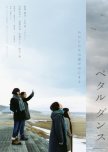
A haunting film that needs contemplation
This film is probably more so in the category of Art House. It's message and themes maybe up to debate and won't be for everyone. Many of the central questions asked in the film don't really get answered. It is more up to interpretation by the audience.The setup for the movie is a little strange, A girl who lost her purpose offers to drive two unknown woman to see a friend who may or may not have attempted suicide. That is the question they are trying to answer by this road trip. The quiet and longing looks of the characters are the main plot of this movie. The dialogue is very carefully chosen. It seems deliberate with how slow the pacing is to let the actors body language do most of the talking. This is a special side of Aoi I haven't seen in any of her movies. This sense of melancholy and grief but also subtle gentleness. It's something mesmerizing. Ando's character felt like grounding while Kutsuna's actor felt like an observer. When they finally reach Miki, we see a really interesting sense of dread and regret without going melodramatic.
When the film began, I thought it was going to be about Haraki finding herself on a journey with new friends. But it turned into so much more. It was almost like a story about reconciliation and loss re-contextualized into a vehicle for growth and truth. The movie doesn't hard line examine these feelings really but it's up to the viewer to find meaning and this is what I found.
The movie's scenes are gorgeously shot. The car ride scenes emphasized the closed and withdrawn emotions with the sea scenes acting as a cathartic release of all their pent up emotions. The symphonic music that Yoko Kanno created for the film only enhances the feeling.
Honestly the film is slow paced burn and it might not leave you happy or sad in the end. It just holds a very special atmosphere that isn't like many movies.
Was this review helpful to you?

This review may contain spoilers
A subject that should be understood by all
When we initially get a glimpse into the lives of Haruko and Mikio, all seems well.. but then the cracks start to form. This is a perfect visual of what depression is. What we do and see on the surface is not always what we are screaming on the inside.The very realistic depiction of depression in this movie is fantastic. Mikio suffers daily and consistently but without knowing why. He has a good wife and mundane job that slowly is eating away at him. The catalyst can be said to be the stress of work, but the movie immediately dispels this. Which is what is special about this movie. It seems the writers really understood the many things that break a person. In Japan's society depression and suicide are really pressing matters. The society tends to focus on the group good rather then the individual's needs in Japan and things like depression are known well but stigmatized.
We see this in how others tend to brush off his depression in the movie and think he's just being lazy.
Haruko's constant struggle to make her husband feel better is heartfelt and realistic. When we go through all the stages of support and love, we get a clear image of how much she cares for her husband. Mikio's actor Sasaki plays his role with such conviction. There was a real sense of emptiness in a few scenes and a real sincerity to how he approached the feeling of depression. Both of them worked so well together in all their scenes. I enjoyed the small moments of their relationship like the cooking, sleeping or caring for animals. It added a lot to their relationship. The church scene was beautiful. The side characters also allowed for growth with the interactions they had so it was overall a good cast.
The music played it's part well. The piano and violins added much feeling to the scenes. There was a sense of loss and defeat in all the little music segments.
The movie ended off on a really fantastic note. It's not always perfect but neither is life.
Was this review helpful to you?
This review may contain spoilers
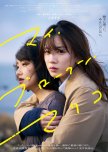
A great movie but not a 1 to 1 adaptation.
My Broken Mariko as a manga is heartbreaking and hits a chord about strained relationships, love, loss and guilt. The movie adaptation follows through but loses some of it's balance that the manga had.One stark difference is the Character of Shiino. In the manga she's much more animated and hot headed. In the movie she's more down to earth and more appropriately human. This change is good for the movie as it makes her grief aspect stronger. It does change the overall tone of the original work but the more grief driven Shiino was probably a better choice for the subject matter. Speaking of which, this movie delves heavily into the subject of self harm,suicide, rape and abuse. It may trigger a few people because of this. This is why I think the tone is more cohesive in the movie. The manga uses humor to help soften the blow before these harsh scenes. I think that's why there might be a little unhappiness with the adaptation for some.
Despite that however Mei Is basically soloing this entire move on her own. I think she carries the devastating emotion so well. Her facial expressions and tightness in body language really help sell Shiino. When she does need a few good yells it comes across well. The bar scene was not as good as the manga as I pictured it more combative but in context to the movie it was fine. Mei had some of her best scenes here with her emotional outbursts. Mariko's actor shows off a hauntingly childlike demeanor which was pitch perfect. As the two leads, they felt natural and fully realized.
A bunch of the scenes were also 1 to 1 of the manga panels which was admirable. I liked the placement of the additional extra in the movie. The feeling of loss was present through many of the scenes framing and lighting. The climax of the movie was well executed. They picked a beautiful space to recreate the scene. Kudos to the person who found the spot.
So while this wasn't a 1 to 1 adaptation it was really well done and great just as a standalone movie.
Was this review helpful to you?

This review may contain spoilers
How would you spend your last days?
I will say you will need a few tissues for this movie. There's so much heartbreak and loss. I felt like they really piled it on in this movie lol. But it was worth the ugly crying.The main story follows a scenario in which you are allowed to live but in order to do so, you lose something forever. It's a really smart plot device that even though it's implications are vastly underscored, it proves a point. The smallest things we take for granted are more important then you realize. We spend the entirety of the movie examining the impact every decision we make has on our lives. That is the important message of this movie. We never really know when it's our time and we never really see sometimes what lead us to that point.
The acting by Takeru is believable and sound. I don't think I really enjoyed his devil persona take. But that's just me. His father and mother are aptly acted and put real emotion into our hearts. The father character is one of those strong characters that didn't have a lot of screen time but you understood his purpose well. It put into perspective strained relationships with family in a nuanced way. Especially with the final scene being so perfectly executed. Having Aoi as a support character is never a bad thing either in these types of movies. I really enjoyed her scene at the waterfalls with her. Tatsuya's scene in the movie rental store was god damn heartbreaking.
The Cinematography is great. There were beautiful consecutive shots and a little humor in between which was great. The shots in the other country were dreamlike and captured that feel of escapism well. There is also fantastic rain scenes in this movie. The mesmerizing piano and organ that plays throughout helped pull the movie together. It was a good use of reoccurring theme to help the main MC's feelings get realized.
The end theme is simply haunting. I think this movie is one that should be watched by many.
Was this review helpful to you?

This review may contain spoilers
A surprisingly strong story
I can't believe I didn't have faith in this movie. I just clicked because of the gyaru. But my my this movie is more then surface level. It's shows a brilliant understanding of the worth of people. The fact that this was based on a true story is even more impressive.Sayaka is infectious and you cannot help root for her. Ito sensei was a perfect example of a teacher doing right by his students. Sayaka's mother also played such a great emotional anchor to her daughter. I really enjoyed the interactions she had with Sayaka. The acting by Yoshida was top notch. All the emotional encouragements and words of strength really made her character believable and real. The father and son relationship was hard to watch but sometimes it felt a little over the top despite it's seriousness. I also think it was fantastic the male lead also didn't turn into a straight romantic relationship. It could of easily fallen into that trap. I think the overall cast was fantastic but Kasumi though man, this movie made me want to get up and do something about my life. So many moments were warm and genuinely heartfelt. One scene that still stays with me is the onsen scene with her friends.
That is what is the most important message in this movie. And it doesn't just start with work hard and you will get everything you ever wanted. The movie repeatedly beats down Sayaka and it makes her journey so strong. I felt strongly rooting for her and felt all the losses. I think this plot is surprisingly realistic in that they depict having to continue working hard to get somewhere. It doesn't just happen. You need to actively participate all the time in order to get something out of life. But in order to do so, you need support. It can't all be done alone and I loved that movie showed this strongly.
The cinematography especially during moments of Sayaka's studying and heartbreak were gut wrenching. It was really engaging with uses of wide shots and beautiful lighting. Music was also really great. The piano and cellos played with your heart.
So watch this movie and trust me you will feel something special.
Was this review helpful to you?
This review may contain spoilers
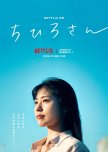
How do we move on?
Call me Chihiro is a interesting little bit of drama. On the surface it seems to be like a perfectly balanced glass full of water. Everything is fine and everyone seems to be just getting on. But what if we add a few more drops to that glass? Will it spill out ? or will it maintain it's level and not spill. This is how I like to think of this plot.The main plot of Chihiro deals with a young lady expertly played by Kasumi Arimura. Chihiro seemingly moves aimlessly through life in order to keep her self busy. On the opposite end we have Okaji who is quietly suffering inside because she is undoubtedly being suppressed by her family. Then we have Makoto, a young boy who is basically raising himself. I loved the chemistry between these 3 and how they helped each other grow by realizing different parts of their lives they had not yet experienced. Chihiro's warmth and spirit are the star here, helping everyone to grow and become better despite her own failures. I loved all the little character moments littered throughout the movie. All the background characters had profound effects on how Chihiro sees herself and it touched me.Her interactions with Tae are also some of the best character moments in the movie in my personal opinion. There's a scene towards the end that isn't even sad but it made me tear up because it contained so much warmth.
The cinematography in this movie is phenomenal. There's a few shots that capture that unique melancholic feel of being lost in your own thoughts and feelings and I think that it played a big part in the enjoyment of this movie. The music is beautiful and uplifting as well.
The ending might not be for everyone but if you understand Chihiro as a character it will make perfect sense. I liked how the ending was up to interpretation. The movie will feel different depending on how much hardship you lived in your life and I think it's ok if you don't feel strongly about this movie. But it's worth watching for some pure humanity.
I hope you find someone in your life to give an acorn to.
Was this review helpful to you?

This review may contain spoilers
Beauty in the mundane
I really enjoyed this movie. Will it be for everyone? No. What I can say is this movie is special in that it invokes feelings of distant memories that don't necessarily have to relate to this movie. I think that's the power of this movie.Koreeda Hirokazu is a master when it comes to catching the beauty of the everyday. I loved so many shots in this movie. There were so many well thought out scenes as if we were reliving someone else's memories. I love this approach to slice of life movies. There was a certain tenderness to every scene and it really made me appreciate the movie's flow. Everyone's interactions felt lived in and real. The world building also made everything feel that much more real. It helps to really anchor the story they had going.
The leads were all fantastic particularly Sachi and Suzu's actors being mirrors of each other. I thought the performances were well thought out and even though some scenes felt like they didn't really add anything, these scenes were important in establishing the overall thematics of this movie. Suzu having to readjust to a new world with support from people who she never knew is a really interesting dynamic. The 3 sisters take on motherly roles each exploring different facets of life for Suzu and it was a interesting way of doing this. The plot also being about all their various lives with no real stakes was so refreshing. Even the main drama in the movie isn't that big of a deal in the movie.
The music is also beautiful and serene. Lots of beautiful flutes and pianos all over. The music is also quite sparingly used.
I felt like by the end of the movie I just wanted more and would of sat through like 5 hours of this. I love the way this film makes you feel.
Was this review helpful to you?
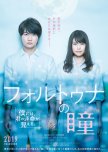
This review may contain spoilers
Is fate changeable?
The initial premise of this movie is a little out there, but it focuses on interesting topics. Topics such as Survivor guilt, life choices and living with purpose are all explored in the plot of this movie.The way they weave together guilt and life purpose is mainly well done. The main character shin has a hard time deciding whether it was correct for him to be alive after a major accident. I liked that the movie used trauma in this way. For some of us we sometimes lack direction in our life, but Shin's had an extra layer of guilt for not moving forward because he didn't understand why he can. I think this allowed for some really good story beats in the movie. Aoi's character doesn't quite click until the end but you understand that she was a catalyst in the movie for change. They had semi decent chemistry in the movie and it did thankfully allow the ending to be good.
I must mention there was a little bit of dialogue concerning future couple plans that I found refreshing as it was not one sided in terms of "we must do this" There was collaboration in the chat and as a movie centered around a healthy relationship, that was something that caught my eye. In most Japanese movies there's always that expectation of steps taken in a relationship and this was a nice change from that.
I do think the ending was dragged a bit too long. There were multiple end points and that hurt the finish of this movie. It's always a gamble doing this type of ending were there was something we may have picked up on all along. When it's done correctly it's cathartic. In this instance it was a little too much and needed a edit down.
Music wise the film had a nice docile score. There's a sweet One Ok rock insert song that wasn't too distracting, although it's a little too simplistic compared to their other hits.
Cinematography was smooth and had a few nice scenic shots. Nothing too eye catching. The ending sequences were well shot and well planned ahead of time. The visual of disappearing bodies was done well too.
Was this review helpful to you?

This review may contain spoilers
Reassuring watch if you're in love with someone who doesn't love you back
Complete transparency: I didn't finish this movie. The characters/dynamics seemed genuinely interesting in the beginning, with a lot of room for development and growth which this film fails terrifically at. Genuinely surprised that they have them get together in the end, even though I know this isn't an uncommon plot for jdramas. The male lead could have had some level of complexity/substance if they didn't end up together, and because they do, he becomes a very vapid and heartless character when it begins to dawn on you. Some really boring choices are made with the plot unfortunately, and I don't tend to fall prey to 2nd lead syndrome. The only moral of this movie is keep loving people who don't love you because they MIGHT love you back one day. The female lead starts out very shallow and doesn't have an ounce of growth throughout the entire movie because it never actually challenges her. It's mostly so disappointing because she is such a fun character and is brought so much life by her actress, that you really end up wanting her to respect herself more and develop outside of the boy she's spent possibly half of her whole life chasing. I did like the visuals, it's a pretty movie with charmingly tacky vfx. Loved her nails every time I saw them but hate every single hat in this movie. First 40 minutes is fun and overall a fine watch if you are looking for a bland, slow and substanceless movie beyond that mark. Great background movie perhaps...Was this review helpful to you?
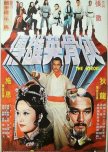
"Even the sun sets at the end of the day"
The Heroes starred Ti Lung, Michael Chan, and Dorian “Flashlegs” Tan. The Shaolin Temple had once again been burned to the ground with Marshal Gao rounding up the kung fu practicing monks and throwing them in prison. All seemed lost yet everything was not as it seemed.Marshal Gao under the orders of the emperor and Governor Pei Le arrests his former Shaolin brothers and burns the temple. He convinces Pei to let him “torture” the monks so that he can turn them to working for the Qing army. Pei’s henchmen don’t trust him and are always looking for ways to test him.
Ti Lung played the conflicted Gao who worked tirelessly to protect his former brothers and strengthen their training by “torturing” them. The only problem for him was that the Shaolin monks didn’t know what he was up to and loathed him. Ti did a good job of showing Gao's pain at hurting the people he cared about when he wasn’t gloating in public at their humiliation. This was definitely his movie and he carried it well. Michael Chan was always a good foil for Ti. Their fight was the highlight of the film. Despite often being chained, Dorian Tan was able to show off his fancy kicks in several fights. Director Wu Ma played the emotionally volatile Shaolin cook, Wu Shun. Tsai Hung had one of the bigger roles I’ve seen him in as the frequent target among the captured disciples. Shih Szu had a few nice scenes with Ti, as the person who saw through his bravado to the pain beneath. The Heroes had more story to it and emotional depth than the standard low budget Taiwanese flick which was a pleasant surprise.
The fights varied in quality. Robert Tai’s choreography bordered on kung fu posing, but was upgraded to kung fu dancing for the most part. Dorian flashed his kicks when given the opportunity. This time his handsome face was covered in dirt and straggling hair. Ti Lung and Michael Chan always had an entertaining fight chemistry, even when it wasn’t lightning fast.
Though filmed in Taiwan, The Heroes looked like it had a higher budget than usual. Many Taiwanese kung fu flicks were filmed in the woods and on other low budget sets. This film had proper sets though not of the Shaw Brothers quality. The story was a familiar retread of the fate of the Shaolin monks from the temple and the rebels during this time period. The film veered off from the familiar though by focusing on the imprisoned monks and Gao’s secret heroic acts. The question frequently asked was, “What is a hero?” Sometimes the only one who knew was the last person people would think it was. Though deeper than other martial arts films from this era, it would still only be for fans of the genre. Rated on a curve as usual.
4 March 2025
Was this review helpful to you?
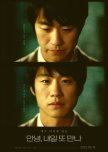
An evocative study of individuality and amendment of loss through a queer lens
Pensively crafted and heartbreakingly depthful, "So Long, See You Tomorrow" offers a devastatingly honest reflection on reconciliation, identity and self-acceptance. The cinematography used to capture its interpretative scenes frames the depths of regret, offering an exposition of adulthood and looking back on everything that slips through our fingers. With numerous references to modern-day art, it draws inspiration from significant works in the literary world—notably "So Long, See You Tomorrow" by William Maxwell, "Giovanni’s Room" by James Baldwin, and "When I Think About Myself" by Maya Angelou. It recycles familiar themes that encircle human life, presenting them with a sci-fiesque touch that brings a sense of peculiarity and deep introspection to the ordinary life of the man explored.The movie adapts a melancholic vibe from the start, presenting the main character’s teenage years through a gloomy atmosphere and embracing them with a nostalgic touch. Stained by the sorrow of tragic events, he is introduced in a way that evokes heartache and sympathy from viewers—he suffers from bullying, loses his Mom, and has a severed relationship with his Father. In a world of grays and sombre colours, the only rays of light that bathe his days in warmth come from the comfort his best friend provides him amidst his struggles. Rebellious and hopeful, Kang Hyun’s words show great contrast to Dong Joon’s, who longs to step out of his comfort zone and self-improve.
Kang Hyun’s goal to live as if always walking on a tightrope on the edge of life without fear of falling suggests a certain desire for recklessness and risk-taking. The hopefulness he emits embed their shared scenes with an optimistic feeling. "I like the idea of parallel universes. It feels dangerous somehow…like the man in the rope photo…" While it may seem as though Kang Hyun is more grounded because Dong Joon is the one who dreams of parallel universes, both are just as unhappy with their lives and have greatly flawed mindsets that bind them to future suffering. His friend is the one who ends up suffering the first great fall because of the amount of hope he had in the world that so quickly let him down. When combined with the rebellious outlook he adopted in a life where he vowed to always "live on the edge," this disillusionment he created quickly broke and fell to pieces. The delicate cinematography foreshadows this downfall of his through a particular scene; a tribute to the importancy that the camera holds on the frames where it chooses to linger.
The start of the movie, where the main character’s teenage years are showcased, branches off into multiple versions, starring him 20 years later in three parallel timelines. The film cleverly differentiates them from each other by changing the setting—from Daegu to Seoul, and lastly Busan. In each timeline, he meets new people who help him reflect on himself through different circumstances and makes realizations that contribute to his journey of affirming his identity while coming to terms with past regrets. Rather than the hardships he faces—whether it be past or present—what changes is his perspective and the way he goes about his life. Each version is built upon his younger self, with each experiencing the loss of touch with a friend due to not going after him. And yet, they all result in such different outcomes depending on his mindset and how he chooses to perceive his past and his own self.
In the first, Dong Joon is consumed by regret, marinating in it. His situation is devoid of hope; he is at a low he believes is the lowest. He mentally isolates himself from the rest of the world, shielding away from all means of contact that would reveal his true self, letting his fear of vulnerability deprive him of happiness. With an addiction to drinking, he is slowly rotting away, and his mental state reflects the deteriorating soul of a person suffocating from depression. He experiences no joy and has a distant look in his eyes, only bathing in old memories. The scenes that follow his uncertain entrance into Giovanni's gay bar—where he claims to have accidentally wandered in when questioned—showcase his efforts in hiding his sexuality. Through his eventual meetup with the online date he was supposed to meet there, viewers are shown the angry and untrusting side of him. His fury in becoming vulnerable and falling for what he perceived as a cruel trick disguised as love in the context of his failed meet-up mirrors the inner turmoil he has regarding his one-sided feelings for his first love.
In opposition to the first arc, the second presents a version of Dong Joon who looks ahead and focuses on his future rather than looking back, staying trapped in the past. Dealing with themes of self-awareness, it uses Maya Angelous’ poem "When I Think About Myself" to convey its message across. This piece of writing uses irony to cover various themes, such as self-awareness and the use of laughter as a way of covering deeper struggles. "I almost laugh myself to death. My life has been one great big joke. A dance that's walked, a song that's spoke. I laugh so hard I almost choke when I think about myself," is the passage most relevant to the film. Its author focuses on juxtaposition between what is expressed and innerly felt, using laughter to mask the pain—mirroring Dong Joon’s avoidance of his past. Unlike the first and last arc, there are no flashbacks to his past or his first love.
Confident, outgoing, social, more accepting of his queerness, and having been on the exchange trip he regretted not taking in the precedent arc, he may come off as more happy. However, the reality is that he is shielding his past away as if forgetting it. In fact, the only time we see a scene from his younger self with his past lover is at the very end, when transitioning into the final arc, but his past trauma is otherwise completely ignored. He has equally completely given up on the idea of parallel timelines, no longer wishing something magical would happen that would make him be him in another world. A strong clip to show this aversion to magic would be when he gets upset when David Copperfield is mentioned among his group and he strictly says that he wasn’t referring to the magician, but instead the one who is the protagonist of "David Copperfield", a novel about the every-day life of an orphan in the late eighteen-hundreds written by Charles Dickens.
In contrast to the first arc, where he attempts to detach himself from his true self using the idea of parallel universes, he is introduced to this concept much differently in the second. Instead of searching to become a different person himself, he bears witness to all the possibilities his life holds, manifesting themselves through those around him. For instance, the tables are turned: instead of being the one who wishes to have studied abroad like in the first, he now meets someone who boasts to him about how lucky he was to have had that experience. In a way, conversing with this particular student was as if he were talking to himself from the first arc—he has a daughter with the same name as Dong Joon’s niece in the precedent arc but struggles to find time to spend with her, just as he did, and he has also someone he's thankful but also sorry for, telling Dong Joon the following; "If I meet her again, i'd like to thank her instead of apologizing. You've once met someone like that too, right? Someone that you’re thankful for, but sorry to…"
The last arc explores the theme of acceptance—acceptance of the present day through Dong Joon’s son, and of the past through his first love. Viewers see him acknowledge his pain and come to terms with his regret. While he used to always wish he had stepped out of his comfort zone, the third arc sees him make the realization that balance is what’s most important. He shows his commitment to becoming an improved version of himself through his devotion to being a better father for his child, visiting his son in prison. This draws parallels to his past lover, whom he had last seen getting taken away by a police car, and who he regretted never making the effort of going after—even if they weren’t taken away for the same reason, they found themselves in similar circumstances. In fact, he reminisced about his past lover on his way to the police station. When he spoke to his son, insisting "it wasn’t a mistake," as if also referring to his love for his friend, his son told him he wanted to write about their father-son relationship.
The scene then cuts to Dong Joon visiting Kang Hyun, now older, who had written about their lost friendship after being inspired by "So Long, See You Tomorrow," a book that tells the story of two friends who could never reunite after having been abruptly separated when one shunned the other. Dong Joon meets Kang Hyun during his presentation of his book "Every Maybe is Pain," suggesting it is inspired by their story—just like how every "maybe" in his life is due to that regretful incident where he never made the effort to stay by Kang Hyun’s side. Instead of doing nothing but bathe in his memories as he does in the first arc, or choosing to completely ignore them in the second, he remembers a certain moment in the third—the most powerful one of all: their first kiss, which was the most painful as it was his happiest moment.
Both polar opposites, neither of the first two versions of himself achieved their happy ending on their own. In the third arc, Dong Joon comes to the realization that one must find a balance between all facets of oneself to avoid falling. Only after reaching this conclusion did he see both of his other selves from the previous arcs smile. "When I couldn’t hold it in anymore, I went up to a high place. I rebelled like he did—I rebelled against the tedium of daily life as if walking on a tightrope. (But) you’re going to fall, Dong-Joon. No. I just need to balance myself once, and I’ll be safe forever…" When they were young, people only regarded Kang Hyun’s mindset of living life as if always on a tightrope—inspired by how Philipe Petit achieved his dream of walking on a tightrope between the Twin Towers—as something that symbolized living on edge without fear. Once Dong Joon grew older, he realized the most important message underscored in this act: it was the balance that made Philippe Petit become that best version of himself and achieve his dream.
In the end, each version adapts through what he learned, and they come together to create one facet. He decides that he likes the idea of parallel universes and other timelines existing because he enjoys thinking that, in each one of them, there is another good teacher and father like him, going about his day and taking care of his son and students. He writes to his dad the following: "Think about it. It'll make you feel good." He no longer perceives this concept as a form of escapism as he did in the first arc, nor doesn’t he completely ignore the idea of parallel universes like in the second. Instead, he now uses it to reinforce his confidence and express his love and confidence in himself. No matter the outcome, he always had the same core memories and was put in the same position—all that changed was the outlook he had and how he chose to face life’s hurdles. With powerful acting performance, intricately woven storylines, and serene music, the movie conveys its message with great impact. If one is unhappy with oneself, they should strive to change the way they live and focus on what they do have control over.
The story ends beautifully, with Dong Joon returning to the childhood moment that started it all. However, he runs back as an adult, carrying the realizations and the acceptance that he likes him and wants to follow him. Their meeting, after he reaches the police car, shifts to them as adults—Dong Joon having gone after him with his new lessons learned. It is revealed that Kang Hyun had assured Dong Joon he would see him tomorrow before his eventual departure abroad, showing that both are to blame for their painful parting. A decade later, once they have both read the book "So Long, See You Tomorrow" in the time it took them to process and accept their separation, they reunite. Seeing each other again was like the day’s sun after a long and dark night, both matured and having found their own selves first. Even though it took time, it was the tomorrow they had promised to spend together. "It was as if we just bid each other farewell last night." In each arc; there was unavoidable pain faced by Dong Joon: his mother and his sister’s death. Despite their heartbreaking departure, the one person he felt truly stayed with him, when he felt everyone was abandoning him, was his first love, who shaped him into who he was and whose memory never left his side whether it be through smiles or tears. "No matter the parallel universe, he’d always be there. He is my universe."
2025-03-04
Was this review helpful to you?


