

Once that detail was in my mind, everything that followed felt predictable. I could already guess where the story was heading, and because of that, I wasn’t able to fully enjoy the film. The tension just wasn’t there anymore.
It’s one of those movies where missing that hidden clue probably makes a big difference but since I noticed it, the experience lost its impact for me.
Was this review helpful to you?
A journey of madness to find the truth
Bluebeard was a very pleasant surprise. Without a doubt, it’s a well-developed movie, and cinematography-wise, its pacing reminded me of old-school thrillers in the best way.The story easily pulls you in and presents events so convincingly that you never question the truth being shown. Everything feels solid and believableuntil the film suddenly pauses near the end, and the gaps start to fill with a new reality that completely turns the story upside down. What once felt certain becomes confusing, and doubt slowly creeps in.
It almost made me resist accepting the truth. But just when it seems like all the puzzle pieces finally fall into place, the real truth unfolds right before your eyes.
And that final reveal? Absolutely chilling.
Was this review helpful to you?
Too crowded
The Thieves feels like a Korean take on the Ocean’s series. If I’m being honest, the plot is very messy and doesn’t allow for good storytelling. Many scenes seem designed only to showcase the cast rather than move the story forward.Sometimes having a huge, star-studded cast doesn’t guarantee success, and this movie proves that. I found it chaotic and hard to follow, and it often felt like a collection of famous actors sharing the screen instead of a cohesive story.
Individually, the actors are unbelievably talented, and they’re honestly the only reason I gave this movie a 6/10. But even their performances can’t fully save it. The poor execution and weak plot drag everything down.
In the end, despite the strong cast, I don’t think this movie is really worth watching.
Was this review helpful to you?
This review may contain spoilers
Not what you expected
This was a really sad movie—but it also made me say the biggest “woahhhh” ever. If you go into this film without reading the plot, that will probably be your exact reaction too. Because of that, I won’t say much about the story at first. I’ll just say this: it’s a good movie, very unexpected. I thought it would be uncomfortable to watch, but instead it was much sadder and more emotional than I imagined.I’d definitely recommend watching it if you’re curious. And if you want to know more details, you can keep reading.
*Spoilers below*
The story follows an unemployed art school graduate who unexpectedly finds work as a maker of sex dolls. He actually majored in sculpture, which makes the job feel less random than it first sounds. Under the guidance of his mentor, Kinji, he helps mold flesh that can produce tactile sensation. Kinji suggests using a human cast to improve realism, and they advertise for a model under the excuse of creating breast prosthetics for “medical purposes.”
That’s how he meets Sonoko.
What surprised me most is how their interactions are completely devoid of lust. Instead, their sessions are filled with awkward sweetness, almost like shy teenage romance. Eventually, the two get married, and the movie shifts its focus to their married life. We watch as Tetsuo works late into the night, pouring all his energy into creating happiness for others, while slowly neglecting his own wife and marriage.
A large part of the film reflects on harsh aspects of Japanese work culturehow the excitement of marriage slowly fades into routine, and how couples can start to feel more like roommates than partners. The warmth that once existed is gradually replaced by distance and silence.
One thing I really appreciated is how the movie approaches the topic of sex dolls. Instead of portraying it in a lustful or provocative way, it focuses on the technical and artistic process behind their creation. Learning about the craftsmanship and production was genuinely interesting and completely unexpected.
The contrast is what really stayed with me: the cold, strange machinery and rubbery mannequins set against a story filled with quiet sadness and very human warmth. It’s an unusual topic, but the emotions are deeply relatable.
This movie surprised me in the best way—and emotionally wrecked me more than I expected.
Was this review helpful to you?
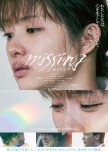
This review may contain spoilers
Contains Spoilers
Missing is a Japanese film about a six-year-old girl, Miu, who disappears while walking back home. What makes this movie stand out immediately is where it chooses to begin. Instead of focusing on the kidnapping itself, the story starts three months after Miu has already gone missing. By then, the shock has settled, routines have returned, and the tragedy has become something the family is forced to live with every day.
The film gives us a perspective we don’t often see in kidnapping stories. Rather than dramatizing the moment of loss, it throws us into the quiet aftermathwhen the case is no longer breaking news, when hope and despair coexist, and when grief becomes almost chronic. Life continues for the world, but not for the people directly involved.
We are shown multiple perspectives, and they depict human emotions in an incredibly honest and uncomfortable way.
Miu’s mother, Saori, is portrayed as emotionally unstable and deeply desperate to find her child. She is consumed by guilt for letting Miu walk home alone that day so she could attend a concert by her favorite boy band. That guilt follows her everywhere, amplified by cruel and malicious online comments that constantly remind her of her “mistake.”
Saori is a fascinating and painful character to watch. She moves through layers of emotiondesperation, hope, anger, resentment, guiltand sometimes she appears almost “crazy.” But the film makes it clear that this is not madness; it’s grief in its rawest form. She struggles to understand why others, especially her husband, don’t grieve the way she does. She is willing to do anything, push anyone, endure anything for Miu’s sake, and she can’t accept that others cope differently. At the same time, there’s a part of her that wants someone especially her husband to blame her, because blame might give her something solid to hold onto. She never rests. Every second is torture. Through Saori, the film shows us the overwhelming and conflicting emotions a mother lives with in a situation like this.
Miu's father, Yutaka, is a more passive figure, contrasting with Saori's frantic efforts on behalf of Miu. He struggles to express his desperation, illustrating another aspect of grief that the film aims to convey the internal suffering that can be difficult to articulate, rather than outward expressions like shouting or crying.
Alongside the parents, we follow Sunada, the reporter covering the case. He faces pressure from the TV network to sensationalize the story, to “add spice,” but with no leads and no progress, there is very little he can do. Sunada wants to believe he has integrity, that he is showing reality rather than chasing ratings. Yet he is also fighting an internal battle—watching younger colleagues rise in their careers by bending the truth, while he remains stuck.
What makes his character compelling is that the movie doesn’t paint him as purely right or wrong. While he claims he wants to help the family, we slowly realize that part of him is also trying to help himself. He pushes the parents at times, crossing emotional boundaries, and eventually he is forced to confront the uncomfortable truth that maybe he was lying to himself about his intentions all along.
The story also introduces a possible suspect: Keigo, Miu’s uncle and Saori’s brother, who was the last person to see Miu and allowed her to walk home alone. Everything initially points toward him, making him one of the most intriguing characters in the film. Layer by layer, however, the movie reveals the truth about him, challenging our assumptions and showing how easily suspicion can destroy a person.
Beyond its characters, Missing makes a powerful statement about society. These cases may capture public attention for a while, but eventually they fade away. People move on. The news cycle moves on. But the parents don’t. They remain trapped in a nightmare that never ends. From the outside, it can even start to look unreasonable that they “can’t move on” and if we’re honest, most of us have been guilty of thinking this way when we’re not directly involved. The movie forces us to confront that uncomfortable reality: the gap between public reaction and a parent’s lived experience.
As the film progresses, we see how support slowly disappears. The people who were once actively helping begin to fade away, leaving the parents increasingly alone.
It’s a deeply emotional and heavy movie. The ending wasn’t what I wanted, but maybe it was what we needed. Not all stories end with answers. Not all pain is resolved. Some losses don’t end you simply learn how to live with them. And that lingering feeling is exactly what Missing leaves you with.
Was this review helpful to you?
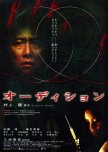
This review may contain spoilers
Do you often view the world with rose colored glasses?
I watched this movie initially when I was much younger. But I don't think it fully registered what it was I was witnessing. I remember asking myself why this particular movie was so highly regarded as opposed to other horror movies. Now as an adult who has dealt with life and trauma, I've come to realize how intricate this story is.With Takashi Miike, you either get a really entertaining movie with obsessive amounts of boundary pushing like Yakuza Apocalypse or you get a movie that has interesting layers like First Love. Now that I fully engaged with this movie, I have thoughts about it's intentions.
First of all, I don't think it's a horror movie in a normal sense. I think it's more of a movie about traumatic events and it's status effect in society. Not only that but the culture of people in Japan in general. When you are watching this movie, Takashi is very deliberate with the types of angles he's using and what they are trying to convey. Many of the early shots in this film are from a very far distance. The imagery is very dreamlike.
I immediately noticed that he was trying to convey this sense of desolation. Like these characters were sitting just opposite of each other at small tables. But the distance felt incredibly large. A reflection of conversations between people who are not actively engaged for various reasons.
I noticed the small quick cuts that signified later that something was incorrect. I'm not sure if that was deliberate but they seem to happen during the key scenes. So I'm more inclined to believe it was deliberate. The wonders of watching older film lol. The lightning becoming more and more dissonant everytime an ugly truth was revealed was very well done. It was a very stark contrast to earlier more dreamlike sequences. When the true backstories are revealed, we get this up close, angled and harshly lit scene. It was like a small hell. You could see the uncomfortable squirming of Aoyama. Very indicative of how Japan's society views these discussions.
There was a impressively blocked scene in the diner when Asami was talking about her parents and family. Later it was revealed that what we heard was just a lie. A fabrication of memories by Aoyama. When we examine the scene, there was a glass window frame surrounding Aoyama. Everyone is gone. It was as if he was living in a glass box.
He is not only hearing and seeing things through distortion but there's a wall between him and Asami. This can be seen in two ways. First is the lies he is telling about the movie being cancelled to hide his true intentions. The second being what I mentioned above about the narrative flip of the actual story Asami told. And now that I think of it, a third thing is how to Asami feels trying to convey her story to deaf ears.
This story to me, is that it's trying to tell us how we relate ourselves to the plight of others. This is how I interpreted Audition. The society of Japan from my knowledge is hospitable in the open but behind closed doors there's a real disconnect when it comes to truly helping someone. The societal hierarchy creates a very uneven balance of power. Despite Japan's culture of being for the group rather then the individual, it suffers from lack of true empathy. It is a story lamented by many newer generations and foreigners who come to live in Japan.
As with many countries, men are predominantly the ones seen to be in charge. Asia has a real problem coming to terms with outdated male roles in society. It's very abundantly 1950's nuclear family oriented still to this day.
There has a been a greater push to revisit this and change course in many countries around the world and Japan is no exception. This movie being created in the 90s heavily shows that sort of distortion. From the way the auditions are handled to how the men treat the women characters. The damage done in this movie is heavily female oriented.
I want to acknowledge that most of Takashi Miike's movies tend to do this as well. Is he trying to say something about feminist views? Or do scenes of violence against women get included because of shock value? It's hard to tell with Miike sometimes. That's why I find his filmography fascinating.
Now when it comes to the characters, we have a very strong contrast of characters. Aoyama having lost his wife, takes on the responsibility to raise his child alone. You normally would find this to be a noble characteristic, however let's dive deeper.
One thing I found interesting is a throw away line where his son Shigehiko, mentions he is afraid of women. I find this interesting because the role of a single father is to be able to teach things like this. Social interactions are heavily tough when it comes to opposite sex. This is probably my headcanon but how a child reacts to things can be directly correlated to the mimicking of their parents. I feel like this further showed Aoyama's mind set when it came to women.
Of their interactions with women, they seem very much like they are just objects to them. They are there to fulfill a purpose, to be eye candy. It's fairly honest to say the script is definately leaning to the misogynistic side. There's a scene that represents this when Aoyama is inside Asami's home and he imagines the various women he knows trying to pleasure him. This leads to his disgust with himself. It's a visually great concept being shown.
Asami is shown as being weak and feeble. Her quiet voice, her small frame. Even the color choice for her wardrobe being all white, the color of purity. I found it interesting whenever she was wearing colors other then white the context of the scene. For instance her taxi scene with Aoyama. Her red coat felt like a signal of lust. But not her lust, his lust.
By the end of this movie, I felt really sad for Asami. I think that is the heart of this movie. Despite what she had done, her actions seem just. Her final dialogue at the bottom of the stairs was just heart breaking. I have a general theory why she chooses to cut off the feet of her victims. I mean it's obvious but her feelings of being alone are deep seated.
Destroying feet is the only way to stop people from leaving her. It feels like it draws back to her time as a child when she was constantly being left alone, only to be tortured by her (step? I can't remember) father. These ideas resonated the core values of this movie to me. Yes it's shocking, but it has purpose. Tongues because of things people said to her.Ears because they never listened and fingers because of the inappropriate touching.
It's a lot to unpack but I'm glad I can see these things now as an adult. I now can appreciate how the movie is seen. Hopefully my write up stirred something in you to think about when you watch horror as a medium.
This has been my medium sized review through a modern lense lol.
Thanks for reading!
Was this review helpful to you?

This review may contain spoilers
Great Comedy But Short on Romance
I watched this out of boredom and didn’t expect it to be this funny and entertaining!It’s about a married couple whose once-beautiful love story turns into a nightmare. They constantly fight and hate each other so much that they decide to get a divorce. They’re given 30 days to finalize the decision, but an accident causes them both to lose their memories.
Through flashbacks, we see how they originally fell in love. However, because of misunderstandings and poor communication, they end up forgetting why they loved each other in the first place. The bad memories eventually outweigh the good ones.
Despite the premise, this movie is more of a comedy than a romance. It felt a bit lacking in the romance department. I wish we had seen more depth in what they loved about each other beyond “he’s cute” or “she’s pretty.” I kept waiting for a scene where they rediscover and actually verbalize the good things they love about one another, something that could mirror the court scene where they list everything they hate about each other, but it never comes.
The ending is fine, but I don’t like that it ends with Nara still not getting her memories back. It feels incomplete because we never get to see her decision once she remembers how much she hates him, or whether that hatred softens after forming new, happier memories.
The two leads, Kang Haneul and Jung Somin, have great chemistry and solid comedic timing. The rest of the cast also delivers strong performances.
Overall, I had a lot of fun with this, and it genuinely made me laugh. 8/10 ⭐️
Was this review helpful to you?
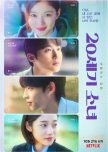
This review may contain spoilers
When First Love Lingers
I didn't expect the ending to turn out the way it did, but I think that’s what makes it resonate so strongly with viewers. Rather than offering a neatly wrapped conclusion, the film leaves a lingering sense of bittersweet realism that stays with you long after it ends. It’s the kind of ending that makes you reflect on the choices, regrets, and missed opportunities in life, tugging at your heartstrings in a way that feels authentic and deeply affecting. The mixture of nostalgia, unresolved longing, and quiet acceptance creates a profoundly human experience, reminding us how fragile life can be and how the people we hold dear can leave a lasting impact on our hearts.One thing I always struggle to understand in dramas and movies is when a character continues holding onto a past love for such a long time. From a viewer’s perspective, we learn of Poong Woon Ho’s fate at the same time as the female lead. As the story unfolds, it feels as though Poong Woon Ho simply ghosted Na Bo Ra. In a situation like that, wouldn’t someone eventually decide to move on? Yes, Poong Woon Ho was a great guy, but if someone suddenly disappeared from your life with no explanation, would you really continue holding onto them? After the initial stages of grief in a relationship, most people would eventually reach a point of acceptance and realize that someone who vanished without explanation may not be worth such a deep emotional investment. Na Bo Ra does attempt to go on a date, yet her lingering feelings constantly pull her back to memories of Poong Woon Ho.
Maybe I’m being nitpicky, or perhaps Na Bo Ra is simply the type of person who loves only once. Like figures such as Betty White or Terri Raines, once they found their prince, they never felt the desire to look for another. Perhaps Na Bo Ra was the same way, but considering the fact that their relationship never truly began, it makes her unwavering devotion harder to fully understand.
What I didn't like, however, was Na Bo Ra’s lack of honesty upfront, caused pain for multiple characters. While I understand that Kim Yeon Du was sick and dealing with her own struggles, it felt as though Na Bo Ra was surrendering and handing Poong Woon Ho to Kim Yeon Du when she wasn't really in a position to be making that decision for anyone. Much of the conflict could've been avoided if Na Bo Ra had simply said something like, “Sorry, I thought you were referring to Baek Hyun Jin.” Even if she didn't want to reveal everything, admitting that she was following the wrong person would've prevented some misunderstanding. This lack of communication created avoidable emotional damage and weakened the narrative at times.
Despite these frustrations, Kim You Jung and Byeon Woo Seok had great chemistry. Their performances made the emotional buildup feel natural and believable. You could clearly see the progression of their feelings, from small moments filled with butterflies to the gradual realization that they were genuinely in love. This strong chemistry is one of the film’s greatest strengths, as it makes the eventual tragedy of their relationship more impactful. I also appreciated how the audience goes on the same journey as Na Bo Ra, slowly uncovering what happened to Poong Woon Ho, which adds an emotional layer to the film’s ending and helps explain why she remained so deeply affected by her past.
Was this review helpful to you?
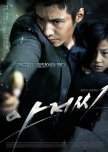
This review may contain spoilers
A Violent Story of Connection
The Man from Nowhere does not shy away from violence. The film is extremely graphic and bloody, using gore not just for shock value but to emphasize the brutality of the criminal world it portrays. If you can tolerate or appreciate this level of violence, the movie offers a gripping and emotionally grounded experience.Cha Tae Sik becomes isolated and a shut in after the death of his pregnant wife. He lives a lonely life running a small pawnshop, and the only real human connection he has is with Jung So Mi, a young girl in his neighborhood whom he quietly helps and looks after. Their bond grows out of mutual loneliness rather than explicit familial ties, and So Mi gives his life a sense of quiet meaning.
Due to Jung So Mi’s mother becoming involved with criminals, both she and Jung So Mi are kidnapped by a group involved in drug and organ trafficking. Cha Tae Sik makes it his mission to save Jung So Mi at any cost, a desperate effort fueled by his guilt and inability to save his own family.
Won Bin as Cha Tae Sik is perfectly cast. He brings physical stillness and emotional depth to the role, and his limited dialogue is compensated for through expressive body language and intense screen presence. His performance makes the character’s fatherly, protective instincts feel completely convincing, even without overt emotional speeches.
Kim Sae Ron as Jung So Mi delivers a strong performance, especially considering how young she was at the time of filming. She brings vulnerability and resilience to the role, making Jung So Mi more than just a plot device.
Beneath the bloodshed lies a story about loss, guilt, and the quiet power of human connection. The chemistry between the two leads works exceptionally well, and the emotional bond that develops between them feels genuine even though it is never explicitly framed as familial. Their relationship becomes the emotional heart of the film. While this is not a movie I would likely rewatch due to its extreme violence, it is absolutely worth watching at least once. The action scenes are also beautifully executed.
Was this review helpful to you?

"Us, meeting like we did, wasn't a coincidence. It was inevitable."
This movie took me in a totally unexpected journey. I expected a cute romance featuring an artist but I got so much more than that. I grew very attached to both characters and what they were going through. The fact that their love for Art intertwined with their relationship was amazing. Visually there were some beautiful moments as flowers were an essential points for the romance : the symbolism was super powerful.The acting was very solid and brought me a lot of feelings...It was my first time watching the leads (Nagase Ren and Deguchi Natsuki) and they really impressed me. It felt very sincere and pure, without overacting but rather appropriately measured.
I would recommend this to people looking for an impactful romance, very sweet and cathartic. It is both light and heavy, and it will take you on a very emotional journey. It broke me but at the same time was healing.
Was this review helpful to you?

Hard pass
If I had watched this movie when I was around 10 years old, I can easily see myself loving it. It has all the elements that would feel exciting and emotional at that age and would probably seem like a great story. But watching it now, in my 30s, it definitely feels very different.This live-action adaptation of a manga includes many elements that work well on paper but feel unrealistic once translated to the screen. At times, it makes you stop and think, how does this even make sense? Personally, I think this wasn’t a great manga-to-live-action adaptation. That said, it might simply be because, at this age, those puppy-love, middle-school romance stories don’t hit the same anymore.
If you asked me now, I’d rate this movie low in terms of story. However, I do appreciate the funny manga-style scenes—they brought more comedy than romance, which I actually enjoyed. Once again, I think this movie might work better for a younger audience. If you’re around 10–15 years old, you might really like it.
Was this review helpful to you?
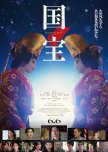
You can tell the makers believed in the art of Kabuki to make it all looks so outstanding. The story is simple, tackles some issues such as how nepotism can ruin talented individuals but what makes the movie good is it's immersive nature. I couldn't look away from the screen. I think that was the point because it's a story about actors who do everything to look beautiful and so was this film was like that.
Our protagonist is flawed, he does dirty things but that is because dirty things have been done to him. But the movie never uses that to justify his action, instead reprimands him but you cannot help not feel bad for him as well. That's when you know you are seeing a nuanced character because he's so humane.
Of course, the acting by the two main leads was wonderful. I lowkey watched this for my boy Soya.
9/10
Was this review helpful to you?
A must watch !!
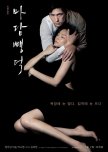
Scarlet Innocence was the second Korean movie I ever watched, and I found it completely by accident while looking for something to watch. The poster immediately caught my attention, and I’m so glad it did. Honestly, I don’t understand people who rate this movie low, because for me it was beyond exceptional .The story is about revenge but not the kind you can easily judge or blame. It’s the kind of revenge that makes you uncomfortable because, in a way, you understand it. The story is captivating and intense, and it shows sides of human nature that we don’t like to admit exist. It’s cruel, emotional, and very real.
One thing I truly loved is how the movie portrays revenge from a woman’s perspective. Women don’t always scream or act loud. They are silent, but their punishments are often the most painful. When a woman takes revenge, she weaves a spider web so carefully that you don’t even realize what’s happening until you’re completely trapped—and this movie shows that perfectly. The revenge unfolds slowly, quietly, and stays with you long after the movie ends.
The cinematography and casting were perfect. And Esom—she was incredible. She is such a talented actress, and like many others, people fail to recognize just how versatile she is. Not many actresses can pull off a role like this so convincingly, and she absolutely nailed it.
This movie left a strong impression on me, and it’s one I won’t forget.
Was this review helpful to you?

My biggest fear in the future......
Watching No Other Choice felt like a two-hour-long panic attack. It’s a Park Chan-wook masterpiece, but man, it is stressful. Seeing the protagonist, Man Su, work so hard for 25 years only to get tossed aside like literal scrap paper was way too real. The way he tries to climb back up the social ladder by basically "eliminating" his job competition is some of the darkest, most twisted black comedy I’ve seen in a while. It’s one of those movies that makes you laugh, but then you immediately feel bad for laughing because the desperation is so palpable.As someone who is about to graduate and head into the workforce, this movie tapped into my deepest fears. I kept thinking about what the world is actually going to look like after I get my degree. The film shows this unforgiving, soul-sucking corporate system where you’re just a number, and honestly, it’s the ultimate "worst-case scenario" that I pray never happens in real life. Seeing the threat of AI and international acquisitions lurking in the background made the whole thing feel like a horror movie disguised as a thriller.
Was this review helpful to you?

Incessant Product Placement
Whew! I've been on the verge of giving up my Korean Drama addiction because, so far, so many new series have been duds. At first I thought LOVE NEXT DOOR was better, but now I'm having second thoughts.During the first half of this series, the male and female leads–played by two well known heart throbs--were mostly believable, especially Jung Hae-in who can make anything work.
The plot lurched off the rails in a few places, with enough crying and carrying on to deplete Korea-'s entire stock of menthol tear sticks. The parents, especially Seok-ryoo's mother acted crazy and abusive (and not in a fun way).
The actress who played Mo-Eum was winsome and likable, but she overacted. I liked her, so I liked the character. But I couldn't warm toward Seok-ryoo in this drama--she was just too arbitrary and cruel.
Let me just mention one other minor character, the ML’s mother. This woman loved her son, but she allowed someone else to raise him. She loved her husband, but she never learned to cook. Instead she’s had a wonderful, professional life–traveling the world and learning about other cultures. And how does this series present this unique woman? As someone who deserves punishment, someone who’s about to lose it all--friends, family, and her marriage. The subtext is clear–if insulting to modern women.
The incessant, in-your-face product placement disappointed me the most. I thought episode 11 was bad, but in episode fourteen, one of the leads actually shows the label on the can to the camera and says, "I had no idea alcohol tasted this good."
There were at least three major bouts of alcohol consumption (and product placement) in episode 14. Apparently, the writers aren't even trying to be subtle.
Nothing against alcohol here, but I really resent the cheap commercialization. Hey Studio Dragon (and you too Netflix)--please don't go down this path.
Why are Jung Hae-in and Jung So-min who are both incredible actors damaging their artistic reputations this way?
Throughout, the writers created trivial excuses and pretexts for various main characters to go on a bender. Whatever the problem–minor spats, bad news–hey, let’s all get drunk. It just seemed like the writers were looking for any chance to push the products.
Still...until the whole series fell apart toward the end, it was mostly watchable. The leads did a good job and hit all the right notes for a good, solid romance. I wasn't looking for high art, but the constant (and obvious) viewer manipulation ruined this one for me.
Was this review helpful to you?


