

I'm pleasantly surprised
This drama is so much better than you first think. It's more than a regular Xianxia. It has multiple layers. It's poetic, it's morals and ethics, it's the human condition, etc. Okay, it's a slightly uneven drama in terms of plot and quality, but it still has so many scenes that touch deeply, so it makes up for it. The music is good and gives additional emotion to the scenes. The drama is also aesthetically beautiful. The actors do very good work. Episodes 21-40 are better than episodes 1-20. I'm pleasantly surprised by Fate chooses you.Was this review helpful to you?
Beautiful martial arts choreography
The Master of Tai Chi stands out more for its action than its storytelling. The plot itself may feel less engaging or not as compelling, depending on personal taste, and it does not always carry the strongest emotional or narrative drive throughout the series.However, where the drama truly shines is in its martial arts choreography. The fighting scenes are beautifully executed, well filmed, and highly polished for a TVB production. The Tai Chi techniques are showcased in a visually impressive way, with smooth, flowing movements that highlight both skill and discipline. These action sequences are clearly the highlight of the series and often carry the viewing experience on their own.
Overall, while the story may not resonate strongly, The Master of Tai Chi is still worth watching for its outstanding fight choreography and its focus on traditional martial arts aesthetics.
Was this review helpful to you?
This review may contain spoilers
Mixed Feelings on Sequel
D.I.E. Again continues the quirky and comedic style of the original series, blending crime investigation with absurd humor and a new set of unusual cases. The drama once again follows Yue Chi Long and his team, with his special ability still playing an important role in solving mysteries. When he touches objects linked to a recently deceased victim, he receives visions that help uncover key clues in the investigation.However, the sequel feels less impactful compared to the original. It gives the impression that the story did not necessarily need to continue, especially with some cast members not returning, such as Yue Chi Long’s sister and father. This also leads to certain character arcs, including Yue Chi Ching and Cheung Ching Yee, coming to a close which I found it hard to believe considering how strong their relationship was. With how they wrote the end of their relationship, you can tell Margie Tsang just didn't return.
Despite that, the series still keeps its light and playful tone. Instead of focusing on serious or gritty police work, it leans heavily into comedy and exaggerated situations, making the cases more entertaining than realistic. The team’s contrasting personalities continue to create humorous misunderstandings and chaotic moments during investigations, which remains one of the show’s strengths.
The cases are still creative and unpredictable, even if they prioritize entertainment over depth. The mix of mystery and humor continues to define the series, making it easy to watch and follow without the weight of a serious crime procedural. Overall, while enjoyable in parts, D.I.E. Again does not quite reach the charm or freshness of the original.
Was this review helpful to you?

A little light in the dark
Misfortune, of late, has been my sole companion, and I, wearied to the bone, did long for any fleeting solace to dull the ache within. It was then that "Duang with You" entered my life, as if summoned by fate's own hand to mend what the cruel world had torn asunderWithin the unfolding of each episode, I found my solace. And as the narrative progressed, so too did my understanding of TeeTeePor's genuine love and devotion. A fire smoldered between the two men, you see. Equal they stood, and together they passed through the corridors of passion. They had no use for the coarse mechanics of words, when they were taught a nobler language: the silent script of stolen glances, the electric grace of fingertips tracing sonnets upon bare flesh, and the solemn vow of kisses laid with pious care on willing lips that answered in kind. So precious was their union, that I could not but rejoice alongside them at their joyous culmination
I am grateful to TeeTeePor and the production team, whose enlightened minds and genius have conjured a work of art both humane and restorative. They have left an enduring impression on me and the world of storytelling, and for this, I thank them heartily
Was this review helpful to you?
This review may contain spoilers
I finally finished Weak Hero Class 1... and honestly, this drama hit me way harder than I expected. I thought it would just be another school bullying action drama, but it turned out to be so much deeper, darker, and more emotional than that.What I loved most about this drama;
* Story development ; The story was intense from beginning to end. Every episode kept building more tension, emotions, and pain without feeling repetitive. The drama showed how cruel school violence can become, but at the same time it also showed friendship, trust, loneliness, and survival in such a realistic way.
* Character development ; Yeon Si Eun is honestly one of the most interesting characters I’ve seen in a school drama. He looks physically weak, quiet, and emotionless at first, but the more the story progresses, the more we understand his intelligence, anger, loneliness, and emotional scars. Every character felt human, not just “good” or “bad.”
* Friendship ; The friendship between Si Eun, Su Ho, and Beom Seok was the emotional core of the drama. Watching them slowly become comfortable with each other made me genuinely happy, which made the painful moments hurt even more later on. Their bond felt real, natural, and heartbreaking.
* Action & tension ; The fighting scenes were raw, brutal, and realistic. What made them even more intense was the emotional tension behind every fight. It never felt like action for entertainment only — every punch carried emotions, fear, anger, or desperation.
* Acting ; The acting in this drama was absolutely insane. Park Ji Hoon especially surprised me so much. He portrayed Si Eun’s quiet rage, trauma, and emotions perfectly through even the smallest facial expressions and silence.
* Cinematography & OST ; The dark visual tone and emotional OSTs perfectly matched the atmosphere of the drama. The silent moments honestly felt even louder than the action scenes sometimes.
Weak Hero Class 1 is not just a school action drama...
It’s a painful story about loneliness, trauma, friendship, trust, and how people slowly break under pressure.
This drama made me angry, emotional, frustrated, and heartbroken all at once.
And honestly...
the ending left a heavy feeling in my chest that stayed even after finishing the drama.
Goodbye Yeon Si Eun...
You deserved so much better.
Was this review helpful to you?
This review may contain spoilers
A critical look at "Kpop Demon Hunters"
Narratively fractured and creatively barren, "Kpop Demon Hunters" reassembles genre conventions into a spectacle of commodified affect, where the promise of cosmic struggle is subsumed by performative decadence. Consider the hunters who, paralyzed by lust, pervert the moral architecture of their sacred duty and salivate over the demons they are sworn to vanquishThe movie incriminates itself through the imposition of non-platonic paradigms on male-female idol dynamics and the transfiguration of malevolent entities into archetypes of desire or victims of circumstance. Among the demons, Jinu being a salient example, many owe their damnation to a consistent disregard for the welfare of others. They have forsaken their familial bonds in pursuit of self-preservation and manipulated the truth to cultivate a favorable self-image
Rumi: "I know your story. You were a good person, and you still are"
Jinu: "I lied to you. I made a deal with Gwi-Ma to get myself out of that miserable life. I left my family alone while I slept on silk sheets in the palace with my belly full every night. I left them" (1:9:50)
Having condemned his family to destitution and starvation so that he might live in safety, Jinu endures punishment in the afterlife. Why would we mourn his suffering? No amount of retrospective remorse can rewrite history or nullify the ethical transgressions he committed
To forgive, or not to forgive? This is not a question posed to courts or the public, but a war waged behind closed doors and in the chambers of the wounded heart. Should Jinu's family, the aggrieved parties, extend forgiveness, it would be an act of courage and a near-divine suspension of justified anger. Should they withhold forgiveness, it would be a dignified reclamation of agency, a solemn tribute to what was lost, and a refusal to be coerced into premature reconciliation by societal or doctrinal demands. However, they could very well have departed to heaven. We are left with no clarity on where they stand in the matter
The story still performs a psychological sleight of hand. It acknowledges the demons' past atrocities only to repress their significance. The audience is conditioned to internalize a distorted moral hierarchy that valorizes temporary catharsis over justice, and conditional empathy over accountability. "They didn't deserve it," they would insist. The truth is, the demons in question are not misunderstood or fallen angels whose small errors brought about their condemnation
Rumi: "If this is the Honmoon I'm supposed to protect, I'm glad to see it destroyed" (1:14:42)
Rumi, who seconds ago endorsed the destruction of Honmoon, appears at the Saja Boys' concert with a newfound determination to protect it. Her abrupt shift in sentiment and subsequent behavior remain unexamined, to the detriment of character believability and emotional payoff
"Kpop Demon Hunters" suffers from a systemic breakdown across all creative domains. The characters, the dialogues, the songs. They dissipate into mediocrity
A critical divergence in reception has emerged regarding the songs, with fans asserting their qualitative superiority over the works of established Kpop groups. This position is one I do not share. Established Kpop groups, BTS, Stray Kids, ATEEZ, MAMAMOO, ITZY, FIFTY FIFTY, etc, have released songs characterized by melodic sophistication and lyrical depth. They are amenable to repeated, ritualistic listening. On the contrary, the songs from "Kpop Demon Hunters" are intolerable and unbearable to listen to beyond a single auditory exposure
Measured against the refined standards set by established Kpop groups, I believe the widespread popularity of "Kpop Demon Hunters" is disproportionate to its merits
TL;DR On a scale of 1 to 10, I would rate the movie a 2
Was this review helpful to you?
This review may contain spoilers
A youth drama that made me laugh, cry, and heal at the same time
I finally finished watching Twinkling Watermelon... and honestly, this drama became one of the most beautiful coming-of-age stories I’ve ever watched. It’s not just about friendship or romance, it’s about family, dreams, music, youth, regrets, and understanding the people we love more deeply.
What I loved the most about this drama;
* Story development ; The story was written so beautifully. The mix of youth, time-travel, family issues, and music felt emotional and refreshing at the same time. Every episode kept me emotionally attached, and the pacing was so good that I never felt bored while watching.
* Character development ; Every character had their own pain, dreams, and struggles. Watching them slowly grow and understand each other was honestly heartwarming. The emotional journey of Eun Gyeol especially touched me deeply. His love for music and his family felt so genuine and pure.
* Family relationship ; This drama shines the most when it comes to family emotions. The way misunderstandings, sacrifices, and unspoken love were portrayed felt incredibly realistic and emotional. Some scenes between parents and children genuinely made me cry.
* Romance ; The romance was soft, youthful, funny, and emotional at the same time. It never overshadowed the main story but instead blended naturally into the characters’ journey. The chemistry between the characters felt warm and comforting.
* Music ; One of the BEST parts of the drama. The band scenes, performances, and OSTs made every emotional moment feel even stronger. Music became the heart of the story and connected all the characters beautifully.
* Cinematography ; The warm and nostalgic visual tone matched the youthful atmosphere perfectly. Every scene looked lively, emotional, and comforting.
This drama made me laugh loudly in one episode and cry emotionally in the next. It reminded me how precious youth, family, and dreams truly are.
Twinkling Watermelon is not just a school drama...
It’s a heartfelt story about understanding love, appreciating family, chasing dreams, and healing old wounds.
Thank you to the actors, writers, director, and the whole team for creating such a meaningful and unforgettable drama.
Goodbye Eun Gyeol...
Goodbye Watermelon Sugar band...
You will stay in my heart for a very long time.
Was this review helpful to you?
Light Hearted Crime Comedy
D.I.E. is a light hearted and comedic TVB drama that mixes crime investigation with absurd humor in a really entertaining way. The story follows a team of unconventional detectives who handle unusual and often bizarre cases, making each episode feel fresh and unpredictable. Yue Chi Long has a special gift after being struck by lightning, where if he touches something belonging to a recently deceased victim, he receives visions of clues that help lead them to the killer.What makes the drama stand out is its comedic tone. Even though the team is solving crimes, the atmosphere is never too heavy or dark. Instead, the characters often find themselves in awkward, funny, or completely ridiculous situations that balance out the mystery elements. This makes it easy to watch and very relaxing compared to more serious police dramas.
The cases themselves are also quite creative and interesting. While they may not always be deeply complex, they are engaging enough to keep the audience curious about how everything will be solved. The mix of mystery and comedy gives the show its unique identity and works well for viewers who enjoy something light but still story driven.
Overall, the drama is enjoyable for its humor, character interactions, and fun take on police work. It does not aim for intense realism, but it succeeds in being entertaining and easy to follow from start to finish.
Was this review helpful to you?
Certain tropes are irreconcilable with the ethical parameters of fiction: the omegaverse edition
It is, alas, a most grievous and lamentable truth of our age that omegaverse, this fantastical contagion of pseudoscientific absurdity and regressive social constructs, has insinuated itself into modern storytelling. It spreads unseen, infecting the printed pages of books, the fevered scribblings of fanfiction, the illustrated panels of comics, and the staged passions of dramas with its delusions of dominance and submission or morbid obsessions with pregnancy. Vast sums of money and countless hours of human endeavor are lavished upon its propagation, whilst BL/gay works of true merit are suppressed by censorious hands and condemned to wither in the dim corners of public consciousnessThough I swear fealty to BL/gay narratives, I rise in rebellion at the mere invocation of "futanari" and its progeny, gender bender and omegaverse chief among them. These, I maintain, are inimical to the values I hold sacred, and provoke in me a persistent discontent for four irrefragable reasons:
1. Their homophobia,
2. Their exploitative mimicry of opposite-sex characteristics,
3. Their dogged adherence to a pro-birth ideology, and
4. Their blasphemous misbranding as BL or gay content
I will give a quick rundown of my reasoning
*The homophobia*
-2 points
Society has deified procreation. It kneels before the cradle as before an altar, not to adore the life within, but to venerate the future cogs and pistons that life will supply to the great engine of commerce and control. A child is a promise of continuity; of goods consumed, of taxes paid, of orders obeyed. Therefore are the chaste, unfruitful same-sex unions held in contempt or branded with infamy. By the sovereign decree of nature, and save that the body be preserved from the hubristic touch of technology, gay relationships feed not the insatiable maw/ravenous belly of the state, nor replenish its dominions with fresh subjects to be bound in servitude
Trembling before the specter of non-procreative love, the orthodox mind succumbs to a desire both perverse and unseemly, in the form of a fantasy bent on transgressing the boundary that nature has fortified between the two sexes. Where reality forbids, imagination conspires to feminize the male body, burdening it with female anatomy (e.g., vulva, vagina, uterus) or the curse of child-bearing; and masculinize the female body, burdening it with male anatomy (e.g., penis, testes) or the curse of begetting. To speak in terms befitting the subject, the male character is stripped of the dignity of his sex and made into a female vehicle of propagation to endure the profanation of a womb swollen with unwilling life. The female character is likewise stripped of the dignity of her sex and made into a male vehicle of propagation, thereby impregnating others and binding the next generation to the selfsame inherited violation
Characters are wrenched from their natural state and recast into a chimeric duality of neither transcending "gender" nor representing it. They achieve, at their highest, no more than a strained hermaphroditism, and descend, at their lowest, into a grotesque impersonation of the opposite sex. They are captives of a creed that exalts birth above all else, and in its service, they are denied the full estate of personhood. Their worth measured in the barren metric of fertility, they are degraded to the rank of breeding stock or chattel, factory-grade, mass-produced, and expendable once the quota of offspring is met
The omegaverse forces of pheromones, cyclical heats, and feral ruts further dissolve the sovereignty of self. No longer may one choose whom to love or how to love. All are condemned to perform the rites of heteronormativity/heterosexism, their every exchange preordained by the body's involuntary impulses and betrayals
These dystopian perversions of the human body are confessions of a society that, in its slavish devotion to the cult of procreation, cannot conceive of love beyond the machinery of lineage, and that would rather overcompensate for its incomprehension through the most monstrous of fantasies or metamorphoses than expand its horizons
*The exploitative mimicry of opposite-sex characteristics*
-2 points
It is a recurring folly of humanity to covet the unattainable or pine for that which is denied unto it. Men cast covetous eyes on the generative power of the womb to sustain life within (womb envy), and women, in turn, cast covetous eyes on the phallic emblem of patriarchal authority and privilege (penis envy). Possessed by envy, they attire themselves in the guise of the opposite sex. Their minds conceive of a singular form wherein both sexes are mercilessly conjoined, whether named futa, omega, or a Frankenstein's monster of sorts. They reject the ancient wisdom that the differences dividing men and women are not blemishes or flaws to be excised or mended. The male body is complete in its own right, and the female body no less so
*The pro-birth ideology*
-2 points
The contention that omegaverse is but an airy nothing, a flight of fancy, or a fantastical delusion born of unbridled imagination, does little to abate the depth of my disapprobation toward its propagation, or the alarming eagerness with which it is consumed. The trope conceals beneath its non-human/brutish exterior and hierarchical savagery the fetishization of the pregnant form, preaching a gospel of fertility with such fervour as to border on the tyrannical
I dissent from the common praise of birth/pregnancy. I am persuaded in my own judgment that to procreate is to commit an act of cosmic violence. Violence, by any honest measure. Out of the void, where no tear is shed, is torn a creature frail and defenseless, thrust into a world beset with fears unspoken and desires unslaked. Not for sustenance alone does it hunger, but for comfort, for delight, for purpose or reason to endure. And each of these must be tended with vigilance. Were neglect to corrode the chain of deprivations, the self that bears it will suffer and wither in kind
With the selfsame hands that condemn the innocent to gnawing want, suffering, and decay, do natalists feign compassion, bestowing crumbs of comfort and claiming for themselves the title of saints or benefactors
The unborn is yet a stranger to hunger and to craving for the vanities of the world. Why disturb their peace? I shudder at the manner in which the hypocrisy of procreation is sanctified in every cradle, every nursery rhyme, every fantasy. And I implore, with due humility, that the domain of fiction be spared this horror. The image of anyone giving birth is too grievous a cruelty to be entertained in reality or fiction
"Not to be born at all
Is best, far best that can befall, ...
... For when youth passes with its giddy train,
Troubles on troubles follow, toils on toils,
Pain, pain for ever pain;
And none escapes life’s coils
Envy, sedition, strife,
Carnage and war, make up the tale of life" (Sophocles, Oedipus at Colonus)
Where one is seized by the longing to rear a child, the honourable path would be to adopt, to extend a hand to an existing child who has known the coldness of neglect, and to warm them with the hearth of a true and loving family
*The misbranding*
-2 points
The capacity for gestation, in my estimation, is an exclusive attribute of the female sex, contingent on the hormone-mediated activation of the ovaries to release the ovum, and the uterine lining to receive and sustain the fertilized ovum. A "man" who conceives has already ceased to be such, having taken on the inner constitution of a woman, even as her outward appearance resembles that of a man. "Heat" itself pertains to cyclic fertility patterns in monestrous (single-cycle) and polyestrous (multi-cycle) species, and falling into its frenzy implies a departure from humanity. It is, all things considered, a misnomer to ascribe the terms "gay" or "BL" to the straight-with-extra-steps, bestial fictional pairings wherein characters possess the womb or the power of conception by the crude mechanics of heats and ruts
TL;DR 2 points are granted for effort, and 8 are deducted on account of the omegaverse themes and the reluctance to commit to a gay narrative
Was this review helpful to you?
This review may contain spoilers
A drama that feels like life itself... ??
I finally finished watching When Life Gives You Tangerines... and honestly, this drama touched my heart in a way I can’t even fully explain 😭✨ It’s not just a romance drama, it’s a story about life, dreams, youth, family, sacrifices, and learning how to continue moving forward even when life becomes painful.
What I truly loved about this drama;
* Story development ; The story flows so naturally and emotionally that every episode feels meaningful. It’s slow and calm, but never boring. Instead, it feels comforting, nostalgic, and painfully real at times. The drama beautifully captures ordinary life struggles, dreams that slowly change over time, and the warmth of human relationships.
* Character development ; Every character felt alive and realistic. Nobody was perfect, and that’s what made them beautiful. We get to see their growth, mistakes, pain, happiness, and emotional scars throughout the story. The actors portrayed every emotion so naturally that it never felt like acting — it felt real.
* Romance ; The romance in this drama is soft, emotional, and deeply heartfelt 😭💛 It’s not flashy or overly dramatic, but the quiet love between the characters speaks louder than words. The little moments, silent support, longing gazes, and sacrifices made their relationship feel incredibly genuine and touching.
* Family & emotions ; This drama shines the most when it comes to family relationships. The love, misunderstandings, sacrifices, and emotional bonds between family members felt so raw and relatable. Some scenes genuinely made me cry because they felt too real.
* Cinematography ; Every scene looked like a memory painted beautifully on screen 🍊 The warm tones, peaceful atmosphere, and emotional framing made the drama feel comforting and nostalgic at the same time.
* Music ; The OSTs were absolutely beautiful 🎶 Every song blended perfectly with the emotions of the scenes and made the heartfelt moments hit even harder.
This drama quietly teaches us that life is not always perfect, but even during painful moments, there are still beautiful memories, people, and small happiness worth holding onto.
When Life Gives You Tangerines is not just a drama...
It feels like a warm memory, a healing journey, and a gentle reminder to cherish life and the people we love.
Thank you to the director, writers, actors, and the entire team for creating such a heartfelt masterpiece 💛
Goodbye to these beautiful characters...
You will stay in my heart for a very long time 🍊✨
Was this review helpful to you?

This review may contain spoilers
Rebuilding old-business AND LOVE ?
I finally finished watching this drama...!!! And honestly, I still can’t move on from it 😭 For 40 episodes, the pacing was built so beautifully that I didn’t even realize when I started and suddenly reached the end...What I truly love about this drama;
* Story development ; Even though the story is business-centered, it never feels boring or too complicated. Instead, we become emotionally attached to Teng Yue and its rebuilding journey. Watching Jiang Hu trying her best to protect and revive Teng Yue made me emotional too, as if Teng Yue was our own child...! Every success, every struggle, every small progress felt personal.
* Character development ; Every character has flaws, emotions, and weaknesses, which makes them feel realistic. No one is completely perfect. Even characters who seem selfish or egoistic at first slowly reveal deeper emotions and growth throughout the story. The actors & actresses portrayed their characters amazingly well, EVEN the supporting casts were memorable and natural!
* Romance ; Slowburn BUT SO WORTH IT 😭✨ Xu Si & Jiang Hu’s relationship developed so naturally and beautifully. Their interactions were funny, soft, comforting, and romantic at the same time. And when their relationship started falling apart near the end, it honestly broke my heart... But their reconciliation was so emotional and satisfying to watch. Xu Si’s love for Jiang Hu is truly one of the most beautiful things in this drama. At first we see his teasing and cute side, but later we realize how deep his love actually is — he was willing to sacrifice everything he had just to protect Teng Yue, because it meant everything to Jiang Hu...
* Music ; The OSTs are absolutely top tier 🎶💙 Yuqi from (G)I-DLE, Ju Jing Yi, and Wu Xuan Yi’s voices made the songs even more emotional and beautiful. Every lyric perfectly matched the characters’ emotions and story progression. The songs stayed in my mind even after finishing the drama.
* Not much fillers ; This is one of the rare dramas where I never felt the need to skip scenes or increase the speed. I watched almost every episode in normal speed because every moment felt meaningful and enjoyable. The drama kept me emotionally invested from beginning till end.
* Cinematography ; The visual tone of the drama is BEAUTIFUL. The bluish vintage color grading perfectly matched the old-style atmosphere of Teng Yue. It gave the drama such a nostalgic, elegant, and emotional feeling. Every frame looked soft and comforting.
I seriously fell in love with Xu Si & Jiang Hu 😭💙 This is definitely one of the best 2023 dramas for me. This drama is not just about romance or business, it’s about dreams, legacy, healing, growth, and learning how to move forward after pain.
Thank you director, writers, actors, and the whole team for creating such a beautiful story...
Goodbye Xu Si...
Goodbye Jiang Hu...
Goodbye Teng Yue...
You all will truly be missed 💙
Was this review helpful to you?
This review may contain spoilers
Gay subtext meets historical drama
"She already knows how to make women fall for her without consciously thinking about it ..." (episode 6, 17:43)"I never knew those two [women] could have such chemistry, they are bringing out the best in each other" (episode 6, 51:47)
The stage of "Jeong Nyeon" is no common theatre. A theatre it is where women reign supreme and assume a duality. In their duality, they are both the subject and object of romantic contemplation, the wooer and the wooed, the pursuer and the prize pursued, the lover and the beloved. They circle one another, and, unawares, trace the contours of homoerotic tension that hums under the mask of their performance
The removal of Kwon Bu Yong and the life she shared with Jeong Nyeon is a cowardly bow to societal prejudice. Nevertheless, the adaptation is worthy of acclaim for its deliberate construction of a homosocial sphere, in which same-sex longings find fertile ground to flourish
"The stars that once graced the [female] gukgeuk stage went on to continue their paths as artists, pansori singers, outdoor theatre performers, or even film actors. They have merely dispersed, not disappeared, and they will shine on in the vast night" (episode 12, 1:14:12)
The legacy of female gukgeuk slumbers in silence and neglect, awaiting but the breath of fresh voices to bid forth anew its sovereign might and elegance
Was this review helpful to you?
This review may contain spoilers
A Journey from Ambition to Compassion
The Last Breakthrough is one of those TVB dramas that leaves a lasting impression because of how heartfelt and grounded it is. The series follows Wong Fu Fun, a successful cardiologist who is deeply focused on advancing his career by performing highly complex surgeries and building his professional reputation. His girlfriend, Ha Hiu Tung, volunteers with Life Force and often encourages him to travel and help those in need, but he repeatedly refuses because he prioritizes achievement, recognition, and status over humanitarian work.Everything changes after a tragic accident takes Ha Hiu Tung’s life. Her death becomes the turning point that reshapes Wong Fu Fun’s entire outlook on life. He begins questioning what it truly means to be successful and slowly shifts away from treating only wealthy patients toward using his medical skills to help the less fortunate. He also starts volunteering with Life Force, partly as a way to better understand Ha Hiu Tung and see the world through her perspective. One of the most memorable scenes that captures this transformation is when he helps deliver a baby on the roadside, a moment that reflects his growing compassion, humility, and renewed sense of purpose.
As the drama progresses, Wong Fu Fun gradually rebuilds his life while continuing his volunteer work with Life Force and establishing a clinic that serves his local community. He eventually transitions into obstetrics, showing how far he has moved away from the prestige driven mindset he once had as a cardiologist. He also develops a new romantic relationship, showing that even after deep loss, it’s still possible to heal and move forward.
Wong Fu Fun is sometimes viewed as a controversial doctor by others because many of his decisions challenge professional expectations and strict legal boundaries. For example, when he helps deliver a baby and later discovers the mother was carrying drugs, he refuses to let police officers enter the room until the situation is medically stable. He also makes difficult decisions during high risk pregnancies, prioritizing the safety and dignity of both the mother and child even when others disagree with his methods. A lot of what he does exists in a moral grey area, but the series repeatedly emphasizes his intentions and his belief that every life is precious. His goal in his career is to be the best doctor he can be and do everything he can to save a life. In many ways, the series shows how Wong Fu Fun’s outlook on life positively influences nearly everyone around him.
Ken, who is also a cardiologist, is born into privilege and initially has a far more rigid and by the book understanding of medicine. Through his interactions with Wong Fu Fun, he slowly begins to see medicine in a more compassionate and human way rather than purely through rules and professional standards. His perspective changes noticeably through both their friendship and his own volunteering experiences.
One of the drama’s strengths is how it introduces a wide range of medical and health related issues in a way that is accessible and easy to understand. Although some topics are only explored on a surface level, they still add emotional weight to the story and make the series feel more grounded in reality. The medical themes also make the drama especially engaging and can even inspire a stronger interest in the healthcare field.
Overall, the series is touching, emotional, and meaningful, highlighting how a single life changing event can completely transform a person’s values and understanding of what truly matters. The cast delivers strong performances throughout, but the most compelling aspect of the drama is Wong Fu Fun’s character development. Watching his worldview shift from ambition driven success to compassionate service is the heart of the story and ultimately what makes the drama so memorable.
Was this review helpful to you?
This review may contain spoilers
Moments of brilliance, buried in mediocrity
I approached "Love in the Big City" both eager and guarded, as one who steps into a garden rumoured to bloom with rare flowers, dreading the thorns beneath. And indeed, my patience soon withered/waned under its oppressive sorrow and despair. A suffocating pall of misery clung to the gay characters. The very air seemed heavy and coagulated. And yet, I cannot, in good conscience, deny the actors their due. Their performances were of such distinction, such disciplined passion, that they elevated the poor scriptOf those who graced the stage/screen, Nam Yoon Su did shine with a peculiar radiance. His readiness to partake, without the least restraint of feigned modesty or hesitation, in the delicate and tender manifestations of carnal affection between men, was an uprising against the profane doctrine of homophobia, gnawing ever at the fabric of society. Each kiss, each quivering proximity, was a venture into the "forbidden" and a courageous unveiling of a man's innermost self before another. Stunned I stood, for here were men, yielding mutually and entering the blessed harmony where desire is met with desire, or flame answers flame. Few were the sights that could rival the fair and beautiful scene
Having paid homage to the commendable virtues, I must, with sober and judicious mind, now dissect the manifold imperfections of "Love in the Big City." The narrative faltered at its threshold. Therein, a "straight" identifying woman, she whose eyes roved with lecherous and unbecoming intent on men, trespassed into the charged social space of a gay bar/club, a haven purposed for the free and boundless flowering of same-sex desire (31:07 of episode 1). This is no mere lapse in judgment, but a flagrant assault on the sanctity of single-sex spaces
What cause had the authors and producers for the unceremonious reference to HIV? HIV is not divine chastisement or a gay disease. The military doctor's diagnosis presumed a manner of transmission he himself deemed improbable. "Are you a top or a bottom? The truth is, the chances of spreading HIV to a sex partner are low" (39:50 of episode 5). Whence we may conclude that to afflict a gay character with the blight of HIV, while all else in his life proceeds unimpeded by the ravages of the disease, notwithstanding its low transmissibility or the accessibility of "curative" measures, is to commit an injustice altogether superficial, contrived to stir the blood of the audience and cast aspersion on the inclinations of gay men
Methinks it a wearying contrivance that "straight" identifying women are the sole passage through which the lives of gay men are revealed. A stranger to the sting of homophobia befriended a gay man and claimed the right to utter his sorrows. Is his voice feeble? Can it not speak for itself? Or is it that the ears of society are closed to the truth, unless it be spoken by one it takes to be "safe" and unthreatening to the established order? Be that as it may, the time is ripe for gay men and gay women to gather in brotherly and sisterly concord and recount the trials and joys of their lived experiences. They could find in one another a steadfast, compassionate friend
Evermore were the gay characters denied the solace of a blissful end. I marvel not. From the dawn of civilization, gay existence has been granted provisional legibility within the public sphere on condition that it be sentenced to a life of bitterness, celibacy, or exile. The possibility of societal tolerance rests on the disavowal of collective joy/happiness, the desexualization and deradicalization of same-sex physical intimacy, and the proscription of a viable, enduring future
There is an urgent need for narratives in which gay joy/happiness is the norm, however much they strain against the limits of the prevailing regime of plausibility. It is in their defiance of said plausibility that we can affirm the radical banality of gay flourishing, a mode of being so simple and unremarkable in its presence that it precedes the demand for justification
TL;DR I have, after deliberation, settled on a score of 6.5/10
Was this review helpful to you?
Snail Paced Plot
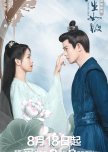
The Junior King of Nanchen, Zhousheng Chen has been in the battlefield since he was 14yo with zero defeat, which earned him a revered reputation throughout the kingdom. When Zhousheng Chen’s elder brother, the emperor, died and empress dowager Gao tried to usurp the throne, he came to the rescue just in time to quell the coup-de-tat, and pledged allegience to his 6yo nephew, with Empress Dowager Qi rising to power. Meanwhile a 14yo Cui Shiyi of the reknowned scholar lineage Cui clan of Qinghe, the supposedly bethrothed crown princess is denied the position as empress by empress dowager Qi, and instead she pushed another prince, Liu Zixing, to step in as the little emperor’s study partner while promising the crown prince position upon him reaching 20yo. Thus to diffuse the Cuis clan’s anger at being sidelined, Cui Shiyi is to take Zhousheng Chen as her teacher, sealing the relationship with the royals before she weds the crown prince later. Having spent significant time in the King of Nanchen palace, Cui Shiyi developed affection for Zhousheng Chen, while Liu Zixing plots in the background to take what he believed rightful to him, a plot that would eventually turn the realm upside down in turmoil.I seriously think the tag of “slowburn romance” to be misleading, because not only does the romance is slowburn, the whole freaking plot also developed as slow as a snail!
I generally could care less about romance, problem here is the show seem to spend so much time trying to push the mainleads’ idea of attraction for each other and simply dumps the plot’s pacing into the drain. When the plot is put on hold to make way for romance buildup, and yet the romance aint romancing, the show comes off boring and empty instead. If not for Forever and Ever (the modern setting of the novel, which is where the main plot actually is), i honestly wouldve dropped this show before i reach Ep10. The plot only picks up at Episode 18-24, so I’m quite relieved that I stayed on with the loyal company of FF button and 2.0 playback speed.
What’s disappointing is that 18 episodes were used up to build the romance, and yet here I am failing to see or feel the spark. No juice. Dead batteries. Nada. I didnt get any emotional connection for the rest of the characters too - the Cui clan, 10 Zhousheng Chen’s disciple, etc. The first 18 episodes were so bland I couldnt wait to jump straight to the end. I’m glad I didnt though, cuz the plot went into overdrive at Episode 18 onwards.
All the emotion tuggings happened from then on, with the peak happening when Cui Wenjin (Shiyi’s mom) finally managed to see her precious daughter held in the palace. Yep all those characters dying didnt manage to get a reaction from me, until Shiyi met her mom who broke the news. Man, Bai Lu could really cry. Eventhough I didnt feel any chemistry between her and Ren Jialun’s character, i teared up seeing her take the news. She’s really good at this! I liked Shiyi when she was in the palace because that’s when her character took real control and shine, compared to the previous 16 episodes where her character looked bland and one dimensional.
Ren Jialun is great here, he really did pull off the great general role, someone who is too strong with unbendable upright stance that rulers keep seeing him as a threat, so much so he had to take the high road and step away, vowing never to marry and have children so the emperor would be at ease and stop being wary of him. But human being humans, even eunuchs have desire, let alone a powerful man with no physical disability. He could not help but fall for his student, though he is upright enough as not to act according to his feelings and risk turning the world upside down.
A special mention for Wang Xingyue whom I first saw in The Double (which I didnt like) and The Wanted Detective (which I dropped). This time, his performance awed me, and to think that he was a newcomer here at only 19years of age, i am thoroughly impressed. He’s very good at portraying the spare part and later almost discarded prince Liu Zixing. Not only he had to endure emotional and physical torture from the empress dowager growing up as the little emperor’s study companion, he was also slowly poisoned by the same vile woman to make sure he would never become a threat to the throne. The last straw is of course when the emperor was about to have a baby that would mean Liu could kiss his crown prince position good bye. Not only would he lose his promised position and a chance at the throne, he would also lose his bethrothed Cui Shiyi whom he had admired ever since the little emperor promised him of this crown princess. His sadness, angst and regret was remarkably portrayed by Wang Xingyue without flaw. What a talent for such a young man.
I love the addition of Prince of Fengyang, although this character seem pointless (and never even mentioned in the novel), he turned out to be the pivotal role who keeps the Nanchen army whole, especially when their general is gone.
Basically if youre a romance lover, i reckon this would get into your good book. As for me whose interest lies mainly in action/wuxia, it’s pure torture to finish this, and the show only managed to reel in my interest in the last quarter. For the third time, yes I am glad I stayed on long enough to reach Episode 18 where the action really starts, but to say I enjoyed this? Naaahhhh no way. If not for the novel that caught my attention and my curiosity to see how the production expand the little plot of Shiyi’s memory of her previous life, I wouldve dropped this so fast I wouldnt even bother writing a review.
Honestly i hope the sequel would give a different vibe and proper closure to main couple as per the novel.
Was this review helpful to you?


