


same old reincarnation plot with a bland fl
i love reincarnation dramas and I usually don't care if the plot is similar since the genre is the same.but the plot for this drama had SO MANY HOLES! Like damn, if anyone were to walk to the script they'd need to learn swimming first cuz they'd fall through the holes before they can even take a step
but even if I ignored that (which I did), Meng Ziyi's acting skills need polishing. After watching Heyu and Jerery every time the camera focused on her I was IMMEDIATELY taken out of the drama because of how expressionless she was. she's also the reason I ended up dropping the drama.
Was this review helpful to you?
interesting premise overall solid commitment
was grateful the premise was substantial enough to drive the pacing of the plot pretty naturally. I think the writing only fell short in the last 2 episodes, especially the final 3 or so scenes. otherwise, despite the story’s effort to be more complex, it actually was able to work out without many plot holes through the main progression. definitely harder to find shows able to achieve it in this genre. and as far as I can tell, even the ending being written flimsily seemed to be faithful to the source material funnily enough.. at least according to reviews I’ve read of the novel. I think at times, the romance felt somewhat misplaced, but I realised the passage of time in the story was stretched wider than indicated so it couldn’t help but feel a bit choppy. can see why people commended this show in its commitment to pass for a regular televised drama despite its minor hiccups and the usual budget limitations for this genre. overall thoughtful scene production to raise the value was appreciated, though the AI in the opening sequence was definitely jarring despite the fact I’d always skipped it anyway. seems that in the effort to seem higher budget, they got lazy in that regard without actually being able to afford to do so, in addition to the misfortune korea has no stigma towards AI even among the art community. characterizations were a bit exaggerated but there was the same issue of an unconvincing ex-cop that didn’t seem necessary. I think the corniness mostly stemmed from the fact they attempted doing too much in lieu of the story being dark in nature. music editing was mildly awkward in certain spots but not off enough to ruin the scenes.tldr a pretty engaging show that’s able to maintain good momentum for the majority of the show despite the story leaving several conflicts seemingly unresolved in the end. might follow up with spoilers separately to pick on the specific scenes towards the end I had gripes with
Was this review helpful to you?

Sometimes Confused
I loved this series, but I have to admit the political story line , I had trouble following. Also just when I would get comfortable with the characters another would show up. This is not a drama where you can get up and make a sandwich or dose off , or you'll end up rewinding 😃 Ml 🔥villain 🔥🔥Was this review helpful to you?

It's just a slice-of-life show, and that's it
It's a comedy slice-of-life show, and that's alright. Its production really reminds me of japanese bls, and so does the storyline. It's simple. Yet, it's kinda dull. As usual, TutorYim's acting are amazing. They're incredibly talented. Still, the narrative is just too weak. Once again, the production was there. Such a beautiful cinematography! But what's up with the script team having a beef with TutorYim? Of course I do understand that this show comes from a day-to-day basis, it is supposed to be easygoing and feel natural, but it doesn't mean it has to be this gray thing. Personally, I didn't have a problem with the ammount of NC scenes nor the sexual undertones of the whole show. I guess it's natural when they're a young and in love couple. Still, there were lots of other ways to go from it. See, in Battle of The Writers, all of the NC scenes felt so well-placed in the story. ChermChey's just feel random, that's the thing. Anyway, it's a comedy show, it's not supposed to be a really big deal. I wish TutorYim get to star a well written show, still. Also, something's worth thinking about is the way ChermChey was probably planned to be received by the audience weekly, considering the rhythm of the story. But, in a long term, that really sucks. Found Yim so cute in this series as a whole. Tutor's unbelievably beautiful with a blonde hair. They're so good.Was this review helpful to you?
This review may contain spoilers
Meh.
I found this interesting at first, but I don't know... it just wasn't my cup of tea.For me, the story left me asking, "Why?" Was it meant to be about healing? Moving on? I'm honestly not sure what the drama was trying to convey. One of the male leads' acting also didn't quite work for me. It felt a bit stiff, so I had a hard time connecting with the character.
As the story went on, it felt like there was one plot twist after another, and I personally found a lot of them unnecessary. Again, I kept asking myself, "Why?" Why did he have to die in a car accident? Why spend so much time developing the other ship when they were never meant to end up together? And what was the purpose of that final goodbye from the one who had already passed away? Maybe I just didn't fully understand what the writers were going for.
OMG, this review sounds so harsh. 😂 Please don't come for me. This is just how the series personally landed for me, and I can completely understand why others might love it. It simply wasn't for me, and that's okay. We all have different tastes, and unfortunately, this one just didn't click with me.
Was this review helpful to you?

This review may contain spoilers
Som Couple
My Som couple. My Sharmaine couple. 😭 I really hate saying goodbye to them.First things first, let's appreciate the cinematography and color grading of this series because I think most people would agree that they're absolutely stunning. Every time I watched When Oranges Fall, I found myself smiling from ear to ear throughout the entire episode.
I know I said before that I was getting tired of high school BLs, but I'll gladly take that back. I just needed the right series, and this was definitely one of them. When Oranges Fall has such a calming and nostalgic atmosphere that every episode feels warm and comforting. Age doesn't matter here because every interaction between the couples will still give you butterflies. The angst and conflicts are grounded enough to feel like something real teenagers would actually go through, and they might even take you back to your own high school days.
What I loved the most was how the series explored the emotions and uncertainties that come with graduating from high school. Ko Neung may have seemed immature at times, but that's honestly how a teenager deeply in love would think and act. At that age, your partner feels like your whole world. 😂 Thankfully, they learned to overcome those fears, doubts, and insecurities together, and that's what made their journey so satisfying to watch.
And yes, we were definitely robbed of those two episodes. The story could have been even better if the real-life issue involving one of the actors hadn't happened. But it is what it is. Even with that, this series remains a genuinely beautiful watch, not just for teenagers, but for viewers of all ages. (Speaking on behalf of Team 30s. 😂)
One last question, though...
Did Ko Song's lost package from Episode 1 ever find its way back to its rightful owner? Because I'm still waiting for that closure. 🤣📦🍊
Was this review helpful to you?

This review may contain spoilers
A Shop for Killers -- Updated Review -- Finale
Now that A Shop for Killers 2 has concluded, I wanted to revisit my initial thoughts and build on them with the full season in mind. Looking at the season now, some of those early impressions still stand, but the completed story gave them far more weight and context. My overall reaction is that this second season is bigger, denser, and more overtly political than Season 1, but it still manages to completely capture your attention. I felt transported into this world every week, and I remain in awe of how much work was put into the writing, directing, action choreography, performances, and overall production.The biggest change is that the show traded some of the relentless survival-thriller energy of Ji-an defending the shopping mall for a broader war against Babylon and a deeper exploration of Jin-man’s past, his plans, his alliances, and the machinery operating behind everything that happened in Season 1. Where Season 1 was tactical, Season 2 is operational. Season 1 was about surviving the moment. Season 2 is about understanding the larger system, the long game, and the execution of plans that had been in motion for years. It shifts the focus from “What is happening?” to “How do we destroy Babylon?” The narrative fills in gaps from the first season and expands the world through Jin-man’s survival, Babylon’s internal politics, and the broader network of killers and operatives. Some viewers may miss the claustrophobic intensity of the first season, but I think the show simply traded one type of tension for another. It was no longer about whether Ji-an could survive the shopping mall. It became about whether Ji-an, Jin-man, and their allies could outmaneuver an organization as vast and corrupt as Babylon.
Ji-an remains the emotional center of the series, but what makes her arc so compelling is that she is no longer merely reacting. In Season 1, she was being hunted. In Season 2, she begins making choices. More importantly, she begins to understand that Jin-man’s world does not operate by normal rules. At the start of the season, there is still a part of her that wants to distance herself from that world. She wants to believe in reason, compromise, and negotiation. Episodes 5 and 6 become particularly important because her attempts to reason with Jin Kusanagi make it painfully clear that idealism and playing by the book do not work in a world built on manipulation, violence, and power. Kusanagi views compromise as weakness and every attempt at good faith as leverage to exploit. What makes Ji-an’s journey work is that she does not lose her humanity. She does not suddenly become cold or cruel. Instead, she begins to understand what Jin-man understood long ago: survival depends on preparation, strategy, and understanding exactly who you are dealing with. By the finale, she is no longer just trying to escape her uncle’s shadow. She understands why that shadow existed in the first place. She is not becoming Jin-man, but she is beginning to inherit the part of him that knew how to survive.
As for Jeong Jin-man, Lee Dong-Wook once again carries the show effortlessly. He remains charismatic, controlled, believable as a strategist, and convincing as someone who can be both deeply protective and absolutely terrifying. One of the smartest aspects of Season 2 is how it reframes Season 1. Many things that initially seemed sudden or chaotic are revealed to be pieces of a much larger operation against Babylon. Jin-man remains fascinating because he genuinely loves Ji-an while routinely manipulating information “for her own good.” He is loving but secretive, protective but controlling. He does not protect like an ordinary uncle. He protects like an operative. Every lesson, hidden rule, warning, contingency plan, safe route, ally, and backup system was built around a single objective: keeping Ji-an alive.
The most moving aspect of the season for me was realizing just how much preparation went into that protection. The yellow ribbons tied around the trees. The escape vehicle. The routes through the woods. The fallback plans. The hidden structures. The people positioned in the right places. The planning surrounding the shopping mall. When Ji-an had to destroy the shopping mall and escape, those yellow ribbons were not simply markers. They were proof that someone had imagined the worst possible scenario and built a path through it for her. The escape vehicle was not simply transportation. It was preparation, foresight, and love expressed through action. In a show filled with assassins, betrayal, weapons, and death, those details became some of the clearest expressions of affection. Jin-man may struggle to express love directly, but he built an entire infrastructure around Ji-an’s survival.
As for Pasin and the old crew, they continue to provide continuity while expanding the mythology of Babylon and the mercenary world. Pasin’s storyline becomes one of the clearest examples of how the show plays with loyalty, betrayal, and misdirection. When it first appeared that he had betrayed everyone, I found it difficult to believe because this series thrives on incomplete information and false assumptions. What looks like betrayal is not always betrayal. Sometimes it is coercion, strategy, sacrifice, or someone trying to protect the people they love. Babylon understands this. The organization does not merely attack people physically. It attacks relationships. It weaponizes family, grief, loyalty, and fear. Throughout the season, people are manipulated, betrayed, pressured into impossible choices, and forced to question those closest to them.
When I first wrote about the early episodes, two of the new additions who immediately stood out were J and Q. By the end of the season, I felt even more strongly about that assessment. J brought unpredictability and a completely different energy to the series. His movements, attitude, and presence helped make Babylon feel like a much larger organization with different branches and operational styles. Q, on the other hand, immediately commanded attention. She never needed to be loud to feel dangerous. She carried herself like someone used to control, execution, and discipline. The chemistry between J and Q gave their storyline emotional weight, but what I did not fully appreciate at first was how important Q would become.
J’s death becomes one of the emotional weapons Babylon turns against her. Kusanagi manipulates Q’s grief and directs her anger toward Jin-man. This is one of the best examples of how Babylon operates. Its greatest weapons are not always guns or assassins. Sometimes they are lies, misinformation, and grief pointed in the wrong direction. I completely understood why Q initially accepted the story she was given. She was grieving and wanted someone to blame. However, some of the strongest moments of the season come when she finally realizes she was never truly Kusanagi’s partner. Deep down, I think she already knew it. Her grief simply prevented her from accepting it. She was an asset. Her loyalty, grief, and trust were all being exploited. Once that truth is exposed, Babylon begins losing control of one of its own weapons. What makes Q’s eventual alignment with Jin-man so satisfying is that it never feels sentimental. They do not suddenly become friends. They simply recognize the real enemy standing in front of them. Q’s storyline highlights Babylon’s greatest weakness. It can create fear, obedience, ambition, and dependence, but it cannot create genuine loyalty. Where Babylon uses people, Jin-man prepares them and protects them. That distinction ultimately becomes one of the reasons Babylon starts falling apart.
Unfortunately, my opinion of Jin Kusanagi never really improved. I understand what the writers were attempting. She was clearly intended to be a master manipulator and a major antagonist within Babylon’s hierarchy. But for me, she was annoying rather than intimidating and is one of the very few K-drama characters I have genuinely disliked in nearly a decade of watching dramas. Every scene involving her felt more frustrating than tense. What made matters worse was that she rarely seemed competent enough for the position she occupied. She possessed all the arrogance of a mastermind without the presence, effectiveness, or menace to back it up. Even the performance did not work for me. The screaming outbursts and eccentric mannerisms often felt more irritating than threatening. Many times, disliking a character is evidence of a strong performance. That was not the case here. I did not dislike Kusanagi because she was a great villain. I disliked her because I genuinely did not enjoy watching her.
Bale, on the other hand, remains one of the most memorable characters in the franchise. He is pure chaos, and that made him fascinating, especially because he functioned as Jin-man’s dark mirror. Both were lethal operators, but while Jin-man treated violence as a necessity, Bale treated it as entertainment. He was unpredictable, genuinely dangerous, and had the kind of screen presence that elevated every scene. I was genuinely disappointed to see him eliminated so early, even though I understand why it happened. His fate reinforced another major theme of the season: Babylon uses people until they become inconvenient. Still, Bale’s absence was felt. He brought a level of danger that Kusanagi never matched. Bale did not need the story to constantly tell us he was dangerous. His presence made us feel it.
One of the greatest improvements over Season 1 is the international expansion of the cast. The inclusion of actors from Japan and other countries fundamentally changes the texture of the series. The Japanese branch brought a different rhythm, style, and efficiency to the action. J and Q helped make Babylon feel less like a mysterious criminal organization and more like a global institution with branches, hierarchy, rivalries, and competing agendas. Babylon no longer felt like a vague plot device. It felt like a machine. Season 2 is also heavier because of how much loss surrounds the characters. The deaths of teammates, friends, and family members are not simply there for shock value. They reinforce the emotional cost of living in this world. Murthehelp is not just a business. It is a found family held together by loyalty, sacrifice, secrets, and survival.
The people around Ji-an and Jin-man are not simply fighting because they are paid to do so. Many of them fight because they believe in someone. That makes every loss hurt more. Every death is both a personal wound and a strategic loss. Every betrayal carries emotional damage and operational consequences. The final episode perfectly demonstrates why I keep describing this season as operational. It is not one giant fight. It is a chain of strategies. Kusanagi believes she has finally gained the upper hand through Jin-man’s biometric information and Murthehelp’s data. On the surface, it looks like she has won. In reality, Ji-an and Jin-man are turning that advantage into a trap. While Kusanagi believes she is hunting Murthehelp, she gradually becomes the target herself.
The finale’s use of misdirection, particularly the heat-signature deception involving the mannequins and lamps, is exactly the kind of detail that made this season so rewarding. It was not simply a clever trick. It showed that Ji-an and her allies were no longer reacting. They were shaping the battlefield, manipulating information, baiting reactions, and exploiting assumptions. Earlier in the season, Ji-an tried to reason with Kusanagi. By the finale, she understands that Kusanagi only understands leverage, power, exposure, and consequences. By the end of the season, Babylon feels both larger and more vulnerable. The series reveals the cracks beneath its power. Its leaders lie to one another. Its operatives are disposable. Its hierarchy breeds ambition, and that ambition breeds arrogance. Jin-man and Ji-an do not begin defeating Babylon because they are stronger. They begin defeating it because they understand it. They exploit its weaknesses, expose its lies, turn information into a weapon, and rely on relationships Babylon will never truly understand. That is why Q’s storyline matters so much. She is not simply another supporting character. She represents Babylon losing control of its own people. Once the truth emerges, Kusanagi’s manipulation collapses, and Babylon’s internal rot becomes part of its downfall.
No doubt Season 1 was tighter and arguably more original. It had a simple, nearly perfect premise: survive the night. Season 2 is bigger, messier, and far more ambitious. It is not always suspenseful, and the pacing occasionally suffers under the weight of its expanding mythology and politics, but I still love it. If you watched Season 1 primarily for Ji-an’s fight for survival, Season 2 may feel less focused. But if you were fascinated by Jin-man, Babylon, Bale, Murthehelp, and the larger world surrounding the shopping mall, this season delivers exactly what you wanted.
For me, this season is less about the inconceivable acts these people commit and more about the machine that created them. More importantly, it is about the network built to protect one person from that machine. The yellow ribbons, escape vehicle, hidden plans, alliances, safe routes, and sacrifices all lead back to the same idea. Everything was built to keep Ji-an alive. Season 1 was about Ji-an surviving the world Jin-man left behind. Season 2 was about understanding, inheriting, and eventually beginning to command that world. She is no longer simply the girl in danger. She is becoming someone Babylon may one day regret underestimating. Season 1 may remain the tighter thriller, but Season 2 is the richer, larger, and more ambitious story. It explores loyalty, sacrifice, grief, manipulation, truth, and family.
For all the assassins, mercenaries, betrayals, deaths, and hidden agendas, A Shop for Killers remains, at its heart, a story about family. Season 2 simply broadened the battlefield enough for us to see how far people were willing to go to protect it. I simply cannot wait for Season 3.
Was this review helpful to you?

honest feedback
after completing this series i can finally understand why certain things happened & characters behaved in a way i couldn’t interpret at first. ngl i had a headache to process what was going on, every time, throughout the series but good thing a solution always comes after. the genre isn’t really my cup of tea and i feel like the script is still weak but thanks god to the actors/actress’ talent that they know to deliver every line without making it awkward, thats why i gave them a 9. perhaps, for someone who prefers a fantasy with a plot twist that makes you go “oh i was tricked” at the end, this is for you, but for me, i’d rather watch something simpler and easy to ‘consume’ lol so that’s the reason the storyline got 4. i also wanna point out that ep 11 is my fav ep from the series. if i could rate only one episode, ep 11 will get 10/10 from me. the camping scene had me laughing and enjoying it so much that i forgot about the whole plot. overall, the bl is good, but i know it can be better. good enough to watch and see how they played it well <3Was this review helpful to you?
This review may contain spoilers
Ok?! Taeson!!
Korean BLs rarely fail to deliver, and this is another proof of that. What I love about KBLs is that, most of the time, the story always comes first. They don't compromise the plot just to squeeze in flirting or NC scenes. Even when there are a few flaws, the storytelling is strong enough that you barely notice them.The actors absolutely nailed their characters. I spent most of the series hating Taeson, and that's honestly a compliment to his performance. 😂 While the overall premise isn't the most unique, it's still the kind of story we rarely get to see in BLs, which made it feel refreshing.
And can we talk about the NC scenes? They weren't just there for fan service. The cinematography, the emotions, the chemistry, and even the audio made every scene feel natural and incredibly well-executed. They enhanced the story instead of distracting from it.
Overall, it's a solid watch that proves you don't need to sacrifice storytelling to deliver great romance and chemistry.
Was this review helpful to you?

This review may contain spoilers
An impactful must watch drama
If you have not yet seen Love in the Big City, I implore you to do so. This story contains so much beauty and intricacy that can only be experienced though watching it, SO GO DO IT!Anyway here’s my review:
In the ten years we follow Go Young we bear witness to every aspect of his life, from the realities of living with HIV, to dealing with his hyper-religious dying mother, to a suicide attempt. These sensitive subjects are handled with care but not sugarcoated, resulting in something that feels raw, realistic, and personal.
This drama is guided by Go Young's retrospective narration, which I interpreted as excerpts from a future novel of his. The narration is often poetic and brings another dimension to Go Young and the people around him. Go Young's narration also delivers one of my favourite quotes from the series: "In the face of a tough life and a long time love is powerless".
This line harkens back to one of the central ideas of the drama; is everlasting love real? Throughout the course of Love in the Big City we see Go Young enter various romantic relationships. They bring him moments of happiness and suffering, subsequently ending in hurt. Which makes him question whether love has an expiration date.
Another theme that stuck out to me was loneliness. We see the different ways it develops in Go Young's life and his futile attempts to quell it. Even when he’s dating, even when he’s living with someone, the loneliness inevitably sets back in. All of his solutions are temporary.
Although Go Young’s loneliness is ever-present, it isn't permanent. A beacon of light that consistently makes him feel seen is his friends. When he spends time with them he can be loud, unabashed, and confident. He can stick his head out the window as they drive around in a bright pink car. Go Young’s friends are also the only characters that stay with him from the beginning to the very end of the series, affirming their loyalty. Absent of everything else, Go Young still has his friends.
In the final episode of Love in the Big City, we see Go Young write down a wish on a floating lantern. He wishes for love. After the lantern is released into the air, it burns down and falls into the sea. His hopes quite literally go up in flames. Despite this, the series ends on a rather optimistic note; Go Young smiling as he watches fireworks with his friends. I think in this moment Go Young realizes that he is loved and has been loved this whole time. Love exists in many forms, it doesn't have to be romantic or familial. Love's versatility is an aspect of its beauty.
Was this review helpful to you?

This review may contain spoilers
East Palace – A Masterpiece of Destiny, Sacrifice, and Love
East Palace is one of those rare dramas that completely draws you into its world. From the very first episode to the final scene, it balances political intrigue, heartfelt romance, unforgettable characters, and emotional storytelling with remarkable confidence. It never relies on spectacle alone—the true strength of this drama lies in its people and the choices they make.The story unfolds at a carefully measured pace, allowing every relationship to develop naturally. Friendships feel genuine, rivalries carry real weight, and the romance grows through trust, loyalty, and shared hardship rather than simple attraction. Every victory feels earned, and every loss leaves its mark.
What truly elevates East Palace is its cast. The performances are exceptional across the board, with each actor bringing depth and authenticity to their character. Even the supporting cast shines, making the palace feel alive with people whose stories matter. There were very few one-dimensional characters—everyone had motivations, strengths, and flaws that made them believable.
Visually, the drama is stunning. The costumes, cinematography, and palace settings create an elegant atmosphere without overshadowing the story itself. Every scene feels thoughtfully composed, enhancing both the quieter emotional moments and the larger political conflicts.
One of the greatest strengths of East Palace is how emotionally rewarding it is. It made me smile, laugh, worry, and occasionally break my heart. The drama understands that the most memorable moments are often the quiet conversations, acts of sacrifice, and unwavering loyalty between people.
By the end, I wasn’t just watching a historical drama—I felt as though I had lived alongside these characters. Long after the final episode, they stayed with me, and that’s the mark of truly exceptional storytelling.
If you enjoy historical dramas with intelligent political intrigue, beautifully developed relationships, outstanding performances, and genuine emotional depth, East Palace is an easy recommendation.
A drama that reminded me why I fell in love with historical series in the first place.
⭐ Rating: 10/10 – An unforgettable journey that deserves a place among the very best historical dramas.
And we want a season 2 ☺️
Was this review helpful to you?

This review may contain spoilers
A Heartfelt Journey That Tried to Tell Too Many Stories
I went into Road to Success expecting a heartwarming sports drama, but what I found was something much more ambitious. It tries to blend coming-of-age, healing, sports, romance, mystery, trauma, family drama, and even a little suspense into one story. On paper, it has everything I usually enjoy, and for the first half, I genuinely thought it was going to end up in my 9s. Unfortunately, while its ambition is admirable, it ultimately becomes the very reason the drama struggles to reach its full potential.The first fifteen episodes were honestly fantastic. They were fun, emotional, and surprisingly engaging. Every episode gave me something to look forward to. I loved the interactions between the characters, especially all the little inner monologues and the way everyone constantly misunderstood each other while the audience knew what was actually happening. Those moments gave the drama so much personality and made the cast incredibly easy to love. By that point, I was already thinking this would easily end up being an 8.5 or even a 9 out of 10.
Sadly, somewhere after episode fifteen, everything started losing momentum.
The biggest problem is that Road to Success simply tries to tell too many stories within thirty-two episodes. There are so many interesting plotlines that constantly compete for attention that none of them receive the development they deserve. The mysterious person responsible for bringing the football team back together feels incredibly important during the beginning, only to disappear for a huge portion of the drama before suddenly becoming relevant again. The same happens with several family storylines. We never really see whether Wen Chengye's father genuinely accepts his son's decision to play football, and Lin Wanxing's relationship with her parents also feels unresolved. They're briefly confronted, then quietly disappear without giving us the emotional closure those relationships deserved.
The biggest disappointment, however, was the entire storyline surrounding Lin Wanxing's past. The person responsible for destroying her career is introduced as this major mystery, yet when the truth finally comes out, the confrontation feels incredibly easy. The male lead finds him almost effortlessly, resolves everything quickly, and the drama immediately moves on. Considering this event shaped the female lead's entire life, I expected a much more emotional and satisfying resolution.
That became a recurring issue throughout the drama.
Every time the story introduced an interesting mystery, emotional conflict, or character trauma, it would quickly rush through the resolution before moving on to the next storyline. Instead of allowing emotional moments to breathe, the narrative constantly jumped ahead, making many scenes feel less impactful than they should have.
The drama's biggest weakness is its pacing.
Rather than naturally developing each storyline, it often feels like we're watching only the beginning and ending of important events while the middle is skipped entirely. You understand what happened, but you rarely experience how the characters reached those emotional conclusions. As a result, even scenes that should have been emotionally devastating never quite leave the impact they deserve.
This is especially noticeable because the drama is trying to balance so many different genres at once.
It wants to be a healing story, a sports drama, a romance, a mystery thriller, and a coming-of-age series simultaneously. Unfortunately, it never fully commits to any of them. The romance receives just enough attention to make you invested before disappearing for several episodes. The mysteries are intriguing until they're solved far too easily. The sports storyline builds excitement but often takes a back seat to other plots. The healing journeys are genuinely meaningful but frequently interrupted by another mystery waiting to be solved.
Instead of complementing each other, these genres often compete for screen time.
The romance was probably my biggest personal disappointment.
The chemistry between Esther Yu and Chen Jingke is genuinely lovely, and I really enjoyed watching them together during the early episodes. Their slow burn initially felt very promising. However, somewhere along the way, that slow burn simply... stopped burning.
Once the male lead realized Lin Wanxing wasn't responsible for the incident he blamed her for, it almost felt like the romance paused entirely. By the time he finally confessed his feelings, I found myself no longer emotionally invested in whether they became a couple or not. Their dating phase was equally underwhelming, lacking the emotional payoff that such a long buildup should have delivered.
Ironically, despite romance not being the drama's strongest element, Esther Yu gives one of the most mature performances of her career.
I've always thought she was capable of much more than the overly cute characters she's often cast as, and this drama proves exactly that. Lin Wanxing is warm, compassionate, resilient, and quietly determined without becoming exaggerated. Esther balances vulnerability and strength beautifully, making this one of my favorite performances from her so far.
Chen Jingke was equally enjoyable.
His reserved personality worked perfectly opposite Esther's warmth, and together they provided the emotional center that kept me invested even when the storytelling became uneven. I just wish he had received even more screen time because every time the drama focused on him, it became noticeably stronger.
The real stars of the series, however, are the students.
Watching these children slowly overcome trauma, abuse, family pressure, bullying, and feelings of worthlessness became the emotional heart of the drama. The football team wasn't simply learning how to play a sport—they were learning how to believe in themselves again. Whether their struggles came from poverty, wealth, strict parents, neglect, or emotional abuse, every child represented a different kind of pain.
The message that everyone carries invisible burdens regardless of social status was genuinely beautiful. More importantly, the drama constantly reminds us that having someone believe in you can completely change the direction of your life.
Unfortunately, even here the writing feels inconsistent.
The team is introduced as a complete group, yet by the second half the story focuses almost exclusively on three or four members while the rest quietly fade into the background. I found myself wanting to know more about many of the other students, but the drama simply didn't have enough time.
The mystery elements also left me frustrated.
Who left the email and password on the classroom board? Who created the puzzles leading to her grandfather's classroom? Who placed the photographs and keys? These details seemed incredibly important when they were introduced, but the drama often forgot about them until it suddenly remembered they existed. Instead of creating satisfying mysteries, they ended up feeling like convenient plot devices.
Some scenes also felt surprisingly illogical.
One example that really bothered me was the counseling session where the female lead somehow overhears the male lead's private conversation with his psychologist. Confidential therapy sessions exist for a reason, and using such an unrealistic situation simply to force emotional development felt incredibly awkward.
The football itself was enjoyable, although not always convincing.
The matches created excitement, but occasionally it was obvious the actors weren't actually playing competitive football. The coaching also felt inconsistent. We're told Wang Fa is one of the country's most respected youth coaches, yet during one of the biggest matches his strategy essentially comes down to telling the team to eat well, sleep well, and stay calm while the opposing team arrives with detailed tactical plans. Moments like that made the sports aspect feel less authentic than it could have been.
Another aspect that never quite worked for me was how the drama handled some of its supporting relationships. Lin Wanxing's friendship with her best friend left me more confused than emotionally invested. The story kept insisting they shared an incredibly deep bond, but I rarely felt it. In fact, some of their interactions almost made it seem as though her friend had romantic feelings for her rather than simply being a close friend. They never shared those heartfelt conversations or moments of emotional vulnerability that usually define a lifelong friendship, so when the drama leaned on that relationship for emotional impact, it didn't resonate as strongly as it should have.
The same issue applies to Wang Fa's manager and best friend. While he provided some comic relief, he often felt like a character who existed only when the plot needed him. His relationship with Wang Fa's sister also never sat right with me. He continued pursuing her even though she clearly wasn't taking the relationship seriously, yet she never gave him a firm rejection either. Instead of feeling like a charming slow-burn romance, their dynamic became awkward and frustrating because neither character seemed honest about what they wanted. It was another subplot that could have been much stronger with better development.
Despite all these issues, there is still so much to appreciate.
The performances are consistently strong across the entire cast. Esther Yu delivers one of her best roles to date, Chen Jingke is quietly compelling, and the young actors deserve enormous praise for carrying so much emotional weight. The drama genuinely succeeds whenever it slows down and allows its characters to simply exist together.
In many ways, Road to Success feels like several really good dramas trying to occupy the same thirty-two episodes. Every individual storyline had enough potential to become emotionally memorable, but because the drama kept rushing from one idea to another, very few of them reached the depth they deserved.
That's ultimately how I feel about the entire series.
For fifteen episodes, I genuinely believed I was watching a drama that would easily earn a place among my favorites. Then the pacing accelerated, the mysteries became easier, the romance lost its emotional momentum, and the resolutions started arriving before the emotional journeys had properly unfolded.
It's still an enjoyable watch with meaningful themes, lovable characters, and genuinely heartfelt moments. It reminds us that healing often begins with someone simply believing in us, and that no matter our background, everyone carries struggles that aren't immediately visible.
I just wish the drama had trusted those stories enough to let them breathe.
The first half promised something truly special. The second half never quite lived up to that promise. Still, thanks to its wonderful cast, heartfelt message, and memorable students, Road to Success remains a worthwhile watch—even if it never fully reaches the heights it seemed destined for.
Was this review helpful to you?
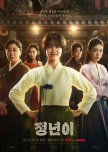
Kim Tae Ri as always at her superb best
Jeongnyeon: The Star Is Born (2024)A stunning production, which I gather did not garner much enthusiasm as the time it was released. Which is a pity because, for someone like me who knew nothing about pansori storytelling or gukgeuk theatre, it was a real eye-opener – the theatrical productions and auditions from this Korean arts tradition were a joy to watch. Whether the writing between the lines is Sapphic or not.
The cast, with Kim Tae-Ri in the lead, were also stellar. The vocal acrobatics of all actor/singers (whether voiced-over or not I do not know, but it didn’t seem to matter in any case, so why am I raising the issue…) were staggering in stark contrast to the simple folk tales and heroic events enacted in the theatre productions.
Kim Tae Ri, as ever, stood head and shoulders above everyone for the depth, intelligence and sensitivity of her acting, whether as a young woman fighting multiple challenges in order to become a gukgeuk actor, or as that actor on stage. Her vocal modulation technique in particular was remarkable. I never tire of watching her in the ambitious parts she always manages to choose.
My only quibble would be the tendency at times towards lengthy melodramatic moments, especially between members of the gukgeuk troupe. But that may be my 21st century European perspective which could arguably be viewed as inappropriate for a series set in Korea in the 1950s (excellent set and costumes btw). However, perhaps the script could nonetheless have taken the contemporary sensitivities of the target viewership into account?
Was this review helpful to you?

This review may contain spoilers
Uncomfortable Watch
The age gap in the beginning of the show makes me feel too uncomfortable, and they could have shown less, such as a simple, momentary crush maybe, but they chose to build the relationship from there by calling it love. Yikes. I had high hopes since it's high up on the lists, but I guess I should remind myself that the audience for Asian dramas is very young and might still think these types of situations are okay. But it's not okay, guys. Like the show says, if you are 20 and meet someone who is 25, it might be okay, but 14 to 19 is absurd. (Still not for me, though, as I think a 5-year age gap is only okay for people above 25.)Was this review helpful to you?

Chemistry
Sometimes the plot was boring and too long with unneccasry details. But Yang Yang is always good to watch. I am glad his co-star this time was her and they actually caught a chemistry together. (Love O2O was lacking in that part) Even though it promotes a game in the drama it's only mentioned a lot in the first half of the drama and it is still fun to watch. Surprisingly OST of this drama hits the right spots when they are played in a scene.Was this review helpful to you?


