

This review may contain spoilers
The Math Adds Up. The Romance Doesn't.
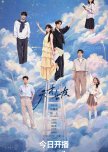
I went into Genius Girlfriend with quite a bit of anticipation, partly because of its cast and partly because of the reuters. Unfortunately, the drama ended up being one of those cases where the ingredients sound better on paper than they taste on the plate.At its core, Genius Girlfriend follows Lin Zhi Xia, a girl who is brilliant with numbers but supposedly awkward with people. She crosses paths with Jiang Yu Bai, the charming golden boy who initially seems like he could be her academic nemesis. I was honestly expecting an enemies-to-lovers setup when Yu Bai paid attention to Zhi Xia being the school's top scorer. Instead, we got something much sweeter. Yu Bai was actually nervous when he met her, and rather than treating her as an enemy, he genuinely wanted to be her friend and compete with her fairly. Their friendship gradually becomes the emotional foundation of the story, and eventually Yu Bai realizes that what he feels for Zhi Xia may be more than friendship.
I actually liked Yu Bai's competitiveness quite a lot. His decision not to team up with Zhi Xia for the math competition made sense to me, despite some criticism from other viewers. Sometimes being friends with someone much better than you at something can quietly chip away at your confidence. Wanting to compete against her from another group was, in a way, his attempt to stand beside her rather than behind her. It was less about beating her and more about proving to himself that he could be on the same level. That's probably one of the healthiest portrayals of academic competitiveness I've seen in a youth drama. Hu Yi Tian played Yu Bai well enough. Nothing particularly mind-blowing, but he wasn't bland either, which suited the character. I also didn't have much of an issue with him playing a high school student. He didn't look so old that I was constantly pulled out of the story.
Tian Xi Wei also did well as Zhi Xia. The character is described as socially awkward, but I honestly didn't see much awkwardness in her. She is simply extremely logical and inexperienced in navigating the more irrational parts of human interaction. Give her one socially capable person who accepts her for who she is and explains how the world works, and she'll be perfectly fine. I have socially awkward friends, and Zhi Xia doesn't really strike me as one. Still, I enjoyed watching her grow. Tian Xi Wei gave Zhi Xia a cute, innocent, and naive quality during her school years, while her adult portrayal showed someone who had gained a better understanding of the world without losing her conscience and convictions. That consistency in her core personality was one of the stronger aspects of the drama.
Unfortunately, I couldn't feel the romantic chemistry between Zhi Xia and Yu Bai beyond friendship and an adolescent crush. And this is especially painful for me because I am a sucker for slow burn romance. I love slow burns. Give me lingering gazes, tiny gestures, emotional intimacy, accidental hand touches, and all those crumbs that make viewers scream into their pillows. I don't need endless kissing scenes to believe two people are in love. Romance isn't measured in lip-to-lip contact. The problem here is that I didn't even feel the slow burn.
The drama kept their high school relationship remarkably innocent for a very long time, which I understand. Chinese coming-of-age dramas often handle teenage romance with a certain restraint, and I don't necessarily need them to start dating in high school. But if the intention was to keep things innocent, there still needed to be more subtle sparks. The friendship itself was convincing. The romance was not. By the time they finally became romantic, they felt more like two best friends who had collectively decided, "Well, I suppose we're dating now." Even the romantic gazes and supposedly intimate moments didn't quite reach me. This becomes even more complicated when Shen Fu Xuan enters the picture.
Fu Xuan is lonely, intelligent, quiet, and much more similar to Zhi Xia than Yu Bai. Interestingly, he is also attracted to Zhi Xia because of her intelligence. In fact, the timing of his interest creates a giant "what if" hanging over the entire story. What if Zhi Xia and Fu Xuan had met first? What if Fu Xuan had been given the same amount of time Yu Bai had to understand her? What if both men had started from the same position?
That is not necessarily a bad thing for a love triangle, but the drama didn't give me enough reason to dismiss those possibilities. Many viewers may argue that Yu Bai understands Zhi Xia better, but I kept thinking that perhaps Fu Xuan could have understood her just as well if circumstances had given him the same opportunity. Once a drama makes me start doing alternate timelines in my head, the romance has already lost some of its footing. It also doesn't help that Lai Wei Ming is incredibly charming here and portrays Fu Xuan well. So now I have both a believable alternative and an actor making me wonder about the road not taken.
Ironically, the relationship I cared about the most was not Zhi Xia's romance at all. It was her relationship with her older brother, Lin Ze Qiu. Ze Qiu is almost suspiciously perfect. He is a thoughtful son, a caring brother, and only one year older than Zhi Xia, yet he worries about her. They bicker like normal siblings, but the moment Zhi Xia comes home late, he is ready to lose his mind and call the police. He even asks their parents to get her a cellphone when he doesn't have one himself.
One of my favorite details was his initial reluctance to let people at school know that Zhi Xia was his sister. I assumed it was because she was so academically brilliant that he didn't want people comparing them. Nope. It was because he was worried that people would discover her brother wasn't as smart as she was and that she would feel embarrassed. That tiny reveal told me so much about how deeply he cared about her. I also loved the scene where he initially refuses to walk to school with her, only to change his mind when she looks distressed. Once he notices that she needs him, he immediately switches into protective big-brother mode and doesn't let her out of his sight. Their conversations have that lovely sibling combination of genuine affection and slight awkwardness. They clearly care about each other deeply, but neither of them is particularly good at saying it directly.
Wu Jia Kai deserves credit here. Despite playing someone only a year older than Zhi Xia and being even younger than some of his co-stars in real life, he brought a surprisingly mature presence to Ze Qiu through his expressions, delivery, gait, and body language. Visually, the transformation was more convincing during the school arc, where he looked more mature than the other students. As an adult, he actually looked younger than much of the cast, but his mature styling helped sell the character.
Jin Bai Hui was another character I found interesting, although mostly because I kept wondering what happened to her character development. She starts out as the typical Asian daughter with demanding and controlling parents. Her first encounter with Zhi Xia is unpleasant, and she sees her as a rival. Bai Hui is guarded, competitive, and at times mean enough that I genuinely wondered whether she might be responsible for some of the things happening to Zhi Xia. Then suddenly, she warms up to Zhi Xia and joins her band. I understand that teenage conflicts can sometimes be resolved quickly, but this transition felt like someone had skipped a chapter. I needed a bridge between "I see you as my rival" and "let's be friends." Bai Hui's writing is probably the most inconsistent among the main supporting characters. Her songwriting and singing hobby also felt underused, which was a shame because it could have given her character more depth.
The drama practically announces that Bai Hui and Ze Qiu will have a relationship too, especially with the way the camera focuses on Ze Qiu when she first performs on stage. But by then, I was already far too invested in the Lin siblings to care much about romance. Still, I have to admit that Ze Qiu and Bai Hui's relationship ended up being one of the romantic arcs I enjoyed more. The other was Tang Ting Ting and Duan Qi Yan.
These two are childhood friends, and somehow they managed to show more romantic chemistry throughout high school than the actual leads did. Qian's gaze, Ting Ting's behavior, their little interactions, the way they reacted to each other... everything quietly screamed "something is blooming here." This was the innocent adolescent romantic buildup I was looking for with Zhi Xia and Yu Bai. Nothing needed to be explicit. It was simply there. Their adult dynamic worked well too, although Qi Yan's angry outbursts still had the energy of a child throwing a tantrum. Li Jia Qi and Xia Hao Ran both did a good job with their characters, and their confession scene genuinely made me giggle. The same goes for Ze Qiu and Bai Hui's confession. Both scenes felt natural to the relationships that had been established, which made them land much better for me. Ironically, the romance that had the most screen time was the one I felt the least invested in.
The narrative itself takes a fairly episodic approach. Each episode introduces a different conflict involving Zhi Xia or one of the supporting characters, then explores how she navigates it. Most of these side conflicts are resolved within an episode, with some being referenced later. Fu Xuan's unrequited love and Bai Hui's conflict with her parents are among the longer-running threads. I appreciated the variety, but the execution wasn't always convincing. Continuity was one of the drama's weaker points, particularly with Bai Hui's sudden change in attitude. There were also moments where the logic made me pause. Yu Bai's debt situation, for example, left me wondering how exactly he was able to repay everything without the financial struggle the story seemed to imply for years. These aren't necessarily deal-breaking problems individually, but they accumulate and make the story feel less polished. And then there is the biggest structural issue: the high school arc is simply too long.
The drama spends so much time in high school that by the time the romance finally begins to properly bloom, there are only around three to five episodes left for the romantic relationships to develop. That is a particularly strange choice for a drama called Genius Girlfriend. The title made me expect romance to be a major part of the story, but the actual romance feels like it arrived late to its own drama. If the writers wanted to keep the high school portion innocent, that's completely fine. But then they needed to use that time to establish stronger emotional intimacy. Give me more romantic, fluffy moments. Instead, the story waited until the final stretch to turn the friendship into romance, and by then it felt like a switch had been flipped.
The funny thing is that the final stretch proved the drama could do romance quite well when it actually tried. Ze Qiu and Bai Hui's confession worked. Ting Ting and Qi Yan's confession worked. I genuinely giggled during both. Zhi Xia and Yu Bai's romantic scenes also worked better for me than their confession scene. Their confession felt a little too grand for the emotional buildup they had received, but their romantic interactions were cute. I was especially amused by how straightforward Zhi Xia was once romance finally entered the equation, while Yu Bai was the one trying to restrain himself and be considerate. That dynamic was adorable and felt very fitting for them. I just wish I had gotten more of it.
Visually, the drama was another disappointment. Everything looked almost too clean and polished. The constant focus on the subject with heavily blurred backgrounds, the pristine school sets, certain lighting choices, and the overall artificial quality made the drama feel less lived-in than it should have. At times, I wondered whether AI had been used heavily in the production. I don't have a problem with AI when it blends naturally into the work, but here, the artificiality stood out to me.
The one visual element I consistently liked was Zhi Xia's drawings and sketches. They felt much more tangible and personal, and I liked how they were used to summarize what she had experienced in each episode. They gave the drama a little bit of personality that some of the overly polished visuals lacked.
The OSTs are pleasant too, although none of them really stayed with me after the scenes ended. They did their job of elevating the emotional moments, but they weren't the kind of songs that made me immediately want to add them to a playlist.
Ultimately, Genius Girlfriend became a 2x-speed drama for me surprisingly early on, and that probably says everything about my level of enjoyment. I wasn't suffering through it, but I also wasn't exactly counting down the minutes until the next episode.
There are things I genuinely liked. Zhi Xia's growth was pleasant to watch. Yu Bai's competitiveness and friendship with her were thoughtfully portrayed. Fu Xuan was an interesting alternative that created some genuinely intriguing possibilities. The supporting relationships, particularly Ze Qiu and Bai Hui and Ting Ting and Qi Yan, gave me some of the romantic moments I actually enjoyed. But above all, the Lin siblings left the strongest impression on me. Their relationship had warmth, personality, and emotional credibility that I wish the main romance had possessed.
So, do I recommend Genius Girlfriend? Honestly, it depends on what you're looking for. If you enjoy wholesome youth dramas with academic themes, friendship, family dynamics, relatively innocent romance, and a generally positive atmosphere, you may find this charming. If not, then you should manage your expectations. This drama spends a long time solving everything except the equation that matters most: how to make me believe these two people are in love.
For me, Genius Girlfriend wasn't terrible. It was simply too bland, too polished, and too safe to leave much of an impression. I finished it with a mild sense of "that was nice" rather than the emotional devastation or excitement I had hoped for. Sometimes a drama doesn't need to be bad to be disappointing. Sometimes it just needs to promise you one thing, take its sweet time getting there, and then arrive when you're already halfway out the door.
Was this review helpful to you?
The second season syndrome
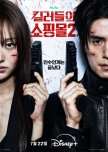
Season 1 started with Uncle Jian dead, his body shown and his funeral taking place, while the story revealed that he was the head of Muthehelp. He also left his niece the green code, a signal that everyone in the organization was obligated to protect her. That setup created such a powerful foundation that I was expecting Season 2 to pick up directly from there. Instead, the connection felt somewhat loose.This is what I call the second-season syndrome. When the first season is a classic, how do you possibly top it?
It reminded me of the first time I watched Kill Bill: Vol. 1. That feeling of discovering something completely fresh is almost impossible to recreate. Season 2 doesn’t quite have that same impact. But to be fair to the writers, they weren’t really trying to repeat Season 1. This time, they went deeper into the mythology, the characters, their backgrounds and motivations and, of course, there were a lot more deaths.
And honestly, it wouldn’t be much of a bloody action series if only the good guys were allowed to survive.
My favorite character in the entire series remains our supreme female antagonist. She drove me absolutely boiling, and I have to admit, I admire her craziness. There is something fascinating about her anger. Deep down, there is even a part of her we can understand. Her rage doesn’t come from nowhere; it comes from pain, betrayal and the feeling of being wronged.
Jian may have played a smaller role this time around, but I actually enjoyed seeing more of my favorite lead actor. Still, at its heart, this season feels like a story about the wrath of women who kill.
Unlike Season 1, there isn’t much here that demands to make sense. Don’t look for profound meaning. Don’t expect to finish an episode longing for love or wondering who you want to become.
This is not that kind of show.
It’s meant to be enjoyed with a bowl of popcorn on the couch while watching people do increasingly outrageous and senseless things to one another.
And you know what?
For what it is, I enjoyed every bloody minute of it.
Was this review helpful to you?
Was this review helpful to you?
Alchemy of Souls Season 2: Light and Shadow
1 people found this review helpful
The Best Romantacy Ever Made for screen! (Arguably the best Fantasy TV show as well.)
The greatest disservice ever done to this TV show is insisting on forcing it into the traditional categories modern Korean dramas use: Yes, it is a drama; yes, it has its melodramatic moments; yes, it's set in a world reminiscent of Joseon era Korea...but it is far from a merely a Romcom or Historical Drama.In a genre in which Worldbuilding (capital ‘W’) is a hallmark, many esteemed screen writers have fallen short of pulling off the feat of telling epic fantasy stories in an hour-long TV format unforgiving toward lengthy exposition and unnecessary dialogues. Plotlines have been left untied, characters denied development, internal logic of the narrative abandoned, all sacrifices made on the altars of pace and conciseness.
In "Alchemy of Souls”, a 30-episode, two-part, Epic Fantasy-Romance Drama, the Hong Sisters have demonstrated Romantasy works on television—gloriously.
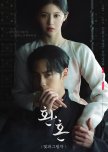
Daeho is a fantasy Joseon-eque kingdom, where magic is a primordial, elemental force, imbuing humans channelling its various forms with power which has been the source of wonder, struggle and strife of generations. Centuries of relative stability are disrupted when the infamous sorceress-assassin, Naksu (Go Youn-jang), uses the forbidden Alchemy of Souls to magically escape death by soul-switching, only to find herself in the weak body of the commoner Mu-Deok (Jung So-min). On a quest to regain her power and complete her plans of revenge, the shifted Naksu crosses paths with Jang Uk (Lee Jae-wook), a young misfit nobleman aspiring to become a mage.The two’s unlikely alliance as master and student masquerading as master and servant becomes entangled in machinations, in the midst of which their personal goals may have unexpectedly significant ramifications and consequences, not only to themselves, but to the world itself.
A gripping story of two individuals caught up in the greater motion of history and power, enjoys a large cast of memorably characters, a well-fleshed out, and well-paced narrative, high production value, laudable performances of the entire ensemble, and the stellar work of two generational actresses (Jung So-min and Go Youn-jang), to make for a show that hits every mark in spectacle, epic scope and intrigue, hilarious situational comedy, and a deeply human emotional journey.
Added bonus—due to its length and intricacies of plot and worldbuilding—the show is markedly e-watchable, and even recommended for rewatching to fully appreciate the feat that the entire production team has achieved on this show. To all lovers of this genre, this show has the makings of a true all-time classic.
Was this review helpful to you?
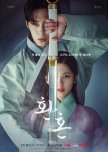
The Best Romantacy Ever Made for screen! (Arguably the best Fantasy TV show as well.)
The greatest disservice ever done to this TV show is insisting on forcing it into the traditional categories modern Korean dramas use: Yes, it is a drama; yes, it has its melodramatic moments; yes, it's set in a world reminiscent of Joseon era Korea...but it is far from a merely a Romcom or Historical Drama.In a genre in which Worldbuilding (capital ‘W’) is a hallmark, many esteemed screen writers have fallen short of pulling off the feat of telling epic fantasy stories in an hour-long TV format unforgiving toward lengthy exposition and unnecessary dialogues. Plotlines have been left untied, characters denied development, internal logic of the narrative abandoned, all sacrifices made on the altars of pace and conciseness.
In "Alchemy of Souls”, a 30-episode, two-part, Epic Fantasy-Romance Drama, the Hong Sisters have demonstrated Romantasy works on television—gloriously.
Daeho is a fantasy Joseon-eque kingdom, where magic is a primordial, elemental force, imbuing humans channelling its various forms with power which has been the source of wonder, struggle and strife of generations. Centuries of relative stability are disrupted when the infamous sorceress-assassin, Naksu (Go Youn-jang), uses the forbidden Alchemy of Souls to magically escape death by soul-switching, only to find herself in the weak body of the commoner Mu-Deok (Jung So-min). On a quest to regain her power and complete her plans of revenge, the shifted Naksu crosses paths with Jang Uk (Lee Jae-wook), a young misfit nobleman aspiring to become a mage.The two’s unlikely alliance as master and student masquerading as master and servant becomes entangled in machinations, in the midst of which their personal goals may have unexpectedly significant ramifications and consequences, not only to themselves, but to the world itself.
A gripping story of two individuals caught up in the greater motion of history and power, enjoys a large cast of memorably characters, a well-fleshed out, and well-paced narrative, high production value, laudable performances of the entire ensemble, and the stellar work of two generational actresses (Jung So-min and Go Youn-jang), to make for a show that hits every mark in spectacle, epic scope and intrigue, hilarious situational comedy, and a deeply human emotional journey.
Added bonus—due to its length and intricacies of plot and worldbuilding—the show is markedly e-watchable, and even recommended for rewatching to fully appreciate the feat that the entire production team has achieved on this show. To all lovers of this genre, this show has the makings of a true all-time great.
Was this review helpful to you?
mid
it has so many misunderstandings what the hell every episode they were always splitting and arguing. FL can’t just say her mind and always trying to pick of a fight. ML was just there idek he was too slow and why wasn’t his backstory talked about well I was confused. it was pretty mid I liked the first 4 episodes. I feel like this was too short maybe it for the better cause I couldn’t even imagine 16 episodes of misunderstanding. it was a snooze fest this could have actually been one of the best Korean x Japanese shows but it was just thereWas this review helpful to you?
Even on ordinary days, life is still worth living
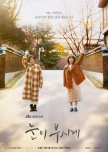
This K-drama has been sitting in my watchlist for as long as I can remember. I came across it when I was searching for “saddest K-drama scenes” on TikTok. It was a clip from a small scene in the final episode, but I didn’t pay much attention to it. Fast forward to now, and watching it hit me with so many emotions, but mostly sadness and melancholy. This K-drama heavily reminded me of When Life Gives You Tangerines and Hi Bye, Mama, but it told a different story. It was all about aging and life in general.A thought occurred to me while watching: as a person gets older, do they often question their self-worth? Do they wonder if they’ll still be able to enjoy the things they love and cherish as time goes by, or if they’ll eventually struggle to keep up with a world that is constantly changing? It portrayed aging so beautifully and realistically, from our physical capabilities to the regrets that follow us forever.
Also, once again, Nam Joo-hyuk gave an amazing performance. Just like Twenty-Five Twenty-One, this K-drama left me with a lingering feeling after watching. There was one episode where his dialogue made me so nervous for some reason. And just like the rest of the K-drama, you’ll also feel immersed in the characters. It’s like you’re part of the story as they navigate through different moments, some sad, some happy, and some angry.
I finished all 12 episodes in just a few days. It’s definitely binge-worthy, but make sure to have tissues ready. I believe I cried in almost every episode, even on the bus 😭😂. It really felt like a puzzle with each episode leading up to the big picture.
When our lives feel like a series of mishaps and misfortunes, we somehow just need to remember the dazzling and glimmering moments in our lives. Sometimes, it’s just the ordinary and normal days. So live, because everyone deserves to be happy.
I would categorize this kdrama as a healing and nostalgic korean drama. The shots were so beautiful especially the sunset scenes, the musical scoring will make you feel so many emotions. I hope I encounter another one just like this. :)
Was this review helpful to you?
just not it
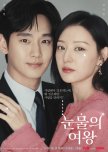
I watched Queen of Tears before the ML's controversy broke, so this is my completely unbiased opinion. The main cast consists of top-tier actors who deserved so much better than this. The show was genuinely painful to sit through—the plot was overly forced, and the character development was weak. As a huge fan of Kim Ji Won who was anxiously waiting for this drama, I felt so disappointed by the overall execution. To make matters worse, the chemistry between the main leads just wasn't there for me.Was this review helpful to you?
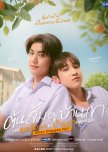
Cute, but not Genius enough
My favorite parts of the show:1. LIN ZE QIU & JIN BAI HUI! I loved them so much, I wanted to drop this so many times but ended coming back again and again just for them. They were both mature and calm and matched each other as well. Also the man Zeqiu is! A great brother and a great husband.
2. Lin siblings moments, love seeing siblings bonding. This show would've been so much better if they were the center of the plot and not the romance.
3. SML and his patiant, shockingly I did care for them!
Tbh, although i liked Tingting and Qiyan, I preferred them so much more as friends. Friends that are so special to each other. Why can't we have friends that don't turn lovers, I love meaningful friendships.
Also I wanted Tingting with Su mo, this is just me liking jiejie romance I guess!
Unfortunately I couldn't care less for the main leads 😕, there was just nothing about them that interested me. Admittedly I skipped some of their scenes because I found them mostly boring. Honestly they should have focused more on her being a genius that how it affects her, or mostly people around her.
I HATE the random unnecessary AI, as well as the intro/ outro
Altogether it was a cute drama. Nothing too extraordinary, but not bad either.
Was this review helpful to you?
Was this review helpful to you?
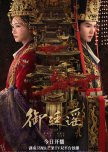
Best C-drama of June & July 2026.
Royal Betrothal is without exaggeration, one of the best C-dramas I have watched in 2026 and easily one of the most compelling historical dramas to come out of the genre in recent memory. This drama doesn't lean on tired tropes or lazy power fantasies instead, it builds a world where every alliance is fragile, every victory is earned, and no character is safe from the machinery of power.The storyline was unique and genuinely peak television. We so rarely get a show where the male lead is an emperor and when we do, the narrative usually collapses under the weight of either too much romance or too little substance. Here I genuinely wondered where the plot could possibly go with an emperor at the center, but Royal Betrothal delivered at every turn.
What impressed me most was how the show balanced its dual worlds the glittering, treacherous court and the gritty streets where corruption bleeds into ordinary lives. The emperor's vigilante identity adds a layer of moral tension.
The villains, too, were excellent. From the brutality of the Tiger Roar gang to the cold, calculating ambition of the Right Chancellor to The Blood Moon Society
Both Chen Zheyuan and Wu Jinyan did exceptionally well in their parts. I will be honest I always thought Chen Zheyuan was somewhat overrated. I had seen his work before and never fully understood the hype. But Royal Betrothal proved me wrong, completely and emphatically. He deserves every bit of praise.
Shen Zhishu wow. At first, I genuinely thought he was just a scholar from a noble family with no martial arts skills, destined to be the polite background character who occasionally offers exposition. But as the show progressed, he surprised me at every turn. He proved himself not just capable but indispensable as the emperor's right hand. His strategic mind, his quiet loyalty, and his willingness to get his hands dirty when necessary made him one of the most satisfying character arcs of this drama.And his relationship with Yan Fuzhi was genuinely enjoyable to watch. It had none of the forced melodrama that plagues so many secondary couples. Instead, it felt like two adults who see each other clearly and choose each other anyway.
Di Nian deserves better than Shen Zhili and I say this with real frustration. Even though Shen Zhili was one of my favorite characters overall, I cannot ignore how poorly Di Nian was treated by the narrative's romantic geometry. Di Nian deserved someone who would choose him first, unambiguously, not keep him as a second option or a consolation prize. Shen Zhili's moral complexity made her fascinating, but her treatment of Di Nian was one of the show's few genuine missteps. He gave everything to a woman who could not fully commit, and watching him realize that slowly was heartbreaking.
If you have been waiting for a historical C-drama that respects your intelligence Royal Betrothal is that drama.
Was this review helpful to you?
A Shop for Killers: Season 2 (2026) — 10/10 Masterpiece!
Bigger stakes, intense retaliation, and a mind-blowing continuation."Season 2 took everything that made the first season amazing and escalated it to a global level! With Jeong Jin-man back in action alongside Ji-an, the dynamic counterattack against Babylon was non-stop adrenaline from start to finish.
🌟 What Made Season 2 Outstanding:
The Dynamic Duo: Seeing Ji-an officially step up as the CEO of Murthehelp alongside Jin-man’s long-awaited comeback was pure hype! Their chemistry and tactical coordination were top-tier.
Expanded Universe & Babylon Conflict: Expanding the story beyond the original novel to introduce international threats and new characters (like Masaki Okada as J) added incredible weight to the narrative.
Next-Level Action Choreography: The action sequences were even more explosive and brutal than Season 1, keeping the high-stakes tactical realism we loved.
Fast-Paced & Gripping: Just like the first season, zero filler episodes—8 episodes of pure storytelling, payback, and tension.
Was this review helpful to you?
Casting
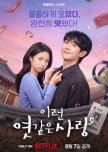
The series started off interestingly. Unfortunately, it's unclear whether we should view it as a comedy or take it seriously. Both TaeHa and EunSae have separate storylines, but they're not given properly.Even before the story, the casting mismatch bothered me. Jung Hae In, with his strong dramatic acting skills, deserved to be partnered with a better actress for the female lead. While I found Hae In's scenes realistic, Ha Young's acting, which is still unclear, unfortunately disconnects me from the scene. Sometimes her gestures and facial expressions don't synchronize with the dialogue, and sometimes they fall short of conveying emotion. Ultimately, I'm trying to watch what Hae In brings to the scene through his individual efforts, and I hope that in his next project he'll be with a partner who complements him and at least delivers acting at his level.
Was this review helpful to you?
Officer, on what grounds do you say that?
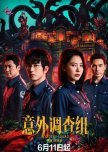
In episode 4, a suspect states "Officer, on what grounds do you say that?" when the lead investigator throws out theories about how and why this suspect could have murdered the victim and made it look like an accident. The audience feels this sentiment from beginning up until the last episode where two or three leaping twists are thrown in. If a dramas are supposed to be a thrilling rollercoaster ride this attraction has glaring gaps in the tracks where the speed is supposed to get the audience to the other side despite the huge unsettling leap from track to the next.Episode by episode, I tried to dissect the merits of the drama and I just think the amount and the subject matter of the content they tried to cover in a 20 episode in 15 mins per episode was too much for it to be created in any substantive way. It was a disservice to the actors, the scriptwriter, and director. It is a low budget production but I don't think the locations were poorly done. The uniforms and offices were ok. But the scripts and dialogue were a disservice to the main cast. Some of the best lines and most sound logic came from the witness, victims, and suspects. Only three of the main four investigators were able to spotlight their skills. The lead investigator is somehow supposed to be naive and green but somehow put in enough years that she is supposed to be leader of this new accident squad.
The merits of the casting and writing of this drama actually happen with the accident squad is not on screen. The dramatic narrative surrounding the reveal of the crimes are very compelling. This is especially true of the first crime when the actions of the victim and assailant are revealed. The squad actors never found their chemistry together and played individual characters in the same room. The result is that they in some circumstances looked like comedic parodies of their characters. I think there was a lot of effort made the concessions that were probably made on the script, direction, and time were costly on the final product.
4.5 - the drama never found a consistent tone for the 4 main squad members but the dramatic narratives and performances of the guest stars carried the show into something watchable. The leaps in logic were egregious for the crime/mystery drama. The end was abrupt and had too many twist occurring in the last 15 min episode.
The outro was not great. The musical score was ok for dramatic performances and over the top for scenes with a bit of comedy. I'd give the re-watch value a 0 if I could.
Was this review helpful to you?

A Love Forgotten, but Never Truly Lost
OVERALL IMPRESSION🌟• An emotionally intense and surprisingly addictive amnesia romance elevated by compelling performances and beautiful chemistry.
WHAT I LIKED💖
• The leads share a connection that appears to survive even when memories and circumstances stand between them.
• The ML’s instinctive concern for the FL suggests that his heart remembers what his mind has forgotten.
• The FL’s devotion is understandable because she remembers the loving man he once was.
• Their striking compatibility and emotionally charged interactions make them fascinating to watch.
WHAT I DISLIKED⚠️
• The FL endures an uncomfortable amount of emotional suffering.
• The ML’s circumstances explain his behavior but do not excuse his cruelty.
• The plot relies heavily on familiar amnesia, misunderstanding, and scheming-rival tropes.
• Certain emotional developments needed more time, while the short runtime made parts of the story feel rushed.
PRODUCTION AND PERFORMANCES🎭
• Tian Xu Ning portrays the ML’s coldness, inner conflict, and buried emotions remarkably well through subtle expressions.
• Teng Ze Wen convincingly communicates the FL’s pain, tenderness, and restrained desperation despite having limited dialogue.
• The leads’ chemistry is one of the drama’s greatest strengths.
• The attractive styling, polished locations, and beautiful cinematography give the production impressive visual quality.
FINAL THOUGHTS💭
• This is not a flawless drama, but it is one of the more compelling versions of this familiar storyline.
• Recommended for viewers who enjoy intense, melodramatic romances filled with angst, devotion, and powerful chemistry.
Was this review helpful to you?


