
 Celebrity


A Winter Sun Wakes the Wind in Spring Hills' Dream
1 people found this review helpful
This review may contain spoilers
If I were rating only the two leads and their chemistry, this would be a very different review. Unfortunately, I am rating the drama.A Winter Sun Wakes the Wind in Spring Hills’ Dream is one of those frustrating dramas that mistakes suffering for depth, stupid choices for the weight of life, melodrama for character development, and explaining its themes for actually exploring them.
There is a huge difference between a story that contains an idea and a story that constantly explains its own ideas to you. This drama desperately wants to impart profound lessons about love, freedom, sacrifice, grief, independence, letting go, finding yourself, and allowing the person you love to follow their own path. None of these ideas are inherently bad. Some of them could have made for a genuinely interesting story.
The problem is that the actual plot rarely earns them.
Instead of allowing conflict to grow organically from the characters and their choices, the writers repeatedly throw increasingly dramatic events at them in order to manufacture an emotional reaction.. Death. Trauma. Separation. The Hunter School. Five years apart. Whenever the story needs another emotional climax, something terrible happens, and afterwards somebody says something vaguely philosophical about life, love or destiny as though the speech retroactively gives the preceding events narrative depth.
It doesn’t.
The death of Qingtian is perhaps the clearest example. It feels less like the inevitable or meaningful conclusion of a character arc and more like the writers realizing that killing a character the audience cares about is an extremely efficient but cheap way to make people cry. And with three couples on stage at least one had to have a tragic ending or the story wouldn’t be noble enough. Killing of characters are enormous events, but enormous events are not automatically meaningful ones.
The drama continually substitutes intensity for causality.
And then there is Changyang.
This is a man who spends two years obsessively pursuing Qinglang. He wants him with extraordinary intensity, inserts himself into his life, can be manipulative and controlling in the name of protecting him, repeatedly makes it clear that being with Qinglang is one of the things he wants most in the world, and spends much of the drama wanting to protect and care for him.
Then, once he finally has the relationship he fought so hard to obtain, the story suddenly needs us to believe that leaving Qinglang for the Hunter School represents personal growth and independence.
Why?
Wanting to share your life with the person you love is not dependency. It can be a choice. Independence does not require geographical separation, and having an identity outside your relationship does not require abandoning the relationship for years.
The idea the writers appear to be aiming for is perfectly understandable: two people should not lose themselves in love. They should remain individuals, pursue their own paths, and love each other without possession.
Fine.
But the drama never convincingly establishes why the Hunter School is Changyang’s path. There is an enormous difference between “I love you enough to let you pursue the dream that has always mattered to you” and “I love you enough to accept your sudden decision to disappear for years to pursue something the screenplay has abruptly decided represents personal growth.”
If the Hunter School had been established from the beginning as Changyang’s ambition, the conflict could have been heartbreaking. If his decision had instead been presented as a psychologically unhealthy response to his inability to protect Qinglang — an obsessive need to become stronger after feeling powerless — that could also have been fascinating, because it would have developed one of Changyang’s existing flaws.
Instead, the Hunter School feels like a plot device wearing a sign that says PERSONAL GROWTH.
Qinglang’s side of this is equally frustrating. The drama repeatedly seems to confuse unconditional love with having almost no boundaries. Respecting another person’s freedom does not mean having no needs of your own. Changyang has every right to choose his path, but Qinglang should have an equally valid right to say: “I respect your choice, but I do not have to put my life on hold waiting for you.”
Instead, Changyang gets both freedom and the emotional security of expecting Qinglang to remain there for him. The story presents Qinglang’s acceptance and waiting as evidence of the greatness of his love, when after a certain point it made me wish he would discover some self-respect.
This is especially irritating because the drama has all the ingredients for a much more interesting exploration of love. Changyang’s tendency to protect Qinglang until protection becomes control, combined with Qinglang’s own history and his difficulty establishing boundaries, could have produced a genuinely complicated relationship. The question could have been: how do two people who deeply love each other build a life together without either controlling or disappearing into the other?
That story was already there.
The writers apparently decided we needed deaths, prison, prolonged separations and motivational philosophy instead.
The fundamental problem is that you can constantly see the writers’ hands moving the characters around. Eventually you stop thinking, “What would this character do now?” and start thinking, “What do the writers need to happen now so they can produce another tragic scene?”
Once that happens, melodrama stops being moving and becomes manipulative.
And by the final stretch, something even worse happened to me: I stopped sympathizing with the characters’ suffering because so much of it resulted from decisions that felt avoidable, irrational or artificially imposed by the screenplay. Angst only works while I still care about the people experiencing it. Eventually my reaction stopped being “please let these poor people finally be happy” and became “you are all responsible for your own misery.”
That is disastrous for a romance approaching its happy ending.
Which brings me to the greatest waste in the entire drama: the leads.
They are beautiful together and have real chemistry. In their quieter scenes — sometimes simply looking at each other, touching, hesitating or sharing space — they create more emotional complexity than pages of the screenplay’s pseudo-philosophical dialogue. There are moments when you can see the much better drama that could have existed with these same actors and characters.
Then someone starts delivering another life lesson and I wanted to throw something at the television.
There is nothing wrong with melodrama. There is nothing wrong with tragedy. There is nothing wrong with separating lovers, killing characters, or making people suffer.
But suffering is not automatically profound.
A story should make its ideas emerge from its characters, their choices and the consequences of those choices. It should not force the characters through arbitrary misery and then explain to the audience what profound meaning we are supposed to find in it.
If I want to read platitudes passed on as philosophical truth, I can read fortune cookies messages.
At least they don’t require sixteen episodes of my life.
Was this review helpful to you?

A must-watch for history buffs.
This is a biopic of Xi Zhongxun, a prominent communist in his own right and the father of China's current president, Xi Jinping, mostly set during the Republican era. As the title points out, the drama focuses mostly on his revolutionary activity in the Northwest region, with just the final episodes set in the early years of the People's Republic of China.The story starts in 1927 with Zhongxun as a poor peasant teenager in Shaanxi, when the already conflicted relationship between the Nationalists (Kuomintang) and the Communists had just broken down, and ends in 1952 when Chairman Mao called him to join the Central Government in Beijing . He was nearly 40 by then, still incredibly young for such a post.
We see how he got into the Communist Party, his early years as a revolutionary in the mountains and his close relationship with Liu Zhidan, the purges and conflicts with the Party's leftist and more radical wings, how he established himself as a progressive and appreciated leader, the land reforms that took place in the Northwest, his relationship with Mao during his time in the region, his roles in the Red Army and local governments, parts of his personal life, and how he dealt with the ethnic integration of the western regions into the newly established People's Republic.
It's not the first time I've come across a prominent historical figure from the 20th century who seems to have lived a life more unbelievable than a plot-armor movie, and for sure many of those who appear in this drama check the same boxes. What's crazier is that the series made me research him more deeply, and the second part of his life was equally or even more incredible. Some out-of-the-ordinary people in the past century indeed lived ten lives in the span of one of ours nowadays.
Production is jaw-dropping, which is understandable given who he was and who his son is. The breathtaking landscapes, mainly of Shaanxi Province, and the real settings give the drama the flavour it needs to carry you to that era; not to mention that the number of extras on screen and the recreation of the battles are also impressive. The only notable blemish you could mention in this regard is the CGI leopard in ep 7 – totally unnecessary even if it's part of the folklore and myth, which I don't know.
Despite the period and topic it tackles, the drama isn't heavy or stiff at all. This makes Northwest Years a very entertaining drama, with an even pace and engaging storytelling throughout its 39 episodes, supported by a solid cast led by Jin Dong, Yu Hewei, Ding Yongdai, Hu Jun, Ni Ni and Leo Wu (as the young Zhongxun). In this regard, you could argue that Xi Zhongxun was portrayed more like an idealized figure than a person, but despite this, Jin Dong did a very good job making him feel like a real human.
It also does a fantastic job bringing all the battles, names and strategies of that period and setting into the mix... and there were a lot! Again, excellent work in the script and direction departments. As I only knew the basics, I ended up reading and researching further as I went along with the episodes to keep track of them, and for me that is a plus as a viewer.
When I first checked out this drama, I knew I was going to like it, but never in my wildest dreams had I thought I'd be so entertained, eager to hit play the second each episode ended. Of course, this isn't a drama for everyone, but if you enjoy watching high-quality projects bringing real events and people to life, and want to know more about the Republican period and in this specific region, you should check Northwest Years.
Definitely a must-watch for history buffs, without a doubt.
Was this review helpful to you?
Why 《Made in Korea》 Is a Masterpiece of Secret History
How can you tell if a writer and director have mastered their craft? It is when they can tightly weave fiction into real history without changing the actual flow of events, leaving us wondering if those events did happen in some form or another. That is exactly what 《Made in Korea》 is, a secret history genre of fiction seamlessly inserted into the seams of South Korea's turbulent 1970s.This is no ordinary fiction. This is not like typical historical fiction where a story is simply set against the backdrop of a particular period, such as in 《Abraham Lincoln: Vampire Hunter》 or 《Avengers》. Instead, 《Made in Korea》 belongs to the same tradition as 《Titanic》and 《The Da Vinci Code》, fictional stories tightly woven into actual history that the audience can no longer tell where fact ends and fiction begins.
This genre is particularly captivating when executed properly. A writer must perfectly fit a fictional story into real-world events without altering the timeline. Meanwhile, the director must integrate the narrative seamlessly into existing knowledge that the audience is left wondering if the fiction is secretly based on classified, unreleased, or incomplete records that the creators simply cannot legally or openly acknowledge.
That is what 《Made in Korea》 is made of. It is a true work of art by writers Park Eungyo (박은교) and Park Joonsuk (박준석), and director Woo Minho (우민호). They have definitely mastered their craft, making 《Made in Korea》 their definitive masterpiece.
Was this review helpful to you?
Why 《Made in Korea》 Is a Masterpiece of Secret History
How can you tell if a writer and director have mastered their craft? It is when they can tightly weave fiction into real history without changing the actual flow of events, leaving us wondering if those events did happen in some form or another. That is exactly what 《Made in Korea》 is, a secret history genre of fiction seamlessly inserted into the seams of South Korea's turbulent 1970s.This is no ordinary fiction. This is not like typical historical fiction where a story is simply set against the backdrop of a particular period, such as in 《Abraham Lincoln: Vampire Hunter》 or 《Avengers》. Instead, 《Made in Korea》 belongs to the same tradition as 《Titanic》and 《The Da Vinci Code》, fictional stories tightly woven into actual history that the audience can no longer tell where fact ends and fiction begins.
This genre is particularly captivating when executed properly. A writer must perfectly fit a fictional story into real-world events without altering the timeline. Meanwhile, the director must integrate the narrative seamlessly into existing knowledge that the audience is left wondering if the fiction is secretly based on classified, unreleased, or incomplete records that the creators simply cannot legally or openly acknowledge.
That is what 《Made in Korea》 is made of. It is a true work of art by writers Park Eungyo (박은교) and Park Joonsuk (박준석), and director Woo Minho (우민호). They have definitely mastered their craft, making 《Made in Korea》 their definitive masterpiece.
Was this review helpful to you?
wtf is this drama
A drama filled with foolish people and constant misunderstandings.I stuck with it until episode 23, but after that, it completely lacked logic. The lengths they went to just to keep the embroidery shop running were truly stupid, turning the conflict into something nonsensical. It’s a really stupid drama. I can't fathom how the Chinese people of the past are portrayed as being this foolish. The worst part is the main character and the mother-in-law; their stupidity is baffling, and the storyline is just terrible.
Was this review helpful to you?
Really?
So far the most frustrating thing is that doesn't appear to be any adult teachers or school officials who care to show up or report the cruel hazing that goes on at this "exclusive" wonderful school. As far as I'm concerned most of these students are just wealthy wastes of skin using up oxygen. And the female protagonist most of the time is a spineless, cowardly mess, with an occasional backbone thrown in to keep her from looking completely pathetic. Hate me if you want that's the way I see it.Was this review helpful to you?
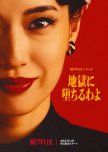
This review may contain spoilers
I never love a villain as much as this!
I never thought I would find myself sympathising with a villain. Yet Straight from Hell tells the story of Kazuko Oda, a woman who refused to surrender to fate.She was born into misfortune, surrounded by poverty, hardship, and tears. But rather than allowing suffering to make her bitter, it sharpened her. It made her ambitious, resilient, and determined to become better than the circumstances she had been given.
At first, I thought the story would follow the familiar arc of a woman who learns that the cruelty and unfairness of the world do not justify becoming cruel herself.
Instead, Kazuko became exactly like the people who had hurt her. Greedy. Manipulative. Ruthless.
And somehow, that made her story even more heartbreaking.
Kazuko became the victim of her own brilliance. She was naive, but fiercely driven, with an extraordinary instinct for business. She was charismatic, intelligent, and magnetic—and the men around her quickly recognised those qualities. Unfortunately, they also recognised how useful she could be.
The first was the man who became her fortress. He gave her work, took her in, and taught her how to become a hostess. He adored her, and she loved him in return. For a while, she seemed to have finally found someone who would protect her.
Until he realised just how valuable she was. And then he sold her to one of his wealthy clients.
That was Kazuko's first great betrayal.
After that, more men came into her life, each with a different scheme, but ultimately with the same intention. They saw her potential and wanted to use it for their own benefit. Each betrayal pushed her further away from the innocent woman she had once been.
And yet, behind the mask of the woman wrapped in the finest silk, walking confidently into her multimillion-yen establishments, there remained a wounded soul.
A soul hurt by the man she loved. By the friend she trusted. And perhaps most painfully, by the destiny she had once believed would eventually give her everything she wanted.
Kazuko told the world that she had everything: money, fame, power. But beneath all of it, she knew what she really wanted. To be loved.
Not admired. Not desired. Not used. Loved sincerely and truthfully.
That, to me, is what makes Kazuko such a tragic character. She spends her entire life trying to gain control over everything around her, only to discover that the one thing she truly longs for is the one thing she can never buy, manipulate, or force into existence.
And the storytelling isn't the only thing that impressed me. The cinematography is beautiful too, the first scene that strike me: Erika Toda, sitting in her limousine, lights a cigarette and lowers the window just enough for the smoke to drift into the night air. She gazes out at the city lights, lost for a moment in memories of where she came from.
It was such a simple scene, but something about it stayed with me. That was the moment I knew this drama was going to be something special.
Was this review helpful to you?
All actions have consequences, this series will show you two different parenting side, one is neglect and the other is pampered and spoiled . When su lin was bullied because of the three bullies. The only person who is concerned about her is her classmate who saw what happened and her neighbor Mr. Gu who is really worried about her.
This series is dark and gripping.
Highly recommend this drama.
All the cast did a fantastic job 👏
Was this review helpful to you?
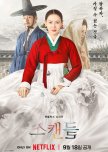
A Masterpiece of Acting and Exquisite Artistry
The Scandal is not your conventional K-drama family romance or a period romance; it is a masterclass in psychological tension, repression, and hidden desire..It does have explicit sex scenes but ones that are necessary for the story. The slow, laid-back pace of the drama reflect the boring, slow-paced everyday lives of the elites of the Joseon Era, especially the women. This could very well be one of the most misunderstood K-dramas, until one looks beyond the surface.While some may find the relationship dynamics as a "lack of chemistry," the show's brilliance actually lies in its calculated restraint. The bond between Lady Cho and Cho Won is defined by a heavy, palpable longing masked behind rigid societal facades. Ji Chang-wook delivers an incredibly nuanced, multilayered performance, doing the heavy lifting largely through his highly expressive eyes. He seamlessly transitions from witty and mischievous to chillingly predatory, only to later reveal a profound, heartbreaking vulnerability. Opposite him, Son Ye-jin commands the screen with flawless micro-expressions, perfectly capturing a ruthless intellect hidden beneath a calm exterior, while Nana provides a heartbreaking, raw emotional anchor as the virtuous widow.
Beyond the stellar acting, the drama is a visual and auditory triumph. The production team treats Joseon-era craftsmanship as an active narrative device-using traditional silk-making, paper-making, and symbolic landscape paintings to beautifully foreshadow the plot and mirror the intricate, slow-burn manipulations of the characters. The creative use of pansori music acts as a powerful emotional chorus, heightening the tension where words fail. Bathed in gorgeous, candlelit cinematography and meticulous costuming, The Scandal demands to be watched for its artistic depth rather than surface-level tropes. It is an exquisite, haunting character study that lingers long after the credits roll.
Was this review helpful to you?

A whole lots of misunderstanding
Falling into Your Mortal World had everything I love in a fantasy romance—fate, sacrifice, misunderstandings, hidden truths, and two people whose lives seem destined to remain connected. Yet after everything the ML and FL went through, the ending left me asking one question: Why weren't they allowed to be together?Much of their heartbreak comes from misunderstandings and lies. Things are deliberately hidden, causing them to make choices without knowing the complete truth. Instead of being able to understand one another, they are repeatedly pushed apart by circumstances and deception. That's why I expected the truth finally being revealed to become their turning point.
What made the ending especially frustrating was the **red string of fate**. The story tells us these two are tied together and that their lives will continue to cross. To me, that symbolizes a love and connection strong enough to survive different lives, separation, and everything fate throws at them.
So why establish such a powerful connection only to leave them apart?
I understand that not every romance needs a perfect fairy-tale ending, and sometimes loving someone doesn't automatically mean you can be together. But here, the ending felt more incomplete than bittersweet. After all the misunderstandings were cleared and the lies exposed, I wanted them to finally have the opportunity to choose each other with the truth between them.
If their souls are destined to remain connected, I wish the writer had given us that final moment showing that fate wasn't only bringing them together to suffer—it was bringing them home to each other. ❤️💔
Was this review helpful to you?
the ending changed everything
let's start with acting, it was brilliant. no surprise there.now the story,
I ALWAYS believed in something:
it doesn't matter if the drama is gold and plot is good if the ending is bad (not necessarily sad ending) then the entire drama I think is bad. now the reverse is true too, when the drama and the plot is trash if the ending is good (not necessarily a happy ending) then the drama is good.
kinda the same thing happened here, this drama was not good honestly the plot was all over the place and a mess, but the last two episodes was actually really good, it was filled with emotions and the plot suddenly moved forward. I really enjoyed the last 2 episodes. the ending especially was good too.
I don't know if i can recommend it to others but IF YOU STARTED watching it, don't drop it and watch it till the end, you won't regret.
Was this review helpful to you?
This review may contain spoilers
A bit too meta
The beginning was too silly and I wasn't convinced this is the drama for me. And then, bam! The end of the first episode they made me cry. When she saw her dad and hugged him 🥹😭This made me hope for a hidden potential. And wasn't it much of a risk to continue watching. With visuals this beautiful and clear scenographic image it was very pleasant to watch (OST didn't steal my heart but it was still objectively very good).
And it all was looking very good until I reached the love confession and all of my engagement plummeted. Sad, very sad.
But it happens very often. Suddenly without angsty will-they-wont-they situation plot cannot hold on to the tension by itself. And the FL's disappearing act didn't help the matter. I get that it was part of the plot and the message (we cannot forget ourselves while loving someone) but not having lead actress 'present' for the best part of the second half was very disengaging. It also didn't help the matter that she had no personal conflict or agenda that would make matters interesting. It was there at the beginning, but then she truly became this clueless, sunshine side character.
The ending was... something. I hate open endings, but I hate boring endings more. This one was kind of both, but I didn't hate it. I do not love it either. At least there was some kind of vision and the plot twist. It was just a little bit too meta for me. And too much was revealed at the end. Sitting there confused for the better part of an hour is not what I count as a good time.
*how come they couldn't even have a kiss here, but in other dramas they almost go at it (looking at you Pursuit of Jade). Just wonder. It's so prudish for agult people to only hold hands and kiss on the forehead.
Was this review helpful to you?
After Moving Seats, the Boy Behind Me Has a Crush on Me
28 people found this review helpful
This review may contain spoilers
cute but...
This is JBL is very cute and very open. The only point missing is the makeup department. Sometimes they look young and sometimes due to the makeup and the lighting they do not. Of course it would have been better to have actors somewhere closer to their age to portray them. Especially when you have watched "Takaras Treasure" Eito looks soooooo much younger. This is my only major gripe with this series...Overall it was beautifully done, nice pictures, good vibe and yes, they really kiss which is an improvement over so many other JBLs. The story is not the most exciting but still interesting. Of course they serve all the clichés expected from a BL either in words or in pictures. The unique point is a supportive bigger brother.
Of course there must be drama in such BL, which happens on the end of episode 5 when Asamiya says something stupid and I wanted to punch his face immediately. "What is wrong with you?" At least they did not drag that on, it gets resolved with the encouraging words of Asamiyas friend who supports him from the "shadows". Also Mayama is growing, taking initiative and leaving his inferior complex behind.
This was nice and wholesome. As with most JBLs it's a positive story with a postive vibe. Production quality was good, but as mentioned above lighting and makeup were inconstistent. Especially Eito is superb in his role making the comedic bits believable and not cringe. This series is worth binging.
Was this review helpful to you?
After Moving Seats, the Boy Behind Me Has a Crush on Me
0 people found this review helpful
This review may contain spoilers
Cute, Simple, and Just What I Needed
I honestly didn't know what to expect from this drama.Not only because of the title — which already tells you pretty much everything that is going to happen 😂 — but because this was actually my first Japanese BL. So I went into it with absolutely no idea what kind of experience I was going to have.
And in the end, I think this was probably the perfect kind of drama for me to start with.
It's not complicated, it's not overly dramatic, it's simply a cute, light and very easy-to-watch school romance, and sometimes that's exactly what you need.
The story begins after a classroom seat change puts quiet, rather introverted Mayama Har in front of Asamiya Kosei, one of the most popular and handsome boys in the class.
Then Mayama finds a confession written on a worksheet:
“I like you.”
Naturally, he assumes there has been some kind of mistake. Because why on earth would someone like Asamiya be interested in him? Except… there is no mistake.
Asamiya really does like him.
And apparently, he has liked him for quite some time. From there, the drama basically becomes a very cute exercise in watching one boy trying to understand why someone could possibly like him, while the other has absolutely no problem making his feelings known.
And honestly? I had fun watching them figure it out.
Asamiya, let's talk about him.
Once he decides that he likes Mayama, he basically goes all in.
He waits for him.
He finds excuses to be around him.
He tells him what he likes about him.
He makes his feelings very, VERY clear.
What makes Asamiya's personality work, though, is Mayama. He isn't cold. He's just inexperienced and genuinely doesn't know what to do with this sudden amount of attention.
I actually liked that he doesn't immediately fall head over heels.
He needs time.
He needs to understand his own feelings.
One of the things I appreciated most is that the romance doesn't feel unnecessarily heavy. There aren't endless misunderstandings created simply to stretch the story. There is some hesitation and some emotional uncertainty, obviously, but the overall feeling remains warm. It's about first love.It's about the excitement of realizing that someone likes you.
It's about discovering what it means to like someone back. It's about jealousy, awkwardness, little gestures and those tiny moments that suddenly feel much more important because you're falling for someone.
Maybe this is completely subjective, but I can't imagine having watched this at a better time.
There is something about After Moving Seats that feels very summer.
The school setting.
The young characters.
The uncomplicated romance.
The light comedy.
The feeling that everything is happening for the first time.
It was exactly the kind of drama I needed: light, sweet, funny and uncomplicated. There were moments that genuinely made me laugh, and plenty of others that simply made me smile because the two leads were so cute together.
Was this review helpful to you?
This review may contain spoilers
Two Red Flags made for each other
This drama is perfect, the story is catchy and the way Big Jane become a softer person for his Little Jane despite his background and past traumas. I actually reproach that they didn't dig deep in this side of BJ and why he start doing favors in the first place.The acting is top notch Especially Tee. His eyes are so expressive, you can feel his love for LJ and his sorrow when they broke up, he really did an amazing job for his first ever role and the chemistry is chemistrying. Despite their actual age gape, you can feel how they are comfortable with each other which helps delivering an excellent performance.
For me Little Jane is as much a red flag as Big Jane
He listen to gossips so much , let them guide him and his decisions and he judge BJ through them.
The shower where he imagine BJ despite him being in an actual relationship with Dan.
He treat BJ like shit after he paid his brother dept.
He sleep with the man responsible for his best friend death [in his opinion] the same exact day the said BF died and all that as a favor.
He himself demand two favors from BJ when he spent an amount of time criticizing him for offering favors to others.
So they deserve each other.
Was this review helpful to you?


