


 4
4 17
17 1
1 5
5 1
1 1
1 1
1


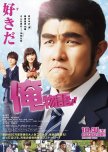
Young Love with three Sweethearts
Oh, what sweethearts these three teenagers are! This is a love-triangle done right, and the film hits all the highs and lows of a first love.And this is a story with one of the narratives I love: The "ugly duckling" doesn't change.
Takeo is, while well liked by guys, shunned by girls at every turn. His appearance and his deep voice -- the first image that came into my head when I saw him was one of a middle ranked yakuza -- is definitely not what teenage girls look for in their next crush.
The film makes is very, very clear in the first minutes, however, that this boy is a complete sweetheart, a loyal friend, and a gentle soul. From his many rejections in the past, his confidence regarding love is non-existent and he thinks his crush on Yamato is hopeless; and still he puts on a smile and tries to make his friend and his crush happy.
And this is why the film works so well; the three main actors convey the feelings with apparent ease -- when their characters smile with a broken heart, when they try to stay calm but would rather break down and cry; it's all there to see.
The humour is over-the-top as for most adaptations of comedy manga, but sprinkled throughout, and never laughs at the characters.
One little thing I loved a lot was how the writer let the mother causally accept the possibility of her son dating a man. Progressive mums, yay! Also, I love how they hinted that Suna's feelings might be not quite the platonic friendship he would like us to believe. I hated the after-credits scene though, it broke the style of humour and the characterizations of Takeo and Suna, so if you see Suna's characters the way I do, you might want to give the after-credits scene a miss.
Was it good?
Yes, both actors and writers knew what they were doing, and they told us a beautiful story about young love and friendship.
Did I like it?
Absolutely.
Who would I recommend it to?
People who want to watch a different kind of coming-of-age / young love story.
Was this review helpful to you?
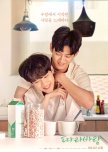
This review may contain spoilers
This series swings wildly between "meh", "heart-rendering" and "horrible", unfortunately. Overall, the actors were decent to excellent, the music was so-so (not that good for a series about a singer-songwriter), and the whole vibe felt distinctly Korean. The last point means that I feel already a basic disconnection to the story and its characters, so the not-so-good aspects weigh much heavier than they might in a Japanese or Thai production.The series can be divided into three parts, which all have their own level of quality.
It starts out slow and average, with a meet-ugly and a rejection, and then two young men who grow into a friendship with a one-sided crush. It's all terribly predictable, and really nothing to write home about, but done well. Only Baram's reaction to the rejection felt overdone -- which might be because we don't have a connection to the young boy yet. The worst point is when we get an undefined time skip from high school to -- when? The two other band members, a woman and a man, call our couple oppa/hyung, and the woman has her own bar. So, how old are they supposed to be, exactly? Somewhere in their mid to late twenties, I guess?
From episode 3 or so, the quality of the screenplay increases significantly, and the story gets more captivating: There's plagiarism, extortion, the fear of being outed, the heartbreak of being rejected: This is where both main actors shine; they show their feelings in subtle movements of hands, eyes, lips. Even if the reasons for the second heartbreak are a bit cliched, the execution tugged on my heartstrings and the resolution felt perfect.
Alas! The drama doesn't end here, and takes a deep dive. Our couple regresses into 12 year olds who can't even say the word "kiss" and ponder if they are "really" dating. For two men in their twenties, this is not believable at all; and whenever this happens in a (BL) romance, I am taken right out of the fantasy.
Luckily, it gets resolved relatively fast, but the quality never recovers from that in the last sugary episode.
Was it good?
It would have been okay to quite good if not for the last one-and-a-half episodes.
Did Iike it?
Hard to say, with the wild variation in writing quality.
Who would I recommend it to?
To those who generally get on with K-BLs, and who don't mind if their main characters occasionally behave like 12 year olds.
Was this review helpful to you?
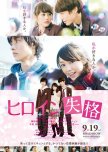
This film is not a rom-com. It's a rom-com parody.
And the film makes very, very clear from the first few minutes in that it is a parody -- the "heroine" looks at herself and the people around her as if they were in a story. The exaggerated acting in the typical Japanese comedy style paired with stereotypical extras (like the thuggish bullies or the canteen cook) as well as the constant fourth-wall-breaking are another clue -- and then the story tones the physical comedy down in the second half but still proceeds to follow every single beat of an average rom-com: With a light twist, like when the "summer" date is filmed in the middle of winter. And they follow this concept until the very last scenes, with the hundereds of lanterns and the kitschy snowfall, and then tie it up with an uplifting message.And yet, they somehow smuggled in some very real character growth. The aggressive playboy, who pursued the heroine "just because" and initiated a sudden and unwelcome kiss, learns to let go. The shy and awkward girl learns to stand up for herself, not with lies and deceit but with honesty and integrity. The "hero" learns to make a decision and commit to it. And the "heroine"? She learns that love doesn't just happen because she wants it to.
Maybe the writer and the crew were too good at that, so that MDLers caught real feelings and thus don't understand that this is supposed to be a parody?
Was it good?
Yes! It starts out as a physical comedy where absolutely everything is exaggerated, and ends up with real feelings.
Did I like it?
I did! I was hesitant to watch another youth focused het romance but I am glad I did.
Who would I recommend it to?
To people who get on with the exaggerated Japanese style of comedy. And to those who are able to understand how a parody works.
Was this review helpful to you?

Neither the character dynamics (excitable puppy vs. cold cat / country mouse vs. city mouse) nor the backstory (controlling father, betrayal by lover, thwarted dreams) are in any way new. The setting is an appropriately romanticized village, complete with stereotypical overly friendly villagers and out-of-season fresh fruit and vegetables. Wounds heal quickly without scars; the surroundings don't change with the progressing in-universe time.
And yet, it works.
The story, tropey as it is, takes its time to develop Seon Yul's character from being closed-off and exhausted to a confident young man who has found his own way of life. Events around him fit neatly into the narrative, and everything resolves without becoming too cheesy.
Ye Chan's antics are the eye-catcher of the series (and another proof why you should hire actors who know what they are doing -- according to MDL, the actor Yoon Do Jin is a stage actor in SKorea), and the main aspect that elevates this rom-com above the average. Yoon Do Jin gives his character an endearing quality, child-like but not childish, with unexpected words of wisdom, delivered with perfect innocence. In contrast, Do Won ("Seon Yul") gives us a subtle performance of a jaded man that you need to look closer to see. Both of them balance each other quite nicely.
Technically, I find this to be a solid production; I am not a fan of the sung OST but overall the background music fit well with the rest. I wish they had used the countryside to more effect -- most of the time it was just there -- but we all know that in reality, country life looks nowhere near as idyllic as on screen.
Was it good?
It was a solid, if predictable, rom-com with well delivered performances.
Did I like it?
Yes, and I even have rewatched it a few times.
Who would I recommend it to?
To someone who is looking for a rom-com with comedy elements, with a relatively short runtime.
Was this review helpful to you?
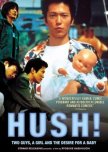
I am not quite sure what the film is about. Is it about gay life in the year 2000, with all that it entails? Is it about heteronormativity, and its consequences for women and queer people alike? Is it about lonely people who try to find comfort in a harsh and hectic society?
Is it about he question what a *family* is?
And I'm not sure if they put too much into the script (there are several scenes and side stories that don't advance the main plot at all, the scene where they try to mate two dogs in front of a kid is still burnt into my brain), so it's core theme isn't clear -- or if it's done intentionally, because, well, life is messy and everything is intertwined. I tend towars the latter reading, especially with the more than hectic beginning and the parallel telling of the story lines of the three main characters.
Whichever it is, for me, the most intriguing thing was not the gay couple -- their story is interesting as well -- but the three women who encounter the restriction of society's expectations in their own way.
There's, of course, the film's main character: Asako. Who has had different sexual partners in her life (not always by choice, as the film makes very clear; cw for an on-screen non-con sex scene), and is shamed by medical professionals for it. Confronted with the possibility of infertility, she tries to take desperate measures to become a mother -- outside of society's norm of marriage.
By contrast, we meet Katsuhiro's sister-on-law Yoko, who tells us that her marriage was arranged and she didn't have a choice in it. That her mother-in-law expected a grandson. Yoko has resigned herself with this kind of life, and has started to identify with it. She, like her mother-in-law, perpetuates the toxic ideas of a "good woman" and of "family". Because if she didn't, her whole life would be meaningless.
And this comes to head in a climactic scene, where both women meet and their views clash. One of the exchanges stayed with me:
Asako says: I wanted to choose a family the way you choose lovers and friends!
And Yoko replies: You don't choose your family, they are just there.
And in addition to their contrasting worlds, there's a third woman, a co-worker of Katsuhiro's, whose attempts at pursuing him become more desperate over time. She suffers not only from the expectation to marry and start a family -- her disability also makes it much harder to find a partner at all, so she latches on to the only man who treats her kindly.
Core themes aside, the film is gloriously messy. No single character is perfect here, no motivation is "green" -- even Naoya, who is a sweet man, chooses his partner not because he is in love with him, but because Katsuhiro is the one who stayed. There are many things that stay unsaid or unresolved, some character arcs never get what I would call a stopping point.
The cinematography and the side stories give the film a hectic and disrupted feeling -- and occasionally this will be contrasted with slower scenes.
While there are light-hearted scenes, which are occasionally very funny, and while the film gives us an overall optimistic outlook about three people who carve out their own space in this world, this doesn't make the film gentle or light -- it's more that we find laughter and happiness *in spite of* reality, not because of it.
I'm not sure if I *liked* the film, but it certainly stayed with me for weeks now, and that is always a good thing. If I ever have another chance to watch this again, I will definitely do so.
Was this review helpful to you?

Sometimes, less is more
... and this short film is a prime example.You don't need much if all people involved know which story they want to tell and have the ability to craft a good screenplay and to execute well it with everything they have.
In less than ten minutes, we see a love story from the first shy glance -- Is this feeling real? -- to an answering touch -- Is what I see real? -- until we know: Yes, it is.
The intertwining of fiction / acting and reality / genuine attraction in this short underline this uncertainty we feel when we make our first steps towards the possibility of a relationship, and even moreso for two people of the same gender.
Both actors, the director and the person behind the camera very obviously know what they are doing, they use their limited resources ingeniously, and manage to quickly connect audience and characters, build up a good amount of tension, and resolve it with great satisfaction.
Was this review helpful to you?
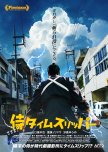
All right, I thought, time travel, man out of time, comedy -- we all know how his one will go, right?
Wrong.
Well, at least I was wrong. The story continually surprised me with how it developed, to the point that I had no idea how it would end until the last five minutes or so.
If a film with a widely used trope like "time travel" can do that, then it is an automatic recommendation from me.
I don't want to spoil the actual plot for you either, but let me just say this: This might have been labelled as a comedy on JFF Theater, but it is not only that. I found more than a few thoughts about other, more profound themes in there, I was breathless during the "last scene", and I shed some tears in between.
This film is both a spoof of and a hommage to Samurai films and Jidaigeki TV shows (Samurai series). It both honors an image of the noble samurai and points out the horrors of killing and war. And, as a lot of Japanese productions do, it shows people's dedication to their craft, whichever it might be. (Also, food appreciation. Where Thai media has ghosts, Japanese media will always have people loving their food.)
The main character is so loveable, I wanted to give him a hug more than a few times -- and all of the other recurring characters are very likeable too. Watching them help and respect each other was a joy -- even the relationship between the main character and his (perceived) antagonist is full of respect.
There was some slight romance, but nothing explicit, and open-ended; it was one of many sub plots, and certainly one of the less important ones.
What makes the film even more outstanding is the performances. The fight scenes, "choreographed" and "not", look very good to my untrained eye, which is as it should be, given the two main topics here, and the actors balance comedy and darker emotions very well.
I am sure that aficionados of Samurai genre will see even more love in the film, but it was already brimming with love for filming, Samurai movies and history for me.
I don't even need to pose my three question here; it was excellent, I loved it, and everybody should give this film a try!
Was this review helpful to you?
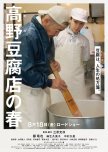
This is a story about an old man, who refuses to change.
This is a story about a father who loves his daughter.
This is a story about two survivors.
This is a story about gently supporting each other.
This is a story about expressing love.
This is a story about life.
This is a comedy. This is a simple slice-of-life story. This is a film that moved me to tears.
Expect a mostly slow-paced slice-of-life film, in the style that's typical for Japanese films of this genre. It has more than a few layers of story, see above, and those who get on with the style will surely find their own reading.
For me, what was most poignant, and maybe not easily accessible for the younger generation, was the way the two older people lived their life and how they looked back on it. They are, I think, almost exactly as old as my own father, and I found much of him in theses characters. All of them have lived through the horrors of war in their early childhood -- they saw the bomb falling on Hiroshima, my father lived through air raids in cellars; all of them have had to go on with life and rebuild a society they did not destroy, and even though there was no one to talk with about these experiences, this generation shares a silent kowledge about their traumatic childhoods and a quiet acceptance of what is that later generations don't. And in this film you can see exactly that -- and also how freeing it is for both to finally talk about it, to acknowledge the pain and to share their values with each other.
Other viewers might rather focus on the father-daughter-relationship or the tofu making process, or the scenery of Hiroshima, or maybe the two love stories -- it's all fine; I think this is what the writer wants us to do -- and this is what makes the film a great example of a good slice-of-life film.
The overall quality of the film is excellent, as it is usually the case with films shown on JFF Theater; the only thing I would have liked to be different is that Fumie's actress, while outstanding in her portrayal of the character, is about twenty years too young -- and because of that, I was unsure about the character's age for most of the film; even though that is an important fact to know about her, that she was a child in 1945.
Was it good?
Yes. Except for the one aspect I mentioned, it was well-written, and well-executed.
Did I like it?
I did. This is one of the kind of films I need to be in the right mood for, and I'm glad I found the time at the right moment for it.
Would I recommend it?
Definitely. Especially to those who like the Japanese style of slice-of-life films.
Was this review helpful to you?
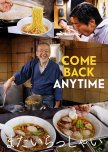
Now, this is only the fifth documentary from Japan that I have watched, so I might be hilariously wrong here -- maybe they were the exceptions, and this is the norm -- but something felt off.
The other documentaries all had a certain sensitivity to them for the mastery of the craft, for the people living it. And for those about specific people, "The God of Ramen" and "Sumodo", I was moved by them because the directors managed to get very close to them -- so close that we saw the men filmed not only in their high points, but also at their lowest, at moments when they were exceptionally vulnerable.
All of the other documentaries, whether they were about a specific person or a group of people, never shied away from the hard facts of life, and from the pain life can bring -- on the contrary, this is when they leaned in even harder, got even closer, focused even more on them -- because only then the good things can really shine.
And even though "Come Back Anytime" follows Ueda-san for a whole year, I never felt that closeness to him, nor that sensitivity for his craft. It felt much more curated, maybe even staged at times. It felt superficial.
It might also feel more distant because in "The God of Ramen" and "Sumodo" the director was there with us all the time -- both of them commented on what we got to see in the films, and even brought in some of their own thoughts and feelings; and I could see how they themselves had grown closer to their subjects during filming. Here, however, the director is only heard posing questions two or three times, probably because he couldn't edit himself out. This director didn't take us on a journey nor did he offer his own perspective, even though the film itself *is* his perspective, so there's no reason to pretend it's objective.
Another thing that bothered me was the Western / European piano music -- it felt wrongly placed in some scenes, when silence would have been preferable; and during some of the talking head interviews, the music was almost louder than the words of the customers.
Maybe the reason why this documentary feels so different and "off" is a very simple one: The director, John Daschbach, is US-American, even though the producer is Japanese.
And still, even with all of this, there are times when the Japanese perspective shines through. When Ueda is humble about his success -- but still takes pride in his craft. When the customers speak with such love about the simpleness of a good ramen soup. When Ueda and his friends handle food and ingredients so gently as if they are their own grandchildren.
So, overall, watching "Come Back Anytime" wasn't a complete waste of time, and I wasn't bored or confused -- but in the end, I have to ask myself, what was the point in showing us this man's life?
Was this review helpful to you?

The first part is funny, fast-paced, and manages to integrate the message into an engaging plot. Unfortunately, half of the second part is a more elaborate repeat of the first part's last 15 minutes, so it felt a bit repetitive. However, the cast is more than enough to make up for it; even when they do nothing but sit around a table to plan their scam -- told in classic heist-movie fashion -- all five of the cast give their characters life and more depth than is provided by the script alone, so much so than I genuinely began to root for them and was most anxious for their plot to succeed. (A result I am not sure the writers intended.)
For me, I found the writing a bit *too* heavy-handed in their message and the ending a bit too simple; to the point that I asked myself who the intended audience might be -- the plot and the direct informative monologues about how scammers work felt appropriate for 10 to 13 year olds. On the other hand, this age-group is possibly not the target for ATM scams or fortune telling scams, which would be adults.
Given that the drama is part of a programme called "Drama for All", I suspect that they tried to make something that appeals to people of all age groups and all education levels, so it makes sense to do it that way.
And, well. It worked! I was entertained and got a refresher course in the subject.
Was it good?
It was a bit heavy-handed in the message, but overall both extremely entertaining, not in the least because of the cast, *and* it was educational.
Did I like it?
I did. Loved the interactions between the gang members. (And I still want to hear Gle's story.)
Who would I recommend it to?
To fans of the actors, and to people who want to spend two hours being entertainingly informed about scams.
Was this review helpful to you?
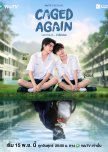
They had a great idea and strong imagery, but too many episodes for it
I seek out dramas with an unusual premise, and a penguin turned human is as unusual as it gets.I loved the first half of the drama, how the unsual premise at first seemed to be nothing but a simple high school drama, complete with school bullying, an odd group of friends and a ghost -- but then turned out to have strong imagery of cages vs. freedom, of staying in the seemingly safe present vs. going out into the wild and unknown future. I loved the metaphor of school and teenage years as prison, which liberally used striped pyjamas with numbers, high walls, guards in uniforms and so on, where school is a prison / a cage that provides a safe space but at the same time, stifles growth -- versus the wild, and maybe dangerous woods, symbolising the unknown, in which you can get lost, but also be found again.
The metaphor gets spelled out in a medically induced dream and subsequent dialogues between Junior and Sun -- what will the future bring? What will we do when we grow up? Will we be brave enough to step out of our cages or will we go back to what we know? I think the animal-turned-human is also part of this imagery; as a human, we have much more freedom, we don't rely on instincts alone, we can be who we want and be with whom we want, even if it's a black panther.
Overall, this first part was a very good metaphorical coming-of-age comedy.
I loved Junior's character in these first episodes; he didn't know much about the world, but he did know what he wanted and went to get it, he was able to stand up for himself, even when he was betrayed by someone he had trusted his whole life. And he did all that while being an adorable penguin.
All of this was supported by good choices of sets and wardrobes; and the main actors portrayed their characters and their quirks and thoughts well (especially considering that they are newbies!). More than a few times, Junior really acted like a penguin in human skin, which was lovely to see.
In my opinion, the drama should have ended somewhere in episode 8, when Junior makes his decision whether he wants to go back to his cage or to live in an uncertain future but together with Sun.
Because after that, the writing falls apart. Sun and Junior change to a stereotypical top/bottom couple (with a whining bottom, and a sexually experienced(?) top), the side couple's development stalls completely, even to the very end, the narrative starts to feel redundant and made of ill-fitting pieces, leaving some plot-holes. Especially the last episode, with its weird time skips, and all too sweet ending that somehow tries to give even the minor characters a happy ending, is a huge let-down.
My theory is that the writer had a fantastic idea for a plot -- and then discovered that it wasn't enough to fill the standard 12 episode format, so they had to add more filler, and this is what we got.
Was it good?
There were a few highs, and some great imagery, as well as some good acted scenes. Unfortunately, the last three and a half episodes were weak.
Did I like it?
I loved the first two thirds, so much so that I thought the drama might become a new favourite; and didn't dislike the last third. It was just less than it could have been, so I don't think I'll ever rewatch it.
Would I recommend it?
I don't know. Maybe to someone who likes their BLs on the cute side and doesn't mind some fantastical elements and doesn't expect great writing.
Was this review helpful to you?
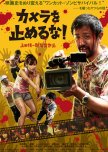
Go in completely blind, let the narrative lead you, it's brilliant!
It's not possible to write a review for this film. Whatever I could say about the acting, about the camerawork, about the directing, about the script -- it would all be a spoiler.Instead, I'll share some of my notes I made during watching:
* Oh, "one cut" means "one take"!
* Just enjoying the ridiculousness of the C movie horror zombie film :)
* Wow. This zombie film was taken in one single take.
* Things are not what they seem
* The Japanese dedication to art is always impressive
* Ending credits: Two for the price of one!
* How did they *do* it? HOW?
If you can, please go into the film without prior knowledge and just follow along. If you love zombie movies, especially of B or C movie quality, you'll have a great time, I promise.
Was it good?
Yes, [redacted]!
Did I like it?
I loved every minute of it! As a C horror movie, as a comedy and as a [redacted].
Who would I recommend it to?
To everybody who enjoys a good spoof of C movies about zombies, who loves their layers, and who can watch the same movie several times.
Was this review helpful to you?

PWTP -- Porn With Travel Promotion
"Kiseki Chapter 2" consists of three elements: Travel promotion, Drinking, and Soft Porn.There's no plot, except for a bare bones "four young men meet and spend a few days together" to loosely tie the three elements together.
Theres nothing wrong with either travel promotions or soft porn, and I don't even mind both of them in one drama.
The problem is that the quality is somewhere in the basement:
Both the travelling (especially the food) scenes and the sex scenes feel as if the makers wanted to imitate Japanese food centred films and Pink Films. They failed spectaculary at both.
My theory is that the director showed up only for the sex scenes, because they were the only scenes that seem to have a script -- and even so they can't reach the (dubious) quality of Pink Films when it comes to creatively hide genitals, show more sexual acts than tab A goes into slot B, and position body parts correctly for realism.
And everything else? I think the team gave the actors a vague "This is what should happen in the scene", left the camera equipment with the intern, and went to get some delicious Japanese food.
In the end, I jumped forwards through the outings and the drinking (which I usually don't do), watched the sex scenes and really didn't mind when it was over.
Was this review helpful to you?
This review may contain spoilers
Summer vibes with a lot of waffling about
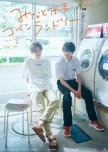
I am extremely conflicted about Minato's Laundromat. On the one hand, I loved it. On the other, I disliked it.Let me explain.
There were several things I loved:
* the summer atmosphere at the seaside town
* the sets, especially the cosy laundromat
* the teacher, with his hilariously bad memory, who nevertheless was very good at leading his students towards adulthood,
* the solid acting
I think what the production team was going for was a cute and fluffy summer story. The thing is, the story *also* shows clearly that both Shin and Minato are sexually attracted to each other, and get heart-rate-raisingly close to each other in some scenes (always ended by Minato, who pushes Shin away with a curse and a laugh) -- this part of their mutual attraction is switched on and off, just as the script demands. I would have liked to see Minato struggle more consistently with his desire; but what we got is a man who seems to be quite content with the way things are for the most time.
And a similar personality switch exists for Shin. He is both shown as the young, thoughtful and earnest boy, who has clear goals in life (studying medicine) and who takes care of his younger siblings -- and then, like flipping a light switch, he suddenly is a pushy "seme" who doesn't want to take no for an answer.
It's more these points that made watching the drama frustrating than Minato's endless waffling about.
Regarding that, it was also low-key irritating. We are told two reasons for his rejection of Shin's advances: 1) Shin is a minor. 2) Minato still has unresolved feelings for his old teacher.
The thing is, in the last two epsides, none of them are really relevant anymore. So, why is he still hesitant? (It feels as if he is just because the writer said so.)
So, although most of the series was lovely and nice to watch, as soon as I started thinking about character arcs and motivations, things fell apart. I know that this drama is based on a manga, which sometimes get one or two volumes too many, so that a once tight story loses its clear focus; and I suppose that might have happened here.
Was it good? -- It was entertaining and technically well done. character-wise, it wasn't as tight as it should have been.
Did I like it? -- Yes. No! I don't know.
Who would I recommend it to? -- Fans of fluffy, slow-paced Japanese BL dramas.
Was this review helpful to you?
[Don't pay much attention to the ratings for this review, as always. Documentaries would need different categories. When will MDL finally allow me to post a review without ratings?]
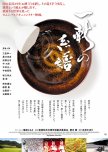
It's a very slow paced documentary, which I don't mind as such -- but for the most part, I didn't really understand what was happening on screen. They introduced too many brewers and masters too fast, and jumped from one to the other -- some never to be seen again, some would be important later, but I didn't know who would. The narrative also jumped between times -- history and present, summer and winter. They showed one aspect, and then, without explaining it thoroughly, showed another.
I ended up having more questions than answers at the end:
* Why exactly do all the brewers have to stay at the brewery for the whole six months of winter? I get that it's a difficult process, that needs to be monitored closely at crucial times, but when the mash is fermenting, it should be sufficient to check once or twice a day, right? (The answer seems to be tradition.)
* Where do the workers sleep during that time, how are their living conditions?
* Are they paid during the summer?
* The documentary claimed several times that the brewing of Sake in Noto is closely connected to the local culture. We only got to see a few glimpses of one festival. What exactly is the connection, what do the locals who are not working as brewers think about it?
* The documentary claims that the four "Kings of Sake" developed the modern brewing process. How exactly does it differ from older processes?
Overall, it was a frustrating (and boring) experience. For a moment, I wondered if it was me, if it was because I have no knowledge about Sake at all (other than that it's a alcoholic rice drink) -- but no. I also didn't know anything about Sumo but thoroughly enjoyed the documentary "Sumodo".
One other thing: The volume level is very low, I had to turn up the volume on my end several times. I don't know enough Japanese to understand anything, but I still like to hear the people on screen.
Was it good? -- I don't think so. There were a few scenes that were really good, and I loved how they ended the documentary (that one sentence had impact), but the narrative was more confusing than informative.
Did I like it? -- I would like to see another, better documentary about the same topic.
Would I recommend it? -- Not really.
I will give a watch suggestion for the first time after writing more than 130 reviews: Watch from the beginning to 2:16 for the atmosphere, then 23:40-26:25 (for the origin stories of Sake), 27:00-31:30 (for the modern brewing process), and 1:15:00 to the end (for the brewing process of refined sake by a master). After that, you could go back and watch the rest for the brewers and the masters.
Was this review helpful to you?


