


 4
4 17
17 1
1 5
5 1
1 1
1 1
1


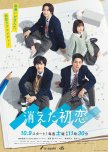
Aspects I find especially outstanding:
* The class: Even the background characters had their own personality. They weren't just there, the actors seemed to know what their characters were like at any time. I found myself rewinding some scenes just to watch them doing their thing in the background. There's not only our favourite drama couple (the original Cinderella & her prince) but also look out for: the guy who alsways has his little notebook with him, the foodie, the two boys playing games... I would actually watch a second series just to see what they were all up to during the whole relationship drama of Aoki and Ida. (The same is true for the volleyball team btw.)
* The whole atmosphere in the class. It reminded me of my own last two years of school. We had much less dramatics, or at least I wasn't aware of any, but this is what it can be like if young people are allowed to be whoever they are and respect that about each other.
* I liked every single character in this show. Yes, even the student teacher. They were all genuinely trying to understand and to grow.
* The friendship between Aoki and Hashimoto. Hashimoto could easily have been that stereotypical love rival but she wasn't. I love how we gradually get to discover that she is more than just a timid or shy girl.
* I haven't even said anything about the two main leads. They earnestly try to discover how they feel and what to do about it. I like how the drama focuses on the awkwardness of trying to figure out who you can be as a romantic partner, and what you want your partner to be like. I remember being this awkward at 16 and 17, so for me, it's actually quite an accurate portayal of a first love, if a bit exaggerated -- but it IS a Japanese show and adapted from a manga, so it is kind of expected.
Overall, this little series has become of my favourites, and is one of the series I choose to watch if I need a pick-me-up.
Was this review helpful to you?
This review may contain spoilers
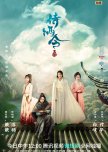
Little Gem
I watched this series on Viki, in the edited 12-episode-format.Some people have mentioned that it's obviously low-budget -- but I think if the story and the story-telling is good, things like this don't matter much. And the story-telling is excellent!
First, the series is set both in our present and in the past (or maybe dreams) -- and they are beautifully interwoven. I loved how smoothly the transitions between both worlds are done.
There are five sub-plots (or rather short stories) about friendship, familial love, romantic love -- about loss, letting go, sacrifice, and healing. These are cleverly tied together by the "Demon Bar", a place where demons meet, and destiny brings customers to ... well, to what? To dream? To tell their story? To relive past lives?
What is real, what is a dream -- this is never quite clear; and in the moment when the sommelier (the demon hunter?) maybe grasps an important part of the truth -- the series is over.
I wouldn't even be sad if there's never going to be a second season, this ending is kind of perfect.
Throughout all of these sub-stories, we also follow the friendship (and it can't be more, it's from China) of the demon hunter and the dragon. The former gets some backstory and also some character development; the latter unfortunately not. Maybe he is supposed to remain shrouded in mystery.
On a personal note: I laughed a lot -- but I also cried at the end of every sub-story, especially the first two had me bawling my eyes out.
Was this review helpful to you?

PWTP -- Porn With Travel Promotion, part 2 (now with added plot!)
Someone watched "Kiseki Chapter 2", and really said "This makes me want to sponsor a second season"? Well, why not.Compared to the prequel, this one was an improvement, which isn't saying much -- it's still soft porn with travel advertisement more than anything else.
The outside shots in Japan were certainly not bad, and the actors were certainly better than before -- although I can't say whether this was because they had better directing (or rather, any directing at all) or because they were more comfortable in their presence before a camera.
The sex scenes were longer and more detailed, and had more variety than in the previous drama. Whether they are in any way realistic, I'll leave that to every viewer's own judgement. I did like that most of the sex scenes with P and Pan had a certain levity and a good amount of playfulness to them, which I haven't often seen in BLs.
We also got somewhat of a story, and I think that contributed to the overall feeling that this season was more cohesive than the one before. I do wish that this premise (namely how the Thai way of promoting artists with "imagined couples" severely impacts their private life) were devoloped into a better story, there's a lot of potential there.
I think the plot -- simple as it is -- made the outings much better than in the prequel, in that I didn't make me want to skip the scenes; and it gave me a bit of background to connect with the characters. It also grounded the sex scenes a bit more and made them feel warmer than those in "Chapter 2".
And I admit it, I like the manager, even with all the toilet humour (he should definitely see a doctor about his bowel movements), and I hope he'll find his own lover some day.
The camera work is still on an elementary level, and especially the outing in the last episode looked and felt like an average vlog post.
That last episode was a let down plot-wise too -- I had hoped for a better resolution of the problem than just "yeah, the other hashtag is trending now, so it's all good" -- and in the last few minutes, it just kind of fizzled out.
This is one of those dramas I choose to watch when I am feeling physically unwell, as it doesn't require me to engage with anything much, and still is somewhat entertaining.
To be honest, there are Thai BLs with worse plots and/or acting ("Coffee Melody", "The Renovation", "2Gether", "Bad Guy My Boss") which nevertheless get loved by some because the actors are "cute" or something like that.
However, I can't in good conscience recommend this drama.
Was this review helpful to you?
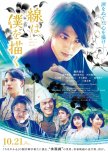
Here, it’s mainly told from the point of view of a young man, whose past hold a tragic event, and who finds not only solace in painting but also a new way forward in life.
As such, this film is less straightforward about showing and explaining the art of Sumi-E than “Every Day A Good Day”, which introduced us to the art of tea making,. I still loved the many close-ups of the brushes painting ink on the paper and the insight the film gave us into the art. The connection between human and nature is much more subtle than in “Every Day A Good Day” but it’s still obviously there. The subtlety also makes the film not obnoxious about the message it carries (unlike in “The Zen Diary”).
Another thing that I liked was that there was no romance at all. I feared that there would be when they introduced the young woman, who is only two years younger than Sosuke – but they connect over their art and their struggles, and it all stays very, very platonic. I would have liked it more if the film had placed Sosuke firmly in the “still a beginner” category and have her stay on a much higher lever of expertise in the ending scene (as it is, it feels too much like the tired trope of the man who starts as a beginner and supersedes the female teacher in the end) – I do think the script made it clear that they both have learned that it’s painting their own lines that’s more important than any outside appreciation, but it was nevertheless slightly disappointing for me.
Having Sosuke as the beginner who is still not in the lime light would also have been a better fit for his overall humble personality.
As always, whatever is on JFF Theater, is of high quality regarding filming, editing and acting and with great attention to detail. I admit, I was a bit distracted by Sosuke’s hair – but even here, the way it was styled reflected his state of mind.
Was it good?
It was! It had a good story with a clear emotional arc and still gave insight into the art of Sumi-E.
Did I like it?
Surprisingly, yes. I wasn’t too sure about the subject – painting is really not something I connect to and the “Spirit of Dō” collection and all JFF films that get philosophical can feel too overbearing very quickly for me. I even shed a tear or two.
Who would I recommend it to?
To painters and appreciators of painting. But with the caveat that one should be in the right mood for a slow film.
Was this review helpful to you?
What do you want?
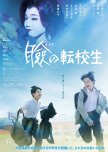
"Confetti" is a good example why you don't always need an external conflict to tell an engaging story with depth.Interesting characters, a relatable premise, a screenwriter and a director who know what they want, and, of course, outstanding actors -- if you have that, then even the most mundane plot can feel new and fresh. "Confetti" has all of these in spades.
Although the life circumstance of our main protagonist Yuki -- a kid who is growing up in a 大衆演劇 "taishu engeki" or "poular theatre" troupe -- are quite unusual, the central question for him is one most teenagers ask at a time in their lives: "What do you want?" With the end of middle school (and thus the end of compulsory schooling) growing nearer, he has to make his first life-important decision.
What I loved about the film is that it combines Yuki's unusual background with everyday topics in Japan: absenteeism in schools, parental expectations, exploitation of idols, the modern vs. the traditional arts and more. And quite a few of these themes are not addressed directly, but often just in a glance, a smile or a frown, a few words that are just said as an aside. What's not being said is just as important as what is being said in this film: and this is where the quality becomes very obvious. Because for something like this to work, all creative forces need to be in alignment about what story they want to tell -- and since they decided to tell their story mostly in the glances and side remarks, I'll leave the reading of this story to the attentive viewer.
Another thing that I loved: We get to see glimpses into the world of Japanese "popular theatre". I surely had never heard of it before, and liked that the film took us to see the genre and the inner workings of a theatre troupe. I would not be surprised if the actors for the troupe were a real 大衆演劇 group and the venue and the props were actually used in real life.
Let me take note of some technical aspects:
The screenplay is written concisely and every scene and every line has its own value. When Yuki speaks a few lines while sitting alone in his new classroom in the beginning -- and it's picked up again by a theatrical actor in the last minutes. When themes are gently introduced, and their importance is only revealed bit by bit.
The directing and the acting support the screenplay: A gentle nod, a crips bow, someone leaving and another standing by the door. None of this seems obviously out of the norm. Fit together, it makes for a cohesive whole where nothing is forced but everything can potentially be important.
And where these decisions would make another film feel slow-paced, this is strangely not the case for "Confetti".
I have to mention Yuki's actor, Matsufuji Shion, who has one of these round faces that don't naturally lend themselves to expressive acting -- but he does it anyway. His emotions are always very easy to read, his confusion, his melancholy, his joy. Very, very impressive for a 15-year-old!
Was it good?
I my view, this film is a little gem among Japanese films -- it's not pretentious at all, or flashy, but neither is it boring. But it tells a beautiful story about growing up and trying to find the answer to "What do you want?"
Did I like it?
A lot! Really, this is one of the films I'll definitely watch again.
Who would I recommend it to?
To those who like coming-of-age stories, definitely. To those who like to watch a film with their eyes and hearts as much as with their ears.
Was this review helpful to you?
And these are indeed the reasons why I would say it's worth to watch this film -- because the story itself is very predictable and did not touch me.
The cinematography, however, is beautiful, and quite stunning, especially considering the aged material. I loved the peek the film gives us into the lives of Thai villagers 70 years ago, and I loved with how much care the ceremonies were filmed. Among others, we get to see a school, Loy Kratong, a wedding, and the ordainment of a monk -- and the film takes its time to show them to us in detail, though without explanation.
The story itself shows us attitudes towards disabled people, towards women and towards marriage and family of that time (and modern audiences might see how much of it has (not) changed since then). It also, more implicitly, tells us about Buddhist mores, the relevance of the belief in Dhamma and Karma, and what is considered to be a meritful life. In Buddhist teachings, เกิด แก่ เจ็บ ตาย "birth, aging, illness and death" are the four natural inevitable aspects of a person's life. When Santi is "sees the light" (grows up), he sees the world in all its beauty -- and its suffering. Only now can he see his "right" path forward.
The film was thought to be lost for decades -- only in 2014 was the film negative found at the British Film Institute, and screening versions at the China Film Archive in China and the Gosfilmofond in Russia. More than 1700 hours went into the digital restauration.
Was it good?
It has very good cinematography, and it gives us a window into the past. It's also notable for its importance for Thai film history, as it is one of the first 35mm colour films.
Did I like it?
I didn't get on with the story, but I loved seeing the daily life of the villagers, and their ceremonies.
Who would I recommend it to?
To people who are seriously into the history of Thai cinema. And to people who want to see life in a Thai village in the early 1950s.
Was this review helpful to you?
I really liked this documentary. The narrative gently leads the audience from the process they use on the peninsula to the history of why almost every family made salt there to why they stopped doing it -- and how it came to be preserved nevertheless. And then it looks into the present of 2011 and into the future of how this traditional method might be preserved and maybe even help the economic situation of this rural part of Japan.
I admit it, I had an elevated level of interest already because in my home town there also is a history of salt making (from briney springs rather than sea water), and in the very early days, before the invention of Gradierwerke, they also boiled the brine to produce salt crystals.
So, I had a connection already, but the documentary wouldn't have held my interest if not for these points:
* They built the narrative so that someone who has no prior knowledge can follow along. It takes time to explain and show the process, and also gives room for the beauty of salt and the landscape. Its slow pace also underlines how slow and back-breaking the labour was and is.
* They were probably lucky that there are not only photos but also film footage of the family who were the only ones to make salt for dacades. I'm glad we got to see this.
* There's a good balance between the facts of salt making and the people with their emotions and passion. Neither could exist without the other.
* Regarding people, after the revival of salt making (mostly for tourism), there are several endeavors to do so -- and I liked how the documentary doesn't try to push a "We're in this together, ganbarimasu!" type of narrative, because it clearly is not the case. The original family's father is very salty about how things went in recent years, and they don't try to hide that.
* I also liked how they found a random granny on the street, decided to interview her, and kept that footage in the documentary.
* The documentary also doesn't gloss over the fact that industrialization changed Noto, that salt making is not a craft with a bright future -- but that is more tourist-oriented now, trying to bring in money for the people who are left while preserving salt making as a historical artifact, and that this has changed salt making itself.
Was it good? -- Yes. It was informative, and engaging. It was also a bit slow, but I think that's perfect for the subject.
Did I like it? -- Very much so. I do have questions after watching it, but they are follow-up questions that would deepen my understanding, not questions because there was something missing or unclear.
Would I recommend it? -- Absolutely.
Was this review helpful to you?
The acting and the production value was great, as it often is with Japanese films -- but this one doesn't have the tight writing I've been accustomed to by other Japanese productions.
The script wasted time on several love stories, but couldn't develop them all, and then proceeded to use cliches for additional drama. Cliches, I might add, for the women only. I was most diappointed by the mother's reason for "retiring", which is one of the most overused trope in films and dramas.
These tired plot points distracted from the two story lines that should have been at the centre of the movie: The love story between Takeshi and Johyun and the preparation for the tug-of-war. It could have been a sweet, community-focused slice-of-life. It could have been a love story of a man who struggles between his own dreams and expectations or between old dreams and new ones.
There were also hints at other stories: A man who's single misstep at high-school overshadows his whole life, a mother whose life has been dedicated to family and the family business, a divorced single mother who constantly is at odds with a sexist society; the list could go on and on.
And even though the film took the time to explain about the tug-of-war in several dialogues, I didn't even understand what was exactly happening during the tug-of-war. What is the purpose of the disruptors exactly, what was that about the loops, why does the rope have to be cut at the end?
The film gives us tantalising glances into a fascinating cultural event as well as into interesting plot lines -- but none of them is ever developed to a satisfying point.
All in all, I would have rather watched a documentary about the Sendai Tug of War.
Was it good? -- Everything was great -- except for the script.
Did I like it? -- Not really. Script and characters are at the centre of a film for me, and here they frustrated me.
Who would I recommend it to? -- I'm not sure. To people who want to know about Japanese culture maybe? But then there's not enough explanation fo it.
Was this review helpful to you?
Intended for a domestic, not international, audience, this documentary does not need to tell the story of Tsukemen, the ramen variant invented by Yamagishi-san in 1961, and it does also not need to tell us about the dish itself.
Instead it focuses on the last active years of Yamagishi, and some of his years after retirement -- as well as how his work and marriage has shaped his life and his legacy.
As always with these documentaries that follow a person's personal life, I admire how close the film maker is able to get to the subjects of his film. The raw honesty with which Yamagishi can show us his life is the main reason this documentary can evoke the deep feelings viewers can feel while watching it -- personally, I cried throughout the last third until the very last second of the closing credits -- they were tears of suffering, of relief, of nostalgia for a life I did not live. Every moment of happiness was tinged with a deep melancholia for the passing of time and the changes it brings with it.
The way Yamagishi suffers through most of the film, and how he is still able to look back on his life and see the good things -- how he can accept the finality of age will stay with me for a long time.
Was this review helpful to you?
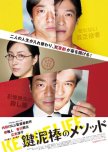
And, as expected from any film shown on the JFF Theater platform, the actors are brilliant. They are indeed so brilliant that there is no need for dramatic music, or experimental camera work -- the actor's way of portraying their characters is what carries this film.
Most of the film's value comes from how the characters react to their circumstances (or, rather how they try to shape them) -- which is why the actor's capabilities are so important.
I don't want to spoil anything about the plot and its little twists and turns. Maybe just this: This is not a "firework of jokes" kind of comedy -- yes, there are some scenes that made me laugh out loud, like right in the beginning, when Kanae Mizushima straightens her desk and then takes out a small vacuum cleaner for the finish; most of the comedic bits are more subtle.
And a short word about the romance -- yes, there is a romance story -- it was very cute. Two oddballs falling in love with each other, over their shared passion for plans and lists, was sweet to watch. And the hug in the end was everything.
As the best comedies do, this film also touches upon question of human existence: What is love? And what are you willing to do for it? What makes you "you"? How do you "know" who you are? And can you be an ethical killer?
Was this review helpful to you?
This review may contain spoilers
Does what it set out to do.
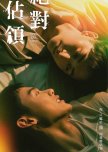
"You Are Mine" is a classic office rom-com with a boss-employee romance. This drama thankfully doesn't pretend to want to be anything else, and it does it well.In accordance with its theme, the drama is rife with tropes -- from the gaggle of secretaries / colleagues, to the meddling friend/co-worker, and of course, both working overtime and the all-too-common work outing and more.
There's one story aspect that doesn't quite fit.
The main struggle in this story is that there's an imbalance of power between a boos and his employee -- and I do love that they address this! -- but it doesn't quite make itself clear through the script. For the longest time, it seems as if our employee is the usual "bottom"-type who is reluctant to enter a sexual/romantic same-sex relationship. The writing emphasizes this aspect too much and for too long, while the much more interesting and *actual* hurdle is only truly visible near the end.
I also am not too enamoured by the music. While the songs themselves fit the vibe of the drama and are likeable enough, they are unbearable as background music and distract from rather than support the scenes.
Both these aspects though are overshadowed by the amazingly on-point performance of the main actors, and also by the supporting actors -- it feels as if they know their characters inside out. The comedic timing is usually perfect.
I also love the "interviews" at the start of each episode (except episode 1, which has it at the end), which are funny in their own unique way.
Overall, it's a nice and fun watch for a gloomy day.
Edit to add:
This has become one of my comfort watches.
With every rewatch, I like this one more and more. It's actually quite good at evolving the characters feelings, they are just mostly not speeled out but only shown through facial expressions and the eyes.
Only the music gets more annoying each time I watch it.
Was this review helpful to you?
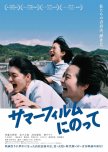
If you saw a light teenage summer film, fine! If you saw an allegory about modern tiktok-shorts, easily consumed and easily forgotten, versus feature-length old-style slow-paced films, good! Or if you saw an essay about how similar rival relationships in classic samurai films (and also wild west movies and thriller dramas, btw) are to love relationships, also nice!
And if you saw a completely different meaning in the film, especially in the last scene -- impressive! The author is dead. It's your film as soon as you watch it.
Maybe one word about the cast -- they were all great! I love the subtle pining of Bito-Ban's, I love the banter between the technical crew of the samurai movie. And Ito Marika, who played Hadashi was overwhelmingly good -- I loved how she managed to change her body language depending on the mood and setting her character is in: Awkward and angular at school, relaxed and engaged when with her friends and when directing, focussed and precise when imitating Samurai fighting. Her facial expressions range from subtle to exaggerated. I cannot imagine another actress taking this role.
Thank you, Elisheva, for giving me the push to finally watch this film. I'm glad I did.
Was this review helpful to you?
underdeveloped plot, underdeveloped characters.
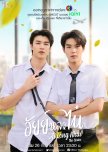
There's three things you should know before you watch this:1. The producers of this series are also the people who made "Second Chance", "Coffee Melody" and "Tin Jem Jai".
If you liked those, you might like "Ai long Nhai".
2. There are a lot of scenes, where it's clear that they intended to have a product placement. There are no product placements in the whole series. Either the production company is very bad at finding a sponsor or all potential sponsors did have no interest.
3. Ai long Nhai -- อัยย์หลงไน๋ -- Ai is infatuated with Nhai. That's it. That's the story.
[As an aside, the dictionary I use also gives two other meanings for หลง, which are a) [is] lost; confused; forgotten; neglected; mentally weak; b) to lose one's way, to go astray, to get lost, to be mistaken or forget; to be absorbed; to be absent-minded -- which is Nhai's personality in a nutshell]
The series -- I hesitate to call it a drama -- suffers from these points:
1. Interesting plot ideas, which never go anywhere and unconnected scenes, with plot holes and inconsistencies.
2. Side characters who can't even be called "one-dimensional".
3. Old BL clichés, and not the good ones.
4. Low funds, static scenes.
Let's elaborate:
-- 1. The series had a really strong start. I especially loved the banter between Ai and his father. When Ai first met Nhai, I expected this story: Ai falling in love at first sight, and subsequently pursuing a clueless Nhai, in more and more ridiculous situations; to the great amusemant of ai's father and friends -- I would have loved this comedy.
I liked that it was Nhai who made the first move, and his subsequent self-exploration. He was a classic case of a gay man deep in the closet (pining after a girl he will never get, getting physical with men when drunk, insisting that another man is just a friend and some internalized homophobia -- vocally claiming that touching another man is "eew"). That also would have made a really good story, maybe finally something more LGBTQ+ than BL. And they could have made this story light-hearted and funny, if they wanted. But that was quickly discarded.
Nhai's characterization as dirty and generally being a slob could also have been something new and interesting, people could have asked Ai "Why that guy?". It was kind of important but didn't translate into his appearance. He always looked styled perfectly, and I couldn't even see that his shirt was not ironed.
Scenes were often not connected, side stories discarded. I never could tell how much time had passed. Between a scene and the next, there were inconsistencies several times. Example 1: The friend group talk about Ai and Nhai several times, whether those two are together -- but there's no continuity, the discussions are always as if the friends haven't talked about it before. Example 2: In episode seven, a hickey appears and disappears, and reappears.
There's more, but this is getting long, so on to the second point:
-- 2. The side characters. I'd complain that the female characters are there just to advance the plot for the main characters -- but the friend group is more or less the same. They stay remarkably bland, considering they have quite a bit of screentime. At the end of episode two Nhai tells us about his friends in a voiceover, but this information is never important for any of the plot.
-- 3. Clichèd BL tropes that I hate.
Top/bottom dynamics, including the use of "hubby" and "wife" -- The top is manly, sucessful, knows how to get through life, perpetually horny, while the bottom is whiny, fragile, needs help constantly, reluctant when it comes to sex. There's a review here by RemmiKay, who says "This is a CLASSIC exchange of power relationship." There's actually some textual clues for that, so it works. While I don't think this interpretation is in any way intended by the writer or the producers, it made watching the series bearable. Still, even from an exchange of power relationship I'd expect that both are shown as into the sex -- Nhai continues to look like a nervous virgin whenever things turn sexual, and it gets worse the longer the series goes on. (Even if Nhai would only be playing at being reluctant, as part of their relationship dynamic, the audience should get to see that he wants it.)
There's the stereotypical gay (maybe transgender?) friend; there must be a gay friend in a romence, right? Of course, they are flamboyant, have pink hair, but they are definitely not beautiful or attractive. And it's disheartening that Nhai goes to this friend when he's unsure about his attraction to Ai and gets "Yes, of course you are the wife" as an answer. That's not helpful and also sexist.
Too many side couples. While other Thai BL productions in 2022 seem to have learned from past mistakes, this one tries to give a male love interest to everyone in the friend group. Not only do most of them not go anywhere (the one that does, just ... does, behind the scenes), the three friends also had explicitely stated that they are straight in previous episodes. (see above, inconsistent plot)
and, finally,
-- 4. low funds. The sets, few as they are, look empty. Ai's condo is supposedly "like a labyrinth" (Nhai, somewhere in the second of third episode), but it's not, and you can see that -- the living room and the kitchen are in the same room, for example. The props in the shelves etc. are obviously placeholder props; had they filmed in one of the example rooms in an IKEA, there would have been more personality to this living space. There are no knick-knacks or anything that makes a home a home. Ai's car seems to have cost most of the money they had.
That everything, the sets, the clothes and so on is mostly in white and black, really does not help.
Scenes often just were two or more people standing and talking, which made the already slow pace wven more static. Some actors need more acting classes.
Overall, I feel that the writer had some good ideas, but shied away from anything that would have made the series more interesting, either writing a good conflict (inner or external) or more comedy. Was it too daring for him?
But even if they intended to make a slice-of-life series, they would have needed something more plotty and consistent.
It's like a teenager's first fanfiction -- they love their characters, they don't want to hurt them, they write things they wish for in their relationship. But for a product that is supposed to bring in an audience, who'll remember the story, this is just not enough.
That being said, there have been two small things that need to get an honourable mention:
* I think this is the first Thai BL in which lubrication for anal sex is mentioned, and hopefully used.
* Ai explicitely states that he is bisexual. In most BLs they don't even use the word "gay".
Was this review helpful to you?
Two hours filled with a lot of nothing.
That was a waste of time.The first episodes is just a string of cliched "romantic" scenes -- the ubitiquous sponge bath, drinking and getting drunk, bad flirting, beach scenes etc. I am surprised there wasn't a fall-and-catch.
I didn't understand there was a story at all, until the first third of the second episode was over. And to be honest, it's not much of a story -- even though I have to say that the premise could have had some potential for an interesting story, when the writer confuses the real-life person and his fictional character, when he maybe starts to blur the line between reality and fantasy; but this was the most shallow version of this premise I can imagine.
The second third of the second episode finally did have some story -- but that wasn't nearly enough to develop anything, and relied on our suspension of disbelief. You can't tell me that two or three days are enough for two people to love each other enough to make life-changing decisions. That sounds more like the start of a famliy-centred tragedy, to be honest.
A lot of smaller details also didn't make much sense.
The acting was less than mediocre -- but I can't say if its the actors' lacking abilities, the poor direction or just that the script didn't give them anything to work with.
The only aspect I liked was the resort itself, which was beautiful and reminds me of mediterranean buildings with its white-washed walls, and the use of colours and light throughout the drama.
Was it good?
The colours were nice?
Did I like it?
I want these two hours of my life back.
Would I recommend it?
No.
Was this review helpful to you?
I like the way the story is told, the way the space the landscape itself shapes the tone of a scene, the way music also tells the story of the island's community, of their feelings and state of being. I also loved how they did the flashbacks to Nabbie and Sun Ra in 1940. The dialogue is also something to pay attention to: In some scenes words are never needed; in others, characters say what they mean, but in other words; and in some, words fall like stones into the still sea.
Only one thing, we are used to the somewhat yellowish tint in Japanese films and series -- but I felt that it was even stronger here? It must have been a conscious choice? Or else I am too used to digitally filmed media? Thinking about it, I notice that I haven't seen a colour film from the 20th century in a while.
It's sad that the film didn't capture the vibrant colours of the sea, the sky and the flowers, I think I would have loved to see that.
I'm glad that JFF provided us with additional material, especially the "Ryukyu Buyo" short (link to the video on YouTube: https://www.youtube.com/watch?v=mSX8VaAV4RQ), which helped a lot with understanding the music and why some of the scenes were acted the way they were.
The story elements of enduring love, leaving the island and coming back, community and spiritualism are probably much deeper than I as an outsider can ever see. It was lovely, and I cried for reasons I cannot explain myself.
Was it good? -- It was! It's deliberately slow, but well told, and I love the way they did the flashbacks to the old love story of Nabbie and Sun Ra.
Did I like it? -- I did. However, this is a film I have to be in the right mood for if I want to enjoy it.
Would I recommend it? -- To those who love to see something different, who don't mind a story that sometimes tells things coming from sideways. However, those who hate the colour palette in Japanese media should probably stay clear.
Was this review helpful to you?


