


 4
4 17
17 1
1 5
5 1
1 1
1 1
1


Comedy lakorn with modern ideas and a lot of convenient writing
Before I say anything else, let me admit that I am just starting to dip my toes into mainstream Thai television. This means that, as a Western European viewer, I can't really say how this series compares to mainstream Thai lakorns. Everything in this review is just based on my own feelings and what little I know about Thai society.Anyway, my tl;dr:
Was it good? -- It had quite a bit of convenient writing and a few dated jokes, but the good outweighed the bad for me.
Did I like it? -- Yes, it was what I needed at the time, something funny, engaging but not too hard on the brain. Also, the two romantic subplots were not the main focus of the drama, but were still well integrated into the main plot.
Would I recommend it? - I don't know. I'd have to know more about other mainstream productions.
What I am quite sure of, however, is that to review this lakorn is to understand that it was broadcast on weekdays at 7pm -- which means that its target audience are normal families at the end of a busy work and school day. They will want to watch something that isn't too much outside the expected norms, something that provides a bit of escapism, something that is relaxing, relatable and funny.
Another thing to be expected, given the genre, is the low budget and the resulting narrow range of sets and inconsistencies. Actually, the people in charge did a good job of keeping track of all the colourful costumes worn by Leena and Khaomai -- unfortunately I noticed this mostly because of Gee's ("Bank") ever-changing hair length. (Really, from episode 14 or so, I started to notice the order in which they shot the series, just by how long his hair was.)
As for the mix of progressive and outdated aspects, I think the writers tried to write a modern lakorn that would still appeal to the mainstream audience, so in the end, we got a lakorn that had both cliched plot points, some outdated "jokes" and a few messages of democratic principles, equality and humanity.
The main character, who is กะเทย "gàthoey" -- the concept seems to be quite different from the neat western boxes of "gay" / "trans", so for the purposes of this review I'll just describe him as "effeminate gay man" and use the Thai word from now on -- is himself a mixture of stereotypical and progressive. Just alone the fact that he *is* the main character, and not a side character to be made fun of, I find progressive in itself. But then they went a step further, and cast James Rusameekae, whose body is large and whose skin is dark -- so he is not even stereotypically gathoey in terms of looks; just in terms of how he dresses, moves and speaks.
In the course of the drama, the script addresses homophobia and colorism very respectfully -- but it's a minor aspect of the show. Instead, Lee / Salee / Leena is shown as a person who loves his village very much, who is willing to fight for justice and who has his own flaws, none of which have anything to do with his being gathoey or his skin colour.
However, there are three scenes where the writers slide back into the old habit of making homophobic "jokes" -- two of them between Leena and his father, which makes it all the more distasteful.
Similarly, the two main young women in the drama, Khaomai and Pakkad, are both modern young women, one with a thriving business, the other with a clear purpose in her life, both are shown as equals to their respective romantic partners -- and, at the same time, Pakkad is written as someone who is not very smart and, in the first half of the drama, as someone who pursues a man based on superficial attraction, and Khaomai gets her own "hysterically demands a course of action that goes against all common sense" plot line, even though she is usually a very level-headed young woman.
One of them is the one to propose when the time comes (instead of the male love interest) -- and then, in the end, both are left to stay in the village while all three of the men go out into the world to learn.
There is a lot of convenient writing, and the plot develops "because the writers said so" -- some of the problems could easily have been avoided if Lee and his assistants had just sat down for an hour or two and made a plan, instead of running around like headless chickens. The villains are easily recognisable villains, we have the expected roles of "old man with a rough exterior and a heart of gold", "mother who will do anything for her son", "plucky child", several easily forgotten "villagers" and so on. The subplots are easily predictable, and where there aren't, it's more often than not either because of a sudden plot twist to make things more difficult for the characters or a deus-ex-machina solution. Overall, these things are more or less what I expect from a comedy series that is filmed to be shown in the early evening on a weekday.
On the other hand, the writers not only included the most interesting character of Salee, but they also mentioned democratic rights, a discussion of what is right and wrong, ordinary people fighting against corrupt officials; they raised the question of what kind of development might be good for rural areas. Considering that Thailand is still a very fragile democracy, with a score of 34/100 (a rank of 107 out of 180 countries) in the Corruption Perceptions Index 2024 (https://www.transparency.org/en/countries/thailand), I think the Thai audience might appreciate this differently from a Western viewer.
This strange mix of progressive character traits and tropey writing confused me a bit -- but the writers managed to make me care for the main cast, who all had their loveable traits and their flaws, so much that I can overlook these not-so-good things.
Overall, I liked it for what it was. Could it have been better? Yes. But it could have been so much worse. For me, it was exactly what I needed, which was a bit of escapism.
Was this review helpful to you?
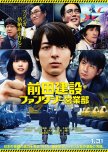
Project Dreams: How to Build Mazinger Z's Hangar
3 people found this review helpful
This project will save the company -- no, Japan -- NO! THE WORLD!
Japanese companies have made running shoes out of tabi, dictionaries out of collected words with minimal budgets and huge amounts of earnest shouting, so why not make a hangar for a flying robot out of nothing?I cried with laughter throughout the film, a perfect mix of
a) those popular business stories, where earnest shouting and lots of "ganbarimasu!" combined with Japanese ingenuity save the Japanese economy (or, at least, the company),
b) fan culture, the kind where fans earnestly discuss how things would work in real life (like physicists trying to work out space travel in SF, or biologists drawing up an evolutionary tree for Pokémon),
and
c) the passion of engineers. (Muck is a serious issue!)
Did I like it? -- Absolutely!
Was it good? -- Without doubt!
Would I recommend it? -- YES! Especially to those who are either in the kind of fan communities which I described above or who have seen one or more of Japanese business dramas/films.
When I watched the film, I wasn't aware that Mazinger Z is an existing anime series (it's from the 1970s) -- and I wasn't sure if Maeda was a real company. But it is!
And what makes it even better is that this film was based on a real group of Mazinger Z fans, who worked at Maeda and made detailed plans for the construction of sci-fi anime bases.
(https://www.animenewsnetwork.com/news/2020-01-31/live-action-maeda-kensetsu-fantasy-eigyobu-film-features-cameos-by-mazinger-z-creator-go-nagai-yamato-desslar/.155963)
I really loved the characters, who are all so likeable, and how each of the the core group members gradually discovers their own niche of passion for the project. There was never a dull moment for me; the overall development of events was gripping (Japanese films can really make you care about the most niche of interests!) and the comedy pacing was spot on -- although if you are not a fan of passionately shouted speeches and the Japanese style of comedy, this may not be the right film for you.
I also liked how towards the end, the line between fantasy and reality became increasingly blurred for all of the characters, both main and supporting, until even we, the audience had a hard time telling them apart.
One minor point I did not like as much -- they could have left out the romance. There is only one female character in the team -- why does she have to get a crush? There was no reason at all for it, and I would have found it much better if she had developed a crush on the niche interset, not on the person who has the niche interest. But since it's minimal, and I could easily disregard it (I don't think her crush is even aware of it, and she denies it), I don't mind too much.
Overall, it's a great film! Do watch it!
Was this review helpful to you?

I have to admit that I started watching Mystery to Iunakare because I had heard good things about the drama and because I thought it would be a detective drama.
And it IS, in a way, but not a classic example of a whodunit, where you can solve the cases along with the detective character.
I had to adjust my expectations -- because this is more of a psychology lesson, with a focus on parent-child relationships, and with a bit of philosophy thrown in -- characters, their story and their motivations to do the things they do are at the center, not the cases.
Once I did that, I mostly had a good time.
I loved, as I often do, the excellent acting, the use of space and light -- it often reminded me of a stage play, in the way the characters were positioned in relation to each other, or the way the camera used wide shots.
The drama was strongest when it used silence to convey the mood of a scene or to build suspense -- I also liked the two original songs (and I am very grateful for the translation of the lyrics on VIKI, because they do help to understand the drama's themes). But why, oh why?, did they have to use classical music for the background music? The Dance of the Sugar Plum Fairy, the Aquarium piece from The Carnival of Animals, Vivaldi's Four Seasons -- I am sorry, but their original meaning was never "mysterious" or "suspenseful" -- and to hear them used in that way was jarring.
I was also unconvinced by the order of the story elements. We get an interesting dynamic between the main character and another character -- which is completely dropped in favour of a weird romance (?) arc between him and a strange young woman -- and then picked up again in the final episodes. I do understand why they did it that way, but the thing is, it broke my connection to important characters, not once but twice.
(I am also not a fan of romance arcs in mystery dramas, so that did not help.)
Regarding the main character -- I am not sure I like him. He is interesting, yes, and quite mysterious. A 20-year-old philosophising at older people always strikes me as precocious -- but if not the young, who else can make such sweeping declarations about life?
I wish the actor and director had focused more on Totono's imitation of other people's habits -- it was just him imitating tics, like drumming fingernails on surfaces or similar. I think if Totono had mirrored their whole posture or even their facial expressions, maybe a bit more subdued, that would have been much more fascinating and could have added to both Totono's mysterious aura and the drama's underlying theme of "identity". I am convinced that the actor could have pulled it off too!
Another aspect was the shocking and rather sudden explicit depiction of severe child abuse in episode 7. I didn't mind that it was shown per se -- I do mind that we didn't get any warning and that it came very late -- all the other episodes before had been rather conservative with showing violence, or even dead bodies, so it wasn't something I could have expected.
All in all, Mystery To Iunakare (Don't Call it Mystery) excels in pacing, acting, lighting, silence and the OST (not the classical pieces), which all serve to make an excellent philosophical and psychological piece about family, specifically dysfunctional mother-child and sibling dynamics, and how society shapes identities, explored through criminal cases.
So, in conclusion:
Was it good? The acting and the lighting were impressive; the musical choices not so much. The cases presented were interesting -- but why were they shown in this order?
Did I like it? I liked some aspects of it, enough to keep me interested.
Would I recommend it? Yes, especially if you like stories that explore the human psychology.
Was this review helpful to you?

This review may contain spoilers
This was extremely hard to watch for me, and also to write a review, because my mother heard exactly the same diagnosis - and there was one scene in the film that came very close to how my mother died. Mother-daughter-relationships are also at the centre of this film, not all of them are good or even resolved at all.
So, if you're also sensitive to the topics in this film -- late-stage cancer, death of a parent, mother-daughter-relationships - then you might want to avoid it.
That being said, the actors are excellent! This is one of the reasons I couldn't not finish the film, because the actors, child actress included, portrayed their characters so well that I was already invested in their story and needed to know how it all ends.
Regarding the story, apart from my personal hang-ups: The three main characters, are all female -- and they are who are shown as the ones who shape the family, who take on the challenges life throws at them -- while the men are more passive, even weak.
The thing is, the mother is shown too much as the "self-sacrificing prototype", which really got on my nerves after a while. I wish the mother had been given a bit more time for her own struggles, her own pain, her own grief for having to leave her family. There was only one scene, right after she heard her diagnosis, when she broke down, alone in the hot bath (excellently filmed, btw), and then, once, near the end. All of the rest showed her being dedicated to her growing family -- but a mother is also a person with her own life, and I really wish the writer had given her that. It wouldn't even have taken a lot, maybe just her wiping away a stray tear, looking at an old photo, hugging herself in the kitchen ... just show us that there's more to her than just "devoted mother".
Overall, I can see how many people would love this film, even maybe find solace in it -- and most of the aspects I did not like are more related to myself than to the film -- so if you think you can watch something with the above-mentioned topics, then you should definitely try this one.
Was this review helpful to you?
What to do when you feel your relationship and your life has reached a breaking point?
This is not a happy story.(tw: depression, child abuse, chronic illness)
This short film, like most short films, leaves a lot of meaning unspoken and questions unanswered.
That means if you can't find a connection to the struggles of at least one of the two main characters, this film might be hard to "get".
The characters have to deal with illness (of the mind and of the body), their own and their partners; with prejudice toward their sexuality and towards their profession.
What to do if, on top of all of this, you feel trapped in your relationship? When you feel that you lose yourself, bit by bit?
Will you go on a long-distance journey or stay with your partner?
The pain of the characters is apparent in every movement of their faces and bodies. The minimal music and the cold late autumn surroundings underline their bleak situation.
One thought about the plot: I was completely thrown by the twist in minute 20, which made a lot of things about the woman much clearer. I had to rewatch the whole film just to understand her better.
I'm not sure I like what her ending scene implies about a possible connection between that twist and her sexuality, but maybe I'm reading too much into it.
(Edit: After thinking about this some more, I arrived at an even sadder coclusion about her life and her decisions. Another point in favour of this film. Made me think, and question what I saw.)
And a thought about the subtitles: Those on GagaOOLala are not good. They are good enough to understand the plot, but the obvious grammar mistakes make me wonder if there are nuances that pass me by just because of the bad translations.
I also wonder about the subtitles for the ill partner. We get them, and know what he says, but the main character doesn't (he says so during the therapy session) -- so, does the Korean version have subs for the partner's sentences? Or do international viewers know more than the main character AND Korean viewers?
Overall, I found the story extremely painful and bleak. And I can understand why some viewers don't like it -- for those who have experienced at least some of the characters' struggles, the film might give a better connection to the themes.
The excellent acting and production alone is worth it, I think. (According to the info on GagaOOLala, this film was awarded the Grand Prize of the 2020 Ansan Dan-won International Cultural Art&Film Festival, so it can't be just mid.)
I'd suggest that you try it, it's just 29 minutes, after all.
Was this review helpful to you?

This review may contain spoilers
Scattered mess of beautiful moments and weak scenes
I postponed writing a review for this drama for years now -- there are some parts I am still in love with, but some are just frustrating.The show is a mess of scattered plots, good acting, average music, fantastic plot ideas, weak acting, and some touching moments. So, any star rating would be wrong and right at the same time. (But MDL doesn't let me post this without a rating.)
First of all, I know that the makers of this series were unlucky with their timing, first it was aired earlier than planned and then there was Covid. But still, there are some structural flaws:
* I think the writers bit off more than they could chew when they introduced all of these side couples. They distract from the main storylines, and are not developed at the same time. Even without covid, if they'd cut down Tutor's and Fighter's storyline to incoporate Zon's and Saifah's -- where would they have put the side couples? There's just no time!
* Overall, the script is not very consistent, subplots are introduced but not resolved, some scenes are not connected to the whole script -- and it cannot all be due to interruptions by covid.
* The premise of Zon thinking he could be in a BL novel was an interesting one but was basically dropped after a few episodes. The question of "Is it real?" could have elevated this above the common-troped college BL story.
* Zon's endless waffling between shameless flirting and borderline homophobic panic attacks was just annoying.
There are some other minor things I did not like very much, which was the crude humour in the beginning, the way Zol's disregard of privacy and wishes of the real people she is writing about is never resolved, and the dynamic between Saifah and Zon.
This couple adhered more to "usual" BL tropes than Fighter and Tutor, which I tend to find boring, sometimes irritating. Otherwise, it was a cute kind of innocent first love. Some people seem to very much like it.
So, until here, it's maybe average, and I'm generous with that assessment.
But then, there's Tutor's and Fighter's love story. And if it wasn't for all of the points above and some other, minor, things, I'd rate this show much higher because of their story.
* I love their push-and-pull-relationship. At first, it's more of a rivalry which develops into more as they both struggle with their own feelings.
* Both are equals in this relationship, both are able to give and take, and learn to lean onto the other and give strength.
* At the beginning, both are -- in differing ways -- closed off to other people and are keeping their inner self for themselves. As they learn how to deal with their feelings for each other, they learn how to open up and show their underbellies. Especially Fighter is beautiful in these vulnerable moments, when he allows himself to submit to Tor.
* All in all, these two characters show some well-acted character development and a beautiful story arc.
Other, minor things I loved:
* Zon's gang was hilarious, I do love that kind of humour.
* Kae (the café owner) was as supportive as he could be, while himself strugglingas a member of a minority group and in unstable financial times. His scenes show that there could have been more, that the writer was capable of better writing but chose to focus elsewhere. (Or, rather, distribute their focus to everywhere, so there's no focus at all.)
* Blue is just ridiculously cute.
* Also, Hwa's character was interesting. I'd loved to see more of her emotional journey and what was going on in her family. but still, the glimpses we get are fascinating.
So, what to do about a rating? I love the Tutor/Fighter parts (10 stars), and I have watched those again and again. I am frustrated by the side couples (3 stars), and disappointed by Zon and Saifah (5 stars).
I can't recommend it, but I can't not recommend it either -- watch at your own risk.
Was this review helpful to you?

This review may contain spoilers
If a film from Japan is 60 minutes long and has an 18+ rating, then there's a good chance that it is a pink film -- with all that entails about crass sex scenes, random nudity, production quality and sometimes questionable plot. For more info, I recommend RandomUsagi's introduction to their list of gay pink films (https://kisskh.at/list/1xrm2893) and a comment of theirs about the distinction between BL and gay pink films (https://kisskh.at/list/1xrm2893#comment-19083260).
I haven't seen a lot of gay pink films yet, but what I appreciate about some of those I've watched is the way they use soft porn to tell stories about the universal human experience -- love, loss and gentle heartbreak.
This is one of those.
The main character (Takeshi) is torn between familial obligations and wanting to live his own life -- this resonated deeply with me, and maybe other people who are or have been in the same place in life.
Love and loss play a big part in this story: His boyfriend Kazuyoshi, who left Takeshi to pursue his own career while Takeshi remained to care for his elderly and disabled father, returns, but only for a short while. His sister leaves the house to get married. The gift from the ocean, the man without history, Akira, might have been a temporary person in Takeshi's life.
What is not said is at times more important in this film than what the characters tell us. I liked the use of silence and the chosen soundtrack.
I am impressed by how the director managed to give the obligatory sex scenes some meaning -- the first, before the break up, is loving, on the dry part of the beach, warmed by a nearby fire -- the second, the reunion, is harsher, on the wet sand -- the third in the liminal space between land and sea, doused in cold ocean water, bodies smeared with black sand -- and the in last scene at the beach which, in contrast, is not even a sex scene, both men are overwhelmed by their emotions and, in accordance, by the waves crashing over them.
The acting was not bad, I've seen worse in other modern gay pink films, and the plot holes are not that bad, considering the film is only 60 minutes long -- it's not about the plot anyway but either about the sex or the emotions (whichever the viewer prefers).
If you don't mind the way sex scenes are done in pink films, and are willing to look beyond the plot holes, it's a not-bad way to spend an hour.
Was this review helpful to you?

This review may contain spoilers
Colourful!
Let me be shallow for a moment: Hiroko would absolutely be my type of woman, if I had a type. Competent, always friendly, a boiling mass of emotion behind a nice smile, and that hair? Mmh, yes.Now on the the actual review:
From the first minute, this drama surprised me with its colourful design: From the worklpace and Ayaka's home to her clothes, the light outside and inside -- I think I've never seen a Japanese television series with such clear and crisp colours.
This colour scheme does fit the upbeat and light-hearted story -- only tempered by the past experience of discrimination of LGBTQ+ people and the subsequent emotional state of one of the characters.
This is one of the best points, story-wise: Discrimination of lesbian women (and also the inherent misogyny, heteronormativity and sexism that go with it) are not glossed over but are part of the story itself; and the positive outlook we get at the end does not detract from that.
On the other hand, Ayaka's character feels unfinished. Why was she the way she was before her transformation? Is her "new" self closer to who she really was all along or did she completely change her persona? How does she manage to go from uncommunicative and reserved to an outgoing and socially adept colleague? Something's missing here, which is why I had to subtract a point.
Mori Kanna's (Hiroko) acting is suberb; her comedic timing and her facial expressions are excellent. Especially the first part of the series (which is more hilarious than the serious latter part) lives because of her inner and outer reactions to Ayaka's flirting.
Overall, I think this is a series I could recommend for a first-time GL viewer.
Was this review helpful to you?
This review may contain spoilers
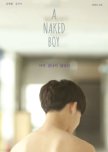
"Can I ... Can I carry you on my back?"
"You know ... I'm getting married soon. But it has been so hard for me these days. I should ... I should get married... I have to soon ... but ..."This is not a story about a middle-aged man lusting after a boy. This is a story about a man, who once was young, who denied himself his chance with his first love, who is feeling the societal pressures to get married -- who mourns his loss and tries to say good-bye to what once could have been.
Even though this film is short, it's slow. What we hear is not what Jin Tae says -- do not listen with your ears, listen with your heart and your mind; what you can feel and know about him.
Everything is subtle and muted; the excellent melancholic acting, the autumn colours, the quiet sounds -- the story's in the details.
This film will not be for everyone; it's been hard for me to "get it" too -- but maybe you'll find yourselft a bit more open the next time a middle-aged queer person tells their story.
Was this review helpful to you?
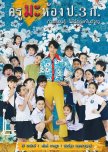
His progressive ideas about teaching don't find easy acceptance among parents and teachers, who think strict upbringing, including corporal punishment, and learning by rote is the path to success for their children.
We follow teaching, parenting and learning adventures of Kru "Ma" Wichai and his third graders in this 12 episode drama.
I admit, I can't often withstand the temptation of a good drama about teaching -- and this one delivered. I loved its message about good teaching methods (even if sometimes I thought Wichai could have found a middle ground in teaching, for peace's sake) and how it showed how school and parenting was done in the 1970s in Thailand.
Also, I learned that I know next to nothing about the history of south-east Asia -- I mean I had heard of Pol Pot, and of course, the VietCong but I did not know anything about the greater picture in the area, let alone that life in Thailand's border territory was that dangerous.
So, a great learning experience not only for the characters but also for me.
The acting was great all around -- and especially for the children! These young actors, five of whom had rather large roles, impressed me.
The story, i.e. the characters and the setting had hooked me from the very first minutes -- and it did not let me go until the last second. The conflicts were at times solved too easily or too quickly, that is to be expected though; this series is made to be a feel-good drama, with a positive outlook.
Most of the series is either optimistic or funny, the last episode had me in tears three times (for entirely different reasons each time).
There's maybe a bit of romantic interest (a few minutes in the later episodes), but it's up to the viewer to decide if they get together as a couple or if they remain good colleagues -- I choose the latter ;) The teacher-student relationship and the friendships between the children are definitely at the centre of the drama, as it should be.
Was this review helpful to you?

Until this project, the YouTube channel "옆집남자 GuyNextDoor" had only made short comedy skits -- most of which are really good! They used their history and experience with these shorts to their advantage for their project "Fake Buddies" by filming and releasing the seven parts as comedic shorts, without any indication whether each one would be the last. The first four or so were even complete little stories in themselves, at first I wasn't sure if they should be seen as part of the same story at all. The wait and the guessing game (Will the story continue? Will we get a backstory? Which couple will we see?) enhanced the experience for me.
Even as a finished product, this short story (the complete version is 44:35 min) is charming -- the acting is well done, the comedic timing on point. The plot is simple -- the way it is told make us root for all four of the young people. The budget was obviously non-existent -- for this story about people "next door" more wasn't needed.
GuyNextDoor show us that you can tell a good story, even without budget, if you use your strengths to your advantage. I'll be looking forward to their upcoming projects.
Was this review helpful to you?
You need courage to take the next step
This movie with its simple love story has fast become one of my favourites -- a story about two very ordinary men who fall in love with each other and take the first steps into a relationship.I love how the film shows us the insecurities that come with having a crush on a man as a man, the questions that come with getting to know another person -- will you like me, too? Do we have a chance to come together? Will I take the step into the unknown?
And at the same time, both men as well as us get to experience the giddiness when we feel that our feelings might be reciprocated.
We get to see how these two men, who seem to be very different in their hobbies and lives, try to find the courage to open up to each other -- only then the relationship may move forward.
The film makers obviously had to make do with a low budget, there are some sound issues in outdoor scenes. But they did not need much more -- as I said before, this is a simple love story of two ordinary men, who could be our neighbours, our colleagues, ourselves. Accordingly, the use of places, of light that is already there makes the film feel very real.
I also love the sets, which are lovingly filled with small details: There's the changing date on the white board behind Koiwai's desk. There's the small detritus of the life of a working person in Yamashita's room. There are the messy bed sheets near the end of the film.
I'm looking forward to rewatching the story of these sweet and gentle people.
Was this review helpful to you?
It's never sentimental about it; there's no pathos at all. It just shows the people as the are. It also never tries to explain what people are thinking or feeling, why they act the way they do -- which is especially exceptional for Chu-san. I can imagine that a lesser film would try to explain him to the "normal" people (i.e. the ausidence), either directly or through the mouth of a character.
This film does neither. It shows us how Chu-san lives his life, what is important to him and where he clashes with the world, who shows no sympathy for him at all; with the exception of the son of the neighbour family.
Following the way the story is told -- unsentimental, but with great sympathy -- the acting and editing stays natural and even understated throughout.
If you can watch this film, then I recommend you to do so!
Was this review helpful to you?
What happens when everybody tries to to their very best at a wedding
A wedding should be a couple's best day of their life! This is what drives not only the bride and the groom, not only the wedding planner -- but everybody who is invited (and one who is not invited).We get to see backstories of the couple and a few of the guests, who all want to make this day special, while they have their own aspirations. I love the aquatic theme that's going on while they tell their own stories -- even though it's never quite clear why it this theme, not another. (If you know, please tell me!)
The film also takes its "Chekhov's Gun" very seriously, but no need to pay extra attention, you'll see when it's used.
These sincere and genuinely nice characters do their all to make the wedding the best wedding of all time -- and overshoot their goal; this is where most of the humour comes from. I waited for things to go wrong horribly. But this is not the kind of comedy, and it works!
There was a bit of sexism in the beginning -- the long-suffering husband(-to-be) who wants to please his partner, and the "guy outing" (what are guys up to when they are alone, hehe... not that funny, all very innocent though) -- but the groom and the ex-boyfriend are so cute and nice that I can forgive them. There was also a story arc with a bit of "diarrhea-is-funny", I don't mind that kind of humour, other viewers might.
A bit disappointing is that the female characters are not only in the minority but also much less interesting then the men (with the exception of the wedding planner).
All of the actors made their characters come to life -- and I fell in love with all of them. Especially notable was the scene where the fathers and old schoolmates entertain the guests, what a choreography!
There are two storylines that happen simultaneously but are shown after one another; I wonder if they couldn't have been shown as they happened or if this would have been too much? I suppose it's the latter, because overall the pacing was excellent, fast scenes and slow scenes followed an easy rhythm, according to the story.
I wasn't bored for a second, I laughed a lot -- and there were a few heartwarming moments. The ensemble plot and the multiple points of view with their backstories show us a wedding that will be memorable for all of them, the couple, the guests, and the staff of the location.
Was this review helpful to you?
So, I'll just point out only some aspects:
* Trigger warnings for explicit depictions of excessive violence, suicide, human trafficking, drug use rape and forced sex work.
* The movie is very slow and quiet, except where it's not.
* The movie is definitely not fluffy. But heartwarming all the same.
* There's a love story that is told in less than six minutes, from beginning to the end -- and I still cried for both lovers. (But it's still not a romance movie.)
* The young boy actor was impressive.
* A lot of the story is told not in dialogue but in silence. The movie expects the viewer to pay attention not what the characters say, but what they do.
* When people are victims, over and over, all of their lives, is there a chance to get up again? -- The story can be read as some social commentary. But maybe not.
* The sombre tone is lightened by the group of neighbours, whose loving antics are hilarious.
This is not a movie I will rewatch any time soon, it's just too intense for that -- maybe in a few years. But I can recommend it for anyone who is not disturbed by the themes mentioned above and wants something different that engages the mind.
It's probably best if you see for yourself.
Was this review helpful to you?


