


 4
4 17
17 1
1 5
5 1
1 1
1 1
1


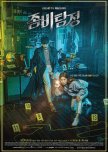
What I liked best:
* The initial premise is different and interesting, the story arcs well paced and in the end, all story threads are neatly tied up. Even if they ended the series with a glimpse of a new plot, it felt more like a "this is not the end" than a cliffhanger.
* The main character was extremely well acted, I loved the facial expressions (or, sometimes, the lack of them) and how the actor moved his body, we never forget that this is actually a dead body, not a living being.
* The comedy was there duiring all the episodes, and varied between spoofing Zombie movies and the detective genre, slapstick-y routines and just plain hilarious situations.
* The mysteries were not too simple, but simple enough for a comedy.
* Some K-Dramas I've watched have a weird slump in pacing or story in the 9th to 11th episdes. This one doesn't, every episode was interesting or funny enough to keep me watching.
* There was no romance between the two main characters, only a hint of interest on the woman's side, which is not even recognized by the zombie detective.
Was this review helpful to you?
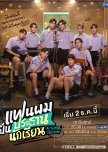
The target audience is definitely much younger than me, but I liked it.
Technical aspects of the production were fine. Overall, the acting was good, especially since the actors are all really young. Directing was fine also -- I always have an eye on how ensemble scenes are done, and I did not notice anything missing here.
There are quite a lot of songs in the series, which is appropriate, since it's about a band -- not too many (and that's coming from me, who thinks that there's too much singing in Disney movies), and all of them fitting the band's general vibe and the plot.
Regarding the plot, it is a slow burn with lots of pining, and I tend to love this trope. Yes, it's a bit ridiculous at times, and also a bit cheesy, but that makes the series so charming. Even though some more serious issues are addressed, it's never high-stakes for the audience.
A lot of the good tropes are used liberally, some are there just to be subverted (an episode at the beach, but the young people get only five minutes to actually enjoy it?) -- and there are none of the trope I hate (e.g. miscommunication because some character is lying, love triangles, traumatic childhood experiences, jealous female characters...).
I also loved that there's so much time dedicated to the bandmates' friendship and the highs and lows they go through as the school year progresses. They are all young boys who enjoy life, and are not ashamed to act silly when they feel like it.
The parents also got some character development, and enough time to show it.
There really only two very minor points that could have been better:
a) I wish there were more female roles. I know it's a BL, and BLs have to have a majority of male characters, but why not have a girl in the band? Or a female Kajorn? Or female MCs? Or a female Yak? (Though, I admit, the last one is maybe a bit more difficult.)
b) I would have liked to see a bit more story for Tinn, whose main role is to support Gun, his love interest. He does have his own insecurities, his own questions about his future -- it's all already there, just underdeveloped and glossed over.
One last thing, because I waited for it but it never came: There is absolutely none of that old and tired top/bottom-dynamic in this show! None of the boys have any characteristics that trope would demand (difference in age, status, experience, body type etc.), none of the "pushy top" and "reluctant bottom", their body language and whole demeanor are always "typical boy" and touches are very much mutual and equal in reciprocation. I hope we'll get to see more of this kind of relationship dynamic in future Thai BL shows.
(They even make fun of the trope at the end when they talk about ship names!)
So that was a very nice surprise.
All in all, the show is light-hearted and funny, even silly at times, with great friendships -- it made me smile throughout the whole series. So I recommend it as something to watch on gloomy days. Characters don't take themselves too serious, and the audience should do the same.
Was this review helpful to you?
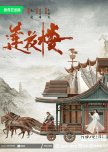
This review may contain spoilers
Excellent drama with one flaw
THE STORY:I started this thinking that we'd get to see detective stories, where I could solve cases together with the heroes. The cases were, although interesting, not of that sort. They all made sense, but the audience often only got to see the clues at the time Li Lianhua or Fang Duobing revealed them to their co-characters. The cases themselves were overshadowed by the overarching plot relatively early, so for me, they did not have too much merit by themselves, and only served as a vehicle to move the story forward.
The overarching story wasn't that complicated, we got to guess the main villain quite early, and some of the plot twists weren't that twisty for me.
(Also, the main plot point -- evil people from a defeated foreign country try to overthrow the mighty and just and overall better [China] and fail -- is typical Chinese nationalist fare.)
What makes the story interesting, is the journey of Li Lianhua, both in the past, which is revealed to us in increments, and in the present -- Li Lianhua, who is terminally ill and is pulled into the Jianhu after ten years of solitude, whose journey is one of finding closure, of forgiving or avenging, of finding meaning in life and death.
A plus, for me, is also that the series has little romance -- most of it finds it conclusion within three episodes or so around episode 20 (they decide their romance will stay in the past only). Unfortunately, most female characters' motivation still circles around love, more on that see below.
The story unfolds over 36 episodes, which never drag or feel rushed. The series kept my interest throughout -- the pacing was always just right.
THE CHARACTERS:
Li Lianhua is a wonderfully human character. He is flawed, he lies, he deceives but still seems to be a person who has his values he lives by. He is a miracle doctor and a horrible cook. He is someone who pushes others away, and it's never quite clear if it's to protect the other person or himself. He is selfish in his last decision, and at the same time sacrifices his life (essence) for others over and over again. Li Lianhua is world-weary but can still find solace in the little joys in life and seems to believe that most people are ultimately good.
Li Xiangyi was young and inexperienced. He trusted wholeheartedly -- but also judged hard. He thought he was the most important person in the sect -- and died because of it.
I also loved the other two main characters -- loved their banter, of course. They both had their distinct personalities and unique goals. Fang Doubing and Di Feisheng had good character development -- more time to show their personalities and their inner life would have been even better.
The one thing that irked me for the most part of the series was the portrayal of the female characters. Their motivations mainly circled around "love" (or a version thereof), and usually, they had no agency without a man. Let's look at the four most prominent women:
Jiao Li Qiao: Her motivation for anything is to get Di Feisheng as her husband. That's it.
Qiao Wan Mian: She is important as the past love interest of Li Xiangyi, who waited for ten years for him. Later, she gets a bit more agency, but it remains half-hearted. Has she left Zijin or not? Why does she take his Sect leader token but does not take on the role herself? (He is obviously still the sect leader later.)
Master He (Fang doubig's mother): She's the only woman without an interest in pursuing another man; the only one who is shown with significant skills who can contribute to the fight. She is also the only married woman, and the only middle-aged woman, so it's probably just that she's "too old" to be a potential love interest who can be heroically disregarded.
The princess: Her interest in marrying Fang Doubing is somewhat understandable -- as a princess she lives a highly regulated life, and probably knows that the only chance to get a bit of freedom is as a married woman. (Of course, her interest has to take a backseat next to her fiancé's desires.)
There's also the young girl who we first meet when she disguises herself as a man -- she could have easily been a cunning woman with a network of informants or a vast library. But no! She always gets her information from her grandfather and she is allowed to bring Li Lianhua to her brother for treatment.
That's enough of a rant for this review. Let's close with another excellent aspect:
THE ACTING:
I did not find one actor unsatisfying. The minor characters were all right throughout.
All three main characters were portrayed incredibly well. Especially Chen Yi (Li Lianhua) who needed to show his multi-layered personality without words had excellent micro-expressions. Di Feisheng is probably more interesting than the script itself has provided because Xiao Xun Yao manages to hint for underlying emotions of his character from the first second we get to see him on screen.
And a special mention has to go to Rain Wang (Jiao Li Qiao), who, despite her single-trait character, shows how chillingly deranged Jiao Li Qiao has become over the course of the series.
OVERALL:
This is, despite the one flaw, a series that tells a story about friendship, betrayal and revenge -- and a man who just wants to have a quiet death.
Recommended!
Was this review helpful to you?

Things I liked most:
* The female characters! Although they were still in the minority, they were fantastic! The two main female characters were an equal part of the cast -- in most cases the female forensic doctor was the one who found the deciding clue, even. Both were shown as professionals, with interesting personal lives, own ambitions and well-rounded personalities.
* The team! We get to know all five (hm, six) people of the UDI well, and how they learn and grow together. They start as distant, even uncomfortable colleagues -- and in the end, they work as a well-integrated team. Some of them get some character development, some don't really need it.
* The supporting cast! Even they got a personality, some are more mysterious, some antagonistic, some familial. All of them clearly have their own motivations and goals.
* The acting! The directing! The soundtrack!
* No Romance! Well, over the course of one or two episodes, the male part-timer wonders if the female lead might be interested in him, and it seems he wouldn't have rejected any advances -- but! That fizzles out and is never even thought about again.
(Although, as I read through the other reviews, I see Orangevine's who states that "There is also a love triangle (with the caveat that one must be well-versed in Japanese romance tropes to spot it)". I'm obviously not well-versed, so I don't see it.)
* Minimal gore! We see blood, contusions, discoloration of the skin, some wounds, the occasional part of an organ preserved in formalin. Faces of the deceased are never disfigured, there are a few scenes where we see how the scalpel starts to cut, but never any opened bodies or any inner body parts while the autopsy is in progress.
All in all, it's remarkably respectful of the dead (compared to US productions) and there's never any kind of voyeurism.
* A fascinating insight into Japanese culture! Concerning death, and how the deceased and those who have contact with them are regarded and what it means for the politics around them.
* Last but not least: The cases! Not every case is a crime, but they are all interesting. The first one is noticably from before CoViD. The seventh had me in tears, that one hit close to home for me. The overarching plot was also intense, and was the main focus of the last three or so episodes, and tied all the personalities and their development together.
Was this review helpful to you?

This show is a fantasy for all of us who belonged to the "nerds", the "weirdos", the "fat" people or whatever group we belonged to and thought we would never have a chance to get the popular guy -- to make our secret crush our one true love.
First of all:
1. Toh is a very special kind of guy. His brain works differently to "normal" people. (I think people nowadays call that neuro-divergent.) He's also a rather campy gay man, which marginalizes him further and colours his world view heavily. This makes his actions hard to watch, although for him, they all make perfect sense.
2. Toh's friend group is loud, queer, a bit weird -- the whole show is made of camp.
If you can accept that and roll with it, you will have a very good time with this show. If you can't, then you should probably watch something else. I get that these over-the-top kind of shows are not for everybody.
Second:
1. What I loved most is the friendship between Toh, Daisy, Som and KaoJao. They are all supportive when it counts, pushing the other when it's needed,and not above teasing each other. It was also great how easily the two gangs mixed, the weird one and the popular kids. Toward the end, they were still very much present, and that's not something you always have, that the couple(s) don't forget their friends.
2. The second main thing I loved was: Those characters who are different (nerdy, queer, chubby ... just "different") usually only get supporting roles, mostly no love interest, and are often there mainly for comic relief. In this series they are the main characters! And they all get a love interest! AND, and this is the thing that made me give ten stars, none of them is required to change for that to happen. How often have we seen that the "ugly duckling" turns into a beautiful swan in the end? Not here, Toh remains his usual self, glasses, bowl cut and short trousers included.
Third:
* Kudos to the director: There are so many ensemble scenes, and even if they are not in focus, I haven't seen one actor fall out of character. It's a joy to watch the reactions and interactions in the background.
* Colour, audio and overall cinematography was fine. The background music was always there, as if whoever was in charge of it had a "horror silentiae", and sometimes too loud. I do love "แอบหลงรัก ", §ดั่งดาว" and, yes, even "Ooh My Loove".
* One thing that threw me out of my enjoyment of the explicit scenes was that they opened the condom packets while still dressed -- where are you going to put it then? (Also, I'd really like some lube sometime...)
Fourth, and that's the last one:
And I have to talk about it because I like to rant about the prevalence of top/bottom-tropes in Thai BLs, this was actually toned down a lot here. It was still there, and I wish we could get away from the "pushy" top. (Even though Sky was quite sweet later on, I'm not too happy about how he pursued Jao in the beginning and the grabbing around the neck/chest thing.)
Still, there was no feminizing a partner who was not like that in the beginning, that's good. Also no infantilizing whatsoever. The use of "wife" was mainly used to describe the roles during sexual activities, not as a character trait. Partners in two couples offered to switch roles if the other wanted it.
"Tops" were also at times insecure, emotionally open and one of them not really adept at flirting.
I also firmly believe that the bandana in Nuea's right backpocket (in episode 7) was intentional, and you can pry this headcanon out of my cold, dead hands.
Overall, a firm recommendation from me, if just because of the great representation of characters who are otherwise never in the spotlight.
[This is a slightly edited version of the review I posted on Viki.]
Was this review helpful to you?
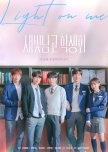
All in all, it did not wholly deliver on its promise.
The premise I liked, four young people who have to come to a decision and their own standing point regarding their position towards platonic and romantic relationships -- and issues of belonging to a group versus being who you are. Even the love triangle made sense within these topics.
The execution, though, is stilted and at times too slow.
These are definitely directing choices, not the problems of the actors -- as soon as they get to do something, they start to shine.
For example, I don't understand why the actors stand right in front of each other in most conversations, with their arms hanging down without movement (and the whole drama is conversation-heavy) -- alternatively, they talk while walking next to each other at a snail's pace. I suppose the director wanted to convey some kind of awkwardness -- which is a good idea, since the characters definitely don't feel comfortable for most of the time, but it just gets boring after a while.
Also, the characters (with the exception of Namgoong) all have similar mannerisms (or, if I want to be a bit mean, the same mannerisms) -- including the teacher, which I mistook for another student in several scenes.
There were also some minor issues:
* At times, the background music did not quite fit the mood -- I'm also not a fan of the "plink-plink"-kind of music.
* The scene with the adult toys in the beginning was never resolved, and did not fit in with the rest of the story.
* I could have done without the kiss at the end -- it feels as if the writers or the director said: Oh, the audience also wants a kiss, so lets add it somewhere. A hug or some light cuddling, or even sitting very close to each other would have fit the overall mood better.
* I'm also not too sure about the female character, but since she had her own story arc and character development, I'll let it slide.
The plot itself, with its theme of exploration and the awkwardness of navigating relationships in adolescenece, is fine, and surely of interest to many. It's just that the way the series is brought to the screen cannot convey all the depth and the emotion it wanted.
Maybe if the creators had been clearer of the intended audience and made some bolder choices for directing according to that, it would have been more on point.
Overall, I found it okay to watch, but not worth a second time.
Was this review helpful to you?
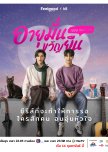
Weird, remarkably consistent -- and can make you think if you look beyond the Pork Blood Soup
For vampire Pun, only meeting Yo makes his own life meaningful. Only when they are together, during the all too short span of a human life, there can be happiness. Pun will enjoy every single second with Yo, it doesn't matter if these seconds are good, bad, or deeply absurd.For those who seek help in deciding if they should watch this series, this might be important to know:
* Take all of your ideas what a vampire story should be like, and put them away, because this story either discards them or at least subverts all the vampire tropes.
* Almost all of the characters are weird in some way. If you can't handle "cringe" (whatever that is, because I still don't understand the word), then this might not be for you.
* Blood Pork Soup sometimes feels like the main character of the show. This is what brings the group together.
* This is not a fast-paced romance. At times, it seems as if this show is not about the romance, but about the absurdity of life. Which also means that sometimes it seems that nothing is happening at all. Relax, follow the flow of the drama, enjoy every scene on its own, without expecting it to advance the story -- and you'll enjoy this show.
* Pun is, and that is important to notice, usually at least an unreliable narrator -- inconsistencies in what he says are not plot holes. Take everything Pun says about himself or other vampires with a grain of salt, he has his reasons.
* You *will* get a common trope used in stories about humans and immortals at the end.
* And last, watch the trailer https://youtu.be/5ekNPUazAmA. For a trailer, this one is pretty much accurate. If you like what you see there, you might like the series.
_________________________________
Now, the things I love about the series:
1. The series tries to do something different.
While I can love a tropey rom-com, I don't want only that. I love when somebody does something new; when tropes are discarded or subverted. Actually, I was deeply sceptical before I started watching this serie, because I DON'T like vampire stories and their tropes. Dark and brooding, cruel and mysterious, erotic blood-sucking included? No, thank you. But this one is different. This is colourful, and bright, and everybody enjoys the absurdity life can bring.
"Different" always gets bonus points, even if other aspects might not be good.
2. The characters are weird, and so, so loveable.
Pun, of course, the good vampire who loves Yo and Pork Blood Soup, who once wore braces as an accessory, whose assortment of colourful umbrellas shade us from the harsh sun of reality.
Yo, who is obsessed with aliens and fascinated by the weird, who likes wearing his beaded bracelets and, of course, loves eating Pork Blood Soup.
Kamsai, whose main goal in life is to have a Pork Blood Soup stall, and who is the most pragmatic of them all at the age of 16.
Yam, Yo's little sister, who seems to be a no-nonsense kind of person but ultimately gives in to the weird obsession of Yo's, and who is the one who has a good sense for people and is the first to point out the attraction between Yo and Pun.
Shin, of course, who is hard-working, always full of energy, and who seems to have a slight humiliation kink.
And then there are the side characters; the alien-obsessed Pak and her mute girlfriend, the nosy but courageous auntie, Gyoza and her elderly grandma, the small and cheeky landlady.
3. The series is consistent:
When I watched the series for the first time, I waited for the plot to fall apart very episode. It didn't. Actually, after rewatching, I can say, the plot and the worldbuilding is remarkably consistent -- there are no glaring inconsistencies, no obvious plot holes. I do wish the writer had put more obvious clues about Pun's backstory in earlier episodes. As it is, the last episodes reveals *two* crucial pieces of information about the past and has to resolve all of it in half an episode -- this might be one of the reasons some people find the ending rushed.
I also have to mention that this is one of the few Thai BLs that actually give us dates! The main story starts shortly before Valentine (episode 1, the couple's discount at the food stall) and ends shortly after Songkran, then there's a time-skip of a year, after which follows a montage over the next fifty-four years (this can be easily calculated). So, and I think that's something a lot of people haven't noticed, the main part only takes just over two months -- that's actually not that long.
I also feel that the characters are consistent in their actions. There wasn't a scene when I thought that someone was out of character. Even the side characters had, well, *character*.
Look at Chalui / Luis for example. He's part of "UFO and the gang" (Yo's college friend group) -- if you observe him, he's obviously not as into alien hunting as Yo and Pak. He rolls his eyes continuously, he doesn't want to get involved with that vampire nonsense. He points out that their thesis in the next semester will be a solo project -- and consequently, disappears from the moment the break starts and doesn't appear again. (And, let's be honest, friend groups at college form and disband all the time.)
4. Something that also impressed me were the props and sets.
Seeing the Pun and Yo's rooms, they fit their characters. None of those soulless condos and houses for the super-rich that look as if they were just rented spaces for a series. I can see Yo and Pun *living* there, surrounded by all the things that are important to them. The roof-top restaurant, too, evolves over time, from a neglected space to a place where our group regularly meets and eats their pork blood soup -- props were added over the course of the series, changed places, were *used*. That shows what you can do with a small budget, if you know what you want.
5. The music.
Most of the songs are sung by Boy YourMOOD, who also plays Shin in this show, they are as up-beat and colourful as the whole series. And I encourage you to pay attention to the songs at the opening and closing credits!
6. The plot, in all its consistency, leaves some questions unanswered. (Yes, I'm still at "things I love")
I don't mean the important questions -- the main plot itself is resolved in the end; we get to hear the reasons for the main obstacle, we know why Pun acts the way he does. But there are some minor plot points that are left open -- I won't talk about them here, I try to keep this spoiler-free.
The thing is, I like it when I can think and theorize more after a show has ended. When I can have my little fantasies about what happened before and why, about what someone did or said between scenes, about what will happen after the last scene. Bonus points for that!
7. Below all of the quirky weirdness, there lie unexplored depths of existential questions.
Throughout the series, it feels as if the mood is just one turn away from shifting into the dark.
The drama asks: What to do when everything falls apart and the thing / the person that gave meaning to your life is gone? What will you do when you are the one who will outlive them all?
And: How much do you let yourself be defined by what you are? Can you go against your very own nature? Against what everybody else says how you should be? How long will you be able to defy expectations?
And: What makes a good life? Can happiness be a bowl of Pork Blood Soup?
________________________
The acting by all of the actors was not something exceptional, but we've all seen much worse in Thai BLs. Both main actors did a good job -- especially Pun's besotted stares and Yo's laugh whenever he was embarrassed or confused were very well done. The comedic timing was usually spot-on for me, and where it wasn't. it seems mainly be a strange editing choice. Somchai could have had more range -- the clapping and laughing got samey after a while, but in other scenes the actor was good enough to make everybody hate his character. Special mention goes to Mild who played Kaemsai, what a remarkable scene in episode 11! And she was only 16 when they filmed; I'm looking forward to following her acting career.
__________________
And, at last, the not-so-good.
Because everything cannot be perfect, and we can love something while also be aware of the flaws.
I already pointed it out earlier: There are two crucial plot points that answer questions that are central to the whole plot; and we don't even get real hints before that. While rewatching, I noticed that, at least for one of those plot points, there are actions that make much more sense now that I know what I know -- during the first time, I felt that there was something ... not quite off, but strange about them, but I couldn't put my finger on it.
In my opinion, it would have been possible to place more and stronger hints in earlier episodes, without revealing everything. It might also have made the series more palatable for the people who felt that it was "too slow" or that "nothing is happening".
To everyone who made it to the end of this review, I say:
โบกมือลา ... แล้ววันหน้าพบกันใหม่ --- Wave goodbye ... and meet you again in the future.
Was this review helpful to you?
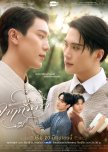
A 12-course meal, where every course is a dessert
If I had to describe this series in three words? I'd choosesaccharine
repetitive
inconsistent
Why saccarine and repetitive?
This show is basically a 12-course meal, where every single course is some kind of dessert, and sometimes you get the same dessert twice.
The thing is, when even the bitter-sweet moments are more sweet than bitter, then the sweetest moments don't taste as sweet as they should. A meal that is only desserts might fill our bellies, but we won't feel satisfied, nor it is nutritious.
To say it clearly: None of this is the actors' fault. They all did their best with what they were given, and there are many moments where the love between Rati and Thee shines -- it's only that there are too many of these sweet moments, and not enough of anything else.
Knowing that this is a GMMTV production, I didn't expect them to use the intriguing possibilities a setting like this provides: The backdrop of the first World War is only used as an excuse to have a French national teach his language to Siamese dignitaries -- while Rati expresses that he is subject to negative scrutiny from Siamese people, this is never actually shown.
That Rati is both of Siamese descent and a French citizen, and is part of two very different worlds, is never used to its potential: France was the only Republic in Europe, and one of the very few Republics worldwide, and with its basic idea of "liberté egalité fraternité" it was an egalitarian society by law, if not in practice, while Siam was still an absolute monarchy, and had only penalized slavery a few years prior to the story.
The subject of classism and also of homophobia in Siamese society is reduced to a personal conflict within the two families of Rati's and Thee's, marking two characters as the evil antagonists, while everybody else stays neutral to understanding or even supportive.
And this reduced potential for external pressure is overshadowed by the saccharine, at times kitschy, relationship between Rati and Thee. As a love story that starts with a "love at first sight" cliché, and then only slowly develops, it is not only overly sweet, with a lot of handholding and gazing into each others eyes, it is also very repetitive. We get at least three different declarations of love and devotion, and after a kiss in episode 5, the relationship regresses to handholding and loving stares again -- you cannot tell me that Rati or Thee, as young men with a sex drive, would not try to find a secluded place for more, and instead wait for months without even doing so much as kiss again, and only sleep together when they are at Rati's mother's place, several episodes later? (A place that is not exactly sound-proof, I might add.) Especially Rati's resistance doesn't make much sense here -- if he accepts that they are both in love and knows that they should try to use their time together, then he should, as a 24 year old man who grew up in cosmopolitan Paris, want to and know how to be physically intimate with another man, and not shy away from touch like a frightened virgin.
The potential disaster of separation and unwanted marriage hangs over the protagonists from the start, and since everything stalls for nine episodes, with Thee's grandmother occasionally popping up to say "MARRIAGE!!" -- the climactic eleventh episode, which should have been the emotional highlight of the drama, full of anxiety and with a feeling of impending doom -- this part feels much the same as everything that came before. To be honest, I was bored at that point, and that episode 12 glossed over Rati's and Thee's feelings of loss and betrayal with a time skip only to proceed with a 40 minutes long sugary ending, did not make anything more interesting.
The story would have profited from a tightening of the pace, and a reduction to maybe six or eight episodes, and if the script had allowed the angst to shine, then this could have been something very special.
Why inconsistent?
The most glaring inconsistencies are around Inn's character Rati. As a young man from Paris, and a man who presumably has been groomed to take on a diplomatic career, he should behave much differently.
Paris was (still is) a cosmopolitan city, it hosted the World Exhibition of 1900, it was a centre for cultural and artistic innovation -- and yet, Rati is excited at the prospect of owning a bicycle, one of the most widely used modes of transportation in the early 20th century? He has never bathed in a natural body of water? He is amazed at the sight and taste of cotton candy? It's just not believable.
Rati, who should have had an education in politics and diplomacy, who should be much more experienced in worldly matters, who, I assume, has studied at a prestigious university and has met people of different countries and classes before -- this Rati behaves more like a sheltered Khun Nhu in more than a few scenes, especially when it's about physical intimacy with Thee (see above). He also at times is very ignorant in matters of society and how it works -- and then he is the one who points out the risks of engaging in a homosexual relationship between a noble and a son of a servant. His character does not make any sense. (Thee, on the other hand, doesn't have much of a character at all.)
Also, some anachronisms: The most obvious one being Thee's car, which is a model that didn't even exist yet in 1915 -- this is what a modern car looked like: https://commons.wikimedia.org/wiki/File:Hispano-Suiza_(F)_Type_26_Roadster_von_Flood_1914_(2).JPG. There are a few more minor things, like the telephone in the customs office, and the ubitiquous presence of electricity outside of homes. But the one that should not have happened is the mention of the Chulalangkorn University in 1915/16 -- it was only founded in 1917.
Was it good?
The scenery was nice to look at, both the landscape and the actors, and it was well-filmed and acted. But the overly saccharine relationship, and its non-existent development combined with inconsistencies and missed opportunities for depth, made it feel like I was being force-fed one piece of cotton candy after the other. The only liveliness was provided by the secondary couple's story, which has its own share of multiple issues of inconsistencies and anachronisms.
Did I like it?
I liked it enough to finish it, but that was probably only because I chose a time where my brain wanted to watch something sweet.
Woud I recommend it?
No. Die-hard fans of Inn, Great or the other couple's actors, Boom and Aou, might find enjoyment in watching.
Was this review helpful to you?

Arm WC, the sole host of this show, is a charming man, who can even make the most nervous newbies relax. A lot of the guests seem to enjoy taking part and keep coming back, and I think this is the reason why the show has been as long running as it has. (Arm Share has been running for five-and-a-half years now (Oct 2024), from before the Covid pandemic, through it, and beyond.)
Except for the episodes before the pandemic, the main goal of most episodes seems to be to promote the guests and the sponsors' products. And the latter is unfortunately so prominent in more than a few episodes that I felt as if I watched a long commercial, not a show. I do understand the need for finances, so I can take a bit of advertisement, but sometimes it felt as if every third sentence was about the promoted product. Recent episodes (I'd say from the beginning of 2024) have been much better in that regard, so maybe they've decided to dial it down a bit.
Edit April 2025: They seem to have settled on a concept for now, which is that either Arm takes his guests out to explore a street with its shops and cafés or an attraction, playing "tourists" or they play Werewolf. Both means that the obnoxious product placements are gone for the most part. I really don't mind that local shop owners get an opportunity to show their businesses.
For those who are undecided if they want to watch older episodes -- you absolutely can! I'd recommend the first 46 episodes, which had a different concept. They showed Arm as he tested food together with GMMTV staff, as he explained how to do subtle make-up for men, as he showed us parts of his life, as he worked as a stylist for concerts and MVs, as he travelled to SKorea and Japan. (A YouTube comment on the second Hiroshima episode reads "I miss Arm Share when it was about Arm" and they are right.)
Actually, I think it's a crying shame that the concept changed, because this way, the show underutilizes Arm's talents in the areas of styling, fashion, arts, and his general hard-working character who seems to be interested in a lot of topics. I wonder how this show would have developed if the pandemic and it's consequences hadn't forced restrictions on producing?
After those first episodes, it's probably better to choose only those when there's a guest you want to see, because, as I said, it's become about the guests and the product placements. It's still funny, but not as charming and authentic.
Was this review helpful to you?
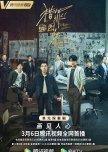
And it was, in a way.
You have Shen Yi, who is almost a savant in his abilities to draw portraits out of the most obscure clues and his sidekick and partner Chen Du. You have a series of cases that can only be solved by this ability.
In all technical aspects, the drama was fine, great even. But something was lacking.
One aspect that I can point out is that the mastermind and thus the plot in the last one and a half episodes felt very disconnected from the rest – none of it used Shen Yi’s original ability of drawing or deepened the metaphor of “under the skin”; instead, we got a plot about surveillance and computers. Also, a new metaphor of playing chess was introduced – and suddenly Shen Yi is the greatest chess player ever.
Not only is it that the plot diverged from the established pattern too much but also the dynamics between the two main leads is disturbed: While in the first two thirds, we had Shen Yi as the savant who does his own thing and Du Chen as the upright police officer who is rash and hands-on, this distinction disappears completely later.
Part of it might be the unavoidable propaganda (which is why I approach Chinese dramas with great caution): It could have been much worse, but it’s still there. The police can do no wrong, they are all morally above reproach (apart from the occasional emotional outburst), they are all doing their job out of conviction, and, of course, none of them is not likable. Police brutality? Questionable interrogation methods? Of course not.
Interestingly, the evil mastermind reminded me of a certain American whose name begins with Marc and ends with Zuckerberg – I am sure no parallels were intended.
But even in the earlier episodes, the cases left me lukewarm. There was exactly one moment that caught me, everything else felt … muted, maybe. I would love to see a Japanese remake, I think they would play up the eccentricities and tighten the pace a bit, so the emotions can hit better.
Was it good?
It was great in all technical aspects; but felt too slow at times. I feel that the last case didn’t fit with the rest, and that the world building that was definitely there could have been explored more.
Did I like it?
It was okay.
Would I recommend it?
Not necessarily. Maybe to those who both love classic whodunnits *and* the style of Chinese dramas?
Was this review helpful to you?
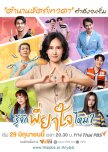
Because not only does the drama happily mix different genres, it also meanders through the episodes without a clear theme or obvious goal. I was so much that I felt that the plot was nowhere and everywhere at once until episode seven or so.
I suspect that the initial intention was to make a series to showcase different types of massage and their use; and this is where the drama is best. It's almost like a meditative documentary in these scenes. If the main goal was to educate viewers about (Thai) massage, then it did a good job!
This contrasts with the overall vibe, which is a comedy combined with slice-of-life, with the occasional dip into lakorn as well as more sober scenes when social issues are addressed. The plot's direction is completely unclear until the first half of the series is almost over, and even then, it occasionally diverts into sub-plots.
Where the screenplay is a comedy, it's a really good (Thai-style) comedy, and the serious issues are presented in a way that doesn't make light of them. It's the mix that will likely put the uninitiated off.
The main cast does a good job, even if the Thai way of "age is just a number" casting made it hard for me to accept the casts relationships. Both Yaajai and Chart are close to fourty (their actors were 31 and 45 at the time of release, repsectively); Pop, who is maybe somewhere around thirty, or slightly younger, maybe even in his mid-twenties, is played by an actor who is four years older than Nest ("Yaajai") and this makes him calling her ป้า (and later น้า, then เจ๊ ) incongruous.
The thing is, all actors look their age (which is not a bad thing in itself!) but it made it very hard to accept their respective status with each other.
However, if I think about it, I feel that the actors were still somehow right for their roles. Nest Nisachol ("Yaajai") had the hardest part, as she had to switch between over-the-top comedic acting to serious and calm; Kimmon Warodom ("Pop") is excellent (if a bit too pale) as uneducated, sincere but sassy respectful motorcycle-taxi-driver-come-masseur; Oh Anuchit ("Chart") is the sensible father figure with a secret; and Mim Rattanawadee plays a solid teenaged daughter who has her own burden to shoulder.
Without them, the series would have been not as enjoyable for me.
Something that also continuously distracted me was Yaajai's lipstick, which didn't follow the lines of the lips but went over and under them. It concealed her beautiful cupid's bow and looked horrible overall. Maybe it was to make her look older? Because I have seen this style of applying lipstick only on middle-aged and older women who try to make their lips look larger.
Overall, I liked it more than I thought at the beginning, I had no trouble at all to continue and watch until the (too saccharine) end. I do think the screenplay would have benefitted from a clearer underlying common theme -- there were some I would have liked to see explored: like the stress menial labour like driving, cooking, etc., i.e. work that usually is done by the lower class, has on the body, or the importance of human touch for well-being vs. the need for consent. (There was one scene where Yaajai was definitely disregarding boundaries in one scene, and unfortunately it was played for laughs.) -- both themes that could have easily been tied together with the promotion of massages.
I would not necessarily recommend this one. If I did, then only to those who are already familiar with Thai PBS productions and like them.
Was this review helpful to you?
To be fair: It's not the actors' fault, all of them delivered a great performance. It's also not a technical issue -- everything was up to the usual J-BL standards. The problem lies with the story and with the characterisations.
There is much ado about what happened back in middle school to seperate the two main characters, an event that has Miyata still in its grip even fifteen years later -- and somehow none of the two is able to address it, not hurt Miyata, and neither suave Iwanaga; even though the latter is quite adamant about rekindling their Whatever-It-Was. They both act as if ths was some great and traumatising event -- but when we finally hear the whole backstory in episode 5, it's actually nothing to speak of, at least not for two men in their thirties, who should have the emotional maturity enough to understand the difference between a teenaged crush and adult love. And yet, whenever they mention their own age in the present, they talk about it as if they are already middle aged, when they are only just over thirty. Thirty is still young!
... overall, the two main characters behave like a fifteen-year-old would imagine people in their thirties to be like, not like actual adults, which made for a very frustrating viewing experience.
Added to that, we get two love rivals in six short episodes, which are about two too many, and a traditional family in the background -- all of it adds to the impression that this story was written by a teenager who has no idea how the adult world works.
Was it good?
In all technical aspects, it was fine. Characterizations were unsatisfying.
Did I like it?
No.
Would I recommend it?
No, there are better second-chance J-BLs out there.
Was this review helpful to you?

However, squeamish people should maybe approach this one with caution. We see fish being killed and filleted in close-ups; even I, who is not normally fazed, felt vaguely uncomfortable when the vendors used a thin rod and pushed it into the fish to crush their spines (so they'd be paralysed but still alive).
The films looks at the different kinds of vendors and workers who work at Tsukiji Fish Market, which is the largest and most important fish market in Japan. We get to see their work day (rather: night), and, more importantly, their relationships with each other: While yes, there's a rivalry going on, the workers and vendors are also aware that they are dependent from each other -- not only vertically (from wholesaler to grocer to consumer) but also horizontally; because in the end, they are all dependent on the market's good reputation.
Of course, the docu also shows the famous Japanese working spirit, the pride in providing excellent service and products and all the traditions that come with it. However, it doesn't hide that new eating habits of the Japanese people as well as the declining birth rates have already changed the market, and a further decline is expected.
One thing to know is that this docu was made in 2016, so ten years ago. Near the end, they tell us that there are changes coming to the market (if I understood it correctly, the wanted to built a new market?). I wonder how Tsukiji market is doing nowadays?
There is only one aspect I wasn't too fond of: That the narrator spoke English, not Japanese. For me, this disrupts the general vibe and it's not needed at all, especially since everything else was in Japanese and we need the subtitles anyway.
Personally, I would have loved to see even more of the behind-the-scenes and the history of the building but that's not a complaint, because we get to see plenty already.
Recommended.
Was this review helpful to you?
So, yes, I don't mind the wonky audio quality or how the change between scenes is often less than smooth. I can focus on how the actors do their best (and mostly succeed) and on the interesting camera angles.
What I do mind is if the script is not good. You don't need a high budget to write a good script -- you need a vision. And I think this is where the weakness of this film lies.
The three stories are very good -- on their own. The shy and confused boys experiencing their first love feels very grounded in reality, the close-ups and the wonkiness of the camera work support the viscerality of the story. The second changes genres -- from slice-of-life to horror: And this, too, has interesting lighting and camera angles, and is quite well written, with somewhat of an open end even. And the third returns to a more sensitive topic, and this screenplay makes us feel for all three men in just twenty minutes.
In the last few minutes, the script tries to tie the three storiess together -- but ultimately fails. There's a theory in the comments on kisskh, but the mental twisting it requires to make it work (and even then there are too many details that just don't fit) makes me think that these originally were three seperate stories, maybe even sperate projects.
letterboxd lists three directors for this project, and the difference in styles in the three stories indicate that each one was directed by one director. I suspect that they only noticed at the end of their work that they maybe should try to make the stories into one, which is why things don't really fit together.
In my view, they did their project a disservice by doing so. Each of the stories is not bad on its own; this could have been a simple omnibus. Each of the stories shows a different age in life already (teenagers, young adults, adults). The Thai title เพราะรัก...ไม่สิ้นสุด "Because Love ... never ends" would make a perfect starting point for a journey through the stages of life; just choose some middle-aged actors for the third story, and you already have it.
The three directors chose to do differently, but I don't think it works well enough.
Was it good?
Each of the stories were not bad for an indie production. The whole doesn't make sense, unfortunately.
Did I like it?
If I pretend that the stories are independant from each other, then yes.
Who would I recommend it to?
To those who want to peek into the history of Thai gay cinema. Not to BL fans who are used to recent productions and want everathing to have the same production quality.
Was this review helpful to you?
However, despite all of these technical issues, the film is worth a watch. Both main leads do a good job of portraying their characters -- I wish some of the newer BL productions had this high of acting quality -- and since this is a character driven story, that is the most important part for me.
Tum's story, who is the character we mostly follow in the beginning, is a classic coming-of-age story: He leaves the familiar shores of home and sets out into the wide world, where he meets people whose life is unusual for him, goes through rites of passage, falls in love, makes peace with his father, and finds what he wants in life.
Personally, I find Kim's story much more interesting -- he is a boy who is very lonely, who drifts over the island like a ghost. He is the one who embodies the feeling of "other" that makes us feel Not Seen. A supporting character puts it like this "มันคงจะดีนะ ถ้าใครสักคนเห็นเราอยู่ในสายตา" -- "It's probably good, right? When someone has us in their view." This desire to be seen, to be understood, is a very human trait, I think.
This could have been maybe made a little bit more obvious for the casual viewer; instead the writer tried to insert another metaphor into the story -- a metaphor which is related to wate: Pivotal scenes are often either in the rain or at the sea shore, and the girl who ties two storylines together is called น้ำ /náam/ "Water"), so I suppose this is intentional but I'm not sure what it means.
Together with the aspect that there were some scenes that didn't add much to the story, I think that the script could have been tightened slightly to make the theme clearer.
One last thing: The film is tagged with "BL", "gay", "young love" and "sexual awakening" on GagaOOLala, but it isn't, not really. In my view, it's less queer than "Confetti", and that one went over the head of many viewers, according to reactions on letterboxd. It's perfectly possible to view "Summer to Winter" as a film about a strong friendship between two young people.
As it is, it's a fine low-budget film, with some beautiful shots of Koh Tao, decent acting by the main leads, and a good, though not great, screenplay.
Was it good?
Overall, I think this was actually quite nice for an indie low-budget film.
Did I like it?
I would have liked it sightly better if the editing had been a bit gentler, but yes, I did.
Who would I recommend it to?
Not to people who only want to watch BLs. To those who love coming-of-age stories, and who like metaphors.
Was this review helpful to you?


