


 4
4 17
17 1
1 5
5 1
1 1
1 1
1


This review may contain spoilers
Minato Akira doesn't need a boyfriend ...
... he needs therapy.Because there is really no reason at all for Minato to refuse Shin -- both of the reasons from season 1 are obsolete, everybody who knows them supports their relationship, Minato is both sexually and romantically attracted to Shin ---
Minato Akira has intimacy issues and should seek help.
And where I was a bit uncomfortable with Shin pushing Minato's boundaries in season 1, here Shin is just suffering. They are nominally "dating" but Minato keeps him at arm's length, gives him only crumbs; all the while Shin is feeling guilty for even asking for more affection.
On a meta level, this story feels as if it might have been one of those fluffy manga which find some success in the beginning, get a continuation, and then author and editor are afraid to change the formula, so everything just goes around in circles forever, until they notice they've written themselves in a corner and resolve things with the easiest plot point they can think of.
The whole thing was painful to watch, and if I hadn't wanted to know how the writer intended to escape the dead end they had been writing themselves into, I'd have dropped it in episode 4 or 5.
(The "resolving" was well-intended, I think, with a switch of their usual dynamics, but the couldn't have been more clichéd.)
In comparison, the second couple had much the same dynamic, but at least here we get to see a) a reason for the standoffish behaviour and b) some steady development. Unfortunately, there isn't enough contrast to the main couple to offset the pain of watching Minato refusing every kind of affection, so the secondary couple didn't even give me a respite from that frustration.
What's more, the few things I liked about season 1 -- the summer vibes, the cozy laundromat, the seaside town -- they are almost non-existent in this season.
The only aspect that saved this whole mess was the actors, who gave depth to their characters where there was none.
Was it good? -- No. The story went around in circles, the characters' issues were solved by a cliché.
Did I like it? -- No.
Who would I recommend it to? -- Ony to those who watched season 1, and loved it to bits. Those who were already annoyed by the first season, should stay far away.
Was this review helpful to you?
I, however, found it artificial in terms of story and visuals, and too on the nose. The characters sometimes moved through the scenery like puppets placed on a stage. Or like a pop-up picture book, if you will.
The scenes -- following parallels of life stages and seasons -- and the sub-stories felt clichèd and stale, the visuals were Ghibli-like, but without the depth Ghibli brings.
Do not look for any kind of realism here -- I mean, how would a café like this work without going bankrupt within the first year?
Especially the ending was so contrived I thought my eyes would roll out of their sockets.
(I waited for the moment that everything would be revealed as a picture book written by the main character, which would have made sense at least, but no!)
So,
Did I like it? -- No.
Was it good? -- It had high production value, and acting was superb (as expected from these actors). The story was a miss for me, but as I said, it will be loved by others.
Would I recommend it? -- Not really, no. Only if I know that the specific person loves these kinds of gentle and soft stories and is looking for something, what did people call it? "healing and heart-warming".
P.S.
Also, as a German, I have *opinions* about bread. Half of what he baked might have been パン but it was certainly not bread.
Was this review helpful to you?

This review may contain spoilers
A clever little drama about the struggles of gay men in China
Before I talk about anything else: Yes, this drama is too short. Yes, it couldn't develop anything the way it deserved. Yes, the acting was awkward at times. Yes, the sound and the editing leave a lot to be desired.And yet! This little drama is almost a stroke of genius in a very special way.
We know that Chinese censorship doesn't allow any positive on-screen depiction of homosexuality (which has only got worse since this drama has been published), and that their government and society as a whole in China is openly homophobic.
So, of course people exüress their amazement at how this little drama got away with this much -- almost kisses, sexual innuendo, two men sharing a bed, hugging, planning their life together. And they are right to do so.
The stroke of genius though, lies not in what was or was not cut from the final product -- it is in the premise itself. And I have no idea how it got through.
The concept of the "Deluded" themselves is just a thinly disguised metaphor for homosexual people. If you think about how people in the drama talked about the Deluded -- the insults, the fear -- and how Deluded have to hide their very own nature, especially if they are celebrities, and whenever they are exposed, their career prospects will be over and friends and colleagues will desert them.
Lu Lin's story matches a possible journey of a gay celebrity almost beat for beat. His fear of discovery, the press that's hounding him, the boss who's exploiting his weak spot -- but also the few allies who could stand by his side. (And if you listen to the aide and the little sister? They talk exactly as well-meaning but uninformed allies of LGBTQ+ would in real life.)
If we want to stretch the metaphor a bit -- and this is where I'm not sure if this is still the makers' intention -- Jiang Yifeng's inability to feel the world (i.e. make a real connection between himself and his feelings) could also be seen as a metaphor for a man deep in the closet, who is separated from what he really is, what he really feels, who is numb to himself and the world.
Lu Lin and Jiang Yifeng's love story parallels love stories of gay men in oppressive societies around the world, and as soon as I saw it, I could not unsee it. For me, with this metaphor in mind, a lot of what happened made perfect sense, and it was extremely easy to fill in the gaps myself.
That this thinly disguised piece of art about the struggles of gay men in China got through censorship is a miracle.
So.
Is it good?
It's a Chinese censored BL amateur production, so of course not. There's a great idea that should have been given a better chance.
Did I like it?
Oh, yes! The basic idea of the "Deluded" metaphor is great, and it's very obvious that there was a great deal of passion on the side of the team.
Would I recommend it?
Only to those who are willing to overlook the poor production value and who are able to recognize the hidden story.
Was this review helpful to you?
Masks, metaphors and speaking through the words of another
"Sonnet 18" is a short film that, typical of its genre, hints at underlying themes, characterisations and even the plot itself, rather than telling us everything.With this genre, I find that either you either relate to the characters or you don't -- since there's not much time to tell the story, the viewer must make their connection quickly and easily, or they will feel like I did with this one -- able to appreciate the beauty of the storytelling but not really liking it.
Was it good?
Absolutely. It's an artistic short film that tells its story with a specific aesthetic, and it's very consistent with that.
Did I like it?
Somewhat. I can appreciate the story they wanted to tell and the artistic way they told it. But I wasn't emotionally invested enough (that's me, not the film's fault).
Would I recommend it?
I wouldn't *not* recommend it, since it's so short; and it is well-done. People who like their plots spelled out for them might not find it engaging.
I liked that almost everything was filled with meaning: Where the characters are and what they are doing there (and in what state of mind), how they speak or don't speak, and at what times each one wears a (metaphorical or real) mask. The romantic classics (Debussy, Chopin, Brahms) are used sparingly, and with clear intention -- mostly we hear no background music, and the starkness of the silence underlines the characters' emotional state.
As for the use of Sonnet 18 -- we hear it three times. The first time we hear it is when the actor recites it on stage. To be honest, I did not like that one at first -- it felt almost farcical, with the overly theatrical hand gestures and intonation. The second recitation, however, made it clear that this was very deliberate -- and the third recitation confirmed it. If you watch the film, I urge you to pay some attention to how the sonnet is spoken each time.
Dialogue was used very sparingly -- and I wished they had used even less. The long stretches of silence felt more powerful to me than any of the dialogue (except for the recitations of the sonnet); and I think some of the dialogue could have been shortened even more.
Let the sonnet and the way both characters recite it and the silence in between, do the talking. Just as no single word in a sonnet is meaningless, so the dialogue in this short film could have been.
Overall, this is a well-crafted short film, obviously made with dedication and love.
Was this review helpful to you?
This review may contain spoilers
This is a solid Taiwan-typical BL rom-com, that unfortunately goes off the rails in the last two episodes.But first, what I liked:
* The characters (except for the father) were all very down-to-earth in their living circumstances, occupations and characteristics.
* Bai Liang's character is consistently written -- his passions, his fears, his experiences in childhood, his resulting way of life -- they're all parts of one picture.
* His actor takes this, and deepens the character by wonderful acting. His expressions mask the characters insecurities, his tics hint at his emotional state, and the anxiety attacks were beautiful to watch.
* The sets did not feel like sets, they all felt like real places (except for the mirror in the clinic, which was always a bit too conveniently placed).
The main flaws for me were
1. Too many couples. Seriously, why do some writers think they have to pair up all of their characters? Four couples in ten 30-minute episodes are too much; two of them don't even get more than a few minutes of screentime. The second couple (bartender/young man) also was not needed, its development did not connect to the main couple. I'd rather the writer had taken the precious screen time to delve deeper into Jin Yun An's character, because I did not understand some of his actions.
2. The father-son sub plot in episode 11. It comes out of nowhere (there were only some very minor hints that Jin Xu An was not on good terms with his family), is squeezed into one episode, the father's actions don't make any sense (he's so much against his son being gay that he hits him, and after that's done, he is fine with it???). It seems as if the writer feelt that Bai Liang and Jin Xun An must have an obstacle to overcome and couldn't think of anything else but this contrived cliché.
So, up until the end of episode 10, this drama is good, if a bit tropey (with a meet-ugly, a tragic childhood background, wooing through food, an old love interest and more), which is tempered by excellent acting, solid directing and editing, and a good depiction of mental struggles caused by trauma. Sadly, the afore-mentioned "conflict" decreased my enjoyment of the series.
Was this review helpful to you?
This review may contain spoilers
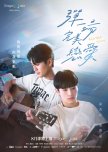
Finding closure and moving on
This is mainly a story how people who are stuck in limbo after a close person's death (a brother, a friend) find closure so they can finally move on.(Through the power of Love!)
... and I think this is why some might find that the romance part doesn't get enough screen time. This has been a point of contention in other recent (BL) productions too, that as soon as another story line gets more screen time, the romance part has to be cut a bit, which upsets some people.
If seen from this angle, writing choices make a lot of sense -- because grief needs time, grief is remembering the past, and letting it go. Trying new things can help, as can reliving the old things.
Neil needs someone to push him out of his fugue -- which Sea finally does. And only now that he is able to finally face the loss of his brother, his friend Reese, who until now had dedicated his life to help Neil, can also finally find his own new goal in life.
So, with these thoughts in mind, these are the things I loved:
* The time that was dedicated for flashbacks, and the way we got to see them bit by bit, to understand why the loss of Matt hit all of them so hard,
* the ugly crying -- crying is not cute, and if you really cry, then you don't care what you look like, you don't care about the snot and the mucus, you are just crying,
* the talks between Reese and Neil, which were so important for both, and obviously did not happen before,
* the way they found closure -- and that the writer chose to not go the route I expected in the beginning. This is obviosly onbly the start of a new part in the characters' lives.
Other aspects I liked:
* no romance arc between A-Liang and Ting Fei,
* the choice to show Sea's and Neil's first time as sensual rather than sexy,
* the way they chose to bridge the language barrier -- whenever Orca talks to anyone but Reese (as long as he doesn't want to rile someone up), they all talk in English. Heavily accented English, with grammar mistakes -- just as you would expect from people who speak English as a second language. For Reese and Orca, on the other hand, the writer makes it very clear that they both have been learning the other's language in secret -- they just choose not to speak it as long as they are at odds with each other.
* Actors were great -- I liked how Reese's actor gave it his all during the crying scenes, and I could watch Neil's eyes forever.
One story arc that got lost a bit for me, was Sea's story -- mainly how his feelings evolved from adoring his idol to loving Neil as an equal. I don't even think it would have taken much, just a small gesture or look here and there. It's already there, just not clearly told.
(I also wish they'd given him a different hair style, at least for the concerts. Especially during the last concert, his hair and his make-up made him look even younger than usual.)
I'm not too impressed with how the makers chose and used the background music. I'm not talking about the songs the characters sing, those are all right, if not my kind of music. I do think though that in a drama with music as a main theme, there should have been more focus on the effects background music can have. In several scenes, I found it distracting (silence is also very powerful! And it could have been used to its adavantage!) and overall, it was mostly bland.
All in all, it's a solid production, with a well-rounded cast and no glaring mistakes. "Finding closure through the power of Love" is a well-used trope and it's not badly implemented here at all.
Worth a watch.
Was this review helpful to you?
This review may contain spoilers
oof...
That was surprising.What starts as a one-night-stand, awkward testing of interest via small talk and slight kink included, ends as something ... very different.
(tw for violence, maybe murder, rape)
This is only 16 minutes long, and the plot could be summerized in no more than three sentences, but there's so much to pick apart in the characterization of one of the main characters, especially in the second part, that it easily feels much longer.
Everything, from the dialogue (small talk to sex talk to only few words), to the use of space (the short film is only set in the apartment and the short hallway outside, and in the end it focuses more and more on tighter and tighter spaces), the use of light and shadow (brightly lit to shadowy), and to the excellent acting by both the actors -- all of it forces the viewer deeper into the darkness, and in the end it's clear that there will be no escape.
I'd recommend watching this at least once, but only if you're prepared to know that this is not a fluffy piece but a graphic depiction of the lengths an obsessed person will go to get what they want.
Was this review helpful to you?
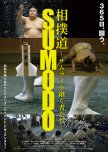
In "Sumodo - The Successors of Samurai" the director is allowed to enter two prestigious sumo "stables" (that's the word given by the subtitles in JFF Theater) to film the daily lives of sumo wrestlers. He films them during training and during downtime -- I was amazed at how close the director got to the wrestlers, and how open they were with him about their hopes and struggles.
Given that Sumo wrestlers do see themselves as the successors of Samurai (which is historically not quite unreasonable, as the documentary explains), and that Japanese society is not known for people openly speaking about their inner world, this is quite the feat!
(The film team is even invited to a wedding.)
Because of the closeness, the documentary is able to show us both the exterior of Sumo (the history, the stables' PR and, of course, the competitions) and the workings "behind the scenes". This documentary could have been a film focused on the fights, on the powerful bodies and the excitement of the tournaments -- it is that, but it is tempered by what we learn about the people -- real people with profound thoughts, with feelings, with bodies that sometimes fail; people who continuously push their boundaries and strive for perfection, even if it means to endure pain and suffering.
I started without any real knowledge about the sport -- the documentary was still easy to follow and I learned a lot. Since it's made for a Japanese audience, there are some things left unexplained, but it's still an educating watch.
If you have the chance to watch it, then I recommend to do so!
Was this review helpful to you?
How to survive in a heteronormative world
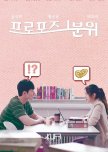
A poignant short film about two queer people trying to survive in this heteronormative world.A young woman who loses her fanancial support and tries to find a way out of the situation.
A young man deep in the closet and hopelessly in love with a married man.
A married hetero man, who rather believes unsubstantiated rumours than listen to the subtle hints of his friend.
Two-and-a-half locations, minimal music, details are told with the camera, not with words.
I wonder if people who are not LGBTQ+ can easily understand this short film, but I hope they'd choose to look closely and will listen better than the straight friend here.
Was this review helpful to you?
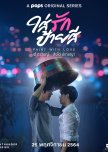
The premise is simple: Artist Phap (easy-going, living from day to day, a bit of a slob) meets entrepreneur Poramaze (money-loving, very controlled, a clean-freak, basically your tough shell, soft core type) and personalities clash.
And there's the first of the three major weak points:
For a story that has to be character-driven (there are very few external obstacles to overcome), the script doesn't give the actors much to work with. Maybe it's stronger in the novel, I don't know. But here, motivations for our main characters are very unclear. It's not so bad for the artist, whose character is stereotypically colourful enough we can fill in the blanks ourselves. But for the more complex Poramaze, who is both both a cold and strict type who "loves money" and still obviously likes his friends and his team, this is more of a problem. We never really know what exactly made him the way he is. Why does he feel the need to be always in control? Was it only that his step-brother left him? But then, why did this have so much impact for him? The few minutes of back-story does not explain things sufficiently. And that's a problem in a story where for several episode the main story arc is this character's inner struggle with his own emotions.
This is saved by the drama's best feature: its actors. Both Singto ("Poramaze") and Tae ("Phap") portray characteristics and emotions that are never explicitly stated and break their characters out of the confines of the strereotypes the script gave them. I love their scenes where they lash out against each other -- both actors show their hurt and their heartbreak very well, and my heart broke with theirs. I'm sure that with weaker actors this series would have been flat and boring.
The same goes for Maengmum ("Nae") and Soodyacht ("Tharn") who both don't get a lot to work with. But Nae, who should have been the stereotypical airheaded rich girl, becomes a steadfast and intelligent friend, and Tharn is being shown as a guy with a long-term secret crush from the very second we see him.
Yoon ("Nueng"), on the other hand, is the drama's second main weak point. He does absolutely nothing with his character -- I think Yoon has about 1.5 different facial expressions: "amused", "gently amused" and "gentle". It's most obvious when he directly faces Soodyacht, who is acting circles around him. And that's a problem. Nueng has had a huge influence in Poramaze's life, and he still is the major point of conflict for the relationship between Poramaze and Phap. But he doesn't have a character at all! Why does he act that antagonistic towards Phap, even until the end, and at the same time encourages Poramaze to voice his feelings? What is his motivation here? Is he not aware of how his words hurt Phap and disripts their already fragile relationship? We don't know. Neither the script nor Yoon give us any hint for us to fill in the gaps. I also don't believe that he was ever attracted to Tharn -- no longing glance, not secret smile, nothing -- until the confession, and even then he only shows expression number 3 ("gentle").
There are several aspects in this drama that I love:
The wardrobe choices are excellent -- Nae's outfits are gold (Does she even wear the same thing twice, except for her pyjamas?) and I love how both Poramaze's and Phap's clothing reflect their change and growth.
I'd love to live in Phap's house, it's messy and cozy at the same time (although the gleaming wooden floor is a bit unrealistic, especially in the area where Phap paints) and his little garden is a small oasis -- contrasting nicely with the modern look of Poramaze's office and condo. On that note: I do wonder about the plants in Poramaze's condo -- the first time we see their corner is in episode 9. Were they there the whole time or did he only add them after he started to like Phap and his little garden? Whether it's option 1 or 2, this shows that the people responsible for the set design put a lot of thought into it, but it was not used to its full potential by the director.
I love the opening credits. Painting-like animation is not something we see often, and it fits with the premise of the story, and I also like the almost chaotic orchestral music.
The background music choices are also well done -- I did not notice them most of the time, which is a good sign for me -- and I loved that there are some emotional heavy scenes that don't use any kind of music at all, which is a rare thing in Thai mass-market productions.
So, all in all, it's apparent for me that the production team put a lot of thought and effort in this. Which makes the third major weakness all the worse.
Phap is commissioned to paint an abstract work "The Love", which progresses along with his feelings and his relationship with Poramaze. It's a central point of the story, and we see him working on it. But then the set design team and those responsible for continuity dropped the ball -- after his second time working on it, we see the painting again several times -- in the form it had after the first but before the second time Phap painted it. And since its so huge, and right in frame more than once, this is a glaring error I could not ignore.
And a last thought, I love Phap's names: ภาพ /phap/ means "picture, image, vision" and his legal first name ศิลปิน /sin-la-pbin/ means literally "artist". Love that. (And not to spoil, but if you watch episode 12, pay attention when they talk about "the artists" emotions, the knowlegde that it's both his job title and his name makes this all the more enjoyable.)
And, another aside regarding names: The GagaOOLala subtitles sometimes transcribe คุณภาพ, which is clearly spoken as /khun Phap/, i.e. "Mr Phap" by the characters, as the word /khunnaphap/ "quality; value; worth" but used as a name "Kunnaphap". I wonder where that comes from, is Phap's name shortened from Kunnaphap? Or is it a genuine error on the subtitler's part?
So, all in all, this drama could have been a failure, if the actors and the team responsible for set design and props hadn't done an excellent job.
As it is, they managed to elevate a sub-par script to a perfectly watchable and even enjoyable drama.
Was this review helpful to you?
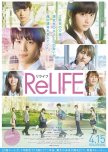
I haven't read the manga, and haven't watched the anime adaptation, so this is solely for the movie.
First, what I liked:
As usual with Japanese productions, the use of light and colours was exceptional. It's especially noticable in Kaizaki's old workplace, where drab greys dominate -- and the light is changed according to the mood of the scene.
I also liked how background music was only used very sparingly.
The ending was also well done -- we really don't need more than the "ano" at the end. We had been told that they will retain their memories. so anything more would be redundant. I also would have liked if the film had ended after Yoake had left his reports on his desk. We don't need to be told everything, we can think for ourselves sometimes.
I don't mind so much that the six characters stay relativly bland. In a film with a runtime of two hous, there will be limitations. I do think that the other subject could have had a deeper backstory -- or the writer could have committed to only focus on the main protagonist Kaizaki and his journey of change.
Even so, none of the characters' stories managed to capture my interest -- except for Yoake, whose story I'd really like to hear. (Really, I think he is the most fascinating one, and *his* story of change, what he feels and thinks when he, the one who is supposed to be the unemotional observer, begins to like his subjects? *That* would have been interesting.) For a story about character development, it is a huge minus that I feel kind of meh about the main characters.
I can imagine that other people can relate more to Kaizaki's struggles and the story of the last year at school and their message of "Treasure the Now" than I do, so this is extremely subjective.
For me, I wouldn't have missed anything if I hadn't watched the film, but it wasn't so bad that I regret it either.
Was this review helpful to you?
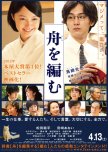
When you find your calling in life
I always admire people who have found their calling in life, and dedicate large parts of it to their passion. This film is about this kind of people -- who work steadily towards one goal, with a lot of hard work, attention for detail and perseverence.It's very Japanese in it's slow story telling, the lights and colours and the detailed sets. It's, again, a story about a small group of outsiders doing a work which is underappreciated by others, who find solace and satisfaction in what they do, not necessarily in what others think of it.
I'm not a het romance fan, but I liked the love story between the main protagonist and the landlady's granddaughter. They are full of respect for each other and the other's passion and interests, even though they don't quite understand them.
And one aspect I also liked: It's a story about words, but in moments of great emotion, the characters fail to find the right words to express them; and in the story telling, silence and the gentle background music is at least as important as the dialogue.
Well worth it.
Was this review helpful to you?

I don't mind the rather predictable story about the men going on a drunken trip, and the ensuing entanglement with the local drug dealing ring -- but did they have to make it sexist? Especially the scene at the beach on the first day was terrible to watch. Also, the other female characters were at turns harassing the men and being the weak victim.
The stars are for the acting, the drug dealing plot, and the overall cinematography.
Was this review helpful to you?
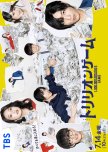
This review may contain spoilers
What a ride!
You think, yes, now I know what will happen next, now I know how it will end -- and no, you probably don't. While it was always clear that Trillion Game would win in the end, the "how" was very much not clear. I thought I'd know how Haru would do it, but, as it turned out, I didn't. Even at the last scene, there was a bit of a twist.That said, the obstacles were overcome a bit too easily; and even now, I'm not clear about Princess Kiriri's motivations at times. I'd have liked to see maybe one or two fewer obstacles but better ones, or at least I'd have liked to see Haru having a bit more trouble in succeeding. As it was, his plans were a bit *too* perfect. More attention to details would have been a benefit to the story.
Speaking of details, one aspect that continuously irked me: The way that the actual *doing* was just disregarded.
For example, the opening of an e-commerce flower delivery: Where do you get the flowers from? Who will do the actual arrangements, even if they are planned by an "AI"?
Oh, and "AI", as Haru said himself: "It's a buzzword." Even if you can program an AI to do the things it does in this series, the costs for building and maintaining servers with enough processing power are enormous! Not only the material cost, but also the energy cost needed.It's why any company investing in AI has not seen a penny of return investment and it's expected to remain that way in the forseeable future.
It's a shame that the series doesn't pay attention to this sort of details.
Another aspect I found disappointing was the writing of the female characters. Yes, it's the story of the journey of Haru and Gaku -- but as the third partner Rinrin deserved better than to be used as scapegoat (even if she got her own happy ending), and that Princess Kiriri had to submit was also disappointing (even if it was for character-appropriate reasons). I would have liked to see them both put on a more equal footing with the men.
What I really loved though, and what made everything I just said insignificant overall, was the excellent acting -- by all of the cast. Meguro, of course, as the inscrutable Haru -- and until the last show-down I wasn't quite sure what exactly went in in his head -- but also Imada with her cool and calculating presence as well as Sano's depiction of an awkward nerd. I could list all of the actors, but then this will get too long.
Another plus in my book, there's only a hint of romance towards the very end, and even the sizzling chemistry between Haru and Kiri is always turned into rivalry, never romance.
The actors, together with the outstanding music choices and the fast-paced editing made the drama a wild ride, and I was hooked from the first to the last minute.
Was this review helpful to you?

And when I say, slow, I mean slow. We get to see too many flashbacks, and too often the same scenes, from the same perspective. The story has been edited into a 2:30h film, which I expect is not that bad in this regard.
What I liked:
* The acting performances of both main leads, they portrayed the emotions of their characters, their fears, their anguish, their hopes really well.
* The soft, washed-out colour palette. It supports the slow pacing of the story well.
* The setting is in a rural area, with normal people in normal surroundings.
* There are none of the usual BL tropes here, wich is always nice to see. This is what you can call a universal love story.
* Overall an unusual story for a BL series, although not for a "traditional" (romantic) show; expect a story that deals with a heavy experience and how both main leads deal with it. Extra points for that.
What I did not like:
* I don't know why the brother and his friend could not have just stayed supporting background characters. Their relationship distracted from the main leads.
* As I said above, there are too many flashbacks. The pacing could have been more concise and still alllow for enough space to show the motives and emotions of all characters and have a slow pacing.
* Why do the doctors tell Nut about his friend's (their patient's) medical situation? This is not ethical behaviour and it irks me.
Was it good?
The premise had much potential, and I liked that it stayed soft throughout but it was underwhelming because of the lengthy and repeating flashbacks.
Did I like it?
I did, and I loved the characters and their story, but I wouldn't watch it again, not even the movie version.
Would I recommend it?
Not the drama. Maybe the movie. If you watch it, be mindful that it is not light-hearted, so if you are prone to crying in emotional scenes, keep your hankies ready!
Was this review helpful to you?


