


 4
4 17
17 1
1 5
5 1
1 1
1 1
1


You could probably understand most of what's happening without knowing the first season but I'd recommend watching season 1 first, as the regular customers are I introduced there.
The food, the acting, and the general atmosphere ware delightful again.
There are a few minor things that made me subtract half a point:
* I felt that in season 1 the customers interacted a bit more. The Izakaya felt emptier and not as lively. In season 1 it felt like a centre of a community.
* It felt like the food had less variety? I'm not sure why though.
* The hairstyle of some characters looked more anime-ish than in season 1.
* I missed the characters from before, especially Nikolaus. But I liked how they gently wrote most characters out and did not just let them disappear.
Overall, another mouth-watering, light and mostly fluffy series, a great watch if you just need a diversion from the Real World.
Was this review helpful to you?
This review may contain spoilers
The premise is great; the runtime too short.
The idea to blend an office setting / a boss-employee-dynamic with a fantasy plot of reincarnation and curses which have to be broken, is interesting.Unfortunately, the boss-employee-dynamics with its inherent power imbalance is only kind of important in the beginning -- for me, Dong Baek was much too accepting of Yu Dam's story. But that may be because I did not feel a connection between the director and his employee. The director was so standoffish at the beginning, and then suddenly, he is concerned annd worried? The employee is confused and more than a bit uncomfortable, and then, suddenly -- love? A bit more time for character development would have been nice.
I think there's a lot of more character back-story and world-building here than we get to see; and this is what makes the whole series feel unfinished. It is as if we get an incomplete puzzle and are asked to fill in the missing pieces ourselves, and the pieces that are there are just the people, and none of the surroundings.
We don't know why it was so important that the "child of god" / "the kid who grew up in the shaman's house" not get a name. We don't know who it was who shot Dong Baek (looked like Dennis, maybe?) and why. We don't know what kind of curse it is and how exactly it can be broken. And we don't know how Yu Dam knows. We don't know who is was who possessed Dong Baek that one time. We don't know anything about Dennis, and why he thinks so lowly of Yu Dam.
The list could go on and on.
I don't understand why those who were responsible chose this story when it was clear that there's not a lot of time to fully explore it. Even a 10-episode drama of 25 to 30 minutes per episode would have been enough to at least explain the most pressing questions.
But if you know that you don't have the time, then why not choose a much simpler story?
As it is, most of the episodes felt rushed or disjointed (or both); which is a pity since the acting and most technical aspects were fine.
The ending .... is probably something people love or hate. It's open-ended bt hopeful; and I think it fits so I like it.
If you're interested and have the time, you could watch it -- it's short enough and certainly not bad enough -- and form your own opinion.
Was this review helpful to you?

And that's the least of the show's problems.
But first: What I liked:
* All of the actors played everything straight and took their job seriously.
* The funny scenes made me laugh, the cute scenes made me smile, the serious scenes were sombre.
* There were no technical issues.
But the story. Oh my.
I think the first, and most relevant, issue is that we as the audience do not get any clues that this is not supposed to be anything but one of the usual BL romances (or romance comedies).
Also, the production doesn't stick to one "genre" -- between scenes the mood jumps from serious to cutesy to plain silly.
The show could have been
-- either: a serious, heartbreaking story about a relationship that's come to its end, and how the couple deals with it, and maybe find a new way to be together,
-- or: a cute, maybe a bit trope-y story about a couple that tries to balance their relationship and work / college with cheesy slice-of-life-scenes,
-- or: a silly, over-the-top story that makes fun of alle the tropes of het and BL romances, maybe with some slapstick thrown in.
Considering the quality of the technical aspects and the acting (and, again kudos to all of the actors), either of the three genres would have been great!
I suppose this show was conceived as a parody, which is the only thing that would make at least some kind of sense -- but the audience needs to get clues what this show is supposed to be!
As it is, the show does not know what exactly it is (what it is is a mess) and leave the audience not only confused but also disappointed.
Was this review helpful to you?
I expect that this series will be one of those that might stay with me for a while. As always, I go in blind if I can, and as always, I found that it was the best decision for me. The series started out as a classic horror in a Big House setting -- and then turned out to be something else entirely.
Instead, the drama follows the Thai tradition of happily mixing Western genres and making something unique. And what it is definitely not: A romance-focused BL drama for the masses. I guess that is why the rating on MDL is so low, as it always is for titles that look "BL" at first glance and then actually have layers and a focus elsewhere.
I had absolutely no idea what was going on for the first three episodes -- I was at least as lost as Alan there. Only during episode 3 and in episode 4 did I start to gather what was going on. And even so, the puzzle pieces did not form the whole picture for me until the reveal in the last episode: I had all of the pieces, and I had at least three theories but none of them wanted to fit.
So, for me, "Mystique in the Mirror" falls neatly into my favourite genre of "What on earth is going on?"
In all technical aspects, I didn't see anything I would object to. I did wonder at the start how they would keep up the suspense of the oppressive Big House-setting; but they did not, intentionally so. Likewise, at first I wasn't sure I liked that the second love story was even there -- but it, too, served a purpose: It kept the mood from getting too dark, it gave us hints about what is real and what is not, and it gave a generational balance to the main plot.
At times, I felt that the background music was too much but that was far and few in between. Similarly with the use of colours and shadows -- in some scenes less would have been more. Something that always, always worked for me were the camera angles -- both the use of reflections and the use of Alan's point of view.
Tou Sedthawut was brilliant in his role as Alan, and Nat Sakdatorn as Doctor Nil stood out to me as well. Gig Danai was a delight as always. And the other main cast did well too.
I have to mention the make-up too, which made Alan's face reflect his state of mind perfectly.
All in all, Meowchi on MDL expressed it perfectly in their rewiew here on MDL:
"So you watch this drama two times; first time for the journey and second time for the realization of being aware of the destination. It will hit the same as it did the first time."
Was it good?
Absolutely. It did have some snags, like the overuse of background music at times, but all in all it has an excellent script that neither gives away too much too soon nor has a deus-ex-machina surprise twist -- but *only* if you don't have any info beforehand, even just one tag would be too much. The actors were good to excellent, and everything fits well together in the end.
Did I like it?
Yes! I even replaced one of the four "favourites" on letterboxd with this drama.
Would I recommend it?
How could I not?
Was this review helpful to you?
Here, the story is very simple: Young man has a crush, gets enormously flustered when said crush flirts with him, they meet again and try anew. Add a light splash of secret identity, and indirect kisses, and you have a strong base for a good short film. I liked the piano pieces and the old-fashioned crooned song at the end, the perfomrance of both actors was solid -- only the change between scenes was too hard and distracted from the overall soft vibe.
If you have eight minutes, then do go and watch it.
Was this review helpful to you?
This review may contain spoilers
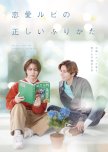
Occasionally, there is a drama that gently touches one of my soft spots, and it finds that spot so precisely that I find it very hard to see if there are any flaws."The Proper Way to Write Love" is one of them. After I finished it, I immediately queued it up again, something that hasn't happened for at least two and a half years, and then I proceeded to watch it another two times withing the next weeks -- and that has happened only once before, with "Secret Crush on You".
I love "The Proper Way to Write Love" not only for the central issue of a person who has been an outcast and a victim in his teenaged years and learns to let go of the past, I also love it for the way it slowly, almost imperceptibly, lets their protagonists change (Natsuo's is even less visible than Hiro's) and the way it develops their relationship dynamics.
The drama tells a small love story about two young men who both bear mental scars from their time as teenagers at high school (one more visible than the other), who learn to clumsily express their feelings and learn to read the other's expressions -- which directly ties back to the Japanese title. It's a story that shows us how they grow together through little "adventures", with a slice-of-life feeling that reminded me of "Rokuhodo Colorful Days" or "The Four Yuzuki Brothers".
Others might find it mundane, even boring. They might say "why should I care about a random little boy cutting flowers or about a hair styling competition"?
However, this is not about these things themselves -- it's how Hiro and Natsu react to these events. It's how they learn to do things together. And it's how we see what is important to them, and how they learn to understand each other and how they learn to adapt to the other's presence in their lives.
In a way, this is a very Japanese drama; in which the protagonists are neither rich nor famous, their lives are very average, and meaning comes from paying attention to the little things.
And here's one of the few things that could have been better. If the little things are important, and if it's about the small changes in the protagonists' lives, then I would have loved to see more close-ups of them. The actors certainly have great ability, and it's clear that they are excellent at expressing emotions. Unfortunately, the director not only adheres to the usual Japanese way of often using wide shots, they also seem to have a fondness for not focusing on the person who is speaking. There were more than a few scenes where I would have liked to see Natsuo's or Hiro's expression when they talked, but they were just outside of the frame we were seeing. I'm sure this was a deliberate choice, since there are many shots where the frame, the lighting and the colours are obviously chosen with great care.
But in the end, I only care for this aspect because I love the whole so much that I want to see more details than there are shown (I would love to see more of Natsuo's life at school outside of his interactions with Hiro, for example), so I'm not sure I would be satisfied, even if there were more close-ups of Hiro and Natsuo.
Was it good?
I find it hard to give an opinion on whether it was "objectively" good. I do think that the actors were excellent and that the overall technical quality was above average -- and that it all felt rather Japanese.
Did I like it?
Yes! Yes! And Yes! It is one of those stories that touches a weak spot of mine -- but not so that it hurts, but so that it feels more as if someone gently applies balm to an old and itchy scar.
Would I recommend it?
Yes. Maybe not to those who need melodrama and big emotions, and not to those who are looking for the love story of the ages.
Was this review helpful to you?
First the good things:
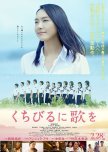
The teenagers' acting was overall good. I liked the background characters, and Nazuna was very well acted. Kuwahara was cute as a button -- but why did he constantly had the same tense posture, regardless of how he felt?
The script told the story in just the right pace and fit its elements together into a whole.
But that "whole" was unfortunately overly sentimental and contrived. The plot was predictable and characterizations superficial. Major events always were very obviously conveniently timed.
Several plotholes were left at the end:
Why is a professional pianist allowed to teach at a Middle School?
Why does nobody know that she is no longer active as a pianist, and not even a search turns up that she withdrew from engagements?
Why is the boy's father suddenly okay with him singing?
As far as I know, the song the choir sings in the contest was the insoiration for the novel this film is based on -- the song is about looking into the future, not giving up despite obstacles in life, etc etc. In my opinion, the problems in the protagonists life didn't fit the song and its intended audience of fifteen year olds. How many teenagers have a dead mother and an absent father? How many have to take care of their autistic older brother? Normal teenagers's problems are very different -- and for them often as insurmountable as those presented in the film.
So, slice-of-life problems would have fit this song better. And the moments when the children were children -- girls complaining about icky boys, boys peeking at girls and crushing on the new beautiful teacher, kids forming and maintaining friendships, a boy secretly being in love with a girl, those were the only moments when the film felt real. But there were precious few of them.
Another interesting avenue to explore would have been the boy and his questions about his own purpose. If you (think you) know why you are on this world, or rather, why your parents had you -- what does it mean for your own sense of self, for your dreams and feelings?
The worst thing is that in the end, it feels as if none of the children's problems are solved -- nor does it feel as if they took a significant step forward in their lives. Only the pianist can leave the island with a lighter heart and look into the future. Were the children's stories just a means to an end?
In some scenes, as well as the island setting, I wondered if maybe this was a callback to the seminal film "Twenty-Four Eyes" -- especially the scene on the grassy hill with the teacher and her students singing felt like it was. But where "Twenty-Four Eyes" made me feel deeply, this film left me mostly cold. Near the end, I even predicted what would happen constantly just a minute before things happened, and then rolled my eyes at it. Only the two minutes of conversation, the one flashback and the song after the competition was somewhat moving -- but then I am weak when people are being kind to each other.
Was it good?
For me, it wasn't. The obstacles were nothing new, and didn't fit the song.
Did I like it?
No. I found it superficial and overly sentimantal, when it didn't need to be. Other viewers loved it and called it "heart-warming".
Would I recommend it?
Not really.
Was this review helpful to you?
This review may contain spoilers
"No matter which path you choose ... know it will be for your own sake and your own happiness."
[cw for the drama: death of a parent, death of a daughter, abortion, grief]This was all around an outstanding drama; perfectly acted, gently filmed, and not at all what I expected from the synopsis.
For all that Tsukioka Natsu, the father, is listed as the sole main character, this is a drama that is primarily about women.
It is about family in the broader sense (and we get to see various family constellations here), and it is about becoming and being a father, but it is much more specifically abut motherhood, about mother-daughter-relationships, about children who are wanted or not, about abortion, and how hard of a choice it is; it's about women who make choices.
And grief. So, so much grief, and grieving, looked at from every angle, how each of the characters feels the loss, whether it is daughter, mother, friend or ex-lover.
And apart from some lashing out, not out of malice, but because the characters are overwhelmed, there's so much gentleness, kindness, and patience.
The characters do their best to give each other time to adjust. They make mistakes, they try to amend them. They listen.
And there are characters who find it hard to express themselves, and still try so hard to understand and be understood, and to find the best way forward.
Consequently, this is a drama that takes its time to tell the story, of how the characters got here, and of how they might continue. It's slow-paced, but no scene, no dialogue feels superfluous. The actors play their characters with gravity where needed, and with levity where possible -- naturally, with care and with respect. Just like the characters listen to each other with patience, and accept their choices, the drama asks us to do the same.
Because this is a drama, that, much more then it is about family, is about the right to choose. It's about choosing your own happiness. It shows how every choice will have consequences, for ourselves, and for others; how every choice wil have a price -- and a prize.
And in this drama, it's almost always the women who take the agency, not the men. In a patriarchal society that expects women to be mothers, and mothers to sacrifice their own happiness for family (in conservative Japan even more than in Western Europe), this drama shows us alternatives.
It gives us a women who decides to not have a child -- and how she still feels guilt and nevertheless lives a happy life.
It gives us a woman who decides to have a child and be a single mother -- and how she is happy even though it's hard.
It gives us a woman who needs to let her daughter find her own path.
It gives us women who choose to be in a romantic relationship -- and women who reject it for themselves.
It gives us women who choose.
And women who protect other women's choices.
We, as the audience, won't agree with all of their choices. But it's their choice to make, not ours. Like Mizuki says in episoe 9:
"There is no such thing as a choice that will appease everyone. But know this. There's no reason to sacrifice yourself. Do not become too kind to others. Do not act like a person who acts out of understanding. Please, allow your self to be a bit selfish. Make this choice yourself. And no matter which path you choose ... know it will be for your own sake and your own happiness."
Was this review helpful to you?
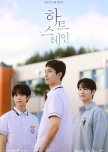
Woo Hyeon's journey from a crush to understanding the feelings of first love (which, of course, turns out to be "true love") is at the centre of the story -- and the other characters' love stories serve as a nice background, so we can understand Woo Hyeon's own story better. Kim Ji O was excellent in portraying the character, and I hope we'll see more of him in the future.
Another thing I liked was that they didn't push aside the question of what it might mean to be gay in contemporary Korean society (it was addressed a few times, and one of the supporting characters had internalised homophobia); but they also didn't make it a big part of Woo Hyeon's journey.
The longer part of the drama takes place during their last year of high school -- and I found that the passing of time stayed a bit too vague -- the shorter second part four years after. While I appreciate the slow story telling of the first part, with it's journey of self-discovery, I think the second half would have profited from tightening the script. Here, the desperation of both Woo Hyeon and Doha felt not intense enough and it got a bit lengthy. I also don't think the short jealousy story arc added anything to the story.
However, I know that the drama was based on a Manwha. So, it's likely that the script writers followed the manwha's structure here.
Was it good? -- Yes, it was a sweet and straightforward teenage love story, with all the usual tropes and ood characterisation.
Did I like it? -- I liked it well enough, and I was entertained. However, it wasn't eough for me to say I'd watch it again.
Who would I recommend it to? -- For people who want to see a teenage love story, this will definitely hit the spot.
Was this review helpful to you?
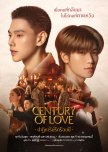
Delightfully overdramatic
A disclaimer first: I watched this drama while I was sick, and in pain from an ear infection -- what I wanted was something sufficiently fast-paced and engaging but not too complex in terms of plot. It was clear from the first episode that "Century of Love" would be exactly what I needed.It's a delightfully overdramatic series -- from San's over-the-top reaction to Vad's death in the past, to the supernatural elements, the heinous villains, and San's family in the present. It was fun to watch, appropriately ridiculous in the fight choreographies (and their sound effects) and the main villain in his wheelchair, which was juxtaposed with the silliness of San's family members trying to get them together.
Some plot-changing decisions didn't make any sense to me -- why did the shrine keeper/priest in 1924 agree to the ritual, if it would result in the destruction of the last piece of Nüwa's Five-Coloured Stone? Why did he not refuse, since death and loss are part of the cycle of life? Why didn't Tao (the shrine keeper/priest in 2024) recognise the signs of Nüwa's approval and why didn't he trust in his own calculations but let himself be confused by lies later on?
Nevertheless, the drama is remarkably consistent in keeping to its universe's rules, in the actions of the main and supporting characters and in the story they want to tell.
Because the story is not without depth. The core message the writer wanted San / us to see is being spelled out towards the end of the last episode, so I won't spoil that for anyone who hasn't seen the drama yet.
Another aspect I found much more interesting is the way two forms of homophobia are shown here -- the overt homophobia of San and the internalised homophobia of Vee (which is reinforced by his low self-esteem, more on that later). San's homophobic behaviour comes from the time he grew up in, he believes in the values and customs he's known all his life, and after he has overcome them, he is very much willing to pursue a relationship with Vee. We've seen that in other BLs already, even if not that often in the last year or so.
Vee, on the other hand, is even more interesting. Outwardly, he's openly bisexual, he is out to his grandma, he has had sexual relationships before, and he admits early on that he has a crush on that handsome man named San. However, the deeper his feelings for San grow, the more insecure he becomes. He doesn't trust this budding relationship, and with good reason -- don't we all know that "you should never fall for a straight man"? It gets worse when a young woman, who calls herself Vadfah and tells them that she has dreamed of San all her life (unlike Vee), and has the same birth date and place as Vee, so they share the same destiny -- as Tao says, the probability that she is the real Vad, is higher for her than for Vee. The probability is also higher just because she is a woman -- isn't it more "normal", more "usual", and doesn't it make more sense that she is the one San has been waiting for? Vee believes all these things.
Vee also has quite low self-esteem. He manages to hide it by playing up his goofy side, by smiling and laughing, by making self-deprecating jokes -- but occasionally he will let another character (and us) in, and tell us about growing up poor, about how he was cheated because of it and now has a criminal record, how having his grandmother as his only family member made him an outcast among his peers; and then he will try to laugh it off, play down his experiences, while the others look on in horror. With San, he is a bit more direct; he tells San that he's not worthy enough to be with him because he's from another class, because he's a man, because he is Vee.
I love Vee's complexity, his optimistic side, and his love for his family, as well as his insecurities and self-doubt. He is a well-written and consistent character, and I wish they'd have explored him a lot more.
However, I do understand that this is not the main story the writers wanted to tell -- it's a side story, and just the story that I, as a viewer would have found more interesting. So, this doesn't affect my rating.
These three aspects -- San's overt homophobia in the beginning, Vee's internalised homophobia and his low self-esteem -- all of them could have given the series a deeper meaning if the writers had made them stand out a bit more, made the character's emotional journey clearer, or maybe given them a bit more room.
On the other hand, I do understand that this drama was always supposed to focus on the romance, the villains' plot and the message they spelled out at the end (although I would have liked to see that shown more clearly throughout the drama, rather than being said outright -- but then, I'm a fan of subtle storytelling).
One other thing I'd like to point out is that I love the colours and the sets -- I love how the living spaces reflect the characters, and even Vee's room in the first episodes, which we only see in a few scenes, does this. I love the shrine, with its rich reds and its shadows. I love how San's mansion stands out ridiculously among the low and small houses around it.
Was it good?
For a Thai BL, it definitely was. It had a theme that was different from the usual plots, it was consistent, even if a bit overdramatic and more or less predictable.
Did I like it?
I did! I do wonder though, if I had liked it as much if I hadn't been sick.
Would I recommend it?
I would, with the caveat that it feels very Thai, and not to expect a masterpiece of art.
Was this review helpful to you?
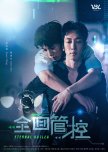
Bait & Switch
After Anti-Reset (and the preceding Stay By My Side and You Are Mine), I already did not have high hopes that this newest product from VBL would delve into the SF aspect or even the philosophical aspect of Human-Android relationships.But what I got was even worse, a Bait & Switch.
They lured us with an intriguing opening scene (AI rights -- a often-discussed question in SF stories, should a self-aware machine with a free will have rights, just like a human?), tantalised us with more knowledge about how the Ever series androids work, the androids bleed, have a heartrate -- basically seem to have a human body, but are enhanced (at least Ever 4 is), and don't age, the story also gave us glimpses of the other Androids (talked about Ever 2, we saw Ever 7, who is a look-a-like to Gu Bu Xia) and so on.
The questions if a human-android relationship would work, and how this would impact society, or what "love" is (can a machine love?) are not new to the genre and are extremley obvious in the premise itself ... and the story gives us crumbs, only to leave us with nothing.
Instead, they gave us the switch: A clichéd story about a young man who still carries trauma related to his mother (ugh!) and who only needs a devoted butler/confidant/lover to heal him, and we never get any more information about the world they are living in.
Characterisations are weak. I already mentioned the ultra-chlichéd background story for Lo Bus Shi. Ever 4 also did not have a consistent character. He is supposed to be mainly a bodyguard/fighter/strategist type of android, who is not supposed to give emotional support to his master, so he should have not been given data for this. He talks about struggling with emotions, asks Ever 9 for advice, but then proceeds to do everything perfectly (like a stereotypical top, see below). This would have been an interesting avenue to explore: Where do emotions come from? How do they work? Or another aspect to explore: The inherent power imbalance between master and slave (in this case, android) -- what does this mean for a romantic relationship? And if they'd further developed the dom/sub vibes Ever 4 and Lo Bu Shi gave throughout the series, this would have added another layer to the question of power imbalance.
Other things that irritated me:
* Ever 4's glasses didn't make any sense. Not only the "dom mode", that is just another Bait&Switch, but especially when he takes them off because "He trusts Lo Bu Shi" -- why does he not put them on again whenever he is alone or in a confrontation. Feels like the director just wanted an excuse to put the glasses away.
* The whole top/bottom dynamic was stronger than in the other VBL productions I've seen, and it made me angry when several characters (Lo Bu Shi included) implied that to bottom during sex between men means that you are less manly for it. Couple interactions were written along the lines of stereotypical dynamics, and, of course, the top is more than capable of doing anything, while the bottom is the one who is cutesy and must be protected.
* The secondary couple was superfluous. There wasn't enough time to develop a good progression, and there could have been another reason for the fall-out between father and son. The writer should have taken the time to further explore the really interesting questions (see paragraph two) or to make Ever 4 more consistent.
Was it good?
As before, VBL take an interesting (and, for a BL drama, unusual) premise -- and only briefly dip their toes into it only to then give us another fluffy romance without much substance. I did not mind so much in You Are Mine, because that one was a comedy first and foremost, and it did that well (even if the power dynamics between boss and employee should have been more developed), but it had already frustrated me in Stay By My Side to the point that I had to put it on hold for a while. Here, in a drama with such an intriguing world, it's sad, even for VBL standards. And no, the last ten minutes of episode 12 dd not save it.
Did I like it?
I wanted to like it. But with this Bait & Switch, I couldn't. It was watchable, but also irritating because it could have ben more, at least a bit. Overall, for an android-human relationship, I'd rather rewatch Anti-Reset, which at least knew what it wanted to tell us, than this.
Do I recommend it?
Only if you are seriously into the looks of the actors. If VBL decides to make more BLs for the other Ever Series androids, then there might be some background informations that could be useful. But that's hard to say at the moment.
Was this review helpful to you?

Delightfully educational
In accordance with the name of the show (เตร็ดเตร่ /tred tray/ means "wandering"), Tay Tawan takes a guest or two and travels around Thailand to various festivals, explores their origin and their history and gives us insights into Thai culture and Buddhism. He takes part in the festivals, interviews locals and obviously enjoys the chance to be a nerd on camera.I loved that he is genuinely interested in what he learns and how he connects new knowledge to what he already knows -- and how he is able to explain things clearly to his guest (and us) so that we can understand.
(His way of speaking and thinking reminded me of my fellow students at uni, when we studied Latin together, and our colleagues from the other departments like Ancient Greek, Classical Archeology and Medieval History. I think if Tay Tawan and I met in real life it would be delightful to be nerds together and to compare the histories and cultures of Europe and Thailand, and learn from and with each other.)
I loved the poems which introduced each episode (and I hope to rewatch in ten years or so when I know enough of the language to understand them).
Also, the ubiquitous product placements were minimal, in the first few episode I didn't eeven really notice them. And though they got more screentime in later episodes, it was very much bearable. Unlike in the Tred Tray Special episodes by the way, especially from special ep. 3 onwards, where it feels as if half the runtime is given to the avertisements. If you want to continue the learning journey with Tay, I can only recommend the first two episodes of the specials, the rest is only bearable for die-hard fans of Tay Tawan or his guests.
So, great insights into Thai festivals in 13 shortish episodes -- might give us an idea or two for festivals to visit in Thailand!
Was this review helpful to you?
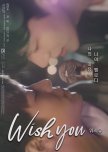
Wish You: Your Melody From My Heart (Movie)
2 people found this review helpful
A musical movie or a music video with added dialogue?
If you have the choice between the series and the movie, then watch the movie. It has several scenes that are missing from the series and round out the story.What I liked:
* I loved the two female characters! They did not have much screen time, but showed some interesting character traits nevertheless. The team leader is obviously under a lot of pressure to produce music that sells well, is a real career woman who can be ruthless at times, and at the same time she seems to want to produce good music as well. The deputy is similar, and she does care about the people who work under her, at least Sang Yi. It is a delight to see women who are people with their own ambitions, even if they are supporting characters.
* I liked Lee Sang's acting. He did a good portrayal of his crush in the beginning and his shyness to speak to In Soo.
What I did not like:
* The story was thin, very thin. The premise has great potential for more, and it's saddening to see that it wasn't developed more. On the other hand, it was a good decision to not put too much into the short time frame.
* The lighting was at times a bit too much on the mood lighting side.
* I wish the scenes the singers would actually sing what we hear, not just be shown as a bautiful backdrop to the music.
I am torn about whether there was too much music with pining stares and montages or not. On the one hand, it is nice that the story took its time to unfold -- and it is about two people who fall in love with each other's music first, and then with the person. If there was less singing, I would maybe have complained about that.
On the other hand, those scenes took away time that could have been used for more plot or character development. Sometimes I fellt like I was watching a music video with interspersed dialogue.
You can watch it if you have some time on your hands and can use a pick-me-up, but you won't miss much if you don't.
Was this review helpful to you?
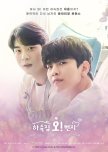
What I liked:
* All of the characters in the boarding house. They each have their own personality, which we can see even though the story's so short.
* The acting. All of the actors make it possible for us to get to know the characters and their thoughts.
* I liked the friend from college, Bong Deok, the most, who showed remarkable depth of character. Kudos to his actor, I'd like to see him in more dramas.
What I did not like:
* I think they people responsible for the project chose the wrong story for their format. For these short dramas / average length movies you cannot have an ensemble drama and expect a cohesive storytelling that has enough depth to be satisfying. Something will have to be left out, and it shows. I imagine the original work this is based on is much longer and allows for more character development.
* Why did they bleep out the swear words, even put a flower over the actor's mouths? I don't understand why they did not just put a different text for the actors to speak there, if they wanted to keep their low age rating.
Overall impression:
I do not regret watching this show, as the story was cute, the characters likeable and the actors did well. But this is by no means a must-watch; we have enough BL dramas by now that we can choose those of higher quality.
If you have not yet seen it, but want to, I recommend watching the series, not the movie. Although the change between episodes is a bit annoying due to their shortness, the scenes which are not in the movie are entertaining. Also, the movie's background music is sometimes a bit too strong.
Was this review helpful to you?
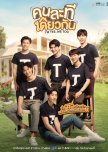
When I first watched this series some time ago, I did not know ANY of the actors (yeah, I don't know how I managed that, either) -- and I still liked it. So, it's not all fanservice here. It does feel like a low budget, Covid-influenced production; most of the scenes take place in or around the house, there's only a small cast of characters, it still manages to tell a good story about six people who find strength and support in each other.
One aspect I am not a fan of is the sub-plot about the father, which was a bit too "lakorn"-ish for me. But it's thankfully only a small part of the series.
I love the credit song and it's text -- it's been stuck in my head since I started rewatching this a few weeks ago, and the text is such a comfort.
A short note on the title, "I'm Tee, Me too" is okay -- but the Thai title คนละทีเดียวกัน is great and has many meanings in one sentence!
Maybe like this: คนละ = to each one, each one differently -- ที = Tee -- เดียวกัน -- identical, same.
Or: คนละ = to each one, each one differently -- ทีเดียว = quite, very; a single occasion -- กัน = each other, together.
Or you could read every syllable on its own as one word each; here's a link, and you can find your own translation http://thai-language.com/?blu=pLnF0LfV4LTVwseh0bkI
All of the Tees get their own story, their own problems they have to live with -- and I like how their psychological issues are not completely healed at the end. In that way, the series takes issues of the mind very seriously. And at the same time, the way the problems and the "solutions" are presented are hilarious.
This good balance of comedy and deeper meaning makes it a drama that is well-worth watching.
Was this review helpful to you?


