
 News


This review may contain spoilers
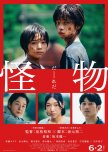
and so the monster was me
This film I believe is intended to be watched without spoiling or going into what it is about in depth. Take in all the promotional on the surface and you will get the full viewing experience. I say this because of the promotional materials that lead you in one direction, take it in that direction at first and then go in depth.. which is what I did. So spoilers.I definitely did not get what I bargained for when I decided to watch this movie. I watched the trailer, read the synopsis, saw the poster, and thought I would get a good scare out of this one. The ratings and reviews are well enough that I thought it would be perplexing, a psychological horror.
The first two-thirds of the movies had me, but in the back of my mind, the answer to the allure and mysterious tones was pretty simple and clear. To put it simply, this movie isn't a slasher or a horror. It is a coming of age queer film beneath two layers.
There are three acts to this movie after the initial setup. With the synopsis, firstly you have a story of a single mother who cares deeply for her child, a devoted and misunderstood teacher, and two kids that have the answers to the overall premise of the film. Minato is the child of the single-mother and is being abused as school, by either a teacher, or something else is at play.... so that is what I thought. I thought there could be anything, even a fifth element that added supernatural. This film was anything but, it was so real and thought-provoking, and in the end I found so many details that clearly show what was really going on the whole entire time.
The third act shows the perspective of Minato, and slowly it shows that instead of an abused boy, you find a boy that is scared of his blossoming but very real feelings for a student of his that was shown to be connected to this mystery within the school. There was no abusive teacher or secret being held by the higher ups, there was a boy who was scared of his feelings, and enough to think of himself as a monster. So in the end he made a lie. This film weaves together several elements to knit it into one final conclusion. Instead of going on about that I'll point out a few details that show how brilliant this film really is.
I must say, I was hesitant to conclude that this film involves two boys that like eachtother, but by the end and looking into the screenplay and its intent, I realize that was the point. Minato was just as scared as his feelings and it brings the question as to why it is seems as sexual when it is innocent love between two people that are the same gender. There is an innocence with Minato and him coming to terms with his feelings for Yori, and it's heartbreaking to witness how scared he really is of them.
You can see this through dialogue, and specifically with scenes where Minato says he is shifting into a monster, and where he is in the MRI scanner, truly scared that it will read his mind and his mom will be aware of his developing feelings. Why is he so scared thought? Yori is why he is scared, he is constantly tormented for his behaviors that don't suggest he likes a girl, he is abused by his father and told he has a pigs brain. Yori's father would rather he act out and be bad, than be an obedient child who is good at school. There is this whole spectrum of what a boy acts like and what they shouldn't.
What got to me was the part where the two boys find a safe space together, and I started thinking about their feelings for eachtoerh when Yori got too close to Minato. Although in the end Minato never wanted Yori to go anywhere, and what was cool are the little details. Minato goes back to the empty safe haven and texts Yori, where Yori says he won't go back because he wants to touch Minato, in the ways where he patted his hair or hugged him, but Minato says he wouldn't mind. I love how the ending doesn't have them fear, and instead they get past the gates of the railroad and are happy and free... there's just a lot to talk about with this one.
it seems that this topic is a taboo and that's why I didn't see it at first, but that is the point behind this film. To have you question why it is seen that way, and why you view an innocent feeling and curiosity as sexual or not normal. There is no romanization between them, the director and screenplay had the intent to share a story of two boys that grew to love eachother and coming to accept in regardless of the heteronormative society they were placed in. Any opposition to that shows the point of the film again and societies failure to accept it.
Below I'l several links that goes over all the details of this film I couldn't go over.
https://www.reddit.com/r/TrueFilm/comments/1761z26/little_details_in_koreedas_monsterkaibutsu_2023/?rdt=39846
https://x.com/wyvernhood/status/1745418419368055276?s=46&t=hWWeyWA1Y9kwJqIT_KVSaw
https://x.com/korokketto/status/1745376701188825596?s=46&t=hWWeyWA1Y9kwJqIT_KVSaw
https://x.com/haeinfleur/status/1744727092586246244?s=46&t=hWWeyWA1Y9kwJqIT_KVSaw
Was this review helpful to you?

This review may contain spoilers
This Drama Is a Fever Dream and I’m Weirdly Into It
This drama eases you in just enough to make you think you know what you’re getting into—and then promptly proves you wrong.The plot and setting actually had me invested, so I was not prepared for the absolute clownery that followed. The comedy is loud, goofy, borderline cringe, and wildly unserious, yet somehow it still works. Everyone is acting like shame was never invented, and honestly? I laughed more than I expected. You will cringe. You will laugh. You may do both at the same time.
Visually, it’s thriving. The cast is ridiculously good-looking, the aesthetics are clean, and there is no shortage of eye candy. This drama knows its strengths and flexes them regularly.
That said, nine episodes in, the story is juggling a lot. Multiple plotlines, constant tonal shifts, comedy fighting for dominance with actual story progression—it sometimes feels like the show is doing parkour without a helmet. I’m choosing to believe this chaos is intentional and that everything will eventually click into place. Also… why is this full-length? That realization hit me like a jump scare.
The leads are solid. The ML continues his streak of choosing unconventional projects that somehow work, and I have faith. The FL gives strong My Uncanny Destiny vibes, which I loved, so no complaints there.
Overall, I’m having a genuinely good time—laughing, vibing, and enjoying the lightness while it lasts. Because let’s be honest… the angst is warming up in the wings.
Will update once I'm done with the rest of the episodes ✨
✨Update / Final Thoughts✨
Okay… wow. What a ride.
Overall, this turned out to be a genuinely unusual drama. The humor definitely won’t land for everyone, but if you look past the silliness, there’s a surprising amount of depth here. It tackles heavy questions, quiet contemplations, and some truly tragic backstories that hit heavier than expected. The Princess Consorts’ storyline, in particular, might be the most devastating of them all—easily one of the most tragic arcs in the entire drama.
And yes, I absolutely bawled my eyes out over the leads’ story. Especially the ML. A painfully pure soul. Emotionally unsafe levels of purity, honestly.
The cinematography is beautiful, the characters are deeply lovable, and the ending—while technically a happy one—leans bittersweet. It took several tear-detox sessions for me to fully accept that happiness was, in fact, achieved. Even though the background music occasionally goes a little too hard for no reason, it doesn’t take away from how memorable and distinct this drama ends up being.
Also—special shoutout because this deserves to be mentioned—the drama actually references My Uncanny Destiny in a clever, self-aware way that ties in perfectly. Did not expect that lol.
Do I still think it didn’t need such lengthy episodes? Absolutely. But despite that, this is a hidden gem—quirky, emotional, and unexpectedly moving. Definitely recommended.
Was this review helpful to you?
This review may contain spoilers
A Heartwarming Journey
I went into this drama unsure about it, even questioning if it was worth my time. In the first half, I was seriously ready to tell the female lead, "Girl... divorce!". But by the end, I was completely invested in their story. The drama turned into a surprisingly heartwarming and emotionally satisfying journey, and I ended up loving it more than I ever expected.Plot Summary: At the beginning, the female lead is frustrated with her marriage. She lives with a meddling mother-in-law and feels like her relationship with her husband is stagnant. The male lead is close to being a "mama’s boy" who does not stand up for his wife, and their marriage is strained because of his mother's interference. The couple seems to be at a breaking point.
At its core, the drama explores the realistic challenges of marriage—the little frustrations, the miscommunications, and the changes that come with being in a long-term relationship. The female lead deals with a meddling mother-in-law and a husband who has trouble standing up to his family. It’s a candid look at how marriage can be full of ups and downs, and the idea that it’s not all hell or heaven—it's somewhere in between.
The male lead’s character development was one of the biggest highlights. He starts off as a passive figure, just going along with whatever his mother says, but by the end, he undergoes a meaningful transformation. He learns to stand up for his wife, becoming more self-aware and emotionally mature. His growth was something that really made the show feel rewarding.
I also loved the moments of humor and lightheartedness sprinkled throughout the drama. One particularly memorable scene had the leads involved in a dare-or-truth game, which led to some hilarious moments. There were moments when they were silly and playful, but also when they shared genuine emotional exchanges, making the balance between the two feel just right.
And that plot twist at the end? Emotional and satisfying! It added a whole new layer to the relationship and made everything come full circle in a way that was so heartwarming. I went from being skeptical to falling in love with their journey.
The final moments were what really solidified the show’s place in my heart. It was with a line about how "Prince and Princesses don’t always end up together happily ever after"—but it was real and grounded, showing how far they had come. Instead of a fairytale ending, it embraced the imperfections and unpredictability of life while still leaving us with hope.
Final Thoughts: Despite my initial doubts, this drama completely turned things around. It’s a perfect mix of humor, emotional growth, and real-world struggles in a marriage. I went from being ready to drop it to feeling connected to these characters by the end. If you’re looking for a drama that doesn’t just focus on grand gestures, but on genuine development and heartfelt moments, this is definitely worth a watch.
I’m giving it a solid 8.5/10—a fun, emotional, and surprisingly heartwarming journey!
Some moments i liked(SPOILER):
The Dating App Twist: The female lead downloads a dating app for work and matches with a man, not knowing he is her husband. She is upfront with him about being married, so they just chat as friends. However, unbeknownst to her, her husband saw the app on her phone and decided to match with her to understand her better. This twist was a huge revelation, and the emotional development that follows was a turning point for both characters.
Male Lead’s Growth: One of the most rewarding aspects of this drama was watching the male lead’s growth. At first, he simply obeys his mother, but as the drama progresses, he begins to stand up for his wife. His decision to match with the female lead on the dating app is a key moment. He realizes how much his wife needs emotional support, and this sparks his change. His slow but meaningful transformation was incredibly satisfying and heartwarming.
Mother-In-Law Dynamics: The relationship between the mother-in-law and daughter-in-law starts off tense and antagonistic, but it evolves over time. The mother-in-law, while overbearing, isn't portrayed as a villain—her actions are more a result of her generational perspective. The emotional development between the two women added complexity to the narrative and showcased the importance of understanding different viewpoints in family dynamics.
Key Moments:
Red Nails: One hilarious moment was when the female lead made her husband get red nails as part of a dare-or-truth game. It was a quirky moment that highlighted their growing connection and the playful side of their relationship.
The Bike Ride in the Rain: The final scene is a beautiful and emotional culmination of the couple's journey. They end up riding bikes in the rain, just like the grandma did earlier in the drama. The leads reflect on the realities of relationships with the line: “So prince and princess end up together living happily ever after? No, how can that be possible, even the North Pole is melting, how can anything last forever?” It’s a perfect nod to the imperfection of life and relationships, showing how they’ve grown to embrace each other’s flaws and cherish the small moments together.
Ending: The final twist shows how far the couple has come. The male lead’s growth and understanding of his wife’s needs come to a head in the final episodes. It’s a satisfying and heartwarming conclusion where they choose each other despite the challenges and imperfections, signaling that while "happily ever after" might be an unrealistic expectation, their love has evolved into something real and beautiful.
P.S. I realistically would've preferred if they divorced to be honest.
Was this review helpful to you?
This review may contain spoilers
A Love Story That Isn't for Everyone
I have been wanting to watch this movie since I first watched the trailer and had "No Regrets" by Li Rong Hao on repeat for over a month. I knew this was a movie that would make me cry. I don't think this movie is for everyone, when it's a love story that isn't for everyone; especially people that doesn't like very flawed characters and that not all love will have a happy ending.Zhou Xiao Qi is our male lead that is super rash and emotional throughout the movie, while You Yong Ci (our female lead) was a girl that wanted to simply feel loved and safe in a relationship due to her past family issues. I honestly felt like female lead's character was not fleshed out well compared to the male lead's character, but I think the main focus of the story was on Zhou Xiao Qi. They are both very flawed characters though. The moment Zhou Xiao Qi did the stupid thing that ruined his future, I knew their relationship would fail no matter what. There would always be regrets for him, and then for Yong Ci will forever feel guilty for it. No matter how much they loved each other, it would just not work out.
I think the message that the movie wants to tell us is that just because you love each other, doesn't mean you have to end up together. It gave a realistic view on how when you are young, rash and emotional; you make stupid mistakes and say stupid things that can make or break a relationship. But it's important to look back and cherish the love you had for each other in the past. We should view it as a happy memory; it's better to have loved and been loved, then to not have loved and not been loved Also, it's important to live with the decisions you made and to not have regrets. Keep looking forward, learn from your mistakes and try to become a better person.
Was this review helpful to you?
All the usual angst
Manipulation ✔️ Bitchy ex- girlfriend (the worst I have seen in any drama! ) ✔️ Lots of misunderstanding ✔️ Lack of communication✔️ Love triangle✔️And yet somehow, I didn’t skip much and finished all the way through 😂 I did find it quite engaging although the storyline was annoying. There were some nice moments between the main leads, and they did manage to express and communicate their feelings.
Not a great watch. Only if you have nothing better😉.
Was this review helpful to you?
I love the premise of best friends to lovers. Think of it as an Asian 'When Harry Met Sally' but with more heart and more dialogue. That is probably not the most accurate description but it is a nice story nonetheless. I think it is not as good as the Taiwanese one but better than the Korean one. Ishida Ren is so lovable and the perfect guy that could be. Mitarai is selfish and flawed but here she came off as less mean than Ariel Lin's portrayal in the original one.
The story is predictable but not as cliche as one might expect. The romance between the leads is a slow burn and you would just be longing for action all the time ; but there is little of it. It's not a fast paced drama but still a lot happens in every episode to keep one entertained. I really enjoyed the premise of Shibuya and the execution of all subplots.
I must say the casting was very well done in this one. The only miscast was Mitarai's boyfriend and because the original version guy was so good. I feel like this is a very good version and adaptation and you can enjoy it even if you didn't watch the original. The main leads are fantastic and everything is nice and lovely. The emotions will get you and Ishida Ren will win you over no matter. Watch it for him. The actor is awesome and that's all I can say.
It is a nice break from mean "bad" boys of dramas who treat the girl like crap. It is nice to see the nice guy as the lead but after a while you wonder if he's the second lead after all. Just watch it in one go. It's worth a weekend binge watch.
Was this review helpful to you?
Here the heroes individually are insignificant, helpless. Together they can make a difference.
"Falsify" (also "Distorted") tells an exciting story about the business with official truth. I think this works particularly well as the KDrama offers a critical examination of the rather difficult concept of 'truth', which can be bent and manipulated depending on the eye of the viewer. Is the rule of law just a pretty farce? Rather an eloquent backdrop for the mighty who operate in the shadow? Does actually anything like justice exist? What truth are we hearing? Which one do we want to hear? Which preferably not? Is it always so good to bring the truth to light?Regarding the recently common term 'lying media', used as an accusations from all different directions, "Falsify" offers a burning issue. Also a bit of an 'Watergate Affair' in South Korean garb (as the underlying case resembles some real South Korean one). Sophisticated journalism and sensation-hungry tabloids, public prosecutors and lawyers as law enforcement officers, so called respectable (yet cheating) businessmen as well as gangs are all frighteningly close together. Against this background, seldom has sich wide range of positions, attitudes and motivations been thus successfully intertwined and presented close to touch on the basis of individual fates, altogether mixed up in an exciting story. Abysses open up in view of social ideals and their illusions. And yet hope is not lost in the face of (quite deadly) superiority.
This is definitely not a ´Marvel´-like (super)hero story. Here the 'heroes' individually are insignificant, inconspicuous, fallible, and to some extend helpless puppets in a complex mechanism that is controlled by opaque forces. However, together they can make a difference in co-creation - by bundling their potentials, throwing their prejudices overboard, getting involved with each other, learning to trust each other (despite initial contempt), and no longer reflecting on what separates them. The key is a unifying idea that is bigger than each individual (with their physical, emotional or social needs). They want to give this idea shape, body, weight and charisma with all imaginable creative means. This cross-personal idea is what gives them strength (even in the face of massive personal threats) and overcomes fear. Here it is the idea of a democratic constitutional state in which there is justice for ALL; in which ALL are equal before the law; in which every citizen can/must bear responsibility for his/her actions - the price for the freedom of responsible citizens: a minimum consensus of laws, rights and obligations that are binding and binding for everyone.
This idea sounds nicer and more promising than it really is, because it usually stays with the idea that is trampled on behind the scenes. Yet, it is (real) people who fill this (abstract) idea with life. But where there are people, there are also their corruptibility, their greed, their vulnerability to blackmail and their cowardice, as well as the fitting people to unscrupulously exploit such weak points. South Korea's young democracy and long history of corruption and mighty ones operating in the shadow offers a realistic, scandal-ridden environment to process this exciting and at the same time outrageous KDrama - thus offering a wide range of gray tones, emotionally differentiated and authentic.
By following various protagonists from the press and the courts, the story begins with individual threads of action that are at best loosely connected to one another, but which become entangled over the course of the story and together form a strong strand that everyone can pull on together. So a bit of patience is required from the audience, but it pays off! The differently motivated characters come to life in a tangible way, become comprehensible in good and bad and reveal a reality about the business with truth that makes you shudder. We as the audience are ourselves cleverly integrated as part of the story - as representatives of public opinion and thus as perpetrators and victims at the same time.
Wow!
Good job. Ambitous. Thought-provoking.
P.S.:
Also ideally suited for repeated series enjoyment due to the differentiated, complex story.
Was this review helpful to you?

The first half of the show is particularly strong, in part due to outstanding performances by Kim Young Chul as Taejong and Choi Myung Gil as his embittered queen. Taejong may be monstrous, but he’s also powerfully human, and the show loses some of its spark when he exits the scene. The second half is weaker, perhaps because the series was cut down from 100 episodes to 86. This causes pacing issues, as some events are rushed through while drawn-out moments of pathos feel unearned due to a lack of dramatic set-up. Subplots get dropped and major characters disappear without acknowledgment or comment. It also means that Sejong comes off as far more serious than perhaps he was, as the show leaves out such “frivolous” elements of his life as his love of music and his passionate relationships with his concubines. In general, the show is more comfortable in the elegiac than the celebratory mode, but its tendency to emphasize loss sometimes deflects attention from just how extraordinary Sejong’s achievements were. It may be difficult to do great things, but there is great joy in such success as well.
Was this review helpful to you?

This review may contain spoilers
Within the aura of a love story some socially critical topics on successful woman, work & family
"I Do I Do" tends to be humorous, offers a nevertheless emotional love story and at the same time the backdrop for the critical processing of a merciless everyday professional and living environment to which women in South Korea are exposed. As also, for example, "Romance is a Bonus Book", "Scent of a Woman", "Revolutionary Love" or "Angry Mom" the KDrama uses the comedic touch to lift the emphasis of the topic into a lighter tone that is easier to digest. Cheerful and serious aspects are well balanced, also thanks to a great cast.
Within the aura of a love story "I Do I Do" comes along with some socially dominant topics around woman, work and family that want to critically be processed. "I Do I Do" precedes "Now, We are Breaking Up" by nine years. Not much has changed in the status of the professional life of a successful woman (in the fashion scene). The scenario reminds here and there: the experienced, successful and talented designer (here elegant pumps) who has chosen career over relationship/marriage/family; the parents who want their daughter to finally get married properly; a younger man who, after a one-night stand, throws the orderly life of the confident businesswoman upside down. In the case of "I Do I Do", the protagonist ends up in a one-night stand, which is rather untypical for her (and him) due to a chain of special circumstances. The hook for further drama is her completely unexpected pregnancy. ... and 37-year-old Hwang Ji-ahn, still being single, having just been medically diagnosed with a premature menopause...
------------------------------- SIDE NOTE: --- Woman, Work and Family as far as South Korean society is concerned ---
- A woman (in South Korea) can perhaps be successful, but the price for this is her woman-ness (as in many places on earth...). She proves herself to be a better man and simply has no room for relationships where she could live out her soft, tender, feminine side. Showing her weakness at work whatsoever would jeopardize her position. Competitors are already waiting for a devastating neckbutt.
- A woman can be excellent and even unique in her work. From a marketing point of view, however, it is more promising (because it is more binding for business partners) if a man bears the official, managerial responsibility for business sucess... because who knows when the woman will leave the professional world behind and take up her role as wife and mother... The dramaturgical dynamics in this regard are astonishingly differentiated in "I Do I Do". There is even room for the aspect of how women envy each others decisions for either way (instead of solidarily supporting each other - here and there).
- A woman should get married. She can mercifully let off steam for a while in her professional life, since society has already become about 10 years more tolerant in 2012 than in the decades/centuries/millennia before. But the age of 37 is (biologically speaking) a magical limit... because now it's high time. (The KDrama actually offers an exceptional man as a role model who thinks progressively here...)
- Dating, a woman automatically becomes the one who needs/wants to be protected and the one who in turn provides the man with allround care. What a mess, if roles lose their clear assignments. Here, too, the KDrama offers, among other things, another (different) exceptional male role model - one who (although instinctively a protector, too, but nevertheless) is ready to develop in a different way.
- And then equally valid for men and women: relationship is not a private matter. At least the parents are the first to have a say.
-Also: The greatest happiness in life should be a permanent position. Everything else is extra...
---------------------------------------------------
"I Do I Do" defies these societal norms, which in South Korea seem to be chiselled in stone. This is no piece of cake. Interestingly, the KDrama offers only one answer to the question "What are the arguments in favor of deciding to have a child or a family as a professionally ambitious woman?" - this in the face of an almost endless list of reasons that argue against it... This single commitment to a "yes" (towards children and family) is located beyond rationality. This "yes" has nothing to do with virtue and values. This one and only "yes" argument is completely personal. (My respect for taking such a position - one that actually stands outside of society´s right to have a say in this!)
After all, "I Do I Do" eventually shows another variation in the Cinderella spirit of fairy tale love stories ... But. I consider the way as the goal! And the path described in this KDrama (the circumstances and processes of the main protagonist) makes it definitely worth seeing. In addition, Kim Sun-ah finds a good balance between a competent, unapproachable boss and an approachable, not so competent 'woman' with her heart in the right place. Lee Jang-woo also convinces me here in his role as the much younger, impulsive, unconventional Park Tae-kang.
By the way: Since it is about the world of fashion designers and pumps in particular, it would be worth mentioning that the viewers get to see a lot in this regard. Not only in Ji-ahn's well-stocked private shoe room, but also beyond that - 500 pairs of pumps were brought up for the series that were supposedly worth almost 9,000 euros. Also, the protagonist Ji-ahn's individual fashionable style (which goes back mainly to Kim Sun-ah's specific, personal suggestions) became a trendsetter at the time.
Was this review helpful to you?
Was this review helpful to you?

Queen's Classroom
35 people found this review helpful
 1
This review may contain spoilers
@ mobbing, friendship, class culture and reflecting moral behavior among 6th grade pupils. Great!
"The Queen's Classroom" is a dramaturgically fascinating story about kids at a South Korean elementary school, shortly before their transition to middle school. The young actors are fantastic. Likewise the adults. At the same time, it is a nuanced, clever study of bullying from 2013. I appreciate this series very much because it not only shows THAT there are enormous social problems with an increasingly traumatizing marginalization of young students, but also how/that the school, i.e. the teachers, can contribute in a creative, constructive, pedagogically valuable way, and thus counteract the trend. For this reason alone, "The Queen's Classroom" is worth seeing. In addition, the KDrama tells a wonderful story about the idea of friendship - about how the mere concept and label 'friendship' becomes a real, three-dimensional relationship with a solid grounding. Fabulous.The unique approach is a focus on the age between elementary and middle school - a phase that is crucial in the development of personality, e.g. for the cognitive development with regard to the moral assessment of situations, the ability to change perspective and a differentiated understanding of moral values. Eventually, the moral assessment of mobbing/bullying is the crucial first step in order to seriously counteract the ominous trend. This aspect is a characteristic problem in South Korean schools. (See side note below.)
In the case of "The Queen's Classroom", the homeroom teacher sets important impulses for the personal processes of individual pupils and the class as a whole with quite idiosyncratic, (of course also dramaturgically effective), provocative pedagogical methods. The aim is to use paradoxical intervention in order to trigger more profound emotional and cognitive processes, so that the students can move from the sometimes naive surface of their beliefs to their true, genuine core. On this basis only can they then stand their by all means noble, idealistic convictions powerfully and authentically against adverse circumstances. Personal processes can often be a bit painful, as is the case here. However, the result is quite spectacular for the individuals and for the class as a whole, too. It could/should be something like this or something similar, it HAS to be if the increasing trend of bullying in schools is to change.
Chapeau! "The Queen's Classroom" is boldly leading the way as a small but mighty pioneer in the KDrama world. To be fair, the KDrama is based on a Japanese production. Since the social problem is similar there, it is not surprising. In any case, the Korean remake didn't do any harm... Despite all the emotional seriousness, it's a great pleasure to accompany the kids on their bumpy road.
---------------------------------------
SIDE NOTE: --- Wang-ta - Bullying in a collectivistic society, like South Korea ---
While 'mobbing', strictly speaking, refers to psychological terror or physical violence by a group, 'bullying' describes the harassment itself, regardless of how many people take part in it. However, the choice of term does not change the fact that far too many students are involved - be it as victims, as perpetrators or as spectators/witnesses. This is an international phenomenon, with more or less extreme manifestations. There is peculiarity in South Korea, though: collectivism (vs. Western individualism). When the welfare of the collective has the highest priority, it means that the interests of the individual are subordinated to those of the associated social group - be it family, work, school, class, club, friends, etc. Peer pressure also exists in individualistic Societies, true enough, but in collectivism it has an even stronger impact. This should not be underestimated when dealing with the topic of mobbing/bullying.
'Wang-ta' is a specific, common South Korean slang term that is used in connection with and in dealing with a person who is not part of the group. One becomes an outsider very quickly, wearing the wrong clothes, having the wrong interests or preferences, belonging to the wrong group or to no group, having poor, stigmatized or less influential parents, living in the wrong family constellation or only achieving bad grades. However, this label commonly implies (in collectivist society) that it socially 'is allowed' to devalue and harass this person for being an outsider. When group norms are thus strong, such exclusion based on appearance, lack of achievement, special preferences, etc. can have particularly fatal consequences. Those experiencing 'Wang-ta' first hand, may lack the chance of getting rid of this label again.
- Those who 'choose' the victim are hardly aware of any guilt, since they are convinced, that they are rightly criticizing a deviation from the set norm.
- The other peers will thus avoid the stigmatized pupil and assume that there is something to it, so that the label (and exclusion) is justified.
- And those labeled ´wang-ta´ will only withdraw even further, ashamed of their 'apparent' lack, and feel even more inferior, than they might already do.
Empirical studies in 1998 ff with pupils from European or American countries (with individualistic socialization) showed, that in 85 percent of bullying cases peers were involved as bystanders. Of those, only 11 percent eventually intervened. Unfortunately, I don't have any comparable South Korean numbers, neither from then nor from today. However, I probably don't lean too far out of the window when I suspect that there are significantly less, who would actively intervene.
In the course of further international studies it was possible to prove that intervention by peers is, however, an essential first step towards change. Active intervention on-site in the middle of the situation triggers a (moral) debate among the peers about the situation in the first place. As long as there are only passive, tolerating bystanders, the act is socially approved and its justification defacto confirmed.
There are South Korean studies that show: although the majority of the pupils interviewed do not like bullying, at the same time they also believe that it is inevitable. In fact, they assume, that the victims in general deserve to be punished because of their (self-inflicted) being an outsider.
The peer group has the greatest influence during the school years from late elementary school to high school. At the same time, this is the phase in which generosity in dealing with diversity can and must be learned as an essential social value. If such a value is not socially recognized at that time, then young people will not be able to integrate it into their further lives, let alone apply it. This is the painful crux of the issue of "wang-ta" in South Korean schools (or later in the workplace): generosity in dealing with diversity has no tradition, no culture, no socially recognized value on the peninsula. If you want to change the school bullying trend, then you have to start here. I.e. as a teacher in elementary and middle school, opening up spaces for experience with tolerance and thus creating the opportunity for a new culture of social interaction. A confident class culture that explicitly acknowledges diversity, that socially and openly and explicitly questions wang-ta as a social option, can form the fertile breeding ground for fundamental societal changes that leave more room for individuality. In the face of an ever-approaching, globally networked world, this is becoming increasingly necessary in order to create the personal and social balancing act of a hybrid between traditional and global, between collectivistic and individualistic.
Was this review helpful to you?
The show does drag out the denouement, with more moralizing speeches than I’d prefer. It’s also not a ringing endorsement of the idea that people can change. It is however, a lovely example of how good writing, acting and directing can bring an old genre to vibrant, urgent life.
Was this review helpful to you?
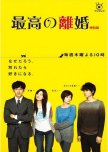
Though sometimes one may see it advertised as such, Saikou no Rikon cannot be called a true "romantic comedy". It watches more like a slice-of-life, centering around two couples (whose respective relationships may or may not be crumbling). The comedic aspect hits as often as it misses, despite passable delivery from involved actors and actresses. Emotionally rich and intense scenes outweigh these in sheer remarkability; in fact, the levity issues are approached with at times (such as the occasion divorce is brought up for one of the couples) actually leaves the whole product feeling a little inconsistent. Am I watching a zany Japanese relationship lark or this heavy treatise? Because some elements did not wholly jive (at least for me), those thoughts popped up frequently over the course of the series.
Where the drama excels must be dialogue, which is razor-sharp and surprisingly natural. These characters speak like real people, even showing pop cultural awareness. An engaging way speech is used is also in the way characters loose their frustrations to others; they tend to tell strangers and service-providers in these long-winded monologues, unable to vent to anyone closer. What it lacks in stunning backdrops and visual candy, Saikou no Rikon makes up for in thoughtful camera work. With a sharp focus on the inner workings of married life in mind, shots often adopt voyeuristic qualities. For instance, we might see an argument from a fly-on-the-wall perspective in the kitchen, overlooking the entirety of a small apartment made for two.
Eita headlines a solid cast, swinging all his powerful versatility behind the (initially) repellent Hamasaki Mitsuo. This is a character that embodies everything wrong in a husband, from his incredible pettiness to the selfish way he views most everything. The first time he tells his wife something between them was her "personal problem," even threw me back into some bad memories of my own. However, Hamasaki exhibits incredible personal growth throughout Saikou no Rikon (with Eita totally inhabiting the role). Ono Machiko, as his polar opposite and somehow wife Yuka, has a fantastic showing also. Whenever Yuka showed weakness or had something big to say, Ono-san knocked it out of the park. Her role, despite early episodes showing her through her husband's perspective, is lovable and sympathetic; women will definitely identify with her best.
Ayano Go and Maki Yoko portray strange duo Ryo and Akari, whose tale most interests at first glance yet slowly is overcome by that of the main couple. Both are fine actors and do beautifully in their scenes. Unfortunately, paired with the "that's just how things are" attitude the characters take to one another and themselves, the too-fast wrap to their story leaves the entire relationship a little hard to watch and slightly unsatisfying to finish (unlike that of the main couple).
If Saikou no Rikon is a hero wielding dialogue as its best weapon, music will be its Achilles Heel. Having just come down from a marathon of the series, I can scarcely remember any specific tracks. There was at least one quirky instrumental number, but the only truly memorable song is ending theme "Yin Yang" provided by the amazing Kuwata Keisuke. Despite not being a song to my taste, it suits the drama exceedingly well. And that wild ending sequence that accompanies it? Positively awesome.
Was this review helpful to you?
Dr. Romantic: APPENDIX, The Beginning of Everything
35 people found this review helpful
Clearly, this IS the 21st episode of Romantic Teacher, Doctor Kim. This is not MDL's fault, however. The production team decided to end Romantic Doctor, Teacher Kim at 20 episodes, and label this one an Extra Episode instead. With that being said, you cannot watch this as a standalone drama special. You will need to watch Romantic Doctor, Teacher Kim first before proceeding to this one.
I wish they didn't label this an extra though. This episode is what makes the entire series actually complete. It does not start introducing any of the characters again as a new production. It doesn't jump ahead or back in time. It continues smoothly from episode 20 and answers a lot of questions left hanging from the main series. It has a lot going on as well. It's not just a dragging 'filler' kind of episode. So many 'romantic' things are going on here :)
This is definitely a must-watch. Consider your progress 20/21 if you haven't seen this yet.
Was this review helpful to you?

I was in "drama mood" so in that period U wasn't picky at all. I just read the synopsis then I decided to watch this drama without expecting anything from it.
2) Storyline/Plot:
The general story wasn't very special but it can't be considered as a one of K-dramas usual plots. However, it wasn't outstanding.
Positive Points:
*The storyline had a great dramatical depth which can make you tagged to its events.
*Main Genres:
--->Romance: This is a romantic story with all the meanings that the word "Romance" refer to; it was well written in order to make developments go deeper and deeper after each episode.
The romance here is the "mature" type, not like those childish romantic stories that we see everywhere but it's not very serious that would make you get bothered since they added moments to cheer the audience and keep boring moments out; i believe it was a smart move in order to maintain the great romance.
One more point, romance was a play of fate, a play of reality to show how true love can survive no matter what kind obstacles it faces; I know it's a little dreamy but it was cool in the drama.
--->Drama: I consider this drama as a dramatical romance, it's not the rom-com type so the dramatical side was heavily present and well done in some points.
It can be devided to several parts since the storyline was devided, the middle dramatical part was the best then there's some good parts at the beginning.
Negative Points:
*The romance is good but only the main leads romance existed; no side romantic stories that can change the mood a little. Yes, there was the usual Korean triangle but the side romantic stories were absent.
*The dramatical parts in the end were really annoying because it took a wrong turn after the 15th or the 16th episode; I had high hopes for that part and even though, it didn't end up badly but I wasn't satisfied.
Story: 8/10
3) Acting/Cast:
*Joo Jin Mo:
I have a great respect for him as an actor, I loved his previous roles and I really liked his role here, it wasn't an intense role but the way he handled things was really well done.
The character was a very strong at first, you can feel the hartred and pain in Lee Shin Jun's eyes then as the drama went on, many changes occurred, many dramatic moments were held by his character, it was intEresting to to follow his character developments but at the end, I noticed some unsatisfying changes in the character's personality but it's all up to the story's changes above.
*Lee Bo Young:
I don't know her as an actress which means that I am not familiar with her acting skills, here she was acceptable and moving in some points because the role was portrayed in a satisfying way.
The character, let's see, I wasn't fully taken by kang Eun seol's character and I never sympathized with her. The character was off sometimes, cheerful some other times, cool most of the time and what I clearly remember that it was really annoying starting from the 15th or the 16th episode.
*Other Cast: I am only familiar with some of them but I think their roles were nicely done, except some annoying characters, the supporting roles were okay.
Relationships:
--->Romance: The chemistry was good, like I said earlier it's one of the greatest romantic stories that I've ever seen plus the leads made it enjoyable "most" of the time.
--->The triangle: Most of the time they were really annoying to watch, I skipped those parts often, I tried to watch but they weren't any close to the sweet triangles that we usually know but I have to appreciate Kim Pil Seo's character since it was "mature"
--->The leads relationship with Lee Shin Jun's mother: It was really well done at first but when it took the obvious turns near the ending, I became uninterested.
Cast: 7/10
Acting: 8.5/10
4) The ending:
I liked the final obstacle, it was somehow unexpected and cool to watch. Nice closure but it doesn't deny that it was one of K-dramas classical endings.
The ending: 8/10
5) My impression (How did it affect me):
*I was really interested in this drama and that's the main reason I finished it fast.
*I wasn't bored but I have to admit that I skipped several parts in order to make my watching time equilibrated plus there were scenes that I didn't like.
*Is this drama memorable: Yes, I am keeping this drama in my mind as one of the greatest romantic dramas but not as one of the greatest dramas that I've ever seen.
My impression: 8.5/10
6) Overall:
*If you like romantic stories than this for you.
*If you're into romantic comedies, I don't think that this drama would suit your taste.
*Watch this if you're looking for a great male lead.
Overall: 8/10.
Was this review helpful to you?


