

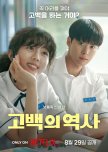
Love Untangled Review - ZyKuu
"His heart strings were more tangled than her hair" - This story was very innocent and cute. The film follows the main lead Park Se-ri is a determined teenager on a mission to untangle her natural curly hair. With hopes of having straight hair she aims to impress her crush Kim-hyun. The other main lead is Han Yun-seok whom is a transfer student. Both main leads did well in their role and excelled during the emotional moments. They also had good chemistry with one another. Se-ri is a person who trusts her gut feeling and is very attentive. She displayed her acting range yet again as she continues to impress me. Yun-seok was a very quiet but interesting character whom spoke a lot through his actions. Kim-hyun was a cool character with minimal screen time, and amongst Se-ri's friend group, Sung-rae is who stood out the most as he was the comedic focal point throughout. The OST matched the theme and setting of the film to a tee. I loved the colours of the film, it was very vibrant and pleasing to watch. Although the majority of the film follows Se-ri on her quest for love, there was a segment revolving around domestic violence that I wish topic was explored more. To me that would have added more depth and value to the film's overall plot. In conclusion, this film is great and I would definitely recommend it to all audiences.Was this review helpful to you?
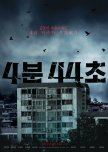
all this being said, again take all this with a grain of salt as I only watched the one 4 minute segment, but the plot itself wasn't all that interesting or in-depth, but with a movie comprised of just 4 minute segments I wasn't expecting much from it in that department. I'm sure the intention regardless was to focus more on character anyway as that's what it seems, and in that regard its pretty good! the acting naturally carries as that's really all there is to focus on, and he did great!
lastly, I've seen many shinee fans asking about this even pretty recently; just to be clear, I haven't uploaded my translation. again, I'm pretty new in my korean learning journey and I doubt its at all any good (or I'm just insecure lol) and due to the only footage I could find of his segment not being the greatest it doesn't look the best (attempting to crop out a watermark and two pairs of subtitles doesn't leave much room for my own subtitles and the actual footage, as well as it randomly going from pretty good quality visually to not that good randomly - but that part was out of my control). that being said if anyone is at all still interested in (at least for now) just seeing onew's part from someone who is new to the language and hasn't translated anything in their life before outside of the little I've learned so far, definitely feel free to let me know and ill probably upload it or at least send it out to people! just be aware its possibly not that great lol!
hope this is at all helpful :)
update: decided to upload it! again likely not the best but it’s enough to watch it :) https://youtu.be/LEbI0h3bJUM
Was this review helpful to you?
Don’t judge a book by its cover
I know so many people were tempted to judge this movie when they saw the trailer and I think I was one of them. I was finding it hard understanding how they were going to make a plot surrounding the fact that she had curly hair when curly hair isn’t a bad thing. however, the plot was less about her hair and more about who she thought she needed to be at a critical point in her life, which is her young adult years. I think this is a feel good coming of age movie with good acting and acute plot. The movie itself is not groundbreaking, but I also don’t think that it makes it bad. I am not going to leave a little review just because it’s not necessarily something I would watch on a regular neither is it something that will change the K drama industry or film industry. It’s just a cute love story.Was this review helpful to you?

Drive to and away
In the first minute of this short movie, a thought came to my mind that this might be a Hong Sang-soo film, and I was right. He has a distinctive style, showing everyday life both through his characters and the surrounding landscape. Everything looks so ordinary, as if I had just taken my phone and filmed it. And yet, he still manages to engage us emotionally through the interactions of his characters. Since this is a short film, the scenes and conversations are briefer, but I can easily imagine it becoming a full-length feature simply by letting the protagonists speak more. So I can only say that this is a typical movie from this director, one that makes you reflect on human emotions and relationships.In this movie, we follow a young girl driving her car to meet a few people she hasn’t seen in a while. I didn’t notice her climbing any mountain—apart from a little uphill road—so I don’t really understand the title of the film. My suggestion would be to rename it Drive To and From :) A car can bring you to people, but also take you away from them. You can drive alone or with someone, so I think driving works well as a metaphor for the relationship described in this movie.
PS. Is there a reason that the rating is not available for this movie?
Was this review helpful to you?
Overhype to the core
I left kdrama world for so long and decided to give this a try bcs everyone been raving about it but really it is a boring movie. Plot was basic, but the cast line up was even more disappointing. Nobody had a charming persona or good looking. I think the korean entertainment industry will loose a lot to china in this generation. I only like the accent they used.Was this review helpful to you?
 1
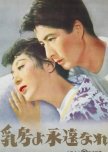
1"I've lost my breasts. What can I write about?"
Tanaka Kinuyo tackled three sensitive topics for 1955 in The Eternal Breasts aka Forever a Woman—divorce, breast cancer, and a woman’s sexuality. I'd watched the other four films she directed but saved this fifth one for last as I knew it would be the most devastating for me. Having lost the two most important women in my life to it, I take this disease personally.Fumiko and her two small children, Noboru and Aiko, make the most of their days. Her mother helps the family out when she can as Fumiko’s husband has given up on finding a job, is for all practical purposes a drug addict, and an unapologetic adulterer. After having enough, Fumiko files for divorce. Her only solace through her marriage and divorce was the poetry club she belonged to. Because of the depressing nature of her marriage her poems were described as “overblown.” An old friend sends her poems to a Tokyo newspaper looking for new talent and she is “discovered.” Unfortunately, Fumiko also discovers she has late-stage breast cancer. A young reporter enters her life, more concerned for her health than the story.
Discovering you had late-stage breast cancer that had metastasized to the lungs was a deadly diagnosis in 1955. In truth, if it was already in her lungs, it would have been in her brain and limbs as well. Mastectomies were the primary treatment. Chemotherapy was in its infancy and not trusted. Radiation and some hormone therapies were about the extent of possible medical regimens. Fumiko was confined to the hospital that had bars on the windows and doors, functioning effectively as a cage. Her children were not allowed to visit, which for a mother would be barbaric. Her roommates were transferred to a different room as they neared the end of their life and then the long dark hallway to the morgue. It seemed like a lonely way to spend one’s final days.
Despite being relegated to a room waiting to die, Fumiko began to work through her feelings and thoughts. At first, she felt less like a woman without her breasts. As time went on, she came to realize she still had longings and desires. Her poetry reflected her fight with cancer and death, and what it meant to be a woman. Could she still be a woman without her breasts? She began to speak her truth and her mind more openly. At this point what did she have to lose? The same society that kept her from attending her brother’s wedding and caused her to marry a man she didn’t care about could no longer censor her thoughts or actions. She was dying, what else could they do to her?
The women around her stayed by her side and cared for her and her children. Her brother won the good brother award as he, too, didn’t shy away from her as some men are wont to do. The young reporter, Otsuki, gave her the joyous gift she had longed for. While the mystery after death must be walked alone, Fumiko was fortunate to have loved ones who cared for her.
Tanaka Kinuyo created a strong film about an imperfect woman who loved her children and family, loved poetry, loved men, and in the end was able to love her “sinful” self, unconcerned about any “unreliable gods” out there. Nakajo Fumiko, the tanka poet this film was based on, died at the age of 31, leaving behind four children and her poetry. Your Auntie Butterfly implores you to begin doing breast exams in your 20s, talk with your doctor about your risk factors, and when the time comes, march right in and get squished. The treatments now are much more sophisticated and successful, especially if they catch it early.
"Death shall lighten
and free me
to even ride
on your shoulder"
2 September 2025
Triggers: F*cking cancer
Was this review helpful to you?
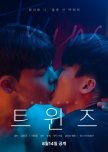
Short Run + No Context = Zero Sense
I have so far only submitted reviews for BLs/dramas that I truly enjoyed, to help like-minded folks find their way to the same shows. But today, I'm making an exception. Consider this review an "enter at your own risk" sign.
I have no issues with accepting whatever premise a writer puts forward in order to appreciate a story within the bounds of that premise. But Twins gave me no context, so its ending made zero sense to me. I didn't know whether to view it through the lenses of a psychological thriller or speculative fiction, and because of that, I was left confused at the end.
I can forgive an ending that I don't necessarily like if I at least enjoyed the journey that got me there , whether it's a full-length BL/drama or a short form series (A Balloon's Landing, The Best Story, and I Fell In Love with Someone of the Same Sex are a few examples off the top of my head). But this story fell flat --- weak character development, acting that failed to create emotional resonance, music that did nothing to underscore what was happening on the screen, and just an overall lack of energy (among other things).
Total run time is 11 mins. 35 secs. Needless to say, I won't be watching it again. You can choose to still watch it, since it won't take up too much of your time, but I personally want my 11 mins. and 35 secs. back. Lots of other things I can do with that time.
Was this review helpful to you?
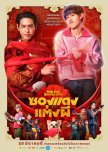
They did it. :D
What I thought of the series: I have seen the original film and liked it very much so I had high expectations for this film. Then Billkin and PP had the lead roles which was a plus. Yep, they made the film well. I am glad I saw it.#BillkinPPkritt
You can find more of my reviews on Instagram. :D See my homepage about my Instagram account. Some of my reviews are under five hundred words so I can't post them here. (*^▽^)/★*☆♪(*^-゜)vThanks!
.. ... ... .... .... .... .... ..
Was this review helpful to you?
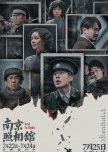
Heart-wrenching
Brutal and devastating. I found myself really caring for every character, and the additional theme of war photography is extremely interesting. There's some moments towards the end that do feel very propaganda-y, but I think the overall takeaway of the film remains the same. Prepare for some very graphic scenes.(The only thing that ruined my immersion was...you guessed it. The terrible English-speaking actors.)
Was this review helpful to you?
This review may contain spoilers
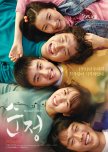
Sweet nostalgia
I'm not sure if it's just me but as much as I like youth romance movies, my enjoyment is almost always hampered by the addition of a really depressing and dramatic third act, which we sometimes, like in this movie, know is coming from the beginning. While I thought the story was sweet, it's also another instance of "maybe it would've been better in drama form," and we would have more time with these characters, like in the Reply series.Was this review helpful to you?
Fairy Tale Mashup
This is not complicated. It's very much the "Shin Eun Soo Show" with a stock plot, stock supporting characters, stock high school setting, etc. The plot is almost verbatim "Ugly Duckling". Shin Eun Soo's Se Ri is not an exceptional student, comes from a middle class family and although she has a few close friends, is not particularly popular. Her defining feature is her persistently curly hair which she dislikes and blames for her romantic misfortunes.Cue the cutest boy in her class recognizing her existence.
Cue her crush on said cutest boy.
Cue entrance of new, nice boy that does anything Se Ri needs.
Cue serpentine series of events of dealing with hair curls and high school crushes.
The supporting cast is actually pretty strong. Cha Woo Min, Yoon Sang Hyeon, Kang Mi Na and Choi Gyu Ri all are as good as the script allows them to be (which is unfortunately pretty limited). Gong Myung probably isn't the best choice as a credible high school boy but when a production needs a laconic, slightly depressed, quiet type, that's Gong Myung.
But as noted above, this is really a beginning-to-end spotlight vehicle for Shin Eun Soo and she mostly delivers. It's a departure from the high school students she's played previously. Her character is not a rebel, is not angry at the world, is not griefstricken or living in an abusive home. Se Ri is a fun, typical teen but Shin Eun Soo brings her to life as an exuberant, extroverted, energetic bowling ball of harmless mayhem. She's far from perfect. She'll cook up a selfish scheme.. She has no shame in asking her friends to go along with her impulses. She is oblivious as, well, most real life teens are. But she's easy to root for because she's genuine and warm and kind underneath the frenetic exterior.
Is it award-winning fare? No. Is it going to transform Shin Eun Soo's acting career in to a stratospheric, A-list juggernaut? Also no.
But it definitely does enough that it wouldn't be a surprise if sometime in the near future, this actor does have that transformative, breakout performance.
Not a must see but recommended nevertheless.
Was this review helpful to you?

This review may contain spoilers
Better plot and aren't focus about p*rn
From the film poster, I will never thought this film contained n*de scenes (that's why Siwon already warned that this film is rated 18+)After watch this film, we can see the different perspective of erotic writer, and even when Danbi totally flustered about the sex things we can understand as a girl who never opened herself to this thing, she will ended imagine about it to everything she saw.
And I love how everyone around Danbi so supportive to her, not even judges her choices of work (not that stinky guy) so it's very good film.
I also watched 'love and leashes' and for me this movie and more plot and stories that l&l not just about sex things. You guys can watch this. It's worth, just skip the n*de scenes if you guys uncomfortable
Was this review helpful to you?
Strengths & Highlights
90s Nostalgia
The film is drenched in nostalgic charm—cassette tapes, pagers, camcorders, and analog cameras transport viewers back to a pre-digital era where handwritten notes and awkward phone calls defined young romance .
Authentic Chemistry & Cast
Shin Eun-soo delivers a vibrant, earnest performance as Se-ri, capturing the hopeful awkwardness of teenage love. Gong Myung brings sincerity and warmth as Yun-seok, their chemistry pulling the story beyond predictable tropes. Supporting roles, including Yoon Sang-hyeon as Seong-rae and Kang Mi-na as In-jeong, round out a believable circle of high school pals .
Heartwarming Simplicity
Though the storyline embraces familiar rom-com territory, its restrained, kind-hearted execution feels cozy and comforting. There's little by way of high-stakes conflict—no bullying, illness, or sabotage—just the gentle embarrassment and authenticity of teenage love unfolding with humor and care .
Emotional Resonance
A later plot twist involving heartbreak and family struggles adds emotional depth. Following a painful separation due to personal trauma, Se-ri and Yun-seok unexpectedly reunite in a sweet, emotional climax—on a blind date of all places—leaving viewers with a hopeful sigh .
Was this review helpful to you?
This review may contain spoilers
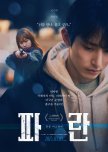
Watchable, But Barely Worth the Time
Blue is a movie about a talented shooter, Yun Tae Hwa, who is tormented by guilt after receiving a lung transplant from his father, who committed a hit-and-run accident just days before the surgery. To ensure he survived long enough for the operation, his father chose not to report the incident and secretly buried the victim. The crime was only uncovered after his father’s death during surgery, allowing him to escape conviction. As a result, Yun Tae Hwa faced harsh public criticism and was blamed by many. Seeking redemption, he sets out to find the victim’s family and offer compensation. During this journey, he finally encounters the deceased’s daughter, uncovering the darkest secret behind his father’s crime.The story is simple and straightforward most of the time. There’s nothing particularly thrilling, exciting, or suspenseful to keep you on the edge of your seat. Even the big twist when the victim’s daughter, Kwon Mi Ji, reveals the secret behind her father’s death feels anticlimactic. Still, that moment might be the highlight of the film, because the rest often feels flat and slow.
The characters are decent, but they lack depth. None of them left a lasting impression or made me feel emotionally connected. The acting was solid across the board, but it wasn’t enough to elevate the story. The ending was fine, everything resolved as expected and life simply returned to normal.
By the time the credits rolled, I found myself thinking, “That’s it?” The movie felt long yet didn’t give much in return. Overall, it’s watchable, but not particularly enjoyable if you’re looking for something quick, engaging, and satisfying.
Was this review helpful to you?
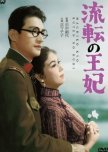
The army decides that Ryuko (Saga) is to be married to Pujie, the younger brother of Puyi, the last emperor of China and the current puppet ruler of Manchukuo. Pujie is a lieutenant in the Japanese army. Ryuko and Pujie make a surprisingly good fit and are happy together in their small house in Manchukuo even with Pujie's spendthrift ways. Despite the Kwangtung Army’s disrespect of them, the two refuse to let anything get them down. They have a daughter, Eisei, whom Pujie dotes on. But this is war and war is hell. When the Japanese are defeated, Puyi abdicates, and soon the extended royal family is on the run from the Chinese and the Soviets.
I had three complaints about this film. Perhaps because Saga and other people involved in the story were still alive, Tanaka showed too much deference. They didn't say what the empress' illness was until late in the film when they finally revealed she was dealing with opium withdrawal. In the prison Ryuko had an almost obsessive need to protect her when her daughter was completely dependent on her. Saga had also written in her book that she felt Puyi's cruel behavior had contributed to the opium use so she had been well aware of it. The death the film began with was whitewashed*, which was egregious as apparently it was a rather well-known scandal at the time. A few abuses committed by the Japanese military were listed which wasn’t the same thing as showing, a far more powerful technique.
In real life, there was no one to root for in this story. Puyi enjoyed torturing his servants and could be sadistic to his wives, which wasn't shown in this film. The Manchurians were literally being used as slave labor, something Puyi supported. The Kwangtung Army ruled everyone with a vicious hand. In the film, that same military was considered a monolith, much like Star Trek’s Borg. Orders weren’t given by any individual, “the army said,” was all the reason given throughout the film. "The army said" Ryuko would marry Pujie, "the army said" the Manchurians would receive no coal during the winter, etc. Ryuko and Pujie may have fallen in love, but it doesn't negate the fact the only reason they were there was because Japan occupied Manchukuo. Ryuko might be given a bit of a pass as she and her family had been encouraged to agree to the marriage by "the army."
This leads to my third complaint which is more artistic in nature. Many of the more poignant moments took place off screen. The Manchurians' suffering was mentioned and yet was all but invisible, heartbreaking final goodbyes and tearful reunions weren’t shown yet there was time for at least three long scenes of people singing. Ryuko was shown to be almost saintly in all of her interactions. It felt like there were missed opportunities for real human moments instead of ones that felt distanced by telling us what happened and sanitizing the story.
What did work? Kyo Machiko gave a strong performance as Ryuko showing how she sought to fit in with her new country and husband. After a life of being pampered, she was faced with hardship and death she'd never known. I also liked that this telling of the story was from a woman’s point of view, instead of the deposed emperor's. The cinematography was stunning and highlighted the hardships of the refugees as they traversed difficult mountainous terrain. It was nice for a change that a royal arranged marriage worked out, both Ryuko and Pujie were quite enamored with each other. Even after both having spent time in prison they longed to reunite. The OST fit the film like a musical glove. And finally, the few action scenes were well choreographed and filmed for the time. Despite not diving too deeply into the Kwangtung Army’s faults, Tanaka never really let them off the hook either.
The Wandering Princess wandered too much and Ryuko was too optimistic and unable to accept the cruelty all around her. It was interesting to see this story play out through this woman’s idealistic, if not realistic eyes, eyes that hoped to see Japanese and Chinese children playing together in Manchukuo. What she didn’t grasp about the Manchukuo she and Pujie dreamed about was that people are more willing to work toward harmonious relationships if no one brings an army and forces their way in and enslaves much of the indigenous population.
1 September 2025
Real life spoilers:
Not long after this movie came out, Pujie was released from prison and Saga Hiro was allowed to go to him in Beijing.
*Film Eisei was a composite of Pujie and Saga's two daughters. Eisei was 19 and in love with a young man that her mother did not approve of. The two were found dead together, a murder-suicide/lovers’ suicide. Eisei didn’t commit suicide due to the pressure of being a Qing heir as alluded to in the film. She also didn’t have to make the arduous trip and spend time in prison like her mother and younger sister. She had moved to Japan earlier to study and was not caught up in the expulsion and termination of the Japanese after the end of WWII.
Was this review helpful to you?


